
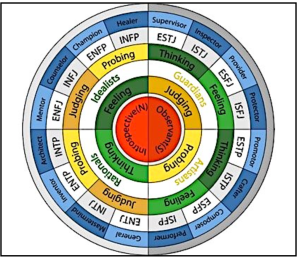
PREVIOUS: MBTI Intro #1a
SITEs : INFJoe Cartoons
• Each TYPE’s Striving Style
• What makes an extrovert?
REMINDER: When people consistently differ from each other in how they see & interact with the world (different MBTI types), it’s only reasonable that they’ll differ in their interests, reactions, values, motivations & skills.
Our TYPE is Innate, Observable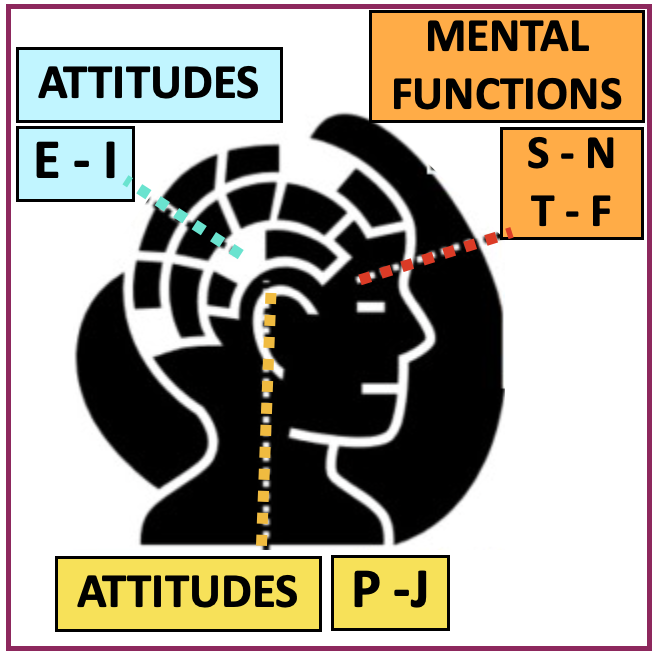
• It can be Influenced
• It is not a box, not an excuse
• It indicates Preferences, Not skills
• It is a life-long Journey
🌈
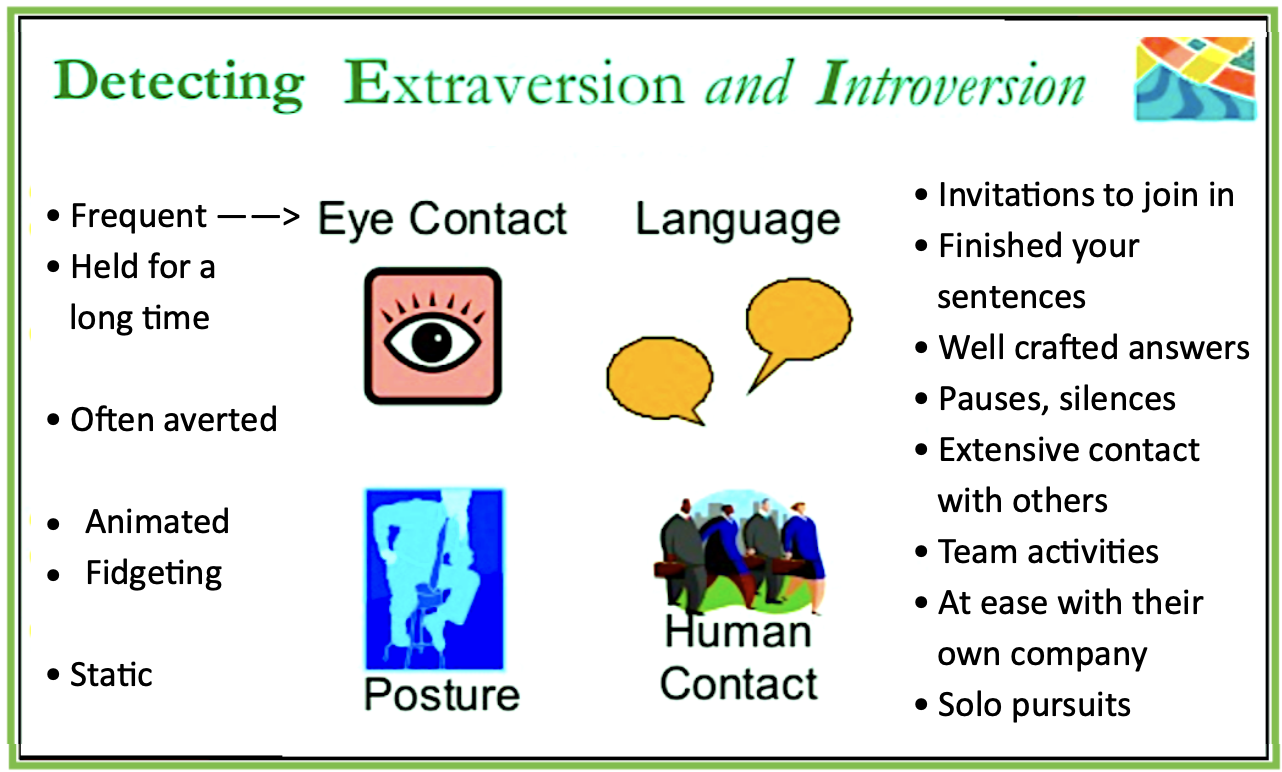
Detecting PREFERENCES
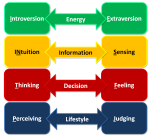
Level 1
E = ‘I have to experience life to understand it’
Work: Stop by to see me. Communication: Talk it out
I = ‘I have to understand life to experience it’
Work: Do not disturb. Communication: Thinking it thru
«
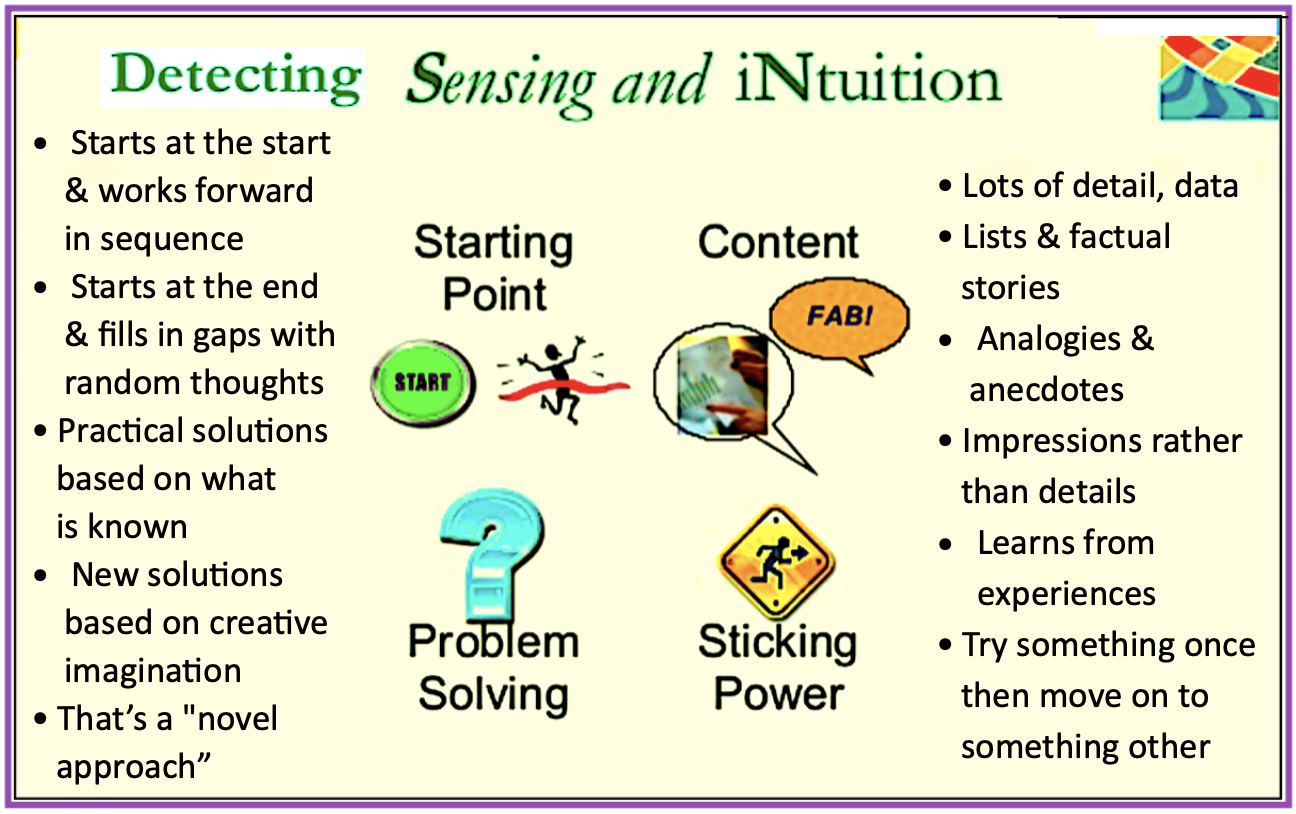
Level 2
S = ‘I need to work thru a problem to see a result’
Fun: This was great for the price. Communication: Specifics
N = ‘I see results/solutions to problems at the beginning’
Fun: This just gave me a great new idea! Communication: Big picture
«
Level 3
T = ‘I can be insensitive’. Work : She has good credentials.
Communication: Logical implication
F = ‘I can be too sensitive’. Boss re. candidate: I like him.
Communication: Impact on people
«
Level 4
J = ‘I run my life. Work: Glad this is done’
Communication: Joy of closure
P = ‘I live my life’. Work: I have plenty of time
Communication: Joy of process
«
«
⬆ From SLIDE SHOW
👨🏻🏫 re. WORK — The middle two letters of our specific type are the best predictor of career choice. (ST, SF, NT, NF )
When we’re in the wrong job for our type the job is harder to do, & makes us feel like a failure. Being in the appropriate job/career guarantees success, even when there are things we may not like about it, or if it takes time & effort to ‘get it right’! (More….)
 NUANCES (facets)
TEST : The official MBTI typing instrument is made up of 93 questions. It provides the test-taker with the 4-letter code we’re most familiar with (ISFP, ENFJ….), which stays with us throughout life.
It also identifies where we fall on a continuum of 20 sets of nuances ⬇️, 5 per preference. Using our specific facets puts us in a mid-zone within our type, & allows us to say that — how we act depends on the situation!
EXP: We’re not all typical : some Thinkers are wired to respond with some aspects of Feeling in special circumstances. Some Judgers can be casual when feeling safe (as a P), some Introverts will be gregarious in certain situations (as an E). ….
➤ These possibilities don’t show up in short-form questionnaires
The following CHARTS identify the 40 possible aspects that make up all expressions of personality type, including the out-of-preference/ atypical ones.
Each of us is a unique mixture of our Type’s 20 nuances. It all comes down to brain plumbing. (more re. Brain in future posts). So, an ESTJ would have 5 Extrovert, 5 Sensate, 5 Thinking & 5 Judging possibilities
EXP:
• You may identify as an Introvert (I), your innate preference, which includes facets normally seen in Is, & some that are outside your type. This means an Introvert could have 4 (I) nuances & 1 usually preferred by Es.
CAVEAT: Popular on-line tests are weak or useless because they condense the # of Qs from the official / correct questionnaire, & also change some of the wording. This leads to homogenizing the outcome. Some people will fit the ‘box’ built into these tests, while others will be slightly off from their pre-set ‘norm’, making the conclusions unreliable. The missing “extra” Qs in the original/ official test, which may seem repetitious, are needed to capture those important nuances of personality type & cognitive function.
ORIENTATION Nuances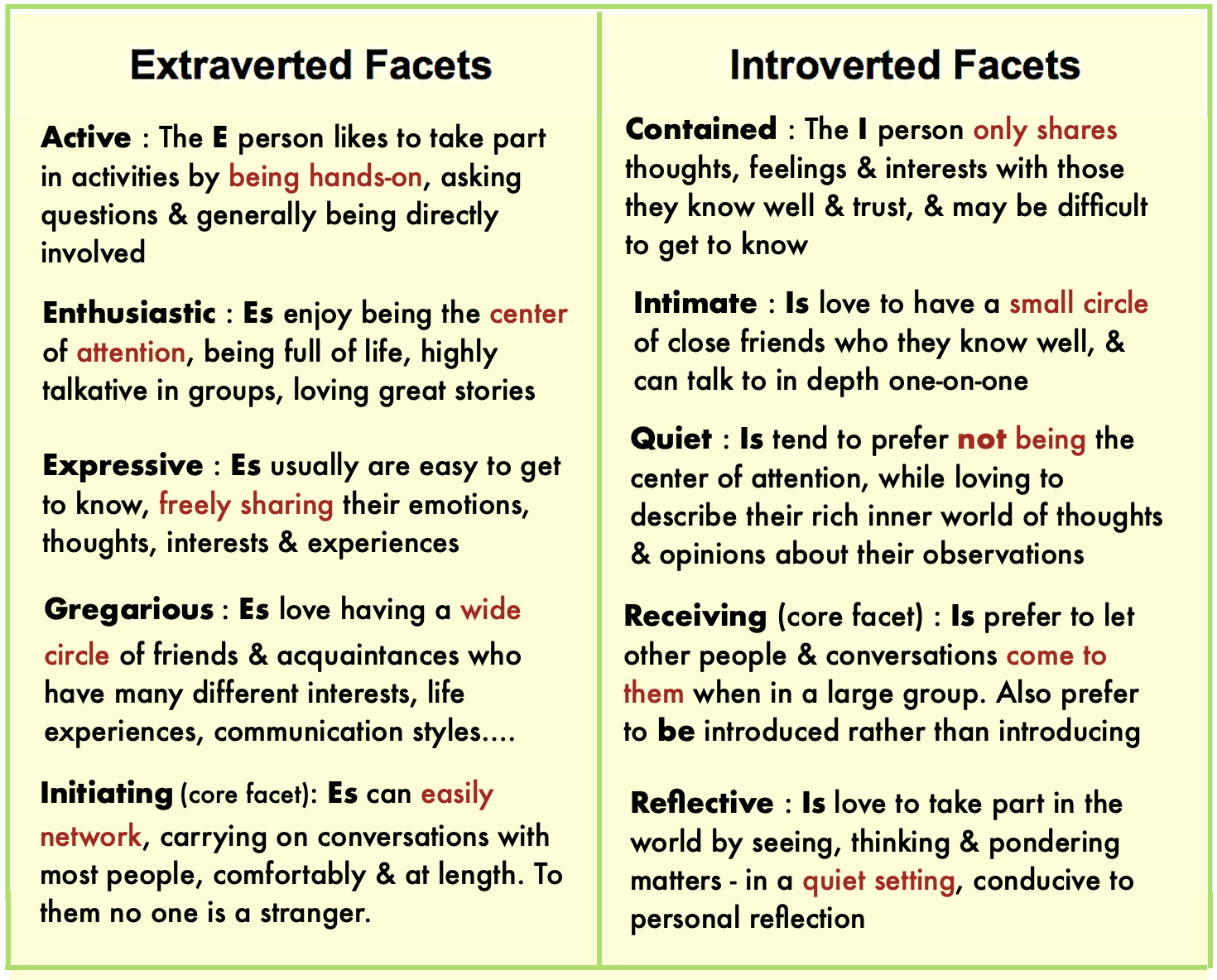

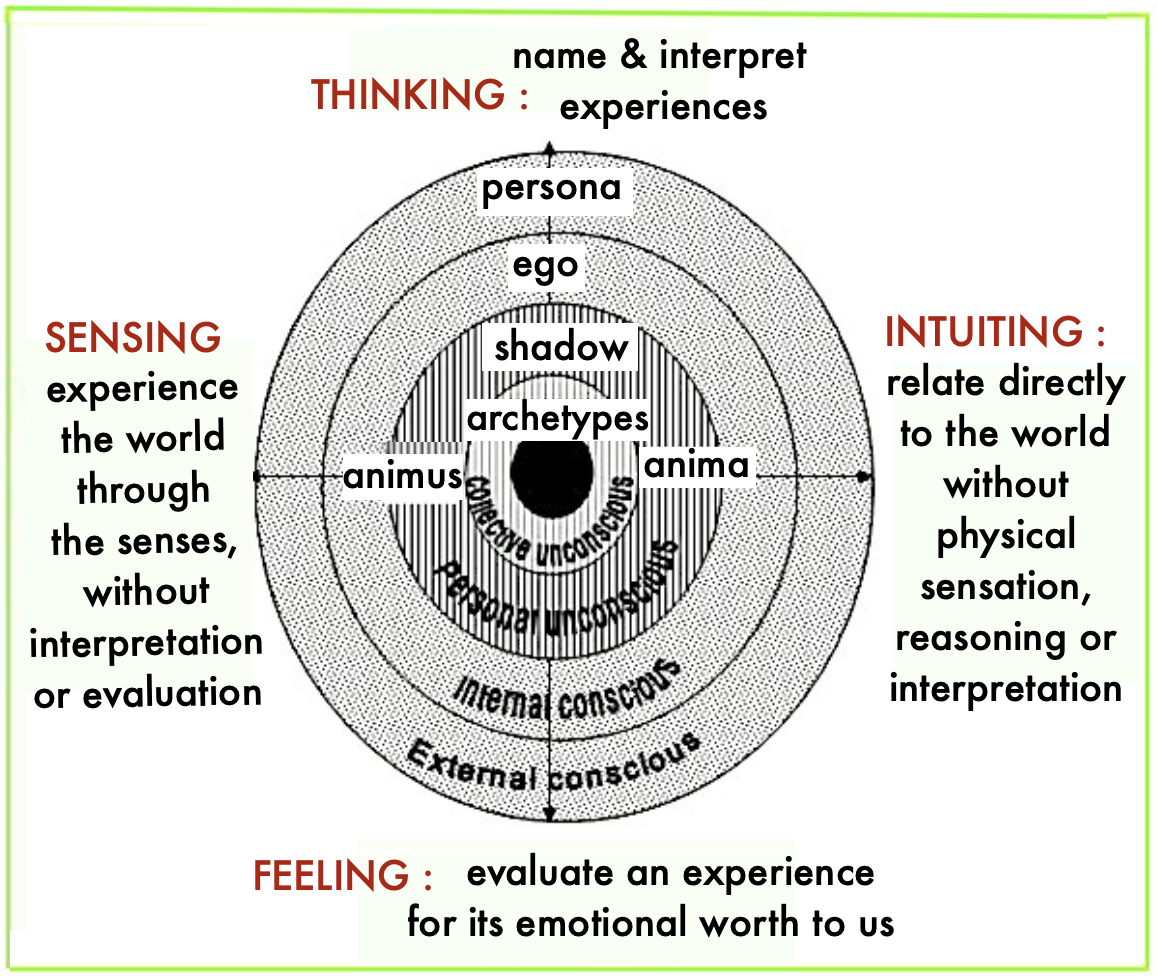
COGNITIVE Nuances

«
MBTE types & D.I.S.C. (Dominance, Influence, Steadiness, Conscientiousness)

«
NEXT : MBTI INTRO – 2a
 I
I






















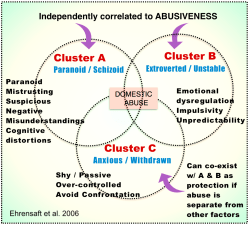 Based on similarities, PDs are grouped into:
 HEAL & GROW for ACoAs