Psychological DISORDERS – Neuroses (3c)


MY CHARACTER DEFECTS
are just twisted versions of the True me!

PREVIOUS: Disorders #3b


1. HEALTHY


2. NEUROSES
 – Different  Perspective (cont) a. Enneagram  //  b. Trauma

c. Transactional Analysis  – The IMPASSE
Def : 
A road or passage having no exit, as a cul-de-sac
A situation so difficult that no progress can be made. Deadlock/stalemate

In psychological terms, impasses are formed at Type 1, 2 & 3 developmental stages in childhood ⬇️, when script-decisions are made. Scripts – our unconscious plan for life /internal ‘story’ – are usually based on unmet needs & abuse.
This causes inner conflicts between one’s Parent & Child ego states, & usually experienced by the child first as a personal failure – an internalized sense of inadequacy. Scripts are presented by, repeated & reinforced by parents, wider family & society —

— in some cases positive, but most often harmful. (Gouldings’ 12 script themes – similar to ACoA Toxic Rules)   ✥ This shows the power & active participation of children in their own development.

As adults, we all carry a representation (model) of the world & ourself – where we belong, how we fit in, our work & how we do it, & where we’re headed. If the source of this model comes from a dysfunctional family, it will always fall short of dynamic, ever-changing reality, limiting our S & I growth.  An impasse (being stuck in some area of life) indicates a need for change in order to move forward.
✺ The different intensities of psychological disorders represent various stages & intensities of impasse. (MORE...)

CHART : 3 developmental stages of conflicts between inner Parent (P) & Child (C)
✓ 3rd degree impasse (Po-Co: Birth to 6 months, pre-verbal, even pre-natal)

These earliest conflicts come from the type of connection between mother & child, depending on how they relate day after day. Conflicts will be around the issue of survival, between: abandonment & engulfment, destroying or being destroyed, worth & worthlessness….

EXPIf the mother has an unhealed WIC – stuck in her own impasse – her wounds get communicated to the baby, day after day. If she is insensitive, controlling or brutal – the effect on the baby is predictable.
However – much more difficult to identify later on –  is if h
er grown up Adult & Parent parts are used to activate, even improve her parenting style, but without Recovery her behavior won’t have any affect on her little C1 ego state. No matter how she tries to cover it up, her deepest damage will unconsciously keep re-traumatizing the baby. 

A depressed or angry mother can ‘responsibly’ feed & look after her baby son every day, but he knows / senses his mother is emotionally bereft. He intuits (or is told) that he needs to take care of her – all focus must be on her instead of his own feelings & needs – OR ELSE she may somehow leave (die). So he feels unworthy to be taken care of & worthless for not being able to help her, which causes intense anxiety. So he slowly develops defensive patterns like people-pleasing / isolation / addictions…., which form his False Self.

As an adult,
this earliest impasse continues as deep-seated conflicts in PMES forms such as muscle tension, psychosomatic complaints, immune disorders…. & expressed verbally in symbolic images, such as “I feel as if I’m in a fog, lost, cold & alone, there’s a wall up between me & everyone else” …. 

 ✓ 2 degree impasse (P1-C1:  6 mths – 6 yrs)
Made up of Injunctions (authoritative parental orders) carried by the child’s feelings /emotions. They become internalized, often through non-verbal comman
ds, at a time when the child has only a basic grasp of language. Script-decisions made are basic theme about the child’s identity, such as: “Who am I? // Am I important? // Don’t grow up // Don’t feel”…..
Later on, it’s much harder to remember how these issues developed, so the person usually doesn’t know they’re stuck back there

1 degree impasse (P2-C2 : 6+ yrs old, when they can understand language)
The struggle here is between what the child should & should not do, what behaviors are socially acceptable or not. Internalized verbal
instructions (counter-injunctions) will be things like: “Please others // Always try hard // Be a good boy or good girl // Never get angry”….. These are more accessible to awareness, so later on it’s easier to remember who gave them & in what form. (More….  in ‘Ego States’ posts).

BREAKING the Impasse – options
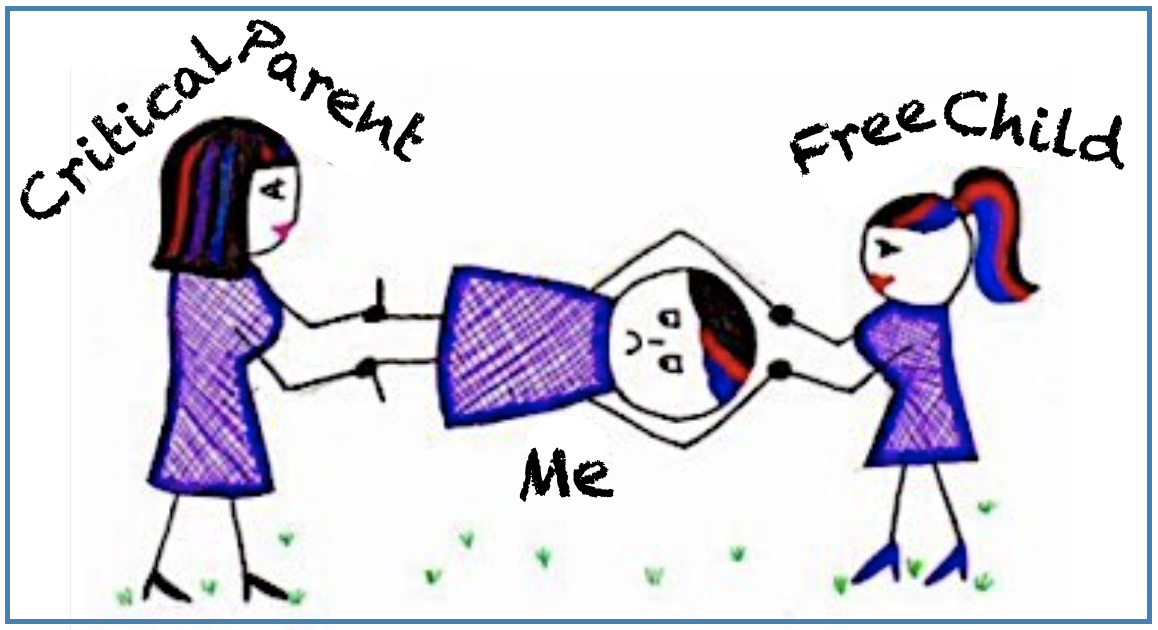
When the Bad Parent is so strong that it keeps the messages in place, the person gives in & continues to live by the original ‘rules’, keeping the Healthy Child bound.
HOWEVER –
a. When the person’s Wounded Child refuses to go along with its Bad Parent’s messages & is finally allowed to get angry, it liberates the Healthy / Free Child
b. The Bad Parent’s injunctions are agreed with, but the Healthy Child’s needs are ‘redefined’, often in humorous terms. Then both sides win.
EXP = Parent voice: “You’re crazy”  Child: “I may be crazy, but I’m never boring!”:)

NEXT: Disorders #4a
Psychological DISORDERS – Neuroses (Part 3a)

I’M NOT AS MESSED UP 
as some people I know!

PREVIOUS: Disorders #2b

SITEs: “Why being neurotic could actually be a good thing”
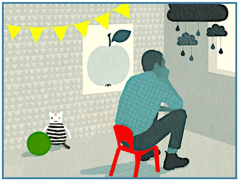
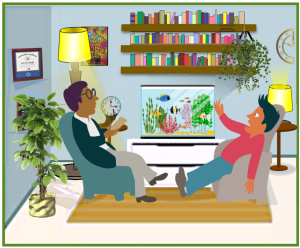
⬅”THERAPY SESSION” by DMT


1. HEALTHY

2. NEUROSES – now called “depressive or anxiety disorders”, are a group of mental dysfunctions which do not interfere with a person’s ability to think rationally or function day-to-day, but definitely cause distressing anxiety.
PSYCHOLOGICAL
Freud said they’re a result of an extremely painful experience earlier in life, which was never processed consciously (rape, witnessing a traumatic death, attacked by a person or animal….)
Jung added they’re caused by a conflict between conscious concerns (like obligations) & unconscious content (unacceptable thoughts, wishes, emotions….)

Trait Neuroticism (TN) one of the 5 personality components of O.C.E.A.N. All vertebrate animals – including humans – have a “negative affect system” to avoid dangerous or punishing situations. TN includes individual differences in sensitivity & activity of this system, ie. how painful someone’s emotions are & what kind of responses they have to upsets (affect=emotion)

People tend to be more sensitive, so are high in TN & more likely to develop depression & anxiety, especially when exposed to ongoing stressful living conditions without having the skills to process their distress in a safe, validating interpersonal environment. They can either avoid the disturbing person /situation, or shutdown from frustrated needs & losses. AND they can either turn their pain in on themselves, or turn it on other (S-H or attack).

Karen Horney in “Our Inner Conflicts” said neurotic needs move us:
Toward others: who look for affirmation & acceptance from others – needy, clingy, looking for approval & love
Away: those who are hostile & antisocial – aloof, cold & indifferent
Against: those who are hostile, with a need to control others – difficult, domineering & unkind

❎ MEDICAL / SOCIAL
• Scientific studies show a correlation between neuroticism and a specific human gene with its corresponding allele pair. These cell components help to control the amount of serotonin released into the body, which when delivered unevenly, will continue to stimulate surrounding nerve cells, causing neurotic symptoms (anxiety)

• Not surprisingly – a 1998 study of over 9,500 UK residents found a higher number of neurotic disorders among poorer people. It’s possible that genetic factors predispose an individual to anxiety & neurosis, with outside factors triggering the symptoms.(MORE….)

IMP: Neurotics have a consolidated identity (not fragmented – being mostly in touch with reality), are well aware that something’s wrong (unlike PDs & psychotics), & can use ‘normal’ defenses (like CDs).

• With neuroses (n.), only a part of the personality is effected.  A person confronted with their feared issue (big dogs, snakes, airplanes, clowns, public speaking, visiting family….) will inevitably have an intense desire to avoid it. But their way of dealing with it is self-defeating, because it prevents the person from meeting their long-term needs (feeling safe) & goals (achievements).

✰ The main symptom is excessive anxiety, along with one or more physical issues not based on illness (tight muscles, palpitation, headaches, sleeplessness…..), & may include anger & irritability, co-dependence, compulsive self-defeating behavior, low self-esteem, obsessive harmful thoughts & perfectionism.

Re. traumatic events – without psychological & spiritual help at the time of the originating stressor (rape, severe accident, death of parent, best friend, classmate….), the unconscious suppresses unbearable emotions, & sometimes even the memory of the event. Whether the person remember or not, their nervous system continue to experiences it as it did originally, becoming an ‘invisible injury. This makes dealing with their specific fear very difficult, while others parts of their life function relatively well. (MORE…..)

Neurotic reactions can show up in one or more areas :
♟ Beliefs: (‘verbal cognitions’), intensely protected rigid beliefs about ourself in the world, developed to justify actions & reactions
♟ Defenses: trying to manage the tension between conflicting internal goals, & filter unacceptable ‘stuff ‘ out of full consciousness, but doing so at significant cost
♟ Emotions: generally either over-regulated (suppressed & not expressed) or under-regulated (hyper-sensitive & over-expressed)
♟ Habits: automatic or ritualized patterns of visible actions used to calm anxiety & provide a (false) sense of security
♟ Relationships: developed rigid styles of dealing with others, & can have extreme reactions when not getting the connection they want/need

NEXT: Psych Disorders #3b

Psychological DISORDERS – Intro (Part 1)

I’M NOT CRAZY – just a little ‘off’!

PREVIOUS: Communication (#6)

POSTs: Principles of Character 1 & 2

SITEs: STARLINGonline educational videos, community support, & tools  -to improve mental health
🌱  7  vitamin supplements that improve mental health


LEVELS of Mental Health, from highest to lowest functioning :  1.Healthy ——> 2.Neurotic ——> 3.Personality Disordered ——> 4.Sociopathic/Psychopathic ——> 5.Psychotic (deranged)


DEFINITIONS

✦ PERSONALITY
:
A pattern of relatively permanent traits & unique characteristics that give both consistency & individuality to a person’s behavior.
✦ TRAITS contribute to individual differences in behavior, consistently over time, & across a variety of situations.
✦ CHARACTERISTICS are unique qualities of a person that include temperament, physique & intelligence.

BEFORE looking at the various degrees of psychological disorders, we need a look at what mental health is – to use as a comparison. One way to identify it is :
O.C.E.A.N. traits: Openness to experience, Conscientiousness, Extroversion, Agreeableness, & Neuroticism
⬆️ It’s also called the BIG FIVE, (CHART) dimensions of character which represent the main qualities shaping our social interactions. Extensive research shows they have biological origins & are remarkably universal.
One study that looked at people from more than 50 countries found that these 5 traits accurately described personality from Germany to China. (Descriptions). Traits are rated on a scale from strongest  to weakest. (People at the extremes)

Thomas Fuchs (U. of Heidelbergs) : Narrative Identity** is a person’s combined personal past, present & future. Understanding that makes it possible to observe contradictory aspects & tendencies found in oneself & others —> & mentally integrate them into a consistent, inclusive picture about Self or ‘Other”.
**Narrative Identity = forming a sense of oneself from a combination of all life’s experiences into an internalized, evolving story of the Self that provides them with a feeling of unity & purpose

INTERESTING : people with long-term, stable mental health seem to be in the minority.  Several long-term studies – in the US, Switzerland & New Zealand – (covering a 27 yrs, with people ages 11 to 38) found that up to 83% of participants developed mental disorders sometime during those ages.

Re. the continually health people: while having loving, drama-free childhoods helped, these people were (born) naturally up-beat (emotionally not moody), had lots of friends & had superior self-control.
As adults, they reported more education, better jobs, higher-quality relationships & more satisfaction with their lives. Also, in New Zealand, the healthiest Kiwis had fewer first- & second-degree relatives with mental disorders. (More….)

1. HEALTHY  (NORMAL)
Basically – mental health is about knowing who you are – the very essence of you (not just your damage expressed as self-hate) but rather the person you were born as, called the True Self, found in the Natural Child.
IT IS:
• being comfortable in your own skin, even when things aren’t going well or you’re experiencing great difficulties (More….)
• being curious about yourself, other people & the world, always looking for new ways to grow & stay interested in life
• having access to all emotions (not all at once ):), knowing how to comfort yourself when in any kind of pain, AND being able to enjoy all the good things about yourself & your life

• knowing what your talents are & using them  to your best ability, learning what you don’t know & using all your imagination to express your ideas
• having strong, clear boundaries (not walls) so you can have safe relationships which can be loving, interesting &/or fun

• knowing what your limitations are, based on your natural personality, you experiences & your age. Accepting that you are imperfect & not all-powerful, both as a human being & as your unique self. It’s ACCEPTING this & being OK with it

💕 Healthier people can tolerate a wider, deeper range of emotion, so don’t have a compulsive need for distractions (alcohol, sugar, internet surfing, sex, doing / doing….). Being more honestly self-aware allows them to feel:
😟 the pain of their own human failings, limitations & eventual mortality, and
😍 the beauty of everyday living – precious moments with loved ones, appreciating delicate flowers, a kind word from someone, time spent with a pet or listening to favorite music….
‼as well as the high points, like weddings, births, promotions, personal milestones, artistic accomplishments….(SITE: Children’s Mental Health 2–8)

NEXT: Personality Disorders (Part 2a)

COMMUNICATION Categories – Ways (Part 6)

NOBODY SEEMS
to be listening to me!

PREVIOUS: Comm categories #5


CATEGORIZING Communication (Comm) cont.
7a. Re. Mechanical Networks  /// 7b. Re. Human Networks  

8. Re. WAYS to ENGAGE in communication
Level 1: Messages into the Ether
Snail mail, email & texting have some things in common. They’re sent out, & a response can sometimes take days or weeks. Since they’re not conversational (back & forth) there can be a high level of misunderstanding, possibly leading to hurt feelings, even fights.

Level 2: Back & forth Messaging
It’s conversational, but still done remotely (IM, text….). Such exchanges are more casual & direct, so confusion is less likely, since one or both can catch distortions or misses with each reply.
However, its bite-size style means it’s not well-suited to discussing complex issues.

Level 3: A Verbal Dialogue
Here participants get to express their opinions directly, plus adding a whole layer of implied info via Para-language. These can hint at excitement, pleasure, peacefulness OR annoyance, frustration, stress…. that are harder to detect in writing. A drawback is that they often require scheduling, but sometimes things need to be cleared up quickly via phone.

Level 4: In-Person Spontaneous Discussion
When something important comes up unexpectedly, we might decide to get together with the others person. Spontaneous discussions can be effective for problem-solving, getting an immediate need met or making a plan. Benefits come from adding a new level of mutual understanding & co-operation. But it doesn’t always work – discomfort with spontaneity, lack of privacy, the other person being too busy or not in the mood…. can get in the way.

Level 5: In-Person Scheduled Discussion
What makes this level special is the mutual agreement to set time aside.
Planning doedn’t have to make the meeting Formal, but gives both parties time to think about the topic. Successful & dynamic interactions (Zoom, Skype, FaceTime… OR office conference, private dinner….) come from combining self-awareness, non-verbal intelligence & privacy, to ensure comfort & trust. (From )

VALUE: Observing admired leaders, we can see that good comm. judgment is very important to their success.
EXP:  knowing what
can be done at Level 2, versus what must be done at Level 5 – & doing it – is a sign of sound leadership instinct, as well as knowing what to expect in personal relationships.

9. Re. PMES Categories
✒︎SOCIAL
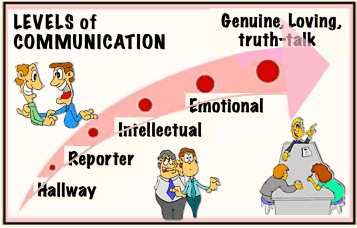
: Talking about anything of mutual interest – world news, sports, weather…. It’s superficial but truly useful, allowing us to function among acquaintances & strangers without burdening them with TMI about our life.  It also helps determine whether someone is neutral, a potential friend or enemy

✒︎MENTAL: Talking about facts, helpful tips, ideas, non-controversial beliefs, plans & strategies, as in professional conversations. Unfortunately, some people go out of their way to be the ‘best’ at it, so that no one is smarter, wittier or more knowledgeable, & they never have to be wrong.

The distance between the first two levels is relatively short. Polite conversation can turn into a mentally stimulating one very quickly & then collapse back into small talk or none at all – without discomfort. Except for conversations with a controlling know-it-all, these two levels are safe.

✒︎EMOTIONAL: Here talk is about aspirations, fears, wants, needs & joys. Sometimes eyes well up, lips quiver, & the voice chokes. Other times those same eyes light up, heart pounds & words flow with joy, or fail from awe.

• The distance between #1 & 2 AND #3 is rather wide, because #3 requires intimacy, transparency, trust & vulnerability. Most of us are afraid of being wrong or looking foolish, & absolutely terrified of rejection.
Participating at this level opens us to possible rejection, hurt & being scarred. Over-all, this level is easier for women to navigate, partly because expressing emotions is more socially acceptable, & because a portion of women’s Corpus Callosum is thicker than men’s, perhaps allowing more access across the hemispheres emotions to be verbalized  (MORE….)

✒︎SPIRITUAL. This is the hardest to identify & describe, not only because our culture is so secular, but because few people are willing to drop down into the level of faith – for themselves – much less to speak of it to others.
It melts away push-pull, give-take win-lose, me-you. There are no distortions from emotional mental or social games, allowing for the highest level of resonance, creating an energetic embrace that sustains & heals.

‼️ Understanding all these forms of comm allows us to identify & then choose which is most appropriate for any given situation.
It can be too easy to go down the path of least resistance, but that can get us into trouble, so it’s important to be more thoughtful about how & when we communicate.
It’s better to do it the right way – focusing on our goals & using whichever level will help us get there.

NEXT: Psych Disorders #1

COMMUNICATION Categories – Informal (Part 5)


IT HELPS TO KNOW
what the rules are

PREVIOUS: Comm. #4

SITE: “….How Relationships influence Behavior”

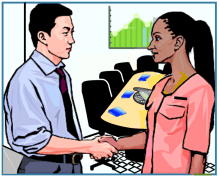
⬅️”BUSINESS MEETING
designed & created by DMT


CATEGORIES of Communication
(Comm) cont…
5. Who / 6. Structure / 7a. Mechanical Networks

7b. Re. HUMAN Networks  (biz, academia, military, even family)
The form of an organization’s comm. networks dictates the method & speed that ideas flow between managers & employees (parents & children). Flow efficiency can be checked by looking at : Nature of task, Leader emergence, Group satisfaction, & Speed of work

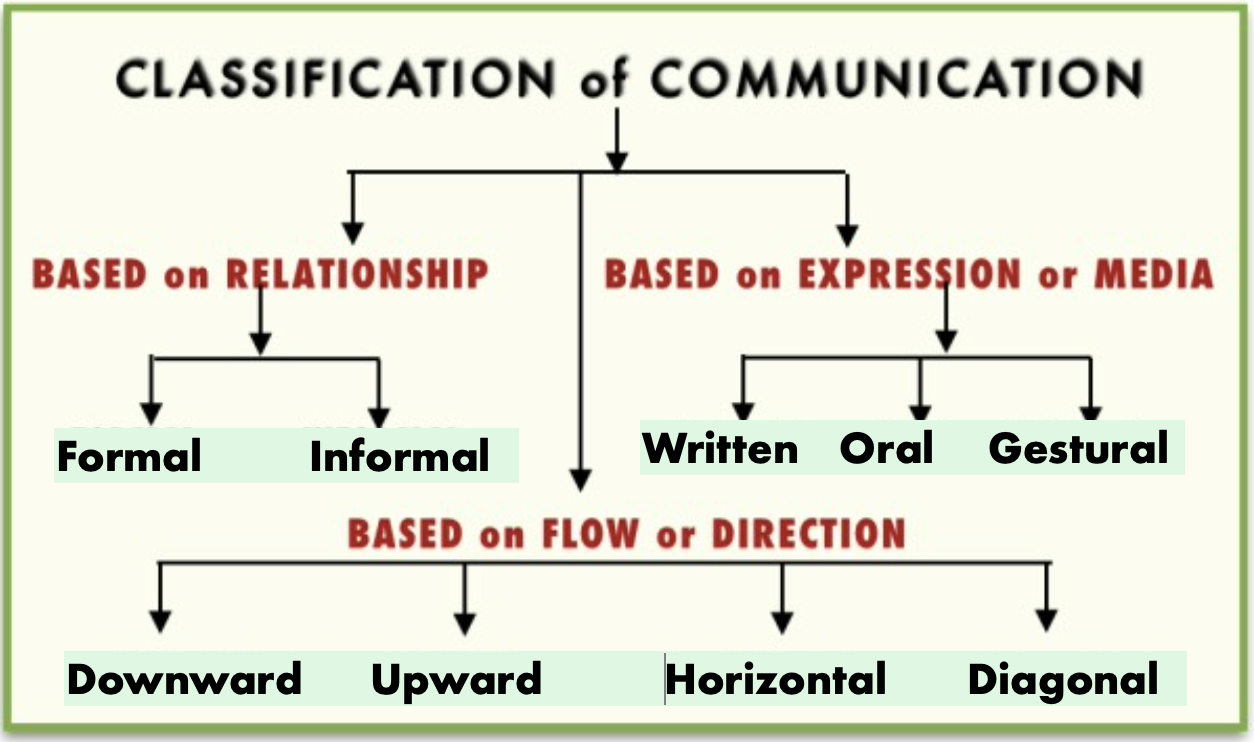
a. MEDIA – Written, oral & gestural. see Part 2

b. DIRECTION
• Vertical comm. – Info is passed between different levels of organizational hierarchy. Orders move down from the top through a formal chain of command, to the person or group who will carry them out. Responses (obedience) & collected info (research….) flow up to the top for review & decision-making

• Horizontal (lateral) Comm. is between any two parts of the organization at the same level – between 2 people, divisions or departments – allowing a greater degree of informality. The purpose is to co-ordinate the activities of the various ‘units’

• Diagonal – Sharing info among different structural levels. This term was introduced to capture the new comm. challenges associated with new organizational forms, such as matrix & project-based businesses.
EXP: It’s when higher level management works with a lower level to tell them about a change in work/ goal objectives (we’re going to grandma’s instead of the mall)

c. RELATIONSHIP (channel)
i. FORMAL Networks
➤ CENTRALIZED
This is when one group member has access to more comm. channels than any other, & so tends to use more info than others in that group, sent out to others based on status & hierarchy.  (Older sibling to younger)
EXP: The boss needs to deal with any negative grapevine comm., or employees will believe the rumors to be fact

• Wheel  – most centralized form, where all info flows from the leader, & other members have little or no comm. link with each other. Here, the boss deliberately controls comm., making sure their wishes reach everyone

• Chain (scalar): People comm. in a set sequence, via the line of command….. proceeding from A to B, B to C ….. or in reverse. This type is slow but carries the most authentic communication

➤ DECENTRALIZED
Here all group members have access to the same number of channels. Info is comm. by any person on the hierarchy scale & can be accessed by other employees. Research shows that decentralized networks or organizations perform better, & have more satisfied members (regular family group ‘conferences’)

• Circle – Here the info is shared equally among all members. Each person gives & receives info from two or more others in the network

• Star – Comm. revolve around a central point. Each person in the outer branches of the star passes on a message to a central authority, who then distributes it to the other participants. A must for groups to promote teamwork, but can limit or inhibit ease of comm. between members

• Inverted “V” – Here subordinates are allowed to comm. with their immediate superior, as well as with that boss’s boss – but it’s effectiveness is limited

• Common (Free-flow / All-channel)the most decentralized, where everyone is connected to each other, so info can flow freely from anywhere in the organization (a commune?)

ii. INFORMAL
Usually deals with interpersonal, horizontal comm. Traditionally it was considered a potential hindrance to effective performance, but that’s no longer true. However, leaders of modern organizations see it as an important way to ensure effective conduct in employees

Informal comm. is via the grapevine, represented by sociograms. These are important since they’re a large part of daily comm. Friendship, usage & efficiency are 3 important parts :

• Single strand
Info flows from one person to the next, until it reaches everyone ….. but generally a less reliable or accurate way to pass on the message. However, it can effectively for urgent / emergency news

• Gossip Chain
There’s usually a central person who looks for, finds & then passes on info to all other members directly (water cooler, lunchtime…..), often used when the topic is not job-related

• Probability Chain
Info passes randomly from persons to persons – when it’s interesting but not important

• Cluster Chain
The most common type – where a person who is the source of a message passes info to a pre-selected group, out of which a few individuals repeat it to other selected groups – until the whole network is covered, like a telephone tree.

NEXT: Comm #6

COMMUNICATION Categories – Topologies (Part 4)

I HAVE SO MANY OPTIONS for connecting with others

PREVIOUS: Categories #3

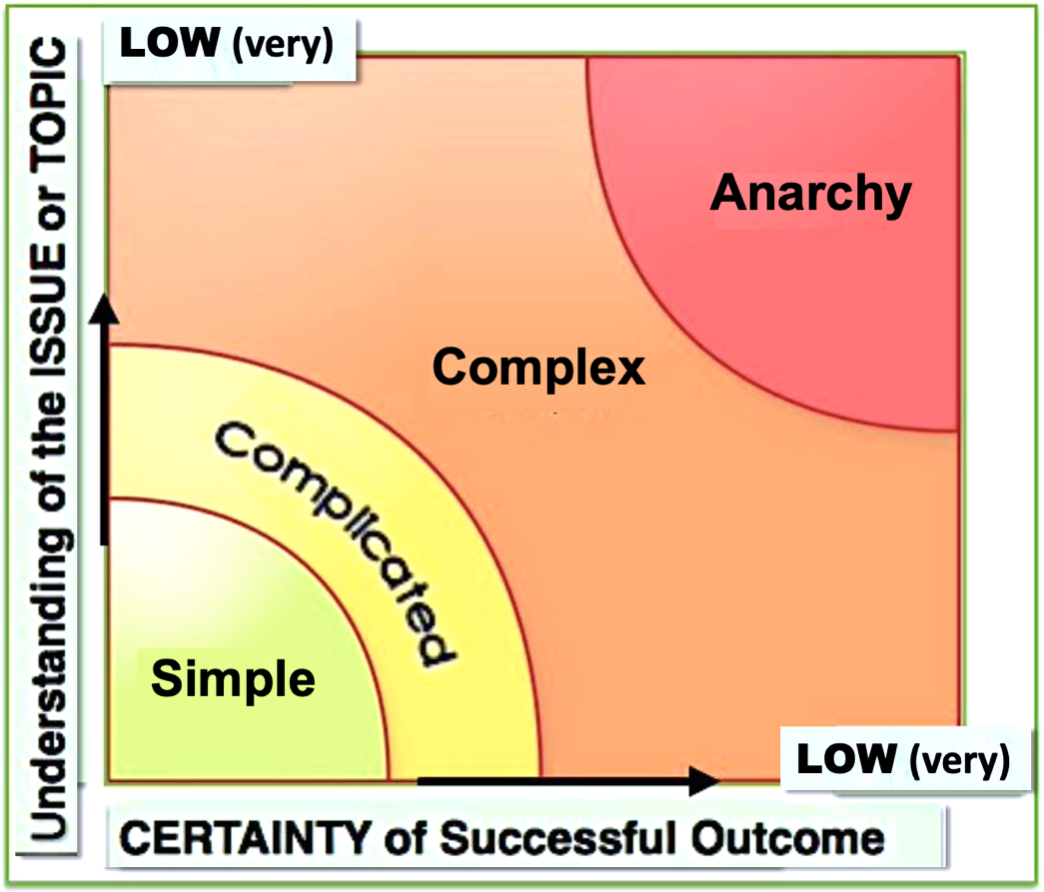
QUOTE: “A genius is capable of making the complex simple.
An idiot is capable of making the simple complex!”


CATEGORIES of Communication
(Comm) cont.
4. Re. SYNERGY levels /// 5. Re. WHO the participants are // 6. Re. Focus of STRUCTURE

7a. Re. MECHANICAL Networks (as of 2017)
a. Local Area Network of computers in a localized area, such as office or school. All are connected through the LAN via a hub or a switch. A large number of computers drag down the speed of a LAN

b. Wide Area Network – Covers a large geographical area, usually made up of multiple computer networks. The Internet is a WAN that relies on a complex global interface of service providers using routers, switches, modems & servers, which carry data, media & Web pages

c. Public Switched –  A network of circuit-switched telephones – basically the phone version of the Internet. It’s mainly digital, which includes services for both cells & landlines

d. Telecommunication – The transmission of signals over a large distance, usually by electromagnetic waves. It’s used for TV, radio & phones, as well as computer data

e. Wireless – It provided info transmission & network connectivity to devices without cables or wires – such as broadcast radio – over long geographical distances. Wi-Fi is for computers, & Bluetooth is a shorter-range version, which connects with a nearby mobile phone

f. Satellite – It comes in several types, such as those used by phone companies. Some provide navigation info, military surveillance or weather data. Others provide TV programming, radio broadcasts, & broadband Internet service

TOPOLOGIES : the ways component parts are interrelated or arranged
NODE:  hub or switch // workstation or other device

STAR – a network where each component is attached to a central node, with a point-to-point connection. This reduces the probability of network failure. All peripheral nodes can only communicate with all others by transmitting to, & receiving from, the central node

The BUS – each node is connected to a single cable – the network’s backbone , via interface connectors. A signal from the source travels in both directions to all connected machines until it finds the intended recipient. If the machine address does not match the intended address for the data, it ignores the sent info

RING – a Bus topology LAN in a closed loop, forming a single continuous pathway for signals going through each node, with data only traveling around the ring in one direction. When data is sent from any one node to another, it passes through each intermediate node until it reaches its destination

MESH – a LAN, WLAN or VLAN. In ‘full mesh’, each network node is connected directly to all the others. In partial mesh, some nodes are connected to all, while others are only connected to those nodes they exchange the most data with

Mesh networks play an important part in the Internet of Things (IoT). Unlike the star, which require a router to deliver Internet service, network nodes are decentralized, so they can “talk” directly to each other without requiring an Internet connection. A big advantage is that there can’t be a single point of failure (SPoF).

IoT – In 2016 30 cities (including Phoenix, Dallas & Fort Worth) were connect to a new M2M network specifically geared towards the Internet of Things (IoT), by Ingenu, the company building the project. The Machine Network is the “largest exclusive IoT and M2M network serving 100 million users in the U.S. covering nearly 100,000 square miles.”
The technology is designed to avoid interference by being able to self-modulate within the band to find a clear signal at both network & device levels

HYBRID networks – combining 2 or more basic topologies, so the resulting network is different (not bus, star, ring…..). EXPs: A tree network is a star interconnected via a bus , but a Tree connected to another Tree is still topologically the same, not a distinct type. A star-ring network consists of two or more ring networks connected, using a multi-station access unit (MAU) as a centralized hub. 2 other hybrids are hybrid mesh and hierarchical star. (MORE…. Wikipedia)

EDITORIAL comment: NOTE all the acronyms!
NEXT: Comm. Categories #5

COMMUNICATION Categories – Focus (Part 3)

HOW CAN I BEST
get my point across?

PREVIOUS: Dealing with conflict #2 

⬅️ Designed & assembled by DMT


CATEGORIES of Communication (Comm) cont.
3. Re. FORMS of Comm.  /// 4. Re. SYNERGY levels

5. Re. WHO the participants are
a. INTRA-personal comm – mental conversations with oneself, silent or out loud. It’s a form of thinking, where we consciously pay attention to certain information, to process & analyze a situation. This strategy is particularly useful when we need to make important life decisions, or deal with a conflict.

EXPs: To-do lists, journals, inventories, notebooks, calendars, a reminder to finish something, -OR- mentally congratulating yourself on a job well done, planning a project, or “Positive self-talk” to encourage & improve self-esteem

• In biz: An exchange of info among departments. Frequent, in close proximity & only dealing with internal company issues

b. INTER-personal Comm – only between two people, & usually face-to-face. It can be impromptu or planned, & it’s meant to share / exchange information, feelings, experiences, plans….
EXPs: Conversation between you & your BFF, a text message from mom, a meeting with a boss or teacher, explaining something to your child…..
SUBDIVIDED into: Assertive (strong but not harsh), Non-assertive (weak, disrespecting self) & Aggressive (angry, hostile). (MORE…..

c. Small Group Comm –  takes place within private gatherings or work teams, where everyone is encouraged to participate in discussions. The purpose is to provide info that’s of common interest to the members, or to get the opinions of each participant – to arrive at a decision, solve a problem, plan a project or event, discuss a result….
EXPs:  a family dinner, hanging out with friends, a class discussion, a football huddle or post-game review, executive committee meeting, Meet-Up.com, 12 Step programs….

d. One-to-Group Comm – involves a speaker who informs, persuades or motivates an audience – a spiritual teacher giving a sermon, a candidate giving a campaign speech, a football coach giving a pep talk, a college lecturer….

e. Mass Commone or more individuals directing a message to a large audience at the same time, often made up of members not in the same location, & who have a wide variety of characteristics. It can be provided electronically such as thru TV, internet, newspapers, PHS announcements…. 

OR it can be a live event (rock bands, opera in the park, political rallies or protests, Billy Graham Crusade…. in a huge space). In such cases the person(s) on stage needs to have special skills & charisma to hold the audience – talent, voice, posture, phrasing & timing, relevant info, media material, props ….EXPs : requests to support a cause, to donate time & money, or may offer some benefit, such as – health education, spiritual guidance, emotional release, call to social activism…..

6. Re. FOCUS of STRUCTURE
a.   Known to Unknown
Comm starting from info which the listener already consciously or subconsciously “knows” & accepts, then moving into a clear explanation of new or unknown info.

Using this order means the speaker understands the other person or group’s real-world experiences, & is going to present possible answers or solutions to deal with the current situation or problem.
This helps to form a Yes Set” in the listener’s subconscious, which encourages a tendency to accept that the speaker’s ideas & suggestions are correct, worth taking seriously, & acting on.

bGeneral to Specific
This approach starts with an overview of the big picture & general category to be discussed, who lets the listener know what’s being dealt with. Equally important is that it allows for a wide variety of possible items to be included, without identifying which one.
EXP: Animals / Cars / Emotions / Law Suits / Seating  ….

Gradually more details are added, giving the listener time to absorb what’s presented, like gradually moving down a funnel, which limits & curbs the amount of info given at each level.

c. Simple to Complex
This structure is the reverse of Point b. It requires the speaker to fully understand the ‘whole’ as well as its components, in order to lead the listener gradually toward an action goal or understanding of a big ‘concept’ – in small increments.

It counters the assumption that the listener already knows the issue being discussed. Unless addressing an educated person or group with highly specialized knowledge, each part needs to be described, adding & linking pieces in logical order, building up a picture of the topic.
EXP: It’s not helpful – or fair – to tell a child: “Be good”, without first identifying ‘good’ characteristics & behaviors.  (MORE….)

NEXT: Levels of Comm #4

COMMUNICATION Categories – Types (Part 2)

I GET ALONG BEST with people who get me

PREVIOUS: Communication, #1

QUOTE: “A man’s character may be learned from the adjectives which he habitually uses in conversation.”  ~ Mark Twain

↗️ “FORIGN STUDENTS” designed & created by DMT

CATEGORIES of Communication (Comm) cont.
1. Re. CONTENT (in Part 1 a & b)

2. Re.
AVAILABILITY to self & others
The Johari Window works best for groups because it allows for self-awareness & useful feedback. It can also be used to track the growth of an individual, in their progress towards intimacy in 1-to-1 relationships.

Even when we decide to take the risk of being open with others, doing so fully is much scarier & more complicated than most will admit. The chart shows what people know or don’t know about themselves, & what they reveal or don’t reveal to others.

JOHARI Windows  explained ➡️
GREEN: Initially, what is known & shared with others will be very small – should be!

⬅️ The longer 2 people or a group interact, the more the ‘windows’ change size for the better – IF they are reasonable healthy & well-meaning. The larger the Open section, the better the communication.

3. Re. FORMS of Comm.
a. Verbal – using words to deliver an intended message. While it’s still the most successful form, this makes up only @ 7-20% of all human comm! Effectiveness depends on clarity, grammar, vocabulary & writing style, plus the skillful use of the other 80%
• Written: brochures, contracts, formal business proposals, handbooks, memos, press releases…..
• Oral : face-to-face, phone, text, voice chat, video conferencing …. Can be either Informal, such as the grapevine & rumor mill, arguing a topic…. or Formal, such as conferences, debates, lectures….

b. Visual Aids: Use of color, drawings & illustrations, media, graphic design, typography…. Graphs & charts reinforce anything written, or can replace it altogether.

c. Para-language (non-verbal/gestural) : Physical ways to convey thoughts & feelings – the way something is said – such as expressing approval, interest or lack of it.
It includes emotion, intonation, pitch, style of speaking, stress, tone, voice quality & touch. Some research estimates tone of the voice accounts for 38% of all comm, 55% is from body posture & gestures, & only 7% from the actual words used. (MORE….)

EXP of shortcuts • shrugging = “I don’t know”
• crooking a finger = asking someone to come closer
• holding a hand up = stop / back off / enough
• laughing = I agree / I identify -OR- I think that’s ridiculous
• looking away =  I’m thinking -OR-  I’m lying / withholding
• patting = I empathize / “Poor dear”…
• tapping = Hello / Pay attention
• tone of voice = pleasure at seeing someone, – OR-
displeasure / anger about something
• wagging a finger = saying “naughty, naughty”

Other FORMS can also express one’s personality, social status & taste :
▸ Aesthetic comm & creative expressions – dancing, art work….
▸ Appearance, & style of dressing/ grooming
▸ Space language – owning paintings & landscapes
▸ Symbols – any religious or ego-building images
(From: Bright Hub Project Management)

4. Re. SYNERGY levels, via TRUST + CO-OPERATION
Synergy means that the whole is greater than the sum of its parts – so inter-actions between them create new connections. The result is not just another ‘part’, but the most catalytic, empowering, unifying & exciting outcome.(CHART)

LOW-Trust: These interactions are expressed thru defensive, over-protective & often legalistic language – used to ‘covers all the bases’, to indicate escape clauses & qualifiers (if…then) – in case things ‘go south’

MIDDLE: This is ‘careful’ communication, used by average/normal people, who have respect for each other, & want to avoid the possibility of ugly confrontations, so they’re polite rather than emphatic or confrontive. They might understand each other intellectually, but are not likely aware of their own underlying patterns & assumptions, so aren’t really open to new possibilities available from connecting with others

HIGH: Synergy allows interactions with creative solutions offered by others that are much better than any available at the lower levels. Here all participant know it, feel it & enjoy the outcome – practical, emotional &/or artistic. It means that 1+1 may equal 8, 16, or even 1,600. The possibility of truly significant gains & improvements in such relationships are so real that it’s worth the risk to let oneself welcome the unknown. 

NEXT: Comm Categories #3

COMMUNICATION Categories – Content (Part 1a)

THE MORE I KNOW
the better I can do

PREVIOUS: Dealing with disputes, #3

SITE: Barriers to effective Communication & Skills needed


DEF: 
Communication is the process of passing info & understanding from one person to another – which includes any behavior that results in an exchange of meaning.
 • It’s the sum of all the things one person does when they want to create understanding in the mind of another.
• It is a bridge of meaning, involving a systematic & continuous process of telling, listening & understanding.

ACoA Communication (comm)
IF we are being appropriate – we will comm. differently in different situations. So –
♟ the way we verbally play while watching a game together is not how we behave in a religious setting
♟ what we eventually confide in a good friend is much greater than what we let out at first
♟ things we tell our mate aren’t usually things we tell co-workers
♟ things we say at work may not be appropriate for our children to hear. (Posts: Relationship Continuum)

It’s sad that many of us say we yearn for emotional connection & yet adamantly push it away – spending much of our time —> monologuing / pontificating at, gossiping with, or chit-chatting about trivial or pointless topics.

🚩While these are used by most people as a type of social glue or social currency – it’s also typical of what passes for communication in alcoholic & other narcissistic households. Nothing ‘real’ is ever said or talked about – how each member feels or thinks, what drives their behavior, what their true Self’s  motivation might be…..

But at the other extreme are the emotionally & verbally starved ACoAs who desperately want to be heard. They’ll take any opportunity to “go deep”, as in spilling TMI to whoever will listen. This kind of sharing is necessary BUT belongs in 12-Step meetings, therapy & a daily diary. The alternative is to not talk at all.

In fact, many ACoAs are notoriously reluctant (refusing) to make light conversation (small talk) , meaning : the ‘normal’ sharing of mutually interesting but not earth-shattering experiences, tastes & opinions. They feel that only ‘serious’ counts – but is most often just dumping, the WIC without socially appropriate boundaries.

Careless over-sharing is a mistake – there is a time & place for the ‘heavy’ stuff. We say we want to be accepted, but then act inappropriately. Keeping things light in many situations makes us much more approachable & likable!

It’s true that healthy relationships – whether private or public – are based on some degree of Emotional honesty. And the deepest level is the realm of Spiritual communion – with oneself, others, nature & Higher Power. (4 Qs to Ask Yourself Every Day).

However, as powerful & precious as the Emotional & Spiritual levels are, they’re too intense & raw to sit with for too long, at any one time.
1. If our tendency is to get heavy too fast with another person – we need to set boundaries – with our Inner Child! It’s not appropriate to assume that someone is a ‘friend’ & then jump into telling our deepest thoughts & emotions (suffering, complaints…..), which is almost always about our S-H & dysfunctional family history.

2. In general, most people are simply not equipped emotionally to go ‘deep’ at all, & it’s not fair to spring such comm. on someone without their consent, or on those we know can not handle it. It’s disrespectful to others (our narcissism) to inflict our intensity on them. (from C. Gilkey)

NOTE: Small-talk is appropriate, from time to time, to keep things on the surface when with acquaintances, or with people we know have very little depth. It is also not a substitute for meaningful conversation with ’emotional peers’, no matter their age or level of self-awareness.

We need to learn that we are in fact fundamentally like everyone else – we share the same needs & desires, & even many times similar experiences. It counteracts our suspicion & isolation.
We also need a break from our own emotional intensity, which will help to balance us. And we may even learn something new!

NEXT: Comm. Categories #2

ACoAs – Dealing with Disputes (Part 3)

EVERYONE TELLS
you who they are!

PREVIOUS: Disputes #1

SITE: “Side Taker. You fight – we decide who’s right.” FUN site

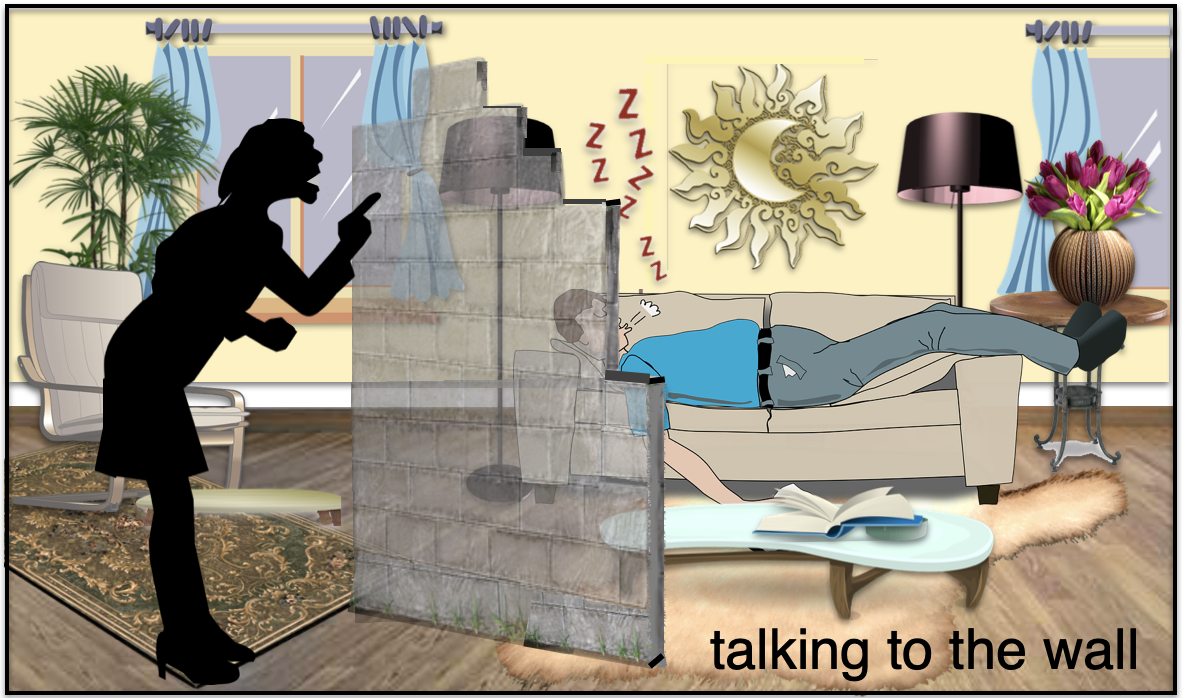
“TALKING to the WALL” — Designed & created by DMT

RECOVERY Awareness (cont)
4. Is what’s bothering me – a recurring pattern ?

5. What did I notice about the other person (job, group, teacher….) from the very beginning that I promptly ignored?  This Q. goes to the previous point.
While we may not always know the specific characteristics of Narcissism, Emotional Abuse, Co-dependence, Victimhood…. we do get mental & emotional hints when something is off in the way we’re being treated.
Do you have a feeling of discomfort, wondering “What the hey??”, not liking something they’re doing/not doing, afraid to upset or disagree, fear of alenating them….. all the red flags we ignore so we don’t have to leave the PPT we’re attached to

6. What is my Enneagram, MBTI, numerology/ astrology charts.vs. the other person’s – ie. how are we different & similar?
Most of the time we won’t know someone else’s Type or chart, but knowing our own is crucial. At the very least we always have to keep in mind that other people have their own personality traits – usually not ours.
(“EAST-WEST BUSINESS” by DMT ➡️)

• Their culture, world view & what’s important to them…. may be so unfamiliar or opposite ours that we can’t come together. What also can make a difference the kind of wounding they’ve experienced, or if they have any genuine self-awareness. It’s important is to keep these realities in mind – always – & ASK Qs whenever possible, to find out where others are coming from. Don’t assume!

7. When spending time with this person, job or group, how do I feel
Before (anticipation) – am I excited & happy, assume acceptance, look forward to having fun, learning something & gaining from the encounter?
OR fearful & worried, anticipating rejection or being ‘invisible’? Do I spend a lot of time worrying about what to wear, what to talk about, what uncomfortable or painful things are bound to happen? (more likely with family)…..

During – am I feeling safe, comfortable, respected – or not?
After (hangover) – do I come away with a pleasant feeling, re-energized OR drained, depleted, angry, lonely, frustrated? (Emotions lists)

8. Am I prepared to respond to an accusation or hurt feelings?
I do not have to respond right away (if at all). Most often I’ll need :
• to take time to process what happened & how I feel about it
• to ask: “Do I agree with the other person’s assessment of the problem or situation?”
— If YES, am I willing to face it head on without shame or S-H?
— If NO – do I know what’s wrong with the ‘picture’ the other person presented?
• In either case – I can figure out what to say – from my Adult & sticking to the point
• If I’m confused or ambivalent, it’s appropriate to go to others I trust to process the event & think thru the best way to proceed. I may also need time to gather factual info to back up my legitimate opinion

9. If it’s an inappropriate relationship
 for me – what price am I paying for staying?
Emotions & functions: anxiety, depression, isolating, loss of sleep, obsessing, S-H, trouble concentrating, over-reacting, over-sensitive….
Actions: being controlling, cheating on mate, constant complaining, escaping with TV / porn /internet ….over-spending, over-eating, using drugs or alcohol to dull the pain, starting arguments…..

10.What dysfunctional behavior gets triggered in me from being with them?
↘ be passive-aggressive, become demanding, co-dependenct, dissociate, fawn/ passive, people-please, rescue, rage, procrastinate, sabotage myself ….

11. What are the negative benefits for staying in a situation I know is unsatisfactory or harmful?

12. What am I willing to give up / change in order to have something better? What actions will I need to take?
This will include using your 4th Step inventory, & then actively work shift thinking & behavior.  (12 Step ACoA Inventory Workbook)

13. How have I already begun making positive changes in my own behavior, & in my choice of work or personal relationships?
✳ Make a list of all the growth you’ve achieved so far – no matter how small you think it is. Give yourself kudos & share the list with everyone you trust to give you validation, admiration & encouragement!

NEXT: Communication categories #1