What to DO when CONFUSED (Part 3)


ONCE I HAVE ENOUGH INFO –
I can make a better decision

PREVIOUS: What to do …(Part 2)

See ACRONYM page for abbrev.


💠 ACTIONS: UNRAVELING CONFUSION (cont)
1. GOALS
Before anything else we need to know what our goal is. Oh no! That means having permission, knowing our needs & letting our ADULT choose the actions.
What’s your bottom line GOAL? Are you pursuing it or still protecting your Negative Benefits?  EXPs:
• re. GOING OUT: is it to stop being so lonely & risk being disappointed, but maybe gain friendship, good info, new opportunities ….
OR is it to protect yourself at all cost by hiding out & continue starving!?

• re. WORK: is it to do a job search, no matter how long it takes, to find something more suitable & better paying
OR stay in a place you’ve outgrown or hate, so you don’t have to make the effort of improving your life?

• re. SELF-CARE: is it to gain a sense of personal power & get needs met (no matter how small),
OR is it to wait endlessly for someone else to come along & rescue you?

• re. ASKING QUESTIONS: is it to get help, knowledge, attention….
OR is it having to always be right, to know everything, to be ‘self-sufficient’?

• re. STANDING UP for yourself: is it to get a need met, without anger
OR suffer in silence & stay resentful?

• re. RELATIONSHIPS: is it to work toward & eventually leave a dead-end or destructive relationship that continually hurts you (even tho it may bring up pain in the short-term – but in the end be a relief, an opportunity to heal & the freedom to choose better next time)
OR is it to stay endlessly, & be in denial that it keeps adding to your low self-esteem, generates more humiliation, anger, sadness….?

2. SIMPLIFY
Small chunks – practice chopping down any task into bite size actions, based on what you can swallow at the moment. ACoAs are in the habit of being overwhelmed by goals in general, & by some that no one can possibly do all at once, but for some insane reason we think we should be able to!
In spite of the fact that current reality is usually not as grim as our childhood was – we still opt for staying overwhelmed rather than simplify whatever is going on in the present, right?

terrifiedClearly – that attitude comes from the WIC’s beliefs–
• who is terrified of breaking any of the Toxic family Rules because if we actually got things accomplished & our needs met via reasonably sized actions – that would trigger the ‘inevitable’ punishment of abandonment, from family or anyone else (RULES: “Must always struggle but never get there”, “Don’t outshine us”, “All risks are dangerous”)….
AND
• who is still convinced we don’t know how to do anything! since we were expected to know & do all sort of impossible things even as very small children, without anyone bothering to show us how or being a good example! Many of us got the message “Just do it!”

EXP: Anyone remember the 1980’s TV show “The Greatest American Hero”?  A high school teacher was given a super-hero costume by aliens, with the manual, which he lost in the shock of the encounter. Each episode was about how he had to figure out how to use the suit & all the trouble it / he caused because he didn’t know how it worked. Sounds a lot like our lives!

BUT
• who refuses to acknowledge all the years of accumulated knowledge & experience we HAVE gathered along the way since those early harrowing days, because then he/she would lose an excuse for waiting to be rescued!

NEXT: What to do when….. #4
What to DO when CONFUSED (Part 2)

ONCE I HAVE ENOUGH INFO –
I can make a better decision

PREVIOUS: Confusion – Growth #5c

SITE: “A Cure for Confusion”

See ACRONYM page for abbrev

SUGGESTION: save “My Rights” & “New Rules” posts to all devices, & read them every day until they become second-nature

Reminder : Confusion (C) is a mental state – not an emotional one, even tho we usually say “I feel confused”. We can be confused about emotions – but that’s from not knowing how to think about / understand them. (See ACoAs & Confusion #1)

ACTIONS: UNRAVELING CONFUSION
FIRST – on no account beat yourself up for anything you have or have not been able to do. It’s not productive – AND it’s child abuse! Never expect yourself to have the PERFECT answer, or DO the perfect thing. EVER!

This topic is about behavior – the problem of not knowing which option to choose when in a dilemma. It can be:
– relatively small, short-term or a daily occurrence
– something you’ve been struggling with for a long time
– something that has surfaced in your life recently
– a really serious, life-altering choice you need to make

• Al-Anon says:
“Take the action & let go of the results”, another hard thing for ACoAs to do. ‘Letting go’ is not in our vocabulary. Because of the WIC’s fear that the whole world is unsafe – like our family – we try to control every outcome.

BUT danger is not the only possibility now, in spite of all the bad things that do happen in the world, which we can’t fix.
Not EVERY situation or person is safe (idealized) NOR dangerous (devalued). We can search out good people & positive circumstances once the WIC & PP are no longer in charge!

EXP: Telling someone you don’t want to do something, or forgetting to make a call…. is NOT as dangerous as walking alone thru the Central Park at night, or depending on a narcissist – for anything…. Unfortunately, many of us are more afraid of the former than the latter!

• Train yourself to ASK, ASK, ASK for info about things you don’t know, & to clarify who other people are, how they think, what they meant by a comment, what they want (from you), what they have already done or are planning to do about a problem of theirs…..

• Stay present – watch & listen – pay attention to how others do things, what their motives are, what alternatives they have made use of… & consider whether any of it can be applied to your life. Then try it out. This is not just to be a copy-cat.

Whatever you observe has to be tailored to who you are.
The best way to learn how you function in the world is by trial & error – once you have enough info & a decent support system to guide you. Try out 2-3 different ways to say or do something, & then evaluate the results

• In most cases you can change your mind before or even during an activity without major repercussions, so decisions don’t have to be written in stone. Keep a dated log of difficult actions you took, & the outcomes.
ALWAYS have PLAN B. in case Plan A. doesn’t work out.

• IF you still can’t take a particular action, keep working on:
– negative beliefs, & the anxiety they create
– the connection to your PP (too strong) AND
– with your WIC & HEALTHY CHILD (not strong enough)
– validating your needs & hopes, while practicing with boundaries

EXERCISE: To separate & identify confusing / conflicting Emotions : stop, breath deeply & feel the sensation in your body – what’s authentic for you about the situation?  (More….) and (More...) and (More….)

NEXT: What to DO…. (Part 2)

What to DO when CONFUSED (Part 1)

PREVIOUS : Recovery Confusion (#5c)

SITE: Confusing communicators

REVIEW – See posts: “ACoAs & Confusion” —  not due to mental or physical diseases (brain damage, Alzheimers, psychosis, depression…..)


DEF
: Any time we have trouble sorting out 2 or more conflicting / opposing : points of view, rules, options, desires, experiences, needs.
Being torn between the facts as we know them AND a resolution we can’t see or find, (being sure about the facts) because we don’t understand our environment.

Can be caused by:

• getting too much information at the same time
• learninScreen Shot 2015-07-20 at 4.54.04 PMg something new, & not knowing how yet (this or that?)
• absolutely not understanding some info, communication, instruction, expectation
• not knowing what to do because of —
– having too many desirable options, but can’t do them all
– not allowed (internally) to admit what you really want to do
– not knowing yourself well enough, & so – afraid to make the wrong choice & then have regrets

EMOTIONS (Es)
You’re confused about how you feel – emotionally. You wonder :
= “Am I angry or scared? I shouldn’t be upset about the way that clerk talked to me, like I was dumb, but I am upset about having such a strong reaction…..

= I’m feeling sad & relieved at the same time about the breakup. Am I crazy?”…..
NO – not crazy, it’s just normal human complexity. Having a variety, even simultaneous contradictory Es is common, especially when considering that each Ego State has it’s own & they often disagree

EXP: Carla came to the party on her own, & wondering who all these people were. After a while she found herself talking with 2 older out-of-town business men, obviously colleagues & obviously married. They were charming, friendly & amusing – telling funny ‘war stories’  & how they’ve helped each other at work. Carla was having a good time laughing with them, genuinely enjoying their company.

At the same time,
she felt sad inside, & checking with her inner child, “Little C” said she was sad because then the party was over she’d be going home alone & missing the fun!”

COMMUNICATION
WORST
– severe Narcissists are dangerously confusing. They’ll crush any attempt you (target/victim) may make to figure out their agenda – to keep you constantly walking on eggshells, emotionally off balance & mentally confused (feeling crazy). Narcissists always need to be in control of every situation, & react accordingly to keep you in line

SECOND: those who knowingly leave out important info about themselves – that you need to know (married man, ex-con, addict….), or crucial info about a situation they’re in

OTHES Confusers – so you never know where they stand, where you stand with them, what they want….. They’re the ones who:
– talk a lot, but never say anything of substance (shallow)
– sound like they’re trying to tell you something – especially when upset – but just beat around the bush & never get to their point
– only respond in non-sequiturs that have nothing to do with what you’re saying
– lecture, pontificate…with no emotional content
(11 Posts: ‘ACoAs & Confusion‘)

LANGUAGE (T)
Most people are sloppy in their use of words & phrases, causing much confusion. (See post “Sayings that Misrepresent“)

❎ The most common is the word -FEEL- to mean 3 different states – physical, emotional & mental .(See post “Feelings aren’t facts
• Repeating words they don’t know the actual meaning of (co-dependent, introvert – when they mean shy…. )
• Using a word that sounds like another but with totally different meaning (flamingo instead of flamenco)

• Misusing words (that’s schizophrenic, your crazy, pathological… ) when we’re angry at someone
• Vague words, usually about some emotional state, but unspecified (upset, triggered, off, out of it, acting weird, not themselves…. ).
Is the person unusually angry, sad, scared, nervous, withdrawn, unusually angry, cranky… ?

• Using this word as a pejorative, “Don’t be so emotional, women are too emotional…” by which someone means they’re angry or crying.
BUT emotions come in a wide range of colors.
Why can’t “they’re being emotional” also mean “they’re so excited, thrilled, happy-shocked….!” ??
 And yes, maybe even crying a little!

NEXT: What to do …#2

ACoAs & CONFUSION – Growth (Part 5c)


PREVIOUS: Recovery  (#5b)

SITE: Neuro-marketing: The Science of Decision Making

QUOTE: I simply can’t build my hopes on a foundation of confusion, misery & death….I think…peace & tranquility will return again” ~ Anne Frank (Jewish German-Dutch diarist)


‼️REVERSING life-long Confusion
(cont)
4. Grow the ADULT/PARENT
5. RESOLVE internal CONFLICTS
6. Take SOME Action

7. OUTCOMES
They are by definition, about the future, whether 5 seconds or 5 yrs from now. But ACoAs want to know how everything is going to turn out NOW, to quell a little of our enormous anxiety. We assume that without our vigilance & interference (control) we’ll always be in danger (lose), as in childhood.

What danger?

• Aa kids we were treated equally harsh – for spilling the milk, not knowing how to do math, talking back, stealing something, fighting…..
No nuances, no degrees of value, no room for a lack of info or experience, for accidents, human error, or just being a kid. The unfairness & lack of proportion was very confusing – and enraging!

• In the present, ACoAs continue to give the same importance to all situations & all outcomes. This causes confusion which can paralyze.

a. Responsibility – We do need to step up – for ourselves, so our efforts have at least a chance of being favorable. How well things turn out generally depends on having healthy beliefs & ‘right’ actions – from the UNIT – plus helpful outside forces.

Many times :
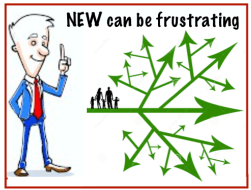
i. NEW-ish: we can make an educated guess about the outcome of an unfamiliar date, meeting or event. This is not mind-reading, projection or wishful thinking.
Rather, such ‘predictions’ are based on logic, knowing what’s real & sane, intuition, education, & many previous experiences
But having been taught to deny all of these – we rarely use them – for ourselves

ii. REPEAT: If we’ve been through a particular situation several / many times, AND are willing to acknowledge what we’ve observed & felt, we can give up poor choices without a lot of agonizing, like:
• NOT going to an abusive parent for emotional comfort, ever again
• NOT dating an addict or other narcissist, again
• NOT taking another job that doesn’t suit our talents & goals
• NOT-not dealing with our money / bills wisely….

b. Control – However, here are things in life we’re not responsible for! – mainly what others think & do. And many situations we can’t manipulate or predict the outcome of.
i. UNKNOWABLE: things we can’t control or predict, because we’re not all-powerful, as some ‘spiritual’ or philosophical teachings insist. Even very ‘psychic / sensitive’ people don’t have all the answers!

We usually can’t know things like  —
• if medical tests, procedures or medicines will give us answers, will heal or harm us
• how everyone else (or us) is going to react when pushed to their limit
• when we’re going to met the ‘right one’unknown path
• how our children will turn out, really
• whether cold-calling will get us business
• when we’re going to die (usually) ….

ii. UNKNOWABLE: when we don’t have any or enough info about something ahead of time, like how a new experience is going to turn out (first time in a group, moving to a new job or location…. ), what value we’ll get from taking a class, how our relationship will work out in the long run, where Recovery will take us in life….

ACoAs believe we’re supposed know everything – and perfectly, & feel ashamed or self-hating when we don’t. This is narcissistic magical thinking which sends many ACoAs into a panic, even paralysis, because the WIC assumes if we’re powerless we’ll always suffer, as in childhood

EXP
: Whatever you may think of the Kardashians, Kim’s comments to Oprah about the ‘reason’ her 1st marriage broke up after 2 1/2 months speaks to the lack of info: she said they had never spent time alone with each other, so once they were under the same roof every day, she realized they were NOT at all compatible.

• This can remind us that most situations – especially relationships – need to be researched more thoroughly before jumping in. So we’re back to: “Take the action & let go of the result”, or – do the best you can & learn from each outcome. Look before you leap! LACK of INFO can certainly lead to CONFUSION.

NEXT: What to do when confused #1

ACoAs & CONFUSION – Growth (Part 5b)

PREVIOUS: Recovery Confusion (#5a)

SITE: 🔺 “Overcoming Anxiety & Confusion
🔺 Uncertainty and Cognitive Control

🔺 8 Ways to Eliminate Brain Fog Once & For All

QUOTE:”Good communication is the bridge between confusion & clarity” ∟ Nat Turner (slave rebel leader)

A Zen Buddhism story
Two monks were walking along the banks of a river. They saw a young woman who was afraid to cross. Although the monks had taken vows never to touch a woman, the older monk picked her up and carried her to the other side of the river. The younger monk was angry about it all day.
The two didn’t speak until sunset, when they were allowed to break their vow of silence.
Then the angry younger monk accused the older monk of polluting not only himself but also the whole order. The older monk simply answered, “I put the woman down on the other side of the river early this morning. It is only you who have been carrying her around throughout the day.”

REVERSING life-long Confusion (cont)
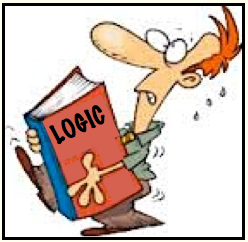
1. Learn to apply Logic // 2. Get more info

3. Get VALIDATION
Because our parents provided no mirroring or very distorted feedback about who we are, we think we’re invisible – both internally toconflicted ourselves (“I don’t know who I am”), & externally to others (“No one gets me”).
As adults we can reverse this training by risking what we fear the most – any form of abandonment.

4. Grow the ADULT/PARENT ego states
Since our internal confusion comes mainly from the PP & WIC, we need to form & strengthen the UNIT so that it can be the decision-making voice.

Posts: Book-ending // Problem-solving // My rights // Why are you stuck?
USE: relevant books, YouTube, 12-step Programs, spiritual groups, therapy …. to learn what’s normal & healthy.

5. RESOLVE internal CONFLICTS
‘Being stuck’ always includes intense internal conflicts we don’t know how to resolve, or are unwilling to do the Recovery work it would take. They are mainly in the form of frustrating disagreements – between the WIC (obeying the PP) & the UNIT, or the Unit fighting against the PP’s injunctions – between old damage & new Mental Health

The goal of Recovery is to get the PP completely separated from the WIC, so that both Healthy & Wounded parts of the Inner Child can align themselves with our healthy Adult/Parent.
STEPS
a. List real Needs (Parts 1 & 2) of each ego state – not the WIC’s outrageous demands (Part 3). ‘Normal’ childhood needs: acceptance, approval, attention, emotional comfort, physical contact, security & stimulation

b. Write down conflicts between the various opposing ego states
c. Inner Selves must agree to help each other get those needs met, brainstorming as many ideas as possible

• When Loving Parent & Inner Child are on the same page about any given subject (shutting out the PP) – the conflict melts away & useful choices seem self-evident. Whatever actions we’ve been dragging our feet about suddenly are easy to do, & usually don’t take much time. But when we’re deep in our damage, all our time is spent obsessing, worrying, planning, complaining… but NOT acting

6. Take SOME Action
Once we’re ready to focus on taking some kind of appropriate action, we can consider the next part of the process.
It may be something we’ve been thinking about for a long time but couldn’t move on, or something shifted in us so we formed a new way of thinking about the problem, which quickly translates into a new way of functioning.
*️⃣You don’t have to know if the action will lead you where you want to end up. But it can tell you if you’re on the right track or not

• Break down potential tasks into bite-size pieces – called process
• Identify the ones you know how to do, & the ones you don’t – & get the missing info
• Choose the simplest action you can & take it – one phone call, one evening class, one hour of internet searches….
• Don’t give up. It’s OK to take breaks but then start again & keep trying new things. It can eliminate some confusion & you’ve possibly learned something along the way (More….)

NEXT: Confusion – Growth #5c

ACoAs & CONFUSION – Growth (Part 5a)

getting cleamerPREVIOUS: Recovery (#4c)

SITEs: “How to face Confusing Thoughts”

QUOTE : “There are few things more powerful than a life lived with passionate clarity.” ∟   Erwin McManus (iconoclast, artist, cultural thought-leader)


REVERSING life-long Confusion

It’s normal to be confused sometimes, & sometimes to NEED guidance. It’s when any of the situations listed in previous posts shows up at either extreme – too much or too little that we know something’s off. (see lists of “Unhealthy & Healthy Opposites,” in Part 4)

Externally
: The main way we get confused is when others are unclear in any way (see Part 3d) and from Double Messages

Internally
: While we can never know everything, it’s imperative that we start with ‘I know what I know’.
Clear thinking does not preclude or ignore INTUITION, which is based on subliminal or unconscious info we’ve gathered along the way. We need all parts of logical reasoningour knowledge base, from all 4 PMES levels.

1. Learn to apply LOGIC
INDUCTIVE reasoning – (bottom-up logic / scientific method): observe something & then use it to form a conclusion
EXP: Joe drinks a lot on a consistent basis, & when drunk he gets mean. You can logically assume that he is going to continue this way – for some unknown time.
THEREFORE it’s safe to say that – at present – he’s not good partner/ mate/ friend material, no matter how charming & clever he is the rest of the time when not drunk!

The problem for ACoAs is NOT that we’re not smart or observant enough to do this, BUT rather that we’ve been brainwashed to not observe &  trust our perception & experiences.
Denial is our default position. (See #3a).
But when we allow ourselves to see present-day reality using Adult eyes, we come to realize how crazy & bad things really were for us as kids – & in many of our adult relationships. This can be painful at first, but ends up being empowering – as we stop obeying the PP & be our own person!

DEDUCTIVE reasoning – (top-down logic) starts with an idea, belief, premise (X) – which we assume to be true, using general rules of logic, which hold true within a specific framework. IF & only IF the premise if correct, deduction provides absolute proof of our conclusion.

IF a premise is unproven or unprovable, it must be accepted at face value, on faith, or for the purpose of exploration. (More...), even when we don’t like the answer (The Serenity Prayer).
EXPs of X: All ‘men’ are mortal (philosophy) / I have inalienable rights (psychology) / God exists & is good (religion, faith). (More….. )logic

• Based on (X), we can consider what else might be true (Y), making rational & generally accepted observations, proceeding to an IF-THEN conclusion (Z), reached by generalizing or extrapolating from our initial statement. Some (X) premises can be proven (re. mortals), others cannot (re. God):

EXP a
: If God is real & is good (X), then He watches over me (Y), & therefore I am protected (Z)

EXP b: X – all mothers always love their children
Y – I have / had a mother (reality)
Z – therefore my mother loves me (her child)
Of course, this second ‘X’ is not true, since not all mothers love their children. Y is true, but Z is not a guaranteed outcome!

2. Get more INFO
EXTERNAL Decisionslearn logic
Define the issue or problem you want to clarify. Try to formulate it honestly, even if you have to sleep on it.
ASK:
What is your Adult / True Self’s goal? What outcome do you want? Is it realistic?  What’s your motivation?
Write everything out & if you need help – ask someone trustworthy (sane) to review it with you.

INTERNAL Decisions
a. Make notes of all the conflicting points of view on a subject that’s making you ‘feel crazy’. Then put it aside & come back later. Ask someone to review it with you.

b. Try to identify the emotions under the mental confusion / resistance:
— you may already know the answer to a problem, but afraid to go for it
— the angry PP or hopeless WIC is stopping you, each having their own agenda for not wanting to proceed….

NEXT: Confusion #5b

ACoAs &CONFUSION – in Recovery (Part 4c)

PREVIOUS : Confusion #4b

SITE: “What to do when unclear, confused ….”

QUOTEs: “The ability to simplify means to eliminate the unnecessary so that the necessary may speak. ~ Hans Hofmann, German artist

• “However confused the scene of our life appears… it can be faced, & we can go on to be whole” ~ Muriel Rukeyser, American writer 1913-1980

RECOVERY CONFUSION is NORMAL (cont)
c. what we know vs don’t know
d. because of incongruity

e. family influences
What are ACoAs primarily ADDICTED to? Our family!
They installed our buttons & they can push them all too easily – any time we’re in contact with them. BUT not forever! Recovery does provide relief with S & I.

However, until then, dealing with our family (especially parents) means we can still be influenced by their dis-ease :
• In recovery, part of what confused us is that we underplay / deny how great our damage really is. Assuming it “wasn’t that bad” makes it harder to appreciate how much work it takes to heal
• The WIC wants to be loyal to them to not feel abandoned & to not abandon them! “I have to listen to my family. They KNOW.  I’m wrong & they’re right…..”

recovery confusionAll of this creates internal conflict (dissonance), having one foot in the old & one in the new – about ideas, patterns, awarenesses, choices… old introject (PP) tapes still blaring their poison, competing with the new info we’ve been learning. Very confusing. Who should we listen to?

We keep wondering: “What’s true? Am I just feeling my parents’ pain for them – so they don’t have to (because they don’t want to)? Am I just feeling sorry for myself? Am I depressed?  Why can’t I get it? There are so many versions of ‘health’, & what about Spirituality & Forgiveness? Aren’t I supposed to turn the other cheek, take the high road?….”

Any time we get stuck in some area of life – we want to do it differently, but can’t seem to move – it means we’re in serious conflict – & the negative side is winning. Then we have to find out what the PP & WIC are thinking & feeling, so we can identify the “Negative Benefit” of not moving forward.
As we stay on the Path to mental health, we begin to experience our own Inner Truth. With the right info & support these Qs are answered & things get clearer.

f. because of the contrast between:
• the way we were treated by our family & other abandoning, abusive, neglectful, torturing adults (school, religion, caretakers…)
vs.
• the way healthy, respectful, kind, loving PPT treat us – in the present – once we have enough self-esteem to place ourselves in saner situations.

contrast confusionThis new way of being treated is a tectonic shift & represents our growth! But at first the contrast just doesn’t compute, doesn’t feel real, can’t last, is an accident….

Our discomfort with ‘goodness’ points out the severity of the early abuse & neglect, which brings up rage & sorrow. Eventually we come to live ‘in the light’ of the positive, which then becomes the new norm!

CAUTION: S & I is very scary to the WIC, & intensely resisted by our PP. So, as we move away from damaged thinking & acting, there’s a strong pull to revert! The Program reminds us that our ‘disease’ is “cunning, baffling & insidious!”
It’s as if it has a life of it’s own & doesn’t want to be left behind.

SO – practice disobeying the Toxic family Rules – no matter how confusing. When we backslide / regress – we do NOT have to stay there! We will feel guilty at first, but that will pass as we keep up the self-care.

So, even when we hear the old tapes, they won’t be as loud – most of the time. We may still get confused occasionally, but now we have new tapes with better info, & slowly we get less trapped between loyalty to the family vs. loyalty to ourselves!

NEXT: Confusion #4d

ACoAs &CONFUSION – in Recovery (Part 4b)

 PREVIOUS: ACoAs & Confusion (#4a)


RECOVERY CONFUSION is NORMAL (cont)
a. during any transition
b. when learning anything new

c. what we know vs don’t know
This kind of ‘not knowing’ is an indication of growth, the confusion part of any issue we’re working on (career, relationships, self-care….), & will be to different degrees for each. Our reactions will be too little AND too much :

i. Too Independent

With little or no guidance as kids, many of us are used to doing everything ourselves. What we can’t figure out – we do without! Even in Recovery we still believe we’re supposed to know everything, making it hard to:no thanks
• reach out for comfort, guidance & information
• make an effort to see what else is possible in the real world
• try out a variety of new ways to do things
• be OK with making mistakes or having to try many different options before find the right answer or right fit

We were trained to believe we’re supposed to be self-sufficient – both emotionally (“Don’t bother me / don’t be such a baby….”), & how things are done (“You figure it out / should know that”)…. without anyone’s help. So no matter how confused we are – we don’t want to look dumb or make a fool of ourselves.

EXP
: You take a college course on a subject you know very little about, maybe just for credit, or because it’s of interest. But you don’t really understand the material & find that you’re floundering. You get the sinking feeling you’re missing something everyone else understands but you don’t know what.

So, as a ‘good’ ACoA we beat ourselves up – either we should already know the info OR be able to figure it out (“I guess I’m just too dumb”). But how can we? The whole point of taking a class is to learn what we don’t know! Believing otherwise feeds S-H.
This issues applies to work, relationships, self-growth…..

Having trouble understanding something means you:
• are rushing the learning process
• don’t have enough facts about the lesson or situation you’re in
• are trying to do too much, or everything at the same time
• are trying to use ‘graduate level‘ info before being solid in the fundamentals
ii. vs. Too Dependent (longing for symbiosis, someone to take care of us so we don’t have to).  Actually – there are many thing we DO know – and have always known, even as little kids. But we’ve been brain-washed by family (& sometimes church & society) to deny it, so it gets pushed it away or completely forgotten. The internal conflict makes us feel crazy. (“I know / I don’t know”)

We feel too lost & afraid to trust our own judgement, common sense or experience, so we constantly, compulsively ask others for info & help, even when we actually know the answer or what to do —
• as a way to stay dependent on others, esp. on authority figures
• trying to get validation because we don’t believe in our knowledge & intuition
• from being taught (usually by a religion) that talking about -even- legitimate knowledge & accomplishments is arrogant, presumptuous or the sin of pride

It’s true that we have many cognitive distortions (CDs) learned from family, BUT ACoAs are very smart & perceptive. We need to recapture the many truths we’ve suppressed & ignored for so long. It will UN-confuse us. REMEMBER: “I know what I know – but I don’t have to / can’t know everything ”.

d. because of incongruity.  DEF – when something is “strange, becausinconsistenciese it doesn’t agree with common principles, or what is usually expected”
CONGRUOUS: exhibits harmony in it’s logic parts, has internal & external consistency, is perceived by others as sincere or certain

For ACoAs, incongruity has to do with anything we’re thinking (CDs) or doing which conflicts with how the real world works. This is similar to ‘Old Patterns’ (‘Confusion-Part 3b, #g). When we try to function from our historical training in ‘normal’ relationships or work settings – we don’t get the response we expect or want, so we get confused – and we confuse others.

In Recovery – the main incongruity, at least internally, is between the False Self (wounded Adapted Child) & the fledgling True Self (healthy ‘UNIT’), how we’ve always reacted vs new ways we’re learning to apply.

NEXT: Confusion (Part 4c)

ACoAs & CONFUSION – in Recovery (Part 4a)

normal confusion 

PREVIOUS: ACoAs & Confusion (#3d)

SITE: Emotional & Psychological Trauma


QUOTE: “One who asks a question is a fool for 5 minutes. One who does not ask a question remains a fool forever.” ~ Chinese proverb

IN RECOVERY
The opposite of confusion is clear thinking.
For ACoAs, this requires a certain amount of S & I, which allows us to develop a stable sense of who we are as an individual, what our rights are, & a decent amount of self-esteem.
At the same time, it’s appropriate to be confused in certain circumstances. Healthy adults use those situations to notice when something is incomplete or incorrect. It’s a cue to get more information, & ask for help or get verification. “Leaving home” (S & I) is scary & perplexing. From time to time it’s even depressing.

But the reasons for Recovery Confusion are not the same as those we’ve been drowning in much of our life.

CONFUSION is NORMAL :
a. during any transition, such as with personal growth.
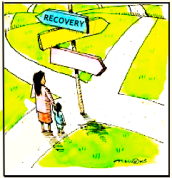
In Recovery we’re moving thru completely new territory & don’t know what’s ahead, even tho many others have gone before & paved the way. We’re used to predicting all future events based on past experience – but the past we’ve been using is mainly based on childhood trauma.

So even if we’ve had some positive adult experiences, we still rely on what’s familiar, no matter how distorted or harmful – because that feels ‘safe’. But of course it’s NOT. The well-known ‘definition’ of Insanity is: “Doing the same (stupid/wrong/sick) thing over & over, & expecting a different (better) outcome”!NEW PATH

• At first we don’t know what to expect, or even if it’s possible for us to heal. We may not even believe we can achieve our goals of having internal peace & external success.

Yet many of us are compelled to keep searching for assurance. We want/demand a blueprint, & want to know how long it’s going to take, meaning – how fast we’ll be ‘well’. We hate uncertainty – it feels chaotic & unsafe. Transitions are always uncomfortable. That’s normal!

• BUT – by definition – growth means we can’t possibly know what’s ahead – not completely. We have to be willing to risk finding out what’s possible by changing our thinking & actions, to get that illusive ‘different outcome’. As we gather new information & courage, we’re encouraged to take more steps along the path. Otherwise there’d be no reason for the effort.

• Transitions include periods of time when we have to just sit with not knowing – we can’t use the old ways but don’t yet know ourselves well enough to figure out how to be. We don’t like it, but with persistence, we become more sure of ourselves. “I know what I know” applies even in transitional stages, which can help us feel a little more grounded.

b. when learning anything new – which includes reworking the original developmental stages. (See book “Cycles of Power” + comments ~ Pamela Levin). We get confused not only for the obvious reason that it’s all new to us, but also because most of us never learned process.

We’re impatient & want our progress to be faster than is humanly possible:recovery impatience
• we think we should already know things we never learned & which our brain needs time to grow into, because repetition is what makes the change – & that takes time
• we’ve been miserable for so long we want a miracle cure, & right now!
• ACoAs rarely have a realistic sense of time – how long things actually take – we think something takes much, much longer OR no time at all

• Always remember the analogy to having physical injuries. The greater the damage to our body (& our age) – from an accident, illness or surgery – the longer it takes to heal. And if we try to use / over-use a recovering part of the body too soon – before it’s had enough time to heal – it’ll be re-traumatized.
It’s the same for emotional wounding.
Recovery work needs to be done consistently – every day – in order to see progress, AND it cannot be rushed. 12-Step Programs remind us “Progress, not perfection”.

NEXT: Confusion (Part 4b)

ACoAs & CONFUSION – as Adults (Part 3d)


PREVIOUS: ACoAs & Confusion (#3c)


ADULT Confusion (cont)
1. Confusing OURSELF 
2. Confusing OTHERS


3. OTHERS confusing US (cont)
a. IGNORE Emotions

b. INCOMPLETE responses: Others can confuse us when trying to give us info, often in the guise of help – which is only useful if it’s what we need at the time, & in a form we can use.

Vertical
– using School Levels as a metaphor
You ask someone for help or info at level 1 or 2,school levels because that’s as far as you’ve gotten about a subject / project / lesson…., but the response is given at level 3 or above.
You won’t be able to use what’s offered, & be confused or fail – if you try to apply it before you’re ready.

Anyone who responds that way is NOT actually paying attention or asking you for some context (“Where are you in your process?”). More than likely they’re in a narcissistic / co-dependent fog & just offer whatever they know, have done, or would like themselves, without considering you at all.

Horizontal confusion
Someone will try to provide what they think is a perfectly logical answer, but is actually incomplete. It’s because they’ve left out a crucial piece of info somewhere along the line (X) which they assumed you knew, but of course you do not. You know something’s missing, so you ask for clarification.

It’s so aggravating when the person says: “Well, what do you want to know?” Since you can’t possibly know that missing piece, you can only say you’re confused. If you insist they explain more thoroughly, AND they can’t or won’t – both of you will get very frustrated, & possibly quite testy!

c. OTHER ways
How we can confuse others is the same as what they can do to us (Part 3c).
Motto: “If I can’t convince you, at least I can confuse you!”

Re. THEMWe get confused when someone:
• asks for something small & then when you do it, you find out there’s more to the ‘thing’ they want (a quick ride home turns into several stops to pick up a fiend, their dry-cleaning, cigarettes….)
• injects a comment that has nothing to do with the current topic

• claims slaughing atomething is a proven fact simply because it’s a popular belief
• doesn’t ask you for enough info when assigned a task or project, & then procrastinates or makes a mess of it

• never gets to the point, only talking around a topic
• makes everything into a joke
• smiles or laughs when talking about something personally painful (childhood abuse, a death, an insult…)

• talks really fast & doesn’t take a breath, but doesn’t say anything meaningful
• tends to exaggerate, even lie, so you can never tell what’s really true
• they claim to be or do something they can never live up to
• use complex words or long explanations to express something simple

Re. US – We can get confused when someone:
• accuses you of something you didn’t do or say
• ‘comes on to you’ but has no intention of following thru (a tease)
• does the opposite of a direct request you made
• doesn’t pick up on cues you give about who you are or how you feel, so treats you as if you’re someone else (in their head)

• expects you to read their mind (know what they want)
• ignores or insults you to your face, but praises you to others (parents)
• ignores what you’re saying, leaving you wondering if you were heard
• is symbiotic, assuming you are the same as them

• is usually ‘there for you’ in some situations, but definitely not in others
• only says what they think you want to hear
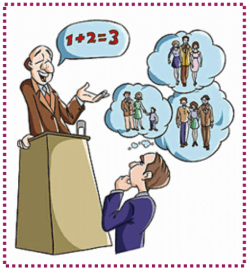
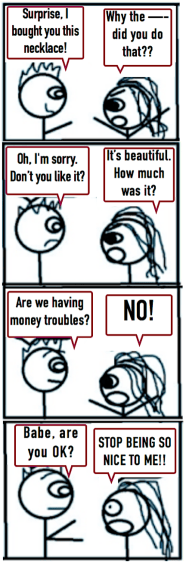
• reacts to your Adult or happy IC ego states from their PP or WIC   —> (Cartoon )
• reacts negatively to a positive or neutral statement

• repeats what you say – but in reverse (I hate holidays / Oh, you love holidays / Paint my room any color BUT brown / & then they paint the room brown )
• pretends to understand what you’re saying but doesn’t, letting you go on thinking they’re ‘connecting’
• says they’ll do something (“I’ll call you later”) but rarely or never does

• says “You know what I mean” without enough context
• twists your words / intentions against you
• uses emotions to manipulate (creating guilt, fear…)
• uses their authority to manipulate you into going against your principles or best interest ……

NOTE: Many of these can easily lead to frustration & anger! That’s normal. Remember – if you’re on the receiving end – it’s not you that’s off!

NEXT: Confusion (Part 4a)