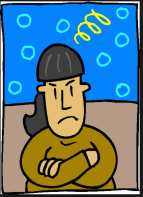
SYMPTOMS of Co-dep ANGER – in us

I DIDN’T REALIZE
the damage I’ve caused myself

PREVIOUS: Issues for Secretly-A.

SITE: ‘”Shame & Anger in Chronic Shyness”

See ACRONYM page fr abbrev.


NOTE :

• All of the characteristics listed below are most likely combined with anxiety, fear, depression &/or with a mental or physical illness, menopause, genetic inheritance ….. which can be checked out medically

• If you identify with many of the behaviors & attitudes in this post & the next (‘toward others’), they’re likely to be :
— copies of what we heard & saw growing up, since we carry an Introject in the form of the Bad Parent voice, which we use against ourself and on others
— the defensive ways we developed to cope with childhood stress

• These now express our self-hate, fear of abandonment, hidden suicidal wishes, how we placate people we’re afraid of, & try to get approval from people we’re afraid of loosing

PHYSICAL Symptoms (of co-dep anger)
CHRONIC Complaints & Ailments, including hereditary weakness which gets activated from long-term stress & rage-suppression
♜ Addictions – any type of substance or activity over-use, food sensitivity….
♜ Illnesses – real, chronic or sequential = heart problems, obesity, ulcers, constipation, headaches, back & joint stiffness or pain, frequent colds, auto-immune diseases, asthma, knot in the stomach or tightness in the throat

♜ Lethargy – trouble staying asleep, over-sleeping, drowsy at inappropriate times, always tired, feel ‘heavy’, hold body stiffly, frequent sighing, brain fog
♜ Neglect – avoid self-care & appropriate medical attention, get burnt out from over-doing for others,  can’t rest or vegg out

♜ Systemic – muscle tension, poor memory, often distracted, loss of appetite or gorging on sweets
♜ Self-Harm – nail-biting, chewing inside of mouth, picking at skin, pulling out hair, head banging, cutting, often bumping into things
«
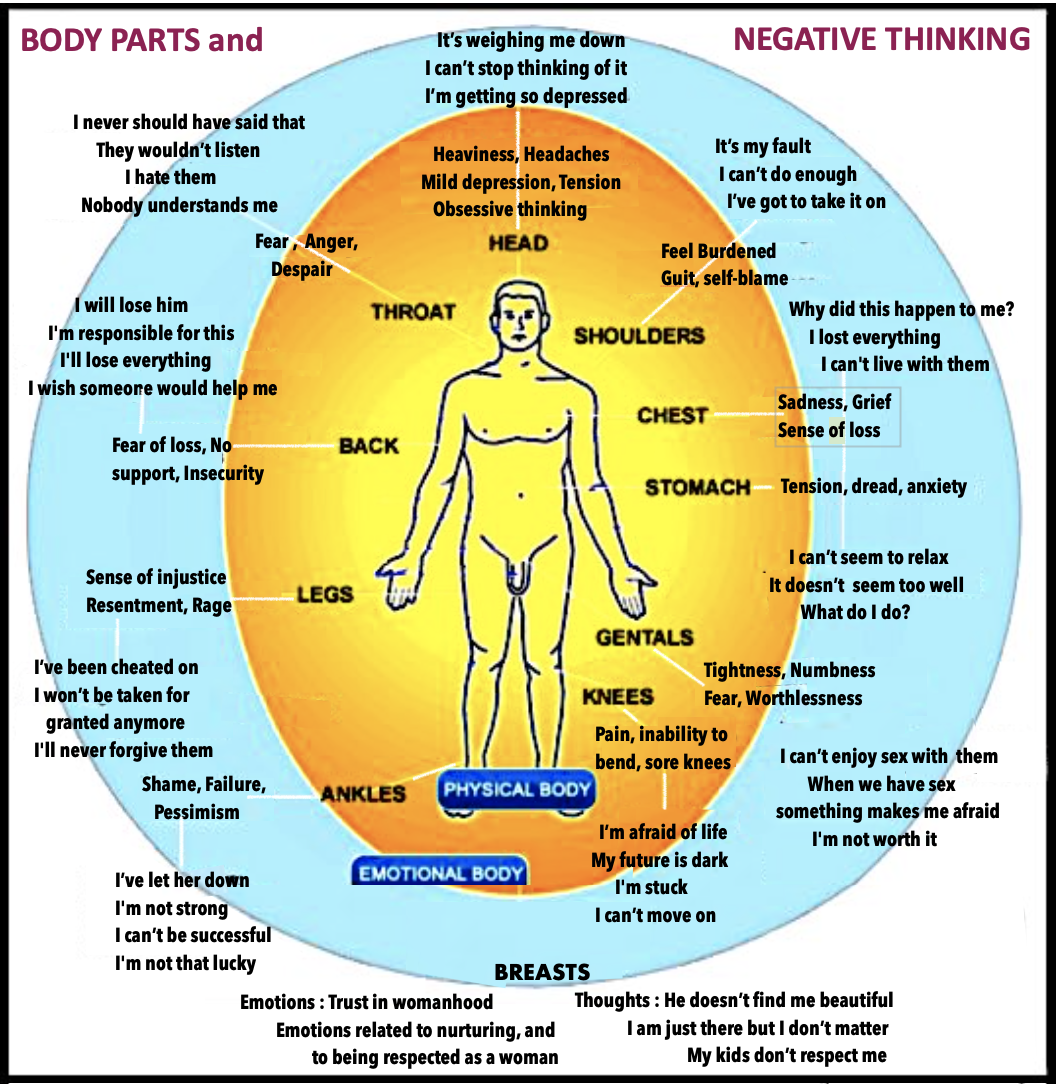
EMOTIONAL Symptoms
➤ Anxiety – panic attacks, excessive irritability, impatience, can feel sad, scared, hurt – but rarely angry, other emotions more intense from pushing down anger, obsessive worry, fear of being alone but also of being dependent (“I hate you, Don’t leave me.“- Dr. J.J.Kreisman and Hal Straus)

➤ Depression – (for no immediate or visible reason) low-grade but constant, boredom, loss of interest in things once enjoyed. Sulk, withdraw, pout, threaten or try suicide.  Exhaustion, burn-out from suppressing Es

➤ Inappropriate Affect –  Mood swings, smiling while hurting or feeling angry, laughing when telling about your abuse & neglect. Too calm – not angry but also not joyful, can have an explosive reaction that’s out of proportion. Altho’ very rare it scares others.  Are always nice to people who regularly hurt you

➤ Low self-esteem – trouble accepting yourself and others, blame self for harm that other do to you, feel unworthy of anything good, mentally beat self up all the time (rage turned inward)

➤ Superiority – feel ‘spiritual’, in control, better than – for never being angry, self-sacrificing martyr, the ‘good one’, control freak, know-it-all, everyone’s friend, helper, rescuer, center of attention

ATTITUDE Symptoms
insecure /anxious• act out self-sabotage & have a deprivation mentality
• afraid of competition & being seen as less than ‘perfect’
• are over-sensitive to criticism & afraid of any rejection
• feel misunderstood, invisible or unappreciated
• keep a stiff upper lip, act as if you don’t need support
• lack of ambition or motivation (can be depression)
let others infringe on your rights & take advantage, but then complain bitterly
• often complain about, envy & resent those more fortunate
• pretend something doesn’t matter when inside it does

COMMUNICATION Symptoms
• constantly apologize, over-polite, over-helpful, over-disclosing
• gossipy, two-faced, patronizing, sarcastic, complaining, flippant
have weak or no boundaries, afraid to say NO, both to abuse & to things you simply don’t like or want
• over-controlled/ monotone voice, or too loud & sharp, vague
• resist or have trouble talking about yourself, talk about issues/interests rather than personal thoughts & emotions

Our BEHAVIORAL Symptoms
• busy all the time to avoid emotions, minding everyone else’s business, rush from one thing to the next – OR –
• procrastinating – both for tasks imposed by others,  AND things we say we want to do for ourselves, OR
habitual lateness, unreliable, unpredictable, don’t keep your word
• financially lazy or irresponsible – under-earn, don’t focus on own talents
• visibly ambivalent, indecisive, start in one direction & then shift into another without finishing the first
• won’t plan for your financial future, worry @ $$ but hope for ‘magic fixes’

NEXT: Symptoms – hidden anger toward others

Co-Dep EXTERNAL Negatives – in US

screen-shot-2017-02-28-at-10-47-34-am
I WAS SO SURE BEING NICE
would get me liked. Not! 

PREVIOUS: Internal high cost (#2)

SITE: Co-dep in Children
• Childhood Trauma Recovery ARCHIVE

See ACRONYM page for abbrev.

The HIGH COST of being ‘too nice’ (cont.)  NEGATIVE RESULTS – in US

• You have unrealistic expectations of others
Since you think of yourself as well-meaning, you may automatically assume that others have the same good intentions. When they don’t reciprocate, you think it’s about you, or that they’re being mean, or taking you for granted. Not meeting your (unspoken) expectations feels too disappointing, easily leading to anger & resentment.  BUT it’s either your —
— faulty thinking : that everyone is just like you (symbiosis), when they may just be taking care of their own needs – instead of yours, and/or
— 
faulty choices : sticking mainly to self-centered & abusive people who have no intention of reciprocating

EXP: ACoAs have our own version of Hansel & Gretel – You’re in the forest of daily life & run into the child-eating-ogre (‘perpetrator‘). Your WIC takes over, glued to the spot, looking up innocently, with big eyes & thinks : “You wouldn’t eat me, would you madam/ mister monster?” – instead of getting away as fast as possible, the way healthy people do!

You come off as tone-deafdo not tell to smile
Over-friendly people may mean well, but it can certainly be annoying, insensitive, even rude – rubbing others the wrong way  – because it’s a form of not listening.
EXP: A woman undergoing very painful medical treatments needed physical therapy. The young male receptionist in that office was a california-cheery type (but not in CA), who always beamed “It’s so good to see you!! How are you today?!!”
Walking slowly with a cane, the patient was obviously weak & in great discomfort. She was not amused by the greeting, much less uplifted. Even if his style was genuine, it truly lacked empathy, & was his need to project sunshine even tho’ it didn’t suit the situation. Being quietly gentle or even neutrally polite would have been much more soothing.

According to the School of Life, the too-nice are guilty of 3 major errors:
1. Believing you have to agree with everyone – making you a liar
2. Handing out empty compliments – making people think you’re fake
3. Being remorselessly upbeat – suggesting you can’t ‘read’ situations correctly, if at all – because you don’t have emotional intelligence (EQ)
These make it unsafe for others to reveal their truest selves around us.

• You attract needy people
Just like ‘takers’ are your catnip, you are catnip to those even more desperate than you! Over-dramatic, clingy, controlling /demanding, whiny adult victim types will find you & try to drain you dry. They expect you to be mommy/daddy, therapist, nurse-maid, char, “butcher/ baker/candlestick maker”. And they’re manipulative, playing on your need to be needed, skilled at guilt-tripping if you don’t be-or-do what they want.
ALSO:
• You attract aggressive, demeaning treatment
Being over-friendly invites bullying from arrogant personality types, who instinctively recognize the “Kick-me” sign on your back that you don’t realize is there. They smell weakness – your insecurity, fear of loss & lack of boundaries – which energizes their sadistic need to vent their rage on others, rage toward their own weak family members who severely abandoned & disappointed them

•  You get stuck in this role
Once everyone gets used to your pattern of ‘selflessness’, it’s not only harder for you to change, but many people you know will strongly object if you do start having clear opinions & setting boundaries. It would mean they’d have to make changes too, which humans tend to resist

• You can’t do your job well
Especially as a boss, if you’re too easy & agreeable, you:
— won’t get rid of people who hurt your business or company
— won’t stop workers, suppliers & customers from taking advantage
— won’t make beneficial changes because it might ‘hurt’ someone
— can’t do great things that require forging your own way
(Stop being ‘nice’ at work)

• You can hurt others
Being too available for too long is so wearing that it leaves you with no time & energy for yourself , family or friends. If you’re dealing with needy people, whatever you give will never be enough. Without setting & holding to firm limits, & with no reciprocation or appreciation, you will eventually get fed up. Then you explode or cut them off cold turkey. This leaves the clingers confused & hurt, ‘loosing all faith in humanity’. But they just put their faith in someone who has their own ulterior motives & almost as weak boundaries as themselves.

NEXT: External negatives – in us #2

INTERNAL HIGH COST of Angry-niceness (Part 1)

P-A wifeI’M SO STRESSED OUT
& no one will help me!

PREVIOUS: Co-dep angry-nice (#2a)

BOOK: “The Book of No:
250 Ways to Say It – & Mean It, & Stop People-Pleasing Forever”
Susan Newman, PhD (book review)


INTERNAL
 High COST of angry-niceness
✔︎ Abandoned – as an adult.
To totally depend on others (especially on narcissists) to be ‘seen’ & for a sense of worth – will always leave you disappointed & even more alone. Yes, we need other people to help, encourage & validate. But self-esteem is an inside job, a combination of taking care of our WIC, growing the UNIT & relying on a Higher Power to heal our wounds.

✔︎ Addicted – Constantly depriving ourselves of needs, wants, dreams, goals…. makes the hole-in-our-soul** bigger & bigger. But since nature abhors a vacuum, we try to satisfy the longing for comfort & security with any addiction that fits our personality type. And it’s often a witch’s brew, engaging in several all at once or sequentially. If we’re constantly over-giving, we may escape by over-spending, over-eating, over-working…..
✔︎ Beleaguered (surrounded by troubles), yours & everyone else, until you just want to scream, but that’s too unacceptable, so you swallow the anger & collapse inward. Always saying “I’m sorry”- for things that are not your fault OR beyond your control, tying to placate the monsters inside & out

✔︎ Burnt out – run yourself into the ground, a workhorse – or should we say ‘work like a dog’!? BY – try to do more than everyone else
– never ask for help (including spouse & kids)
–  have outrageous expectations of yourself (perfectionism)

✔︎ Confused – “I don’t know how to____, I can’t seem to ____ // Why don’t I get any better? Why am I not appreciated? What am doing wrong? Should I have ____? Why don’t I ever get picked for ____? // I’m not sure who to listen to, who to believe. Isn’t my family right? What if my husband /wife is right about me?”…..

beleaguered

✔︎ Desperate – your frantic efforts to get your needs met in round-about ways always end up in disappointment & disaster. Sadly, no matter how much effort you put in & how determined you are, just like you can’t fix others, they can never fix you. Even so, you keep PMES starving, but refuse to feed yourself. You just get more & more desperate, often to the point of being suicidal

✔︎ Distrustful – if others do actually like you, it doesn’t count because:
– you don’t believe you’re worthwhile
– you don’t trust your own judgement as to who is sincere & who isn’t
– you idealize others, BUT are secretly sure no one is safe
– you know you’re not emotionally honest, so assume they only like your fake front
– you don’t realize others can see your good qualities, even tho’ you can’t

✔︎ False Self – that you had to develop as child – continues to get reinforced & dominates our life.  Only focusing on your outsides, waiting to be rescued / taken care of guarantees disappointment, wastes decades of your life. You miss out on drive & spontaneity, ignoring opportunities to be creative, to use your natural gifts & to accept all aspects of yourself

✔︎ Frustrated – from never getting control over others to make them be what you want, & do what you need – so you can feel safe. From trying so hard to get it right but never ‘figuring it out’. From longing for the love you don’t think you deserve or have a right to. From living in the fantasy of how thing would be, if only……

✔︎ Gilt-ridden – any time you’re less than chipper, any time you have an angry thought about someone, any time you just can’t do something you think you should or what someone else wants, any time you take a minute out for yourself, anytime someone’s angry at you, any time you’re not perfect……

✔︎ Obsessive – endlessly ‘chewing the cud’, going ’round & ’round about:
– something you did or didn’t do, that you’re sure is going to make others turn away from you in anger or disgust – OR
– about what someone said that hurt, or what they didn’t do that you wanted….. wasting time & energy trying to figure out why?
SO you can fix it & not be abandoned!

NEXT:Internal Negatives #2

BEING TOO NICE – High Cost (#1)

angry-nicenessI DON’T KNOW WHY
they’re being so mean to me!

PREVIOUS: Underpinnings, #2.


The HIGH COST of ‘too nice’

Co-dependence
is a survival strategy developed in childhood in an alcoholic or otherwise narcissistic family & community. They prevented us from developing a clear sense of our identity, so we didn’t learn how to be our own knowledgeable & loving caretaker. We may not realize we’ve taken on this ‘persona’, but a deep part of our psyche wants to please others to avoid negative reactions we’re afraid we won’t be able to bear.

Now, as physical adults – but reacting emotionally as a child – we use co-dep tactics as sneaky ways of expecting other people to fill the hole in our heart left by our unhealthy parents. Not usually aware of being angry & scared, & not believing inot with-itn ourself – we constantly look to others to tell us who we are, what we should wear, read, think, feel, study, do for a living…. even to giving us permission to exist! – because any differences threatens our WIC. We end up ‘wearing’ people’s personalities – at least when we’re with them.

This makes us vulnerable to the moods of others, as if their state if mind is a reflection on us – so if they treat us well we’re OK, but if they’re cranky, critical or just gone – we blame ourselves and feel bereft!  With weak or missing boundaries we’re everybody’s puppet, jerking an uncertain way thru life

Q: What if the one basic requirement for boundaries?
ANS: Our NEEDS! Knowing what they are, having permission to own them & then implementing as many as possible. You can’t draw a line in the sand unless you know where that line is supposed to be – which is based on your True Self.

People-pleasing
As co-dependents we are people-pleaser (P-P) – who will do anything at all, no matter how humiliating & self-destructive – to keep others attached to us. Many ‘experts’ warn that being too nice will lead to a loss of self-worth – implying we had it at sometime in the past. This may be true in some cases, but not for most ACoAs. People-pleasing is rooted in & springs out of a lack of healthy core & genuine self-esteem – to start with.

As a result of this lack, co-dep P-Ps are most easily attracted to friends & mates who are controlling, who always seem to know what’s best, & happy to tell everyone. And they want to be with us because we let them be in charge all the time. If we had at least one such parent or other important caretaker – we make the unconscious connection between love & being controlled. We think that way we’re safe & don’t have to make the effort to figure out what we want.

However, no matter how battered, each of us does have an inner voice of our own that wants to be heard. So eventually, in a long-term relationship with any controller – we can get more & more anxious, resenting the other person for always getting their way. But afraid of rejection, we may start withdrawing or become passive-aggressive, instead of leaving or being more assertive. (MORE….

Being “too nice” can backfire
a.  Others often see it as a sign of weakness & some will use it as an opportunity to take advantage of us. (More in a future post)

b. If you’re ‘too nice’, wanting social harmony at any cost, you avoid conflict as much as possible, but end up harming yourself. You’re much less willing to stand up for yourself, or say things like: “No, I don’t want that / No, I won’t do it / No that’s not what I meant….”

This avoidance creates more disruptions, since problems never get aired or resolved, & in some cases cause others harm as well!

NEXT: Being Too Nice, #1

Co-Dep Angry-Nice UNDERPINNINGS (Part 1)

love-buyingscreen-shot-2017-02-24-at-12-13-36-pmTHEY WON’T LIKE ME
unless I try a lot harderrom : New-Life

PREVIOUS: Co-dep #1

SITEQs @ Co-dep
Anger
 
False beliefs @ being angry

✒︎ 7 ways to say NO (for People-pleases)

From New Life Spirit Recovery 
Codependency is much broader than simply being involved with a substance abuser. In fact, that is a symptom, not the actual problem at all.  Codependency reflects an inner brokenness & a foundation that is people-based rather that God-based. This foundation drives a codependent to find someone or something outside of themselves to meet their deepest emotional & spiritual needs. It puts people in the place of God.” (See their list of characteristics)

Co-dependence UNDERPINNINGS (all at the same time!)
YOU ARE:
• Hero – of your own story, but not really. Your sense of importance & value is totally dependent on what you can do for others, whether they want it or not, and on how others react to you. If they respond positively, you can breathe. If they don’t – even once – you feel like the rug’s been pulled out. So you have to keep running from the monster (the Introject), to make sure you always do the right thing – for others – but never for yourself

• Jelly – inside. A quivering mass of terror & self-flagellation, always waiting for the other shoe to drop! The least little thing that goes wrong – you blame yourself – whether others hurt your feelings, or heaven-forbid you don’t know something, or make even a tiny mistake – all reasons to condemn yourself

• Mind-reader – sure you know what everyone else is thinking  – about you. Your shame & S-H ‘knows’ it’s never anything good, so you never bother to actually find out by asking, lest your suspicions prove to be true, which you couldn’t bear

• Martyr – taking on the burdens of everyone else, carrying their suffering for them (as if you actually could!), assuming they are weak & you’re so much stronger

• Secret Superman/ Wonder-woman – able to leap tall buildings with your determination to march on alone in spite of all your hardships, proving your ability to save others, while never needing any help yourself

YOU HAVE:
• Antennae – that constantly swivel back & forth towards everyone else, overly- attuned to your assessment/assumption of other people’s emotions & needs – whether accurate or not. Your focus is for external approval, rather than internal self-appreciation & fulfillment. Left to your own devices, you feel lost, purposeless, even empty

• Brakes – like on a car – but only the emergency one, keeping you locked in place, stuck in the mud of your pain, so you can’t take care of yourself. You think if you stand perfectly still you’ll be safe, but all you’re doing is trading real freedom & enjoyment for fake-protection

• A Committee – a dangerous ’round’ table in your head of warring factions – most with opposing points of view, vying for the upper hand – AND all negative. They’re so loud, you can’t find your own voice, & they drive you crazy, because you’re trying to make sense of craziness!

• Distortions – of thinking (CDs) that warp the way you see & interpret the world – thru the haze of Toxic Rules, FoA & S-H. This includes a skewed idea of Higher Power/God. ACoAs automatically assume that “God is an Alcoholic Parent”. We either:
— hate the whole ‘spirituality’ issues because God didn’t rescue us from very real childhood trauma, or
— try to earn love & acceptance by good works (people-please HP) or
— assume the ‘universe’ is against us, no matter what we do, just like it was at home

NOTE: John Bradshaw (Psychotherapist & ex-priest)said  : “Before age 7 we deify our parents. After that we parentalize our deity”.

NEXT: Co-Dep UNDERPINNINGS  (#2)

Hidden ISSUES for Angry ‘Nice’ People (Part 1)

P-A issuesAS LONG AS I’M ‘GOOD’
I’ll be OK (I 
hope!)

PREVIOUS: Intro b

SITE: Danger of Suppressing Anger

QUOTE: Unexpressed emotions will never die. They are buried alive and will come forth later in uglier ways”.  Sigmund Freud

ISSUES for “Secretly angry” people
GREAT DESIRE
• to be loved  //  to not be attacked // to not be alone or lonely

BASIC FEARSsad girl
• of self-reflection //  being abandoned //  being punished

UNDERLYING ISSUES
• feel inadequate, not entitled, self-hating, shame-bound
• not allowed to be assertive or angry, always assume rejection

WELL-BEHAVED, But ALSO:
• controlling, critical, unforgiving // indirectly cruel, attacking, vengeful
• depressed, fussy, hard to please, moody, shy, thin-skinned, withdrawn

PAY-OFFS for using defenses (ie. Negative Benefits)
1. False Weakness (see Original LL)
a. Avoid facing childhood pain
• Connecting with the pain of past & current emotional injuries makes us feel vulnerable, out of control, small & helpless. Anger is energizing – but not allowed – so we end up in constant anxiety, & don’t know why

bCreate physical pain (real or not), as substitute for #a.
• If we’re workaholic (do, do, do) and not allowed to rest / relax / have fun, we can get sick to slow us down
suffer• If we’re not allowed to be given empathy, sympathy, emotional support…. then physical ailments become a way of eliciting some of it ‘legitimately’, since they are tangible & considered acceptable, while emotional hurts can’t be seen & are often considered a weakness or ‘dramatic’
• If we’re not allowed to be/feel taken care of or to find the right kind of help, practically or psychologically, then being weak, sick, incapacitated…. can get us some attention

cContinue being mistreated & abused

• Some of us are so used to being in the victim role – which we really were as kids – that we don’t want to give it up as adults, because it would create separation anxiety from the family & our bad-parent Introject.
Being a victim is about the ‘poor MEs’, staying emotionally immature, waiting to be taken care of. While there is a lot of anger under this position, it’s not supposed to show!

dGet approval for a role
STOIC:
Not letting ourselves experience & deal with jealousy, anger, sadness, fear…. is often incorrectly considered ‘strong’, & gently admired in many parts of our society, including the religious community.  They tells us it’s not OK (weak or un-spiritual) to admit to or show unpleasant ‘negative’ emotions, especially anger. It’s called  ‘loosing it, being emotional’. 
We’re even told that all emotions ‘cloud our judgment’.
Unfortunately obeying these dictates is harmful physically & psychologically  (CHART)

DOORMAT: Being such a ‘nice’ person that you have no opinions or boundaries may make it easier on some people to be around us – especially narcissists – & superficially satisfies our WIC’s desperation to never be abandoned by others, but it insures that we abandon ourself  (MORE….”Recovering Doormat”)

2. False Strength (See Reverse  LL)
a. Superiority
• Admired – as martyr, ‘good guy’, saint, ‘spiritual’
• One-up – needing others to be needy, sick, dependent, not successful

b. Controlling
• Emotional blackmail, to keep others fearful, attached to us
• Demand our own way (always) – ‘nice’ is only superficial
• Hamper or destroy ‘loved ones’  – if they try to be free, happy, themselves

c. Punishing / manipulating
• When we, in the guise of ‘good’ GIVER (G), continually help / rescue / dominate – another person, then the Receiver/ victim/ inferior / weaker (R) must:
— have unquestioning, blind loyalty, never object or question
— always provide affection & total attention, care-take

• If the R. objects, withdraws or rebels, then:
— Giver (G) sees R. as selfish, ungrateful, abusive
— G. will punish R. overtly or covertly, attacking or withdrawing

NEXT: SYMPTOMS of Hidden Anger (#1)

Co-Dependent Anger-Niceness (Part 3)

over-giving
THEY NEED ME, THEY NEED ME!
If I can carry them, I’ll be loved

PREVIOUS: Secretly angry-nice #1

SITEArticle 1 // Article 2


KINDNESS vs Angry-NICENESS
True Kindness is a positive trait, coming from an inner place of abundance – the person having enough of their needs & wants met from their healthy family, themself & in the world. It allows them to be reasonably happy with their life, but not complacent. As a result, they can be thoughtful & generous, without needing or expecting a return.

This satisfaction translates into relating positively to others, but not a as pushover, victim or martyr. AND developing a safe support system carries them thru hard times – showers or storms  – which happen to us all.  Being a genuinely kind person is never a liability when it’s an outgrowth of personal strength, emotional stability & humanity.   nice neighbors

True Kindness is totally the opposite of co-dependence. It honors our own needs & values, expressing this to others so they know where they stand with us.
Sometimes healthy kindness is uncomfortable. Sometimes it means saying ‘No” to someone’s request or demand, because it’s not good for us, or not good for them – like not giving money to an active addict, not spending the night with a stranger, not over-doing when sick or tired….

NOTE:  Our True Self may indeed be helpful, caring & kind. And for wounded people who want to scrub off the False Self layer, with enough Recovery we who are ‘natural helpers’ can find a balance between legitimate giving & appropriate self-care.
Other personality Types can finally uncover & admit that ‘helping’ is not really their style at all – they need more privacy & solitude to fulfill healthy goals & natural talents.
ARTICLE:”For Everyone who has been called ‘Too Nice’.” Re. Positive niceness!!

Co-dependent Fake Niceness
Most people occasionally need to hide their anger behind the face of politeness –  especially when it’s the only way to protect oneself.  This is normal.
Here
we’re focusing on suppressed-anger-niceness as a way of life. It’s a defense mechanisms, one of many ways damage shows up, used to disguise unhealed wounds of the past. Childhood abandonment always leaves us with a great deal of anger, which ‘nice’ people turn in on themself. Lacking genuine self-esteem, we latch on to others so we can manipulate them into providing our many unmet needs, instead of working to develop these for ourself.

Co-Dep is an outgrowth of self-hate, which tells us that we caused our own pain, from birth – on. And according to this distorted thinking, if we caused it then we surely can cure it. This is the WIC’s sense of false power, who is convinced it can control how we’re  treated – by being extra good – no, perfect!   (opposite of Al-anon’s 3 Cs)
But all we end up doing is twisting ourself into whatever pretzel we think others want, and trying to fix people who are the least likely to change – the narcissists & addicts around us who are too self-absorbed to even see us, much less care. Neither effort ever works!

In reality we could not possibly have caused any of our early suffering, since the damaged adults who raised us were already fully formed before we arrived!  It’s not fair that we have to clean up the mess they left us with, but we do have the ability to heal much of it to better out life. Yet many people are unwilling to shed deep-seated defenses, since it would mean dealing with the original wounds that caused a need for them.

Without a strong inner core of self-esteem, clear thinking & good boundaries, hoe we interact with others is not ‘clean’. At the very least, the surface agreeableness of our angry-niceness is a pretense. At the extreme, being overly-sweet, overly-solicitous, overly-helpful hides our anger , but will come out sideways.

Actually, our carefully controlled actions are basically self-serving, because we’re only being ‘so good’ as a way of conning others into taking care of us – emotionally, psychologically – & often in all 4 PMES way. Whether or not we’re aware of our compulsive patterns is not the point. (See Part 1 re. Selfishness).too helpful

If you’re still actively Secretly-Angry, you want to be seen as a kind person, in spite of how you feel inside, because society considers that a virtue. And being desperate for positive strokes, you assume that’s what is always required & expected of you. But you’re still living in emotional deprivation, so no amount of people-pleasing will fill the void.
Then, the more you do for others, especially if there’s no acknowledgement or appreciation – the angrier you get. But ‘nice’ people aren’t supposed to get angry – so the feeling transforms into resentments.

NEXT: Co-Dep defined #2

Co-Dependent Anger-Niceness (Part 1)

too niceWHY DON’T PEOPLE APPRECIATE
how hard I work at pleasing them??

PREVIOUS: Symptoms of Angry-niceness – toward others

SITE: Being too nice – dangers in 4 areas of life

QUOTE: ” A person cannot truly be free without self-reflecting” — Hegel

POWER ISSUES
All dysfunctional thinking & behavior grows out of our personality interacting with the unhealthy parenting we were originally stuck with.

Co-dependence (‘Roles & Co-dep’ and ‘Anger & C0-dep’ posts) begins in early childhood, & rarely if ever diminishes on its own. Instead, without Recovery, it usually gets progressively more exaggerated & painful. It’s most often set up by a dominant-submissive family pattern. Only the parent(s) or other caretakers were allowed to have any power – over everything – what you did, what you thought, what you felt, what you wore….. & all the things you were not allowed.
When children’s PMES needs & emotions are ignored & punished, they grow up without knowing who they are, what their rights are & with the assumption they are not allowed to exercise personal power. (Our Rights).

Power is not a dirty word or an evil concept. It is only a negative when used to force others to do what we want, since that means it’s without their consent & against their will. (Rescuing vs. Healthy Helping)
Internal, genuine personal power is essential for healthy functioning. This is what’s missing or very weak in all secretly-angry people.
 ❤️
 Being thoughtful & kind to others, needing companionship, or even going out of our way to be helpful is NOT automatically co-dependence. Motivation is what counts. (Deserving vs. Rights)

USES: The seemingly contradictory reasons for people-pleasing is the 2-sided coin of being afraid of independence & at the same time of being dependent. Some people are more terrified of one than the other – consciously – but the 2 are so deeply connected, they both contribute to ‘over-niceness’ as a way of feeling ‘safe’. (Boundaries & ACoAs #3, re. Stayers & Leavers)fear of enmeshment

1. Fear of abandonment (FoA) (Separation) : We always feel like outsiders, longing to belong. Being over-nice is supposed to keep people attached to us, but is counter-productive since they never get to know our whole self, not just our wound-flaws but also our true beauty.

fear of abandonment2. Fear of enmeshment (FoE) (Symbiosis): We’ve been hurt & betrayed too many time, & suffocated by a needy parent. Well, we’re nobody’s fool – we’ll just stay behind our wall!
Being over-nice is supposed to prevent others from crossing our boundaries to the point of strangulation, but instead it just covers a layer of ice, creating PMES starvation. That’s because we don’t actually have boundaries, so have to use artificial protection.  (Insecure Attachment styles)

SELF-CENTERED?
If asked, most Co-dependents would swear they’re giving, caring, selfless creatures. Their True Self may be all those things & more, but Co-dependent Angry-niceness is a defense mechanism, & the motivation for all those ‘helpful’ ways actually comes from the desperate needs of the WIC to shut up the PP in our head! Not to mention that under all that sweetness lurks a volcano, dormant but deadly.(‘Rescuing)

• We’re told that we can’t love others until we love ourselves. But we were taught that’s selfish & that we don’t deserve it anyway
• We’re supposed to stop only thinking of ourselves & consider other people’s point of view – but isn’t that what we’re already doing???

So, which is it? Me or them? Selfish or self-less? Well, it both because Mental Health is always about balance (20 characteristics).

3 Forms of Selfishness (S)
a. Neutral when we do anything good for ourself, & it doesn’t involve anyone else
b. Bad – when we do interact with another in a way that seems to only benefit us, AND hurts the other – which can backfire.
c
. Good
– when we do something that we like/ love/ want – with someone else, who also benefits. (MORE… )

SO? In recovery our P-P / Co-dep hopefully diminishes, but any acting it out is the BAD kind of Selfish, because – no matter how much we con ourselves, aware or not – the wounded part of us is only interested in manipulate others into providing needs we didn’t get at home, & that we don’t believe we can provide for ourselves.

NEXT: Co-Dep angry-nice, #2

Secretly Angry “Nice” People (Intro-c)

angry inner childI DON’T LIKE
having these feelings!

PREVIOUS: Secretly-angry (Intro-a)

SITE: Emotions are NOT Bad Behavior
(What we needed as kids)


Ways we AVOID feeling anger :

PERSONAL
• Bury A. under a guise of ‘spirituality’/ good works
• Cling to bad relationships, keep everyone at arm’s length, or avoid all / isolating
• Constantly think about self-improvement, but never risk taking action
• Ignore all uncomfortable emotions // Pretend painful things haven’t happened to us or our loved ones // Ignore RED flags in others
• Live in our head, obsessing // Constantly intellectualize, analyze
• Keep all our conversations superficial, only talk about what we’re Do-íngdistancing
• Keep so busy we never stop to notice emotions
• Talk about everyone else’s business

PHYSICAL 
• Overeat /choose sugary & fatty foods
• Any compulsive behavior (internet, smoking, sex, exercise, shopping, gambling …..) that distracts & numbs us
• Chronic/ auto-immune illnesses, that keep us weak & debilitated
• Excessive use of alcohol, recreational or prescription drugs
• Tight muscles causing headaches, back spasms, shoulder pain, teeth grinding….

HIDDEN ANGER & ANXIETY
Anger
– like other Es – can be caused by many different internal & external circumstance (10 posts), in some cases can be an appropriate emotional response to various kinds of harm, & in others cases an over-reaction to a current event that triggers unhealed childhood wounds.

Fear is the survival emotion we feel in our nerves & gut when actually in a dangerous situation, like being high up somewhere, being yelled at or slapped, suddenly get a serious illness, in a car accident, being fired…..fight/flight

Anxiety
— future oriented: 
It’s what we feel leading up to a (real or imagined) dangerous, stressful or threatening situation – like anticipating going to the dentist, waiting to see the boss, in line at the airport…. And some people are born with a particularly sensitive nervous system, predisposing them to be more intensely affected by stressors, especially as children

— past oriented: It’s the suppressed psychic energy of rage & terror from years of living in chaotic, dangerous environments, which is now stuck in our body. This  backlog then fuels the fearful thoughts that are behind so much of our present-day worry. So we can connect Anger & Anxiety, 2 sides of the same coin, even tho’ on the surface they seem contradictory, because Anxiety is usually associated with fear, which can make us timid (Flight), while Anger tends to temporarily energize, fueling actions & reactions (Fight).

INTERESTING: Anxiety is far from a new concept. In the 4th century BC, Hippocrates wrote that anxiousness is “a difficult disease. The patient thinks he has something like a thorn, something pricking him in his viscera, and nausea torments him.”

EXPs of the anger-anxiety connection
• Irritation: 
Being anxious all the time can make us annoyed & miserable (“Don’t bother me!”), which can lead to more frustration & anger

Overwhelmed : the anxiety of having too much on our plate, with little or no  help, & already feeling inadequate – can eventually turn to hopeless-silent-anger, at ourselves or at others, or both

Loss of Control
: Being out of control for a long time is very painful & draining. But having to suppress our rage about it for many years creates its own anxiety – making us scared of ‘loosing it’, of not being able to hold it all down – because if were to let the rage out it might severely hurt others

Blaming: 
Continually being in unhealthy relationships leaves us with plenty of anger. If it’s unsafe to admit or expres it, it gets turned in on ourselves as S-H. When this becomes too great to bear, it gets projected out onto the world – usually towards everyone except the ones who originally injured us – passing blame for our woes onto others as a way of explaining the anxiety.

NEXT: Issues for angry-nice people #1

Secretly Angry “Nice” People (Intro-a)

secretly nice -1I ALWAYS HAVE TO ACT NICE
to hide how angry I really am

PREVIOUS: Multiple Intelligences #3e

POST: What about Anger?”


REVIEW
Our culture does not support, tolerate or excuse expressing anger in obvious ways – except when participating in or watching sports, or being drunk! Oh right, the BIRDS can be angry – but not humans! One reason is that most people assume there’s only one way to let it out – explosively, dangerously – which of course scares other people, since it can be physically & emotionally unsafe.
But it’s not the only way (“Ways to react” posts).

Since everyone was born with the ability to feel anger (A.), just as we have the natural capacity to experience all the other Es – in varying degrees – each of us figures out how to deal with it, based on our personal tendencies & what we copied or learned as kids.

BTW : The Enneagram triad GUT numbers▼ related to Anger are #8, 9 & 1, Each expresses anger & aggression in a nuanced way :
#8 – it’s externalized, acting automatically, & when pushed – reacts blindingly fast
— angry 8s will think in caricatures or temporarily blank out (9 levels)
#9 – repress A., processing it unconsciously, ignore it by idealizing everything
— repressed 9s tend to get mentally fuzzy, or go into long ramblings (9 levels)
#1- use the superego to represses it, then it comes out as being righteous
— compulsive 1s tends to think only in black & white (9 levels)

In our society, A. is usually called a ‘negative’* emotion – even by the best regarded teachers, writers & therapists. This is wrong!
This misnomer comes from NOT separating the TEA components:
❤️ The Emotion itself (physical energy & information about our environment), vs.
💀 the way we frame it in our Thinking (acceptable or unacceptable), vs.
✍🏽 how we Act on it – Positively or Negatively.

*The EMOTION of Anger itself should never be designated as a negative! It is not only blatantly inaccurate to do so, but does it a great injustice – because A. gives vital information about bad things happening to us or around us. NO emotion is negative, only harmful thoughts & actions are! Anger is a necessary & appropriate reaction to 3 main things:
✔︎ being scared, being frustrated & being hurt (such as threatened, ignored, disrespected….). (see T.E.A. // ‘Feelings aren’t facts’ )

★ And anger is a healthy response to any abuse & deprivation of very real needs (attention, safety, respect, love, freedom, encouragement, comfort….)

Normally, Anger can be:
• an immediate response to a particular situation, or
• gradually built up from a series of real or perceived injustices or threats, or
• a slow escalation from long-term abuse, neglect, or being treated unfairly

Emotionally HEALTHY Nice People have good self-esteem. They are:
• direct, clear & positive in communication & behavior
• happy, self-assured, assertive, confident, relaxed, easy
• well-behaved, socially appropriate, well-mannered, generous
• thoughtful, helpful, kind, loyal, respectful, sensitive to others

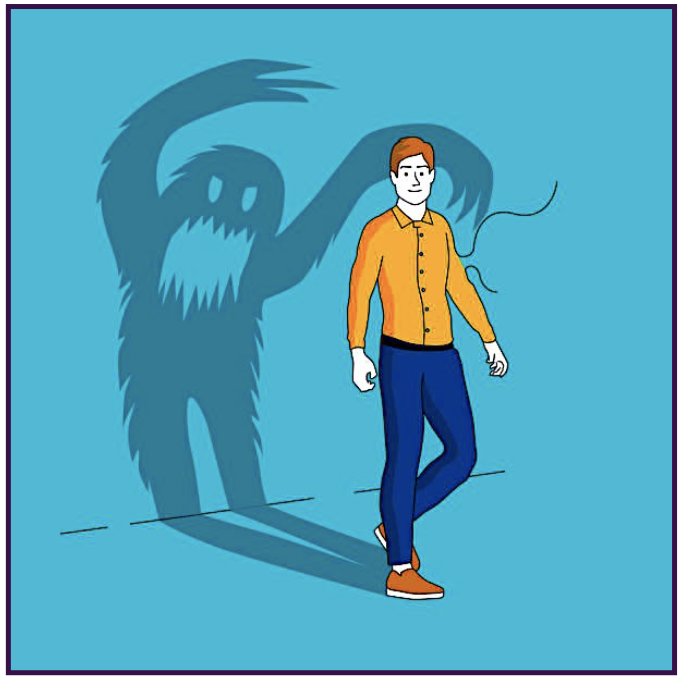
But when someone doesn’t have any safe outlet for their anger, it will go underground. It becomes a part of our ‘Shadow“,  (aspects of ourselves we find unacceptable) so we reject & push the anger into the unconscious.
However, the emotion never goes away on its own – until it’s expressed in safe ways and by fixing the causes, if possible. Instead, it stays locked in our muscles, ligaments, organs & auras. (See ‘Symptoms)
Over time, this trapped energy will become too big to be contained & will end up coming out sideways!

Freud once likened anger to the smoke in an old-fashioned wood-burning stove: Normally, the smoke goes up the chimney, safely away. But if this is blocked up, the smoke will leak out – thru the grate, under the door, thru the vents…. choking everyone in the house. It needs to be cleaned out. But if all avenues of escape stay blocked, the fire will eventually go out, making the stove useless.

In the same way, blocking up the natural flow of our anger-energy becomes harmful to self and others. If we shut it down for too long, it puts out our internal fire, & makes us ineffective. We need a safe outlet for all emotions.

NEXT: Secretly angry nice people (Intro-b)