Enneagram – BASICS (Part 3)

ennea people
I
’M SO CONFUSED!
there’s too much to know

PREVIOUS: Ennea Basics (#3)

SITEs: Re. Wings & Arrows’ 
Enneagram Dimensions  MANY Articles

BOOK : “Are You My Type, Am I Yours?, Relationships Made Easy Through the Enneagram” ~ Renee Baron & Elizabeth Wagele

We can say the Enneagram is:
♦︎ a mirror, reflecting the truth of who we really are
♦︎ a map, guiding us toward growth and liberation
♦︎ a catalyst, speeding our journey of self-knowledge & transcendence.

• Although everyone has some aspects of all 9 numbers, we are each born as one basic type, with the others operating in the background to drawn from throughout our life.
Based on this foundation we then develop a ‘passion / fixation / weakness’ as a reaction to our earliest experiences. This problem attitude governs our outlook & behavior until modified or corrected.

OUTLINE of Enneagram Symbol parts
The information & internal connections between the numbers of the Enneagram are complex & subtle. In addition to the meaning of each Type, there are many other things to look for. 

TRIADS There are several kinds, & this is not a complete list:
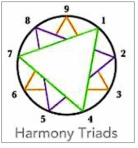
✤ Core Centers tells us each group’s main goal. Each has its own intensity, emotional focus & physical center:
2, 3, 4 = Heart & Love-Shame
5, 6, 7 = Head & Fear-Anxiety
8, 9, 1 = Gut & Anger-Rage

✤ Harmonics: 4s, 6s, & 8s are Reactive / 2s, 7s & 9s Have a Positive Outlook / 1s, 3s & 5s focus on Competency

✤ Importance: 1s, 4s & 7s feel Smaller than the world  / 3s, 6s & 9s adjust themselves to the world  /  2s, 5s & 8s feel Bigger than the world
✤ Instinctual Sub-types are how they function best in the world – Social, Self-preservation & Sexual/Intimate, each Type expressing all three in their own way

✤ Object Relations connections: 3s, 6s & 9s Attach (join) / 1s, 4s & 7s Frustrate (are ambivalent) /  2s, 5s & 8s Reject (push against)

✤ Social ‘Movement’ (interaction), instinctive style: 2s, 6s & 7s go Toward others / 4s, 5s, 9s move away from others / 1s, 3s & 8s go against others

ARROWS – The six-pointed figure showed the relationships between the steps in the process
EXP: Step 1 is influenced by steps 4 & 7 via connecting lines. Each Type relates to 2 other numbers, at the opposite end of their connecting lines, usually at the far side of the circle.
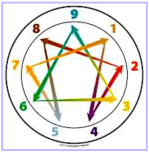
— When we’re relaxed, one of these numbers enhances us, as we add some of those positive qualities to our
— When we’re stressed the other weakens us, as we add some of those negative qualities to our native style.

DESIRES & FEARS – Each type is drive to gain their Heart’s desire & to avoid – at all costs – their greatest fear. People living at the lower Psychological Levels are run by their fear & sadly their dysfunction coping mechanisms often increase it. As one moves up to higher levels, the Desire begins to be the stronger motivator for our actions & interactions with others.

LEVELS – each Type will also be expressed in 9 psychological levels, from most damaged to healthiest. While the goal is to improve oneself, the levels do not automatically imply moving upward, and not everyone starts out from the lower 3. Most people live in the middle 3 – the ‘Average’ range – & some are able to function in the top 3.

STRENGTHS & WEAKNESSES – Each Type is most easily defined by their “Passion” or negative defense, & their whole life is built around it. EXP: the 3’s Flaw/ Vice is Deceit, the 9’s is Sloth…. The goal is to grow into our Type’s highest potential, the positive version of your number
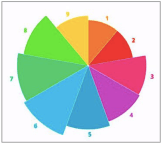
WINGS – These are the numbers on each side of every Type & we tend to choose one or the other to modify our own.
EXP: We can be a 1 with a 9 wing (1w9) or a 1 with a 2 wing (1w2)…. Each has a ‘title’ & allows for easier connections to people of that adjacent Type, who they may not otherwise understand or get along with.
EXP: Type 8 (intense, easily angered, dominant) is extremely different from a #7 (lighthearted, rarely serious, irresponsible), so the 8 with a 7 wing (8w7) is lighter, & can can get along with a 7w8 reasonably well since many traits overlap. (WINGS….)

NEXT: Enneagram Intro #4
“KEEP the FOCUS on YOURSELF” means? (Part 2)

Screen Shot 2016-01-17 at 7.11.01 PM
PREVIOUS: KFY (Part 1)

POST:  Healthy Helping


1. KFY is NOT a justification for our narcissism!
(cont.)  
Review Part 1

2. KFY may mean FACING the pain that YOU:
• had a traumatic childhood you’re afraid to admit & deal with
• know it’s time to let go of some illusions, but are still hoping
• don’t like yourself very much, altho you’re ‘supposed to’
• feel like your life is way out of control, but don’t know how to fix it
• want to take risks, but sure you’ll make mistakes or be rejected
• think your friends only like you because you do so much for them
THAT you :
• hate your job, but afraid to change, holding on until retirement
• hate salads, even though you eat one every day for lunch
• want a divorce, but are afraid to leave & be alonesad woman
• want to change but don’t know how.
Your life is a mess.

It could also mean YOU’RE:
• depressed, & have been for decades
• exhausted from anxiety, even though it doesn’t seem you’ve done much today
• ‘supposed’ to love parent/ mate/ child/ friend…. but don’t (or not anymore)
• terrified of commitment, but also terribly lonely
• not getting any younger, & have so many regrets……
Adapted from Karen R Koenig

“Keep the Focus on Yourself” requires positive Self-honesty :
It’s about always looking for & admitting OUR motives & emotions that propel our thoughts & actions! (without shame, guilt or S-H).
They may come from the WIC, Bad Parent OR – UNIT.
So they’re not always negative. We can legitimately have ok motives, (not co-dependent), which must include our own needs & values

WAYS to KFY
a. Mind your own business
KFY is mainly about staying out of other people’s lives (fixing, Rescuing other adults) – no matter how dysfunctional they may be, how much we think we can help them, AND no matter how much we love them.
In almost all cases, they’ve had many opportunities to get the help we think they need, but ignored or blatantly rejected every one. Stay on your side of the fence.

EXP – Unhealthy: A mother is ‘hele-hovering’ over her daughters’ actions & feelings because she feels guilty for the girl’s problems (not mainly from loving her & wanting her best)

b. Be your own Motivator
Make decisions, choices & take actions based on who you are – your needs.
ACoAs, Co-Deps & addicts use other people, substances or circumstances to give us a reason to function – or an excuse to withdraw from life. We work, go, help, risk…. only long as it’s for someone / thing outside of ourself.

However, we DO have many of the skills needed to run our own life! We must use them to take care of ourselves first, before thinking of others.
EXP – Healthy: “I took that difficult course to learn more about my career & improve my performance” (not self-motivationto please my boss or make myself look good)

c. Be Responsible for yourself
Identify our Toxic Beliefs, & work on correcting them, so we can be in charge of ourselves & our actions in the world. We don’t have the right to expect anyone else to do that for us – our whole life can pass by waiting for that.

Even if we find someone who would, it always comes with a high price – being controlled, kept immature, prevented from healing & expressing our potential.
EXP – 1/2 &1/2 : “I wanted that bigger car because it makes me feel important” (not just because my wife liked it)

d. Listen To Your Gut
Trust the True-Self Inner Voice. There’s a difference between being jerked around by our PP or WIC’s emotions & obsessions, steeped in anxiety from obeying and also trying to resist the Toxic Rules -vs- information provided by our Core self

It’s that still small feeling in the center of our body that won’t go away – telling us when somethings right or wrong for us. Trust “I know what I know”. Once we get quiet inside (low anxiety) we can hear it. We’ll be surprised how accurate it can turn out to be
EXP – Healthy : “I stopped being friends with that woman because I kept getting that ‘ICK’ feeling in my gut whenever we talked” (even though we had a lot in common).

NEXT: KFY #3

“KEEP the FOCUS on YOURSELF” means? (Part 1)


I HAVE TO TRAIN MYSELF
to be self-aware!

PREVIOUS:
 Confident People #6

SITE: “(Not) Keeping the focus on myself” ~Al-Anon


REVIEW: “Keep the Focus on Yourself” (KFY)
Many sources say to be mentally / emotionally mature we need to be responsible for our own TEAs (thoughts, emotions, actions). This is confusing for ACoAs, because on the one hand:
• we were taught by family & religion NOT to notice our own needs, tastes, ideas, values… only focus on others, which means we’re can’t KFY
AND on the other hand —
• ACoAs take on too much responsibility, for things others are doing or have done (abuse, neglect, carelessness, selfishness….), as well as blaming ourselves for imperfections (limitations, lack of knowledge, mistakes, EVEN good things like emotions, ambition, normal human needs….)

SO, no matter how intelligent or accomplished, without Recovery growth, many ACoAs actually don’t know what KFY means or how to do it. We’re all familiar with the PP’s poisonous voice whispering: “Who do you think you are?”

But that’s exactly the point: In order to KFY, we have to know who & what WE ARE!
But since we didn’t develop that as kids, we have to work on it now – every day. With persistence, eventually it does become the new normal

NOTE: The key to KFY is telling the truth about what motivates our thoughts & actions, which comes from the freedom to BE & express True Self. EXP:
“I’m upset because I’m disappointed …..” said without anger
” I yelled because I’m really scared…. “, without excuse or justification

EXP of not KFY 
Joey forgot to bring home the milk Sarah asked for. She gets angry & calls him a few choice names. The REAL reason she’s angry is not that they need the milk so badly, but she interprets his neglect (T) as meaning that Joey doesn’t consider her important – as a person.
That leads to feeling hurt (F), but she doesn’t say that. it’s easier to attack than be vulnecontrollingrable

KFY is NOT a justification for our narcissism!
It’s NOT:
• saying things like “I think that you should____, If I were you I would/ wouldn’t____” & then proceed to tell someone who we think they are, what they should do or think…. instead of finding out who they actually are, what they want, what they’ve already tried….

• expecting / demanding that others fulfill our needs, just because “I want it” – without considering if they want to help, what state they’re in, if they’re available, what they’re legitimately capable of, what’s appropriate to ask of others….
It’s NOT:
• an opportunity to attack, dismiss /negate or point a finger at others & then excuse it by saying: “It’s just my opinion”
• manipulating others to take care of us, because we don’t want to do it for ourselves
• doing whatever we feel like (jerk others around, lie, attack, be insensitive, undependable, withholding…..), because we’re afraid of being controlled, or want to get back at the whole world for what our family Screen Shot 2016-01-17 at 7.03.27 PMdid to us
It’s NOT:
• convincing someone to go out of their way for us & then change plans at the very last-minute, just because we have something better to do or just don’t feel like it
• use other people to get what we want, to get ahead, to vent our rage
• trying to get someone to be/do what WE want – so we don’t have to deal with ourselves

Al-Anon’s “Courage to Change”, (pg. 29 ):
“I am learning to be honest with myself. I will not use my Recovery as an excuse to justify my efforts to change other people’s thinking.
Trying to control others only gets me in trouble. Instead, I will promptly admit such mistakes & put my energy back where it belongs – by focusing on myladder to heartself.”

NEITHER would “Keeping the focus on Yourself” mean we’re :
• selfish & arrogant, because it takes attention away from ‘them’ (the narcs)
• disobedient when we KFY, because we were taught to only think what ‘they’ tell us to

NEXT: KFY (Part 2)

Being CONFIDENT (Part 6)

IC confidencePREVIOUS: Confident #5

QUOTES: “To wish you were someone else is a waste of the person you are.” ∼ Meelia121
• “Confidence, like art, never comes from knowing all the answers. It comes from being open to all the questions.” ~ Earl Gray Stevens,
UK peer

REMINDER: Do NOT let yourself get overwhelmed by this 6-part list. It’s meant to be a guide, qualities to work towards. Acknowledge when you have expressed a little of any one of these in your daily life, & remind your Inner Child of your progress!

CONFIDENT People (cont)
are free to assume 
“Why not?, Why not me?” True confidence allows people to have access to many PPT, with the right to ask for & get a piece of whatever’s available in their environment – but done fairly & legitimately. They create networks & relationships, often quietly behind the scenes. They choose their own path instead of following the most used one

☼ They know there’s ‘enough for everyone’ (attention, connection, recognition, love….), so they don’t have to wait endlessly for permission to express their ideas or get what they’ve earned – to be acknowledged, chosen, ‘discovered’, given info, helped, hired, promoted….

are shrewd
(clever, crafty – not sneaky). Being practical, savvy & having good judgement creates self-confidence, gives them an edge. They know when to keep going, & when to step away from a situation.
They’re often good at quickly sizing up others, figuring out social hierarchies & potential hot buttons. When they combine being clever with wisdom, they can get a lot accomplished without stepping on toes.

BTW: Crafty means taking an existing idea & turning it into something new, exciting & dynamic, or coming up with fresh ideas at a moments notice, & able to deal with stress in ways most others would never think of doing

 are accepting & respectful. Confident people are often the most accepting of others no matter their shortcomings – even when they don’t like someone – because they respect themselves & know that all humans are part of a larger whole. They can because they:
> know & own their own weaknesses, so don’t judge others
> understand everyone’s different, with their own process
> don’t need others to be a certain way to feel safe
> realize they don’t have the power to change others
➼ They try to live by: “I will do unto others as I would want them to do unto me & my loved ones.”

THEY
trust their judgment.
Instead of focusing on trusting others, they rely on their experience & observations to identify who’s safe & who’s not. They rarely second-guess themselves, because they know their rights as human beings, as well as their personal tastes & opinions

celebrate their successes, & those of others. They’re proud of their accomplishment & appreciate any ‘good luck’ that comes their way. Even when they ‘lose’ to someone (fairly), they’re truly happy when others do well, especially loved ones, because it allows them to be surrounded by accomplished & happy people. So they don’t mind when the spotlight shines on others.
🌈
THOUGHTS: Confidence is one of the most attractive & powerful traits we can have – when it’s grounded in self-esteem & respect for others. People are drawn to those who are comfortable with themselves.
• Confidence does not automatically come from genius or beauty, but by the way we think & feel about ourselves & the world. That means anyone can become confident. (YOU too!)

• Confident people search out & make use of all the resources available in their world to improve life for themselves & others

• Confident people are not ‘up’ all the time, which would be unhealthy & unrealistic. When they’re ‘down’, stressed, confused or it won’t be forever :
> they’re able to find a way under, over or around the discomfort, either by themselves or with help
> they can balance Emotions with realistic Thinking, not ignoring either side

NO ONE has all these positive characteristics – at least not 100% each. Confident people will have many of them – but in varying proportions, with some showing up early in their life, others not until much later.
REMEMBER: Progress, not perfection!

NEXT: Keep the Focus on Yourself, #1

Being CONFIDENT (Part 5)

GENUINE, HEALTHY CONFIDENCE
is an expression of self-esteem

PREVIOUS: Being confident (Part 4)

SITE: ‘Creating Confidence

QUOTES: “Don’t waste your energy trying to change opinions … Do your thing, and don’t care if they like it.”∼Tina Fey

⭐︎ “A diamond doesn’t start out polished and shining. It once was nothing special, but with enough pressure and time, becomes spectacular” ∼ Solange Nicole

REMINDER: Do NOT let yourself get overwhelmed by this 6-part list. It’s meant to be a guide, qualities to work towards. To look at the cup half full – or more – notice & then acknowledge when you have expressed a little of any one of these in your daily life. Then give yourself a pat on the back, & remind your Inner Child of your progress!

CONFIDENT People (cont)
Screen Shot 2015-10-03 at 10.41.41 PM stand out in a crowd. They tend to be more successful in life, have better personal relationship & perform better at school or at work

aren’t afraid to look silly. They don’t mind being seen when they’re not at their best. Occasionally “looking bad” makes them more human & accessible. They don’t try to be 100% a 100% of the time.
They can be unprepared, caught off guard, the butt of a joke, having a bad hair day, or find that the equipment isn’t working for a presentation – without becoming self-conscious or awkward.
They may be able to quietly ‘fix’ the problem, get help or just go with the flow, depending on the circumstance.

☼ Confident people have a good sense of humor, about themselves & life in general, so even if they can’t tell a joke to save their lives, they can appreciate the irony in everyday events. Being genuine & unpretentious encourages other people to laugh with them, not at them

THEY:
avoid self-promotion. Positive self-assurance permits genuine modesty / humility. They’re not as bothered (as insecure people) if they don’t get all the credit for their ideas or hard work. Braggers are insecure & lack self-respect, who secretly think “Please notice me & tell me I’m special”.

Confident pwith friendseople know what they’re capable of – or not – & their actions speak for them. They enjoy being acknowledged, admired, lauded, respected…. because they’re comfortable with who they are & what they’ve achieved. But they don’t need the glory from others, since true validation is an inside job

don’t need approval from the whole world. A professional & social network of hundreds, even thousands may have some business advantages, but don’t contribute to self-esteem.
Confident people would rather have the respect & trust of a handful of people they consider important.

Where ever they go or what they try, those who truly matter believe in them & are consistently supportive, whether at home, at work or in public.

don’t gossip, envy or compare. They can keep confidences (+), & don’t want to participate in rag-fests (-), not having a need to be one-up to anyone. They don’t compare themselves to others, or others to each other. Each person is unique, with their own personality & experiences. Al-Anon says to not “compare & despair”.
They rarely focus on envy or jealousy, (which is intensified by comparisons), because they’re empowered by achieving their own goals. For confident people, what others are or have is ‘none of their business’.

THEY:
appreciate compliments. Allowing oneself to receive, graciously & with appreciation, is a sign of solid self-esteem. Knowing their abilities & value, they don’t need to minimize or reject expressions of honor & validation from others, freely given. It lets other have the joy of giving, as well.

This self-knowledge also helps distinguish between compliments that are genuine, & those that are manipulative & controlling.
EXP: “Thanks, I really worked hard on that ____. I’m pleased you recognize my efforts.”

are thankful & don’t complain. They keep in mind all the benefits & blessings they DO have, & work toward what they still lack or desire – if it’s possible. They acknowledge, appreciate AND enjoy what’s available, which generates inner peace.

NEXT: Conficence #6

Being CONFIDENT (Part 3)

LET’S SEE, I’M A:
boss, parent, extrovert, learner….

PREVIOUS:  Being Confident (#2)

QUOTEs:
“The only person you should try to be better than – is the person you were yesterday” ~Anon
⭐︎
“Being comfortable with who you are is the ultimate threat.”∼ Sean Beaudoin

REMINDERDo NOT let yourself get overwhelmed by this 6-part list. It’s meant to be a guide, qualities to work towards. Acknowledge when you have expressed a little of any one of these in your daily life. Give yourself a pat on the back, & remind your Inner Child of your progress!

CONFIDENT People (cont):
use positive language. “Up” words reinforce a confident image, talking positively about their life or their environment. In social situations they avoid foisting their problems on others, keeping complaints & criticism to a minimum, since it’s not useful in most relationships.
— When meeting new people they’re not shy about leading with a personal introduction, which underscores respect for themselves, & signals that what they have to say is worth listening to

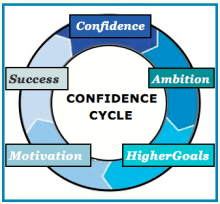
stick to their principles. They know what they believe in, & are willing to confidence cyclestand up for those beliefs (silently or out loud), even when in the minority.
They maintain personal integrity by doing what they believe to be correct, whether others encourage or mock them. It’s about doing the right thing for the right reason, even when no one is watching.
SAYING: “If you don’t stand for something, you will fall for anything.”

THEY:
are ambitious & competitive. It’s one of their main traits, but not used to step on / over others.  They know what they want, easily define their goals, &  persistently work toward them. They love to test their skill & ability to handle demanding situations against the best efforts of others, because they believe they win, even if they ‘lose’.

use alone-time ‘wisely’. They’re not often lonely when no one is around. They may use free time to process recent events, work on a hobby, do a spiritual practice, converse with their Inner Child,  be in nature, or just enjoy being quiet & peaceful. If they need to hide out or isolate, to recover from an illness or great stressor, they make the time. And it’s temporary.

are determined & hard-working. They know their goals are their own & are worth pursuing, so they won’t abandon them, even if they have to be delayed or sometimes seem impossible.
They believe it’s better to try & fail, & continue trying, than to give up and let doubt take over. They know the best path to reaching their goals is to put in a sustained effort, no matter how difficult or tiring. Hard-working people are confident, and confident people are hard-working. It’s a chicken-egg thing. But they also know when to rest!

THEY:
accept change & delay. It is said that “Change is the only constant.” While confident people may not always like the changes they have to deal with, they accept the necessary one (that they have lille or no control over) and do their best to go with the flow. ALSO, they can manage the frustration of waiting for things to unfold, knowing that some things take longer than others. “Delay is OK”

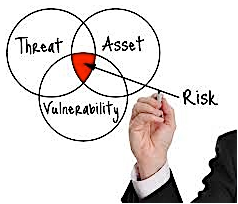
take responsible risks. They are able to take reasonable / realistic risks because they’re not afraid to lose or to be wrong. While confident in their abilities, they’ve also have learned that nobody wins them all, but they do have a good chance to win some otriskingher time or in a different situation. They’re willing to go the extra mile, but know the difference between a gamble and a risk, so they’re not foolhardy nor act impulsively.

☼ They always try to minimize potential dangers to themselves & others by making informed choices among available options, & consider the pros & cons of possible outcomes. They prepare as much as they can, & then take whatever actions they feel are worth the possible benefit they’re aiming for. Gaining enough benefits in life makes the occasional loss bearable.

NEXT: Confident People (Part 4)

Double BINDS – Verbalizing (Part 8a)

say what you mean SAY WHAT YOU MEAN
but don’t say it mean!

PREVIOUS: Double Binds (# 7)

SITEs: Escaping from the BD
“Double Bind Insults”


❤️ SPEAK UP about the Double Bind (DB), because “You’re only as sick as your secrets.” (Al-Anon). DBs can only control us as long as we deliberately ignore our own contradictory beliefs and their contradictory messages (loyalty to toxic family, not trusting our perceptions….), or keep them out of unconsciousness altogether.

🗝 LANGUAGE components help us become aware of embedded “thought viruses” in communication distortions, (Chart in #6a). To stand up to internal or external D. Messages which put is in a D. Bind, we need to know something about the way people express themselves.
✅ Congruent communication – (matching)
All parts of the communication are consistent, agree with each other, fit together, make sense.
But if what you’re ‘Receiving’ is not self-congruent, make sure you do not participate in the S‘s game of control, so you can point it out the best you can
(Communication outlined – many types)

Meaning
Listen for obvious or subtle contradictions in what someone says – or you say to yourself – often in the form of CDs.
Where’s the focus? Is the speaker – or you – talking about Thoughts, Emotions, or Actions?
Do the statements make sense? Are there obvious & hidden meanings?
EXP : What’s being implied when someone says “Even Jimmy got an A on that test!”?

 Levels
The function of each level of meaning is to synthesize, organize & direct the interactions on the level below it (ANIMAL – higher, vs cat // Forrest vs tree). Processes on a behavior level are different than those on a mental level.
EXP: Tying someone up would stop them from physically taking revenge, but not from continuing to plan it. In fact, it will often
encourage it. (MORE….)

Learn to discriminate between messages directed to different levels of experience, which automatically helps distinguish different levels of distortion (DMs, #1)
EXP of LEVELS, from highest to lowest
(1) identity (2) beliefs & values (3) capabilities (4) behavior (5) environment (6) spiritual = a type of ‘relational field’ that forms a sense of being part of a larger system beyond one’s individual identity.
EXP: “It’s a sin to lie” (2)
but “Don’t tell dad what I bought today” (4 or 6) = implied lying.

Meta-messages – a special type of communication, info provided that can be unspoken but always implied, which the R picks up on but can’t prove.
These come in the form of non-verbal signals – tone of voice, body language, vocal sounds (sigh, grunt…) or facial expressions – which contradict the spoken words (incongruent), sending a D.Message

Notice the small visible changes in unspoken cues when someone’s talking (a frown, inappropriate smile or voice tone, clenched fists, stiff posture …)
IF they’re at odds with the words being spoken. EXP: ACoAs are notorious for telling horrific childhood events while smiling, even laughing!

Paying attention can help identify mixed messages by tracking & sorting various types of verbal conflicts. It will free us to respond differently to Metas that confuse, reducing the power of the DB, & possibly allowing us to give the other person feedback, if desired & appropriate.

ALCOHOLIC RULES: don’t THINK, don’t FEEL, don’t TALK
ACoAs stay trapped in DBs when we hide our fear – from shame, S-H & feeling crazy, assuming others will laugh at or belittle us, cut us off…..

Instead, questioning our beliefs & talking about them weakens the hold DBs have over us.
We can’t afford to let fear & shame stop us! Rather than being lonely & passive victims, speaking THE ‘truth’ (not just our personal beliefs) lets us actively help ourselves, by not isolating with our emotional pain & mental confusion.

• Given the nature of D. Binds, it’s absolutely appropriate & necessary to need other people’ perspective to help us sort out the mess – those few we know to be safe & not caught up in the dilemma we’re fighting to escape. At the very least they can provide company & encouragement! “A burden shared is a burden halved.”

NEXT: DBs – Verbalizing (Part 8b)

Double BINDS – STAYING AWAKE (Part 6a)


IF I’M GOING TO GET MYSELF FREE

I’m going to have to pay close attention

PREVIOUS: Double Binds (Part 5b)

BOOK: “Switch: How to Change Things When Change Is Hard” ~ Chip & Dan Heath (review…..)

GETTING STARTED
D. Binds, created by D. Messages, are like being called over to someone who is crooking their index finger, meaning “Come to me, my darling,” – but when you get there they slap your face.
Or being told, “Darling, tell me how you feel,” but then when you do, they sarcastically sneer that you’re being dramatic, hateful, over-sensitive, crazy, ridiculous, immature…. (More…..)

📣 IMPERATIVE : We can not afford to mentally blank out when dealing with controlling, narcissistic, double-binding people – which is what the WIC does when terrified & trying to disappear.
It will make a big difference to your well-being if you stay awake for how you feel around people who do the come-here-go-away dance or give other kinds of DMs.

🔺Identifying the specific D. Messages you’ve been getting is crucial so you know what you’re dealing with, & then figure a way out.
If one specific person you’re around is a S, you’re probably angry a lot of the time, but may not recognize it as that specific emotion. And underneath the anger – you’re really scared of displeasing or losing them – whether you can feel that deeper layer or not.

❗️VERBALIZE what’s going on. You’re only in a full Double Bind while the contradictory statements you’ve been subjected to remain unconscious. Once they’re articulated, they lose some of their force. Questioning AND objecting to the contradictions, & getting external support, can often help with our own internal distorted beliefs

EXP
of self-hating D.Message (More….. )  Also DM Part 7b)
a. Having many PTSD symptoms means I’m broken, worthless -AND-
b. Admitting to only a few symptoms means the abuse wasn’t that bad
c. I’m not supposed to notice what really happened, or help myself out of it

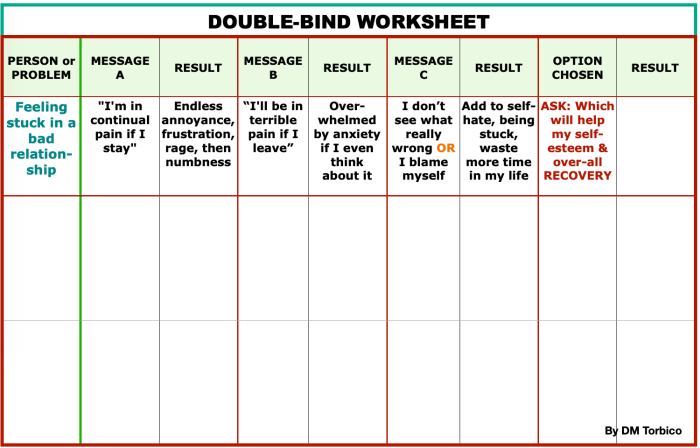
❓CHART: Use it for your own DBs, to figure out what were imposed on you by another person or institution. 📕 Expand & add columns as needed
Re. RESULTS: Internally – what’s already happened
Externally: what you fear will happen
Re. OPTIONS: The one best suited to your personality & current circumstances
Final RESULTS – of your choice, in T.E.A. terms

Fill in columns for each part of the Double/Triple BIND you’re in, in as much detail as you can. DO a little, then add as you figure more out. Include:
🔸 (A,B,C) Conflicting commands & Consequences, from yourself or others
🔸 Blatant & subtle Punishments
🔸 Any attempts to unhook yourself, successful or not
🔸 What happened – in yourself or from others / overall outcome
🔸 If still stuck, why you’re still in it (internal reasons)….
Step Away from DBs and post “Negative Benefits

• Since DBs are often stacked together, it’s necessary to unravel them statement by statement – like parsing a sentence. See how many parts you can identify in the following abusive, distorted manipulative communications:
EXPToxic Parent to actual Child
“Now you want my help! Hah! I never got into this kind of trouble when I was a kid. Surprise me by doing something right for a change, I’d like that!”
“You should be ashamed of yourself. Listen to me, you’ve got to take control over your life. Stop questioning what I tell you. I’ve been around a lot longer than you have, you know.”

EXP Authority to ‘Problem’ Person / Patient
“You have to accept that you are X (mentally ill, addict, out-of-control, raging, self-destructive…) before we can help you. We’re only doing this for your own good, out of love and compassion for you, even though you are X (the label).”

“When you say that — “we have the problem, that we’re doing this to suit ourselves because we don’t like the way you are — it only proves that you are indeed X (the label)”

NEXT: DBs, Staring Awake, Part 6b

Double BINDS – Frames (Part 4a)

Frames I’VE BEEN FRAMED –
but I’m innocent!

PREVIOUS: BDs (Part 3b)

SITE: Framing:…Least recognized daily Mental Activity


FRAMING Theory

Frames are made up of pre-conceived ideas that allow people to quickly organize & interpret new & complex information. They function as mental shortcuts or a “rule of thumb,” & in psychology, are known as scripts or schemata.
Framing is a feature of our brain’s architecture. Our minds react to the context in which something is embedded, not just to the thing itself.
EXP: The cover influences our judgment of the book, a line appears longer when vertical than when horizontal……

Goffman, in Frame Analysis wrote that people interpret what’s going on around them in their world through their primary framework – which is taken for granted by them.
He identified 2 distinctions within basic frameworks:
❖ natural = physical events, separate from any social forces
❖ social
= socially driven events, based on the whims, goals & manipulations of the players, but built on natural assumptions

EXP: If you look out of 2 different windows from the same room at a landscape outside – you’ll see 2 (maybe very) different aspects of that world. It hasn’t changed – only your perspective.

USE of Frames
re. THINGS
Artifact
: giving objects intrinsic symbolic value (car=freedom)
Contrast: describing an object in terms of what it is not
Slogans, jargon : using a catchphrase to make an object more memorable & relate-able
Tradition (rituals, ceremonies) : cultural values that give great meaning to every-day objects / artifacts (buildings, land….) .
re. IDEAS
Euphemism : serving to soothe, distract or reduce conflict (I put my dog ‘to sleep’)
Metaphor: expressing an idea by comparing it to something else
Spin: presenting a concept with a value judgement (positive or negative) not  immediately obvious, or create an inherent bias
Stories (myths, legends): narrative presented in a vivid & memorable way

🤓 Each type of frame has several parts, making up the whole. EXPs:
• Commercial Transaction has: seller, goods, buyer, money
• Communication: message, messenger, audience, medium, images & context
• Group Therapy: therapist, clients, personal problems, suitable location ……

Re. DM & DBs
Framing Theory can help make sense of how D.Messages lead to D.Binds, because it explains that “how something is presented influences the choices people make”.
★ If you don’t ‘set the frame’ – for yourself & with others – someone else will, AND whoever does – controls the situation by creating the context for everything that happens in the interactionFRAME Cartoon

• Controlling our frame is not necessarily bad. In fact we all do it every day – parent to child, teacher to class, boss to employee…. It’s only bad when the frame is designed to con, ensnare or control another person or group.

Our personal reality is constantly changing, & always includes our active participation. It’s made up of the events, objects, processes & facts we experience, & can only be fully understood in context.
EXP : if you say “I’m on a street”, that could be anywhere.

In almost any situation, we have the choice to either frame it in a positive light, or plunge it into the dark clutches of negativityFraming things in a positive way will improve our mood & help develop compassion for others.  “I know I can figure it out”

5 WAYS information can be framed
🔹Gain F – wanting certainty & positive gains, being risk-averse
🔹Loss F – choosing a desired goal with a significant loss, rather than an unwanted goal with no loss at all = risk-seeking

🔹Goal Frespond to info based on whether it helps or hinders you trying to improve your circumstances

🔹Temporal F – choose immediate smaller rewards over long term large ones
🔹Value F – respond better if available info is framed such that it affects what you care about

EXP of a GAIN F. re DB communication = Mother to her child : “Be spontaneous.”
If the child then seems to do something unexpected (spontaneous), he can’t actually be acting spontaneously, because he’s following her direction.
Mother wants total control, so the child has to be put in a no-win situation, to prevent autonomy. Subjected to this kind of manipulative communication over many years, it’s easy to imagine how this boy could become thoroughly confused – & mentally paralyzed.

NEXT: DBs & Frames (#4b)

Double MESSAGES – ACoAs (Part 7b)

I CAN’T WIN for LOSING!
If I let go, I’ll be all alone! Wa-a-a-a

PREVIOUS: ACoAs & DM (#7a)


1. DM from Family

2. OUR inner D. Bind as a result
Once we have a working knowledge of this ‘game’ we can take a serious look at the D. Messages we give ourselves & how the repercussions permeate our whole life.

★ We rarely realize what we’re ‘saying’ to ourselves, or that it comes from the WIC (R = receiver) via the PP (S = sender).
EXP:
Belief A – It’s good to flirt (sexy, desirable, successful…) – AND
Belief B – It’s bad to flirt (slutty, superficial, manipulative…)
RESULT
If I DO flirt I’m inundated with Self-hate (ACoAs’ main form of self-punishment, courtesy of the PP).  Flirting expresses my natural sexuality, but I can’t enjoy being seen as sexual because it shows that I’m ‘dirty’.

If I DON’T flirt, I may: > ‘put off’ potentially positive relatiflirt or notonships
> miss out on -safe- attention, compliments, sex… (my right to have)
> be considered frigid, unfriendly, a snob…. (even tho’ I’m just scared!)
> miss opportunities to get legitimate favors, help & considerations by being charming (with boundaries)…

★ Another way we trap ourselves & frustrate others is being stuck in the ‘Complain —> Help offered —> Reject —> Complain’ syndrome.
• we go on & on about a problem to anyone who’ll listen, implying that we need help. (Of course we would never ask for it outright!) BUT
• when people offer possible solutions, we reject them all & continue complaining!

WHY: The suggestions may not fit our specific need, which is legitimate, but most often – we’re addicted to being unhappy (Victim), don’t feel worthy of being helped, or think there is no solution – for us.
Eric Berne calls it the Why don’t you – Yes, But….”  Game
See post: People should treat me better, but I won’t let them

★ Most common Double Message we give OURSELVES
The 3-part hamster-wheel-thinking, even ACoAs in Recovery:
A: I’m stuacoa DB wheelck & in a lot of pain. I’m trying really hard to heal from my childhood, which I -sort of- know wasn’t so great. I read books, go to Meetings & therapy, Couple’s Counseling, seek alternative & spiritual healing …..
AND / BUT,
B. No matter how hard I try I’ll just never get any better. I’m always going to mess up, & get abandoned. I’ll never get the relationship I want, I don’t know how to love, I wouldn’t know a healthy person if they bit me!…..
It’s my fault because I’m just too slow, too dense, too stubborn, too damaged.
C. I can’t notice or object to or escape my self-imposed trap (WIC obeying the PP) !

Can you hear the D.Message, creating the D.Bind? 
• Position A. implies that you’ve been wounded AND can heal from it. You believe it’s actually possible to Recover because you did not start out defective – you were damaged by your early environment, so you’re willing to do the work at healing – as unfair as that is!
At the same time:
• Position B. blatantly asserts that your ‘f—ed-up-ness’ was not caused by anyone other than yourself. Didn’t your family love you, mean well & do the best they could? It was you who were born defective & therefore it’s hopeless to improve or outgrow your flaws & weaknesses. It’s just the way it is – everything is your own fault & it’s never going to change. You cause your own misery, but it’s what you deserve, so “why bother”.

You can’t have it both ways! Either you’re wounded & can repairingheal, or you’re defective & therefore intrinsically, irrevocably worthless.
a. If you were truly defective you’d be un-repairable. So why would you even try to work on yourself? Why go into Recovery? It would be dumb = futile, a waste of time & money
b. However –  If you are in fact wounded – by your upbringing – which you did cause! – then you can slowly outgrow / repair the damage.

BUT to do that you must give up the belief that there’s something fundamentally wrong with your personality. It cannot be both A & B! With this conflict UNresolved, is it any wonder why we’re stuck?

BTW – some ACoAs try to cover up this dilemma by always being angry, distant & blaming everyone else for their problems, but the original DM  (Form #3) is always running in the background, like a computer virus.

NEXT: DMs – Results (Part 9)