Personal Power – GROWTH (Part 3b)


PREVIOUSLY :
PP Growth 
(3a)


1. HOW to DEVELOP Personal Power
 (PP) cont
🌷e. Don’t Waste Energy Complaining
🌷f. Know & Commit to Your Values

🍃g. Practice self-care
It can take a while to learn how powerful & important self-care is. Hard work is important, but you lose your steam – if you don’t take the time to re-fuel & re-energize. This requires consistent attention to each of the PMES categories in your life (Physical, Emotional, Mental & Spiritual needs) – a little at a time.

Only you know how to best replenish your body & soul. For some it’s daily following you spiritual practice . Maybe it’s a trip to the spa or an exercise routine. Whatever you choose, make sure to choose & schedule it. It’s the only way to maintain your PP.

🌷h. Make your Self-Worth INdependent of Others’ Opinions
Having PP means you’ve outgrown enough of the compulsion to need everyone’s approval, all the time – even though it can be a hard psychological addiction to break. When you do, you can devote much more time & energy to fulfilling your destiny.

It requires that you know who you are by hearing your needs & desires. It can be helpful to listen to others’ ideas & info, but they don’t have to agree with your decisions in order for you to be OK. Evaluate the merit of criticism – when received – but never allow any one person’s needs, ideas or demands determine your self-worth.

🌷i. Get Clear About What You Want
PP helps you determine specifically what you want to accomplish in each interaction or event – important or not. This includes what’s realistically possible & how you’d like to feel as a result.
Before any situation you know you’re going to be in, ASK :
🕴What’s my inner motivation? Hope? Expectation?
🕴What’s my practical purpose for doing it?
🕴Why am I going there, & with those people?
🕴What specifically do I want to get out of it?
🕴How do I want to present myself ?
🕴How do I want to be treated ? What can I expect?
🕴How do I want to behave, moving though the day?

Greater clarity = the more control over the outcome = more personal satisfaction.

🌷j. Know What’s Most Important
Knowing what you need & want is a good start. Then evaluate them all & decide what the most important ones are. Otherwise you’ll be overwhelmed & won’t get much done or feel satisfied. Take time to reflect on what you know about yourself. ASK :
⭐️ What’s my life’s purpose , & why does it matter to me ?
⭐️ What are my core values, & why are they important to me ?
⭐️ What am I really good at? My strengths ?
⭐️ What drives me to pursue the things I want?
⭐️ What am I passionate about & how fo I express it?

Knowing what’s most important to you makes you more centered & grounded when something doesn’t work out the way want or hoped for. PP won’t let you give up – even when you have to take a break to lick your wounds & recoup energy.
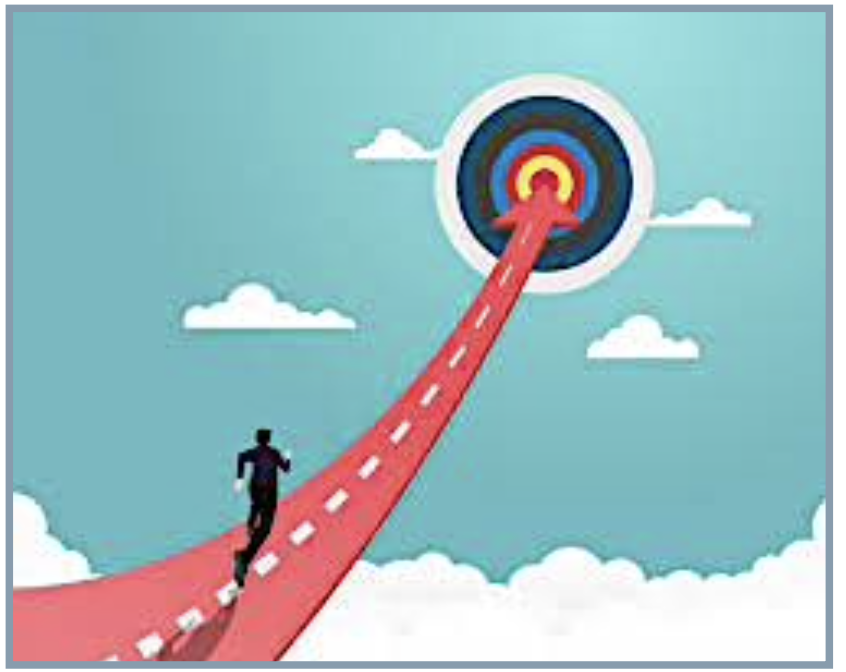
🌷k. Develop Drive and Focus
PP includes drive & focus, formed by trusting yourself to make the right decisions at the right time, consistently pushing you toward your goals. Having self-belief includes enthusiasm, a positive outlook, & ambition – to get us through tough times. Even with PP this not always easy. But these qualities keep you on track, progressively creating the momentum & confidence to fulfill your needs & desires

Acknowledge & declare your ambition. Women – in particular – have been taught to view ambition negatively. They want to be successful but feel awkward admitting it & letting others know.  Never apologize for having ambition!
PP gives you the courage to let family & manager know your personal & career interests. Then find mentors & sponsors to guide you toward your goals.

NEXT : PP Growth (#3c)

Personal Power – GROWTH (Part 3a)

 PREVIOUSLY :
Personal Power – Individual

** SITE : Connection between CLUTTER & TRAUMA


1. HOW to DEVELOP Personal Power (PP)

🌷a. Develop Self-Compassion
With PP you know that making mistakes is not a crime! It’s human – therefore normal & to be expected. You can still be in change of your life & shine.

Also – no one can know everything. The ‘rule’ is “I know what I know, but I can’t know everything, & don’t need to – to be OK!”  Being imperfect is realistic. So mistakes are not usually a problem. Most of the time it’s better to take an incorrect action than no action at all.

Powerful people do make mistakes, but do not beat themselves up or judge themselves harshly. They evaluate the outcome, figure out where they went ‘off’ & use it to learn how to do better.

🌷b. Be More in Charge of Yourself 
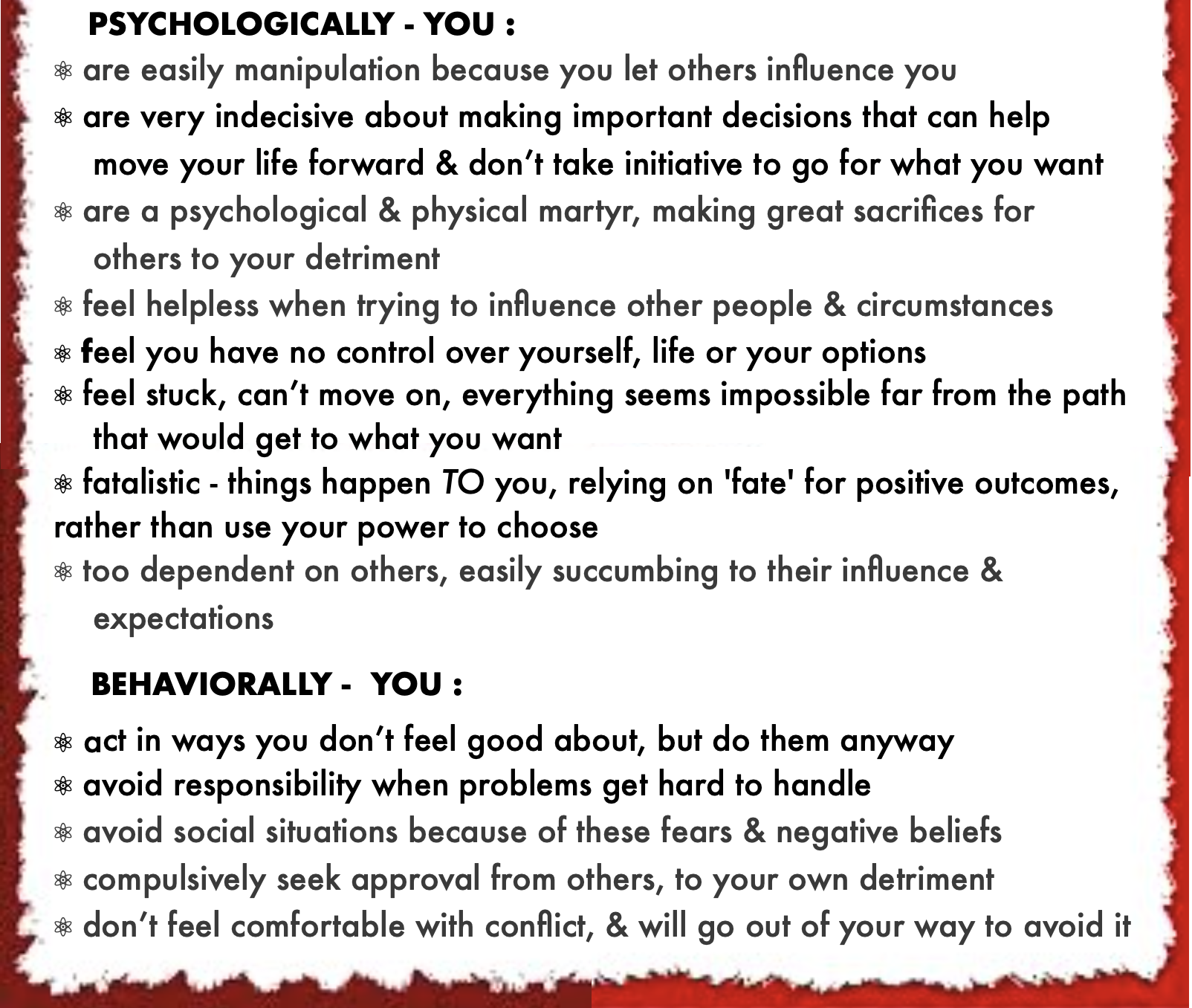
Self-awareness is the first step to owning your power. Your first objective is to gather insights so you can better understand yourself, especially the ways you might lose PP. ASK:
🥀How do I tend to give away my PP throughout the day?
🥀How does this make me feel? How is it hurting me?

Fundamentally, PP is about taking responsibility – as an adult, for your inner-life & outer circumstances – but only those you actually are in charge of. When you do, you’ll feel empowered, no matter how traumatic your background was or present situations are.
Also be clear that there are some PPT (people, places, things) out of your direct control. Even so, with PP you can proactively look for answers or solutions to improve the situation.

🌷c. Get Out of Victim Mode
Having PP means to accept that many things in life are not in your power to effect (the weather, our childhood….), BUT you can’t be powerful if perpetually living from the point of view of ‘under-dog”.

As an adult – to benefit from PP you must weed out cognitive distortions & the language associated with the Victim Role carried over from a painful childhood when you actually had very few options.  Identify & be in charge of the thoughts that live in your mind, so you don’t give more brainpower to areas of your life that don’t deserve it.
Listen to Negative Self-talk . Release, reframe & replace with positive affirmations.

🌷d. Acknowledge What You’re Avoiding
Own your PP by facing your fears. Some you bring with you from old trauma, but are now generated by Toxic Beliefs. These turn into mental spinning & then wasteful or harmful distractions. Once you can identify & correct / replace them, anxiety will greatly lessen.

Everyone loses power sometimes – about some specific issue or category – so when triggered, the fear overwhelms & paralyzes. You can move out of your comfort zone starting with baby steps “one day at a time”, to building the confidence muscle. Each new step & realistic risk brings you closer to owning & strengthening your Personal Power.

🌷e. Don’t Waste Energy Complaining
PP knows the big difference between complaining & problem-solving. Grumbling implies you have no power over your attitude (thinking) about a situation.  EXP: “I had to stay there / had no choice but to agree, because….”

People with PP have control over when & who they share their concerns. Venting belongs in therapy & 12-Step Programs, in prayer & on paper – not to ‘civilians’. It is important to be heard & listened to – finally, unlike in our family, but confined to the right people & locations. THEN you can use PP to form creative internal & external solution.

🌷f. Know & Commit to Your Values
Personal values are the things that matter to you when all else falls away – characteristics & activities that motivate you & guide your decisions. Exercising PP means acknowledging your values, & living true to what actually makes you feel alive.

NEXT : Personal Power – GROWTH (Part 3c)
ACoA POWERLESSNESS (Part 2b)

PREVIOUS : Power Motive

POST: “Unhealthy vs Healthy Family Rules


🤬 The adults we grew up with were internally powerless (cont)
a. About Them //  b. Toward Us

c.🔒IN US – some RESULTS from not being allowed to have an effect on ‘them’ in childhood :
• Procrastination – ACoAs use various excuses for putting off decisions & actions. The underlying reason is the WIC’s sense of powerlessness, translated into endless obsessions + hopeless apathy

Lack of self-motivation – An ACoA double bind:
🧸 We have legitimate needs & desires that will not go away, no matter how hard we try to deny or ignore them

IRONY :  ▪︎ On the one one hand, we assume everyone is like our family – that no one will ever see, hear or care about us  – so there’s no way they’ll meet any of our needs
▪︎ On the other hand is co-dependence. Based on our assumption that we don’t have the power or permission to provide the needs ourself (we’re not worthy), we keep looking for other people to approve, validate & motivate us to function! Talk about a double bind!   «

«                                                     

 🌺 RECOVERY: A person’s subjective feeling of confidence & power comes from a realistic sense of achievement, efficacy & usefulness – which can & are making a difference.
We can modify or undo our WIC’s brain-wash, correcting the false belief that we’re ‘forever powerless to have any effect in the world’
BY :
👨‍👦all thru the day – giving the young Inner Child hugs & strokes – who is mainly scared , & just sitting quietly near the older one – who is mainly angry, so they know they’re not forgotten.
This is especially useful when you’re busy or don’t yet know how to communicate very well with them .
BY :
✍️ regularly using “Bookending with your Inner Child” to prove that we do have an impact on others by our actions AND non-actions, bringing the ‘younger us’ into the present
BY :
✍️ daily doing -at least- a little 2-handed writing with one or more ages of your Inner Child (possible ages : 5-6, 12-13 & 17-19), not only when something bothers you, but about anything that’s happening that day – pleasant, unpleasant or just interesting.
☆ Make sure it’s a dialogue, not a monolog telling them what you think, & not letting them talk.
BY :
🚙 going to 12-Step meetings, reading recovery books, the blog & your Bible, & praying. These are to strengthen your Adult so you can take better care of the kids. (Review the tasks of The UNIT)

💻 Just because our family short-changed us, does not mean everyone else will too. Notice & write down all the ways you’ve already had positive responses throughout life to get a desire or need met, provided you asked the ‘right’ people – those who were already, willing & able. You may be pleasantly surprised.

☛ And it’s OK if you don’t trust what they’ve said (yet) because the Bad Parent voice won’t let you feel good about it. That will change as you heal.

NEXT : GROWTH – Gaining PP 

ACoA POWERLESSNESS (Part 2a)


PREVIOUS : Power Motive

POSTS: Needs – 3 categories

♥️ How to Embrace Your Inner Child


NOTE: It’s important to distinguish between the error of assuming we have no personal power (internal) vs realistic powerlessness over others (external), between what we actually can control & what we can’t, as noted in the Serenity Prayer.

The problem for many of us – as adults –  isn’t the lack personal power or discipline. It’s that we’ve invested in agreeing with the Introject voice (bad parent) about being & staying powerless.

ALSO : Personal Power (previous post) is not the same as
Self Discipline, also called self-regulation, which includes strategies that can be learned, with time & effort.
It’s the ability to manage your own emotions & personality weaknesses – a way to do what you think is right, regardless of how badly you’d rather not.
★This can not be done by the Wounded Child, only by the Healthy Adult & Loving Parent working together (the UNIT).

For ACoAs – Our problem is the WIC‘s mistaken but absolute conviction that we have NO power, in any form or circumstance, that we neither have the ability nor the right to ask for & receive legitimate needs & desires, nor to achieve longed-for goals.

POWERLESSNESS – as adults – is that awful sense of personal inadequacy to get our needs met, & the overwhelming helplessness to handle stressful situations. This leaves us feeling anxious, frustrated & depressed. It’s become a paralysis of the will – an inability to freely express opinions, make decisions or assert personal choices.

Trauma is a major source of powerlessness. Experienced too often as a child, the paralysis becomes permanently imprinted by brain wiring, later on causing us to ‘over-react’ to similar stressors – freezing, panicking or acting out in anger when the original trauma is triggered.

Long exposure to abuse also causes dissociation – the dazed, trance-like body / mind state automatically used as an extreme survival mechanism, by numbing physical sensations & emotions. The child’s freeze-mode became excessive worry & anxiety – walking on eggshells. These are ‘normal’ responses to powerlessness.

ACoAs – As adults, a fundamental way we experience powerlessness comes from theToxic Belief that we are permanently ineffectual in the world – that it’s not possible for us to ever have any impact on other people or our environment. “So why even try!” 

The adults we grew up with were internally powerless
a. 
ABOUT THEM : They passed it down to us in the form of being weak / terrible role models. Children need parents to be strong & confident so they can feel safe. This was not available to us.
Most of us grew up before computers & cell phones. So substitute anything your parents were focused on – which took their attention away from you.

EXP: Alcohol, drugs, food, work / business travel, sports, anxiety, depression, rage, illness / death, perfectionism, a sibling or another relative, their friends, even each other

b. TOWARD US : Day after day, year after year they dumped their damage on us by constant criticism, shaming & neglect (denying us many good things), too many restrictions & expectations, inconsistent or contradictory demands, isolating us, physical & sexual abuse….
Actual result: all our efforts to connect were ‘in vain’ no matter how hard we tried. Back then we really did have little or no effect on them to provide our legitimate childhood needs.

We got the message loud & clear that we didn’t count, were a great bother, weren’t worth their effort, or were just plain invisible. Under those conditions, the only conclusion any child can come to is that :
“IF my parents – who are supposed to love & care for me – don’t want me around, or can’t stand who or what I am,
THEN no one else will either – ever.” That’s just plain logic, isn’t it?

They blamed us for whatever went wrong, & we blamed ourselves for everything that hurt. We couldn’t understand that the problem was who we were stuck with – rather than some inability in us to connect!
So we assumed we would always be powerless to get thru to every one else.

NEXT : ACoA powerlessness (1a)

PERSONAL POWER : Individual ➕(Part 1b)

PREVIOUS: Negative PP

SITE: “Healing the Inner Child” 

** “…. PERMISSIONS in a Healthy Environment” 


1. NEGATIVE PERSONAL POWER

2. POSITIVE PERSONAL POWER (PP) 
The 3 key components are :
▪︎ COURAGE – facing difficulties because you know that growth only comes through actively dealing with life’s challenges.
🔺It’s the crew of your sailboat.

▪︎ ATTENTION – having presence of mind, the ability to concentrate, & the correct mental focus – so you don’t waste time on the wrong set of problems. 
🔺It’s the sail that captures & directs the wind on your sailboatPP is freedom from the dominance of others 

▪︎ PURPOSE – the sense of meaning & mission in your life, connected to a greater objective which allows you to aiming at the right goal.
🔺It’s the rudder on your sailboat

PP is freedom from the dominance of others by pursuing life’s higher goals, & developing mastery of oneself – not over others.
 
It provides strength, confidence & competence – which are (supposed to be) gradually acquired in the course of our development.

It’s infinite (not zero-sum), because it provides access to & control of inner resources, based on positive personal qualities, deeply held values & boldest traits. This includes self-assertion, inborn talents,  learned skills, a healthy striving for love, satisfaction & meaning, with vision & being of service

Elie Wiesel suggests PP is the state of being in command of our most precious & authentic Self. It makes us more open, optimistic & risk- tolerant, so we’re more likely to notice & take advantage of beneficial opportunities. When expressed toward others, it’s more creative, generous & humane than other forms of power.

Unless & until we feel personally powerful, we can’t achieve Presence, & all the Social P in the world (fame, money, social standing…) won’t compensate for its absence. 
New York U professor Joe Magee writes: “Personal Power is all about having the confidence to act – based on one’s own attitudes, beliefs, & values – with the conviction that one’s actions will be effective.”

Research at the U of Ca. indicated that P is often activated unconsciously, turned on like a switch. So it can affect our T.E.As (thoughts, emotions, actions) in ways we’re not even aware of. This suggests we don’t need to wear a crown to feel powerful, nor plot & strategize ways to prove we are powerful, in order to reap its benefits. (Modified from “Presence” by Amy Cuddy)

Having Personal Power & how it’s used – is a strong predictor of success in life.
🗝 Personal Power (PP) is about living life intentionally with a sense of purpose & optimism, providing a deep sense of empowerment – an inner strength & confidence that carries us forward through tough times

🗝 PP allows us to challenge our critical voice, with its harmful thoughts & distorted beliefs that sabotage our progress. It can effectively manage our behavior & set boundaries, to overcome limiting habits 

🗝 PP allows us to gather the strength & ability to handle problems with courage, a tremendous source of mental & emotional sustenance to help us more effectively work through adversity, challenges, obstacles, problems & setbacks 

🗝 Personal Power is a kind of mental toughness we bring to every situation. It allows us to overcome inertia or anything else that holds us back which makes us feel mentally & emotionally powerless. It’s the ability to make deliberate & clear decisions about a desired goal, & then follow an optimal path that will accomplish it.

🗝 Having PP is what separates winners from losers in all aspects of life. It’s also about positively influencing & impacting the lives around us – in the best ways available. With it we can make a difference to those we regularly interact with. (Modified from IQ MATRIX)


NEXT : ACoA Powerlessness #1

PERSONAL POWER : Individual ➖(Part 1a)


PREVIOUSLY : Power – 3 Directions

POSTs: Narcissist’s FEARS


NOTE: Personal Power relates to 2 different spheres of life:
a. A person’s psychological well-being, or lack of, POS & NEG
b. One form of influence in business.
These 2 posts deal with the first kind (a).  (b) will come in later  posts dealing with various types of power in business.

At its best, Personal Power (PP) is used to control our own states & actions.
However, PP can easily be misused, certainly against others in one’s daily life (at home, school, works….) by wounded people.

Surprising to some, PP can also be used inwardly – passively to keep oneself stuck, or actively to harm oneself in PMES ways. The power of self-destruction is a real. A person who functions from this power will go out of their way to implode & disrupt any positive qualities they have.

1. NEGATIVE PERSONAL POWER (PP)
This term may seem like an oxymoron (self-contradictory) – we would say ‘you either have power or you don’t’. However, psychologically unhealthy adults who function from the position of Victim – compulsively, persistently behave in self-defeating ways.

The consequences are almost alway bad, but they don’t seem to learn that “doing the same thing over & over hoping for a different
outcome” (the definition of insanity) will always lead to hopelessness.

This takes great deal of determination, using the energy of negative power to persist in self-harm. It can be seen in the 3 roles of the “codependent triangle“, where the damaged person cycles through them in reaction to PPT (people, places & things) which cause them stress.

a. INTERNAL negative power
While these people see themselves as Victim, the effect of their  harmful attitudes & actions put them in the role of indirect Perpetrator, by triggering anxiety, guilt & anger in others around them. Blatantly self-destructive Victims, such as chronic addicts or those who threaten suicide – are especially effective at generating fear in their loved ones. This is indeed power

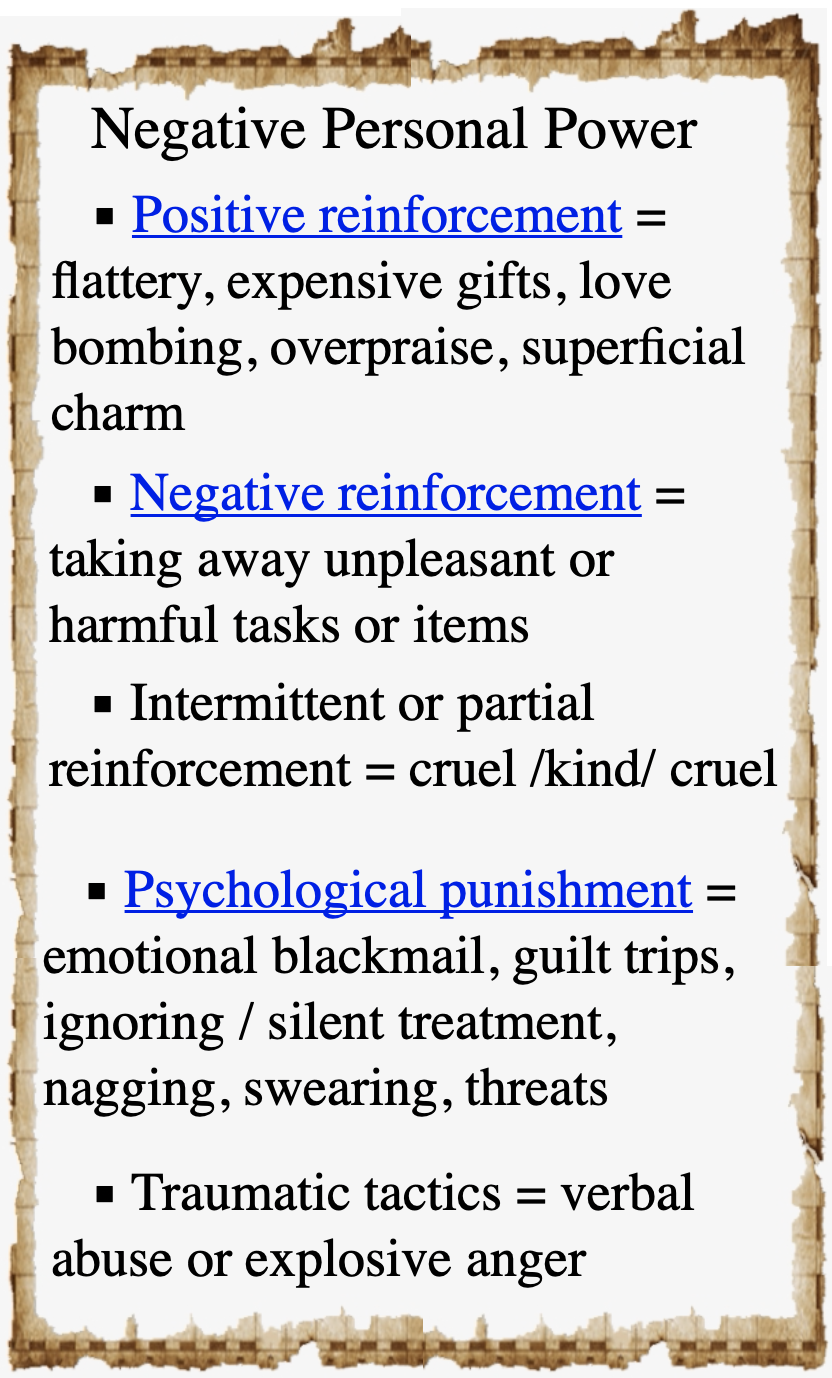
Negative PP can be in the form of accusations, blame, envy & jealousy, only caring about what others think about us, ‘falling apart’, fear of rejection or confrontation, putting others’ needs ahead of our own, verbal attacks, tantrums….. (Review the original Laundry List).

Another way NP is expressed by the Victim is a form of passive-aggression, acted out as incompetence, mental & emotional instability, procrastination….. The power is in the suppressed rage which leaks out in all parts of their life. Although different from overtly destructive power plays, their subtler mind games are just as destructive.

Internal NP can dominate & destroy the life of entire families. It’s a type of terrorism, which includes scapegoating, where the Perpetrator (covert abuser) will pick on one person to be “accountable” for the misery & unhappiness of others. Review all the ways Covert Narcissists cause harm, especially to children.

b. EXTERNAL negative power – based in anxiety, & rage – is expressed by toxic people by aggressive actions of coercive control, domination & force. They consistently misuse PP – deliberately playing on other’s fears, needs & lack – to gain & maintain power.  

The personality structure of overt power-mongers is made up of underlying emotional weaknesses, including arrogance, rage-aholism, narcissism, paranoia, extreme vanity, sociopathy & other personality disorders….
Devoid of empathy for Self & others, they hide behind an authoritarian-parent style of being ‘all-knowing’, judgmental & always right.

OVERTs compulsively need to deny feeling vulnerable from real or perceived inadequacies (S-H). So having control over others can be addictive, because it produces a sense of elation (highs), & diminishes a sense of insecurity (lows).

Even deeper, destructive people suppress acknowledging the reality of their eventual death. Denying any form of powerlessness, their endless hunger to be special & invulnerable to all harm (typical of NPDs). creates a fantasy of being immune to non-existence. Assuming they’re exempt from natural forces supports their vanity, superiority & the ‘right’ to lord it over others.

Because self-delusion never succeeds in eliminating their underlying fear of death, excessive need for power (++nPOW) becomes increasingly compelling, leading to disastrous outcomes, from creating criminal or addict children to crimes against humanity.

NEXT : Positive Personal Power

POWER – 3 Directions, Authority


PREVIOUS : P TYPES

BOOK :”Whistleblowers: Broken Lives and Organizational Power” by C. Fred Alford


3 DIRECTIONS of Power
Everything we do as humans can be seen as a status game — exercises in raising & lowering our own status & that of those around us, which can also be seen in one of 3 types of power within groups.
1. Power-from-WITHIN (power TO self) : healthiest – a result of self-realization, sustaining our life. It’s empowering & underpins self-confidence & spiritual faith.
These people see all humans & the world as = living beings who are dynamic, integrated; individualistic, artistic
Motivation – creativity, empowerment.
BASEs: Nutrient, Competitive (Over & To)
EXP: sitting up straight & forward may be a physical way to raise your status

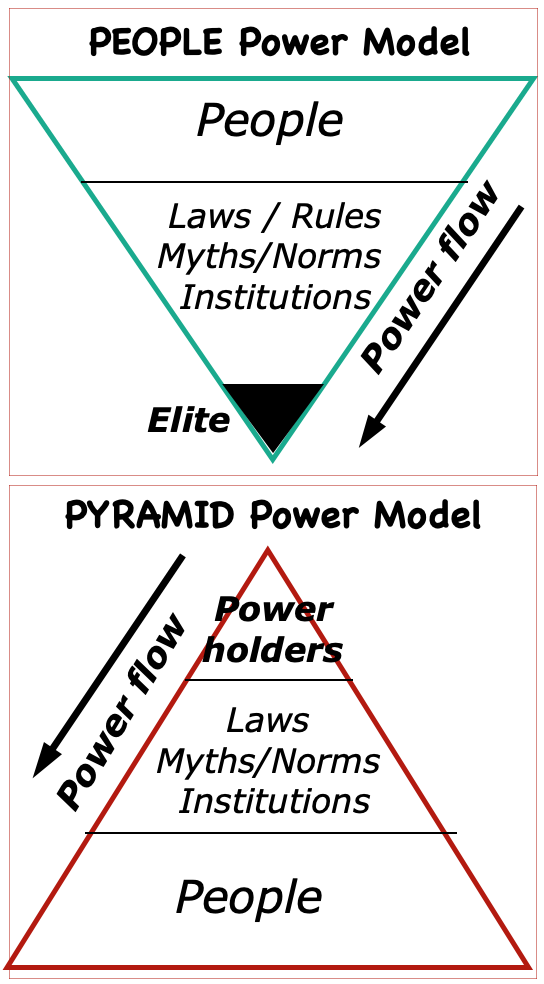
🪐 Socially & politically, power can flow from one of 2 sources, either from ‘the
People’ or from the ‘Elite’, shown as People Power or Pyramid Power

2. Power-WITH (others) : it bridges the value system of P-from-Within and P-Over, representing social & psychological integration, “the whole is greater than the sum”. Such people see the world as a pattern of relationships, valuing all beings & persons. Their interest is in how that pattern can be molded, shapes & shifted – for the better.
Motivation – equality of & respect for all.
BASEs : Integrative, Ideological (soft, implicit power)
EXP: Ask a colleague for their opinion can equalize their status

🌹People-Power Model : This type holds that –
• P ultimately rests in the hands of the  public masses (they’re the top)
• the P-holders’ influence depends on the mass public’s cooperation
• the strategy of creating change from people-movements by ‘leading the leaders”

Re. VIOLENCE – there are also 3 types:
✴︎ Direct – physical actions
✴︎ Structural – built into the fabric of the prevailing governing system (only 10% is visible)
✴︎ Cultural – parts of a culture that legitimize violence, making it an acceptable way to deal with conflict, supporting a few to have a sense of superiority over the majority (More….)

Non-violent social change is the ideal use of People-P, based on universal principles which unify, allowing everyone to participate, using education, persuasion, social movements….

3. Power-OVER (others): domination & control over others & things. These people sees humans & the world as = objects, made up of separate, isolated parts with no inherent worth.
Motivation – fear. BASE – Coercive
EXP: Talking over someone is a verbal way of lowering their status

🧔🏻Pyramid-Power Model : It holds that –
• society is organized in the form of a hierarchical pyramid, with P-holders (elite) at the top & the powerless masses at the bottom
• P flows down from the elite to the masses
• social change can only be achieved by appealing to & persuading the elite to change their views.
🦾
Together, Power & Authority are the 2 capacities of effective power that underpin social interactions.

AUTHORITY – is derived from one’s position, not from themselves, even if they have personal traits that also make them powerful. So a person can be given authority while having very little personal power, although this placement is not beneficial to an organization

Authority is easily lost. An organization can delete someone’s authority by removing everything that gave them formal power over others, by firing them or with a demotion (moving a manager to a position with the same pay level but taking away their leadership functions).
However a few power positions are institutionalized & very difficult to change, such as the British monarchy or a U.S. Supreme Court Justice.

POWER – is mainly the product of positive personal traits, but can also can be learned. EXP: The more knowledge a person has in their field, the more power they have. Having power also depends on how others view you. If they don’t consider you powerful, then you’re not (in your specific environment).

Power can be lost. Because it’s built on expertise & experience, making critical errors, especially in politics or business, can make a powerful person lose credibility. And while it doesn’t require a good personality, it helps, so bad personal behavior or treatment of co-workers can also strip someone of influence.

NEXT : Power Characteristics (Part 3)

POWER – Types


PREVIOUS :  P Dynamics


⬅️ “Dynamics of Power
∼ Evangeline Bradley


ACoAs : It can be helpful to look at all the ways Power can be & is used, so we can have an accurate perspective, be able to correctly identify who we’re dealing with, & make informed choices.

Everyone’s first encounter with power is in the family. Our experience left a very bad taste in the ‘mouth’, leaving us with fear & rage at all ‘authority’ figures, because the original ones misused their power, & -now- we think we don’t have any! Not true!
🌈
POWER (P) itself is not evil – only some of the actions that result. Like any form of energy, it’s not the action of changing another person’s attitudes or behavior, only the potential to do so.

The proper use of power is the ability to get things done safely & respectfully, such as positively affect the outcome of a social interaction, rather than ‘lording’ it over others.

Power can be an effective tool in coordinating & promoting harmonious relationships, solving conflicts, & enhancing performance. It’s not only needed to get certain direct results, but also to form negative decisions or non-decisions.

“The use of influence is not automatically a negative. Like any strong force – from powerful medicine to nuclear power – it is the morality-motive behind the desire to harness it that makes all the difference.” R.L. Dilenscheider, 1990 (“Power and influence: Mastering the art of Persuasion“)

Some TYPES
• CONTROL P : the ability to achieve something. To persuade, manipulate, coerce OR work together to achieve a goal, adapt, prevent injury….
EXP: Acquire the knowledge to name or define events, people, pattern, things

• EMOTIONAL P : Power-related feelings signal basic survival needs — who is a threat, who is an ally, who can be counted on, and who is in the way.

• FRAMING  P : the stories ‘explaining’ why things are the way they are, which can control or direct the outcomes of social-change- efforts (homelessness….), If limited or one-sided, will drive responses in a skewed direction

• LANGUAGE P : Research identifies several features, such as –
– Powerful talk makes speakers seem confident & knowledgeable
– Powerless talk suggests the speaker is unsure, tentative & submissive

• MANIFEST P : having the intention of using power, or actually use it – when A wants something from B
vs.
• LATENT P : the ability to exercise power but not use it, perhaps not even consider its use. Qs:
= Does person B behave differently because they’re anticipating what A could do?
Yesoften to please or protect oneself

= Does the power-holder’s (A) intention matter in an interaction?
No, yet there can be an unintended effect – if A’s very presence causes a change in B’s attitude & actions

• POWERLESSNESS P – resistance to act in ways not desired, such as delay tactics in biz / law / politics…, or sullen pouting / door-slamming / tears by adolescents…..
OR as sacrifice, such as ignoring personal “status” (boss, star, leader….) to belong to a group, or giving up some personal desires to be a good parent

• STRUCTURAL P : the ability of a person / group to shape their social environment, to set the agenda, & determine rules of the game
EXP: “Living next to the United States is a little like sleeping with an elephant. You always wonder if they will roll over on you.” ∼ Pierre Elliott Trudeau

GROUP Dynamics 
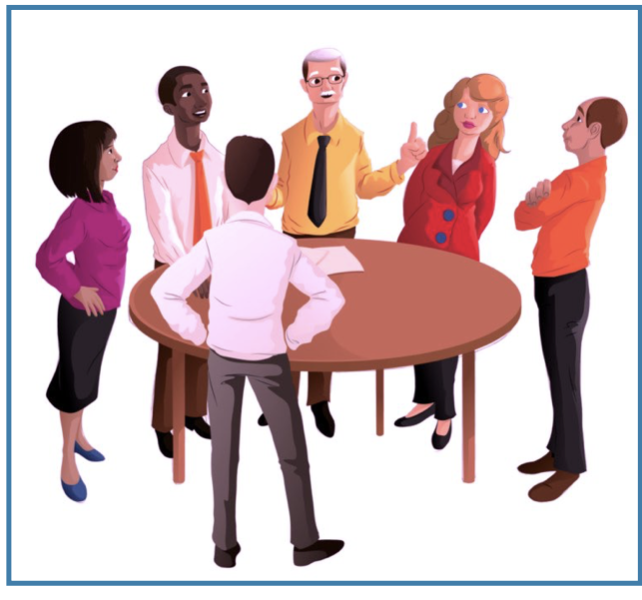
Family therapist David Kantor lists 4 power-dynamic interactions seen in business meetings (& other groups) :
a. Move – to initiate  //   b. Follow – someone else’s move
c. Oppose  – disagree with, or correct another’s move
d. Bystand (positive) – notice when the group gets stuck, name it & make a helpful suggestion for moving forward.

A successful group or family unit uses all four in complementary, positive interactions.
And one way to assess how ‘well’ a group is doing is noticing the pattern of their conversations – how they talk to each other.

Unhealthy groups include the dysfunctional bystander, (lack of moral courage). EXP: Enabling addicts & narcissist, knowing about abuse, watching a crime take place…. & choosing to not intervene.

NEXT: Personal Power (+ / -)

POWER – Dynamics


PREVIOUS : Human POWER MOTIVE

SITE :
How to Successfully Navigate Power Dynamics at Work

⌛️ Power Dynamics History – from 5th cent BC to 2019 (scroll way down)


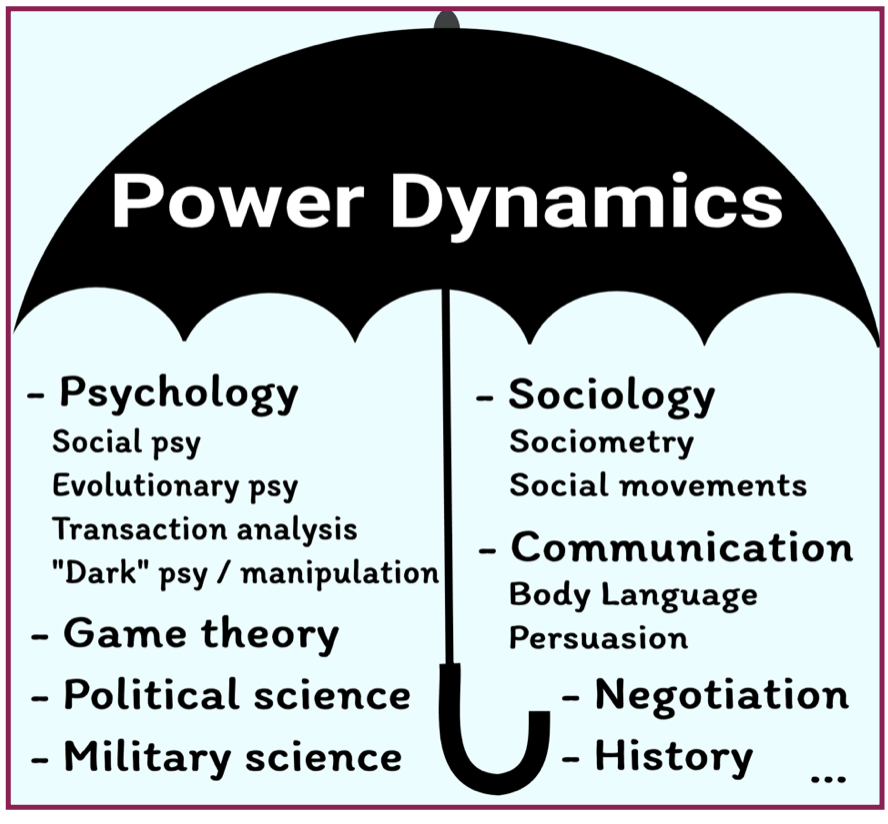
POWER DYNAMICS (PDs) – is the science of power negotiation between individuals or in groups – as a branch of social skills & life strategies. It’s the study of the unwritten rules people use to engage & interact with each other.  It includes :
♝ cooperation among individuals to reach goals
♝ forming & acquiring rank-titles within structured hierarchies
♝ negotiating conflicting interests
♝ use of strategies to reach an end or goal
♝ use of influence, persuasion, & manipulation

If Power is defined as “the ability to achieve predefined goals” then power, in & of itself, is neutral, neither good nor bad. It’s all about how it’s used. Unfortunately, this discipline still has a negative connotation, because power-hungry, unscrupulous individuals are drawn to mis-applying PDs.
However, PDs can also be used for personal self-defense. When strategies for individual success are expressed ethically, they add great value to the people around us & to society as a whole.

Power Dynamics are seen IN many areas of human socialization, so managing its complexity is essential to achieving our goals
Relationships
❧ PDs are present in & crucial to all relationships, healthy & unhealthy. Along with having Personal Power, understanding & mastering the various forms & appropriate uses of PDs supports positive ones.

One of clearest signs that a partner is potentially abusive or already toxic is the one who focuses mostly or solely on having ALL the power within the intimate pairing.
Ignorance of PDs allows abuse to develop & persist. So living as if they don’t matter is naive. And dangerous.

Dating
PDs are part of mating negotiations, & the strategies to gain sexual access. Single people complain about not finding a good mate, but the real issue is not knowing the rules of the game.

EXP: Historically, men have gained power from sex with multiple partners, but women have not. B genders have converging & diverging interests, which vary depending on
where they’re at in the process.

Social environments
Proper use of PDs are needed to be socially successful, because:
• people respect others they consider to have ‘high power’
• one needs to know how to be persuasive
• ignorance of social PDs leaves one vulnerable to being manipulated or ignored.
RULE : Don’t go through life as a ‘dumb’ lamb, pretending there are no wolves. It’s OK to keep being a friendly lamb – but use PDs as healthy  protection.

Business
Workplaces everywhere are hotbeds of politics & (hidden) Machiavellian power moves – because they tend to have built-in contradictions.
On the surface, a company’s values usually stress teamwork, & the “whole” over the individual.
But underneath, there are many diverging & conflicting interests at all power levels that get in the way of cooperation. (PD : Hidden Element in Meetings)

Leadership
How PDs are used differentiate great leaders from poor ones. The poor ones rely only on formal authority (power OVER), while better ones gather power by their people-skills, making others want to follow them (power WITH).
Great leaders can achieve social status within groups even if they have no rank or formal power over others. If they also get a title, it’s an additional ‘legal’ recognition of their already existing influence.

Social Sciences
As important as PDs are, for self-development & personal success, there is no recognized branch in the social sciences. Yet PDs are embedded in the very fabric of most recognized university courses, & so can be considered scientific, since many contribute research & papers to our understanding of PD.
EXP:
‣ Political science – the end game of top power-players is to run things, & running countries is the apex
‣ Game theory & economics – which provide insight into the exchange & transactions of human relations
‣ History – which shows which strategies people developed to acquire & maintain power, or which ones failed. (Scroll to the list ).
(Modified from : “Power Dynamics: What Is It, How it Affects You“)


NEXT : Power TYPES

The Human POWER MOTIVE


PREVIOUS : 
Narcissist

SITE : “The Basics of Power(includes several studies)


POWER (P) is fundamental to human social life
The study of Influence & Power is likely as old as human history. “To a greater degree than most of us realize, we are the products of power,”  Toffler (1990).
Success, defeat & conflict have given rise to the desire & search for it. Some psychoanalysts call this normal, saying that power can actually build a person’s identity, under certain circumstances. (Zalesnik 1989)
Others doctors believe that power-seeking is not conducive to psychological development. This can be shown in Eve’s greed for illegal knowledge & power, which made her vulnerable to the  manipulation of the powerful & devious Nāḥāš (Hebrew for ‘snake’), leading to the downfall of all humanity. (Genesis 3)

GENERAL : The human Power Motive is the desire of one person to have an impact on the behavior or emotions of another individual or group, &/or being concerned about one’s own prestige & reputation. This broad definition includes a whole family of overlapping concepts :  ✦ authority, aggression, coercion, control, dominance, influence, inspiration, leadership & nurturance – combined into the “need for power” = nPow

nPow is different from other power-related psychological concepts. It is not :
✦ Beliefs about P (Authoritarian, Machiavellian)
✦ having the Skills to get or use P (rules, maneuvers)
✦ natural Traits (dominance or surgency ….)
✦ occupying P Positions (teacher, CEO, minister)
✦ P Styles (5 -10 categories)
✦ Sense of having P (locus of control, reinforcement)

nPow is an inborn basic component of one’s personality, & some people have a greater need or capacity for it than others. Research suggests nPow is embedded in certain physical processes, hormones, & mechanisms.
Power-driven people show greater sympathetic nervous system arousal when under stress & threat (reactiveness).

Without proper self-care & the ability to self-regulate (powerlessness), constant triggering can lead to lowered immune system efficiency, potentially causing frequent infectious or auto-immune diseases. Over-reactivity is also related to cardiovascular problems  & higher blood pressure.

In David McClelland’s book “The Achieving Society”, nPow explains some people’s push to always be in charge.
But he also identifies 2 other main psychological motives :
👥 nAffil = Affiliation – a person’s need to feel a sense of involvement & belonging within a social group, &
✍️ nAch = the “need for achievement”, higher in people who have an internal locus of control & so are more in charge of their actions. (MORE…..)

Each of us has these 3 in some proportion, but with a stronger preference for one.
McClelland lists 2 kinds of nPow (business, politics, church….) :
🔻SOCIAL – (for control) the ability to exert dominance, influence or control over the actions of others. These people only function for their own benefit, to prevent everyone else from achieving their P.
🔺PERSONAL (for connection) – being in charge of one’s own states & behaviors. These people don’t chase approval or recognition, rather wanting agreement & compliance. The desire is to achieve goals for the greater good, through positive or negative sanctions.

nPow can be seen in career choices –  modified by social class, responsibility, or extraversion – in all 4 PMES categories :
Physical : Coaches, Trainers // Mental : Teachers / Professors, Politicos // Emotional : Psychologists, Therapists // Spiritual : Religious ministers, healers….

Compared to people with high nAffil or nAch, those with high nPow scores prefer to go after & hold a position where they run everything (people-places-things). And if their “responsibility quotient” is low, they’ll be more argumentative, take big risks & engage in conspicuous consumption. At work they’re pushier in group discussions, & get very frustrated when not in charge of everything.

SIDE NOTE: nPow & nAch are often related – the greater the power motive, the greater the need for achievement. And this combination does not have to be immediately visible. Since P is about influence, it can be achieved indirectly.
EXP: ▪︎ Privately expending a great deal of time & effort writing one or more books – which become widely read & having a great effect by being helpful
▪︎ Working for years quietly creating a new invention, medicine, or other product to broad benefit (influence)….

IMP: The fear of expressing Personal Power in one’s life because of emotional / psychological wounding does not indicate the strength of a person’s native nPow, only the limitation of its use & full expression.

NEXT: ACoA Powerlessness, #1