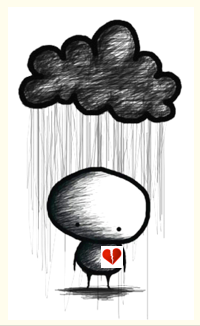
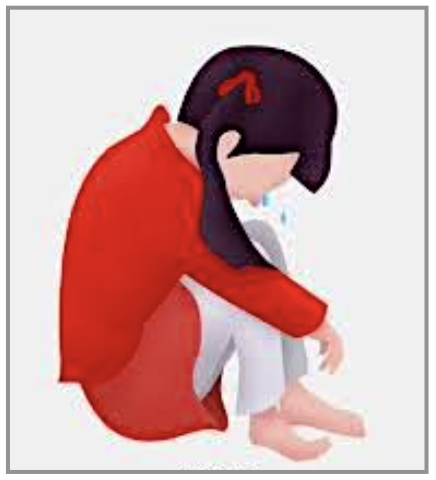
ACoAs – Adult Loneliness (Part 1)

lonelyHIDING IS THE ONLY WAY
I know to be safe!

PREVIOUS: ACoAs – L. in Childhood (#2)

SITE: “Does Childhood abandonment equate Adult Loneliness?

See ACRONYM Page for abbrev.

QUOTE:” Loneliness is the poverty of the self. Solitude is the richness of the Self.” ~ May Sarton, American Poet

NOTE: Loneliness is one result of the many PMES ways we were abandoned as kids. FEAR + INSECURITY LOVE = Loneliness.

DEF: Being alone when we desire otherwise, a discrepancy between what we have socially & what we’d like to have, an inability to find meaning in our life….
Studies about L. yielded 40 emotion-type words linked to it, including : boredom, feeling different, helpless, hopeless, rejected, self-pitying, not understood…..

1. ACoA Loneliness (L.)
It’s inevitable that we bring with us, from childhood, unhealthy self-treatment we experienced in our environment which created Loneliness at that time, but was not our fault!
So naturally, as adults, our actions & beliefs add to the (mostly invisible) iceberg of L. by continuing self-defeating patterns – until we do deep FoO work to fill the internal void.

a. Protecting Ourselves
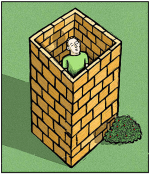
Given all the physical & emotional danger we were subjected to as kids, it makes sense that we end up compressing ourselves into a small internal ball of fear – like any wounded creature. We hide from others as protection – in PLACE OF real, healthy Boundaries (Bs).

Extroverts hide very differently than Introverts, but it’s still hiding.
• Unfortunately we also have to hide from ourselves too, so we end up not knowing who we really are!
• Fortunately, once we’ve developed & internalized Bs we don’t have to hide anymore. Then we choose how much to reveal & how much to hold back, able to choose who’s safe for us & who’s not.

The Loneliness: While we’re trying to protect ourselves from everyone else’s fear, envy, greed, control, manipulation…. & especially their rage – we’re stuck inside our shell, adding to our sense of separateness & isolation – whether alone or with others.

b. Protecting Others
Self-Hate is expressed in our Ts, Es. & As, so it covers every aspect of life. As kids we came to believe that we were very, very bad, even evil, so now it feels like we’re carrying a monster inside – which we incorrectly assume is the WIC, whether we’re familiar with the concept or not. Some of us have even tried (or wanted to) commit suicide – to get rid of it. It’s made up of:

• The PP : Actually – the ‘monster’ is the Negative Introject , our internalized accumulation of all the crazy & abusive adults we grew up with. They had lots of rage too, even if they never showed it. So we’re carrying theirs & ours.

• Our rage: This is the other part of the ‘monster’, the part of us that is powerfully, sometimes uncontrollably furious. And why not. We were alternately neglected & tortured by the very people who were supposed to love us.

• While trying to protect ourselves from the big bad world, this combined rage is so intense & huge that most of us concluded a long time ago we have to protect the world from our monster, so we wouldn’t get abandoned again or kill someone, because we feel it’s so out of our control.

The Loneliness: Being alone with our monster component (made up of emotional pain & Toxic Beliefs) is terrifying, but we figure it’s better than the alternative. Keeping it under wraps, even from ourselves, separates us from everyone at a very deep level.
We become —
clingers, who can’t seem to live without some sort of relationship, no matter how bad, & have to be extra ‘nice’ so they won’t know, OR
hiders, who are co-dependent, depressive or passive-aggressive, internally isolated while seemingly sociable, OR
erupters, whose rage keeps most everyone away, as we spew out accumulated anger anyplace or anytime something sets us off. But that just brings up more S-H.  💔

NEXT: Adult Loneliness #2

ACoAs: Loneliness in Childhood (Part 2)

Screen Shot 2015-07-12 at 1.16.35 AM I’VE BEEN PUSHED DOWN SO LONG
I don’t know if I can get up

PREVIOUS: Lack of Comfort #2
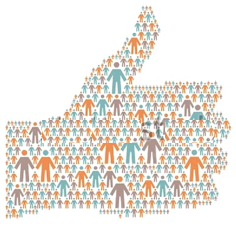
SITE: NEGLECT (effects & related factors)


CHILDHOOD CAUSES of L. (cont)
3. FROM Family DYSFUNCTION (cont)
a. Parental Neglect
b. About Parents

c. TO FEEL SAFE
Consider the Ab. loneliness of….
…. having to hide from parents, siblings, other relatives, baby sitters, neighborhood kids…. because they were bullying & beating on you, subjecting you to unfair & unusual punishment, verbal & physical attacks, sexual abuse, teasing, unneeded enemas, sadistic mind-games, not allowing you to have your feelings (“I’ll give you something to cry about!”)…. & no one to protect or help you

• You carried around constant terror all by yourself, waiting for the other shoe to drop. Where could you go for safety? Under the bed, or table, in the closet, the neighbor family, in your room, at the library, at sports? Someone may have known what was happening to you, but they didn’t/ couldn’t intervene, so you were still trapped with the abusers

Consider the Ab. loneliness of….
…having to constantly fend off boundary invasions, mental & physical.  It may have seemed that you weren’t alone (someone was always around – in your face, in your business, in your space…), so how could you be lonely? But they were not really WITH you, at all – rather: at you, using you, controlling you

It was all about their neediness: getting into every nook & cranny of our body & mind, watching you all the time, fussing with your looks, clothes, actions, even your facial expressions (“look ashamed / wipe that look off your face”….).
OR it was all about one-upping’ you, competition between you & a parent, or between siblings – for attention, knowledge, friends, skills….

Consider the Ab. loneliness of….
…. having to play out a Toxic Role  – Hero, Mascot,  Scapegoat, Lost Child – to serve the family sickness:
– only allowed to ‘use’ a small % of yourself & having to hide or cut off the rest
– never having the freedom to find out who you really are as a whole person
– not allowed to develop at your own pace & for your own benefit ….

Consider the Ab. loneliness of….
…. hiding family sdysf. ROLESecrets, present & past.
SPOKEN – “Don’t let anyone see those bruises / Don’t tell anyone daddy’s in jail, that brother Johnny’s in a mental hospital or a drug addict, sister Suzy’s a prostitute, that daddy isn’t really dead….

UNSPOKEN – never ever bring up the drunkenness, fights, neglect, beatings, incest…. that went on behind closed doors. And then there were the secrets you somehow intuited but didn’t have any facts about, but found out about years later – like about a sibling before you who died, that Grandpa killed someone, mom was raped, grandma cheated on her husband….

d. FROM SHAME  
Consider the Ab. loneliness of….
…. having to hide yourself from everyone, especially outside the house – because you were soooo bad that you couldn’t let anyone know the ‘real you’. If they got to know you, you were convinced they’d hate you just as much as your family did – & that would have been too much to bear (see Self-Hate posts)

Consider the Ab. loneliness of….
lonely child….. having to hide your family from the rest of the world, because they were drunk, crazy, dirty, raging, seductive (with everyone) or just not there to make a home you could bring others to. You were ashamed of them & where you lives, so you stayed late at school, in the library, at a friend’s…. or lone, anywhere but there

Consider the Ab. loneliness of….
…. never able to trust the very adults who were supposed to be taking care of you – parents, older siblings, other family members, babysitters, school & religious leaders
• They were unreliable, messed with your mind, were sexually inappropriate, cruel, stupid, crazy, high….
• They’re too busy with their own concerns – having a good time, working, ‘using’, cheating…. to be there for you
• No one was honest about how they felt or what they really thought. No one was direct & clear. You never knew where you stood.

NEXT: L. in Adulthood (Part 1)

ACoAs: Loneliness in Childhood (Part 1)

neglected children


I NEVER REALIZED BEFORE
how harmful neglect can be!

PREVIOUS: Childhood Loneliness (Part 1)

SITESigns & Symptoms of Chronic Loneliness

1. “NORMAL” Stressors
LONELINESS (L) is an inevitable result of any form of PMES loss.
The following are some things all kids can experience – the key to how well they survive is whether or not they’re helped thru these difficulties with accurate information & appropriate emotional support. If not, these events can leave long-lasting scars.

Consider the Loneliness of….
Abuses:  bullied by a sibling, at school, on the playground, in the neighborhood, mistreatment by school or religious leaders
Deaths: of a parent, other important family member, a beloved petblack boy crying

Limitations : learning disabilities (ADD, Dyslexia…), being poorer than others, not learning social skills
Losses: divorce, BFF leaving, falling out with a friend, loss of favorite family member, teacher or neighbor…

Major changes : birth of one or more siblings, one or more moves (home, school, country)
Positives: looking ‘different’, being smarter than most others, having a special skill, having more things than others…

2. CATEGORIES of Loneliness (L)
• Chronic, or trait: more ingrained, part of a person’s lifestyle & therefore not easily relieved (whether alone or with others, being afraid & mistrustful of others, full of S-H….).  It doesn’t matter what actually goes on in their environment, the experience of L. is always there

External / social isolation: experienced when people lack a wider social network, not feeling part of a community, not having friends or allies they can rely on in times of distress

Internal / emotional isolation: insufficient or inappropriate attachment, originally to parents & other caregivers. Even securely attached children, when away from caretakers, express separation-distress such as crying, searching for the parent, having a tantrum or being withdrawn.
As adults, it’s the distress of being separated for too long from romantic or other deep connections

Transient, or state: temporary, caused by something in one’s environment which can be relieved relatively easily & quickly (replacing a pet, temporary illness, a short trip…)

lonely gil in rain3. Loneliness from Family DYSFUNCTION
Research over the past 15 years concluded that an ongoing pattern of abandonment (Ab.) loneliness poses a serious threat to a person’s mental health & social functioning.
– In children it’s associated with being victimized at home & by peers, leading to severe shyness or aggression
– In adults it’s been linked with depression, alcoholism, obesity, & suicide  (MORE…)

GENERAL causes in childhood:
• Feeling unloved & unworthy of love, even if they said they loved us
• No one could be trusted, not reliable, consistent, honest, direct
• The sense of not belonging anywhere & that nowhere was safe
• Little or no comfort from anyone, & ultimately – feeling unwanted!

🔹 Unhealed ACoAs are fear-based, caused by the loneliness of daily childhood abandonment, which is at the root of neediness. We’re still starving for the nurturing we didn’t get – still longing & desperate for it, whether we admit it to ourselves or not.  We’ve been slowly dying inside from the lack of warmth, concern, touch, protection… ever since we were very tiny.

🔻This next category lists some of the many ways our alcoholic, narcissistic family & other groups abandoned us (Ab.) in Physical, Mental, Emotional & Spiritual (PMES) ways.

no teachera. Parental NEGLECT
Consider the Ab. loneliness of….
…. (T) not having anyone to teach, guide, set an example – about how to do things
…. (E) always being alone with your emotions, especially the painful ones
…. (A) not having anyone to do things with, play with, enjoy the good things in life

b. About our PARENT(s)
Consider the Ab. loneliness of….
…. watching them self-destruct, & not being able to stop them, no matter how hard you tried, but you kept trying anyway, always disintegrationfeeling like a failure

Consider the Ab. loneliness of….
….. having to play ‘god’, be responsible for the adults for their day-to-day physical needs, & sometimes for their very life – or ‘just’ their emotional survival.  You needed them to stay alive, to stop hurting themselves, so they could be the parents you needed – but it never worked!

NEXT: Loneliness in Childhood – #2

ACoAs – Loneliness: Lack of Comfort (Part 2)


PREVIOUS: Lack of Comfort #1

SITE: The Lethality of Loneliness

ACoA PAST (cont)
a. Health (see Part 1)

b. Damage – Everyone goes thru periods of loneliness, but when it’s long-term (our whole life) – it points to how greatly we were abandoned as kids – not just physically, but in every PMES way.
The ACoA’s hole-in-the-soul (Part 1) is caused by the lack of internalized healthy loving parents – because it was not available.

What we did absorb was all of their S-H, depression, anxiety & loneliness – along with their behavior pattern & distorted thinking (CDs). So we carry a great emptiness in our gut, where human beings ‘feel’ emotions – that lack of a safe, nurturing presence!

• Our loneliness started at the very beginning of life – being in the ‘care’ of parents who were emotionally unavailable, psychologically abusive &/or physically absent or harsh.

REMINDER – Children need to feel truly, deeply cared for & cared about, to be connected at a body & soul level, in order to feel safe.

Most ACoAs had no choice but to swallow whole a daily dose of ‘aloneness’ from our parents’ WIC & hostile PP. We had to live with & try to survive their inability to provide a loving, healthy connection (not symbiosis!). Their lack became ours. This broke our heart!

EXP: As an adult Julie has always had trouble falling asleep – she’ll stay up reading or watching tv until her eyes hurt. Her family moved a lot – with a constant loss of home, friends & possessions. She was a victim of bullying at home & at school, religious strictness & outrageous expectations.
She understands now that she was never comforted AND constantly deprived of trying to comfort herself in a chaotic & unhappy life.

Her mother happily told family & friends ‘funny’ stories about how hard she’d worked at stopping little Julie’s thumb-sucking as a baby – putting pepper on the thumb, covering her hands with mittens, tying her hands to the crib…. saying with a laugh “… and that rascal always managed to get that thumb back in her mouth!” Groan.
And Grandma added in disgust: “Yeah, she was born with that thumb in her mouth!” It was considered shameful & weak to need a pacifier of any kind. Better teach them early to be strong & not need anything!cat toy

• She remembers sadly that a few years later her beloved stuffed cat was forcibly thrown away – because she was ‘too old’ to be needing something to go to sleep with. She was 6!  Some years into her therapy, Julie asked her narcissistic mother what she remembered about putting Julie to bed when she was little. Mom answered offhandedly, & with a fond smile: “You were such a good baby. Even when we visited friends, I could put you in the other room & you’d fall right to sleep”.

What Julie got from that was that her mom was pleased to have a child she didn’t have to pay much attention to – to be free to do her own thing.  She never even considered helping her child transition** into ‘sleep time’ by rocking her, reading or singing to her, assuring her she was safe…. Baby Julie was just left to fend for herself.

** Babies (small kids) can ‘get going’ on their own – wake up & be ready to eat, play…. BUT they physically need help calming down after the many stimuli of waking time. Without that they find it hard to relax – to ‘power down’.

Julie also remembers her mother deliberately letting her little sister consistently cry herself to sleep – with no attention or affection, so she wouldn’t be ‘spoiled’. She even prevented visiting friends from going into the bedroom to comfort the crying baby!

NEXT: Loneliness in Childhood #1

ACoAs – Loneliness: Lack of Comfort (Part 1)

“NOBODY LOVES ME,
everybody hates me,
I’m going to eat worms & die!

PREVIOUS:  Not enough Love? #3

SITE: “Why Love is Not the Cure for Loneliness … and what’s far more important

REVIEW posts: Abandonment pain, Now

QUOTES
• “Anger is a manifestation of a deeper issue… and that, for me, is based on insecurity, self-esteem and loneliness.” ∼Naomi Campbell
• “Loneliness, and the feeling of being unwanted, is the most terrible poverty.”  ∼Mother Teresa
• “…..the distressing feeling when one’s social relationships are perceived as being less satisfying than what is desired….” See article above
• “What loneliness is more lonely than distrust?” ∼George Eliot

Def. of LONELINESS (L)
• Dejected or desolate by the awareness of being alone, without companions. Separation between persons or groups
• Feeling a strong sense of emptiness, yearning, distress and solitude, from an inadequate quantity or quality of social relationships
• Sadness resulting from being forsaken or abandoned
• Social pain – a psychological mechanism meant to alert people to being too isolated, which can motivate them to seek social connections
(SITE: ….. 3 Factors of Loneliness)

ACoAs
✶ Loneliness is a universal phenomenon,
since humans are social creatures by nature. But too much of it is crippling.
• Most people think that loneliness is ONLY about external scarcity – not having friends or someone special in one’s life. Human beings definitely need others –
“No man is an island” – for support, companionship, information, touching, mentoring, sex, love, fun, sharing creativity….

… BUT ACoA loneliness is not mainly about missing a physical presence. We know this is true because healthy people can be alone & not feel lonely.  However, ours is primarily an internal lack, from not having been comforted & nurtured as kids, which became a big ‘hole in the soul’, & then is acted out in our life-choices, SUCH AS:

a. With too much unresolved old pain, we’re so uncomfortable being alone with ourselves that we either keep very busy (over-doing, rescuing others….) or find endless distractions (social media, addictions, – to not have to feel / deal with out anxiety & rage

b. This is then reflected in who we pick to be with. Being with the ‘wrong’ person is very lonely indeed – even when it’s someone we love – if they’re always in their own inner world, with little or no room for us.
In that case the loneliness is even greater because there’s the illusion of companionship, but with no real connection

PAST
a. Health: While some children naturally need more time by themselves than others (Introverts), all need guidance & companionship – when learning new info, doing chores, trying out new skills, playing, performing… AND most of all – to not be alone with painful emotions!
Trauma is not only caused by the actual distressing events, but from having to cope with the resulting fear & pain alone!

In difficult times – whether from a skinned knee, being bullied by peers or the loss of a parent – kids need 4 main things:
💔 comfort for any/all emotions the child may be feeling!
📿 physical / medical care, when appropriate
🤔 validation that a situation was legitimately distressing, without hysterics & over-dramatizing
👄 words for what actually happened, & a way to understand it

comforting✶ When children experience these comforting (E) & informative (T) interactions from loving parents &/or other caretakers, self-comforting skills gradually become internalized, so that as adults they know how to take care of themselves, & self-soothing becomes automatic.
By carrying that ‘togetherness’ internally for the rest of life we’re never truly alone. This modifies the level of hurt & eliminates panic whenever we face difficulties & losses as adults.

NEXT: Lack of comfort #2

ACoAs: NOT ENOUGH LOVE? (Part 3)


PREVIOUS: Not Enough Love #2

SITEs: “How to Accept Love

▪︎ 7 Signs Your Inability to Fall in Love May Be a Larger Emotional Problem

QUOTEs : “I can’t love you unless I give you up” ~ Edith Wharton
“I can’t fall in love with anyone. I make men believe what they want to believe. ” ~ Nicole Kidman

Where do our fearful, LOVE-LIMITING beliefs come from? (cont)
a. From THEM (Part 1 & 2)

b. From US
REMINDER: Believing you have a severe shortage of love-capacity, or that you can’t love at all is a form of FoI – fear of intimacy – expressed in 2 broad ways:
▪︎ Not letting ourselves BE loved, so even when someone does, we don’t believe it or let it in
▪︎ Not letting ourselves give the love we actually are capable of, or limiting how much or how often we do, because of weak boundaries

CAUSES
• Children can & want to love their parents – but cruel, drunk, crazy, depressed ones won’t let themselves be loved. So the children blame themselves for not being able to get thru to the parents – for not having an effect!

• We absorbed all our family dysfunction, which became the PP, ie. Negative Introject. If they didn’t set the example of being warm & kind, then we think it’s somehow dangerous for us to be that way too

couple_singing• If they were ‘social’, looking good with other adults, BUT were selfish, neglectful & cruel at home, WE either:
— become isolators, to avoid more abuse – from of being ignored, left out & intimidated as kids (more likely Introverts)
— OR are social too, but pick damaged people & abusive situations to be involved with who are like our family. Such friends & lovers are familiar, since it’s what we think love/intimacy is, & it’s all we can hope for.
We know deep down we can’t trust these mates & jobs, but give them everything we are & have, anyway! (more likely Extroverts)

• Our personal growth was undermined in many ways by our Ps, who could not nurture & love us appropriately, yet we were expected to be capable & clever enough to provide emotional & physical support for them, instead of doing it for themselves

• This put us in a double bind : “Be incompetent for yourself AND be competent for us”! Since no one can obey a double message, we were left feeling crazy, inadequate, hopeless & paralyzed!  We believed that we were supposed to be able to fix their pain & worries – as any child would- but can’t!
Not being able to fill their bottomless pit of neediness & suffering, we concluded that WE are fundamentally deficient, a total failure – without enough cleverness, perseverance, guts & LOVE to go around, then or now!  Screen Shot 2016-06-18 at 3.28.44 AM

RECOVERY (The 3 As)
1. Awareness means That :
•  the human mind & heart has the capacity for love built into it
•  we can love others abundantly, as we learn to love our wounded IC

2. Acceptance means That :
• even though our family was not able to love us – at all or not sufficiently – we have the right to be loving & loved, simply because we’re here, & not for what we can do for others.  God doesn’t make junk!
• we do not have to be perfect to have love, give love or receive love!  (Trying to be perfect is a form of self-hate!)
Screen Shot 2016-06-18 at 3.28.55 AM
3. Action means That :
• we can actively seek out people who are already capable of loving us & groups, literature…that can teach us to love ourselves.  ✶ These will become our new Positive Introjects!
• we can actively pursue our dreams & talents (with less procrastination!), which will bring more joy & love into our life.

NEXT: Loneliness lack of comfort

ACoAs: NOT ENOUGH LOVE? (Part 2)

misisng heart


THEY SAY THEY LOVE ME
so why is there a hole in my heart?!

PREVIOUS: “Not enough Love?” #1

SITE: Can’t Fall In Love? 10 Psychological Issues That Could Be Stopping You


Where do our fearful, LOVE-LIMITING beliefs come from? (cont)
From THEM
a. Parents ISOLATING (see Part 1)

b. Our parents INTERACTING with the world:
▶ Focus – while some parents may have said they loved us, our experience was very different. The real message sent was that we didn’t count very much, leaving us deprived, because they consistently gave their ‘love’ to anything/ anyone but us:Screen Shot 2016-06-17 at 10.41.42 PM
— TO their spouse/ mates, parents, friends, religion, community
— TO their addictions, jobs/ careers, hobbies
— TO one or more of our siblings (dead or alive!)

Looking ‘Good’ – some parents, who also had all the above issues, created a facade for the public which made them seem healthy, even ‘wonderful’ – to others, such as being:
• amusing, friendly & well-liked at work
• respected public figures in their careers
• pious & scholarly in their religious circle
• popular in the local social networks, clubs, groups

• admired for doing community service, helping others in need, generous with their time & possessions ….   but at home, with their own children they were abusive, controlling, demanding,  raging, insensitive, neglectful, perfectionistic….. which left us very confused, and even more convinced that others were ok but we were unlovable!
EXP: More than one of us had a parent give our toys or clothes away to others kids / families without telling us or considering how betrayed & devastated we would feel, just to make themselves look good!

IF a PARENT:
Strapped girl▪︎ constantly teases or makes jokes at the child’s expense, “all in good fun”
▪︎ doesn’t take the child seriously, belittling any effort, wish or dream
▪︎ ignores, shushes, neglects (not warm, affectionate, responsive)
▪︎ over-controls, watches the child’s every move, always correcting
▪︎ narcissistically treats the child as an extension of themselves, rather than seeing them as a legitimately separate being
▪︎ puts down, verbally harasses, judges, criticizes
▪︎ uses a child as a mate / parent substitute or ‘friend’ (emotional incest), to make themselves feel better, stave off their own abandonment fears, loneliness & self-hate….

…. then that child will be so love-deprived, that not only will they feel unloved for their Core Self, they’ll also conclude they don’t have the capacity to give love either – just like the parents. This creates great anxiety, with the fear of allowing themselves to connect with others.

EXP: While doing FoO work, Jenna had a dream: She’s 3 or 4 yrs old, standing in a big room in front of a huge life-size octopus she knows are both her parents.  As their arms undulate towards her she hears their seductive voices: “You’re so beautiful, you’re so smart, you’re so sweet…”

She loves to hear what they’re saying, but knows that if she lets the arms enfold her, the suckers will slowly draw out the vitality of her life energy to nourish themselves. She’s paralyzed – to stay is to die slowly, to run away is to die quickly. Since she’s too little to leave them, the only option she has is to split off her essence & hide it in a ‘gray space’ in her mind – as the arms circle her ….

✶✶ In this dream Jenna saw why she’d been missing the joy of life for so long! Her essential self was wonderfully alive, full of love, beauty & generosity – which her needy parents had been drawing on. Now she was in the process of reconnecting with that essence. It wasn’t gone, just hidden. Now she could reclaim her birthright & shine!

NEXT: Healthy Adult / Loving Parent – #1

ACoAs: NOT ENOUGH LOVE? (Part 1)

Screen Shot 2016-06-17 at 10.39.57 PM

THEY CHEATED ME –
&  now I’m left out in the cold

PREVIOUS: “Fear is the Absence of Love”

REMINDER: See ACRONYM page for abbrev.


An ACoA CORE ISSUE is the conviction that:
• there’s not enough love in the world – for us
• we don’t have the ability to love, OR
we don’t have enough love to offer others, or go around

EXP: Manda wants to study Veterinary Medicine but hesitates because of a fear-based belief: If she takes care of other animals & gives them her affection, she won’t have enough left over for her own dogs, which she adores (& eventually her children). 💙 NOT true!

LOVE – some observations:
Science
is finally studying it, & Spirituality has always maintained that we can’t live in harmony without it   (definition of LOVE) :
1. Love is first & foremost an emotion, & all emotions are psychic energy generated in the brain, so it has no limits “…love sides inside the very cells of our physical body, hidden away until we learn to access it…”
2. Love is expressed in words & actions – not just “feelings” (bottom of pg 14)

3.
Love can be nourished & enhanced by consistently interacting with positive & joyful ‘people, places & things’ (PPT)
4. Love is a healing force – for mental distress, physical ailments & emotional wounds (re. bi-polar illness) (music album) (Book:”Healing with Love“)

5. Healthy Love includes: good boundaries, a strong sense of worth, mental clarity, a connection to a H.P. & a generous spirit
6. Healthy self-love (a deep sense of value) is created from unconditional acceptance by ourselves & someone important to us

7. Developing healthy self-love allows up to have the inner resources to share with others in a non-toxic way
8. The more we share healthy love with others the more love we get back, so we feel safer & more comfortable in the world, which strengthens our capacity
♥                                         ♥                                           ♥
Where do our fearful, LOVE-LIMITING beliefs come from?
Screen Shot 2016-06-17 at 10.40.44 PM1. FROM THEM: our needy & abusive FAMILY (& often other sources such as school, religion, the community…)
• It’s helpful to remember that the adults we grew up with also had:
✓ active addictions  ✓ cognitive distortions    ✓ emotional problems such as depression, NPD, co-dependence…..
✓ fear of abandonment    ✓ self-hate  …..

• These dysfunctions combined to make our parents very fearful (Es), with a ‘deprivation mentality’ (Ts) & a deep sense of lack (As).  To survive without Recovery for themselves, they used whatever was in their environment to get by – each other, their work, their addictions – but most often they used their children as a source of vitality – like vampires!

a. Our parents (P) being ISOLATED from the outside world:
FoA (fear of Abandonment) – since they never dealt with their own losses, they emotionally & mentally crippled their children to keep us attached & loyal for a lifetime. This was done by neglecting, berating, controlling & belittling us, AND sometimes also over-praising us – for their benefit – all of which prevented the development of legitimate self-esteem

✓ Being “Tight Knit” – Many of our Ps didn’t want us to get involved with others outside the family because it would take us away from focusing on them, but when they socialized, it was at our expense!

Addictions, Shame, Fear of Risk – alcoholic families are typically a closed system – they generally don’t reach out to be of service or help the community, NOR participate in outside activities for fun & PMES nourishment

Narcissism – all Ns feed off of the attention & ‘service’ of others in order to keep their facade in tact (‘Malignant Self-Love’ – Dr. Sam Vaknin, about male narcissists, + Links )

🔻 Children need to FEEL loved. It’s not enough that Parents (Ps) think or say they do. If they ‘show’ it in self-centered ways – even without beatings, molesting or physical torture – they definitely fail to get the message across.

NEXT: Not enough Love? (Part 2)

“FEAR is the ABSENCE of LOVE”

Sscared fish 

LOVE vs FEAR
I don’t know what love is, so how can I tell?

PREVIOUS: How ACoAs Abandon Others #3b

REVIEW: ACRONYM page for abbrev.


WHAT DOES this quote MEAN?
• Like so many popular ‘spiritual’ saying there’s some truth in it, but not the whole story, so we can easily get confused & also misuse it. Love & Fear are both Emotions, see. T.E.A.
Generally, it means that if we did have enough love in our life, we won’t be afraid = loved by a Higher Power, by family, by pets, by friends…  Yes, these are to be desired & cultivated.
BUT the reality for ACoAs is that we are fear-based, no matter how much recovery we may have. There are 2 separate issues re. this quote:

1. Fear is created in CHILDHOOD by genuinely being in danger!
• As kids, ACoAs lived in an atmosphere of constant trauma, subjected to fear-inducing experiences (mental, physical & emotional) practically every day of our childhood.
AND there was very little comfort or validation of our reality. On the contrary, if we told anyone or complained, they said we were over-reacting, making it up, being disloyal, AND it was our fault “What did you do?” Even if anyone believed us, they didn’t / couldn’t help, so we had to suck it up.

EXP:  A lot of our childhood was like being:
— a 5 yrs old, dropped off in the middle of a huge traffic intersection at rush hour, left there in our underwear, told to not whine & ‘JUST COPE’ !!  How cruel !

All that pain & terror got pushed down, so where did it go?  Yes, in large part, psychologically, it went into the unconscious. But physically – the chemicals generated by terror & other painful emotions got stored in our body – in our organs, our muscles, choking our aura, meridians & chakras.

2. Fear is created NOW by outer events & inner thoughts
a. Present-day reality. There are many real-world stressful events we’re faced with in life requiring a clear mind, much human help & Spiritual support. .
It’s normal to be fearful when WE:
• are overwhelmed by too many things needing our attention
• find out we’re very sick, & sometimes – don’t know the cause…
• hear / read about traumatic world events ….
• have a lot of emotional turmoil (visiting family, getting married or divorced…)
• loose something very important to us (apartment burns down…. )
• see someone we love is in danger (a child, a pet …)

BUT for ACoAs, such events can easily trigger the pain of past trauma, pushing us over the limit of our scarce reserves. So our emotional reaction will be much bigger than that of less wounded people.

b. Toxic Thinking. Fear will always be generated by harmful thoughts – our inner world of beliefs babad voicesed on negative family rules (CDs) – the harsh, scary things we tell ourselves, creating more terror on top of what we’re already carrying from our past.

Terror & S-H are behind ALL rage and ALL obsessions. WE:
• are convinced someone’s angry at us or can’t stand us, when they didn’t say hello or give us a compliment …..
• are so used to things not working out, & having anxiety as our constant companion, that we create mental drama when it’s not called for…
• believe we’re “dying of cancer” when we’re not seriously sick (especially when not feeling well but don’t know what’s wrong)
• assume others will react to us the same way we think about ourselves – badly !
• project only painful outcomes on to situations & relationships
• worry about future catastrophes & abandonments, which may never happen & which we will have no control over

Daily childhood abuse & neglect (unprocessed) accumulate in deep reservoirs of hidden pain, which most people call anxiety, because on the surface it doesn’t seem to be connected to anything obvious. HA !
As long as this backlog remains frozen, the pain:
a. drives much of our behavior, our thinking & interactions
b. causes physical & psychological ailments ….

… but in Recovery, much release work can be done, which definitely helps!  We can get to a place where we live more in a state of calm rather than upset. There will always be some residual ‘old’ fear that shows up thru the years when we’re under stress – never being completely rid of all original abandonment terror. This should not be a surprise, since there was so much of it.  We need to be extra kind to ourselves.: “Feel the fear & keep going”, but softly, softly.Screen Shot 2016-06-17 at 10.34.08 PM

“Fear is the absence of Love” is about :
— not having loving safe parents, originally
— the scary thoughts which torture us
— not searching out people who can be good to us, &
— not believing there’s any safety in the world – for us !

HOWEVER when we practice nurturing our Inner Child, connecting with the peace of a loving H.P. & with healthier people, our overall fear level diminishes, especially the unnecessary suffering we’ve been add to the ‘pile’.
➼  We can’t always control or eliminate old fear, but we can be in better charge of that we THINK & what we DO about it.

NEXT: Not Enough Love? – #1

ACoAs – ABANDONING OTHERS (Part 4b)


PREVIOUS :
ACoAs abandoning others #4a


7. UNDER-VALUING (cont.)
b. As a ‘life-style’(cont.)

c. Finding Fault (F.F.) in relationships – always looking for their flaws, no matter how unimportant, which will be a deal breaker for us – & we always find some! This is especially true if someone gets too close, whether the relationship is short or long-term. We may like a person at first, but there’s no leeway for them to be human – imperfect or occasionally disappointing.

✶ This is a common ACoA ‘back-door’ defense in relationships – always having one foot in & one OUT, ready to bolt. We assume all will end in abandonment anyway, so don’t get too invested! It feels safer than admitting we need anything (company, fun, live, respect, validation, being seen….), or to admit we’re needy & vulnerable under all our bluster.

Original CAUSE
Growing up in an emotionally & physically dangerous environments (at home & outside) left us with an inability to trust anyone – even people who are kind or neutral. We’re terrified of being trapped, controlled, abused, abandoned – the way we truly were as kids. This is not our imagination or just our interpretation!

We found all those early experiences so unbearable, THAT:
• some of us created a fantasy world & retreated into it, turning everyone & everything into a fairy story, to make them safe (idealized)
OR we decide as kids that to be permanently skeptical, that no one is safe (under-valued),
BUT
✑ anyone who’s kind, fair or appropriate is simply not in our line of sight
✑ or we think they’re faking it, & want something
✑ and once they really get to know us they’ll stop being so nice.

RESULTS
No Love: Undervaluing everyone & everything (“Life sucks!”) may seem like a protection against more hurt & punishment, according to the WIC.
But it actually prevents us from taking in any available attention, kindness & love we’re so desperate for. This insures that we don’t heal from our wounds, keeping us forever needy.

Poor Relationships: Fear of Intimacy is a core issue for ACoAs, which comes from the deadly combination of :
— fear of being engulfed (weak boundaries) &
— fear of abandonment (self-hate).
Our default position is that we’re unworthy of being loved or valued, while everyone else is allowed (like a preferred sibling).

• In childhood, the people who were our mainstay for survival & who tied us symbiotically to them because of their FoA, were dangerous or cold or gone. That was too painful to bear, but it’s the only form of intimacy our WIC knows, & we assume it’s all we can hope for.

Most ACoAs then project our parents’ toxic way of treating us onto others. Therefore everyone else in the world is also untrustworthy & cruel – so we’d rather do without, thank you very much! At its most severe, some ACoAs suffer from Adult Attachment Disorder 

DAMAGE: There are good, kind people somewhere in the world, but may be blind to them. They may in fact be right behind us but we’re not using our rear-view mirror. Or if we do stumble across one, we push them away because we’re sure they’d never want to be with us  anyway!
Most of us gravitate to those who will prove our negative beliefs (Toxic Rules), as a way to rationalize our rage & rebellion.
Once in a while an ACoA will actually marry a kind, loving person – good for us! – without really understanding what they see in us.

HEALTH – We need to be able to:Screen Shot 2016-06-11 at 6.57.49 PM
• choose people whose plusses outweigh their damage
• evaluate others realistically – to acknowledge their plusses & minuses
• stop projecting our parent’s flaws on to everyone & everything
• tolerate healthy people’s imperfections
• OWN our own damage, so when someone pushes our buttons – we can take responsibility for our reactions & not make our hurt someone else’s fault!

LOVE HEALS. Not just the exciting, sexually charged love of a mate, but everyday kindnesses, whether from a pet, the store clerk, a passing stranger, a good friend or the daily protection of our H.P.

NEXT: Abandonment #4a