SAYINGS that MISREPRESENT (Part 2)


WE KEEP PASSING ON – half correct ‘helpfulness’

PREVIOUS: SAYINGS… (#1)

REVIEW Intro in Part 1
3. “I don’t have to be perfect.
What’s wrong with this statement?
💜 NO – Unfortunately, people in Recovery who say this actually consider it a sign of growth, but is in fact one of those sneaky ways our ‘damage’ keeps us hooked. Why? Because:
It implies we COULD be perfect, we just don’t have to be. NOT true!

No one can be perfect except God. So, what is true & accurate is that “Humans are not perfect, & I am human, so I can’t be perfect!” That’s normal. To think otherwise is arrogant. We can only do the very best of our ability given where we are in our life-progress right now.
It means that “To err is human”,  so we must accept the reality of having limitations. This does not minimize our accomplishments or gifts! We can say: ‘There’s nothing wrong with being imperfect, because it’s a universal Truth”

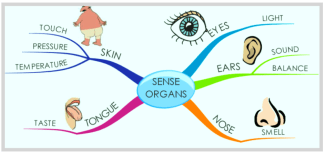
4. “Feelings aren’t facts” is 💜 not about our emotions, as most people assume. The confusion comes from the reality that we use the word ‘feeling’ in 3 completely different ways: As physical sensations, as emotions AND as thoughts.  See POST

5. “The way you do one thing is the way you do everything.”
💜 NO – It’s the word “EVERYTHING” that’s the problem. Taken literally, this is a blatant inaccuracy. Always keeping PMES in mind, how we do the various parts of our life depends on many factors.
It will depend on your fundamental personality, such as indicated by their MBTI or EnneaType – whether you’re more left or right-brained, (scientific vs artistic) Introvert vs Extrovert, AND above all what areas of childhood experiences were allowed & praised or ignored & punished.

So, I can be meticulous about how I dress & do my makeup, but sloppy about keeping my house orderly.  I can be a brilliant scholar & writer, but neglect my family. I can be very talented & dedicated to my native art form but irresponsible if I have to do office work…. .READ article – a Lesson
▶︎ None of us do everything the same way!

(❤️YES) However, if we take this phrase more psychologically, we can use this woman’s experience to indicate where we’re stuck. Each of us can have the same kind of ‘aha’ connections – between everyday ways of doing (or not doing) things & how they’re a reflection of our fears & resistance to change. Such discoveries help us remove blocks which will improve our life.

6. “If you hate a flaw in someone else it means you have that flaw yourself, otherwise you wouldn’t be upset by it”
💜 NO – the things that bother us the most in the present, that push our buttons or ‘trigger us’ are actually the abusive / neglectful things that were done to us by our family (& other perpetrators) over & over throughout our childhood.
They are wounds we need to clean out, but they are not our character defects.
EXP: I’m almost never late anywhere, but I will definitely be angry at anyone who’s consistently late to dates / appointments, because of all the times as a kid I was left waiting to be picked up by my drunk parent….

❤️ YES – Al-Anon says that when we point a finger at someone else, 3 fingers point back at us. So the statement is true to the degree that our denied ‘character defects’ get projected out onto others, & we don’t like what we see of ourselves in them. These flaws are the emotions, beliefs & behaviors (TEAs) we internalized from our family & society, rolled into our Negative Introject’s voice (PP).

BUT that is not who we are. It’s the False Self we developed in reaction to our unhealthy upbringing.
Even so, our True Self sneaks thru in spite of early brainwashing – sometimes indirectly, sometimes obviously.
EXP: a secret interest, types of addictions we chose, our career path, the way we dress, places we love to go….. So the goal is to find out who we really are & live it!

NEXT: Sayings #3

HEALTHY Boundaries – Info (Part 2)

WHAT’S COMFORTABLE FOR YOU  is Too close for me!

PREVIOUS: Healthy Bs – Info (Part 1)


REVIEW: Bs – ‘Healthy Source’

HEALTHY BOUNDARIES : HOW CLOSE?
Studies have formulated Personal Boundary distances for middle class people in Western & westernized countries.  In most social situations Americans require a comfort zone of 6 to 8 sq feet per person, & any violation of that buffer may trigger a strong reaction. In crowded cities people are most likely to just shut down – at least in public

1a. The Intimate Zone – the most important – is 6-18″ (15-45 cms). People guard this area as if it were their private property & only those who are emotionally close are allowed in, which include lovers, parents, spouse, children, close friends, relatives & pets
1b. The Close-Intimate Sub-zone: extends 0-6″ (15 cm) from the body, which may be entered only during intimate physical contact (whispering, hugging, kissing, sex…)

2. The Personal Zone – 18-48″ (46 cm-1.22m), the distance between us & others, at polite social functions like parties, any friendly gatherings & talking with close friends

3. The Social Zone – 4-12 feet (1.22~3.6m) – the distance from strangers, like sales or repair people, a new employee, anyone else we don’t know very well, & generally talking with acquaintances
4. The Public Zone – 12 feet (3.6m) – interacting with strangers & when addressing large groups

GENDER DIFFERENCES
 Personal space has been studied in relation to age, race, culture, mental disorder, menstrual cycle & gender. Regarding the latter, researchers have observed definite differences between the personal space needed by men vs. women in general (most women need less):
• Whether the distance is between 2 men or 2 women
• If a man in approaching a woman or vice versa
geneder Bs• Positioning:
men prefer being next to each other but face to face with an attractive woman. Men need more room around them, so will try to avoid crowds & personal invasion of any kind, reacting hostilely if they can’t

women prefer face to face, being more sensitive to the space next to them, & become wary if a stranger approaches from the side. Women generally keep their distance from both genders unless they feel safe, are more tolerant in crowded areas & seldom invade other people’s space  (More ….

• Studies also noted that children learn this spacing by age 12 if not before, as seen in a sample taken between kindergarten & 6th grade, where significant gender effects were found: Both boys & girls need more distance when around the opposite sex, & less when with their own. (Males – Female Differences)

General CHARACTERISTICS of Healthy Boundaries
▪︎ Appropriate, based on my inner life.  I set a boundary or let it go based on what I’m experiencing right now – which include my beliefs, choices, thoughts, decisions, feelings, intuition, needs & wants. So knowing what’s coming up for me in my external life is crucial in setting healthy boundaries to have healthy relationships

▪︎ Clear. I know my internal boundaries & those that I use in relation to others
▪︎ Firm. I decide how firm I want my boundaries to be, to get what I want or need

▪︎ Flexible. Healthy boundaries need to be flexible. I decide how close or far away I want someone to be in order to feel safe. Also – for healthy relationships, I need to let go of some boundaries & limits – when appropriate

▪︎ Maintaining. I have to consider whether to hold firm OR relax a specific boundary or limit – for some period of time, to get what I want or need

▪︎ Present. I need to keep my boundary in mind when in a specific situation, to identify which ones work & which don’t. If I don’t stay alert I may not be able to decide whether to ‘enforce’ it or relax it

▪︎ Protective. They help protect the well-being & integrity of my Inner Child
▪︎ Receptive. I need to consider when it’s useful or enjoyable to loosen a particular boundary a bit, so I can let another person, place, thing, behavior or experience in.
(Modified from list by Patricia Jones, ‘Alive in the Moment)

NEXT: List of Healthy Bs, Part 1

HEALTHY Boundaries – Info (Part 1)

yes / no I’LL LET YOU KNOW
how close you can come!

PREVIOUS: RIGID Bs (#2)

REVIEW: ‘Boundaries Defined


WHAT are Healthy Bs?
According to L. A Hayduk (1978), it’s “the area each person actively maintains around themself, into which others cannot intrude without arousing discomfort”. And Richard Stengel (1995) found that ‘Personal Space’ surrounds one’s ego-center, intuitively understood by all human beings

• Setting boundaries is about moderation & grey areas, which requires a person to be “fully differentiated” via S & I.  A good boundary-setter is willing to step into their uncomfortable ‘grey zone’ with a clear Yes or No line. They know who they are & who they’re not, taking responsibility for what’s theirs, & expecting / allowing others to take responsibility for what’s theirs

• Then 2 such people, already independent in their True Self, can be inter-dependent, close enough to stay connected with a positive impact on each others’ life, without unwanted intrusion. Healthy Bs are flexible enough so people can grow & change. Each can soften where their Bs are to encourage intimacy, or extend their Bs to create safety

• We all react to changes in environment, managing them to suit our unique ‘Comfort Zone’ – with specific rules for what works for us, so there are no absolutes. A severe decrease in available personal space makes us itchy. If that situation persists, this lack of control can cause psychological distress

🔒 PRIVACY
Social scientist Irwin Altman studied privacy in relation to all forms of Social Boundaries – what makes them optimal, balanced between ‘not too hot & not too cold’!
According to Altman (1975) Bs Are :
1. fluid – we decide how open or closed we are, in reaction to what’s going on inside or outside of ourself
2. not perfect – the amount of space we want or need to feel comfortable & fulfill a particular role, is often different from what’s available

3. flexible – our invisible Bs can be adjusted to different situations. With too much privacy (more is not always better), a person will start crowding others, given an opportunity.
With too little privacy, they compensate by withholding & isolating

4. 2-way – involves input from others, such as noise, and output to others, such as talking
52-leveled – individuals vs groups (public places, cyberspace…)

🔐 PROXEMICS
In the early 1960s American anthropologist Edward Hall was a pioneers in the study of humans’ spatial needs, who coining the word proxemics‘.
A subcategory of non-verbal communication, it’s about the impact it has on social interactions: how we respond to & use our personal space – the distance between ourself & others.

His research led to a new understanding of the human need for territory (animals do too), divided into:
▪︎ Personal – the immediate area surrounding a person. EXP: our body’s space-need & posture are unconscious reactions to subtle changes in sound & pitch of another person’s voice

▪︎ Territorial – the area people lay claim to & defend against others IS used to “propagate the species by regulating density”
This aspect includes the study of how space is organized in houses & buildings, the layout of towns & cities, & in collective forms such as Clans & Countries.

Some responses to B Invasion:
▪︎ choose less personal topics, talk about leaving, avoid eye contact
▪︎ increase inter-personal distance, turn away, leave
▪︎ AND, as with non-humans when pushed too far – reacting with aggression

Degree of Intimacy: Hall identified types of responses by the “angle formed by the axis of the conversants’ shoulders” – a combination of postures (sitting, standing, prone…) which are affected by nonverbal factors each person picks up from the other:
⚓︎ Kinesthetic – how close people are touching
⚓︎ Olfactory – amount of odor picked up
⚓︎ Thermal – degree of body heat
⚓︎ Touching – the ways they’re touching, or not
⚓︎ Visual – amount of eye contact
⚓︎ Voice – silent, very soft, soft, normal, normal+, loud, & very loud.

Cultural Factors : Hall noted that Realizing & Recognizing cultural differences helps eliminate discomfort people may feel when their inter-personal distance is too great (“stand-offish”), or too small (intrusive).

cultureThe Lewis Model of Cultural Types suggests 3 styles :
a. “Multi-active” cultures, that are warm & impulsive (Brazil, Mexico, Italy)
b. “Linear-active” cultures, cool & decisive (Germany, Norway, USA)
c. “Re-active” cultures, accommodating & non-confrontational (Vietnam, China, Japan)

NEXT: Healthy Bs – info (Part 2)