PARENTS BLAMING US (Part 1) 

being blamedWHY IS IT ALWAYS MY FAULT?
No matter what I do, it’s wrong!

PREVIOUS: Rebellion vs Compliance #2

SEE posts : What is Guilt?
What is Shame?
• ACoAs’ Need for Revenge


INTRO

There is a lot of talk in the ‘spiritual’ community about forgiveness, ie – that we should not be blamers.
Not blaming ourself (S-H) or others (attacks) is a good rule for us in the present – now that we’re adults. And that’s a discussion for another post.

However, those same teachers & preachers never talk about what was done to us as kids – that among many other types of harm, our parents unfairly, inappropriately blamed us for all kinds of things – and what that did to our tender & vulnerable developing sense of identity!

This post is about what happened TO US as children. A hallmark of alcoholic & other emotionally unhealthy families is the mistreatment of their children in all 4 of life’s aspects: Spiritual, Emotional, Mental, Physical (PMES).

😿 Parents blaming their children for ANYTHING is ABUSIVE. Blaming us is the same as holding us responsible for their deficiencies & unhappiness.

Remember – abuse is not just Physical, in its various forms. Abuse encompasses all the ways people harm others – especially their children – by injuring another’s rights, self-esteem, mental clarity, sense of safety, emotional equilibrium & boundaries. So Blame fits into the other 3 categories – M, E & S..

👥 A variation on parental Blame is a constant and negative COMPARISON of a living child to a dead or other living sibling, another relative, a famous person….  “Why can’t you be more like ____”

1. IN OUR CHILDHOOD
✅ Damaged parents blamed YOU for things WHICH :
a. were NOT your fault
• your difficulties because of a learning disability, like dyslexia or ADD
• the illness or death of a parent; a parent being left by a lover or spouse..

b. was a projection
of what the parents were guilty of being (fearful, irresponsible, lazy, feeling unlovable, risk-averse….)

c. you were not doing
what you were accused of
• being a ‘whore’ when you were too young to have had sex at all OR
• of seducing a parent’s lover/ spouse, when that adult was actually sexually abusing the child
• of using drugs when you never did – at least not at the point…) Screen Shot 2016-06-12 at 5.07.37 AM
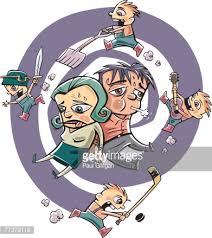
d. you could not do, especially without any instruction, & then accused of being stupid
• when you legitimately couldn’t know something (fixing a car or other machinery, shopping by yourself, def. of a big word…)
• ‘getting’ a hard school subject
• expected to know how to fix a parent’s personal, sexual & financial problems
• forced to take care of a drunk or crazy parent, alone…
WHICH
e. were truly no one’s fault. EXP :  • an act of God
• being born with a physical or mental limitation
•  getting severely ill or having an accident…

f. you were held responsible for –
 something one of your siblings or other child did, especially if you were the Hero or Scapegoat (start a fight; steal or break something; get into trouble at school…)

g. your parents were jealous of, because they couldn’t do something you could, even as a youngster (a natural skill or gift), so they made that ability stupid or a bad thing

h. was mostly not true
always lying (“Kids always lie so we can’t believe anything they say”)
always being stubborn, selfish, too sensitive, difficult, disobedient, stupid….

➼ This last category are a group of normal childhood characteristics which:
√ sick parent cannot tolerate because of their own issues
√ occur sometimes as a defense in the child because of family abuse & neglect…
√ happens occasionally because kids are human ie. imperfect.
Those behaviors & attitudes then get demonized – which make them a ‘sin’ and more likely to continue, causing the child to TRY becoming perfect’. We CAN’T WIN in a sick environment.

NEXT: ACoAs’ need for revenge

Principles of Character – Outline

self-awarenessTHESE ARE THE QUALITIES
I aspire to, a day-at-a-time

PREVIOUS: “Keep the focus on yourself” means? (Part 2)

POSTs: What is Character ?


PRINCIPLES  —> Values —> Comments useful for Character Education

1. ATTRACTION: Courage, Discernment, Self-awareness
We attract whatever we put our attention to, which makes it bigger. If we don’t do anything to limit destructive impulses, life becomes increasingly difficult for us to control. By staying awake & using discernment, we can see the difference between what’s helping or harming us. Then we need the courage to take steps toward health, by eliminating negative desires that attract chaos into our life. (POST  : ACoAs & Risk“)

2. CAUSE & EFFECT : Accountability, Good Intentions, Restraint
According to the ‘law of the universe’ – for every action there’s an equal re-action. When we realize that we’re accountable for our thoughts, words & actions, we can own what motivates our actions, & recognize the wisdom of reasonable restraint
. calmness(POSTs : “Keep the focus on yourself” and “Fear of Responsibility“)

3. DEVOTION : Concentration, Calmness, Focus
We can connect with Creative Intelligence by taking the time to find our True Self, not the false ego. This can be done by being calm, & concentrating on deeper thoughts, whether through prayer, song, meditation or a walk in the woods. When we focus on Spiritual Principles & actions, we glimpse the Divine

4. FAITH : Trust, Hope, Patience
There is a Loving Intelligence that pervades all things. What’s needed is to hold on to our trust & hope, even when living in the midst of uncertainty. Faith is the willingness to take the next step required without fear or looking back, with the patience to allow Divine Order to work-through our situation without trying to force solutions.. (POST “Lack of Trust and Healthy Trusting“)

5. FORGIVENESS : Compassion, Mercy, Understandingforgiveness
Forgiveness frees us from the damaging image of ourself as a victim. It dissolves the poison of resentment which blocks healing & growth. Choosing a new understanding of our pain & trauma, it gives us the freedom to treat ourself with mercy & compassion, as well as to those who have wronged us. This reconnects us to our Real Self. (many POSTs : …. Forgiveness)

6. GRATITUDE: Generosity, Magnanimity, Appreciation
True Universal Reality provides abundance. When we’re grateful & appreciate what life has to offer, it shows H.P. that we accept whatever’s been given to us, & therefore lacking nothing essential.
To attract more prosperity, feel generous toward all life. This opens the flow of supply into our world – because whatever we give to life returns to us.

7. HARMONY : Optimism, Co-operation, Enthusiasm
copoperationA Universal law : We can choose what attitudes we want to focus on, such as optimism & cooperation, rather than being a victim of painful experiences, It allows being in control of ourself, & having inner quiet.
Enthusiasm means to willingly, happily perform all types of jobs (large or small) which generate beneficial energy, making us far more likely to succeed.

8. HUMILITY : Modesty, Unpretentious, Gentleness
Being modest & un-pretentious keeps us from puffing ourself up with self-importance. God in His own way & time provides us with whatever we need, as we rid ourself of pride, & maintain an attitude of gentleness & acceptance. (POSTs “Humiliation“, and “Arrogance vs Humility”)

9. INTEGRITY : Truthfulness, Courage, Sincerity, Honesty
“Earning future trust by accurately reporting past facts.”
It means to act according to the values, beliefs & principles we claim to hold (internally consistent, opposite of hypocrisy).
The connection to our Inner Self is strengthened when we align our thoughts, words & actions with Truth, & have the courage to act with sincerity & honesty. It’s letting go of “our will run riot”, & honor the Divine Will.   (POSTs Why ACoAs Lie)

10. LOVE : Compassion, Kindness, Nurturing, Self-Esteem, Self-Respect
serenityAll living things need love to survive. We must first take care of our own need for it so we don’t become emotionally toxic. When we shift self-talk from the Inner Critic (Introject) to the Inner Companion (Loving Parent), we increase self-esteem & self-respect. Then we’re free to be the helpful, caring & thoughtful people we want to be.

11. SURRENDER : Acceptance, Freedom, Contentment
When we accept what’s happening to us in the moment as part of a grander plan needed for our growth – we experience a new freedom. We welcome whatever comes into our life, surrendering to a Higher will. This awareness provides contentment & peace.   (POST :Acceptance & ACoAs”)

NEXT: Considering abuse

RECOVERY – What IT IS & IS NOT (Part 2)

Screen Shot 2015-07-10 at 9.30.12 AMLEARNING HOW TO BUILD A LIFE
on the experience of those who know

PREVIOUS: RECOVERY – IS & is NOT (#1)

SITE: “25 Things you do as an Adult when you’ve experienced Childhood Emotional Abuse
(like the Laundry List)


RECOVERY
IS NOT….
❖…eliminating ALL pain from our life
IS...
❧…a combination of gains & losses, fulfillment & disappointment, joy & pain – part of being human, not superhuman.  Only addicts – of any kind – want ‘no pain’ & think that’s an appropriate goal
🦋

IS NOT…❖…trying to get from our family all the things we never got as kids, nor assume we can have a ‘great’ relationship with them – if only we were well enough

IS…❧…accepting there’s no ‘if only’ about our family & our childhood (SORRY!)
no more blame• It was their damage that prevented them from being all we needed.  It was never because of who we are/ were! Yes, it was done to us, at us, with us – but it was never ABOUT us  ie. our essence
and, unless family members have been growing too, or changing enough, we may take more radical steps

We can choose how to deal with them – by :
a. having rare or no contact, to protect ourself from abuse & mind games
b. no contact for a long time, until we are more healed, so our buttons (which they installed) get much smaller :)! Then re-connect & see….

c.
limited contact, to see who they really are, for clarification & validation of how they treated us – which will diminish our self-hate, & allow us to gain some emotional distance from the family drama
d. regular contact, spaced out AND only as friendly Adults.  Don’t expect them to be parental if they can’t. Interact superficially or only in ways that suites everyone. Don’t push for the impossible!

➼ Other people often disappoint, which can make us sad & angry. That’s normal. It just doesn’t have to devastate. NOW it’s truly up to us to become Kind Parent & Wise Adult for ourself, with the help of therapy, H.P., Program & other support systems.
🦋
IS NOT...❖…saying we have forgiven our family, as if it were an intellectual decision, made once & forever, hoping that will wipe out all of the damage they inflicted, & all of our pain

IS…❧…knowing that forgiveness is a gift from H.P. – a ‘letting go’ – as a result of our willingness to do Recovery work to clean out old emotional wounds.
Forgiveness is the end product of that work, rather than a prerequisite for growth, as many tell us. Forgiveness isn’t genuine without healing our rage & sorrow. (9 posts = 4 types)

PROOF : when we try to ‘will’ forgiveness & think it’s all behind us – eventually some life-event will stir up that unresolved pain & bite us in the butt. Besides, some abuses are un-forgivable! But we still have to let go of being a victim of our own rage by feeling the sadness that’s underneath (“Forgiveness Is an Inside Job“)
🦋

IS NOT…❖…getting over our rage, so we don’t have to feel it any more OR not having any more terror, worry, sadness… if/when we get ‘really healthy’Screen Shot 2015-07-10 at 9.38.11 AM

IS... ❧…knowing & accepting that we’ll always have some vestiges of the old pain, fear, rage, shame & abandonment hurt, BUT that those Es doesn’t have to control us
…. being willing to separate internally, from the bad voice & externally, from harmful people. It’s absolutely necessary to get away from damaging situations & negative thoughts. After all, if you kept scraping away at a sore on your skin, it wouldn’t heal, would it?

• At first this ‘letting go’ can bring up fear & depression, but with time, it will allow us to heal old wounds, making us less fearful & angry.
We can find & use new ways to deal with those painful Es – by: learning to accept & comfort ourself & letting them out in safe places & ways. Then we’ll experience pleasant & joyful emotions as well.

NEXT: RECOVERY – IS & is NOT (#3)