ACoAs – Fear of Commitment (Part 2)

acoas fearI DUMP ON ANYONE who tries to love me

PREVIOUS: FoC – ACoAs #1

SITE:10 most common fears” & more….


1. ORIGIN

2. RE-ENACTING (cont.)
As stated in Part 1, besides ‘close’ relationships, Fear of Commitment (FoC) also shows up as not giving our all at school or work, at home or in public…. It’s a fear of giving our best, convinced that our best will always be considered “not good enough”. That leaves us ashamed, lonely & scared.

Q :  ‘Not-good-enough’ & always being wrong – according to whom???
Ans : Original family, maybe peers, religion…. As long as our WIC is running things (via beliefs & emotions) we’re stuck in the past, assuming everyone will treat us exactly like our family did/does, even when we’ve had positive experiences to the contrary.

Many ACoAs long for a loving, steady relationship & a better over-all life. Yet no matter how hard we try we keep missing the brass ring. The WIC’s terror of reproducing the dangerous intimacy of our original Parent-Child bond is so strong it prevents us from finding the safety & acceptance we crave.

❤️ What stops us from creating our own strong, internal Loving Parent ? The kind who will pull the WIC away from the PigP, form a connection to a loving H.P., & prove there’s another way to bond with others – safely ?

Some REASONS for FoC
a. Fear of abandonment (FoA) – our most basic fear.
A = not getting enough of our legitimate childhood PMES needs met
, AND being abused in each of those 4 categories. This created the belief that we’ll always lose what we need & love.
So there’s no point in setting ourselves up for more pain by committing (C) to something we truly care about.  It’s one reason ACoAs are ‘best’ at what we like or love to do – the least.

It’s inevitable that FoA creates lack of trust. SO – if our parents & other important caretakers neglected & assaulted us, how can we possible believe anyone else would be dependable or care for us?

b. F of leaving family of originwe can’t C. to anything we need or like, if it takes us away from ‘them’. IF WE:
– are so ‘under their thumb’ that we’re not allowed to make our own choices, or let family pick for us (mates, career, where to live…)
– have emotional-incest ties to a parent, so we can’t have our own dyad
– are still dealing with a parent who’s an active addict, mentally ill or otherwise impaired, so we feel compelled to keep taking care of them, instead of ourselves

c. F of being trappedTo the WIC, C. to anything means :
— never being able have our own space to breathe, nor
— get out of any situation that doesn’t work out the way we hoped.

As kids we were chained to ‘them’, & the adults were trapped with each other – in dead-end jobs, with relatives they hated, & most of all trapped in their own damage. We swore we’d never let that happen to us, so now we never commit to anything or anyone.

♻️ Instead, we make our own prison because of :
• NO Options: not allowed to choose (lovers, friends, mates…) for ourself, so whoever wants us gets us, whether we actually want them or not

come here-go away• NO Boundaries – automatically disappearing / losing ourself when around others, especially a mate. Not having access to our True Self, we don’t know what our needs, wants or tastes are, so we go along with whatever others expect, want, demand, imply….
This makes us feel suffocated, ‘swamped’, overwhelmed when we / they get too close.

• NO Freedom: we’re stuck because, along with our own FoA, we’re not allowed to leave one of our toxic family rule: “If you don’t like you have to stay”.
ACoAs react in one of 2 ways:
– either stay way too long in bad or unsuitable situations OR
– compulsively come & go, isolate or just keep running
⬆️ “Come here-Go away” dance of FoC (see ‘Boundaries’)

NEXT: FoC – Part 2b

ACoAs & RIGID Boundaries (Part 1)

heart in jail
DON’T GET TOO CLOSE –
it’s the only way I can feel safe!

PREVIOUS: WEAK Bs. – #2


Healthy BOUNDARIES are about  having personal power.
When used appropriately they are our “line in the sand,” defining who we are & protecting ourself from unwanted influences.

• In any family – parents are supposed to provide emotional nurturing, & teach children how to function successfully in society.  This includes age-appropriate boundaries, allowing children enough leeway & options to find out who they are as separate individuals, not just extensions of the caretakers – while also providing appropriate protection from harm, which they gradually internalize & use as adults.rigid Bs

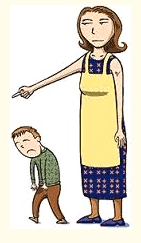
Unhealthy – However, in families where boundaries are too rigid, all power & control is with the parents. There’s no room for kids to breathe, make mistakes, take their own time to learn or be playful & relaxed.
One-sided power strangles communication, limiting or eliminating any real sharing between the generations (“no back talk” / “children should be seen & not heard”…)

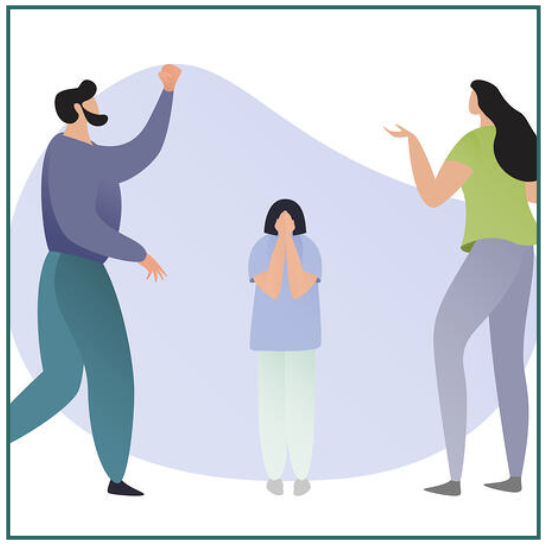
• Some parents are monolithic – standing together as a unit, against the children, rather than for them
• OR one parent, often the father, is the tyrant dictating all rules, to be followed without question
— If the other parent simply capitulates or escapes, children at the mercy of the bully or mentally ill mate
— OR the weaker parent will join forces with the children, either to secretly help the kids, or in self-protection, & will manipulate/ coerce/ guilt the kids into obeying the abuser

• As CoA children become adolescents, they either withdraw or rebel.
EXP: Ben was a happy talkative little kid, friendly to everyone, even strangers. His narcissistic parents were performers, constantly forcing him to be on stage – which didn’t suit his personality.
Over the next 10 yrs. he lived thru several uprooting family moves, physical & emotional abuse at home & bullying at school. Gradually he withdraw, & by 13-14 he’d stopped talking or socializing. His parents wondered “what’s wrong with him”!

ACoAs develop overly-rigid Bs from families:
• that were too restrictive, dictatorial, cruel. Even though it made us very angry, we end up copying their pattern, afraid to break out of the suffocating shell they created
OR
• who were neglectful but emotionally over-dramatic & boundary invasive. Being constantly overwhelmed, confused  & terrified, we over-compensated by tightening our own Bs (becoming rigid), as a way to have a tiny measure of internal control, to quiet intense anxiety

EITHER way – Physical, psychological, emotional &/or sexual assaults forced some ACoAs to choose this per-version of Bs as protective armor (Toxic Rules & Roles  – (“how things have always been done // the right way to do things”….).
So, afraid of being personally violated -again-, we become inflexible & hyper-vigilant, even paranoid.
All our relationships suffer because we’re incapable of true emotional intimacy, convinced that if we let our guard down, we’ll fall under the total control of The Other. Instead of protection, it only leaves us deeply empty & lonely.(‘’Come here-Go way )

• Traumatized children naturally become very mistrustful (just like animals abused by humans). Since the Brain is innately organized in schematics…. we associate people & experiences in generalities.
Therefore ACoAs set up defensive walls against those who originally hurt us, & then extend them out to everything else, losing the ability to make the equation : people = pleasure.
EXP: A woman violated / beaten / neglected … in childhood by an adult male will definitely not trust any man. And a man ‘broken’ by beatings & betrayal from his mother won’t be able to trust his judgment or intuition about other women…..

ACoA irony: When isolation becomes unbearable, in desperation we reach out to whoever is immediately around, whether inappropriate or not.wrong guy
If that person or group shows any interest or kindness – we fall profoundly under their influence before even realizing it! For an instant we drop our guard & drift into the fantasy of finally being loved & taken care of. They become our sole obsession – for a time – convinced we can’t live without them

**Eventually, we’ll feel strangled & crushed, because rigid Bs are not Bs at all! They only mask a desperate longing for a connection that’s actually symbiosis.
▪︎ Hopefully we come to experience the toxic person / group as a virus invading our inner sanctuary, which must be expelled.
▪︎ We can crash-separate by devaluing & discrediting them, finding fault, starting fights or withholding & losing interest!
🔺 Alternatively – we can walk away with a smile, healthy self-esteeme, head held high.

NEXT: RIGID Boundaries (#2)

BOUNDARIES & ACoAs (Part 4)

inner conflict 

YOU’RE GETTING TOO CLOSE –
Hey, where are you going?

PREVIOUS: Bs & ACoAs (Part 3)

REVIEW posts: “Separation & Individuation


3. The SYMBIOTIC DILEMMA  (cont)
a. Fear of Engulfment
b. Feat of Separation

A basic requirement for S & I is a sense of efficacy – able to (allowed to) have an appropriate effect on our environment

SYMPTOMS of poor or no Separation & Individuation (S & I) :
• weak sense of Self: the child’s core injury comes from not receiving a meaningful, empathic emotional response from mother
• narcissistic vulnerability is based on shame of having needs : child is injured by being constantly slighted or ignored
• emotional detachment or clinging: abandonment is played out as “come here – go away” in adult relationships

CONSEQUENCES of symbiosis : creates difficulty with —
✓ feeling all our emotions
✓ loving others unselfishly
✓ nurturing our young
✓ mourning the dead
✓ boundaries re. time & space
✓ caring about the human race
✓ dealing with conflict (isolating) & taming aggression….

✶ These problems make it very hard for ACoAs to have healthy intimacy, often relating to others as if we each were inanimate objects, used to fix unresolved infantile issues

‘COME HERE – GO AWAY’  
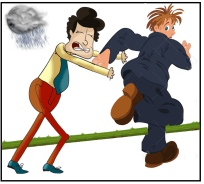
A common example of the symbiotic conflict is the push-pull syndrome.
While some ACoAs are primarily Stayers & others primarily Leavers, there are some whose conflict is subtle & very confusing because both are acted out in every relationship. Either way, ACoAs don’t realize we’re recreating our early abandonment – again & again

1. Come-Here/Go-Away : ACoAs very much want to have relationships, but don’t acknowledge our deep fear of emotional closeness. We invite people in, let them come close if they approach, & some of us even compulsively chase after anyone we can snag
✶ At the same time, we have an invisible barrier around us used as a substitute for real Bs others cannot see & that we are rarely aware of
2. As someone gets emotionally & physically closer, wants to know more about us, spend more time, be more permanent – we start to panic. Since we’re not allowed to say what we need, want & don’t want, how we feel…. if we let them in we’ll be taken over by their needs & wants

3. As the person moves in, they inevitably cross that ‘line in the sand’ the WIC is hiding behind BUT which we never acknowledge, so can’t verbalize.
Then how can we possible expect others to know when they’ve gotten too close?
We feel invaded, suffocated, endangered – terrified. At that point the need to protect ourselves is much greater than our fear of being alone!

4. As the terror builds we do or say things that are a slap in the face to this person who cares about us – we verbally punch them in the stomach &/or become distant & unavailable.  They are shocked, hurt, confused, appalled! They try to figure out what they did wrong — but their only sin was getting too close to our wounded self! So naturally they back off & then go away!

5. Now it gets interesting! WE have pushed the person away by cruelty or withholding AND then wonder why they withdrew!  Suddenly our abandonment fear come to the fore & we act confused & surprised at the others reaction!  Where did you go?? & WHY?

6. So without understanding what we’ve done – that we set up the painful outcome – some of us will invite, cajole, beg the person to come back to us.  If they do, AND we still cannot identify where our boundaries are, they’ll come too close again, & the cycle repeats!

• This pattern is crazy-making for us & our friends or partners. It makes them sad & eventually very angry.  We are condemning ourselves to an endless round of seduction & loss.  We look like the crazy one, hate ourselves more, blame others, say we can’t trust anyone, think we can’t love or the ‘universe’ is against us….. without looking at our Symbiotic Conflict!good Bs

RECOVERY – As Usual 😔
•  Admit our damage – cut thru denial
• Feel the old rage & terror
• Nurture the Inner Child
• Reduce S-H, CDs & obeying the PP
• Connect with others in Recovery
• Form an alliance with the loving H.P.

NEXT: How ACoAs Boundary Invade