
PREVIOUS : Dissociation #6
POSTs : “Toxic Family Rules”
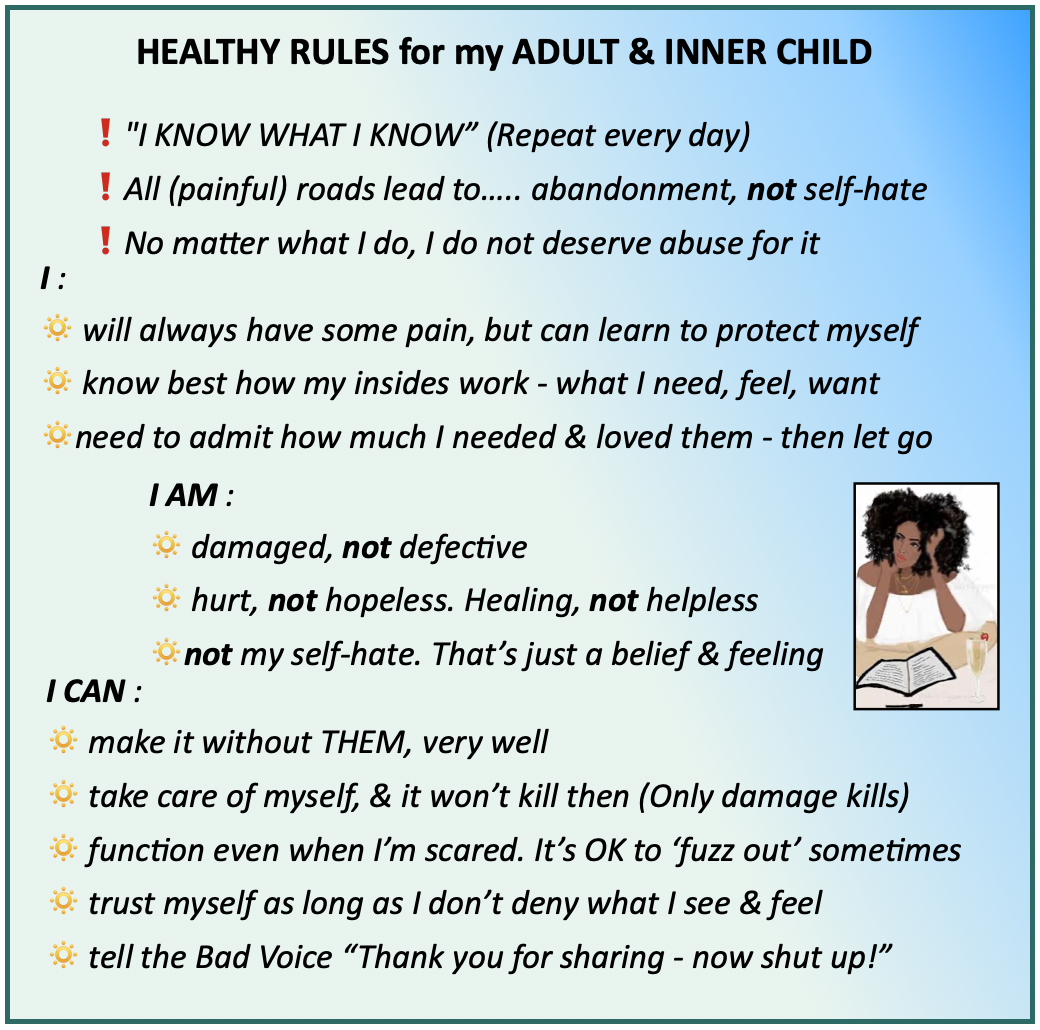
“SYNOPSIS: Unhealthy vs Healthy Family RULES”


NEXT :
PREVIOUS : Dissociation #6
POSTs : “Toxic Family Rules”
“SYNOPSIS: Unhealthy vs Healthy Family RULES”
NEXT :
PREVIOUS : Dissociation – styles
SITEs : How to Integrate the Brain & Prevent Dissociation After Trauma
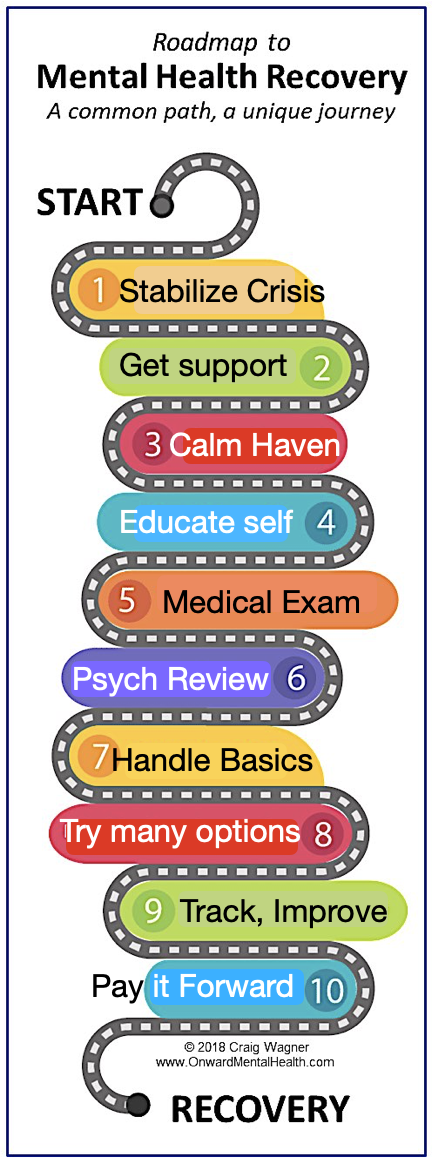
⬅️ “JOURNEY to RECOVERY, a 10-step process” Although everyone’s journey of mental health recovery is unique, this roadmap works for many…. Recovery takes time, so the bulk of our effort is spent in steps 7-9.
‼️ The moment ACoAs anticipate upcoming stressful situation that’s familiar, many of us tend to hold our breath, activating the fight / flight / freeze response. This increases body stiffness & anxiety.
♥️ By making intelligent USE of the ParaSympathetic Nervous System (PSNS) we can hack our body’s nervous system for stress relief. (See Intro post).
To encourage its activation, we can stimulate the VAGUS NERVE (VN) – the longest cranial nerve, which runs from the brain all the way to the abdomen, & branches into various key organs such as heart, lungs & digestive tract.
It’s a counter-balance to the fight / flight system, so stimulating it can create a calming effect throughout the body.
 (Symptoms of VN dysfunction).
PHYSICAL ways to stimulate the Vagus Nerve
Breathing
Since the human mind processes one thing at a time, when we’re totally focused on the rhythm of our breathing it’s harder to focus on pressure & pain. (MORE….)
ACTIVITY (“Nasal breathing & the brain“)
• Inhale through nose <— & exhale through mouth —>
• Slower – aim for 6 breaths per minute
• Deeper, from the belly – as you inhale, expand abdomen & widen rib cage
• Exhale longer than inhale – to trigger the Relaxation Response
 Cold – immerse forehead, eyes & at least 2/3 of both cheeks into cold water. (turns on the immune system)
– go outside in shorts in the wintertime (briefly)
Oral – gargle loudly with water, chew gum or suck on hard candy
• loud singing stimulates vocal cords, activating the VN
• laughter: lifts mood, & boosts the immune system
Nutrition – a probiotic & Omega-3-rich diet strengthens the VN brain-gut axis
• eating fiber stimulates vagus impulses to the brain, slowing gut movements, making us feel fuller after meals
Self-massage – gentle pressure on ribcage, & both abdomen sides (viscera)
• up & down the neck & directly behind the ears into the hairline
 • EFT tapping, to move energy & emotions through the body (works on dissociation)
• palpate temples by hand or with air-filled ball
• feet – gently or firmly touch / massage them.
SITE : “7 Ways to stimulate Vagus Nerve” (psychologically)
SELF-HELP for Dissociation
Connecting – Withdrawal from others is a common symptom of trauma. So it’s important to regularly stay in touch with SAFE support groups, therapy, friends, family. Ask for help. Get hugs!
Grounding our mind & body is the key to dealing with dissociation – connecting us back into the here-&-now.- via mindfulness (not meditation).
It’s an ability we already have, we just need to be taught how to access it. Some methods :
— Taking short pauses we insert into our everyday schedule
— Inner Child Guided Visualizations – lying down, but can lead to sleep
— Listening to Recovery podcasts – seated, walking
— Merge mindfulness with other activities such as yoga, sports, standing in line , long walks, house cleaning …
Movement – research says aerobic exercise can be an effective therapy for people with PTSD, about 30 minutes a day.
Self-care – avoid alcohol & drugs, eat balanced meals, sleep 7–9 hrs a night, relieve stress with creative & fun activities
PSYCHOTHERAPY for Dissociation
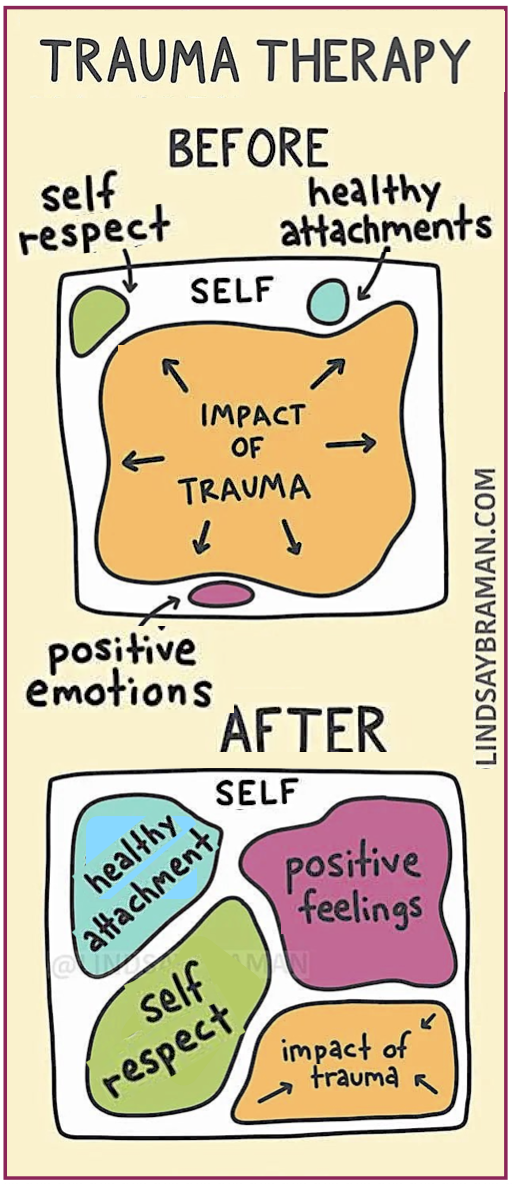 🔸CBT = Cognitive behavioral therapy. It’s designed to help you notice, identify & change negative thoughts & stop harmful behavior.
🔸EMDR = Eye Movement Desensitization & Reprocessing. May help to stop nightmares, flashbacks or other PTSD symptoms.
🔸Hypnotherapy. It may feel easier to explore & process painful memories when in a relaxed state. Only to be done by a professional certified in hypnosis, dissociative disorders & PTSD
 RECOVERY BENEFITS
 NEXT : Power – Negative Worker Types #1
 PREVIOUS : Dissociation – Memory
⬆️ CHART : “Trauma : Normal Stress to Disorder“
MILD
Normal (non-pathological) Dissociation
“The essence is being ABSORBED – an intensely focused mental concentration & involvement in one or more aspects of conscious awareness, to the exclusion of other content from the phenomenal field.
The ‘adaptive’ function of absorption is to be able to complete specific necessary mental processes, although at the expense of tracking intervening events.”
EXP : One second you’re fully focused on driving or taking to a friend…. & the next your mind is wandering to food shopping or worrying about your children…..
Trauma TYPES
🔻Acute dissociation – from a single event, extreme enough to threaten the person’s emotional or physical security
🔻Chronic – from repeated & prolonged abuse. Very distressing symptoms may appear early on, or only years after the original event(s) when triggered by some current event that mirrors the original experiences
🔻Complex – exposure to varied & multiple harmful events, often invasive & inter-personal, but also from dangerous environments & civil unrest – giving the person a feeling of being trapped.
▪️Secondary or vicarious trauma – symptoms develop from ongoing close contact with a PTSD trauma victim / survivor
MORE SEVERE
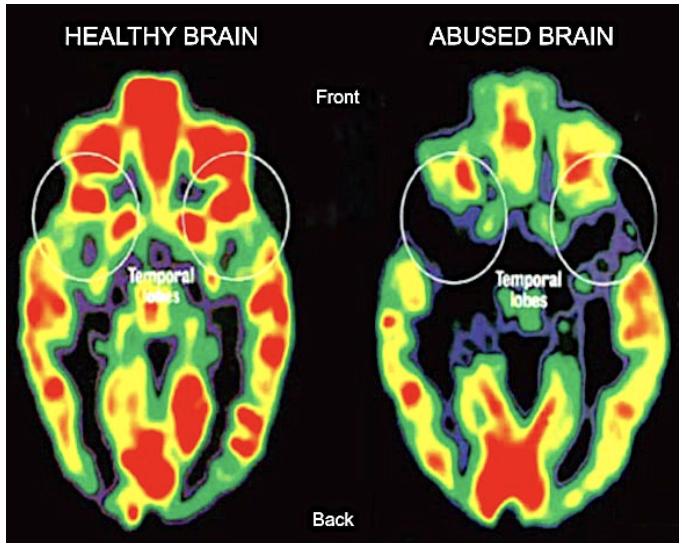 REVIEW : Experiencing traumatic events results in overwhelming PMES distress, actually changing the structure & function of the brain, so it’s no wonder we have strong mental & physical sensations from terrible childhood events. ➡️ BRAIN SCANS
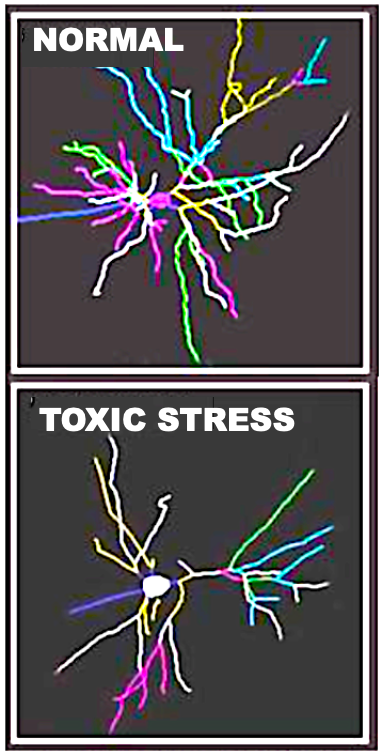 MRI images show that ongoing severe stressors during childhood can shrink key parts of the brain,.
The “Adverse Childhood Experiences Study” (ACEs) underscored the negative impact of trauma on later-life health & well-being, such as drug & alcohol abuse, mental illness, suicide, cancer & chronic, & life-shortening diseases. (⬅️ More….)
SITE: “4 Ways Childhood Trauma Changes a Child’s Brain & Body”
When psychologically overwhelmed, all human beings look for safety. But many times that can’t be met by the external world when needed, so we shift to internal safety – withdrawal.
Dissociation is the mind’s “last resort”, the freeze response when fight or flight isn’t possible. It’s the nervous system kicking in to protect us from unbearable awareness.
 Many factors determine how badly the traumatic events will affect a person. It will depend on :
∇ their basic personality
∇ the presence of other mental health conditions
∇ previous exposure to traumatic events
∇ type & characteristics of the event(s)
∇ person’s background & approach to dealing with emotions
∇ the degree (or lack of) their trust in a Higher Power
Dissociation Levels
a. Temporary ‘spacing out’ because of current pressures.
EXP: During a job interview or a first date, you’re so nervous it’s hard to think. Afterwards, you can’t remember most of what happened.
It may seem like losing your memory, but actually – the memory was not formed. Dr. Ira Fischler suggests “When memories for specific emotionally-laden events appear lost (a “blackout”), it’s most often because our attention during the event was not on the interaction itself”
b. Episodic – Dissociating can occur in people who usually function well, but as a result of too many stressors or responsibilities piled up in too short a time, (family trouble, work problems, health issues….all at once), so the mind takes a little vacation
c. Long-term – feeling disconnected to one’s True Self, in reaction to intense distress, such as a very painful breakup or divorce, death of a child or long-term mate, a house fire, a hold-up or purse-snatch, serving in a war zone (as PTSD-DS).… & can take months or years to recover from. The person may still seem to be functioning , OR not be able to function well at all.

NOTE: Red dots indicate the experiences over several years of one high-functioning ACoA, before & during the early years of Recovery. As indicated, the person’s specific dissociative reactions fall into different categories & levels, rather than limited to one ‘style’.
These experiences were short lived & rare, but generally triggered by an abandonment flashback, mainly occurring in present-day locations or groups similar to those in childhood. The 2 larger dots indicate the more intense experiences.
* This suggests that a wounded adult can go thru life with normal developmental experiences (career, relationships, creative outlets… ) but still have moments of disconnection which can’t be seen by others, yet are the result of long-term childhood trauma.
It also shows that many ACoAs have great inner strength, resilience & intelligence, which has helped them survive & eventually thrive – with the right kind of help & hard work.

NEXT : Dissociation – HEALING
 PREVIOUS : Dissociation – Emotions
SITEs : “How Human Memory Works“
“Forgotten Memories of Traumatic Events Get Some Backing from Brain-Imaging Studies”
MEMORIES = Different types are stored across different inter-connected brain regions ⬇️
▫️Explicit ones are about events that happened to you (episodic), as well as general facts & information (semantic).
▫️Implicit ones don’t require deliberate recall of past events or info (learned motor skills), & we can access them without even trying
Short-term working memories rely most heavily on the prefrontal cortex, carried to the brain’s structural core where they’re compared with existing ones & then stored in long-term memory.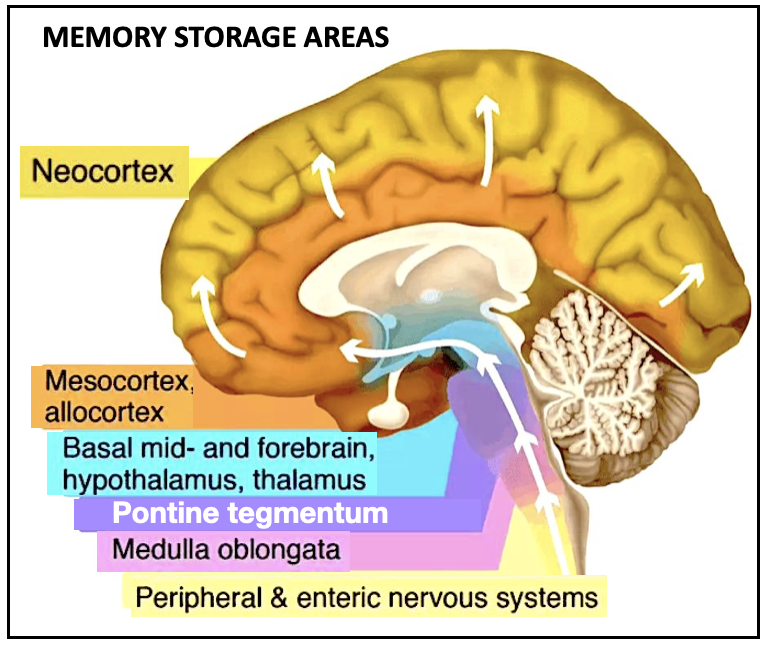
This process occurs in an instant, but is not always perfect, because incoming information races from neuron to neuron. If a particular route is not used often, the transmission may be incomplete, leading to either a faulty memory or none at all.
Normal memories are a combination of :
❖ Narrative – context or story of what’s happening (RED : I’m walking to grandmother’s house with a basket of cupcakes)
✿ Sensory – (I can see the trees & smell the flowers in the woods, feel the red cape on my back…)
★ Emotional – (I’m a little worried about rumors of the big, bad wolf in the forest)
When heavily traumatized, especially as children, our memories get separated into one or more these 3 components. It’s suggested that the brain does this to keep functioning & 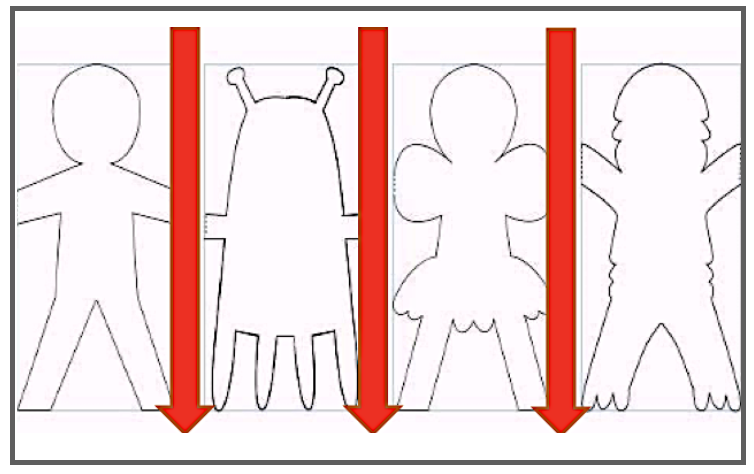 not ‘crash’ or be physically injured.
And in Complex Trauma, barriers are formed between parts of Self, to keep excruciating memories away from daily functioning parts.
Dissociation & MEMORY
Dissociation is mainly about repressed or forgotten memories. The brain can hide those that are particularly terrifying from trauma. This is long or short-term protection when the emotional pain of events are too intense. But in the long run, suppressed memories can create serious mental health issues such as anxiety, depression, PTSD & dissociative disorders (DD) (More….)
The brain is designed to memorize & retain info it considers important for our survival & for adapting to our environment.
IF it doesn’t store info at all or dissociates from an event, it’s the mind’s hardwired protection, so don’t assume there’s something wrong with your mental ability.
★ In fact – it’s an adaptive mechanism we should respect & value. (POSTS: “INFO : How the Brain Learns“)
 The brain stores the parts of experiences it considers vital, & “forgets” the rest. With extreme stress, such memories are suppressed, because the brain :
♦︎ is temporarily out of power & can’t encode anything more
♦︎ considers that the memories may jeopardize survival, so stores them in a different place, or
♦︎ is working to keep the person afloat, so ‘assumes’ it’s unnecessary to store the memory in an accessible way.
EXP re. memory components: If Little Red Riding Hood (OR any ACoA) goes to therapy, she (he) might say :
Option 1. “I keep picturing a wolf in the woods, but that doesn’t make sense, not like a real memory. Did that even happen?”
Option 2. Or – she smells tree & flower scents when not in the forest, & that makes her feel uneasy (or crazy)
Option 3. Or – just feels anxiety / panic, but doesn’t know why
Option 4. Or – she can have all 3 symptoms & not know they’re all about one experience (Modified from “Memory Fragments & Reassociation“)
♦︎ She (he) / you did encounter the wolf (bad parents, spouses, bosses….) & survived, but the traumatic events have remained as 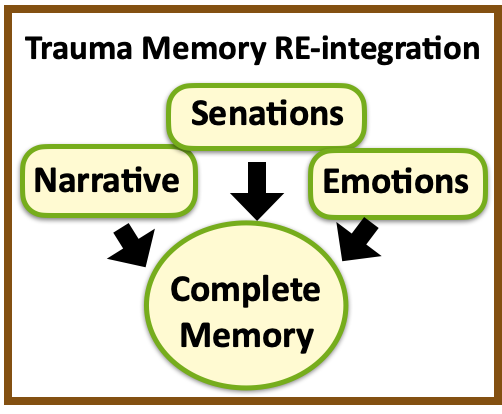 fragmented memories – making the person doubt themself.
☁︎ The brain doesn’t register experiences as ‘real’ unless they include all 3 memory-parts, & will only reconnect them when we feels ‘safe’ enough.
POSITIVE : Fortunately this is do-able, by talking to safe knowledgable people about our experiences of ‘possible’ verbal & physical attacks. Pairing a feeling state with either a sensory memory or the narrative (the knowing of what happened) is the first proof the event was REAL.
Even when dissociation is a symptom of trauma (but not as mental illness), it can also be considered a skill. Not remembering horrible experiences has the advantage of allowing a person to see things from fresh perspectives, making room for the capacity to be surprised, & leaving mental space for learning new skills.
NEXT : Dissociation – Styles
 PREVIOUS : Dissociation – Brain
SITE : “Why Can’t I FEEL? Dissociation & Emotional Detachment in Response to Trauma
REMINDER : this topic is NOT about DID (Multiple Pers.)
Dissociation & EMOTIONS
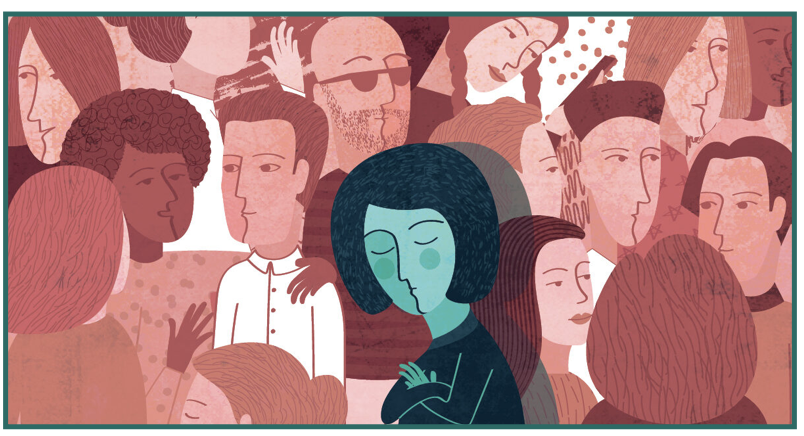
Dissociation is a way to avoid painful emotions, trying to protect a fragile ’Self’. It can occur in the process of being wounded in PMES ways, or later as a long-standing defense (mental habit). If it becomes an automatic response every time we experience intense emotions, is will be hard to undo.
Children can develop dissociation as a coping mechanism when parents do not teach their children emotional regulation skills, who las adults don’t know how to cope with ‘big’ feeling when they surface, & so are overwhelmed by them.
The benefits of dissociation may seem obvious – avoiding specific hurts or endless suffering – but the cost is enormous. By suppressing unwanted feelings, we not only lose the capacity to experience painful ones, but also pleasant & passionate ones, reducing the joy of living. (see POSTs: ACoAs & Emotions) 
ACoAs – As adults, many ACoAs are cut off from our ‘true’ emotions, living in our head. This is so even for those who seem ‘very emotional & dramatic’. The first style comes mainly from being stuck in the Left Brain & the second mainly in the Right.
Ironically, in neither version are we actually experiencing the original pain – only the defensive ones that cover. The original trauma-emotions (loneliness, frustration, hurt, sadness, rage, terror…) are dissociated, cut off.
The most common defense against feeling them is self-hate, blaming ourselves for ‘causing’ our suffering.
This numbing started in childhood, but the pain of each abusive & neglectful moment doesn’t go away – it just accumulates & goes underground – over the months & years of growing up. In the present, this pile-up of emotions will inevitably show as constant anxiety, low-grade depression & anger-outbursts.
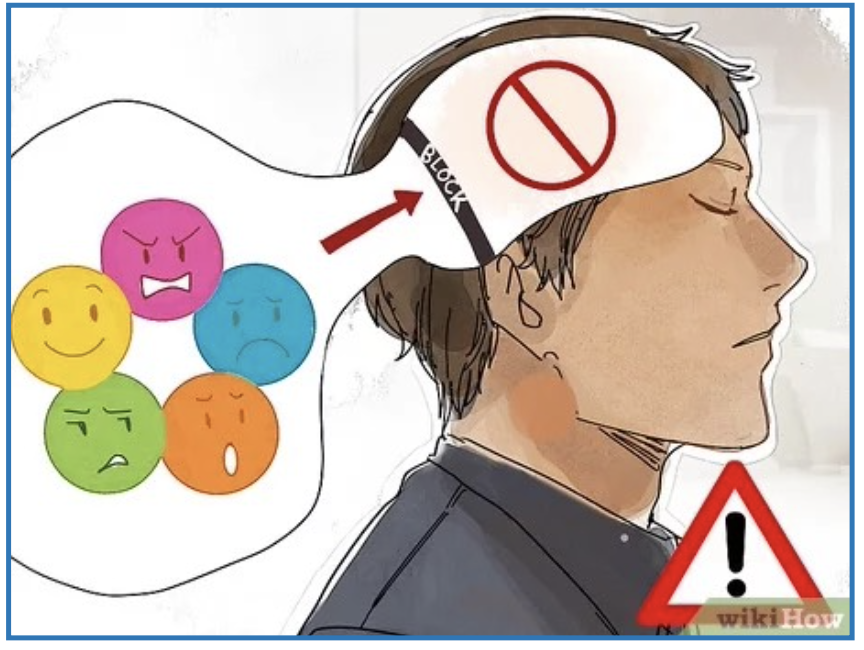 • One way this dissociation shows up is temporary muteness – we’re so ‘shocked’ by what someone does or says that we can’t say anything in the moment.
↖️ This is called TONIC Immobility.
Later of course we think “I wish I had said….”. This happens when our emotion-center (Limbic system) is overwhelmed, called Flooding, so the thinking brain is temporarily unavailable
• Another way is not being upset when someone manipulates, controls, disappoints or otherwise hurts us – if ever, but maybe until months or years later, when the upset finally dawns.
• It can also show up as a disparity between what we’re saying & the expression on our face – describing a traumatic event we experienced while smiling or laughing!
• The most common form of emotional dissociation is seen in the person who grew up in an emotionally & verbally abusive violent, home but will say AND is convinced they had an OK childhood & that their parents loved them. NOT.
The way we can know they’re in denial is by observing the  many ways their life is dysfunctional, even if they’re intelligent & hard-working.
RECOVERY EXERCISE : To undo dissociation we need to become aware of / stay awake for AND accept all our emotions, but this isn’t fast or easy.
Until then – start by checking in with yourself at the end of each day by simply writing down every activity & event – up to 6 words pr item.
THEN list every emotion you might have had for each – as if you had felt something – even if you didn’t notice anything at the time.
EXP : Your ex called today about something, the boss was being a pain, the dog threw up, the car wouldn’t start…. & it didn’t bother you, or you ignored the knot in your stomach.
But by the end of the day, you’re probably feeling down or very cranky, but don’t know why.
 You might have dissociated from your anger, frustration, grief, guilt, loneliness, sadness, maybe even relief….
GROWTH : Eventually, by paying attention (Mindfulness), you’ll start to associate events & emotions.
Along the way,
✿ learn how to comfort yourself when upset (& do it)
❖ be in charge of how you express emotions as they surface.
❣️Also give yourself credit for positive changes in behavior.
(Posts : “ACoAs – Accessing emotions” and “ACoAs – Accepting Emotions”

SITE : Biology of Emotions
NEXT : Dissociation & Memory
 PREVIOUS : Dissociation – Intro
SITE : “Changing the Emotional Association of Memories“
“Sane” DISSOCIATION (Diss – NOT DD) is one of the most common defenses developed by ACoAs, starting in childhood. Because it’s so much a part of PMES survival, many of us are not even aware of how & when it manifests now. It doesn’t have to be dramatic (like losing time) but can occur in subtle ways throughout daily routines, where we’re not present for ourselves – like not ‘noticing’ the emotional sting of an insult.
When children are mistreated, their overall development is negatively affected. Chronic mis-attunement, neglect or other parental abuses can severely harm the baby’s brain, impairing the corpus callosum – the main connecting pathway between Right & Left hemispheres (We are “Wired to Connect”)(⤵️ More….)

Diss. involved temporary or long-term emotional numbness & mental detachment. In actual experience, the more severe form is similar to alcohol blackouts – no matter how brief – because we don’t remember what we said or did while being ‘out of it’, but without ingesting a drink or drug. (See next post re. MEMORY dissociation).
Even so, it IS chemical
Aaron Kucyi et.al., neuroscientists at Northeastern, scanned people’s brains using fMRI. They found that a specialized area – the ‘default mode network‘ (DMN) connected to several other 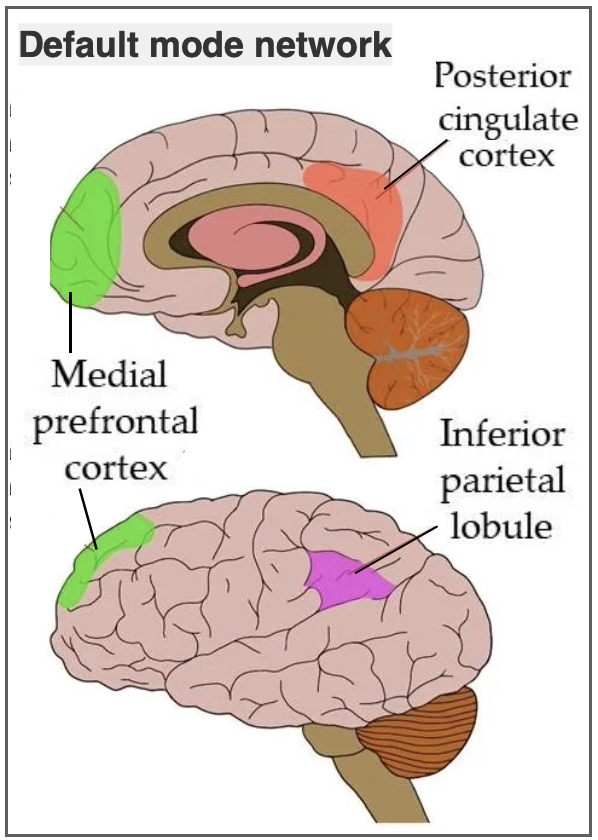 networks – has to do with controlling or maintaining a train of thought. (➡️ CHART info)
The DMN is active when a person is not focused on the outside world & the brain is at wakeful rest, such as during daydreaming or mind-wandering. This may explain that being distracted comes from the brain’s ability to go ‘down a mental rabbit hole’.
DMN can also be activated when thinking about oneself, about others, remembering the past or planning for the future – i.e. not being in the present.
The research also found a noticeable lack of connection between the DMN & attention networks – such as those that provide sensory input – making it harder to be aware of our immediate environment. All this 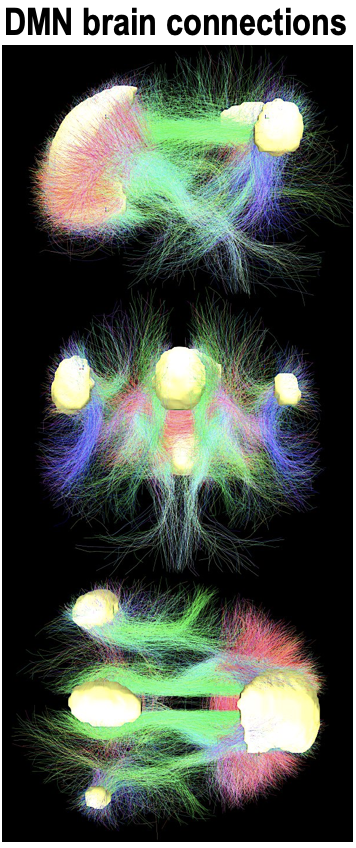 research indicates that dis-connecting is actually a dynamic & fundamental function of our psychology.” (MORE….)
Disrupted DMN connectivity between brain regions for too long can change the way a person perceives events, as well as social & moral reasoning, increasing their susceptibility to depressive symptoms. Weakened network linkage was associated with anxiety & dysfunctional attachment patterns, found in people who have experienced long-term trauma, both in childhood & as adults.
SITE: “Brain connections predict how well you can pay attention“
The NERVOUS SYSTEM : Under normal circumstances, 2 versions of the Nervous System function alternately to keeps us in balance –
🔺Sympathetic (SNS), from the(FPN) fronto-parietal network, is mainly geared to mobilization, preparing the body for action when stressed.
AND the opposite is —
🔻Parasympathetic (PSNS), using acetylcholine as 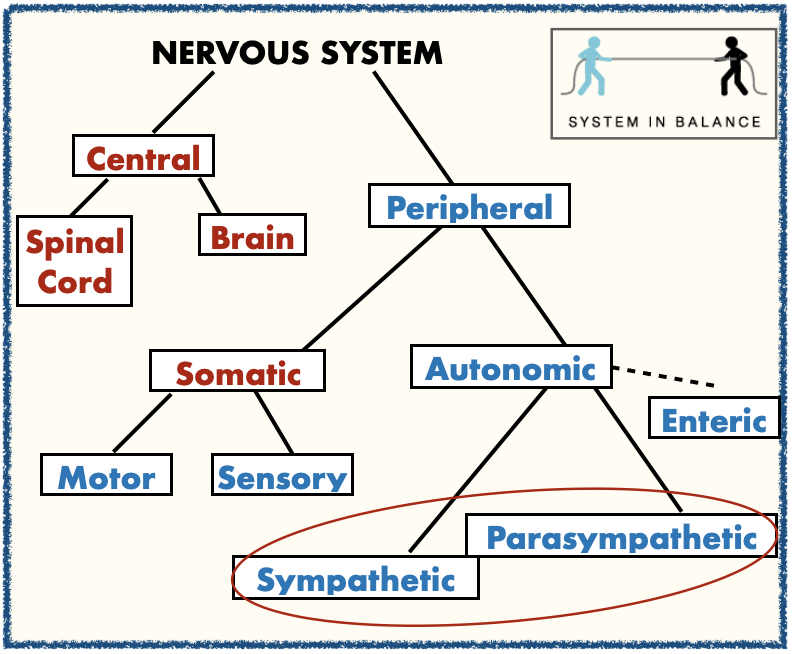 its primary neurotransmitter, is in charge of the body’s “resting & digesting” functions, meant to act as a brake. It tells the body it’s okay to slow down, take deep breaths & relax.
A well-functioning PSNS provides the ability to recover from a distressing trigger by deactivating, to digest, play, rest, & again relate to others in an intimate way.
However, exposure to extreme threat, particularly early in life, combined with a lack of adequate caregiving – limits a person’s long-term ability to balance the responses of these 2 systems when facing future troubles.
Disassociation is mainly activated by the parasympathetic nervous system (PSNS) when we’re under great duress, either by a current event or from past trauma being triggered, also producing ‘freeze’ & temporary muteness)
The brain is flooded with reality-escaping endorphins, dulling the ‘thinking’ brain (neocortex). Changes in cerebral blood flow leads to a failure-to-engage, distorting perceptions (depersonalization & derealization) & impairing  memory encoding-&-retrieval.
Constant stress also results in adrenal fatigue, causing a drop in cortisol levels, producing “endogenous opioids as a form of analgesia” (naturally formed numbing chemicals).
Such physical effects make us distracted & detached, missing all or parts of what’s going on around us.
Parasympathetic imbalance shows up as dissociation :
▫️Physically – suppressed hormones, heart rate & blood pressure, also diarrhea, dizziness & sleep disturbance
▫️Emotionally – feeling confused, numb, slow, reactive
▫️Socially – feeling disconnected, rushed, & stuck in anger or sadness, leading to depression.
NEXT: Dissociation (Part 2)
 PREVIOUS : Corporate Culture – positive
SITE: A 3-Step Approach to Treating Trauma-Related Dissociation,
✿ “The Star Model for Treating Childhood Dissociation” (w/ good overview info)
✿ “Working with Dissociation“
NOTE : This topic is NOT about ‘Dissociative Disorder” (‘split / multiple personality’) in which the mind creates separate identities who are not aware of each other, to deal with extreme childhood trauma.
IMPORTANT : In this category, the person has only one identity. Also, this type of dissociation does not interfere with or distort ego states (wounded & healthy Child, rational Adult, Introject….) which are legitimate aspects of Personality. However one or more of these PARTS may be hidden from oneself in the dissociated state.
🚩 🚩 🚩
DEF : NON-pathological (Normal) Dissociation is a defense mechanism used to cope with distressing or overwhelming emotions, usually but not always linked to a history of trauma.
A person can experience occasional or periodic disconnects of self-awareness, deliberately ‘zoning out’ to get thru a stressful situation (unpleasant medical procedure, deeply concentrating on a project….)
EXPs:
🔸Day dreaming – allowing the mind to wander where it needs or wants to go
🔸Deliberately induced trance states & religious ecstasy
🔸Engaged in peak experiences, losing self-awareness & time, maybe with moments of de-realization (apart from surroundings) or de-personalization (from self)
🔸Immersed in recreation – a psychological vacation from life’s hardships
🔸Successfully engaged in activity of personal significance (prayer, sex, meditation).
 Research indicates that 80-90% of the general population report occasional dissociative symptoms (only about 2% experience DID).
➤ There are different types & in varying degrees, falling on a continuum :
▫️from feeling ‘jumpy’ to feeling nothing at all
▫️disconnecting from the words of the book you’re reading, to disconnecting from your body’s sensations
▫️from very short-lived mental breaks to more permanent withdrawal
▫️from forgetting where you left the keys, to forgetting years of your life.
1. MIND-WANDERING is a mild form of dissociation, considered a stable personality trait, as a transient mental state, in 3 types:
❖ Positive constructive imagining (how vivid your thoughts are)
▪️Guilty fear of failure (how many of those thoughts are guilt- or fear-based
▪︎ Poor attentional control (how deep you go into alternate thoughts).
In general it’s when our mind doesn’t stay on a single topic for very long, especially when involved in a demanding activity we know very well (like driving…. an EXP of mental Decoupling). Being internally preoccupied reduces cortical processing of the external environment, so we tend not to notice or remember what happened around us.
Task-unrelated (meaningless) mind-wandering is common in depressed people, or when intoxicated. (MORE….)
EXP: Mind-LESS reading is mental wandering into unrelated thoughts & feelings while the eyes continue to scan the words without paying attention to their meaning. Decoupling reduces absorbing information from our senses, breaking down the connection between reader & text.
BOOK : “The Wandering Mind: Understanding Dissociation from Daydreams to Disorders”
2. DETACHMENT, a Sub-type of PTSD is a more intense non-pathological form of dissociation : an  altered state of awareness with a separation from some everyday experience, in which the medial prefrontal cortex interferes with (shuts down) the normal working of the limbic system in its processing of emotion.
(➡️Chart)
It shows up as one or more disturbances of a person’s :
• emotional experience (numbed, spaced out)
• a sense of self (depersonalization – feeling unreal, like in a dream)
• physical perception (outside observer of one’s body)
• sense of the world (flat, lifeless & “strange”).
NOTE : Dissociation (non-responsiveness) is usually associated with past trauma, with a desire to escape painful emotions. However, temporary detachment-dissociation can also have more immediate causes, not necessarily trauma-based, such as :
✫ daily stress – current, momentary, accumulated
✫ impaired sleep patterns – deprivation significantly increases dissociative symptoms
✫ rumination – the repetitive focus on past distressing events or worry about the future, with pessimism, negative inner speech, depression, anxiety & sadness.
Researchers found that thinking about the past or future both contributed to negative mental states, keeping our attention on the present decreased dissociative episodes.
↗️ vm PFC = ventromedial prefrontal cortex
▪︎ BLA = baso-lateral amygdala ▪︎ PAG = periaqueductal gray
▪︎ CMA = bilateral centro-medial amygdala
NEXT : Dissociation – Brain

PREVIOUS : Negative Corporate Cultures #2
SITE : “How a Positive Work Culture Improves Customer Satisfaction“
NOTE: POWER topic will resume on 8/29/22
POSITIVE Characteristics
Defining what you want your company’s culture to be is the 1st step toward building a workplace you’ll love. The following are component parts of the best corporate cultures. No company has them all, & not all apply to your needs – but it gives you an idea of what to look for.
🪴Autonomous
Since most people resent being micromanaged, workers find autonomy an attractive quality. EXP: Netflix encourages independent decision-making by employees, fostering freedom & empowerment at work
🪴Casual / Relaxed
Employees in the 2020s (especially millennials & Gen Z-ers) expect the workplace to be relaxed, with a casual vibe & dress code. A relaxed work environment provides freedom to work in ways they’re most comfortable & productive
🪴Challenging / Curious
Organizations need to explore new processes, progressive ways of thinking, & innovative approaches to problem-solving. So employees who want to learn, grow & evolve will welcome being pushed & challenged in the workplace
🪴Connected / Collaborative
Employees in a company with a connected culture are encouraged to feel accepted & valued. Sharing common goals, free to express ideas  quickly & work together easily provides a sense of belonging.
Greenhouse celebrates group dynamics, strongly emphasizing the sharing of concepts & effort, to promote the birth of great ideas
🪴Empathetic / Engaged
Both ideas & emotions are valued & acknowledged – by active listening, open communication, & providing support in difficult situations. Employees are highly invested & inspired to do their best work for the company, so are more likely to stick around. Recruiterbox assesses candidates during interviews to determine which are the most empathetic
🪴Flexible
The workplace has become very different. Fewer employees ‘go to the office’, as working mainly from home has become the new norm, which includes flexible hours. As a fully remote company, HubSpot consistently emphasizes the importance of work-life fit
🪴Fun / Happy
Who says work can’t be fun? It’s no longer enough for employees to just produce. They also want to enjoy what they do. Companies that create opportunities for fun on a regular basis are more likely to engage & retain employees. Zappos CEO Tony Hsieh emphasizes employee happiness & have a work-life balance within the organization.
🪴Innovative / Nimble / Progressive
“Nimble” companies are agile & adaptable, constantly willingness to course-correct & rethink strategies, processes & approaches – to keep growing & thriving. High-growth startups often have more progressive work environments. Marriott focusing on shaping the ‘future of travel’  through technology, continuing to upgrade & modernize
🪴Inclusive / Diversity
Staff diversity & inclusion is a hot topic in HR & recruitment, especially where it has become a requirement by law. Diversity across all categories — including gender, religion, age, race, ethnicity & culture — are critical to establishing positive work environments. Without these, businesses risk losing important innovations, ideas and perspectives.
🪴Rewarding / Nurturing
Managers acknowledge employees when they go above & beyond expectations (a shout-out, gift card, small party, write-up…) & are also encouraged to celebrate each other with peer-to-peer recognition activities. The right environment energizes & motivates employees to achieve company goals
🪴Respectful
Employees are encouraged to express opinions & ideas without interruption, & coworkers are expected to listen courteously.
🪴Transparent / Trusting
This about implementing a formal, mature communication program within the company in order to enhance trust – which is a vital component in building strong working one-to-one relationships & teams.
Messaging company news to the workforce should be structured, planned & honest at all times. Employees & customers alike greatly value transparency in the workplace, by providing key information & decisions.
 🪴Welcoming
In companies with a welcoming culture, employees are friendly, more likely to build internal employee networks, & plan team events to spend time with coworkers outside the office. The onboarding process will be the first impression employees have of a company, with the potential for setting them up for success.
NEXT: ACoAs – DISSOCIATION
 PREVIOUS : Corporate Cultures – PROBLEMS (#1)
Toxic work cultures express a disregard for employees, who are treated as objects that fulfill the company’s needs, not as people who have their own lives & families. It prevents employees from thriving. And while it may not kill them literally, it will negatively effect physical health (depression, burn-out, headaches….), as well as workplace ‘illnesses’ (lower productivity, infighting, complaining….), eventually driving them to look for a job elsewhere.
EMPLOYEE PROBLEMS
1. Candidates Judged for Culture Fit
❗️ Hiring for culture-fit is an outdated recruitment strategy that will cost you top talent. When looking foe carbon copies of your current employees, your culture will remain stagnant or start to decline. Like-minded individuals are great at agreeing, but tend to butt heads when it comes to pushing the envelope.
2.There’s a Culture of Unfriendly Competition
❗️ Having competition as the focal point of your culture will breed animosity between employees. It can also lead to a negative culture founded on competition and animosity between employees.
3.Employees NOT Acknowledged & Rewarded
❗️ Only occasionally rewarding a few individuals (like a top sales rep of each quarter) will make the majority of the workforce feel undervalued & under- appreciated – doing your culture a disservice. It can also lead to competition & animosity between employees.
4.Employees Are Often Tardy or Absent
❗️ Excessive lateness &/or high rates of absenteeism are clear signs of a poor company culture. Employee’s tardiness indicates either that they’re lazy or disengaged. If they’re often out-of-office (remote or flex-schedule employees being the exception) they’re likely disinterested & not passionate about their work.
5.People Work Through Lunch
❗️ If employees often work through lunch, it’s either because they feel they don’t have time to stop working, or believe management doesn’t condone taking breaks. Not only is it a surefire way to turn employees away, but also poor business logic — 81% of employees who regularly break for lunch are active members of their organization.
Expecting employees to perform well while working eight hours nonstop is unrealistic & ridiculous. Besides, it signals that leadership only values their work output, not their contribution to the culture or personal commitment to the organization.
6. People Work Late or on Weekends
❗️ If the work day ends at 5:00 p.m. but the majority of your team regularly stays well past, that should be cause for concern. This indicates that your staff are either juggling too many responsibilities, or managers have unrealistic expectations for their direct reports. Quotas help ensure your growth plan stays on track, but impractical objectives will lead to employee burnout.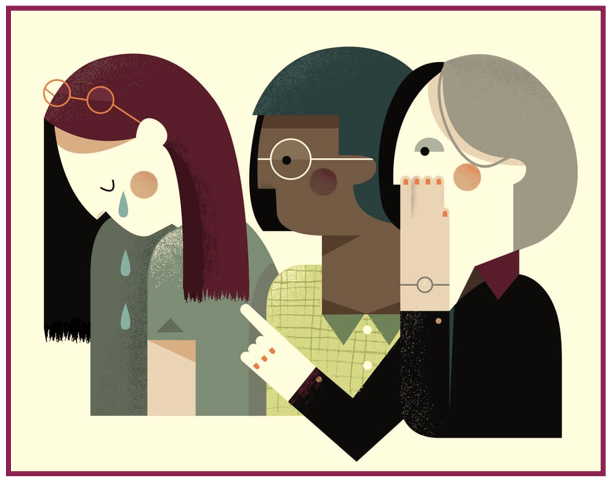
7. Office Gossip Runs Rampant
❗️ It wasn’t cool in middle school, & certainly isn’t appropriate in the office. Gossip leads to unwanted cliques that divide the workforce, turning employees against each other, which creates a culture of distrust.
8. Teams Are Siloed
❗️ Lack of communication is a definite indicator of a toxic culture. Across teams or between managers & direct reports, the way information does or does not flow can impact a company’s culture as well as its bottom line. When employees aren’t communicating properly, it can hurt productivity, stifle ideas, & create a less desirable working environment.
9.Teams See High Turnover
❗️ High turnover is almost always a guaranteed sign of a toxic company culture. Not only will it drive employees away, it will also deter job seekers from taking your organization seriously. More than one-third of U.S. employees say they would turn down the perfect job if they thought the culture wasn’t a good fit for them. If you’re saying goodbye to employees left & right, they’re probably looking for a less toxic work environment.
ALSO – The Company Doesn’t Give Back to the Community
❗️Problem: If the company doesn’t have a matching program for charitable donations, doesn’t offer a yearly day of service for volunteer work, never issues calls for donations in the wake of a devastating hurricane or other disaster…. you’re sending the message that as a company, you just don’t care about the outside world.
NEXT : Corporate Cultures – Positive
 PREVIOUS : Corp. Cultures – #2
SITE: Culture: Your Environment for People at Work
COMPANY CULTURE
‘‘Company Culture’’ refers to a firm’s overall characteristics & shared ideals, with sub-cultures that are formed by rewards. It dictates the company mission, leadership style, ethics, goals & expectations. It therefore identifies how employees connect with each another, the values they hold & the decisions they make.
People shape their culture in the environment that surrounds them at work all the time. Like personality, it’s made up of the beliefs, underlying assumptions, interests, experiences, upbringing, & habits that form employees’ daily rituals & routines. It’s difficult to change but can be modified. When needed, some strategies for upgrading it are: Improving communication, Feedback, & Recognition of work well done.
HOWEVER, Toxic work cultures are institutional-centric. Policies & procedures are designed with the company in mind, not its workforce – including outdated work policies. When employees feel their company is not doing a good job in various areas, a crisis may be inevitable – people will become disengaged, passive-aggressive, & let work quality slip.
PROBLEM AREAS
✒︎ High-pressure environment – When leadership is not vigilant about managing its environment, resulting profits & growth come at the expense of values & ethics.
✒︎ Inadequate investment in People – When management doesn’t live up to its end of the hiring agreement (compensation, career development & benefits in exchange for work) they’re less inclined to live up to theirs
✒︎ Lack of accountability – When the company consistently does not hold specific people responsible for misconduct. So when other employees see that consequences are handed out unevenly or are non-existent, they may not bother reporting poor behavior (why bother?), & use it as a reason to be less careful about their own actions.
✒︎ Lack of diversity, equity & inclusion – In spite of the #MeToo movement, certain industries are known for their culture being non-inclusive & prejudicial.
✒︎ Poor behavior at the top – When company values don’t exist, aren’t known, or aren’t enabled or enforced by systems & processes. OR When executives don’t act in line with with company values. Because of intense pressure to deliver results & the rewarded on what they achieve, leadership doesn’t care how they get there.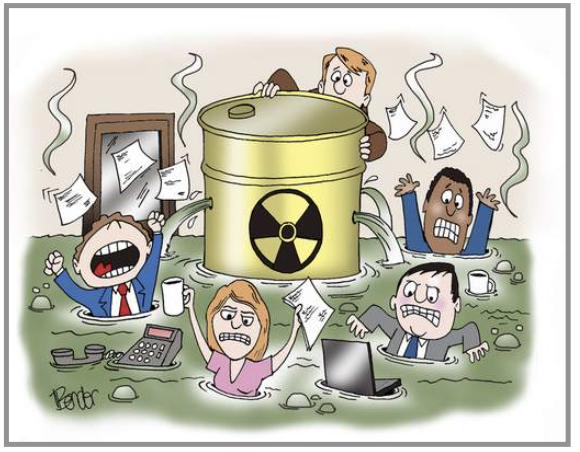
Start by ASKING:
☛ How big is the organization?
☛ How intense is the inertia?
☛ Who are the influencers?
☛ What can I do about it?
☛ Should I stay or leave?
LEADERSHIP PROBLEMS
1. An Absence of Core Values
❗️A very basic sign of a bad company culture is a lack of company core values. They are the driving force behind an organization — without them the culture is likely to lumber along without any sense of direction. Unwanted sub-cultures will then form & undermine business success.
2. No DEI Policy
❗️Not promoting employee diversity smacks of corporate ignorance, contributing to a toxic culture. It telegraphs to employees that management Just. Doesn’t. Care.
EXP: an active, effective way to recruit, hire & retain women, include gender-fluid people & people of color.
3. Managers Don’t Follow Core Values
❗️Employees look to managers for direction. If senior & middle management aren’t following core values, employees won’t either. Even worse, they’ll come to distrust leadership for exempting managers from office rules. Authority will be discredited, with a clear divide will form between leadership & staff.
4. Managers Don’t Promote From Within
❗️If all new hires are from outside the company, especially at a management & leadership level, you’re sending the message that current employees either don’t matter or aren’t good enough to be promoted. Either reason contributes to a toxic culture that stymies  growth.
5. Managers Publicly Criticize Employees
❗️Employees make mistakes, sometimes bad ones. A toxic work culture makes a big deal out of these errors by calling out employees by name & mistake, in a public forum.
6. No Good Reviews of the Company Culture
❗️ If employees are frustrated with the management style, cut-throat competition between peers or discouragingly high turnover rate – as posted on anonymous review-platforms – job seekers will be the first to know, & your company will earn a negative reputation.
NEXT : CORP culture PROBLEMS #2
 HEAL & GROW for ACoAs
