WHAT JUST HAPPENED? – 30 Qs (Part 4)

wondering 

I’M DETERMINED –
I’m gonna figure it out!!

PREVIOUS: What just Happened (Part 3)

Please read / review Parts 1-3 before answering these questions


Suggestions
a. Read all the Qs first & if you feel overwhelmed, leave it overnight. Don’t wait much longer or you’ll lose info.  No S-H allowed!!
b. Write down as much or as little as you can – it can never be ‘perfect’. You can skip any that are not relevant or you don’t know about
c. Go back to it later, more than once if need be, to fill in any blanks
d. Make sure you only take responsibility for your side of the street & no more. Both of you contributed something, even indirectly.
➼ DATE & save all entries.
INVENTORY
Re. YOU
1. What actually happened – list as many facts as you can remember (I did/said… they did/said…) Ask anyone else who may have been there what they remember
2. If relevant, list what was going on with you or what was happening just before the encounter –  what state of mind were you in during the previous few days?

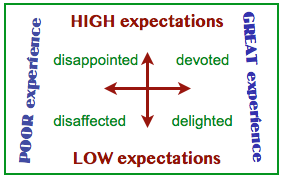
3. If there was any anticipation, what were you feeling & thinking before the event? Was there something you wanted? Were looking forward to? Needed from the person or situation?
expectations
4. What did you expect would happen on this occasion?
a. Consciously – looking forward to? Afraid of?
b. Semi-consciously – what did you secretly assume or expect?
➼ We can often tell this by intense disappointment!

5. If it was an unexpected & unprovoked encounter (by you), what state were you in at the time? (Vulnerable, needy, generally angry, sad, overwhelmed, in physical pain…)
6. How were you feeling emotionally (E) during the interchange?  List as many Es as you can
OR Ask: If I had been feeling something, what might it have been?

7. What were you thinking (T) during the interchange, that you didn’t say? What do you think / conclude, now, that you’ve had time to reflect?
8. What did your WIC ‘hear’ them saying (an implied judgement, accusations, insult….) which also often came from our family?
It may have been hurtful, OR it’s your interpretation of their comments

9. Are you surprised/ shocked by the event? Is it something you could have predicted or anticipated, based on previous experience?
10. Why do you think they triggered you so much?

Re. THEM
1. What’s your connection to this person, if any?
2. If you do know them, what has your relationship been like, over all? How do you think about them?
3. Did they act in a familiar way? How, exactly?Screen Shot 2016-06-19 at 5.57.35 AM
4. What did you observe about this other person during the interchange?

5. If you didn’t know them, what information did they give you about themselves – direct or by implication? (people always do!)
6. What did your intuition tell you about their attitude, their state of mind, their abilities, their ego state…no matter how brief? Is it familiar?
REMEMBER:  When you know a song well, you only have to hear a few bars hummed to identify it!

7. What did their behavior, emotions & words tell you about who they are (this is about FACTS, not a hatchet job) – Angry, needy, controlling, manipulative…/
8. Who do they remind you of (usually a family member)?
9. What were they actually telling you? This is not a guess. Most people say things with some kind of subtext, altho’ not always unkind
10. What does your gut and head tell you about dealing with them in the future?

CONCLUSIONS
1. Looking back, what did I observe about myself in that situation, old or new?
2. What have I realized, that I’d rather not have admitted –
a. about myself
b. about the other person

3. What actions would I like to take, as a result of this interchange?
a. ignore the whole thing
b. let it simmer some more, need time to calm down before saying anythingScreen Shot 2016-06-19 at 5.57.10 AM
c. need more time to process it myself. May want to run it by a few trusted people.
d. jump right in & let them know what I think! What are the consequences likely to be?

4. Did I learn anything useful, that I can apply to this or other relationships, in the future?
5. What do I need to work on? Improve? Modify or change?
6. What can I take with we for any future conversations?
7. What do I need to practice saying, over & over, to be better prepared for similar situations?

8. Am I proud of anything, in this situation? Did I act or talk better – more self esteem-able, more from the Healthy Adult? Was I more appropriately restrained?
9. Was there anything I enjoyed about the situation, was amused by, found intriguing, surprised by?
10. What does my IC need to hear from my Loving Inner Parent, when thinking (T) about this event?

(© Donna M Torbico, 2011)

No matter what you uncover, do not let the IC go into S-H, nor let the PP beat you up!  This is valuable info for YOUR growth!

NEXT:  Noticing Painful events – #1

WHAT JUST HAPPENED? – Intro (Part 2)

caught in their mess


I KEEP GETTING CAUGHT UP
in these messes with people!

PREVIOUS: “What just happened” (#1)


See ACRONYM page for abbrev.


PURPOSE of the INVENTORY (in Part 4)Screen Shot 2016-06-19 at 5.32.57 AM
We can use the Qs to strengthen our HEALTHY ADULT to be more in charge in the future, whatever the circumstances.
We can LEARN about:
1. OURSELVES – strengths, weaknesses, style, beliefs, needs, wishes…
a. conscious parts we ignore, don’t accept or deal with, parts we’re working on, need to pay more attention to, are OK with…
b. aspects that are hidden in the shadows which ‘force’ us to act out old fears & beliefs AND prevent us from shining our inner light

2. WHAT to expect – so we’re not shocked & reactive, every time.
ACoAs have a built-in ‘forgetter’ after experiencing a run-in with painful people & situations which mirror of our childhood trauma
a. In the present we bury the knowledge we could have gained from this encounter, & are then “taken by Screen Shot 2016-06-19 at 5.27.10 AMsurprise” for the umpteenth time when dealing with the same situation – again! as if it had never happened before

b. Even when encountering an unpleasant stranger, the interchange with them is often similar to others of that type, but we’re still surprised, not able to assert ourselves, shocked into muteness… OR over-react from the WIC’s old rage.

INTERCHANGES that hurt — 
a. but are not even remotely about us
EXP: Mona is an acupuncturist & is at a banquet honoring a prominent friend of hers. She starts talking to a man at her table & eventually they exchange business cards. He’s relatively friendly at first, but looking at her card, he becomes quite hostile, bad-mouthing her profession. She’s shocked & hurt.

Excusing herself, Mona moves to a distant table. After mulling it over for a while she goes back & asks him “What just happened?”. Slightly calmer, he tells about a very bad experience the only time he ever went to get acupuncture – when he almost became paralyzed from a cramp in his back & could hardly breathe. He didn’t apologize, but Mona was satisfied.

b. occur when we accidentally step on someone toes
EXP: Sandi gives Joe a CD of Edith Piaf for his B/day, knowing how much he loves her Screen Shot 2016-06-19 at 5.53.00 AMmusic. He’s thrilled & puts it on speaker. Sandi ‘hates’ Piaf (which he doesn’t know) & asks him to play it later. He wants to know why & she admits Piaf doesn’t suit her.

He feels hurt – as if it’s as an attack on his taste (taking things personally & being ‘over-sensitive’). Then he gets angry & attacks her for being insensitive & having no taste in music!
Sandi explains that Piaf’s voice & music are too painful to listen to, which has nothing to do with him or his taste! This only moderately mollifies him.

c. are actually meant as a positive, but are said ‘wrong’Screen Shot 2016-06-19 at 5.42.57 AM
EXP: While visiting a friend, Pat mentioned that she goes to her dentist on Sundays, since he didn’t work on the Sabbath. Her friend said “Only you could have found a dentist to see on Sundays!”  Pat was hurt & angry, but didn’t say anything for a week. It reminded her of being teased at home & in school.

After going thru the 30 Qs (Part 4), she called her friend. “Bobby, remember what you said last week about my dentist?”
-pause- “No”.
“You said…. & what I heard was that you were making fun of me, like – I’m so weird…”
-pause- “No, what I was saying was that I admired you for your cleverness…”
-pause-  “OH!. Well, thanks. But it would have been clearer if you’d said that!”

NEXT: “What Just Happened?” #3

WHAT JUST HAPPENED – Intro (Part 1)

confused monkey


I THINK I GOT BLINDSIDED – but I don’t know how or why!

PREVIOUS: ACoAs & Listening (#3)


See
ACRONYM page for abbrev.


In the AFTERMATH of a difficult / painful / scary experience (A)
Whenever ACoAs have a run-in with another person, our most common T.E.A. reactions afterward are:
(T) MENTAL – confused about what happened, how we got in that situation, what we should have said or done, wish we’d said – about what they actually ‘did’ to us….
(E) EMOTIONAL – ‘freaked’ out, but maybe not clear just what we’re actually feeling, not sure if we should be upset or what’s really bothering us, not wanting to be so aggravated or anxious, not feeling like oneself….

✶ If we’re upset AND don’t understand what happened, we automatically slide into:
(E) feeling guilty for our reaction (maybe breaking a Toxic Rule)
(T) blaming ourselves, thinking we’re weak & stupid for not handling it better…  (S-H, to mask abandonment pain, but not conscious of)
(A) ACTIONS – ‘dealing’ with it by hiding from the other person, ranting to everyone about the event, being overly solicitous (people-pleasing), stop functioning at all…. OR call / text the other person & blow them up, which usually adds to our S-H, guilt & shame.

Start CLARIFYING
• Talk oven the painful event with a healthy trusted person.
• We can also do a lot of work on our own, & feel good about that. It will help to eventually be more ‘present’ in the moment, to feel less like a victim, less scared, vulnerable…
• To that end, it’s useful to identify which ego state we were in when things ‘went wrong’.
• We can also ask ourselves what we observed or already know about the other person (but ignored).

SO:  ‘who’ – inside each participant – was in charge at the time of the incident?
PAC interationsour Wounded Inner Child was in the foreground, or their WIC was
our Pig Parent (Negative Introject) was acting up, or theirs was

🔹 It’s usually some combination:
– our IC reacting to their PP
– our IC provoking their IC
– their IC bringing out our PP
– their PP stomping on us – leaving our IC mute… (follow the arrows ➡️)

NOTE: It’s a good bet that neither person’s Healthy Adult was available & functioning, or it would have turned out differently. (See EGO STATES posts)

HEALTHY PEOPLE (HP) evaluate themselves & monitor their interactions, and when confronted with an objection or complaint, a question about their behavior &/or hurt feelings – they :
• catch it when their side of the street is not as ‘clean’ as it could be. They’re more likely to acknowledge it & make a correction or give an apology
• are able to hear the other person out, evaluate their own part in it & make whatever adjustments are possible, especially if the other person misunderstood or misread an interchange
• won’t accept blame when it’s not warrantedinventory

In PART 4 there are a series of 30 Qs to ask yourself, to encourage clarity. This set of posts is mainly about our Thoughts (Ts) & Emotions (Es). For suggestions re. Actions (As), review post: “What to DO when confused” & “Noticing Painful Events.”

The inventory can offer a way to break thru both our ignorance of what we’re thinking & feeling (Ts & Es), as well as putting a dent in our blindness about others, especially non-recovering people we’ve been dealing with for a long time.
Since everyone tells us about themselves all the time, it is up to us to pay attention to what we experience & admit “I KNOW WHAT I KNOW” (but I can’t know everything, & I don’t have to know everything to be OK)

NEXT: “What just happened” (#2)