
 IT NEVER DAWNS ON ME
to ask about the other person
PREVIOUS: Reverse Laundry List
PROBLEM
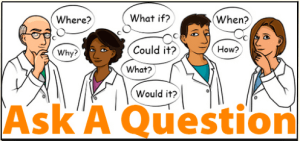
Another indicator of ACoA damage is the fear of asking questions or worse – not even realizing it is necessary, appropriate, even imperative.
At the core of this issue is the unconscious but ingrained perspective that we should not hold other people responsible for their words & actions. As emotionally immature adults, we are still going on the assumption that everything is our fault (narcissistic S-H), & therefore it’s all up to us to correct misunderstandings & fix whatever is causing us pain (narcissistic grandiosity).
In CHILDHOOD
Most ACoAs stopped asking Qs because of the messages & reactions we got from our dysfunctional family as well as from outside sources such as school & religious institutions. “Children should be seen & not heard”. They :
• didn’t want their authority questioned
• didn’t want their bad behavior pointed out or abuse objected to
• didn’t want their hypocrisy & neglect uncovered….
AND they —
• couldn’t be bothered to listen or explain things
• didn’t have the patience to show us what they knew how to do
• made it sound like we’re dumb for not knowing things they knew
• told us we were disrespectful for questioning their authority
• punished us with a smack or with guilt for wanting to know what’s going on around us • made fun of us for exploring & being curious ……
NOTE: Curious & clever children may seem to be ‘challenging’ the adults “WHY … WHY…” But if we got a bad reaction (“you’re arrogant, you’re being difficult, you’re disrespectful”) it’s almost always because the person did NOT know the answer & was ashamed to admit it
No matter what Toxic family Role were fell in to as kids (Hero, Scapegoat, Lost Child, Mascot), ultimately we were on our own, because our wounded parents we unable to connect with us in healthy loving ways. We got the message that we were a burden to them – or worse – hated (“You’ll be the death of me yet!”). We understood that if we were to figure things out it would have to be from other sources, like school & our peers, but mainly by just watching other people & events. Quietly, secretly observing the world around us helped, but it didn’t encourage asking questions.
As ADULTS
Our early trauma, distorted mirroring & lack of good role models has left holes in our ability to think of what to say. This is because of missing information, rather than stupidity. It literally means not having the vocabulary for legitimate questioning – what words to use, what point of view we need to come from, or what to expect.
BUT this can be learned from books such as “The Gentle Art of Verbal Self-Defense”, & from others who have already know how.
Many of us believe that any form of Qs is impertinent, boundary invasive, & just plain rude – which is not true when Qs come from our Adult ES.
And when someone says or does something unkind, inappropriate, narcissistic or flat-out mean – we justify, over-explain, excuse ourselves (Sorry, Sorry), instead of lobbing the ball back at the other person by saying something like:“What did you mean? // Why did you say it that way? // Is that what you would do – want?… (See “Useful Responses”).
ACoAs were not allowed to defend, protect or stand up for ourselves, to not have the right to object to abuse, & to never know what our true needs are. So we continue to live in a quasi-world of not really belonging, not having rights, not being heard, not having access to our personal power, & most of all – never truly feeling safe. Others of us will bite back when we feel neglected, dismissed or accused, a version of the PP &/or WIC trying to protect ourselves, but this is simply ineffective & can serve to escalate a bad situation.
NEXT: ACoAs & Asking Qs – Part 2



 HEAL & GROW for ACoAs