Passive Aggressives – Review for ACoAs (Part 3)

WHAT A CONCEPT : Honest doesn’t mean hostile.
Pleasant doesn’t mean passive!

PREVIOUS: P-A ACoAs (# 2)

SITEs:” Emotionally Volatile People
• “Difficult People & how to Handle Them

REVIEW (cont)
1.The GAME // 2. WHO plays the game

3. CAUSEs of the game
ACoAs ; from our family, school, religion…. we were NOT allowed :
• to be angry, to the point of not even knowing we are!
• to know what we wanted, how we felt, what we preferred (being too much of an individual got smashed – so it left us confused)
• to ask for anything (don’t bother them)
AND
• were taught to never put ourselves first
• always had to always be perfect (no mistakes) – so better not choose anything
• no matter what we did, we were punished, so we couldn’t win
• safer to not be too visible (in a dangerous family, & later in abusive relationships)
taking any risk was discouraged, made fun of, punished (so now we can’t risk ‘failing’ & being disappointed)

4. EFFECTs of the game, as the P-A
a. Negative BenefitsWE DON’T have to :
• figure out who we are, what we want & need
• disobey any of the toxic family rules
• admit we’re angry, even raging, underneath
• stand up to the ‘control freaks
• make a mistake & deal then with consequences
• AND we get to blame others when something goes wrong, & maintain the illusion of superiority

b. Negative Consequences of being P-A :
• always feel scared of disapproval & losing people (FoA)
• it increases our Self-Hate & Loneliness 
• lose out on many opportunities to grow, to be heard, to have fun
• make other people mad at us, a lot! for forcing them to carry all the responsibility & then getting blamed
• never get what we really want, unless by accident or by luck
• we are dis-empowered, lose self-esteem, stay a victim, are infantilized, stay mute, don’t risk anything

4. HEALTHY
a. General: We need TO
• identify all the ways we were hurt as kids, including the specific messages we still obey, like ‘don’t feel’ , ‘don’t talk’ (Toxic Rules)
• prevent the Wounded Inner Child from running our life BY growing a Healthy Adult & Loving Parent  (the UNIT) who can make executive decisions about how to own & fulfill our needs
book-end with the IC, to outgrow living in the past. If done consistently, it will teach the WIC the difference between what’s possible & real in the present, vs the way it was in our dysfunctional family

b. For Passive-Aggressives – we need TO:
• keep a safe distance from anyone who is easily provoked to anger
own our hidden resentments, anger, rage, bitterness
• learn safe ways of discharging rage, & healthy ways of expressing it to others, when needed
• practice saying what we need, want, like, prefer – to find out that nothing bad happens to us or others
• stop looking for other people to be in charge of our life, tell us what to do, make our decisions & choices

Practice making ‘I’ statements every day, silently to yourself, so it gets easier & easier to say out loud:  “I want… I need… I don’t like… I’d rather…  that’s not for me… ” UNTIL it’s your new norm!

c. For Volatiles – we need to:
• accept that the rage is legitimate, but our actions are not always healthy
• find out what’s under the rag e: the reality of child abuse & neglect we lived thru, and the pain it created
• become safe enough to feel what’s underneath – grief, sadness, loneliness, hurt, sorrow, vulnerability Screen Shot 2016-06-17 at 10.24.27 PM.png
• learn calming techniques (bio-feedback, prayer, poly vagal exercises, visualizations…)
• own our Inner Sadist: make friends with it, but never let it act out
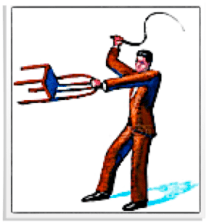
• work on getting rage out in safe, appropriate places (therapy groups, 12-step programs, doing rage-work at home, drawing, writing….)

Practice comforting & mentally holding the WIC, so he/she doesn’t feel so alone with all its pain.  Give yourself permission to cry – it is not a weakness – no matter what our family taught us!  Crying clears out toxins & releases pent-up emotional stress. It’s very necessary!

Realistically, while P-As can definitely work on having permission to express anger & rage, it’s usually up to the V. to STOP the game, stop reacting to / expecting (anything) from the P-A. Maybe even having to leave!

NEXT: Qs – Are you P-A?
ACoAs: Getting to our EMOTIONS (Under)

feelings hurtFEELING BITE!
I won’t let anyone get to me

PREVIOUS: Feelings Aren’t Facts – #2

POSTs:  Emotional Maturity


ISSUE
ACoAs were trained to ignore our Es, often with tragic consequences. It prevents us from being able to identify what is:
• suitable or not for us          • mentally sane & logical
• psychologically healthy       • genuinely pleasurable
STYLE
• At its simplest: The Right brain governs our emotions & the Left brain our thinking (among many other things).
Connecting the 2 sides is a thick mass of nerves, the Corpus Callosum, allowing the halves to communicate, like being able to verbalize (T)<—> feelings (E).  (see posts re. M & F Brains)

• Everyone is born with a unique personality which then interacts with their  environment & training.  Growing up in constant stress, for protection the 2 sides can stop communicating. Then some people function too much from the L & others too much from the R. We can see this in the way we react to physical or mental hurt.

1. UNDER-FEELING – L brain
Under-Feelers (U-F) “live in their head” to avoid painful Es, cut off from a vital part of our being, & need ways to re-connect the ‘wiring’.
a. GOAL – TO:all Es
• feel all our emotions without judgment
• learn names of a wide range of emotion & be able to associate them with sensations the body generated in the limbic system
• learn how to manage painful emotions when they surface
• regularly use available tools to get in touch with repressed emotions
• nurture the Inner Child so our Abandonment pain diminishes – making us less afraid of Es!

TOOLS
• The exact order & stages (process) needed break thru layers of emotional denial is different for every person & can’t be predicted. Each of us starts at a different mile marker on the road to Recovery. So the effectiveness & timing of these activities will vary

• Any one, or a combination, of the following methods can bring up Es we had to push into the unconscious.  It takes patience & perseverance. Try as many as you can & never give up

BODY WORK — ANY available in your area, like:
acupuncture, to re-align meridians so energy can flow freely (Es are energy)
Brain Gym (re-patterning), to reconnect the 2 brain halves
• core energetics, a safe way to clean rage out
• craneo-sacral therapy, to get trapped cerebro-spinal fluid moving
massage, to release holding Es in muscles
◉  If none of these are available, go to a gym, find a place to run, get a punching bag, hit pillows, get a plastic bat & use it on the bed or couch
READING
• 12-step literature          • Personal-growth articles & books
• Spiritual works         • any other writing that ‘touches’ you
SEEING / LISTENINGspiritural practice
• movies, plays, classical & modern music, choirs
• old family photos, diaries, letters….
SPIRITUAL
• religious services, spiritual gatherings
• meditation, prayer….

TALKING
• 12-Step Meetings – Al-Anon,  ACoA, SIA (Survivors of Incest)….
• any form of therapy – individual, group, experiential, primal….sharing
• loving friends, getting family info from anyone willing to talk
VISUALIZING
• Inner Child visualizations & guided imagery
• ‘hypnosis’ – with a trained therapist or self-administered (fully awake but with focused concentration on a topic)
WRITING
Dreams – write them out using the Gestalt Method
Evening Inventory – Brief Journaling OR a positive 10th Step
4th-Step inventory: list of character defects, childhood traumas & losses – but NOT used for self-abuse!
2-handed IC dialogues – learning to listen to the Inner Child AND how to respond lovingly

 Lists of positive qualities – 5 or 6 categories (PMES, Natural abilities, Learned Skills, Talents, Interests, Personality traits… ). Use POST: “Our Timeline inventory”
–> Add to each category as often as you think of : things you do automatically, what you’ve learned in school or on your own, natural tendencies, tastes, interests…, whatever you’re good at, AND anything positive that other people say about youjournaling
Morning pages – stream of consciousness – first thing in the a.m. we’re less ‘defended’ against our inner truth (POSTs “Writing for Personal Growth

• keep a separate list of self-hating beliefs every day to ’hear’ how ugly & untrue they are.  ASK: “Would I say these things to someone I love?” If not, then why let the Pig Parent say them or let the kid agree with them? You can change that!

NEXT: ‘Getting to our Feelings’ – OVER – #1

The BODY & Emotions (Part 3)

body Es 3

I TRY TO HIDE MY FEELINGS, but my body keeps giving me away

PREVIOUS: The BODY & Emotions – #2


SENSING Emotions
• Emotions (Es) represent a large part of our interchanges with others. If we leave out how we feel, or if we communicate them inadequately, we fail to get across an important chunk of what we mean.
NLP tells us that the Verbal part of Communication is only one aspect of the message we present, the others being our tone & body language. Words are important & have power – they can inspire or they can do great harm.  But it’s tonality & body language that convey emotions.

Even though there are still people who deny the value of having emotions, (& some still flatly deny that animals also have them!) – fortunately there are scientists who continue to gather data identifying brain structures associated with emotions & the ways we can use our senses. Maybe it will eventually convince the skeptics!

BLINDSIGHT is a term coined by researchers at Oxford in the UK, over 40 years ago – working with blind monkeys & then humans, in the process of testing their ability to sense their environment using parts of the brain other than eyes.

• In the TV series “Through the Wormhole” the episode Blind Sight’ (clips) shows a scientific study from the Netherlands about how Es travel from person to person, by picking up changes in faces. Dr. de Gelder’s subjects were stroke victims who can see with one eye but not the other.
They were shown pictures of people with neutral emotions – to their ‘good’ eye – at the same time that faces with a variety of emotions were shown to the blind eye.

• In every case, each time the unseeing eye was presented with people’s features that expressed emotions, the subjects automatically mimicked those exact expressions on their own face – without realizing it. When asked if they knew what emotion was on the screen, they all said they were just guessing.
Clearly they were using some other areas of the brain.  For an explanation see the whole program

• CAT Scans show our brains experience many complex interaction we don’t consciously realize & don’t make enough use of, which include the emotion centers of the brain.  It would benefit us as ACoAs to learn about these connections & realize they are legitimate parts of us – built into our biological system. We can then become more comfortable with our Es & use them to navigate the complexities of life – which is why we have them!

concave solar plexusHOLDING IN Es
• How we carry our body can indicate how we’re feeling emotionally, not just at the moment, but habitually. We store un-processed stress in our body’s organs, muscles, chakras, meridians & electro-magnetic layers. Specific emotional residue of abuse AND negative beliefs are stored in various locations in theabused body.  (Anger in the liver, not being supported is in the lower back muscles, shame in the gut, fear in the heart or stomach….)

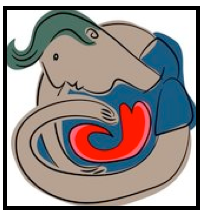
EXP:  Some people’s whole body center is visibly concave, as in these drawings. It shows they were severely & regularly abused in childhood, often continued in current toxic relationships.

☁︎ Their solar plexus has been emotionally punched (sometimes physically too) so often that their body is trying to pullback from future blows they know will come – or are still expecting, even long after the danger has passed.
There are also many abused people whose outward signs are much subtler, but the cues are there as well – to help us understand their behavior
➼ Generally, people who are confident & happy stand erect, head up, shoulders back, & walk with a sure but not arrogant gait. Depressed or self-hating people may stand with head down, slumped shoulders, slow or unsure walk…..  Changing how we hold our body can improve how we feel about ourselves.

Of course there are exceptions:
♿️ someone with a chronic physical illness or disability may move slowly, be hunched over, clumsy, needing a wheelchair. Yet they can be confident & emotionally balanced, with ups & downs, but not miserable,
☢️ while some who are deeply insecure may strut & seem ‘strong’ emotionally, only because they present a facade to compensate for being afraid, expressed as anger & inflated self-importance.

NEXT:  Emotions & the Body  (#4)