
 THE WIC DOESN’T TRUST ME & for good reasons
PREVIOUS: Why resist? #3
POST: ‘Negative Benefits’
SITE: • ‘Emotional Age – Aware & Empower’ •‘Reconnect with your IC’ Scrapbook with 10 items
RESISTANCE to Dialoguing (cont)
🚫 Procrastination ✳️ MAIN excuse (Part 2)
✅ MORE EXCUSES (cont)
⚠️ I don’t know what to say
ANS: Naturally! Because we constantly talk to ourselves with judgments & self-abuse, we won’t automatically know the healthy way to communicate. Obviously, we weren’t taught to speak kindly to ourselves, much less pay attention to what we actually think & feel. So changing the way we do that is definitely a new language.
• It has to be learned, from a good teacher, workbooks, listening to people anywhere who talk to their children appropriately – with respect, patience & warmth. When ACoAs hear what a reasonable & kind Inner Parent can say to the Child, many remark: “Wow, that makes perfect sense, but I would never have thought of it”.
⚠️ Taking to the kid doesn’t work – I’m still in pain
 ANS: Most ACoAs have a strong belief in magic! We think things should take very little time, that we should get things we want right away, that everyone should be nice….
AND we think that recovery will work fast, even if we don’t put much effort in. Soooo, “If I talk to the kid when it’s hurting the hurt will stop right away!” Right?
Sometimes it does, most of the time NOT. The immediate goal of this tool is to be with the child THRU it’s suffering, so it’s not alone. Some ‘piles’ of emotional pain will take longer to dissipate than others, depending on how big they are (a lot from the past – the size of a car wreck, OR a little in the present – the size of a stubbed toe, a paper cut…) vs. how much has been siphoned off by doing emotion work.
REMINDER: EMOTIONS (Es) are neither + nor –, just energy.
When Es are labeled as negative – it automatically implies they are to be gotten rid of, or at least suppressed. This is a very harmful message, since the Inner Child houses most of our Es, with the Parent holding the rest – love, patience, positive pride, compassion, pleasure….).
If we say some Es are bad then we’re saying a fundamental part of our Inner Child is bad! This point of view is S-H, the child abuse we got in our family
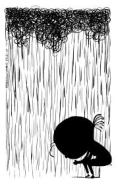 It tells us we:
• were never comforted as kids when in pain, so those emotions were unbearable because we were left alone with our suffering
• were blatantly taught that Es are bad, weak, crazy, stupid, to be made fun of….
• never learned that there are appropriate ways to deal with & express Es, so that we can have our feelings without hurting ourselves or others
3. Other SOURCES of RESISTANCE
a. The INTROJECT (PigP)
Ultimately, the harmful power that rules ACoAs has always been the Bad Parent voice. It’s everywhere, crawling around inside the walls of our mind, like termites, whispering it’s poison:
“This stuff they’re trying to teach you is ridiculous! You can’t live without ME! You don’t know what you’re doing, that Inner Child stuff is just crazy….”
 The PigP definitely does not want to be replaced by a Good one – afraid of being destroyed – so it keeps a tight rein on the Child by undermining it’s ability to think independently & function well.
b. OTHER People
Anyone not familiar with ego states & Recovery is likely to think it’s nuts, a waste of time, a fantasy…. Often people tell us we’re wallowing (even in some 12-Step programs!), that we should have forgiven them by now, so let go, move on….
We can respond to these ignorant comments – OR NOT – with: “You should try it sometime / It sounds like you don’t know anything concrete about it / Why are you being so judgmental? / Thank you for sharing…”. Make up a couple of phrases you feel comfortable with & memorize them!
NEXT: Why resist? (Part 5)


 HEAL & GROW for ACoAs