
THERE are ALWAYS MORE
ways to play!
PREVIOUS:
Childhood Play- #2
FORMS of Childhood PLAY (cont)
2. Emotional
3. Mental
4. SOCIAL
Social P: a key part of fun activities, from the simplest romp or wrestling of young animals to the most humorous, complex banter of close adult friends.
The more children play with others – the easier they can move thru different social stages. How engaged they are & good at interacting with other children – can be observed, validated or corrected as needed. Activities listed in Part 1
• Interacting in play-settings teaches children social rules, principles & standards…. such as give & take, reciprocity, cooperation & sharing.
Playing with others who are at different social stages also helps develop moral reasoning, to form a mature sense of their own values.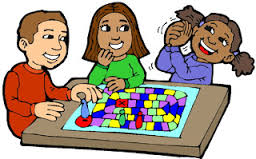
Rule-governed P: by age 5-6, children like pretending, & playing formal games that have rules. Piaget suggested this shows they’re about to shift into the next stage of mental & practical functioning, which requires an understanding of guidelines.
EXP: Follow the Leader, Red Rover, Simon Says, baseball and soccer….
Most children progress from a self-centered view of the world to understanding the importance of social agreements which includes rules – that the ‘game of life’ has laws we all must follow to function productively
Competitive P: a variation of all games, where children compete as well as co-operate (follow the rules), take turns & work as a team (Chutes and Ladders, Little League….). This can be a lot of fun if the child wins, but they’ll need help dealing with losing
Recapitulative P : allows the child to explore ancestry, history, rituals, stories, rhymes, fire/light & darkness. Enables them to access Playing from earlier human eras
Transformative P (integrative): With many new experiences & a great variety of inf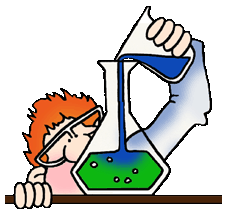 o, children learn that imagination can improve & go beyond the ordinary in life, & what’s known so far in the world (mulling over a problem, daydreaming…..)
This can form the seeds of new ideas & create a higher state of knowledge, like Einstein seeing himself happily riding on a sunbeam at the speed of light
Brain imaging technology tells us : Play + Science = Transformation
👥 👥 👥
Early GENDER DIFFERENCES
• Culture – In some, boys are separated from girls at a very early age. In others, there’s little concern for gender segregation, so in nursery school they play in same-sex groups (Western Europe) (Fagot, 1994)
• Family / culture – Parents treat boys & girls differently, based on society’s norms. Also, they respond according to how much they like each child – because of the child’s personality & how similar they are to each parent (narcissism)
• Nature – Gender preferences in types of play can be seen at about age 2 – by their own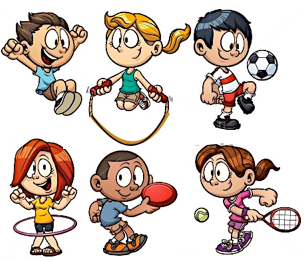 choice.
Male & female brains are wired differently in significant ways, which show up right from the start
EXP of how nature effects a child’s perceptions: By age 4 children can tell the difference between the sexes but don’t yet know that gender is a constant
BOYS
• are hard-wired for spatial-mechanical play, so need more physical space & will may ‘bounce off walls’ when confined
• don’t hear as well as girls, so may need adults to speak up or tap an arm to get their attention. When an instruction is ignored, they can be asked to repeat it back to the adult
• need time to finish an activity before moving on to the next
• mock fighting is natural at this stage, an early form of male bonding
GIRLS
• usually gravitate to dolls, stuffed animals & art materials. Higher levels of oxytocin encourage girls to love & care for their dolls, which boys only see as inanimate objects to be thrown around
• verbal skills develop early, boys later
• tend to use all their senses, while boys rely mainly on visual cues
• may ‘flirt’ with dad – showing love for Father, & a healthy identification with Mother.
“BRAIN SEX: The Real Difference Between Men and Women” Anne Moir & David Jessel, PhD:
NEXT: Childhood Play – STAGES – #1


 HEAL & GROW for ACoAs