Use ‘THINK’ instead of ‘Feel’ (Part 1)

 PREVIOUS: Spiritual Resilience, #3

POSTs: Feelings aren’t facts // Anxiety & T.E.A. // ACoAs & Emotions


REVIEW: 
Many of us are addicted to using the word ‘FEEL’ incorrectly & indiscriminately in all our communications, causing all sorts of problems. In English (& maybe in other Western languages), we use ‘feel’ to talk about 3 totally different categories of meaning:

👣 • Feel as physical SENSATIONS (correct)
“I feel hungry, thirsty, exhausted, peppy, strong, need the bathroom, energized….”

💝 • Feel as EMOTIONS (correct)
“I feel sad, happy, sexy, excited, depressed, scared, angry, loving, sympathetic….”

🧠 • Feel as THOUGHTS (incorrect)
“I feel that they don’t want me around” / “Do you feel like you can do that?”

This 3rd one is the big problem. Why? After all, it’s the most common way everyone expresses themself, yet in this case we’re never referring to emotions (or even a sensation) but instead – only to thinking.
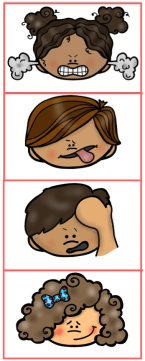
Feelings are not thoughts – see posts listed above. However, if asked how we feel, most of us tend to give long, sometimes rambling answers. And when therapists ask this question, they’re trying to elicit an emotion-answer. So they ask again: “How do you feel?” & off we go again, providing information (thoughts / opinions) but not emotions.

NOTE: This is not to dismiss our capacity to SENSE/intuit something about others . EXP: that Joe’s actually very upset, even though he’s acting all cheerful ….. that Mike & Sara have definitely cooled toward you – still polite but less available….

But saying “I feel like something’s wrong” does not indicate what you feel about it (sympathy/ frustration / anxiety / annoyance). It’s an observation – however accurate it may be – but not an emotion.

While this distorted way of talking may be the norm in our culture, for ACAs it’s of much bigger relevance, since it leads to profound confusion for ourself & when trying to communicate with others. It can make us say things like: “I feel crazy”.
? This could mean you’re overwhelmed by intense emotions, but crazy is a mental issue, not emotional
? OR that you’re lost in obsession about conflicting double messages (‘voices’)…. which are crazy-making, but doesn’t actually mean you’re crazy!
☆ Instead, you could say “I’m scared – because I don’t know how to handle this mess!”

IMP: For ACA, using the word ‘feel’ to mean ‘think’ makes it impossible to get the connection between our actual emotions – such as anxiety, worry, anger…. & what we’re saying to ourselves – usually negative thoughts (S-H / Projecting).
Without having that connection we can’t find out who we really are, be understood or get the help we need.
Long-term stress creates a communication split between the 2 halves of the brain – as a defense. Instead of working together, one side is used much more than the other, making it too dominant. Which side is ‘chosen’ comes from a combination of our native personality, the traumas we’ve suffered & our culture’s preferences. (Brain Repatterning exercises help get the 2 sides working together)

⚡ T.E.A. RESULT
a. Many damaged people (addicts, narcissists, may ACAs….) ‘live in their head’- the brain’s Left side. They:
• complain about everything, only talk about their actions (As) & gossip about what others are doing – whether they know them or not
• are only vaguely aware of what they actually think (Ts), even when they’re ranting about something!
• are numb to most or all their emotions which they’ve consistently buried (Es), & refuse to unearth – but act them out, usually to everyone’s detriment

b. The opposite type of wounded people (including very sensitive ACAs) are dominated by the functions of the Right brain – ‘drama-queen or king’ types, caught up in what they’re convinced are ‘true’ emotions (Es), but are instead too intense & too long-lasting.
1. Their Es are rarely if ever comfortable or joyous (not the high of being in a fantasy).
A healthy emotional life includes a wide range of Es, not just extremes

2. Their Es are never the bottom line issue – always going to rage instead of feeling sorrow or vulnerability, constantly anxious instead of feeling long-hidden anger, self-hate instead of feeling the original abandonment…..

3. The intensity is often way out of proportion to present-day events.
Healthy emotions fall mostly in the mid-range (+/- 20, not +/- 100 from neutral)

4. Their Es can go on & on, for weeks, even years.
Healthy emotions come & go rather quickly – a reasonable response to the moment, not about past or future
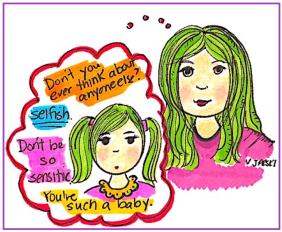
5. The intensity is actually messy globs of unprocessed old pain – real but “hysterical, because they’re historical”.
Since such people are automatically engulfed by painful Es whenever triggered, they don’t hear the very real – harmful – beliefs & obsessions hidden directly behind that wall of emotional flames.
Not being able to recognize their thoughts, they have no way to correct cognitive distortions from the Introject, or to comfort the WIC.

NEXT: Think vs Feel  #2

Developing RESILIENCE – Spiritual (Part 3)

PREVIOUS: Resilience – Spiritual #2

SITE: 3 Visualizations To enhance Resilience, Ultimate Meaning can be gained through activities that meet our soul-needs.


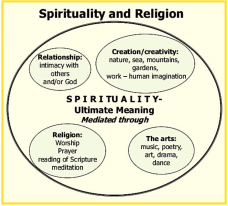
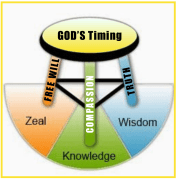
SPIRITUAL RESILIENCE (S>R>) Components  CHART ↘︎


1. Spirituality
2. Humility
3. Emotional Equilibrium


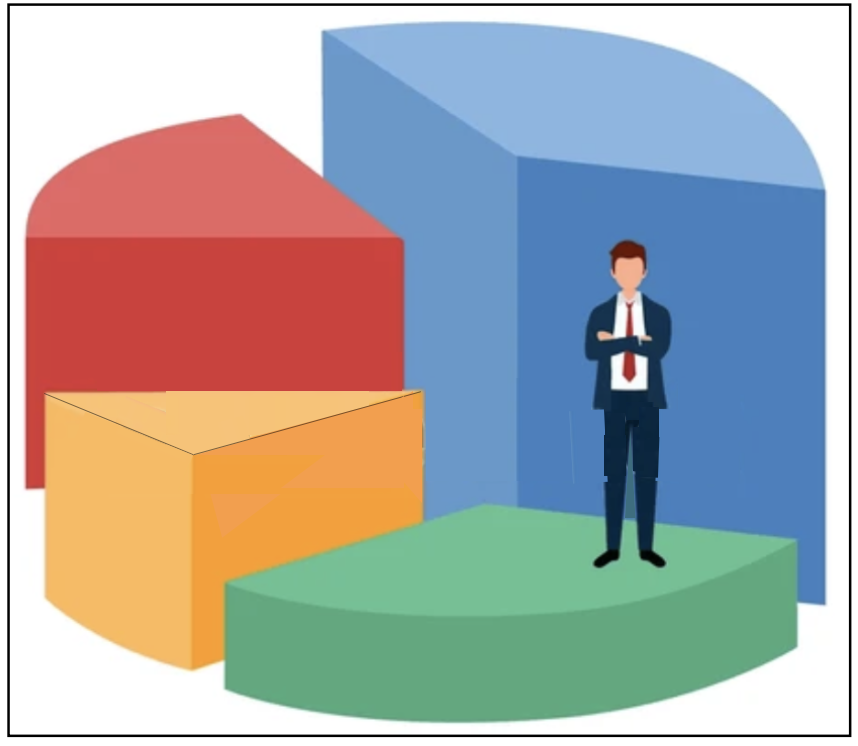
4. STOOL of balance
God’s Timing
– requires both Faith & Patience. God gives each person their own spiritual path, so how you travel on it will be different from everyone else. That means that some areas of your growth will seem to improve more easily, while others will take longer, & each of those time frames will be different for everyone else. So there’s no point in comparing!

⚙︎ Knowledge = of Soul & Spirit: we are created as spirit beings with a soul (Hebrew = nefesh), the personality made up of emotions, mind & will, encased in a body. The soul is meant to be ruled by our spirit – our breath of life – & the spirit is to be ruled by THE Spirit (Ruach), the supernatural part of a human that holds the breath of God which powers the entire being.
Compassion – as we stay connected to  The Spirit, we experience the ability to connect to everyone & everything else 

⚙︎ Wisdom = from The Knowledge. That deep understanding then forms a blend of social, emotional & mental processes, transmuting experience into wisdom. It’s an awareness of how things play out over time, providing balance between needs & wants. That gives us the S>R> to tolerate the uncertainties of life, as well as its difficulties

Truth – Wisdom gives us the courage to tell ourself the truth – about how we feel, what we think, want or don’t want. “You’re only as sick as your secrets” means owning up to the flaws we hide from ourselves. But wisdom also knows who, where & how much of it to right-tell to others

⚙︎ Zeal = goal oriented enthusiasm based on The Knowledge – the essence of a robust spiritual life – the opposite of complacency, but not fanaticism. 🪭 Because humans cannot feel enthusiastic & guilty at the same time, S>R> depends on continually working to outgrow behaviors that harm ourself & others (character defects from damage)

Free Will – the philosophical/religious concept of ‘moral liberty’ that says we can freely choose between right & wrong, consciously making decisions not determined by the biology of our brain. However, there are many influences out of our control, (Step 1), that Wisdom teaches us to accept without resistance, leading to S>R> 

5. Compassion
Developing it, both for oneself & for others, is one of the most overlooked aspects of the resilience skill set. While empathy is taking on another person’s perspective, & sharing emotions, compassion is when those feelings & thoughts include the desire to help, but with boundaries (not rescuing)

Research tells us that doing compassionate acts produce ‘good’ emotions
— internally, & in positive relationships (cooperation & collaboration)
— externally, which strengthens resilience.

EXP: In CA (2009) David Breaux asked people to write down their concept of Compassion & got back over 9,500 responses. He’s been using that input to provide spiritual healing to hundreds of people as a ‘street therapist’.

6. Post-trauma growth (P-TG)
Spiritual beliefs & practices provide a sense of purpose to one’s life which helps people know they’re not victims of arbitrary events. It’s a Belief in a Higher Power who is ‘in charge’ – God is on His throne – now & forever. This implies that what happens to us is not arbitrary, but does not eliminate or substitute our right & ability to choose actions & responses, creating balance. The ultimate in post-trauma growth (P-TG) in Biblical terms would be Jesus Christ’s resurrection.

7. Silence
Having Spiritual Resilience is based on a connection to Spirit. And that requires regularly quieting the mind to hear that ‘still small voice’ – our own & that of H.P. We are made up atoms & molecules held together with pure energy that keeps everything in the Universe moving in the right order. We can tap into that by being quiet – every so often.

The brain & the mind are different.
— the brain needs the right chemistry & health to function well
— the mind includes conscious & unconscious awareness – which we have some control over.
What works for some is meditating, for others it’s doing visualizations, & for many it’s praying. The important thing is that some form of quiet time needs to be a regular part of our day.  (MORE….)

NEXT: MBTI – Introvert T & F

Developing RESILIENCE – Spiritual (Part 2)

PREVIOUS: Resilience – Spiritual #1

SITE: The Spirituality of Resilience

COMPONENTS of Spiritual Resilience (S>R>)
We need to take care of the sum of our parts first before we can be whole. Mind, heart, body & soul (PMES) are all elements of our core, so not nourishing each one regularly leads to negative thinking & disordered behavior. Without a spiritual life, people are more likely to live in monotony, uncertainty &/or narcissism.

BALANCE is an essential feature of mental health – in this case the balance between faith & free will. Both are true & both are necessary. Faith could be expressed as religious participation, trusting the unseen from positive experiences.
Free will would be actively practicing the Golden Rule: ‘Love thy neighbor as thyself, or Do unto others as you would have them do unto you’.

1. Spirituality – Faith, Belief
Human beings’ innate self-righting ability – the capacity for Resilience – is connected to our basic spiritual nature. Activist Patrisse Cullors said: “People’s resilience, I think, is tied to their will to live, our will to survive, which is deeply spiritual. The fight to save your life is a spiritual fight”. When people include spirituality in how they ‘understand’ a tragedy they’ve suffered (ascribe meaning to events), they come thru it with much less trauma-hangover

As listed in Part #1 the term has several meanings, & people use it differently. It has been called Inner Growth, Mindfulness, a Spiritual Awakening….
In 2015 a request went out in the US & Germany: “How would you define the term ‘spirituality’?”and over 1,77o people answered. 10 concepts divided into 3 groupings (see chart above) emerged from an analysis of the responses

PRACTICAL Spirituality is the Regular Renewal of:
Basic trust that we belong. Resilient people have learned to trust their experience, intelligence & intuition. They don’t depend on over or under-trusting other people, but have a deep reliance on a power greater than themselves

• Commitment to & relationship with a personal Higher Power of your understanding
• Community participation with others of shared spiritual values, nurturing interactions with people & nature
Forgiveness – for oneself, & Reconciliation – with others, when possible

• Hope – believing in realistic possibilities & knowing practical options encourages constructive living in the present, thereby being responsible for future outcomes
• Self-acceptance – we are the way God made us. Value that!
• Sound values – a meaningful life philosophy to support & guide all relationships
Transcendent experience (s) that energize – developing our higher self (the soul)  (Christian renewal)  (3 Cs of Spirituality

2. Humility (not humiliation, which is = to shame another)
Being in charge of our own life is one of the cornerstones of Resilience (R.). That’s balanced against Humility – knowing & accepting our imperfections as human beings, without self-condemnation. Resilient people do not aspire to perfection! True resilience is based in reality, & Higher Truth is that only Higher Power is perfect – no human can even achieve it.

Perfectionism is a cognitive distortion (CD) many ACoAs are deeply committed to 😇 – from deep in the mind of our WIC. Catch yourself saying : “I don’t have to be perfect”. This implies you could be, you just don’t have to. NO – you can’t be – AT ALL.

Trying to be perfect is trying to be God! It’s true that not everyone believes in a Higher Power, but even on a psychological level – struggling to do the impossible always leads to disappointment, adding to our sense of abandonment.
Re. shame : John Bradshaw noted that there’s such a thing as psychologically ‘healthy shame’, which admits to realistic limitations. It’s the opposite of grandiosity – the child’s belief that they have no limits & there are no bad consequences.

3. Emotions
Developing emotional equilibrium is part of Spiritual Resilience, by correctly evaluating a situation, safely sharing the pain & receiving emotional comfort. Some psychologists have become aware of the connection between emotional regulation & religion.
Spirituality helps balance well-managed emotions with accurate healthy thinking, to form a spirit-in-action attitude that allows us to succeed by being ‘in the flow’ of life-energy.
Spiritual practices that help people cope with trauma-generated intense emotions include:
Acceptance & Forgiveness, which nurture empathy & modify harsh emotions
• Meditating on Scripture & Mindfulness, reducing excessive arousal
• Prayer, for gratitude & asking for help = an exercise in religious re-framing of events

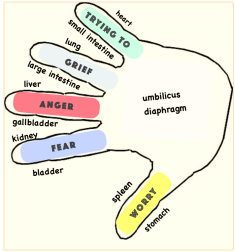
HAND – explanations // the Jin Shin Jyutsu version w/ healing exercises // as hand acupuncture

NEXT: Spiritual resilience #3

Developing RESILIENCE – Spiritual (Part 1)

PREVIOUS: Resilience – emotions #2

SITE: Spiritual life coaching
(non-Christian)


BENEFIT:  Resilient people tend to find a bit of silver lining in even the worst situations, & are *Grateful* for the things they still are & have. While they certainly see & admit the bad, they’re not limited by it, or stuck in it

SPIRITUAL RESILIENCE (S>R>)
DEF: The ability to sustain one’s sense of self & purpose through a set of principles or values.
While it may be in the form of specific religious beliefs for many, it’s more than that – it’s a way of life. The West needs to go back to the awareness that Spiritual health is important in balancing heart & mind – which the East has never forgotten.

Spirituality can be:  Connecting with the sacred, believing in God as Higher Power with a personal experience, understanding life through events, connecting with the Existential Self, finding meaning & purpose, having ethical values & beliefs, positive relationships & helping others, & experiencing transcendence.

In broad terms, whether religious or not, Spirituality can be thought of as:
• Moral Responsibility: A healthy value system (personal code of ethics), spiritual
choosing what’s right for ourself first, then in relation to others
• Congruence: Acting honestly, living by our principles & listening to our intuition
• Altruism: Being concerned for all humanity, & doing what we can to help others – realistically, from healthy motives

Interesting: Various US military branches have started actively including Spirituality in their Resiliency Training. “As a pillar of Comprehensive Airman Fitness, maintaining & strengthening individual spirituality is a primary component for one’s overall well-being.” Fairchild AF Base, Wash.
Capt. Jeffrey Solheim (92nd Air Refueling Wing chaplain) explained that “Spiritual Resilience is about fueling & refueling our heart & soul – that inward part that helps to make sense of our existence & experiences…..”

Spiritual beliefs & general ‘right’ thinking allows people to see the world thru a positive (but realistic) lens, which benefits our day-to-day functioning, & offers solace in turbulent times – especially if supported by participation in like-minded communities.
A Spiritual focus helps to decrease anxiety, depression, addictions & suicide, while increasing personal & family intimacy & stability. It gives people the strength to work toward personal improvements, or to fulfill lifelong dreams.  (RAND Corp paper for the US Air Force).

In 2009, the Defense Department (DoD) conducted a psychological study showing how spirituality has helped service members cope with difficult & traumatic events. The study found that most of them use spirituality to cope with multiple deployments, combat stress or injury. The research also found that it lessens becoming overwhelmed by “moral injuries” – from participating in or witnessing terrible acts of war that conflict with one’s moral beliefs.

Before looking deeper into characteristics of S.R. – some comments:
✧ Many ACAs are OK with some kind of spiritual life, while others don’t believe in any Higher Power.
✧ Many of us are angry at ‘the God of our understanding’, because our understanding is immature & incomplete.
As kids we prayed & prayed for the alcoholic to stop drinking, for the rage, beatings & other abuses to end – but they didn’t. So we hate God – because we don’t understand the Laws of nature.  It’s a substitute for feeling legitimate rage at our parents, siblings…… (For comfort, read Psalm 3)

John Bradshaw pointed out that “Until the age of 7 we deify our parents. After that we parentalize our deity”.  So if our parents were drunk, mean, absent, judgemental, perfectionistic, narcissistic…. then we assume God is too & we don’t trust H.P. or want anything to do with spirituality.
But God is not an alcoholic parent! In recovery, one woman realized that she couldn’t trust a ‘male’ god because her father was brutal. So she decided to think of H.P. as female, & was then able to consider trusting “a power greater than ourselves.”

Since we are all spiritual beings, we short-change ourself by not correcting our WIC’s mis-understanding, & not updating our perspective – whatever form that takes. 12-Step Programs like Al-Anon are spiritual-based, using the power of the Steps & the group to heal our wounds. But it does not ask us to be religious, or even ‘believe’. Only to “keep an open mind & keep coming back.”
(Wide variety of articles re. faith, religion, spiritual anger…..)

NEXT: Resilience – Spiritual #2

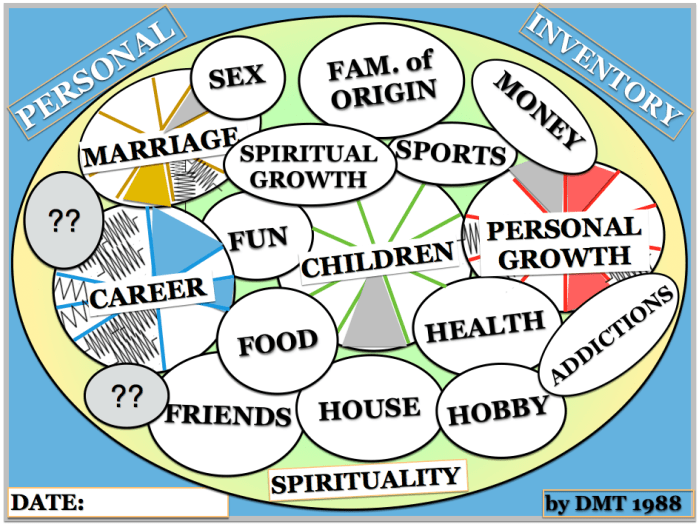
VEN DIAGRAM – for Inventory

Contact Donna:
acoarecovery@yahoo.com

FREE INTRO Therapy Session


1. NEW PAGE – 2018

So far, there are close to 100 topics, & almost 900 posts.

To make finding a subject a little easier, I’ve listed them all alphabetically with year & month – in a chart in TOPICS, found at the top of the Home page.
Once you’ve found the topic you’re interested in, go back to the MENU, click on the appropriate year & scroll to the month.

💻

2. New INVENTORY Form (by DMT)
This is part of the post “What to do when Confused – #5” , July 2016
Venn Diagram chart
PURPOSE:
to get an overview of where you stand on any aspect of your life right now
USE:
You can make the chart into a collage, use the computer or just free-hand it on a large sheet of paper

The biggest circle (Spirituality) is the background to our whole life.

EACH person’s Diagram will look different.
If you’re ambitious or curious, you can make an additional one for where you were 10 or 20 yrs ago, as a comparison.

• Think about all the areas of your life that will go on the chart, & decide their relative importance to you at present. Change or add any not listed.
Draw / cut the size circle for each topic as it relates to their current importance

• Play with the positions of circles…. change them around until the chart feels right. Place them close to, overlapping or far away from each other, depending on how those issues connect in your life

• Label circles, & draw lines to form pie wedges in each one.
— You decide how many lines (slices) based on how many problems & victories for each – you’ll probably have to guess-timate

IMP
: each slice in a circle represents an issue related to the circle’s topic
EXP: re. $$$ – keeping track of spending, get an IRA, have separate accounts, update checkbook, curb compulsive spending, pay old debts……

a. Filled in slices are any aspect of that topic you’re confident you have a good handle on (never perfectly)
EXP:
No longer use drugs & alcohol

b. Zig-zag (or cross hatch) slices that are aspects you’re still working on but making progress. The degree of progress in one may be different than in another slice. Make zig-zag density accordingly
EXP: Get to places on time more often

AND THEN: Most likely there will always be one or more empty slices – representing:
c. Grey – things about a topic you know need correcting / to change, but are not ready or willing to tackle

d. Blank – problems & challenges about each topic you simply don’t know you need to work on – yet.
If you stay on the Recovery path, you’ll be surprised when eventually another aspect of your original damage comes into awareness you didn’t even realize was in your Shadow side.

Happy hunting! (for 💛 self-awareness & 💚 healing)

INTROVERTS – True or False (Part 3)

PREVIOUS: T & F , Myths #2

SITES: 10 Extra-income ideas for Is (like single moms)

Why Is beat Es in the corporate world

Diff  between Introversion & Social Anxiety (good reminder)

Es = Extroverts // Is = Introverts

PREJUDICES & Corrections (cont.)
Part 2 = Emotional // 
Social

💼 BUSINESS / WORK
FALSE: They don’t like working in groups
TRUTH:
Introverts often do their best work alone, but excel in small group situations, & enjoy working that way as long as their opinion is valued

FALSE: They’re rude
TRUTH: Is
tend to be more direct (even blunt), & can show a bit of boredom or impatience, because they can’t see a reason for beating around the bush with social pleasantries. But their intention in not rudeness. Small talk feels like a waste of time. They want everyone to be real & honest, preferring intimate, meaningful conversations. But when it’s important, they’re willing to add a little ‘sugar’ to make things work

FALSE: They’re under-achievers
TRUTH :  Achievement is not related to personality type. Because our culture has such an affinity for the charismatic, extroverted personality, some people assume that Is are underachievers, especially compared to Es

This misconception may be because most Is don’t want or need to brag or blab about what they’ve done. In fact, there are millions of successful – even famous – introverted scientists, artists, physicians, writers & philosophers, but only well-know if promoted by Es 😊 (EXP: Stephen Wozniak, developer of the world’s 1st personal computer)

FALSE: They don’t make good leaders (like Es)
TRUTH: While fewer Is are attracted to high-profile positions (less that 10%), one study tracking Leadership Effectiveness showed that Es & Is were equally successful overall, but each did better with different types of employees. Introverted leaders help their staff thrive by validating initiative & carefully listening to their suggestions, rather than hogging the limelight

FALSE: They’re plagued by public speaking anxiety
TRUTH: One study rating public speaking anxiety did show that Is who are prone to anxiety are more likely to anticipate being nervous onstage, based on how much they project the audience to be hostile, or worry about bombing.
“Speaking is not an act of extroversion,” notes Malcolm Gladwell, another I writer who spends plenty of time on stage. “It’s a performance, & many performers are hugely introverted.”

FALSE: They don’t make good public speakers
TRUTH: “At least half the people who speak for a living are Is,” said Kahnweiler in Quiet Influence. “They just prepare & practice really well, then draw from their strengths.” Such as Susan Cain, an excellent speaker, & author of Quiet: the Power of Introverts (TED talk)

FALSE: They’re not as good at networking (as Es)
TRUTH: While Es find schmoozing easier, have more FB friends & go on more interviews, it doesn’t automatically translate into more jobs.
EXP: Fortune’s best networker was an Introverted computer engineer.
• Getting a job is about building rapport with a potential employer, which Is are better at, since they aren’t trying to be one-up. Many Is are quite sociable, starting conversations with random people at parties, but are easily overwhelmed by bright lights & loud noises (like at rock concerts). SEE: ‘Networking for Introverts‘

FALSE: They’re not as good salespeople (as Es)
TRUTH: Like in any other business, some Is will be very effective & others a complete failure. The key is in the specific type of sales position, & the I’s other characteristics, such as communication & thinking style, empathy level, need for acceptance, perseverance, persuasiveness, prospecting ability, response to others…..
See: “An Introvert in Sales?”

NEXT: Resilience #1

INTROVERTS – True or False (Part 2)

PREVIOUS: Myths #1

SITECaring for Your Introvert 
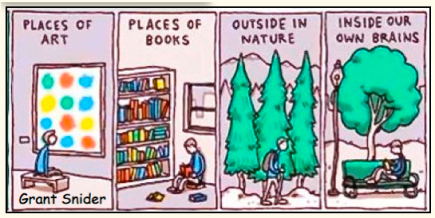
• Cartoons (re. Is) tell the story


PREJUDICES & Corrections (cont.)

Part 1 : General / Mental

😺 EMOTIONAL
FALSE: They’re not emotional
TRUTH : The opposite is true – Introverts tend to have very deep feelings, but keep then inside, preferring to control their emotions around others, & in fact are much more even-keeled than Es, even under stress. In conversation, they may not show feelings with facial expressions or gestures, but it doesn’t mean they’re not interested – they usually are

FALSE: They have low self-esteem
TRUTH : Both Es & Is can have S-H, which is be expressed in different ways, but being internally oriented does not inherently mean a lack of self-confidence

FALSE: They’re shy
TRUTH: Shyness is about being afraid of people, which has nothing to do with Introversion. Is need a reason to interact – not just for the sake of being ‘social’. If you want to talk to an Introvert, it’s up to you to get it started, without being impolite or pushy (Article)

FALSE: They’re isolators
TRUTH: Just as Is are not inherently shy (fear-based), they’re not isolators by ‘nature’, which also comes from fear, lack of boundaries & poor self-esteem. It’s just that they’re perfectly comfortable with their own thoughts, working out problems or solving puzzles. But they do crave someone to share their ideas & discoveries with, one person at a time who is authentic, intelligent & sincere

FALSE: Introverts aren’t happy (or – Es are happier)
TRUTH: Is & Es are happy in different ways. Is prefer low-arousal good feelings & like to be peaceful & relaxed. Es are happier with exciting activities & people

👥 SOCIAL
FALSE: They’re uptight party-poopers & can’t have fun (relax)
TRUTH: Because Es & Is have different dominant neuro-pathways, Is are not thrill seekers & adrenaline junkies. Their brains are too sensitive to Dopamine, which is generated by lots of activity.
Interesting: A 2006 Japanese study found Is to have lower blood pressure

• They just tailor their fun to suit their unique needs – like book clubs, blogging, designing web-comics, listening to frogs in a pond, quilting, throwing pottery, watching sports on tv….. They typically relax at home or in nature, not in busy public places, & will shut down if there’s too much talking or other noise.

FALSE: They don’t like to go out in public
TRUTH:  ‘OUT’ doesn’t always mean with people. They can wander the city on their own, or take long walks in the country. But Is don’t want to be around a lot of hubbub for too long. Turning down social invitations they know will drain them is simply a way to take care of themselves – not weird or insulting.
When they are out socially, they don’t need to be somewhere for long to “get it,” since they take in experiences & info quickly. They may well have enjoyed the time there, but if they always leave events early, it’s because their tank is full. They’re ready to go home, recharge & process it all

FALSE: They don’t like (hate) people & have no friends

TRUTH: Is are thoughtful & occasionally skeptical people, valuing calmness & intelligence. They don’t hate people, only too much hoopla (unlike the robot in “Short Circuit, begging for “More Input, more input…!”).

• They don’t want to be alone. They may struggle to form friendships because they’re selective, looking for people who’ll make valuable long-term companions.
While they may only have a few friends, they value them greatly. If you’re lucky enough to be one of those few, you probably have a loyal ally for life. If you’ve earned their respect for being a person of substance, be complimented.

NEXT: Introvert  T or F (#3)

INTROVERTS – True or False (Part 1)

PREVIOUS: Introvert Intro #2

SITEs: “How to piss off an Introvert” (a List)
Revenge of the Introverts (scroll down)

Es = Extroverts // Is = Introverts

PREJUDICES & Corrections
😱  GENERAL
FALSE: You are either an introvert or an extrovert
TRUTH: Introversion & extroversion is on a continuum, & complex. While some people land more at one extreme or the other, most people have some of both tendencies, are quiet in some situations & loud in others, alternating between grabbing the spotlight & standing in the wings….. Some studies indicate Is are up to 50% of the U.S. population, while others say that Es dominate western cultures. Ours definitely favors E behavior, considering it ‘better’ for success.
Not true – since both Types shine in many of the same areas of life, but with a different emphasis on style & interactions

FALSE: They’re all weird
TRUTH: Introverts are often individualists, ‘following their own drummer’, valuing eccentricity, not making most decisions by what’s popular or trendy. They think for themselves, often challenging the norm, & prefer being valued for their uniqueness

FALSE: They’re stuck-up nerds

TRUTH: It’s not that they don’t notice what’s going on around them (most are actually very observant), it’s just that their inner world is much more interesting & rewarding to them. Without Is there would be few artists, doctors, filmmakers, musicians, mathematicians, poets, philosophers, scientists, writers…. They need to be acknowledges for their inborn temperament, & respected for their contributions to humanity 
SEE: “Top 10 Benefits Of Being An Introvert

FALSE: They’re sneaky & devious
TRUTH: Because they go off by themselves a lot & don’t share themselves willy-nilly, Es can be suspicious, assuming they’re hiding something. Instead, Is simply need alone-time to revitalize – not making plans to swindle, steal or take over the world (like in “Pinky & the Brain”)

FALSE: Introversion is ‘wrong’, so Is need to become extroverted

TRUTH: There’s nothing to fix, because they’re not broken! Since it’s the way one is born, no matter to what degree, it’s as ‘normal’ as one’s height, gender, nationality……

🤓 MENTAL
FALSE: They’re mentally inept, even stupid
TRUTH: As a group they’re intelligent & insightful. Anyone willing to observe & listen to them will find them a fountain of useful knowledge, with well-constructed thinking. Being quiet does not = stupidity, just like being loud doesn’t = intelligence
One study (Silverman, 1986) suggests that people with higher IQ tend to be more introverted (along with curiosity, concentration, wide interests…..), but Introversion itself does not cause brainyness

FALSE: They are arrogant
TRUE: No more than some Es – arrogance is an equal-opportunity flaw. It’s normal for Is to be preoccupied with thinking & processing info internally, which can get them labeled as snobby, like they think they’re superior. Actually, Is are cool in the beginning with people they don’t know, waiting to see who they’re dealing with, but warm up if the other person is sincere

FALSE: They don’t like to talk
TRUTH: They’re more likely to be listen carefully, & to think before contributing.  If there are a lot of people around (mostly Es), Is can have a hard time getting a word in edgewise, so they’re quiet, but alert. They don’t see any point in voicing a well thought-out opinion if it will fall on deaf ears. But get an Introvert started on something they’re interested in, & they won’t shut up for days. There are some Is who talk to everyone they run into, but they keep it light, saving depth for a few intimates.

NEXT: Introverts T or F #2

MBTI : INTROVERSION – Intro (Part 2)

PREVIOUS: – Introversion Intro #1

SITEs: ◆ Seeking Pleasure & Avoiding Pain
 Sensitivity to Reward and Punishment

❇️ INTROVERTS (Is):
• Are deliberate, independent, & tend to keep emotions private
• Are seen as reserved but ‘centered’, which seems to have a calming effect on those around them (even if they’re boiling inside)

• Focus on inner mental activity. Tend to be self-aware, interested in self-knowledge & self-understanding
• Enjoy understanding details, learn well through observation

• Can spend too much time reflecting, & not taking enough action, or not acting quickly enough when needed
•  They sometimes forget to check with the outside world to see if their ideas really fit their internal experience or with reality (more on Es vs Is chart)

❇️  REWARD vs PUNISHMENT
The 2 halves of the brain control opposite physical & psychological functions.
😀 The LEFT frontal hemisphere is more active when we experience pleasant emotions (reward approach = BAS)
☹️ The RIGHT frontal is more activated by unpleasant emotions (punishment, withdrawal = BIS).
Also, anticipation of both reward & punishment is associated with the orbito-frontal cortex (BAS and BIS).

BAS: The Behavioral Activation System is a positive feedback device, based in the interactions between a dorsal & a ventral brain subsystem (see E & I brains #2).
The BAS response signals the end of punishment, & helps us recognize external PPT as potentially rewarding, which triggers a desire to move toward them.
A person with a very reactive BAS is especially sensitive to reward incentives (sex, money, prizes….), & their ability to stop their behavior decreases as they approach a desired  goal – making them progressively more impulsive.

Note: People with strong urges & desires (high BAS activity) are usually Es, while  with weaker urges & desires (low BAS) tend to be Is.

BIS: In contrast, Introverts (Is) are strongly influenced by the brain’s Behavioral Inhibition System, making them less externally active/reactive. It’s a negative feedback device (inhibiting, to stop behavior) generated by brain structures that are part of the septo-hippocampal system,
BIS activity increases a person’s attention & sensitivity to environmental cues that indicate frustration (lack of reward), uncertainty (novelty) or punishment (various forms).

«
In immediate or potentially dangerous situations, the effect of BIS activation is meant to increase anxiety, which makes us quickly limit, avoid or stop any behavior that can cause us trouble. It also helps us use & remember current events as predictors of future events that will most likely be unsafe.
How do we know Is correlate more with the BIS?
An MRI study of 30 ‘normal’ volunteers examined the possible connection between BIS reactions & the hippocampal structure. It showed that the
—  larger the hippocampus the — higher the scores were on the Sensitivity to Punishment scale, & this was found mainly on the brain’s Right side. ⬆️ (More….)

This is relevant because the longer acetylcholine pathway in the brain of Is includes the hippocampus, which is not part of the shorter Extrovert dopamine path. People with an over-worked Right fore-brain (intense BIS), are slower to act, & more susceptible to unpleasant emotions such as anxiety, fear & sadness. (see Post: Growth for Is – #1″) (More….)

Note: When the BIS is activated too often & for too long (as in a traumatic childhood), it causes emotional & physical damage, such as depression, PTSD, exhaustion, chronic illnesses….
Interesting: Psychopaths have high BAS & low BIS quotients

• More CHARTS from “Illustrations That Are All Too Real For Is”
posted by Anna Borges on BuzzFeed (8/12/15)


QUESTIONNAIRE

NOTE – Since we are all some mixture of E & I, it’s possible to answer True to many of these Qs but actually be an E. That could be true – not only because of the mood you’re in when taking the test – but because of your age, profession, state of health…. So if you’re mainly an E – while you need regular periods of down time like Is – you’re still very comfortable mingling with lots of people, & enjoys busy, complex places.
☆ To identify as either E or I – look for your most consistent preferences over a lifetime..     Review characteristics above & Part #1
«

«
ALSO: Extended QUESTIONNAIRE

NEXT:

MBTI : INTROVERSION – Intro (Part 1)

PREVIOUS: E/I Anatomy #2

SITE: MBTI historical info

BOOK: “Introvert Guide to Self-love” – by Luna & Sol


NOTE:
Introversion is NOT isolation.
Dr. Carl Jung identified it as an “attitude type” (inborn), observing that Introversion & Extroversion are both healthy variations of personality style. (See earlier posts)

DEF: Introverts (Is) are both energized and relaxed by drawing energy from their own thoughts & feelings, comfortable with solitary activities, & so they place less emphasis on ‘people skills’ & talking. They perform well in analytical roles that require focus & logic.

Based on Jonathan Cheek’s research, there are 4 styles of Introversion:
• Social: Prefer to stay at home with quiet activities, or hang out with a few close friends, instead of at events with lots of strangers (NOT shyness)
• Thinking: Very introspective, thoughtful & self-reflective, highly creative, often daydreamers with a rich imagination. Occasionally don’t mind a busy social scene
• Reserved: Operate at a slightly slower pace, think before acting, careful decision-makers & take time to start things

• Anxious: Generally – not confident in social settings, often worried about what could go wrong (projecting).
May ne painful shy around others, especially strangers or with new people. Nor does the anxiety always go away when they’re alone, because later they obsess about how they ‘failed’

EDITORIAL: Since Is are naturally wired a specific way, the last type may actually be one of the other 3, but wounded in childhood. Introversion does not by itself cause dysfunction!

Interesting: Researchers discovered that Introverted participants who acted like Es – when taking cognitive tests – had slower reaction times than Is who were being themself. The effort & time they wasted trying to be something they’re not naturally wired for – was distracting & depleting.  This especially applies to Is having to fake it for a long time.
REMINDER : They can give themself permission & the freedom to be the way they’re ‘built’, even if the rest of the world keeps trying to mold them into Es.

Misleading: Many illustrations & cartoons unfairly portray Is as awkward, misfits, fearful & unfriendly – which are signs of emotional damage. And Es often judge Is as isolators, but that’s caused by FoA, S-H & lack of Bs, not Introversion.
ACTUALLY – it’s not unusual for Is to be gregarious, helpful, charming, warm & prodigious talkers. It’s just that they need more alone-time than Es to recover from all that expended energy
)👄(
Using the O.C.E.A.N inventory, National Institute on Aging researchers Paul Costa & Robert McCrae expanded on the Big 5 characteristics, to include 6 facets within each dimension.
Introverts :
1. re. Activity Level – like to take it easy, are laid back & react slowly as situations develop
2. re. Assertivenesslet others lead the way, stay in the background & keep their opinions to themselves. Really don’t like to be pushy or demanding
3. re. Excitementneed peace & quiet, perfectly happy with daily routines. They make better roommates or neighbors since they prefer a steady, easy lifestyle
4. re. Gregariousnessare friendly but do just fine by themself, avoid crowds, preferring quiet activities such as reading or reviewing their day

5. re. Positive emotionare usually content without showing it outwardly. They’re not as likely to express strong emotions, but do feel them deeply
6. re. Warmthare hard to get to know at first, & can feel uncomfortable around people they don’t know well. They hold back in social situations, waiting to be approached, but may be the most interesting ones around

ACoAs
Most Introverts (Is) were not accepted by family, school & friends, the majority of whom are Es & think typical Is are weird or disobedient. But if only someone had understood their basic traits & been willing to accept & encourage them, it would have fostered self-esteem & made life much easier.

Now we can use this info helps us better understand & accept our mates, friends, bosses…., but especially ourself, so we can treat our WIC with greater clarity & compassion. And anyone who has an internally oriented son or daughter can help them flourish, no matter what age

• CHARTS : Illustrations That Are All Too Real For Is
posted by Anna Borges on BuzzFeed (8/12/15)

«
NEXT: Introverts = Intro #2