Being AUTHENTIC (Part 1)


PREVIOUS : Personal 
Power GROWTH (3e)

SITE: The Authenticity Paradox” (leadership in Biz)

21 POSTS re. “Ego-States – Basics….. ”

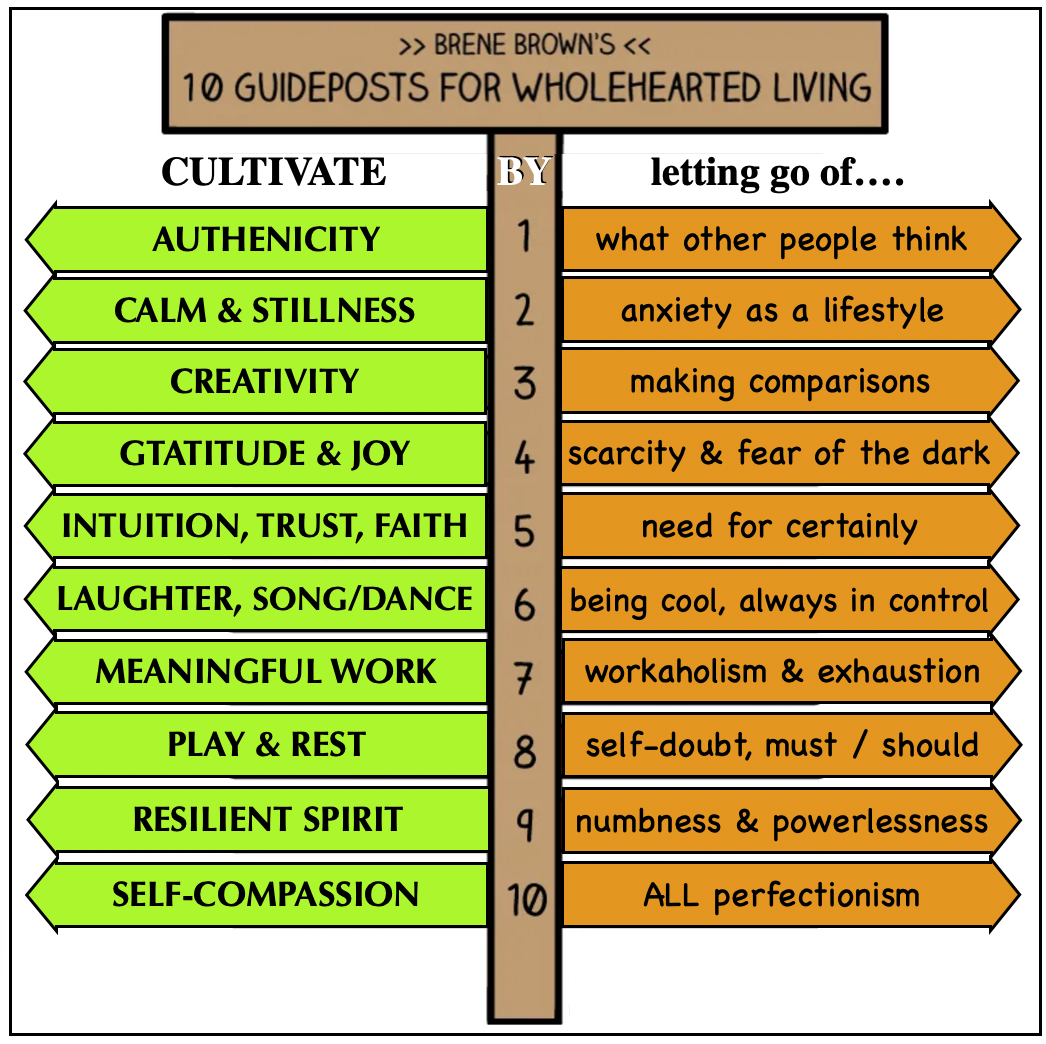
CHART ⬆️ “10 Guideposts for Wholehearted Living” , with explanations for each.

FROM : GAMES PEOPLE PLAY, by Eric Berne
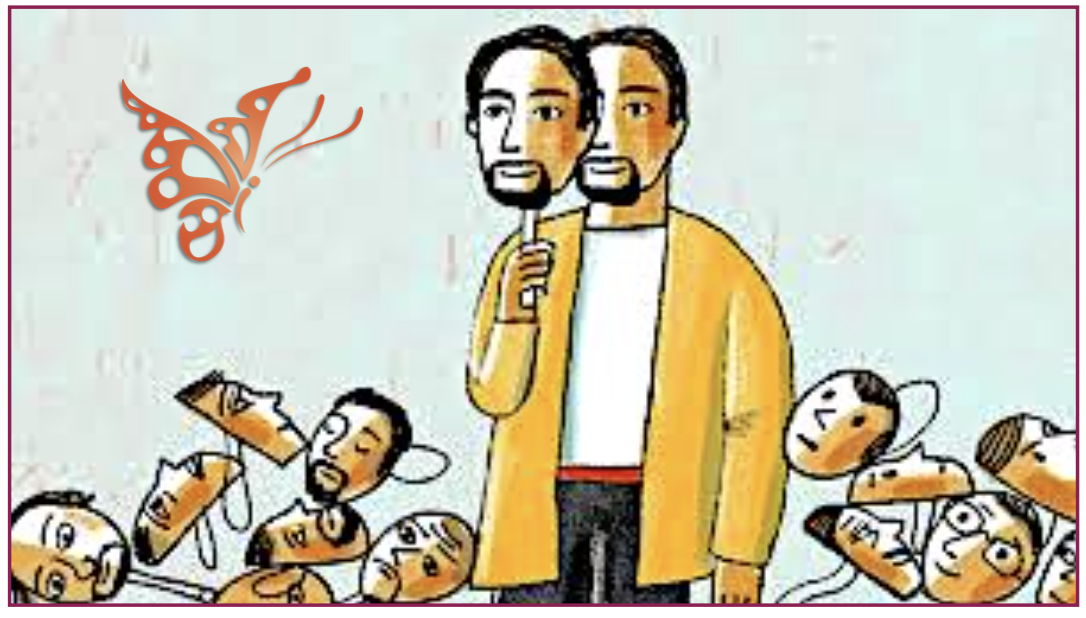
Adaptive Self = The Adapted Child ego-state is the young part of us which wants to know how to behave & what’s expected. It will mould itself to the total environment we grow up in. Broadly speaking,
— IF the circumstances are favorable, this part of us will develop into an adult who fits into their world with relative success & comfort
— IF circumstances are consistently difficult or traumatic, the Adapted child ego-state becomes the Wounded Inner Chid (WIC).

As a result, this part tends to run our life, & can include responses heavy with negativity, resistance, reactions or deeper hostility to our environment. This will show up as “character defects”, everything from extreme narcissism, to outright rebellion, to passive-aggression, to people-pleasing, to total passivity.

Authentic Self (Natural)
The Natural Child ego states are the core of our being, from infancy to old age – what we were born as & born to be. It includes :
🪴 all our strengths (talents, attitudes, tastes, genetic tendencies, learning styles, personality type….) as well as
🌱 basic weaknesses (things we’re not good at, are not interested in, or the tendency to be attracted to dangerously exciting / negative influences….).

As a child, the Natural Self is largely un-self-aware, spontaneous, literal & concrete, likes to play, is open, trusting  & vulnerable. As an adult it pushes us to develop all of our capacities, within the limits of our environment.  (MORE….)
😎

20 WAYS to BE a More Authentic Person(Modified from article by Tchiki Davis, Ph.D., & Starr Sites)

NOTE: Many of these points are like the characteristics listed in the “Personal GROWTH” posts. They all have to do with Self-esteem – expressions of the Natural Child, Loving Parent & Healthy Adult.

1. How to DEVELOP Authenticity
√  Examine family-system Belief
Think back to episodes & messages in childhood that led to hiding your Authentic Self, & instead adopt a protective but unhealthy way of existing in this world (False Self). By examining where our present-day behaviors come from, we can learn what’s true & not true

√ Dialogue between Adaptive & Authentic Selves
Invite the 2 ‘persona’ to a dialogue – part of a thought exercise. Respectfully introduce both: Thank the Adaptive Self for helping you function through some painful & chaotic times, and thank Authentic Self for being your whole, real, core personality.

Mentally or in writing – pose questions & then urge each side to express itself fully, listening patiently to the responses. Try to accept what both sides have to say, as they may reveal things you’re not expecting.
EXP: • Authentic Self may be silent, afraid of silent rejection or outright abuse
• Adaptive Self may be overly- responsible, caretaking to protect you from feeling hurt, like so many times before 

These parts are running our lives for a reason. This exercise may help to understand why you act as you do, so you can decide what you want to change & what to keep.

√ Identify Discrepancies
Notice any inconsistencies between your actions & your beliefs.
EXP : If you catch yourself making a racist, sexist or other hurtful remark, check if you really believe these attitudes & beliefs, or are they ideas someone else taught you?

Remember, Adaptive Self just wants to fit in, so will act in ways that are inconsistent with Authentic Self. This was needed growing up. But now – acknowledging what’s truly you will allow you to function from the needs of Authentic Self, which requires self-honesty & self-awareness.

√ Examine Doubts
When trying to identify the qualities of Authentic Self, you may wonder how, and whether it’s actually possible to change Adaptive Self’s deeply ingrained cognitive distortion, or uncover what you don’t know about yourself – yet.

Doubts can be breadcrumbs that lead to Authentic Self. If you’re unsure about the OK-ness of a thought, action, emotion or experience…. ask what’s behind your discomfort or anxiety. Is Authentic Self trying to say “STOP. That’s not me !!” ?
OR are you not allowed to “Know What I Know” ?

NEXT : DEVELOP Authenticity (Part 2)

Personal Power – GROWTH (Part 3e)

PREVIOUS :
PP – Implement (#3d)


3. HOW to IMPLEMENT Personal Power (cont)
🪴d. Speak up & share your opinions & ideas
🪴e. Be in Charge of Social Interactions

🪴f. Create Genuine Connections
PP knows to look for & find personal & professional connections with people who ‘get you’ – not for approval but rather validation, encouragement, fun, companionship & growth.
They need to be individuals & groups who understand what drives you, respecting you for who you are specifically, & are therefore a ‘safe place’ to be your authentic self. When you’re truly supported, it’s easier to express Personal Power. Even when you ‘fall’,  the right ones will encourage you to get back up & keep going. Everyone needs this.

🪴g. Know When to Ask for Help
PP is not afraid of or ashamed to ask for help when you need it. The key is knowing who to ask & how much each person can actually give. Admitting you don’t have all the answers is not a sign of weakness. In fact, powerful people know when to search out for missing info & feedback.
When you know what you need & then line up the resources to reach a goal or solve a problem, you increase the chances of being successful. This is a Power move.

🪴h. Build a Supportive Network
PP provides the courage to search for & use the help of others who have the right knowledge & compassion to see you thru to our True Self. PP knows you can’t create a successful life or career in a vacuum. Seek advice from mentors, sponsorspowerful female role models…. & observe how they express executive presence. Build mutually beneficial relationships with people you can help, & who will also champion your ideas, provide advice & information you need to be successful.

🪴i. Advocate for Yourself & Others
PP allows you to understand your value & how you contribute to successful business outcomes.  Then you can help your company achieve its goals. Look for ways to add value, creating visibility & credibility.
If you’re a boss, you can be the one who helps individuals reach their objectives, since PP is not diminished by advocating for subordinates or colleagues. Promote your team & their accomplishments. Show respect & express pride in their work, & they’ll respond in kind.

🪴j. Stay (be) Present
Personal Power does not exist in the False Self & is the opposite of dissociation (self-hate, being shut down, in denial…) 
Also, PP doesn’t only come from doing ‘more’. Balance is always needed.
Sometimes what’s best is clearing out internal & external distractions, so you can quietly pay attention, & stop missing moments to use your inner resources. Mindfulness can help to stay grounded in the present, so you don’t overlook wonderful & unexpected opportunities.

🪴k. Schedule Quiet Time
PP knows that down-time is part of self-care. Reconnecting with yourself without distractions allows you to find or reinforce your passion & life’s purpose.  In a culture that rewards busyness, it’s challenging to schedule guilt-free down-time to unplug & just ‘be’ with yourself. But it’s often in stillness that creativity can blossom. It’s amazing how spending a little quiet time each day will help you find solutions to long-standing personal or business issues, seen through a more intuitive & strategic lens. 

🪴l. Give it Away
PP is not something to flaunt, but rather control & moderate, depending on the situation or person you’re with. Sometimes, relinquishing PP is appropriate (not having something mainly be for you).
When you want to be authentic, compassionate & vulnerable, giving away your PP can benefit the social interaction & empower the other person. So it becomes your gift, a superpower you choose to temporarily forego – to win the trust & respect of those around you.

🪴m. Practice Forgiveness
PP is neither arrogant, nor ashamed. Holding a grudge against someone who’s hurt you doesn’t punish the other person – only yourself – by wasting time on them when you could be using that energy to be peaceful or productive. Forgiving someone is the best way to take back your power.
But be clear – forgiveness does not say what the hurtful thing someone said or did was OK. It’s choosing to let go of the hurt & anger that interferes with your ability to enjoy life.

NEXT : POWER

Personal Power – GROWTH (Part 3d)


PREVIOUS :
PP GROWTH (3c)


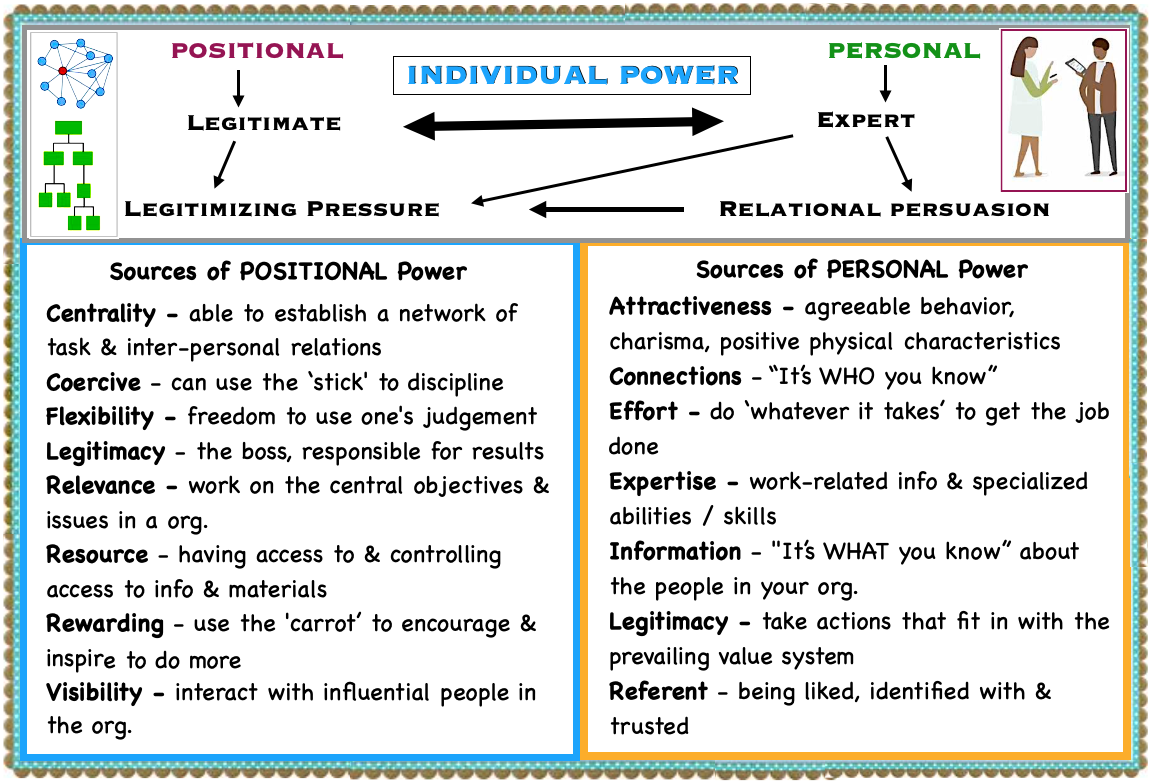
REVIEW : Personal Power is based on confidence, competence & strength. It’s is seen in self-assertion, with a healthy striving for love, satisfaction & meaning,

3. HOW to IMPLEMENT Personal Power

🪴a. Adapt to Changing Conditions
To see things clearly requires being proactive & staying mindful of your thoughts, choices & actions. This allows you to see & interpret problems, challenges & obstacles correctly.

However, it’s not always easy to adapt. Sometimes, there are limited options, inadequate resources, & very little time. Even so, having Personal Power will sustain you – to work through issues with genuine confidence & self-assurance.

🪴b. Be Willing to Stand Out from the Crowd
PP is wise – you have a deep sense of you you are, so your actions are not driven by old anxieties (Toxic Beliefs). This allows you to know when to stand up & when to be quiet, when to take a back seat & when to shine. PP doesn’t have to prove anything but it also guides you to put yourself forward when you have something to contribute.
Always trying to fit in with the crowd disguises who you really are. Trust that you’re emotionally & mentally strong enough to stand out & risk to be different – when the time is right.

🪴c. Express Yourself Effectively
Personal Power includes knowing how to communicate clearly & directly – without anger, demands or manipulation. It allows you to effectively express your needs, desires & wants, form the courage & confidence to share emotions, beliefs & opinions without being limited by fear of how others may respond. This confidence also helps weather judgment, criticism or rejection when it crops up.

PP is about clearly stating what you want, then doing what’s appropriate to follow through. Being assertive, of course, doesn’t
mean being aggressive. Rather, it’s having healthy intentions grounded in self-esteem, then tactfully, respectfully acted on. 

🪴d. Speak up & share your opinions & ideas
You own your PP when you share your thinking process & ability to brainstorm with others. Not every one of your ideas will be applauded or on target, but over the long haul many will be.  As you prove your worth, people will seek you out for suggestions & insights. AND, it’s OK to know some things, so if a subject is  important to you personally or for work, you can find out & learn.

🪴e. Be in Charge of Social Interactions
An external way to see if you’re actively using PP is how you interactions with other people. Whether personal or in business, some will go smoothly, others can turn into a power struggle, if one or both of you try to have the upper hand.

In all social situations it’s important to stay tuned into your PP, keeping a lookout for ways you may relinquish or lose it.
BEFORE any important interaction, ASK:
⚛︎ What do I want, going into this situation?
⚛︎ What’s my specific intention for being there?
⚛︎ What do I hope to get out of it?
⚛︎ What do I need to know & do to make it work out?

AFTERWARD, ASK :
☛ How successful (empowered) was I during this interaction?
☛ How did I express my personal power?
☛ How clearly & well, did I communicate my needs?
☛ What did I think, say or do that increased my PP?
☛ What did I think, say or do that reduced my PP?
AND :
🪴 If I consistently give away my PP, what do I need to change in myself?
🪴 If I only give away my PP in a particular way, or in a specific circumstance, what do need to do differently to ensure I act on my rights to stay empowered?

These Qs will help you stay present & awake, to ensure you make the best of every situation, never giving away your PP unnecessarily.

NEXT : Implementing PP, Part 2

Personal Power – GROWTH (Part 3c)


PREVIOUS :
PP – GROWTH (Part 3b)


2. HOW TO GROW Personal Power (cont)

🍃a. Take Responsibility for How you Feel
PP means accepting that it is up to you to identify & admit what’s going on inside, so you can manage how you behave. Thoughts —> beget —-> emotions. Together, they —> beget actions.

Regardless of how others behave, your emotional responses are yours alone. How you feel about some action or comment will depend on your personal history & what you’re thinking about the event.

🍃b. Be in Charge of Disruptive Emotions & Harmful Impulses
Personal Power includes the ability to tame &/or redirect emotional reactions, and therefore the actions that result. Drowning in intense emotions & negative behaviors are self-sabotaging forces which need to be dealt with. (‘Acting out’)

Overcoming / outgrowing unhelpful habits that hold you back from being your best means developing emotional intelligence that promotes self-care so you can pursue your talents & dreams. (Self-regulation)

🍃c. Commit to Self-Development
To nurture Personal Power requires a commitment to self-development – first & foremost as a mindset – a driving desire to grow your intellect & emotional resilience.
This includes :
√ developing self-confidence, self-worth & self-esteem, and
√ a devotion to lifelong learning, progressively & consistently gathering needed knowledge, experience & skills that help propel you toward your goals.
√ having a growth mindset, which means being curious, listening & learning from others. You can’t be an expert in everything, but making an open mind strengthens PP.
These can transform you from an “If only I had….” fantasy-hero, into the True hero of your life.

🍃d. Recognize & Nurture Innate Gifts
PP is not arrogant, & therefore is not ashamed of admitting & valuing who you are. It never minimizes things you do naturally, easily & well – as ‘unimportant’ – such as the ability to absorb info quickly, listen well, make others laugh, be creative, want to ‘grow’, do math / science easily, have excellent intuition.….
Growing innate gifts raises your self-esteem & circle of influence, showing how resourceful you are, & which can lead to opportunities you didn’t expect.

Remember that the brain will stay ‘fresh’ well into old age IF you keep learning new things! Repetition & boredom kills.

🍃e. Form Healthy Boundaries
An important aspect of Personal Powers’ self care is having good boundaries (not to loose or too rigid). This requires that you know what your needs are and provide them – as much as realistically possible. Only then can you decide how much to let in from your environment, & how much to let out of your knowledge, time & efforts.
Establishing healthy PMES boundaries gives you control over how you spend your time & who you spend it  with.

🍃f. Have Clearly Written Goals
Personal Power included internal mental & emotional clarity. which eliminates or minimizes inner confusion & conflict. Setting clear goals is absolutely critical because it’s the foundation for pursuing any objective. They can be both short-term & long-term.

They provide a sense of certainty that you can use the skills, knowledge & practical experience you already have, as well as identifying any you still need to gather. Once you list them – based on your own needs & dreams – you can lay out a plan to accomplish them.

🍃g. Record Your Achievements
PP allows you to keep track of & validate your accomplishments. It eliminates thinking of yourself as a fraud!
If you have trouble with this – you can reframe your perspective -so you can see & appreciate what you know & actually have done, showing that you’re already powerful.

Suggestion: Record 5 or more positive actions / accomplishments at the end of each day, no matter how small.  And circle the big ones – personal growth, end of a project, a special event…. On days when you feel powerless, flip back in your notes, to be reminded that it’s based on a cognitive distortion rather than facts.

NEXT: PP – Implement

Personal Power – GROWTH (Part 3b)


PREVIOUSLY :
PP Growth 
(3a)


1. HOW to DEVELOP Personal Power
 (PP) cont
🌷e. Don’t Waste Energy Complaining
🌷f. Know & Commit to Your Values

🍃g. Practice self-care
It can take a while to learn how powerful & important self-care is. Hard work is important, but you lose your steam – if you don’t take the time to re-fuel & re-energize. This requires consistent attention to each of the PMES categories in your life (Physical, Emotional, Mental & Spiritual needs) – a little at a time.

Only you know how to best replenish your body & soul. For some it’s daily following you spiritual practice . Maybe it’s a trip to the spa or an exercise routine. Whatever you choose, make sure to choose & schedule it. It’s the only way to maintain your PP.

🌷h. Make your Self-Worth INdependent of Others’ Opinions
Having PP means you’ve outgrown enough of the compulsion to need everyone’s approval, all the time – even though it can be a hard psychological addiction to break. When you do, you can devote much more time & energy to fulfilling your destiny.

It requires that you know who you are by hearing your needs & desires. It can be helpful to listen to others’ ideas & info, but they don’t have to agree with your decisions in order for you to be OK. Evaluate the merit of criticism – when received – but never allow any one person’s needs, ideas or demands determine your self-worth.

🌷i. Get Clear About What You Want
PP helps you determine specifically what you want to accomplish in each interaction or event – important or not. This includes what’s realistically possible & how you’d like to feel as a result.
Before any situation you know you’re going to be in, ASK :
🕴What’s my inner motivation? Hope? Expectation?
🕴What’s my practical purpose for doing it?
🕴Why am I going there, & with those people?
🕴What specifically do I want to get out of it?
🕴How do I want to present myself ?
🕴How do I want to be treated ? What can I expect?
🕴How do I want to behave, moving though the day?

Greater clarity = the more control over the outcome = more personal satisfaction.

🌷j. Know What’s Most Important
Knowing what you need & want is a good start. Then evaluate them all & decide what the most important ones are. Otherwise you’ll be overwhelmed & won’t get much done or feel satisfied. Take time to reflect on what you know about yourself. ASK :
⭐️ What’s my life’s purpose , & why does it matter to me ?
⭐️ What are my core values, & why are they important to me ?
⭐️ What am I really good at? My strengths ?
⭐️ What drives me to pursue the things I want?
⭐️ What am I passionate about & how fo I express it?

Knowing what’s most important to you makes you more centered & grounded when something doesn’t work out the way want or hoped for. PP won’t let you give up – even when you have to take a break to lick your wounds & recoup energy.

🌷k. Develop Drive and Focus
PP includes drive & focus, formed by trusting yourself to make the right decisions at the right time, consistently pushing you toward your goals. Having self-belief includes enthusiasm, a positive outlook, & ambition – to get us through tough times. Even with PP this not always easy. But these qualities keep you on track, progressively creating the momentum & confidence to fulfill your needs & desires

Acknowledge & declare your ambition. Women – in particular – have been taught to view ambition negatively. They want to be successful but feel awkward admitting it & letting others know.  Never apologize for having ambition!
PP gives you the courage to let family & manager know your personal & career interests. Then find mentors & sponsors to guide you toward your goals.

NEXT : PP Growth (#3c)

Personal Power – GROWTH (Part 3a)

 PREVIOUSLY :
Personal Power – Individual

** SITE : Connection between CLUTTER & TRAUMA


1. HOW to DEVELOP Personal Power (PP)

🌷a. Develop Self-Compassion
With PP you know that making mistakes is not a crime! It’s human – therefore normal & to be expected. You can still be in change of your life & shine.

Also – no one can know everything. The ‘rule’ is “I know what I know, but I can’t know everything, & don’t need to – to be OK!”  Being imperfect is realistic. So mistakes are not usually a problem. Most of the time it’s better to take an incorrect action than no action at all.

Powerful people do make mistakes, but do not beat themselves up or judge themselves harshly. They evaluate the outcome, figure out where they went ‘off’ & use it to learn how to do better.

🌷b. Be More in Charge of Yourself 
Self-awareness is the first step to owning your power. Your first objective is to gather insights so you can better understand yourself, especially the ways you might lose PP. ASK:
🥀How do I tend to give away my PP throughout the day?
🥀How does this make me feel? How is it hurting me?

Fundamentally, PP is about taking responsibility – as an adult, for your inner-life & outer circumstances – but only those you actually are in charge of. When you do, you’ll feel empowered, no matter how traumatic your background was or present situations are.
Also be clear that there are some PPT (people, places, things) out of your direct control. Even so, with PP you can proactively look for answers or solutions to improve the situation.

🌷c. Get Out of Victim Mode
Having PP means to accept that many things in life are not in your power to effect (the weather, our childhood….), BUT you can’t be powerful if perpetually living from the point of view of ‘under-dog”.

As an adult – to benefit from PP you must weed out cognitive distortions & the language associated with the Victim Role carried over from a painful childhood when you actually had very few options.  Identify & be in charge of the thoughts that live in your mind, so you don’t give more brainpower to areas of your life that don’t deserve it.
Listen to Negative Self-talk . Release, reframe & replace with positive affirmations.

🌷d. Acknowledge What You’re Avoiding
Own your PP by facing your fears. Some you bring with you from old trauma, but are now generated by Toxic Beliefs. These turn into mental spinning & then wasteful or harmful distractions. Once you can identify & correct / replace them, anxiety will greatly lessen.

Everyone loses power sometimes – about some specific issue or category – so when triggered, the fear overwhelms & paralyzes. You can move out of your comfort zone starting with baby steps “one day at a time”, to building the confidence muscle. Each new step & realistic risk brings you closer to owning & strengthening your Personal Power.

🌷e. Don’t Waste Energy Complaining
PP knows the big difference between complaining & problem-solving. Grumbling implies you have no power over your attitude (thinking) about a situation.  EXP: “I had to stay there / had no choice but to agree, because….”

People with PP have control over when & who they share their concerns. Venting belongs in therapy & 12-Step Programs, in prayer & on paper – not to ‘civilians’. It is important to be heard & listened to – finally, unlike in our family, but confined to the right people & locations. THEN you can use PP to form creative internal & external solution.

🌷f. Know & Commit to Your Values
Personal values are the things that matter to you when all else falls away – characteristics & activities that motivate you & guide your decisions. Exercising PP means acknowledging your values, & living true to what actually makes you feel alive.

NEXT : Personal Power – GROWTH (Part 3c)

ACoA POWERLESSNESS (Part 2b)

PREVIOUS : Power Motive

POST: “Unhealthy vs Healthy Family Rules


🤬 The adults we grew up with were internally powerless (cont)
a. About Them //  b. Toward Us

c.🔒IN US – some RESULTS from not being allowed to have an effect on ‘them’ in childhood :
• Procrastination – ACoAs use various excuses for putting off decisions & actions. The underlying reason is the WIC’s sense of powerlessness, translated into endless obsessions + hopeless apathy

Lack of self-motivation – An ACoA double bind:
🧸 We have legitimate needs & desires that will not go away, no matter how hard we try to deny or ignore them

IRONY :  ▪︎ On the one one hand, we assume everyone is like our family – that no one will ever see, hear or care about us  – so there’s no way they’ll meet any of our needs
▪︎ On the other hand is co-dependence. Based on our assumption that we don’t have the power or permission to provide the needs ourself (we’re not worthy), we keep looking for other people to approve, validate & motivate us to function! Talk about a double bind!   «

«                                                     

 🌺 RECOVERY: A person’s subjective feeling of confidence & power comes from a realistic sense of achievement, efficacy & usefulness – which can & are making a difference.
We can modify or undo our WIC’s brain-wash, correcting the false belief that we’re ‘forever powerless to have any effect in the world’
BY :
👨‍👦all thru the day – giving the young Inner Child hugs & strokes – who is mainly scared , & just sitting quietly near the older one – who is mainly angry, so they know they’re not forgotten.
This is especially useful when you’re busy or don’t yet know how to communicate very well with them .
BY :
✍️ regularly using “Bookending with your Inner Child” to prove that we do have an impact on others by our actions AND non-actions, bringing the ‘younger us’ into the present
BY :
✍️ daily doing -at least- a little 2-handed writing with one or more ages of your Inner Child (possible ages : 5-6, 12-13 & 17-19), not only when something bothers you, but about anything that’s happening that day – pleasant, unpleasant or just interesting.
☆ Make sure it’s a dialogue, not a monolog telling them what you think, & not letting them talk.
BY :
🚙 going to 12-Step meetings, reading recovery books, the blog & your Bible, & praying. These are to strengthen your Adult so you can take better care of the kids. (Review the tasks of The UNIT)

💻 Just because our family short-changed us, does not mean everyone else will too. Notice & write down all the ways you’ve already had positive responses throughout life to get a desire or need met, provided you asked the ‘right’ people – those who were already, willing & able. You may be pleasantly surprised.

☛ And it’s OK if you don’t trust what they’ve said (yet) because the Bad Parent voice won’t let you feel good about it. That will change as you heal.

NEXT : GROWTH – Gaining PP 

ACoA POWERLESSNESS (Part 2a)


PREVIOUS : Power Motive

POSTS: Needs – 3 categories

♥️ How to Embrace Your Inner Child


NOTE: It’s important to distinguish between the error of assuming we have no personal power (internal) vs realistic powerlessness over others (external), between what we actually can control & what we can’t, as noted in the Serenity Prayer.

The problem for many of us – as adults –  isn’t the lack personal power or discipline. It’s that we’ve invested in agreeing with the Introject voice (bad parent) about being & staying powerless.

ALSO : Personal Power (previous post) is not the same as
Self Discipline, also called self-regulation, which includes strategies that can be learned, with time & effort.
It’s the ability to manage your own emotions & personality weaknesses – a way to do what you think is right, regardless of how badly you’d rather not.
★This can not be done by the Wounded Child, only by the Healthy Adult & Loving Parent working together (the UNIT).

For ACoAs – Our problem is the WIC‘s mistaken but absolute conviction that we have NO power, in any form or circumstance, that we neither have the ability nor the right to ask for & receive legitimate needs & desires, nor to achieve longed-for goals.

POWERLESSNESS – as adults – is that awful sense of personal inadequacy to get our needs met, & the overwhelming helplessness to handle stressful situations. This leaves us feeling anxious, frustrated & depressed. It’s become a paralysis of the will – an inability to freely express opinions, make decisions or assert personal choices.

Trauma is a major source of powerlessness. Experienced too often as a child, the paralysis becomes permanently imprinted by brain wiring, later on causing us to ‘over-react’ to similar stressors – freezing, panicking or acting out in anger when the original trauma is triggered.

Long exposure to abuse also causes dissociation – the dazed, trance-like body / mind state automatically used as an extreme survival mechanism, by numbing physical sensations & emotions. The child’s freeze-mode became excessive worry & anxiety – walking on eggshells. These are ‘normal’ responses to powerlessness.

ACoAs – As adults, a fundamental way we experience powerlessness comes from theToxic Belief that we are permanently ineffectual in the world – that it’s not possible for us to ever have any impact on other people or our environment. “So why even try!” 

The adults we grew up with were internally powerless
a. 
ABOUT THEM : They passed it down to us in the form of being weak / terrible role models. Children need parents to be strong & confident so they can feel safe. This was not available to us.
Most of us grew up before computers & cell phones. So substitute anything your parents were focused on – which took their attention away from you.

EXP: Alcohol, drugs, food, work / business travel, sports, anxiety, depression, rage, illness / death, perfectionism, a sibling or another relative, their friends, even each other

b. TOWARD US : Day after day, year after year they dumped their damage on us by constant criticism, shaming & neglect (denying us many good things), too many restrictions & expectations, inconsistent or contradictory demands, isolating us, physical & sexual abuse….
Actual result: all our efforts to connect were ‘in vain’ no matter how hard we tried. Back then we really did have little or no effect on them to provide our legitimate childhood needs.

We got the message loud & clear that we didn’t count, were a great bother, weren’t worth their effort, or were just plain invisible. Under those conditions, the only conclusion any child can come to is that :
“IF my parents – who are supposed to love & care for me – don’t want me around, or can’t stand who or what I am,
THEN no one else will either – ever.” That’s just plain logic, isn’t it?

They blamed us for whatever went wrong, & we blamed ourselves for everything that hurt. We couldn’t understand that the problem was who we were stuck with – rather than some inability in us to connect!
So we assumed we would always be powerless to get thru to every one else.

NEXT : ACoA powerlessness (1a)

PERSONAL POWER : Individual ➕(Part 1b)

PREVIOUS: Negative PP

SITE: “Healing the Inner Child” 

** “…. PERMISSIONS in a Healthy Environment” 


1. NEGATIVE PERSONAL POWER

2. POSITIVE PERSONAL POWER (PP) 
The 3 key components are :
▪︎ COURAGE – facing difficulties because you know that growth only comes through actively dealing with life’s challenges.
🔺It’s the crew of your sailboat.

▪︎ ATTENTION – having presence of mind, the ability to concentrate, & the correct mental focus – so you don’t waste time on the wrong set of problems. 
🔺It’s the sail that captures & directs the wind on your sailboatPP is freedom from the dominance of others 

▪︎ PURPOSE – the sense of meaning & mission in your life, connected to a greater objective which allows you to aiming at the right goal.
🔺It’s the rudder on your sailboat

PP is freedom from the dominance of others by pursuing life’s higher goals, & developing mastery of oneself – not over others.
 
It provides strength, confidence & competence – which are (supposed to be) gradually acquired in the course of our development.

It’s infinite (not zero-sum), because it provides access to & control of inner resources, based on positive personal qualities, deeply held values & boldest traits. This includes self-assertion, inborn talents,  learned skills, a healthy striving for love, satisfaction & meaning, with vision & being of service

Elie Wiesel suggests PP is the state of being in command of our most precious & authentic Self. It makes us more open, optimistic & risk- tolerant, so we’re more likely to notice & take advantage of beneficial opportunities. When expressed toward others, it’s more creative, generous & humane than other forms of power.

Unless & until we feel personally powerful, we can’t achieve Presence, & all the Social P in the world (fame, money, social standing…) won’t compensate for its absence. 
New York U professor Joe Magee writes: “Personal Power is all about having the confidence to act – based on one’s own attitudes, beliefs, & values – with the conviction that one’s actions will be effective.”

Research at the U of Ca. indicated that P is often activated unconsciously, turned on like a switch. So it can affect our T.E.As (thoughts, emotions, actions) in ways we’re not even aware of. This suggests we don’t need to wear a crown to feel powerful, nor plot & strategize ways to prove we are powerful, in order to reap its benefits. (Modified from “Presence” by Amy Cuddy)

Having Personal Power & how it’s used – is a strong predictor of success in life.
🗝 Personal Power (PP) is about living life intentionally with a sense of purpose & optimism, providing a deep sense of empowerment – an inner strength & confidence that carries us forward through tough times

🗝 PP allows us to challenge our critical voice, with its harmful thoughts & distorted beliefs that sabotage our progress. It can effectively manage our behavior & set boundaries, to overcome limiting habits 

🗝 PP allows us to gather the strength & ability to handle problems with courage, a tremendous source of mental & emotional sustenance to help us more effectively work through adversity, challenges, obstacles, problems & setbacks 

🗝 Personal Power is a kind of mental toughness we bring to every situation. It allows us to overcome inertia or anything else that holds us back which makes us feel mentally & emotionally powerless. It’s the ability to make deliberate & clear decisions about a desired goal, & then follow an optimal path that will accomplish it.

🗝 Having PP is what separates winners from losers in all aspects of life. It’s also about positively influencing & impacting the lives around us – in the best ways available. With it we can make a difference to those we regularly interact with. (Modified from IQ MATRIX)


NEXT : ACoA Powerlessness #1

PERSONAL POWER : Individual ➖(Part 1a)


PREVIOUSLY : Power – 3 Directions

POSTs: Narcissist’s FEARS


NOTE: Personal Power relates to 2 different spheres of life:
a. A person’s psychological well-being, or lack of, POS & NEG
b. One form of influence in business.
These 2 posts deal with the first kind (a).  (b) will come in later  posts dealing with various types of power in business.

At its best, Personal Power (PP) is used to control our own states & actions.
However, PP can easily be misused, certainly against others in one’s daily life (at home, school, works….) by wounded people.

Surprising to some, PP can also be used inwardly – passively to keep oneself stuck, or actively to harm oneself in PMES ways. The power of self-destruction is a real. A person who functions from this power will go out of their way to implode & disrupt any positive qualities they have.

1. NEGATIVE PERSONAL POWER (PP)
This term may seem like an oxymoron (self-contradictory) – we would say ‘you either have power or you don’t’. However, psychologically unhealthy adults who function from the position of Victim – compulsively, persistently behave in self-defeating ways.

The consequences are almost alway bad, but they don’t seem to learn that “doing the same thing over & over hoping for a different
outcome” (the definition of insanity) will always lead to hopelessness.

This takes great deal of determination, using the energy of negative power to persist in self-harm. It can be seen in the 3 roles of the “codependent triangle“, where the damaged person cycles through them in reaction to PPT (people, places & things) which cause them stress.

a. INTERNAL negative power
While these people see themselves as Victim, the effect of their  harmful attitudes & actions put them in the role of indirect Perpetrator, by triggering anxiety, guilt & anger in others around them. Blatantly self-destructive Victims, such as chronic addicts or those who threaten suicide – are especially effective at generating fear in their loved ones. This is indeed power

Negative PP can be in the form of accusations, blame, envy & jealousy, only caring about what others think about us, ‘falling apart’, fear of rejection or confrontation, putting others’ needs ahead of our own, verbal attacks, tantrums….. (Review the original Laundry List).

Another way NP is expressed by the Victim is a form of passive-aggression, acted out as incompetence, mental & emotional instability, procrastination….. The power is in the suppressed rage which leaks out in all parts of their life. Although different from overtly destructive power plays, their subtler mind games are just as destructive.

Internal NP can dominate & destroy the life of entire families. It’s a type of terrorism, which includes scapegoating, where the Perpetrator (covert abuser) will pick on one person to be “accountable” for the misery & unhappiness of others. Review all the ways Covert Narcissists cause harm, especially to children.

b. EXTERNAL negative power – based in anxiety, & rage – is expressed by toxic people by aggressive actions of coercive control, domination & force. They consistently misuse PP – deliberately playing on other’s fears, needs & lack – to gain & maintain power.  

The personality structure of overt power-mongers is made up of underlying emotional weaknesses, including arrogance, rage-aholism, narcissism, paranoia, extreme vanity, sociopathy & other personality disorders….
Devoid of empathy for Self & others, they hide behind an authoritarian-parent style of being ‘all-knowing’, judgmental & always right.

OVERTs compulsively need to deny feeling vulnerable from real or perceived inadequacies (S-H). So having control over others can be addictive, because it produces a sense of elation (highs), & diminishes a sense of insecurity (lows).

Even deeper, destructive people suppress acknowledging the reality of their eventual death. Denying any form of powerlessness, their endless hunger to be special & invulnerable to all harm (typical of NPDs). creates a fantasy of being immune to non-existence. Assuming they’re exempt from natural forces supports their vanity, superiority & the ‘right’ to lord it over others.

Because self-delusion never succeeds in eliminating their underlying fear of death, excessive need for power (++nPOW) becomes increasingly compelling, leading to disastrous outcomes, from creating criminal or addict children to crimes against humanity.

NEXT : Positive Personal Power