SELF-CARE around Controllers (Part 1)

many options I HAVE LOTS OF OPTIONS – I just need to practice

PREVIOUS: Responses to Controllers-#2

SITE: How to Cope w/ a Controlling Person

See Acronym PAGE for abbrev.

If you HAVE to deal with a Controller:
1. INTERNALLY : for YOU
• Be true to your own personality – quiet, an Introvert- or Extrovert-talkative, fun-loving, smart, strong, funny….
✅  Trying to out-control control freaks generally doesn’t work. They’ve had a lot more practice
• Continue to work on building strong boundaries so you don’t take on the Cs problems

Stay as calm as possible when in conflict with a C., especially since they’re likely to lose their cool if you challenge their desperately needed sense of power
• Do something physical – run, swim, dance, exercise….it clears the mind & burns off the anger, numbness, fear, frustration…. which deplete us

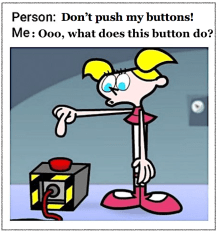
• Take full responsibility for all your own thoughts, words, emotions & actions – & whatever long-standing buttons the C. may be pushing

• Let yourself feel all emotional reactions to the C. rather than pushing them away – but not with the C. – do it in meetings, therapy, journaling… Always be clear that the pain is coming from the WIC.
Take a mental step back from your Es, putting them ‘outside‘ of yourself, rather than drowning in them or sweeping them under the carpet. This defuses the intensity.
The best way to protect yourself is to be fully awake to the effects a C. has on you. That’s what Es are for.

• Focus on how to meet your own needs, rather than on what the C. is doing or not doing. Don’t over-compensate for someone else’s limitations or failures. It doesn’t help anyone, & only drains you
• Know you have the right & power to say how you want to be treated.  This comes from knowing your worth as a person – just because you exist
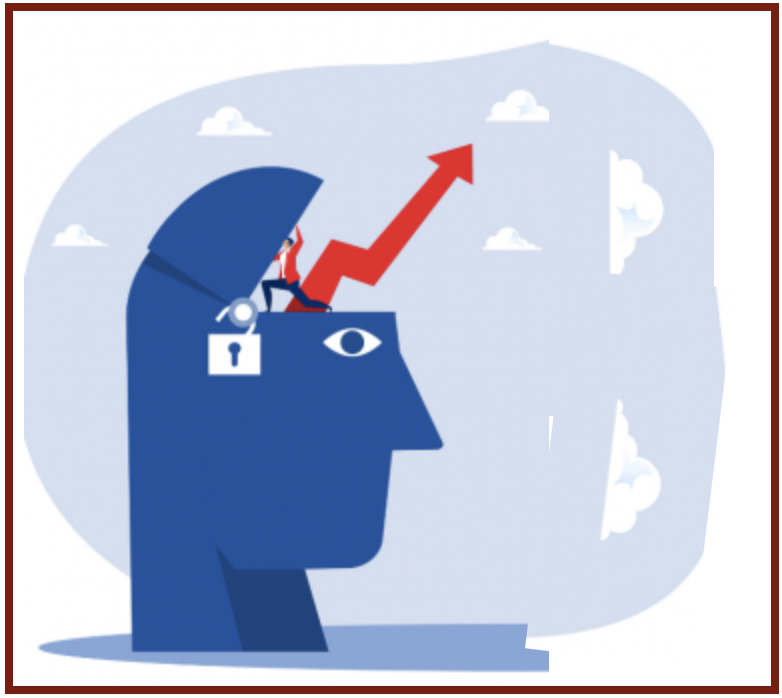
• Identify what really matters or what your real goal is in each situation & then ask: “How important it this?,  Do I need to be right, validated, applauded, justified…, or can I let go in order to be at peace? //  How will reacting to this person make my life better (or worse)?”.
If it’s not literally a life & death situation, you can redirect your energy by quietly talking to the Inner Child, & focus on using Recovery tools

• Look for the lesson in any difficult situation – but not at the expense of the Es. So – NO self-blame or judgment. Getting something out of each encounter with a C. can help you be stronger, healthier, more awake, more self-protective…. for the future
Ask : •“What are they telling me about themself?
• Have I been ignoring the signals about this person’s patterns?
• Have I stayed too long? , Did I somehow set them off?
• How are they like my family? Are they just a bad fit with me?”….

• To stop the drain on your energy, conventional wisdom says: “Stop endlessly talking to everyone about a negative event or conflict”. This is valid if all you’re doing is whining, complaining, obsessing, dumping…. rather than carefully evaluating what’s really going on, & ✒︎ taking it to the right place to process (Program, Therapy, Minister….),

Write out all your frustrations, hurt & anger about how the C treats you – & the mental arguments to prove your side of the story, without censorship. Picture all that pain draining into the paper & then burn it – safely!

support groupNOTE: For ACoAs, as long as a situation is pushing old buttons, our Es can be overpowering, getting in the way of functioning.
We need to keep sharing what’s upsetting our WIC – in the right environment – and for as long as it takes to bleed off the accumulated hurt & rage that keeps our obsessions alive.

We may also need outside validation that we’re not crazy – that someone really is being abusive, that our feelings are normal in that circumstance…..

NEXT: Self-Care Around Controllers (#2)

RESPONDING to Controllers (Part 3)

 Screen Shot 2015-07-06 at 7.55.09 AM
PREVIOUS : Responding to Controllers (#2)

SITE: “21 Common Mistakes to Avoid When Responding to Conflict


WHY ‘Control’ Responses to Controllers (Cs)?
Because it’s Empowering, to not be or stay a victim.
THE GOAL is to heal enough so we can speak up from the Adult ego state right away, but only if it’s safe & appropriate to insure not hurting ourself. That way our frustration, hurt & anger won’t build up – providing short & long-term benefits.
✳️ This ability comes with lowered WIC anxiety (Es) & practicing things to say (Ts)

Being KIND to ourselves
When we react impulsively or fight back we may temporarily feel powerful, but it doesn’t help self-esteem & personal growth. Even so, sometimes it’s the only way to get thru to a C. & stop them from seeing us as weak & vulnerable. Many Cs only understand ‘tit-for-tabe coolt’! even tough it doesn’t usually resolve conflict or protect us from further attacks

• It’s best when we can mentally take a step back (T), to breathe, process how we feel (Es) & check which of our buttons got pushed. If we can address the problem in a positive way in the moment, great. If not, consider what’s best for yourself & maybe deal with the offender later. In any case, the less we RE-act the more self-empowering & peaceful we’ll feel

Freedom of Speech
Other people seem to think it’s OK to say whatever they want, but we are afraid to do the same. We need to give ourself permission to know & express our point of view as well. But over-reacting to volatile or oppositional opinions has to do with our childhood wounds, & not just to what’s being said in the present. Be truthful, but don’t get into a pissing match. Al-Anon : “Say what you mean but don’t say it mean.”

Minimize Negativity
Nurturing all-consuming anger at someone for their comments or actions only hurts us, carrying painful energy into other parts of our life.  Malachy McCourt (actor, writer & participant in Occupy Wall Street, 10/2011) once quipped: “Holding a grudge against someone is like drinking poison and expecting the other person to die.

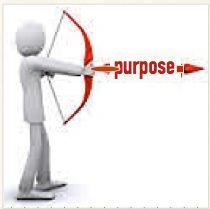
purpose For ACoAs, obsessions come from our damaged past. We can privately do rage-work, & process our wounds in Program & therapy, so we don’t keep reacting in ways that make us feel bad about ourself afterward.

What’s our Purpose?
To get the most our of life we have to be clear about our goal in each situation & act accordingly.  What our Adult self wants to accomplish & what the WIC wants are often 2 very different things. Any time we get riled up about something, remember it’s the WIC or PP, but how we respond will depend on whether the ‘Unit’ is in charge or not.

EXP: One week-day evening Ally was in a church auditorium waiting to hear a concert. In the back vestibule a maintenance man was polishing the floor with the door open to the lower level, & the machine was very noisy!
Ally went all the way down to the man, asking him to close the door adjoining the sanctuary, but he refused, so she went back & sat down. Immediately a man waiting in the audience also went down to the worker, & lo-&-behold — the door was closed! Ally smiled.
She knew that many years ago she would have taken offense & been very angry that the worker ignored her (a woman) yet ‘listened’ to a man. BUT now she was not upset at all – her only GOAL was to shut out some of the irritating noise – rather than being respected or validated, which was not the workers job !

Where’s the Focus?
The hardest thing for ACoAs is to not take things personally. Whether someone is mean or just tactless – they’re telling us about themselves – NOT US!
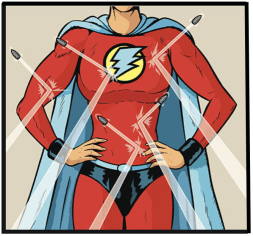
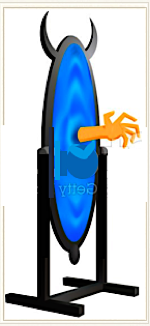
It’s most useful to mirror back to them what we’ve heard: ‘Why did you say that?”, or ‘What did you mean by that?”…. Where attention goes, energy flows. We can only focus fully on one things at a time. The sooner we clear up an obsession, the faster we get our life back. Often speaking up for ourself will rebalance our energy.


NEXT: Self-Care around Controllers – #1

RESPONDING to Controllers (Part 2)

PREVIOUS: Responding to Cs #1


RESPONDING TO CONTROLLERS (Cs) (cont)

ILLUSION
If we’re around a controller long enough we’ll inevitably absorb the pain & rage they’re projecting onto us.  If we let this continue unprotected, it means we still have too much S-H, weak boundaries,  AND
as a co-dependent Rescuer we may think it’s helping them feel better – to ease the C’s pain by providing attention, understanding & compassion.

But it will never be enough to fill their bottomless pit AND it’s not our job to parent them! All we’re doing is rewarding them for toxic behavior, giving them permission to keep it up, & letting ourself be their emotional garbage can!   NOTE: The ‘evil’ is their disease, not the person.

MIRROR as CORRECTION
evil mirrora. We need to reflect back to the C. what we hear them say, & if possible what emotions we observe being expressed. EXP :”You sound angry / frustrated / upset….. What’s really bothering you?”

b. This is in contrast with our Truth – how their behavior affects us, physically & emotionally
EXPs : “You just told me I’m ‘no good for nothing’. I know that’s not true about me AND it’s not a nice thing to say to anyone! // You just said I’m crazy. I know I’m not. Please don’t ever say that to me again. // I heard you tell me I’m stupid for not knowing _____.  Why are putting me down?”

IMPORTANT
In dealing with Cs (narcissists) always throw the ball back in their court. Let them be responsible for their defense mechanisms – their unhealthy way of communicating. Do not take it on & then feel bad about yourself !!

Exp: While at a party Tina started talking to a group of friends.  One of the men asked her what she did & she told him she was a Healer. He started making fun of her & her profession, which Tina did not appreciate.
Instead of justifying her career choice, or getting angry & attacking him, she put her hand on his shoulder, looked him in the eye, & calmly said: “Why are you talking to me that way?”
He was stunned, & backed right up, barely knowing what to say – & then apologized!

KEEP IN MIND – when we do find ourself being controlled, manipulated or taken advantage of, how well we handle the situation tells us a lot about our level of maturity & Recovery.
• Even when we’re stuck in a bad situation, getting nasty or throwing a tantrum usually makes things worse for us.  If we let the WIC react, we’re being just like the C.
So – the more we come from an Adult Ego State the more likely we’ll get what we want AA Big Book Promise #11 – in Recovery:
“We will intuitively know how to handle situations which used to baffle us”

OPTIONS
• In most cases we do have choices, even though many of us still function from ‘learned helplessness’. When possible, try out some new options.  EXPs:
🔆 Immediately end a conversations if it starts to get verbally violent or controlling – by physically leaving, or saying goodbye & hanging up
🔆 Do NOT return abusive or harassing texts!

🔆 End a call with any incompetent Customer Service person, & try again until you get someone who can help. We can always choose a different service provider, friend, bank, waiter, church, store…..
🔆 Privately smile or even laugh at the stupidity or ridiculousness of a C’s comments, rather than getting angry or hurt
🔆 Sometimes the only healthy option is to quit & find a job elsewhere, altho not always possible.

NOTE: With practice, gradually it gets easier to handle familiar controlling situations – some better than others – depending on the depth & size of each button we have.
Buttons are old wounds – things that hurt us over & over as kids, like being accused wrongly, being threatened with abandonment, being ignored, expected to be ‘up’ all the time, often told to shush….

The milder our re-actions to old wounds, the better we’ll feel about ourself. However, some wounds will take a very long time to heal, while others will not.
In tough cases the goal is to recover our dignity as soon as possible. DO NOT give yourself a hard time when somethings still gets to you, even after many years of personal growth. That’s just being human!

NEXT : Responding #3

RESPONDING to Controllers (Part 1)

3resist controlNO ONE CAN CONTROL ME –
unless I let them

PREVIOUS: Being controlled – #5

POSTS Relationship FORMS 1 & 2’

See Acronym PAGE for abbrev.


RESPONDING TO CONTROLLERS  (Cs)
• As adults, even when we’re with a Controlling person, we always have at least some control of our own over what happens to us, whether we use that option or not.  As Glenda the Good Witch says in The Wizard of Oz “You always had the power!” If we must stay with a C., we have to protect ourself, otherwise all we can do is capitulate

EXP
: As soon as Jody met sexy Sam at a party, she could tell he was a C – just like her mom. Even so, they started dating & eventually he moved in.  His charm compensated, but Jody still needed to deal with his habit of assuming she was exactly like him (narcissistic control).
She went along when it didn’t matter, but stood her ground when it did. For a while in the beginning – to shift the focus from any specific topic of contention – to the bigger picture – she started saying ‘ Sure, Martha’ whenever he acted like her mom! It took him a while to catch on, but eventually he got the point & backed off (but most C. won’t!)

Re. THEM – Cs are also wounded people who don’t have a right to their needs, but choose to manipulate others into providing for them, & to feel cared for. Pay attention & evaluate which type you’re dealing with:

• Some are not consciously aware of being a C, & will be confused or surprised if it’s pointed out. They have no idea what they are doing ‘wrong’, but also don’t want to know, so they won’t change easily

• Others are aware of trying to deceive or control, but will vigorously deny it because they don’t want to be caught (& it’s socially shameful), OR they just don’t want to be responsible for their actions or old pain.
So they’re less likely to change at all, because they’d have to deal with the underlying damage

• A few are willing to consider the issue when ‘confronted’ & will work to change it
• And some of us are already in the processes of letting go of being controlling!

Re. YOU

DECIDE: When responding to a C, consider what outcome you want:
❈ for revenge, to punish, retaliate, humiliate….OR
❈ to inform, vent, set a boundary, for self-protection, fairness….
"I" statement✶ If you want to be as psychologically clean as humanly possible (NO perfectionism!) then practice making neutral or I’ statements:

“I don’t respond well to being bossed around , That’s not helpful! ,  It sounds like you’re trying to get me to_________ Is that right? , I’d rather__________ , When you ___________ I feel _________  , That doesn’t work for me / not how I feel about it / not what I need…”

EXPECT: resistance in the form of excuses, protests, denials, blaming …. especially from the hard cases.  You can let them know you understand their feelings & wishes, but that you hold the right to have yours, even if that upsets them, makes them angry, attack you or leave in a huff!
• No matter what their reaction, you decide what you’re going to agree to – or not, based on your needs, not theirs!

REMEMBER: When someone insists on accusing you wrongly (a big button for ACoAs) or just refuses to ‘get it’ – only state your truth as clearly as you can. You may have to repeat your position, but DO NOT:
try to make them understand where you’re coming from
—  keep explaining why your point is valid, and
— NEVER justify yourself – ever!  To stay & argue with someone like that makes a fool of yourself!

• The more relentless someone’s controlling behavior, the more narcissistic the person is. In that case you cannot win, because they can’t & won’t see you as being separate from them, with your own identity & personality.
If you have the option, you either limit contact (Read : 60 Healthy responses to narcs“) , OR walk away, no matter how much it hurts, even if it means letting them think they won.
😰 To do anything else is to humiliate yourself!

NEXT: Responding to Controllers (Part 2)