
 I HAVE LOTS OF WAYS
of being covertly angry
PREVIOUS: P-A #1
SITEs: 27 Most Passive-Aggressive Things That Ever Happened
• P-A Commuter Types – (London)
** Southern P-A veiled insults
Somethings Passive-Aggressives SAY :
Using their cherished bag-of-tricks to combat insecurity, especially if they feel pushed outside their comfort zone, P-As silently hope for attention & approval, trying to prevent loss of connection by avoiding confrontation.
The following statements are meant to express disappointment, hurt & hostility, but are coded in the form of underhanded insults instead of respectful honesty. Totally confusing most people, this style insures P-As do not get their needs met, while feeling ONE UP.
When they give those little looks, roll their eyes, or throw out subtly sweetly nasty comments, they’re cresting brain fog, so most ‘recipients’ don’t catch on that they’re being messed with.
NOTE: Emotionally healthy people are self-reflective, so not only do they have decent self-esteem, but aren’t afraid to own their ‘stuff’. So they rarely point a finger at others,, keep the focus on themself, not ashamed of their emotions, & can communicate directly with ‘I‘ statements.
EXP: “I won’t be able to help you with that // This is who I am, please accept me as is….”
 BUT dyed-in-the-wool P-As have none of those characteristics. Almost all the following statements are ‘you’ types (some implied), and none of the “I” statements are kind or supportive, nor admit personal responsibility for their feelings / opinions
THIS often leaves someone wondering:
“Did I hear right? / / Did they mean to be mean? / / If I catch them or say ‘this hurt’ – will they deny or attack?……” What the P-A wants is for others to always be off-balance.
This list includes things said/written by any adult in any setting
• Aren’t we pretty today? = Who do you think you are? / / Is that what you’re going to wear? // What you’re wearing is ugly
• Don’t bother! = means I really want you to do _____, & angry that you won’t
• Don’t take it so personally = means that it was a very personal barb
• Fine. Whatever = sulking, they want you to stop bugging them
• How is your therapy progressing? =You don’t seem to be getting any better (maybe worse!) // you’re still such a mess, I don’t think even this will help
• I’m coming! = foot-dragging, putting off doing something they want // I’m busy!
• I didn’t know you meant now = means I won’t let you control when I do what you want, which I don’t want to do anyway
• If you really want to = means I don’t really want to, but won’t say so
• It’s nice that you’ve found a friend = finally, since you’re not very desirable
• If you insist! = means I don’t agree // I don’t want you to, but won’t ask you to stop
• It’s fine if you’re late, again = they feel disrespected but think it’s too petty to object directly (don’t have a right to be considered)
• I didn’t do anything (wrong) = complete denial of their abuse or neglect
• I didn’t mean anything by it = means ‘pretend you didn’t get it’
• I h0pe it’s worth it = they’re “worried” about a choice or decision you’re making, think it’s wrong and hope you fail
• I thought you knew/ are in the loop = they had no intention of including you
• I was curious about / surprised / confused by… = a disguised criticism
• I was only joking = sarcasm meant to stab at you. It’s not funny
• Oh my dear, you’re looking so much better today = boy have you been looking like something the cat dragged in lately (although you have not been sick)
• No worries = short for Screw You
• So… (by itself) = another form of Screw you, or what’s your point? — If in a sentence : So….When are we going? / have you called them back yet?….. = the P-A is clearly agitated, worried…. but won’t admit it
• Sure, I’d be happy to = they don’t want to & have no intention of doing it
• This is far too complicated for you to understand = dumb, dumb, dumb
• Thanks in advance = you’re will do what they want, without your input or consent
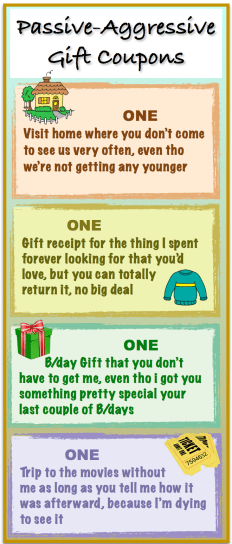 • You’re asking too much / just wanted everything to be perfect = they don’t want to do what you asked for, but can’t get away with putting it off, so do it badly or half-assed, then are defensive when you rightly object to a sloppy execution
• You’ve done so well for someone with your limitations / with what you had to work with = means the P-A is jealous, but patting you on the head like a child. OR are very displeased & disappointed in you, & blames you
• You decide / whatever you want = (as a pattern) never taking responsibility for what they want & then objects or criticized your choices
• You’re imagining things = means that if you’re ‘crazy’, they’re home free – got away with abuse
• You’re so intense / too emotional = P-As are hiding their own anger & pain, so don’t want your strong emotions to stir up their suppressed ones
• You’re too sensitive = P-As don’t want you to object to their hostility, judgement or insult
• Why are you getting so upset? = means “Ha, I got you!”
• We’re watching your progress & hoping the best for you = we don’t have a lot of hope or confidence in you, but want to sound supportive!.


 HEAL & GROW for ACoAs