

I TRY SO HARD TO BE INVISIBLE –
but all it gets me is more trouble!
Previous: Cost of O-C #7
See Acronym PAGE for abbrev.
OBEDIENCE vs SELF-CONTROL
• Obedience is the willingness to follow commands, orders & instructions without question, because they come from a legitimate authority which is believed in. The rules are presented as ‘necessary for the common good’ – usually to uphold the social order.
It requires the person to give up control to another, supposedly for their own benefit, such as protecting children from the dangers of damaging situations
The rationale for promoting obedience in the young is that at some point, with maturity, the training is transformed into self-control – becoming inner-motivated. This internalization happens whether the training is positive or negative.
When a child is subjected to a coercive (controlling) environment, as most ACoAs were, what they absorb & give obedience to are Toxic Rules, which force then to deny / discard the very parts of themself needed to become autonomous. So as adults, ACoAs still function as symbiotic extensions of the family, instead of being motivated by our True Self.
• Appropriate Self-Control is the opposite of obedience – because motivation to act is located inside rather than outside the Self. IT —
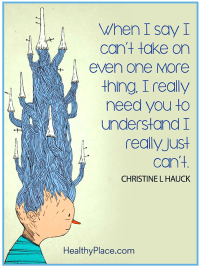 — represents having absorbed the rules of family & society, (mainly beneficial), but only to the degree they fit our personality & ethics
— requires enough S & I from our family of origin to be able to think for ourself, deciding daily what works for us & what doesn’t
From the Encyclopedia of Mental Disorders : The term ‘self-management’ has replaced ‘self-control’ because self-control implies changing behavior through sheer willpower.
Self-management, on the other hand, is being aware of what causes an undesirable behavior, & consciously deals with that cause, to correct / improve it ( ie: making autonomous choices)
RESULTS of Over-Control (OC)
This list is specifically related to ACoAs who are very shut down. The Lost Child Role is the most obvious version, so O-C that they’re mute & feel invisible.
They still have the need to protect themself in an extreme way, even when they’re no longer in physical or emotional danger.
👾 But since this coping mechanism is about negating the True Self, even those in the Hero Role can find O-C hiding under all our accomplishments.
INTERNALLY – WE:
• assume that all future outcomes in our life will be as disappointing & hurtful as they always have been, so can never relax & have fun!
• don’t know when something’s too much for us, because without internal balance we end up exhausted, burned out, & often develop a chronic illness
• don’t trust our own thoughts & intuition, so keep making the same mistakes, like trusting the wrong people
• keep ‘unacceptable’ emotions hidden, are so defensive or become social isolates – that it’s very hard to have mature adult relationships
• only notice & focus on the rejecting things in our environment, reinforcing the paranoia & depression we carry from the past
• stay in the one-down victim role, giving others too much power
INTER-PERSONALLY – WE:
• can’t understand other people’s responses to our persona (how we present ourselves) or why they treat us so ‘badly’
• are over-sensitive to being scorned or ignored by avoiding or rejecting everyone…..
• ….. YET, are always looking to others to validate us, give us permission, solve our problems, tell us what to think or do
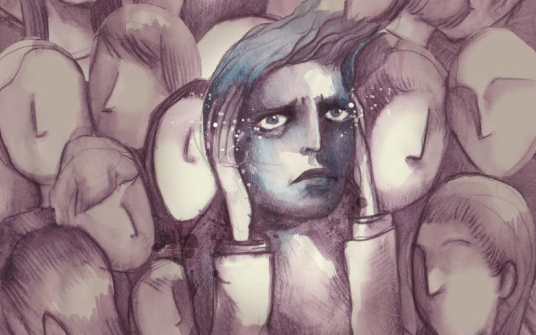 • are attacked by others for our seeming lack of: caring, communication, emotional awareness, openness, responsiveness, sharing, support or signs of warmth.
It’s not that we’re incapable of those qualities, but that we’re afraid of caring too much & being taken advantage of.
Our verbal & emotional unavailability makes ‘present’ people uncomfortable around us (who are more active, talkative & emotionally open).
Some can get frustrated & angry – subjecting us to disdain, being blamed for problems not our fault, have our intentions be misjudged & misunderstood, even be labeled ‘sick’ / crazy
WORK – WE:
• don’t understand office politics – so ‘disdainful’ about it as if it’s beneath us, that we won’t even learn the rules, leaving us marginalized & easily victimized
• may be too anxious to work for anyone else, not wanting to take direction or be under someone’s thumb. Growing up with chaos & abuse gave us an intense fear of authority figures, & need to control everything, at all times
 • ignore or sidestep difficult task / projects, not having learned problem-solving skills, & are afraid to show our ignorance by asking for help. This can boomerang, making bosses & co-workers angry
• have a deep aversion to conflict, disapproval & taking risks. Lacking social competence, we get overwhelmed when faced with difficult office personalities.
Our silence in uncomfortable situations can aggravate others who want to talk about or fight things out, the very thing we’re trying to prevent.
NEXT: Backlash of O-C – #1




 HEAL & GROW for ACoAs