

I’M AFRAID TO FIND OUT
what level I’m at!
PREVIOUS: Levels of development #1
SITE: Enneagram & Addiction
Psychological LEVELS
Each of the nine Enneagram Types contains its own 9 levels/stages of possible psychological development, (don’t confuse Types & Levels), starting at the bottom: from the most destructive (level 9) to the healthiest (level 1) – see chart above. This categorization was developed by Don Riso in 1977, added to by Russ Hudson & used by Ken Wilber in the study of personal & cultural evolution.
● The Levels are a way of picturing the “skeletal” structure of each Type,
& account for differences between people of the same Number, as well as the shifts we see in ourselves & others over time. Moving upward on the scale means we become less bound by the limiting defense mechanisms of our type, to become truer to our Real Self, to be more present in the moment. Moving downward sinks us deeper into damage, increasing our distance from objective reality.
• Unless we know each Type well there can be confusion in identifying someone. People of the same Number may seem quite different from each other when coming from differing levels of mental / emotional health. And different Types can seem deceptively similar, depending on which stage they’re in. To identifying anyone correctly, the thing to focus on is the Passion, and listen ing to the way each type used language helps too.
● These stages are NOT fixed. The Level we act from can change even in the course of a day, based on feeling peaceful or stressed – usually to the one above or below our ‘normal’ level. Because levels are (potentially) fluid, it’s perfectly normal to do this depending on the situation.
— Anyone working on self-improvement will be able to move up one or two on a more permanent basis, with great effort, but most commonly we migrate from lower to higher & back down again throughout our life, while the majority stay in the mid range 4 to 6
— Very few people achieve level 1, altho some do touch it from time to time, & while they’re likely to slide back down, they usually stay in the 2 to 4 range.
— And no one drops from the uppermost levels to the bottom 3, especially not all at once, unless there is severe physical trauma to the brain, or long-term exposure to severe abuse.
EXP: This is what can happen to a happy well-adjusted child who is forced to endure repeated beatings, verbal assaults &/or sexual abuse, over a long time
OVERVIEW by RANGE: At each level, we use different strategies to reinforce our sense of self / ego-identity. NOTE: ‘ego’ = the created self-image. These divisions apply to everyone, no matter which Type one is.
LEVELs 1-2-3 : Healthy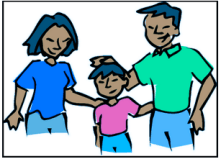
Anyone who in the process of Self-actualizing (not 100% or all the time): high functioning & operating successfully, who can use admire-able / balanced / consistent, reliable ways of thinking & acting. There’s a sense of flow, being fully engaged with the task at hand, moving with little or no friction against the internal & external world.
a. INSIDE: Not strongly identified with their self-image. Are free to express & reinforce their identity, by acting in a manner consistent with the ‘persona’, as well as being able to let go of it when appropriate
b. OUTSIDE: At this level of High Performance, they see other people as valuable in their own right, with unique needs & tastes, separate from themselves, & can balance their needs with those of others.
● High-functioning people have a personality – it doesn’t have them
LEVELs 4, 5 & 6 : Average
Ego-driven people are neurotic but still functional, & can contribute to society, but are limited in 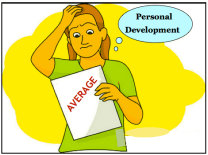 some specific way. They have a mix of productive & energy-sapping patterns.
● In this ‘normal’ range, people are generally self-centered, focused more on image – wanting to be seen in a certain way. They use social roles, manipulation & controlling others to reinforce their sense of self. They interact others mainly in terms of their own needs, with less concern for the needs of others. This can generate resistance & resentment toward them, but they don’t understand why.
● Average-range people believe they are their personality (“It’s just the way I am”)
LEVELs 7, 8 & 9 : Unhealthy
Unhealthy / Pathological people are already – or in the process of being – so out of control that they develop personality disorders such as being obsessive-compulsive, & may eventually lapse into psychosis. There is an increasing sense of ‘spinning their wheels’, heightened internal & external conflict, resistance, difficulties with the public….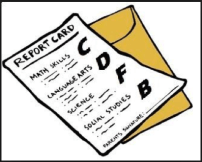
● In this Acute/Chronic Stress range these people’s focus is so narrowed down to themselves that they can break with reality. Their self-image is completely different from how others see them, since they experience others mainly as objects rather than human beings, putting a great strain on all relationships
● For lower-functioning people, the personality has them & they just act out of it automatically.
NEXT: Levels outlined (Part 2)


 HEAL & GROW for ACoAs