
 SEPARATING FROM THEM
is good for me and them!
PREVIOUS: Lack of Individuation
POST: ‘Symbiosis & ACoAs’
See ACRONYM Page for abbrev.
QUOTE: “The successful process of Separation is the source of our personal autonomy, our independence, our ability to assert ourselves and our capacity to make choices.” From The Ties that Bind, the Ties that Strangle
A CHILD’S BRAIN
Adult life is influenced by infancy in spite of our inability to remember that far back. In “Why Love Matters: how affection shapes a baby’s brain”, Sue Gerhardt considers how the mother-child relationship creates baby’s nervous system, with lasting consequences, affecting our future emotional well-being.
New research on early brain development showed very early signs of brain differences between low-, middle- or high-income children. For babies raised in stressed environments, the study found depressed growth in the hippocampus (memory), amygdala (involving emotion understanding), & frontal lobes (dealing with attention, language & self-control. (More…)

• “… foundations are built during pregnancy & in the first two years of life… This is when the social brain is shaped, the emotional style & emotional resources established”
• “… a poorly handled baby develops a more reactive stress response & different biochemical patterns from a well handled baby…”
• “Babies of agitated mothers may stay over-aroused & have a sense that feelings explode out of you, & that there is nothing to be done about it. CHART ⬆️ (also Teenage brain)
Well-managed babies come to expect a responsive world”
CHILDHOOD
Separation = the internal process of the child’s mental separation from the mother. Individuation = a developing Self-concept
Margaret Mahler : Her interest in the developing ego centered on its growth within the context of Object Relations, which refers to the way an individual’s interactions with another comes to be represented in the mind & then is internalized as part of the Self.
 In the normal Separation process – the formation of psychological limits & boundaries allow the infant to experience itself as separate from the mother.
But this is only possible if the infant is absolutely secure in its attachment to the caregiver during its first year of life, AND then begins to develop enough of a capacity for autonomy, self-reflection & self-reliance, normally by age 2.
For this to happen the mother will have to be able to accurately, consistently respond to the child’s internal emotional, mental & physical needs, at the right time & in just the right amount – using intuition & common sense. What a big job!
• This safety would allow the child to form a stable emotional core, as it recognizes & accurately interpret its mental & physical experiences (touch, talk, play….), which are then organized & grouped into loose patterns by category.
The first act of separation occurs during the ‘terrible 2s’ when children hit on the idea of “no.” They are exercising a natural instinct to be unique, but while they may be annoyingly persistent, they don’t yet have the power or autonomy to enforce it.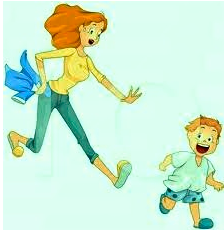
As children grow they can put more power behind their “NOs”, which sometimes includes doing fun things, at other times potentially dangerous ones. It’s all part of the Separation process, but it’s even hard for heathy parents to let their children take the risks that NO imply – who love & want to protect them, having much more reality-knowledge. (MORE…. Saying YES to oneself)
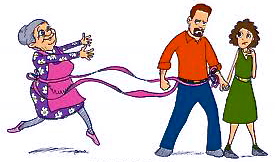
▪️Providing this freedom is even harder or impossible for dysfunctional parents to provide, who have their own S & I, FoA & power/ control issues! In this case, it’s not about loving & protecting their children, but rather trying to stifle their own anxiety!
ADULTHOOD
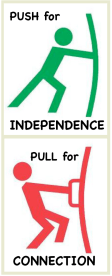
Well-differentiated families, with good S & I & therefore are non-symbiotic, have the flexibility to balance the need for connection & stability against the need for each member to also have autonomy.
NO : Separation does not mean giving up the close attachment we have with parents or other people, nor having to be geographically separate.
YES : Separation does mean that we recognize we’re not the same as our loved significant others, that we react & think differently, AND that is OK!
NEXT: Separation #2


 HEAL & GROW for ACoAs