
 I CAN NEVER LET GO
no matter how bad it is!
PREVIOUS: Intro-a
SITE:“You’re Not Allowed To Have Feelings” (in our culture)
UNHEALTHY ‘Nice’ People have low self-esteem. They are: EITHER co-dependent (Co-dep): over-doing for everyone else, rescuing, self-sacrificing, the ‘good’ one, always ‘up’
OR passive-aggressive (P-A): resistant, obstructive, deliberately forgetful, plotting, ‘innocent’, pretend-incompetent
When we go thru something difficult or painful, and haven’t learned appropriate ways to cope with the Es that come up (usually fear, &/or anger), we’re either not aware of them at all, or dismiss what we’re feeling & find ways to distract ourself. This stifling is a continuation of how we tried to protect ourself as kids because we kept being punished for expressing those Es. Now it just keeps us stuck in our own emotional mud.
Aggressive Anger is obvious – shown as verbal threats, screaming, physical blows, breaking / destroying objects or property…. The consequences are usually harmful to someone or something.
Hidden Anger, on the other hand, is subtle & manipulative (Co-dep or P-A), but also comes with its own risks & negative outcomes. Behaviors can be so indirect, often not related to anything that’s currently happening, that others either can’t easily catch on, or will be puzzled by it. Angry-nice people may seem like victims but are actually perpetrators, acting out their hidden rage in ways that insure they can keep denying it, keeping their ‘good-guy’ status.
🔸 If the anger is so deeply suppressed that it’s now unconscious, the person will not be able to acknowledge that certain actions or non-actions are a sign of being ‘triggered’ (hurt, scared, frustrated)
🔹 If the anger is conscious but concealed, then the unhealthy patterns are deliberate, & may be vindictive : planned to sneakily annoy, hurt or destroy someone they blame for their own shame or guilt.
Either way, ignoring our anger cuts us off from a vitality that could give us the power to forge ahead on our own behalf, leavings us feeling powerless.
Yet many ‘nice’ people are so dedicated to their carefully constructed facade of ‘OK-ness’, they refuse to feel their anger directly & deal with situations that caused it. This prevents any resolution or growth.
ACoAs
For those of us who suffered a great deal of PMES abuse by our family, it’s only natural to have built up a backlog of anger towards drunk, raging, selfish parents, abusive siblings & unsupportive relatives. As kids we gradually suppressed some or all of that anger (A.) & rage (as well as other painful Es), for 3 major reasons:
1. We were humiliated & abused if we had the nerve to get visibly angry at adults
2. It was (& may still be) too overwhelming to consciously face that our parents truly were/are unsafe, cruel, crazy, addicted, neglectful….
3. We were afraid that our anger would literally harm them – because children think their emotions have magical powers to injure or kill others
(BOOK: “So the Witch Won’t Eat Me“, Dorothy Block. Intro explains it)
Shutting down on painful Es was self-protection.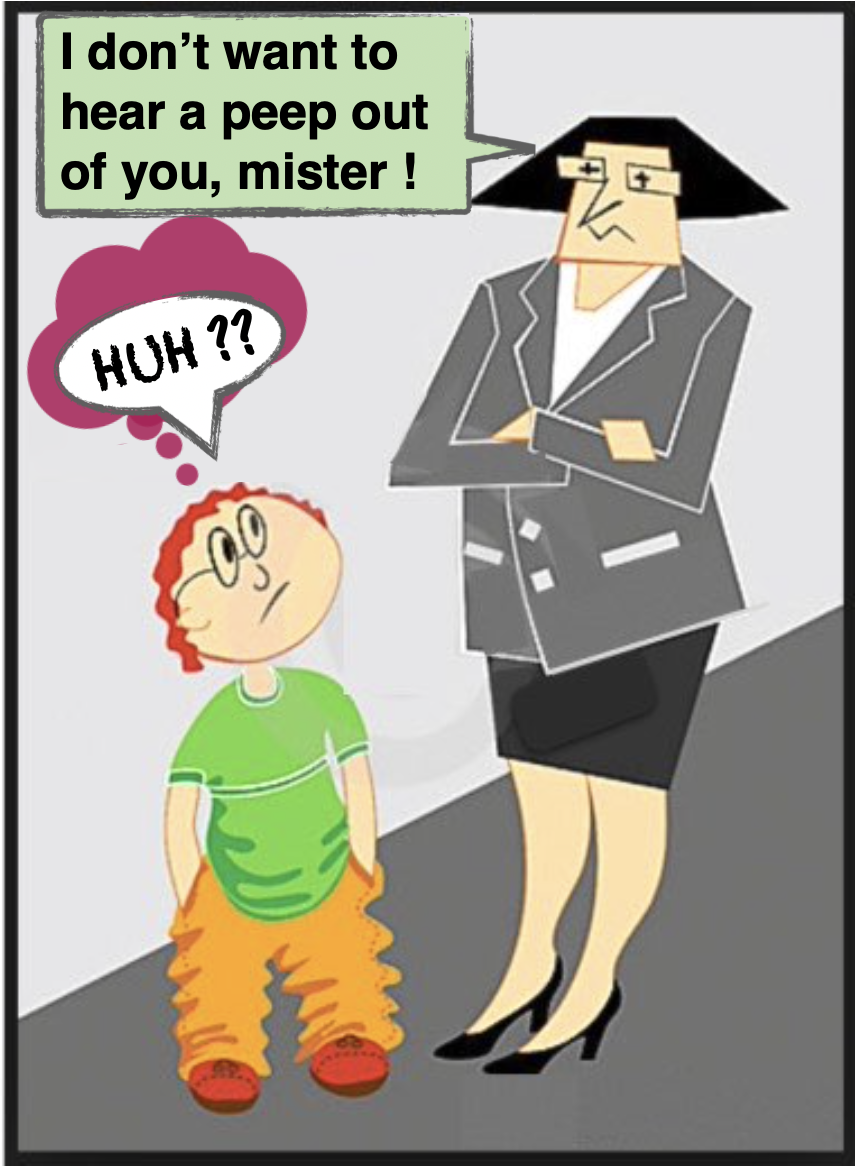
If we had to severely stifle our anger, it was because our parents (see ‘ACoAs & Anger‘ post) :
— believed it was disrespectful or a ‘sin’ to be A.
— didn’t know how to deal with strong Es
— didn’t want us A. at them (their Co-dep & FoA)
— only they were allowed to be A.
— refused to be held accountable for what was hurting & therefore making us A.
— wanted to look ‘good’ to everyone else
— they were too weak, sick, ‘delicate’ to bear having us challenge / disobey them
— they weren’t allowed to feel their own A.
Sadly, most of us were taught to not have any Emotions. For some of us – being sad / crying was punished, made fun of, ignored, while for others – & our anger was the biggest no-no. So now many of us either refuse to acknowledge that we do indeed get angry, or are so shut down that we actually believe we never are.
Instead, we may recognize experiencing some of the following, which are all versions of ANGER:
annoyed, blaming, cranky, impatient, irritated, jealous, ‘justified’, outraged, resentful, self-blaming, over-reaction to being treated unjustly / unfairly, ‘touchy’, vindictive…
NEXT: Intro-c


 HEAL & GROW for ACoAs