ACoAs: PATIENCE vs Co-dependent Waiting (Part 2)

PREVIOUS: Co-dep vs Patience #1

SITE: How to cope with waiting for news

QUOTE: “Good character is not formed in a week or a month.  It is created little by little, day by day, by protracted patience” – Heraclitus of Ephesus

PASSIVE PATIENCE (cont.)

Co-dep also shows up as IMPATIENCE, annoyance, intolerance, worry, fear & distrust
• It’s demanding what we want, right now (instant gratification), because any delay in getting a need or a desire met is taken by the WIC as a definite “NO – you can’t ever have it, so shut up & go away!” from the PP (Negative Introject)
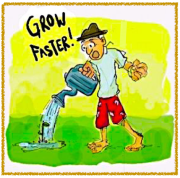
• It’s rushing relationships, to get that feeling of instant attachment, which is actually symbiosis. It’s an attempt to compensate for present-day fear of Abandonment pain, to make up for not having had that bond as an infant with mom, when it should have occurred

• It’s impulsively rushing into situations without considering whether they’re right for us, or what the consequences will be – to ourself or others
• It’s pushing our way ahead of others (selfish entitlement) – the unconscious fear of being left behind – while consciously assuming it’s ‘our right’, but is actually childish narcissism
<ADD YOUR OWN kinds of unhealthy co-dep ‘patience’ & impatience>

Fortunately, Recovery gives us an out – a way to identify our damage so we can separate & strip it away from the Real us that’s hidden under all the defenses, separating the Toxic Rules from our Rights. As adults we have very real options, if we’re willing to risk leaving our attachment to the dysfunction.
REMEMBER: We’re damaged (wounded), not defective!

🦋 🐯 🦆 🐳 🦒 🐇

HEALTHY PATIENCE
This kind is an ACTIVE response to reality (personal & environmental)
Just like ‘Acceptance‘ does NOT mean giving up or giving in, Patience does NOT mean letting the world trample us.
Nor does it mean ‘taking the moral high ground’ as some spiritual superiority, nor a punishment from the ‘universe’
• It does not imply the hopelessness of being forced to endure suffering & deprivation
• It does not mean being passive, of not taking appropriate actions when necessary to accomplish something, especially if it’s something only we can do. (Posts: Healthy Actions // What to do when confused // Why are you stuck?)

It DOES mean being emotionally mature. This allows us to tolerate delayed gratification, which can only come from lowering the WIC’s intense anxiety. Healthy patience is active in the sense that we choose to wait for a desired outcome, while at the same time actively continuing to live our life the best way we can – every day.

Real patience :
• requires knowing the difference between Rescuing & Healthy Helping, because it takes patience to sit with our own discomfort of not jumping in to someone else’s problems. Knowing the rules for Helping is important.
But we can also tell what’s healthy by feeling physically stressed or relaxed, & by our emotions: Rescuing / people-pleasing is driven by anxiety, a compulsion to compensate for something broken in us. SO —
• Before a situation (a communication, an event….)  we can obsess & worry OR – be excited about ‘doing / reacting’, which comes from a false sense of connection, & temporary relief of abandonment fear.
Afterward – we can feel drained – from overdoing, disappointed if we didn’t get what we wanted in return, & then angry. Here the actions are ALL about us, the WIC trying to cover up S.H.

True Helping is done from an inner sense of calm & confidencebefore taking action a choice that comes from the Healthy Adult’s enjoyment of sharing our personal talents, knowledge & experience. And we feel pleased, satisfied & comfortable, even uplifted – afterward. We benefit, & not just about ourself.

NEXT: Co-dep vs. Patience #3

HEALTHY TRUSTING (Part 1)

catching myself

PREVIOUS: Patterns of Mistrust #2


“TRUST” comes from the German word “trost” meaning ‘consolation’, which implies feeling comfortable. In this context it’s relevant to remember that ACoAs almost never felt comforted growing up.
It’s one reason we were never able to trust! And now, as adults, we don’t realize how much we still need to be comforted, so we’re ashamed when we feel vulnerable, needy & ‘feeling sorry’ for ourselves

Genuine trust is first & ultimately foremost about being able to trust ONESELF, a quality we cultivate via our True inner Voice. As an adult, it’s trusting your own judgement, knowing from experience & mindfulness that you will get what you’ve asked for – rather than being afraid & hesitantthumbsUp

A major factor for trusting others IS picking the right person, location, opportunity… that suits us & is do-able, staying away from those that are not.
While there’s a certain level of risk because people & life can be unpredictable, if we’re emotionally balanced, it’s possible to be confident enough to handle setbacks & disappointments

• ACoAs need & want safety above all else – even more than love – neither of which our parents provided enough of, so we believe we’re not entitled to it
• But we can’t feel safe if we can’t trust. AND we can’t trust as long as we’re flooded with Self-Hate! The Al-Anon preamble says “…..we will love you until you can love yourself”.

Healthy trust is not about who or what others are. This is hard for ACoAs to internalize because of co-dependence & S-H.  ACoAs need to find people & / or groups that are safe enough to help us heal so we can become kind to ourselves (via the Loving Parent) & trust that “I know what I know!” (via the Healthy Adult)

Assumption: ACoAs usually think of trust only in the  POSITIVE – ‘I can rely on X…… I can expect Y to…..’, which is true but only unrealiablehalf the story, & encourages Over-Trusting

HOWEVER
Balance: Healthy Trust also includes knowing who & what is NOT reliable. The characteristics & patterns of Damage are just as predictable & consistent as those of Health, but will only cause problems.

• We can trust that a specific person will continually abuse or disappoint us, based on their consistent pattern of behavior (patent, ‘friend’…)
• We can trust that a specific location will usually be unsuitable or dangerous (bars, some neighborhoods….)
• We can trust that a type of event is the wrong one for us……

Once we know what to look for we can see it all around us, & depend on the outcome to be harmful or just a waste of time – without having to be hit over the head each time!

EXP: If you’re not paying attention when you go into a room & sit down on the first chair that looks comfortable – you may be shocked & maybe injured if it collapses & you land on your butt – because you assumed all chairs are equally well made & sturdy

🍋 Yet that’s what ACoAs often do with people & situations – we don’t pay attention or evaluate who or what we’re getting involved with.  Many times we accept friends lovers, jobs, pets, invitations, apartments …. without asking: “What do I want? Is this something I’m interested in? Does this suit my needs or fit my personality?
AND: “What is this person/place telling we about themself?”

TRUST (T) is valid when:
• we’re clear about the ‘rules’ of T – rather than being in fantasy
• the prerequisites for T exist – we’ve done some due-diligence
• we assess who or what does NOT warrant our T – so we don’t waste time & energy on them
fia-color• we experience a positive outcome from trusting the right person or info (feel calmer or relieved / get the introduction we heard about / receive the  promised money / enjoy a shared experience ….)
EXPFaith – the trust-er believes that their chosen path is pre-ordained by a Higher Force, so whatever happens is fated & therefore welcomed. This removes a great deal of worry about the outcome of faith-based decisions will be, whether successful & joyful or unpleasant & tragic.

NEXT: Healthy Trust (Part 2)