CDs: CONSEQUENCES (Part 1)

CDS effects - 1  

WHAT A MESS I’VE MADE
I don’t know what I was thinking!

PREVIOUS: CDs & the Unconsc. #4

REVIEW all CDs posts


OVERVIEW
Our brains are predisposed to making connections between ideas, actions & consequences, whether they’re truly connected or not.
While most people have a few CDs, ACoAs struggle with them long-term, having been formed as a way of coping with ongoing painful & traumatic life events. (Review Anxiety & T.E.A.).

1. (T) THINKING
CDs are available to the conscious mind, but are usually slanted downward, (CDs –Summary), making holes in our reasoning. 3 themes have been observed (A Beck) :
• Depressed people dislike themselves
• Current events are always interpreted negatively
• The future is also appraised negatively

CDs are like termites, damaging the whole system. Conscious (overt) abusing thoughts as self-talk reinforce themselves, creating a feedback loop of self-harm. Studies show how CDs
impact a wide variety of —
SOCIAL problems: child molestation (religious & non-church pedophilia), juvenile delinquency, chronic substance abuse….

PERSONAL issues: depression & worry, OCD, Bi-polar illness, relationship troubles, lack of college success or job searches, physical health problems… partially caused by anxiety & prolonged stress

temite CDs✶ CDs are mental signs of deeper, unconscious damage which need to be addressed. The mantra used by the Behavior Modification school of psychology “Change your thinking, & all will be well” is not the whole story, doing a great disservice to many suffering people. If we change our surface thinking but not the underlying wounds (trauma), whatever improvements that do occur are rarely permanent.

• However, there’s no doubt that identifying & replacing (not changing) CDs does have a positive effect on well-being!

MENTAL / PRACTICAL (PMES) RESULTS
a. Hamper Decision Making
• CDs act as obstacles, stopping us from being productive by creating fear & worry that hold us back from doing something that could be beneficial
• they easily discount valuable new info that disagrees with our existing beliefs
EXP: ‘Anchoring’ can throw off negotiations by getting us stuck on an arbitrary value

• they interfere with the quality of our work – concentration & productivity – by draining energy, disturbing the nervous & digestive systems
• limit or eliminate leisure, fun, & time spent with family & friends
• greatly reduce or eliminate satisfaction in our achievements
• waste time & energy obsessing, so are a wasted use of our intelligence

b. Hamper Problem Solving
• lose time, energy & $$ spent fixing problems made by following CDs which could have been avoided
• impede creativity. EXP : a ‘Framing Bias’ will make us look at a problem too narrowly, while the ‘Illusions of Control’ can make us over-estimate how much influence our actions will have in a situationdecision-making

• can interfere with the 4 skills needed in Decision-Making:
i. define & formulate a problem
— able to understand its exact nature
— understand cause-effect relationships
— identify obstacle in the way of the goal
— form realistic objectives

ii. generate alternatives — able to brainstorm a variety of solutions
iii. make decisions– able to predict possible consequences & their likelihood, & conduct cost-benefit analysis of the desired outcome
iv. implement & verify a solution — able to optimally carry out a plan, monitor its effects, troubleshoot if the solution isn’t working
and validate oneself when the outcome is successful!

c. Limit Learning
• they prevent us from going back to school to reach a goal or change careers (‘Disqualifying the Positive’, ‘Perfectionism’, Mental Filter’…)
• reduce how much we achieve (rather than what we’re actually capable of).
If we say “I can’t handle this”, “this is too hard” …. we probably won’t even try, since the subconscious believes what we say to ourselves
• short-circuit how much we can learn. The ‘Von Restorff Effect’ (also called the “isolation effect“) makes us over-emphasize some information, because it’s unusual,  over other info which may be more important. ‘Clustering Illusions’ can trick us into thinking we’ve absorbed more that we actually have.

NEXT: CD Consequences – Part 2

CDs & the Unconscious (Part 2)


THAT PESKY UNCONSCIOUS –
it’s been running my life & I didn’t even know it!

PREVIOUS: INFO & the BRAIN (#1)


1. THINKING  (cont)
a
. The UNCONSCIOUS (2. Emotions in Part 4)

bThe CONSCIOUS mind is abstract, creative & aware, about such things as —
— thinking about what we’ve heard, seen or written
— what is intelligent & purposeful (having choices)

It doesn’t know what’s in the unconscious & doesn’t even want to acknowledge it, because it considers it too ‘simple & concrete’.  In spite of that ‘prejudice’, our conscious part only has about 15% control over forming experiences, while the subconscious is in charge of the other 85%, as the result of conditioning!

In general, Thoughts are latent but measurable forms of electro-magnetic energy, an important natural activity we produce!  Changes in thoughts change our biochemistry, hormones & brainwave patterns. Thoughts vibrate at different rates of oscillation, spreading out from the body like pond ripples. The speed & distance they travel depend on the frequency that generated them, so the way we think definitely has an effect on our environment

negative thoughtsNegative Thinking (CDs) assumes only difficulties & failures. It make us feel bad & decreases brain function, creating the same physical responses that any actual physical experience which would trigger anger or fear (blood pressure rise, cold sweats, hand tremors & flushed face, light-headedness & muscle weakness, rapid heart beat, shallow breathing, stomach knots….)

Thoughts are stored:
i. EITHER by mechanical repetition (like hours of reciting multiplication tables, practicing musical scales, rote prayers….)

ii. OR by pairing a thought or experience with an intense emotion.
When emotions connected to an event are too intense (painful), the whole thing will be repressed, especially if the distress is long-term or particularly traumatic, like most of our childhood, an abusive marriage, a severe illness….
✓ Think of your very earliest memory. Whether it was a pleasant event or not, it was anchored in your mind by a strong feeling!

AUTOMATIC
• Any often-repeated thought becomes so automatic that after a while we don’t even notice it. It’s now unconscious, out of awareness, but like Google, a complete record of our life.
It includes all our experiences & emotions: disappointments, delights, habits, joys, losses, pleasures, successes, traumas….. PLUS a collection of ‘beliefs & perceptions’. It’s all there – waiting to be discovered!

EXP: Growing up you were neglected & abused at home & bullied at school, with no one to protect or defend you. Now, any time you consider attending a group – no matter how innocuous – you have palpitations.
You think it’s only because you’re an Introvert & shy, but it’s more likely to be from unconscious CDs formed by early stresses – like Over-generalizing, Disqualifying the Positive, Unrealistic Comparisons, Projection….

Hidden : even though information is out of our awareness, continual thinking is still going on. When an emotionally upset ACoAs is asked: “What are you thinking or believing about this situation?”, most will answer : “I’m not”, or “I don’t know”, insisting they’re ‘just upset’

• Strong emotional reactions are always driven by automatic thoughts. With some encouragement & digging, the harmful thinking can be uncovered:
— coming from self-hate beating us down
— repeating insensitive or cruel things others have said to us
projecting dire outcomes about something….

Automatic thinking can be either helpful or harmful:
as a +,  it makes it easier to respond to life’s many tasks & situations without having to stop each time to figure them out – whether driving a car, doing our job, or raising children

as a -, it causes problems when there’s flawed reasoning in the unconscious. Since we’re not aware of what we’re ‘saying’ to ourselves, we don’t know it is creating the emotional pain (anxiety, hopelessness, rage, unbearable loneliness….).
Instead, we blame the distress on something in our environment, which is only a trigger

EXP: 2 people are called in to see the boss. One goes in calmly, curious but confident. The other becomes more & more agitated while waiting his turn.  The difference is not the upcoming ‘talk’ but what each person is automatically, unconsciously thinking / believing about what’s going to happen.

NEXT: CDs & the UNCONSCIOUS (Part 2)

Cognitive Distortions – Intro (Part 3)

vcxcognitive distortions


NOW I’M COMPLETELY CONFUSED –
B & W thinking makes me feel safe!

PREVIOUS: CDs Intro (#2)

ARTICLE: “The NOCEBO Effect

4. Categories of INCORRECT THINKING 
There are more than 10 major kinds of Cognitive Distortions, over 40 kinds of Bias & almost 200 Fallacies. Part 4 gives a brief look at some. They’re all incorrect ‘logical’ arguments used to manipulate & control.

ACoAs are very susceptible to being conned by the WIC & PP’s use of CDs, but many people are also affected by anyone who uses twisted thinking to influence (advertisers, politicos, manipulative relationships…). This contributes to not feeling safe in the world, BUT we can protect ourselves by learning to recognize twisted thinking for what it is!

a. Cognitive DISTORTIONS (CDs): Exaggerated & irrational beliefs that contribute to & perpetuate certain psychological disorders. They can be divided into 3 groups of Negatives – re :
Views about the self (‘Mind-reading’), Views about the world, generally(‘Catastrophizing’) & Views about the future (‘Fortune Telling’).

b. Logical FALLACIES: Any part of an argument that’s flawed, making either a line of reasoning or the whole topic untrue. ALSO, when a seemingly plausible argument includes a mistaken idea (even if there are some valid parts) OR when we draw an incorrect conclusion from correct info.

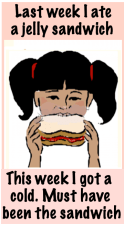
ad-hoc fallacyEXP: A ‘post hoc’ fallacy insists on a direct cause and effect between 2 events, simply because one event preceded another:
i. I went to the jewelry store to look at rings
ii. While I was there, a masked man with a gun came in & robbed the store
iii. Since I was there before he came in, I must have something to do with the robbery!

Here the fallacy is the result of ignoring other relevant information around the 2 events, such as THAT:
— my being there was an unlucky coincidence
— the robber & I don’t know each other
— he’s robbed other stores I’ve never been in….

c. BIAS
• The human tendency to make systematic logic errors based on preconceived ideas, rather than evidence. They’re ‘one-sided’, favoring some outcomes over others, which interferes with the ability to be impartial & objective.  EXP of Gender Bias: ‘All boys are better at math than all girls’

• Biases can come from information-processing shortcuts, including errors in judgment, memory, or the cause of something – which drastically skew the reliability of personal accounts (experiences) or legal evidence (concrete proof). RESULT : Thinking Biases can harm our ability to make proper decisions, solve problems correctly, & limit the capacity to learn new information or ideas.

d. NOCEBO
We’ve know the term Placebo, used to identify both pleasant & harmful effects of the power of suggestion (voodoo dolls that cause pain or ‘fake’ medicines that reduce/eliminate pain).
In the 1990’s the term NOCEBO (Latin for “I will harm”) came into use in medicine. It’s anything that in itself is benign or neutral (the color of a pill or a type of plant), but which can cause symptoms of illness by the suggestion or belief that it IS harmful.  This belief can come from inside or outside of ourselves.

nocebo• ‘Nocebo’ was originally used to label the harmful, unpleasant, or undesirable reactions some test subjects actually exhibited when given an inert dummy drug.
The very real physical reactions were not created chemically, but entirely due to the subjects’ pessimistic outlook & expectations.

A psychiatrist at Boston’s Brigham & Women’s Hospital, found in a recent review of the nocebo literature that – patient expectations of possible harmful side-effects of a drug – played a significant role in the outcome of their care (Arthur Barsky, et al. 2002)
• In another study, more than 2/3 of 34 volunteering college students developed headaches when told that’s what could happen from a (non-existent) electrical current passing through their heads.

All Cognitive Distortions are mental nocebos!  Since CDs are incorrect assumptions or belief that negatively influence how we feel & act, those irrational conclusions causing untold emotional or physical injury to ourselves & others.
(From ‘Skeptic’s Diary’)

NEXT: CDs Overview

Cognitive Distortions – Intro (Part 2)

universe 2MY THINKING?
It’s just fine, thank you very much!

PREVIOUS: CDs – Intro (Part 1)

SITE : Cognitive Distortions QUIZ

QUOTE: “The most dangerous of all falsehoods is a slightly distorted truth.” – Georg Christoph Lichtenberg

3. NOTE to ACoAs
LOGICAL Argument
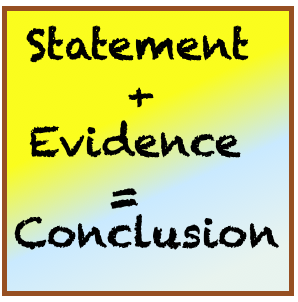
DEF : It consists of one or more premises (assertions, hypotheses) & one conclusion that’s offered in support of the claims being made – each being either a T or F declarative statement. If any one of these components is in error, the whole argument becomes invalid (LOGIC….)

👁‍🗨 Knowing what our CDs are & then correcting them, a day-at-a-time, is very important – even tho it’s not as ‘sexy’ as some topics – because keeping these ideas in mind will help counter our:
✓ frustration at the slowness of change in Recovery
✓ discomfort & awkwardness in trying out new thinking or activities
✓ self-hate for the way we’ve been functioning most of our life
✓ confusion & misunderstanding about the causes of our pain, now

REMINDER
CDs are part of our Wounded Inner Child (WIC) ego state, in agreement with the Bad Parent voice (PP).
When negative or harmful beliefs – hidden from ourselves in the unconscious – contradict the good things we consciously want, no matter how sincerely, which one wins?
Of course, the bad ones, because they’ve been with us the longest & they connect us to our family. (INFO & the Brain)

“The human body & mind are highly receptive to the messages & feelings put out by the thinker (YOU). How we feel about ourselves impacts how we function. When you think, “I’m ugly / I’m stupid / I’m no good / I’m fat….,” your body & mind assumes it’s true. Consciously & subconsciously, these beliefs impact & impair delicate functions of physical & mental processes — including the immune system – restricting the flow of creativity, holistic thought, self-expression & joy.” Modified from ErinJanus.com.
To heal, we have to identify & own the CDs. Then slowly, gently replace them.

CDs are profound MISUNDERSTANDINGS about:
a. Other people’s motivations (He didn’t call me again because I’m boring)
b. The meaning or importance of one particular event (I didn’t get that job so I’ll never be able to do what I love)
c. The likelihood that a similar circumstance will happen again (No one talked to me at that event so there’s no point in ever going there again)
d. The outcome or consequences of a particular situation  (Since I can’t learn a foreign language, I’m ever going to be able to travel, even though I’d love to)

WHY are CDs so ‘appealing’?
It’s not enough to say they’re a familiar & very longstanding mental habit. This is true physically (see previous post re. the brain), but the other piece is emotional  / psychological – providing Negative Benefits which keep them in play

• Some CDs reinforce our WIC’s grandiose sense of responsibility for everything that happens to us & around us
• Others provide a misguided sense of stability. Since our childhood was unpredictable & dishonest & chaotic, the rigid absoluteness of CDs makes it seem like we have something concrete to rely on for ‘guidance’

• Some keep us enslaved to our self-hate & harmful people or situations
• Others keep us so confused by their incomplete info & incorrect conclusions that we can stay in a mental fog (dissociated) without having to figure out what we truly believe or need

And ALL of them maintain a ‘black-hat / deep state’ connection to our dysfunctional past. Consistently obeying CD rules of any kind means we don’t have to think for ourselves, & so never have to S & I, or become responsible for our own freedom!

More AUTHORS
Aaron Beck first proposed the theory behind C.D.s (1967) and David Burns (1980) was responsible for popularizing it with common names and examples.
Freeman & DeWolf (1992) and Freeman & Oster (1999) added: “Externalization of self-worth; Comparison; Perfectionism”.
Gilson & Freeman (1999) identified eight other C.D.s: the Fallacies of Attachment; Being right; of Change; of Control; of Fairness; of Ignoring;  of Heaven’s Reward & of Worrying.

NEXT: CDs – Examples

Cognitive Distortions – Intro (Part 1)

WHAT ARE YOU TALKING ABOUT?
That doesn’t make sense!

PREVIOUS: Why are you Stuck?

ARTICLE: “Thoughts Change Brain Chemistry

See ACRONYM page for abbrev

1. DEF: Cognitive Distortions (CDs ) are forms of  false logic, called stinkin’ thinkin’ in AA, which are the technical ideas behind the ACoA Laundry List  – therefore represent self-defeating ways of Thinking.   (List of CD in Part 4)

They are ways our mind convinces us of things that are not actually true but sound rational if not looked at carefully. They’re used to reinforce negative beliefs & painful emotions, which only serve to keep us feeling bad about ourselves, & create constant problems in relationships.

A CD is: “Any type of inaccurate way of dealing with information, which predictably results in identifiable errors in thinking”. This includes:
– Deficient Processing, causing an unwanted consequence because we didn’t think about it at all, or didn’t think it all the way thru to its inevitable outcome – ignoring prior knowledge
– Deficient Thinking, which causes something to go wrong because of a faulty filter (CDs) applied to available information about a situation

NOTES
• Anyone can use cognitive distortions. However – active addicts, people with low self-esteem &/or anyone living in traumatic, stressful, ‘trapos/neg newspped’  environment – will use these skewed ways of thinking more often than those who have easier lives.
The day-to-day situations of some, like war survivors, gang members, battered wives, the underprivileged, many addicts & millions of suffering children…. are so wretched & fear-filled, that without cognitive distortions, they wouldn’t be able to manage or function

• One study showed that depressed & non-depressed people were equally able to learn negative information, but depressed people found it much harder to learn / take in / remember positive information. Everyone seems to easily remember negative events, but depressives focus on them.
(Journal of Behavior Therapy & Experimental Psychiatry, 3/09)

• Kendall (1992) suggested that more accurate perceptions of the world do not always lead to better mental health or behavioral adjustment. CDs that are positively skewed can be very useful in certain environments, although a ‘too positive’ view of things may just be narcissism (or being dissociated / or in denial)!

thinking brain2. OUR BRAIN – A little Chemistry as it relates to our THINKING
a. Our brains has hundreds of different types of chemicals, arranged in a highly complex design.
Stimuli (what we hear, see, think, do, feel…) trigger 30 + known neuro-transmitters.  Some are relatively stable structural molecules that create the anatomy (hardware) of the brain.  Others are non-structural, making the physiology (software). It takes both types of chemicals to make our brain work.

• This chemistry influences hormone secretion from various sites throughout the brain, such as the hypothalamus & pituitary, and these hormones then carry messages to distant organs in the body (Post: ‘Anger & the Brain, Part 1‘)

b. THOUGHTS cause actual microscopic changed in this elaborate system. Each of the billions of brain cells make connections with others when stimuli or thoughts trigger chemical discharges (the neuro-transmitters). Electrical impulses, via ions, send that information throughout the central nervous system.

c. The biochemicals released whenever we think are pumped into the bloodstream, creating changes in the whole body. Every thought is embedded at some level in the molecules of our brain.
One group of chemicals is triggered by a negative state of mind (like adrenalin & cortisol, changes in norepinephrine levels, & a serotonin deficiency), while others (like serotonin & dopamine) are generated by positive thoughts. (from “Open2Transformation”)

d. All beliefs we mentally nurture (repeat / obsess about) actually influence brain chemistry. In general, the more we think something, the more connections are formed about it.  But harmful ones, such as project the disastrous outcome of an event, block the flow of energy to the whole body.

– ACoAs who constantly think scary, self-hating, what-if thoughts have formed deep grooves, with different neural links, making those the path of least resistance (easiest).
– In contrast, repeating pleasant, realistic, hopeful ideas will get stronger by forming their own grooves, which provide the impetus to become practical life-affirming habits (actions).

NEXT: CDs – Intro (Part 2)

ACoA CONCLUSIONS re. Painful Events (Part 2b)

defended 

NOTHING SCARES ME! 
as long as I’m defended

PREVIOUS: Conclusions (#2a)


2. CONCLUSIONS – OUR THINKING (cont)
🔩 IT’S ALL THEM a. PERPETRATORS
b. PARANOIA
◀️ One negative approach (Ts) combines Fear & Anger.
MANY ACoAs have at least some tendency to be paranoid. Just as we have a PP camera over our shoulder always judging ourselves, we also constantly scan the whole world for danger (mostly unconscious), assuming everyone’s a potential monster – ie. everyone will definitely abandon / harm us sooner or later!

We apply this ‘rule’ even to situations that are neutral or not about us. True paranoids (PPD) see danger everywhere, where there’s none at all, whereas most ACoAs with a touch of it can still correctly identify reality – it’s just that our CONCLUSIONS are likely to be off – but not always

• Paranoia, even in relatively mild form, comes from legitimately being traumatized (in danger) much of the time growing up. That’s not being crazy or just our ‘perception’, because unfortunately most of the danger really did come from our own family!  It has left us constantly terrified, but it’s hard to admit how deeply vulnerable we still feel

• If our family was unsafe, how much more so are strangers?  With such a background & our symbiotic attachment to our parents, we project that original danger onto the whole world, regardless of present reality.

The awful irony is that while we believe we’re trying to sidestep all the hidden landmines we assume are in our world, paranoia mainly draws us to those people, places & things (PPT) —
— which actually are harmful
— those we experience as harmful, or
— those we projedrunk angerct danger onto, that are safe or neutral.
This compulsion reproduces & adds to the original fear & abandonment we so desperately want to avoid!

• ALSO – we automatically reject genuinely neutral or beneficial people & opportunities! Yes – deliberately, because we’re not only repeating what’s familiar, we’re also looking to validate the ‘rightness’ of our family, so we don’t have to face the pain of who they really were, & still are.

Twisted thinking about anything POSITIVE says :
• don’t even register them: “What compliment? I didn’t notice” …
• it can’t possibly last, so why bother believing it
• it’ll be taken away, anyway, & then I’ll feel even worse than before
• it was just a fluke, an accident, a coincidence
• people don’t really mean the nice thing they say – they’re just being polite
• they’re only saying that because they wants something

Distorted THINKING cancels out the very things around us that would nurture & heal us, if we were to let them in!   Some CDs that paranoia uses : ‘Awful-izing, Jumping to Conclusions, Maximizing, Mind Reading, Unrealistic Comparisons

Another negative approach (Ts) ignores Fear
c. COUNTER-PHOBIA (“against fear”):  At the other extreme, sScreen Shot 2015-07-20 at 1.44.53 AMome ACoAs have hidden our childhood terror behind a defensive wall of brains & bravado. It’s become so dense that we don’t know there’s a WIC hiding back it, who’s still afraid for its life.
This group of ACoAs were subjected to the same chaos, cruelty & neglect in childhood as Paranoids & Victims, but our native personality found a different way to survive.  Even though we don’t stop to think about what we’re doing – that would be too painful – underneath are all the same core issues

✶ Counter-phobia is driven by so much terror & rage which never found an outlet that we became insured to danger. We thumb our noses at everything in the world that might ‘get us’.  We couldn’t protect ourselves as kids but now we’re determined to slay & triumph, not just passively accept

• We pushed the anxiety so far down that we’ve become the complete opposite. NOW nothing scares us!  We joyfully chase all that’s unpredictable & treacherous, calling it exciting.  We’ve become addicted to the adrenalin.  When something does bother a counter-phobic – we stuff it, laugh it off, stay very busy – & find new ways to keep the drama going. ACoA Laundry List : “We’re addicted to excitement” .

NEXT: COUNTER-PHOBIA cont. (Part 2c)