
 WHO MOTIVATES ME – Others or myself?
PREVIOUS: Let go of Controlling -#3
POSTs:Personal Responsibility
☆ The UNIT:Healthy Adult, Loving Parent
SELF- CONTROL 101 (Normal)
Events or Thoughts —-> lead to —-> Emotions
Emotions ——-> lead to ——> Beliefs
Beliefs ——-> lead to ——> Decisions
Decisions ——-> lead to ——> Actions
Actions —> lead to —> Rewards or Consequences
Def. of CONTROL, from the dictionary: to direct, command, exercise authority over -OR- to hold back, curb, restrain —> oneself or others.
PURPOSE of Self-Control (SC)
To gain a present reward or reach a delayed gratification
OR delay, reduce or eliminate punishment
DEF: ☀︎ to hold in check or curb (the WIC & PP ?)
☀︎ to exercise restraint or direction over something or someone
☀︎ to eliminate or prevent the spread of something (our damage ?)
ACoAs – Healthy S-C is very hard to achieve as long as: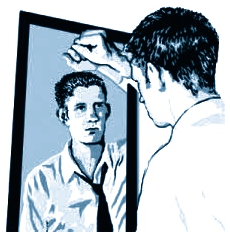
• the WIC is the ego state in charge of our daily emotions, actions & reactions
• we obey the Toxic Rules, suppressing our True Self
• externally, we stay symbiotically attached to our family
• internally, we continue to obey the Negative Introject (PP)
SELF-CONTROL (S-C) is about harnessing our willpower to accomplish things that are generally regarded as desirable & highly valued by society, including our personal long-term goals. As adults, we’re responsible for our thoughts, emotions & actions (T.E.A.) to the extent that it’s in our power, which is not always possible.
• People are born with varying degrees of tolerance for routine vs. change, patience vs boredom, social vs private interactions…. but the need for S-C applies to everyone. However,
it’s harder for us to maintain it IF we’re in the wrong environment, where others are not also willing to govern themself. (MORE…)
 Healthy families help their children to develop this skill as part of their over-all training. In adults – developing S-C requires a lessening of anxiety, & is motivated by a clear, conflict-free desire to stop harming oneself or others. Practice & perseverance are required, but it gets easier with repetition.
S-C IS:
✱ not an inborn character trait that would automatically allow us to govern our thoughts, emotions & behavior
✱ a skill developed through education, social interaction & conditioning
✱ built up by the process of ‘stalling, distracting & resisting’ negative urges
✱ quite complex. It requires that we stay awake so our functioning is based in the present, not from trauma & Toxic Rules
S-C IS
 ✱ internal mastery – by monitoring thoughts, regulating emotions, setting goals & making responsible choices. This allows us to moderate / manage competing activities, desires & urges
✱ the ability to make choices & decisions that benefit ourself, & then others. This requires knowing & honoring who we are – our abilities & experience, needs, preferences & tastes
✱ an important part of a cluster of fundamental internal resources (our core character, courage, determination, endurance, faith, purpose…. ) which do not disappear, even when tested by constant pressure or long-term deprivation
✱ requires motivation. In certain situations, such as a special celebration or an artificial psychological experiment, we may decide to briefly give up self-control for the occasion
S-C
✱ becomes self-discipline when we have to apply intentional effort. When practiced habitually for some time, it can become a character trait
✱ becomes a way of thinking because of the cognitive processes & mental discipline needed to use SC
✱ becomes a virtue when we resists temptations in order to achieve a desired goal, & can be considered a spiritual gift when it’s the result of spiritual growth & transformation.
VALUE of Self-Control – it allows us to:
 • be a responsible & trustworthy human being
• be in charge of our moods & replace negative beliefs – to keep in check self-destructive, addictive behaviors & obsessive thoughts
• eliminate feeling helpless & having to be inappropriately dependent on others
• be in overall charge of our life = gaining self-esteem, confidence, balance, inner strength,& a sense of personal mastery
• have enough mental & emotional detachment to give us peace of mind
NEXT: What is Self-Control (#2)
 HEAL & GROW for ACoAs