HERO Family Role

hero momI HAVE to TAKE CARE of EVERYTHING,
& of course I can!

PREVIOUS: Toxic Roles #4

Originally:
“IF ONLY MY FAMILY UNDERSTOOD ME”, by Don Wegscheider, 1979


❧ HERO’s
 GOAL
To provide the damaged family with some self-respect & a semblance of stability, shifting the focus from parental failures to the child’s successes

PURPOSE
For Self: to make order out of the chaos, feel useful, make the home bearable, keep anyone from killing themselves or going crazy. Believe if they’re helpful enough, the ‘sick’ parent will be cured

For Family
:  make the family look good & seem ‘normal’ to the outside world, by acting as if the rigid roles don’t exist, & prevent anyone seeing the severe dysfunctionality. Genuine desire to provide a measure of group esteem through their accomplishments

BIRTH ORDER: Usually the oldest child, or the oldest male or oldest female
IN SCHOOL : Gets superior grades, teacher’s pet, sports star, Valedictorian or Prom Queen. Classmates admire, envy or use them as help. Are involved in several extra-curricular activities

FAMILY TREATMENT
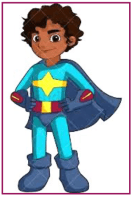
Highly regarded, expected to ‘do the right thing”, but may not be praised directly. Held up as a shining example to prove what good parents & good people they are, the one who other relatives dote on

ACTIONS / STYLE
Personal:  Main focus is perfectionism —-> leading to periodic times of dissociation
Inflexible, extreme need for control of everything, great fear of making mistakes, intellectualizes & disregards own emotions.

In the Family: Ignore the real issues.
Often forced to take on parental position & responsibilities at a young age, AND be self-sufficient, feel ‘old’ & burdened (“10 going on 40”). Keep household running. Compensate for sick, drunk, depressed, crazy or missing parent’s inability to cope

Social:
Can be highly successful, self-sufficient & seem well-adjusted. Seen by non-family adults as trustworthy, conscientious, mature & capable. Has good relationships with authority figures, volunteers often, over-involved in activities. Into everyone else’s business, a know-it-all, may have lots of friends, pets & ‘needy projects’controlling hero

DEFENSES – Main one: Denial
Overly serious, mature & responsible, high achiever.  Very dependent on outside approval & work hard to get it. Also, they feel special/ superior, don’t need anyone, compulsive @ cleaning, gathering info, appearance, career….

EMOTIONS
Confusion, loneliness, guilt, hurt, anger. Extreme shame, shown by compulsivity ‘helpfulness’
• Deny a wide range of emotions, intense sense of inadequacy – fear of being found out as a ‘fraud’, & an over-all sense of failure – mainly for not fixing family’s problems
DEFICITS
Trouble with
: being a follower, taking suggestions or advice, asking for help, relaxing, having fun, being spontaneous.  Not allowed to be weak, needy, scared, vulnerable, helpless

AS ADULTS – THEY:
• are extremely judgmental of others (but may have learned to be subtle about it), and super-critical of themself
hero responsibility • are driven to develop ‘better’ lifestyle than family, make lots of money, master a profession, totally invested in getting & keeping success at all cost, have lots of positive attention but don’t believe or value it
• marry an alcoholic or other ‘problem’ type they can continue to focus on & fix, in lieu of parent
THEY: 
• are cut off from inner emotional life & True Self
• secretly know something’s ‘rotten in Denmark’, but have the hardest time admitting anything needs healing
• will only get help to give up Hero role when emotionally overwhelmed & physically ill from years of stress, have severe substance abuse themselves or a tragedy breaks thru the denial

PARENTS CAN HELP HERO CHILD
TO: Be ok with making mistakes, & develop courage to be imperfect, decrease need to be responsible for everyone, learn to concentrate on self instead of accomplishments (Being vs Doing)
BY: Stressing the value & enjoyment of cooperation & sharing, learning to appreciate Self. Help them accept mistakes gracefully, since it’s never about their identity

CHANGE BELIEFS 
FROM: “I must stay in control of my feelings”.
“ If I don’t do it, no one will.”
“If I don’t do this, something bad will happen, or things will get worse.”
TO: “I am of value just for ‘being’, not only for ‘doing’
“If I don’t do it, someone else will & that’s OK”
“If I don’t do it a certain way,  it’ll be done differently & that’s OK”

Adult RECOVERY NEEDS
• learn to ask for & take what’s needed, accept occasional ‘failures’,  relax & just BE
• let go of perfectionism, need to control & rescuing
• develop ability to listen, follow, be flexible & have fun

STRENGTHS
• attentive, caring, good listener to others’ troubles, nurturing, thoughtful
• appropriately responsible, decisive, focused, goal oriented, organized, self-disciplined
• have leadership qualities, can be successful, initiator, loyal, good at motivating themself & others, study & work hard to achieve.

NEXT: Placater Role
Toxic Family ROLES (Part 4)

Scahnge ME??I’VE ALWAYS BEEN THIS WAY,
& now you’re saying it’s not the real me??

PREVIOUS: Part 3 – ACoAs – as children

SITE: The Dynamics of a Dysfunctional Relationship


❎ DYSFUNCTION (cont)
2a. ACoAs – as CHILDREN

2b. ACoAs – AS ADULTS
heroa. the Hero (usually but not always an Extrovert by nature) may hold on to the role with all their might & become a professional, a healer, an executive…. anyone with authority, responsibility & clout – but only on behalf of others,  OR
• at some point turn their back on the Role so completely that they become the Scapegoat – the perennial ‘fuck-up’ – in order to have NO responsibilities at all – even for themself.  If that gets to be too much, eventually they can switch into Lost Child & be ‘invisible’

placaterb. the Placater is the overly cheerful & helpful one in class or in the office, always agreeing, doesn’t have strong opinions & doesn’t want to disappoint anyone. They are made fun of for being a–kissers & door mats

c. The Scapegoat** – always getting into trouble, often gets fired, doesn’t follow thru & may land in jail, but can also get a lot of street cred as being cool, the bad-boy/girl scapegoator rebel.  even so, they’re very envious of the positive attention given the Hero. They sometimes take up the Hero role if the older child is missing & there’s a desperate need in the family, but it rarely gets them the praise & love given to the ‘favorite’.

** IMPORTANT: Don’t confuse these 2, altho they may overlap:
— Scapegoat Role: child takes on the suffering of the family in a mistaken effort to ease their pain
Being scapegoated: when one child is chosen by the family to be continually picked on, blamed for all their problems —> because they’re ‘different’ in some way OR too strong, too honest – or both

d. The Lost Child (as a primary position) tends to be an Introvert by nature, so they are more likely to lost childstay in the background throughout life. Even if isolated in their personal life, they can make great contributions to humanity in literature, science, acting, any form of writing….

• If they form any attachment, it will often be with a Hero type who will take care of them & run their life, or a Scapegoat (perpetrator) who will control & bully them. They’re very loyal & usually passive-aggressive, since they don’t ‘do’ confrontation.  They may have one close friend for life or none at all

e. The Mascot is usually an Extrovert by nature (but not always) & will find mascotways to get noticed – any kind of performer, teacher, salesperson….. the life of the party, naturally entertaining.
BUT they have to work hard to be taken seriously, because of their facade of silliness & ignorance. However, if they have the Hero as a sub-role, they can draw on it for competence & reliability when needed.

= = = = = = =
ANOTHER way to describe the ROLES is to consider how internal PARTS of a person extend out to family member in a dysfunctional system (Internal Family Systems)

SELF : CORE identity of a person. When in our True Self, this is an active, compassionate force, internally & in the family
Qualities : calm, confident, courageous, creative

MANAGER : the internal system’s guide, trying to be in control of every situation & relationship, to keep from feeling hurt or rejected
Aspects: caretaker, controller, judge, passive pessimist, self-critical, striver

EXILE : holds the painful emotions isolated from the conscious Self, to protect oneself & the system. This aspect can become progressively more extreme, loudly trying to be heard & to share their ‘story’.
Emotions : despondence, fear / terror, grief / lost, loneliness, rage, shame

FIREFIGHTER : also protects the system, but only acts once the exile is too upset, to soothe & distract oneself from the exile’s emotions
Activities : driven to or immersed in Addictions – computer, diet, exercise, sex, sleep, shopping…
Also: dissociation, fantasy, self-harm, suicidality, violence

= = = = = =
PROFILE of a Dysfunctional Family
Bradshaw on the Family: a Revolutionary Way of Self-Discovery”,
John Bradshaw,  Health Communications, Inc., 1988
«
«
NEXT
: HERO role

Toxic Family ROLES (Part 3)

all roles I KNOW WHAT’S EXPECTED of  ME – my Role tells me!

PREVIOUS: TFR (Part 2)

SITEs: ▪︎ Different Toxic Roles
▪︎  Dysfunctional Family Rules & Roles


❎ DYSFUNCTION
(cont)
Virginia Satir divided the functions into: Blamer, Computer, Distracter, Placater & Leveler roles, sometimes used in Neuro-Linguistic Programing (NLP) training.
They’re broader than the familiar ones – Hero, Scapegoat, Lost Child & Mascot  (Originally in “IF ONLY MY FAMILY UNDERSTOOD ME” – Don Wegscheider 1979
⬇️ VARIATION :

1. ADULT Roles (Part 2)

2a. ACoAs – as CHILDREN
• the eldest boy or eldest girl is usually the Hero or Placater, who is aligned with the non-drinking parent (if there is one)
• the next child becomes the Scapegoat, identifying with the active addict
• The 3rd or middle one is the Lost Child, mostly ignored (3rd wheel)
• the Mascot is last or youngest, who tries to keeps things light by being amusing

Just as there are shifts in any living system, the way roles are assigned, clumped together or reassigned changes over the years of a family’s life.  Toxic Family Roles (TFRs) themselves stay the same no matter who they’re stuck on to, but can overlap or be passed on, like a deadly virus! These severely limiting, false personae are taken on by each child, in one of several ways. If there are fewer or more children, roles double up :

a. For an only child, all 5 roles** weigh on them, with one often being dominant, so one CoA may become mainly Lost Child while another may be mainly Mascot…. Not having siblings to share the roles, this child (& later as adult) can experience rapid cycling of moods which can be scary, confusing & sometimes mistaken for manic-depression.
cycling roles
** What may seem like ‘being crazy’ – especially under stress – is actually an automatic shift from one Role to another in quick succession – Hero / Placater to Mascot to Scapegoat to Lost Child & back again – with the mental & emotional perspective of each suddenly coming to the foreground & then being replaced.
If there is no obvious medical condition, this switching can be understood rather than feared, & can even be used as a temporary coping skill until Recovery brings out the True Self

b. If there are only 2 kids, each takes on more than one role, depending on gender, birth order & personality.  In this case each child can still have one dominant Role, but can switch into another when dealing with different types of people.  So a child with a primary Role of Hero (1st born), with Scapegoat & Lost Child as sub-roles, can act out the Scapegoat when someone pushes them too far, or withdraw as Lost Child when being mistreated in some way.

•  The Hero (usually the oldest – or oldest boy) is required to be perfect at all times – to know everything, never make mistakes, always look good….. This is enormous pressure.  When the ‘job’ gets to be too much this child may say or do something inappropriate, outrageous or illegal to relieve the stress of perfectionism. It is both a rebellion & a cry for help, but will only garner punishment & a demand for a return to Hero status.toxic roles

The other child may be Mascot & Lost Child, & sometimes will take on the Hero / Placater role when the older sibling has left home or is incapacitated – OR when running their own household as an adult.

c. With 3 or more – there are still some overlaps. When an older child leaves home (usually the Hero going off to school, work or war) anther sib takes over, which means someone else has to double up, causing even more stress.

NEXT: Part 4 – ACoAs as Adults

Toxic Family ROLES (Part 2)

I HAVE TO HOLD THINGS TOGETHER, or we’ll all implode, & then what?

PREVIOUS: TFR (Part 1)

See ACRONYM page for abbrev.


1. NORMAL HIERARCHY

2. DYSFUNCTION (cont)
Toxic Family ROLES (TFRs) develop in a dysfunctional family when healthy emotional bonds are weak or missing.  They are defense mechanisms to help each person adapt to a difficult environment they can’t fix or escape.

• TFRs are Rigid : assigned not chosen, fixed not flexible, not created or maintained by a single member, & have little to do with each person’s fundamental personality

• TFRs are formed & perpetuated because they keep the system from complete disintegration. They develop gradually, unconsciously, so most members don’t realize they’re hooked, becoming a deeply ingrained part of each person’s False Self. While there’s an internal ‘logic’ keeping the mobile pieces in place, they reinforce dysfunction, which is passed down the family tree

Such families revolve around a serious problem – not only chemical addictions, but also a mentally or physically impaired person, someone in jail, infidelity, physical & sexual abuse, a parent who has left, disappeared or died……defense

This addict or perpetrator is a severe burden on the family – taking up so much time, emotional energy & resources – that the rest of the family can’t get enough of their needs met to thrive.  Children get pulled into parents’ personal or sexual problems, become a spousal substitute to one parent, & often force an older child to be physically & emotionally responsible for younger ones or a mentally ill parent….

ROLES provide a sense of purpose in the chaos, TO :
☞ deflect the addict’s blame away from themself
☞ manage anxiety, minimize blowups or complete dissolution
☞ protect family honor from disgrace by presenting a ‘good’ image to the world….
For Roles to work, the entire system is forced to participate. To TEST this, try taking on someone else’s role in your family, or refuse to play your own. Immediate, intense pressure will come down on you to get back to your ‘job’!

1. ADULT Roles
a. The Addict – Can be parent, teen or adult-child. They get all the attention as the center of the family ‘universe’.  Al-Anon says: “The sickest person in the room wins!” & “The alcoholic has their arms wrapped around the bottle, while the co-alcoholic has their arms wrapped around the alcoholic.”
Once this ‘dance’ is set in motion, all that’s left is for everyone else to automatically fill in the rest of the roles, completing the mobile.

Internal prerequisites for addiction are : genetic inheritance, being differently-wired (neurodiverse), personality traits / attitudes / beliefs, history of trauma, inability to cope with life’s challenges & an unwillingness to be responsible for themself
Externally – addiction is impacted by important relationships : family & friends, cultural beliefs, social influences & pressures

b. The Caretaker (Co-Dependent, Enabler / Rescuer, Martyr)
This person, usually a spouse but often ends up being an older child, makes all the other non-addict roles possible. They have to keep the family together, keep everyone going, keep the addict from injuring or killing themself…..
They make excuses for bad behavior, irresponsibility & emotional abuse, avoid any mention of the addiction or the possibility of Recovery, & try to present a problem-free face to the world. But Al-Anon says: “You’re only as sick as your secrets.”

• As the long-suffering martyr, Enablers take on the addict’s problems & self-blame for failures, living in reaction to the highs & lows of another person.  That’s why addicts consciously or unconsciously attach to them.

This Role allows the co-dependent to ignore their own low self-esteem, gives them a sense of purpose & staves off fear of abandonment.
So, giving up their Role & interrupt the codependent cycle – which could actually lead to healing – is not their 1st choice. Besides, they don’t believe anyone who’s healthy would want them, not admitting it even to themsef, so why bother.
ARTICLE: “Being addicted to the Addict by K. Capell-Sowder

2a & b. The CHILDREN : Hero, Scapegoat, Lost Child, Mascot (next 2 posts).

NEXT:  TFRs (Part 3) – Categories for ACoAs

Toxic Family ROLES (Part 1)

SHE HAS TOO MUCH TO DEAL WITH – so it’s up to me to help everyone!

PREVIOUS: Family ROLES – general

BOOK : “Living With Alcoholism & Addiction: The Elephant in the Room” Meilena Hauslendale


✅ NORMAL HIERARCHY

❎ DYSFUNCTION
These posts are focused on the alcoholic family, but these Roles can also be applied to other dysfunctional systems.
DEF: Drug = anything used compulsively (not only chemicals)
Addiction = any substance, person or activity which is used as a numbing agent against inner pain, becomes the only center of someone’s life & which cause chemical changes in the brain – ‘love’, sugar, alcohol, over-exercising, drugs, porn, pot, religion ….

Reality – In any addictive system :
• the addict’s use of their chosen drug(s) is the most important thing in the life of the whole family, & nobody’s allowed to discuss the problem with others outside the home

• addiction in not the only cause of problems, but is combined with :
— the denial of it & the emotional pain everyone’s feeling
— no-one saying what they really feel or think, to themself or others
— not talking about the “use” & actions that cover it up, blaming others
— providing alibis & undeserved loyalty of the family to the active addict & to the whole toxic system – enabling addictions to continue

ACoA painTYPICAL emotions of an addictive system
Anger: kids resent the drinking parent, but often transfer that anger to the non-drinking parent for being over-controlling, not providing support & protection, &/or for not leaving the addict

Anxiety: fear because of arguments, neglect & violence, creating constant worry & emotional hyper-vigilance (never relaxed)

Confusion: the drinking parent’s mood swings & unpredictability cause uncertainty & inner turmoil, paralyzing kids who don’t know what to do first, second or next. Also confusing, contradictory messages & rules

Depression: feeling lost & lonely, helpless & hopeless, powerless
Distrust: constant disappointments, broken promises & mistreatment make it hard for kids to trust anyone or develop close bonds with others

Guilt: kids assume they’ve somehow caused the parent’s drinking & chaos, & not being able to ‘fix’ things  
Shame
:  kids are ashamed of the family “secret” – including physical abuse – & withdraw from other family members, classmates, friends….

Alcohol-ISM is the organizing principle in a dis-functional family system, says Claudia Black. The active addict becomes the central figure around which everyone else arranges their actions & reactions, usually in a slow insidious process, forming the family mobile.

Members do what they can to bring as much consistency, structure & safety as possible into a family that’s unpredictable & dangerous. They adopt certain roles, while the ‘problem’ becomes the “elephant in the room”, which they all carefully ignore

• In these addictive & other narcissistic homes, with the endless tug-of-war between personalities & the ‘problem’, children’s need for love, support & emotional nurturing is often minimized, made fun of, forgotten altogether – even punished.
With few role models to show how emotions can be expressed positively, children shut down & stuff themselves into the straight-jacket of the Roles.

• Trouble follows when the people or tasks in a subsystem overlap, becoming blurred with those of others (such as role reversal).
Some members may be well-meaning, but the impulse for secrecy prevents anyone from reaching out for help, so the only option they have is a misguided attempts to protect the group by denying or minimizing the stressors.
The need to look “normal” comes out in distorted ways because they don’t know what normal is. They compare their insides with everyone else’s outsides, & always loose by comparison

• At the same time – their worry about & love for the addict, & the all-pervasive fear of change – inevitably cause family members’ to gradual slide into a psychological & social hole. As a parent’s substance abuse progresses, everyone has to play a part in preserving the home.

Toxic Family Roles (TFRs) may seem to be the ‘recipe for living’ in that barely surviving environment, but they actually discourage growth, preventing everyone from responding from their True Self. That makes it hard to give or receive support.
And the Toxic Rules attached to the Roles are unrealistic, & difficult or impossible to obey, which encourages dishonesty & manipulation, to avoid rejection or punishment.

NEXT: Toxic Family ROLES (Part 2)

Family ROLES – Normal

fit in HOW DO I FIT IN,
& still be me?

PREVIOUS: ACoA Poem

See Inner Child MOVIE :
“If you believe


1. NORMAL HIERARCHY

• Most organizations still function is a hierarchical system, with clearly identified Roles** for their members, as in governments, corporations, sports, law enforcement, social groups, most religious congregations, schools (esp. if students are under-age) ….. and of course, families.
Yes, it is possible to have consensus or democratic rule in some of these, BUT ONLY when made up entirely of rational adults.

** Roles are ‘social expectations & norms held regarding an individual’s position & behavior within a group’ (Simon, Stierlin & Wynne, 1985)

• To function properly, family systems need to organize themselves to carry out daily challenges & responsibilities, as well as adjust to the developmental needs of its members.  But to understand the dynamics of any family unit, it takes more than just listing who the individuals are – we need to know how they come together & interact. The family system
exists √ in paradox : it has to be stable enough to provide continuity over time, while being able to adapt to fluctuations
√ as a balancing act : too much change – the system breaks down, too much stability – it atrophies & dies

• All families organize themselves into hierarchies & then into subsystems, which may be grouped by generation, age, gender…., to accomplish their tasks & goals. These smaller groupings can be grandparents, aunts & uncles, parents & children, males & females, the older & younger, the skilled & unskilled, the sick & well…… Naturally, individuals & the subsystems are influenced by & dependent on one another, so what happens to one affects the othergood fences

• Hierarchies need Boundaries, TO:
☞ have a line between subsystems
☞ control the flow of info – into, out from & about the family
influence the flow of people allowed in & out of the system

• According to Family Systems Theory, all families strive for a sense of homeostasis (balance), in an effort to find equilibrium between life’s challenges & the family’s resources to handle them.
New patterns of interacting with each other will have to show up to keep inevitable changes from getting out of hand.
When this doesn’t work, additional family rules or dynamics have to be added or adjusted to restore balance. This happens in both healthy & unhealthy systems, but the solutions will be very different!

• This balancing act has EITHER:
🕴morphostasisa system’s ability to hold its shape & structural stability – by trying to conform ‘perfectly’ to a situation, keeping strictly to its rituals, allowing only those changes that do not threaten the existence of the family…. in the face of all types of stressors
OR
🕴morphogenesis (creation of life) – a systems’ ability to change its form, grow systemically over time & adapt to the changing needs of the family
• To keep the group going & make things harmonious, each family member needs to have an age-appropriate role, which should be stable but not rigid. Ideally, members have specific jobs, governed by rules & strategies
parents provide✶ PARENTS are expected to fill a wide range of needs for themselves such as financial stability, mental stimulation, relaxation & hobbies, community participation, a satisfying sexual relationship….
.
ALSO  provide children with :
the Basics – Daily maintenance, provision of food, clothing, shelter & health care
Emotional needs
• a genuine feeling of safety & security, a sense of home, nurturing, warmth
• fulfilling the need for love & belonging, inclusion
• esteem, giving self-worth, personal value, support, encouragement

Mental & Social needs
• Age-appropriate discipline, correcting & guiding, setting boundaries
• Help with homework, how things are done, how to be social, handling finances, valid information
• Privacy, respect for each member’s autonomy & separateness
• Recreation, opportunities to have fun together
• Understanding, having the right to make mistakes & learn from them
Spiritual needs
• encouraged to have meaning & purpose in life, suited to the child
• gain a sense of the larger community & their place in it
• allowing development of a relationship with a Higher Powerchild obey

✶ CHILDREN are expected to learn from, cooperate with & respect their parents (must be age-appropriate) BY:
☞ attending school, keeping up with homework
☞  expressing their intellectual & artistic gifts
☞  helping with tasks around the house
-☞ trying out new & interesting skills, games & social settings

• People play many social roles,  such as — parent, sibling, worker, student, lover…. each with it’s own set of requirements & functions.
This is normal & healthy as long as they have a positive core identity to underpin their role, & are free to express many different aspects of themself.

NEXT: Toxic ROLES – #1

Emotional NEEDS & Innate RESOURCES

SEE, I KNEW IT! and they said I was tooo sensitive!

PREVIOUS: Purpose of Es – Motivation

REMINDER: Use Acronyms Page for   abbrevs.


THIS post comes directly from The MindFields College Blog & is being reproduced in it’s entirety because it fits so well into the current ‘Emotions’ series & speaks for itself.

“We are all born with fundamental physical & emotional needs which have to be met in order to promote good mental health – as well as the innate resources to help us fulfill them, known as human ‘givens’.
Life is never perfect, but as long as our basic needs are being provided for & our resources are being used well, we don’t suffer mental health problems. However, if just one of these needs is unmet, or our resources are being misused, it can negatively affect our total being!

A. Essential Emotional Needs
human needs🔅 Attention (to give & receive it) – a form of nutrition
🔅 Autonomy & Control – the free will to make responsible choices
🔅 Competence & Achievement
🔅 Emotionally Connected to others
🔅 Friendship & Intimacy – knowing that at least one other person accepts us totally for who we are, “warts ‘n’ all”
🔅 Meaning & Purpose – stretched in what we do & think
🔅 Part of a wider community
🔅 Privacy – opportunity to reflect & consolidate experiences
🔅 Security – a place to feel safe, & environment to develop fully in
🔅 Status within social groupings

B. Innate Resources (human ‘givens’) to meet Emotional needs:
• The ability to develop complex long-term memory, helping to add to our innate knowledge, & accumulate new information
• The ability to build rapport, empathize & connect with others
• The ability to ‘know’ – to understand the world unconsciously through metaphorical pattern-observing brainmatching
To HAVE :
• A conscious, rational mind that can check out emotions, to question, analyze & plan
• An observing self – that part of us that can step back, be more objective & aware of itself as a unique center of ‘presence’, apart from intellect, emotion & conditioning

• A dreaming brain that preserves the integrity of our genetic inheritance every night by metaphorically defusing expectations held in the autonomic arousal system not acted out the previous day
Imagination, so we can focus our attention away from emotions, use language, & problem-solve more creatively & objectively

✶ To see how many of your emotional needs are being met, take the Emotional Needs Audit.

NEXT: “ALONE” – ACoA poem

PURPOSE of Emotions : Motivation (Part 1)

I NEVER REALIZED –
how much my feelings make me do things

Previous: For Decisions #2


2. INDIVIDUAL NEEDS
(cont)
d. To PREDICT BEHAVIOR
e. For DECISION-MAKING

f. To MOTIVATE Actions
DEF: MOTIVATION is the driving force behind the push to achieve goals (internal & external factors that cause & direct behavior), and it’s our emotions (Es) that prepare us to take those actions.
The urge to act is hardwired to specific emotions, which are automatically built in & produce physical sensations – muscles tensed or relaxed, blood vessels dilated or contracted…. These sensations signal us either to urgently do something or stay in a comfortable state

ACTIVE : In all motivation theories, ‘goals’ are very important. One form of goal setting is expressed in a Feedback Loop concerned with how people self-regulate in pursuit of their goals. A Self-regulation System tries to keep some condition fixed, even in the face of various kinds of disturbances from outside.
D = a Reference Value, either as a goal or standard you want & an undesired state to avoid, OR where behavior is adjusted so that discrepancy between input & goal is reduced.
A = an input sensations coming in, to tell you how far you are from achieving the goal or avoiding the anti-goal.
B = an output, a behavior or motor activity to move you closer to the goal
C = a mental comparison, the conscious or unconscious appraisal of how near you are to the goal (MORE…. Emotions & Motivation“)

AVOIDANCE: By nature we’re motivated to take specific actions in order to experience pleasant emotions & minimize the probability of feeling unpleasant ones. (7 Negative feedback loops)
EXP: As a kid in school, what made you decide to raised a hand to answer a question – or not ? It depended on which felt safer / better: the pleasure & recognition of answering it right, or avoiding the embarrassment of getting it wrong
EXP: You might participate in social activities or hobbies that provide a sense of happiness, contentment, or excitement. On the other hand, you’ll probably avoid situations that could lead to boredom, sadness, or anxiety.

RISK: Action requires risk, & the willingness to take risks is rooted in our Emotions, which are themselves based on moral convictions – those values that do move us, not those that ought to move us.
When confronted with a new experience, opportunity or danger – we wonder: Should I be courageous? withdraw? hedge my bets? What’s an appropriate risk?
To make sense of an unexpected experience we need to interpret what it means:  Is it good for us, bad for us or irrelevant?
Our values —-> generate —-> the emotions that inspire us to act.

Es for solutionsOBSTACLES: Emotions can help us overcome obstacles in our life. EXP:
anxiety when you’re about to take a test – although uncomfortable – helps motivate you to study to do your best
• anger can motivate you to protest injustices,  & help override the fear you might feel at a demonstration or rally
• guilt may keep you sticking to a diet or finishing a work assignment.
It’s not to say that we should feel guilty, just that it’s what prompts some to follow through with a difficult project or goal

LIMITATIONS:  Es cannot fix problems – we can’t ‘anger’ something into a solution. We also need free will. Sometimes we can have a strong desire for something but never create an action-plan to go after it. Es may be a driving factor in wanting to change, but they have to be combined with a desire to act, in order to become motivation.
And once we have the motivation, there has to be actual carry-through, the signals sent to our muscles that allow us to move. However, if Es are too overwhelming, they will prevent us from taking any action at all.

NEXT: Motivation #2

PURPOSE of Emotions : Decisions (Part 1)


Smusical notes 4
 I CAN’T DECIDE !
– what if it’s the wrong choice?

PREVIOUS: For Prediction

Article: The Role of Emotion”  

2. INDIVIDUAL NEEDS
– cont.
c. PROTECTION from HARM
d. To PREDICT BEHAVIOR

e. For DECISION-MAKING (DM)
• Decision-making is about evaluating & achieving goals, & the most meaningful ones are combined with strong emotional tags. Scientific studies have established that the role of Emotion in DM is biologically extensive & complex, & therefore indispensable.

Areas of the brain used for thinking are also thoroughly connected to emotions, as can be seen in people with severe frontal lobe damage. They are left with an inability to make practical & social choices, even though they still have all the information & skills need. Their damage isn’t in memory or intelligence, but rather the neural connections between emotional & cognitive centers of the brain.
• Antonio Damasio (Prof of Neuroscience, CA) suggests we have emotional processes called “somatic markers” made by strong chemical connections between events that are important to us and the emotions they induce. (Soma = body)
These markers are stored in a section of the large brain area normally associated with rationally thinking – the prefrontal cortex

When facing complex or conflicting choices, we may become overwhelmed by too many options & not be able to decide using logic alone. Somatic markers can then simplify things by focusing our attention on specifically useful & desirable options. (Emotional DecisionsSomatic Markers Hypothesis )

CHOICES – When figuring out something or making a decision, WE:
Consciously : use cognitive functions (thinking) via the rational cortex, which takes at least 0.1 seconds to get going. This level of DM is based on the principle of utility, where the value of each option is assessed by its cost-benefit to us or a loved one.
EXP : Stopping yourself from crossing a busy street when the light is yellow

Unconsciously : automatically responding from emotions, especially when under stress, such as in a heated argument or when in immediate danger. Emotions happen almost instantly, so it’s much harder to notice & be in charge of them!
EXP : Saying something inappropriate to the boss as a knee jerk reaction

Indirectly : Es stimulate our brains to deal with input very quickly & in specific ways. If we react to input (an event) by disregarding the facts, common-sense or circumstances, we can easily end up coming to a wrong conclusion, & therefore take inappropriate actions
EXP : Callingimages-4 an old lover who’s made it clear she/he’s no longer interested

Directly : observing ourself respond emotionally to unpleasant encounters, then noticing what we think about doing, & remember what has happened before. We learn from experience & adapt our actions accordingly.
EXP : Feel a strong attraction to an abusive ex, but know it’s not safe to reconnect. Want to hit someone who insulted you, but don’t

• If we do something that harms us or contradicts our values, our Es will let us know – so we need to pay attention. Even when we’re just imagining what might happen, our Es are still triggered, & hopefully we always use them as a guide in picking the best options available.

Studies show that when people’s emotional pathways are severed in the brain, they can’t make even simple decisions, because they don’t know how they feel about the possibilities they have to choose from. SO don’t complain about having Es!

INFLUENCES on Decision Making (DM)
Anticipatory Emotions (before an event):
Neg: Emotional anxiety & mental worry about not knowing how to decide, making the wrong choice, not having enough info…. OR
Pos: pleasure & excitement about having interesting & attractive options, not knowing for sure but willing to take a reasonable risk, hoping to learn or experience something new….

Anticipated Emotions (after an event):
Neg: fear, guilt, anxiety about what will happen as a result of the decision made  – being rejected, causing more problems, not getting what we want….. OR
Pos: excitement, relief, wonder – about the potential benefits of the choice made – having left a bad relationship, gone to a longed-for event, chosen between desirable job offers….

NEXT: Decisions #2

PURPOSE of Emotions : PREdiction

PREVIOUS: For Protection

REMINDER: Use Acronyms Page for abbrevs.


2. INDIVIDUAL NEEDS
– cont.
c. PROTECTION from HARM

d. To PREDICT BEHAVIOR
• Psychological research has shown that Emotion shapes behavior, perhaps because strong Es reinforce experience. Knowing how someone feels will help us evaluate how they will act.
Everyone has a chronic or habitual emotional state that determines their fundamental & relatively constant behavior patterns. When we experience success or failure in our activities, emotional levels move up or down accordingly, but eventually re-balance, returning to our personal base line.

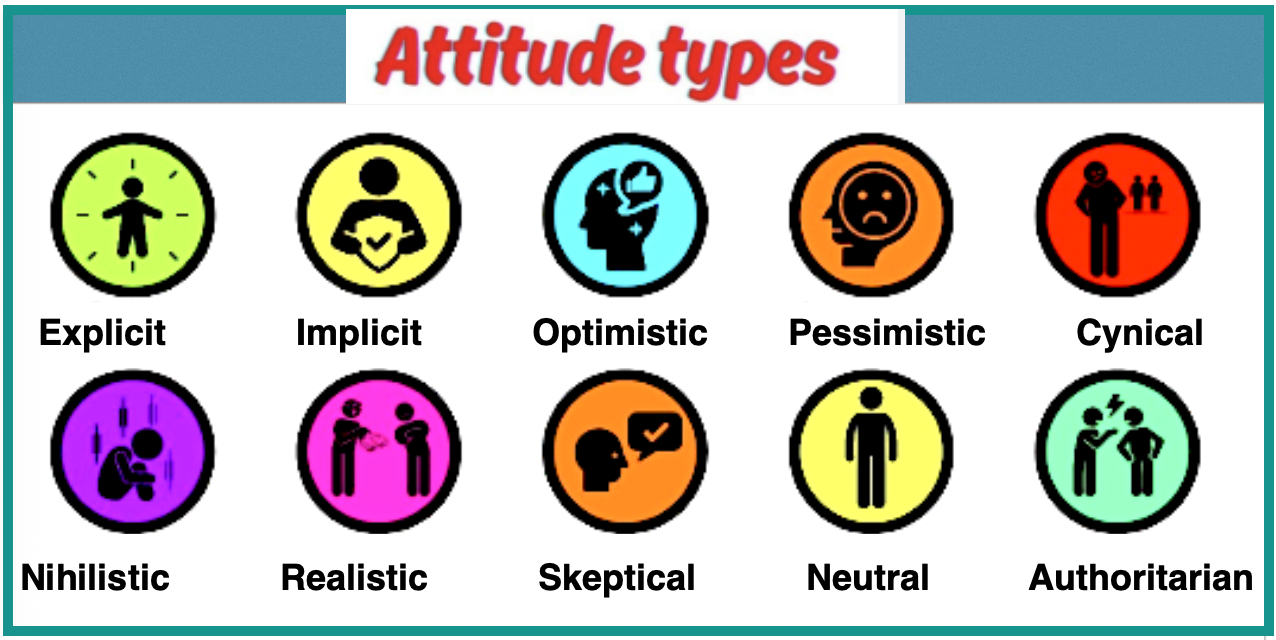
ATTITUDES (Att) are a person’s consistent evaluation of people, objects, & ideas, based on TEA: T – cognitive, E – affective or A – behavioral. Explicit Att are opinions that people consciously endorse, & can be easily described, whereas implicit Att are involuntary, usually unconscious & therefore uncontrolled. Att can predict behavior if we know which of these 2 categories someone is coming from in a given situation

T.O.M. Theory of Mind acknowledges our natural capacity to understand internal states such as beliefs, feelings, desires, hope & intentions. We’re able to create a mental picture of our own Es & reactions, which helps us understand that other people’s behavior is caused by their inner experience. This helps us anticipate & predict some of what to expect from them

• We know that whatever goes on in the mind of others is not visible to us, so the images remain a “theory” we create.  T.O.M. is not a form of mind-reading but rather a way to notice patterns, like putting oneself in someone else’s shoes.
EXP: Even as a kid, you ‘understood’ that your sister would be sad, furious & frustrated with you IF you tore up her favorite dress! And you could also predict how she’d react – yell, hit you, tell your parents, get back at you later – depending on her personalityin your shoes

CHILDREN: A group of Child Psychologists made a systematic examination of emotions & story themes in children’s play time, to see if the combination could provide useful information about their bad behavior (acting-out).
Scenarios made up by 4 & 5-yr-olds, with images of emotional distress & destruction (aggression, personal injury, loss, abandonment…. ), correlated with their actual behavior problems, as rated by parents & teachers.

SALES: Marketing studies have used emotional measurements to see if they could link people’s capacity for persuasion & therefore purchasing decisions with emotional feelings. They concluded that combining emotional responses with other key factors indicate consumers’ true basis for choices. This gives companies an effectively tool for reaching their audience, since Es accounted for 70% of the respondents’ purchasing motivation.

ACoAs: Again, the type of Predicting referred to here is NOT mind-reading, which is based on our assumptions, projections & wishes. Rather, it’s the ability to observe what others are telling us about themselves – which they do all the time – AND recognize what our emotions are telling us about them.

pay attention• As we get to know someone we can make general but legitimate assumptions about how they’re going to react in various emotional states & social situations. It’s up to us to stay awake.
Children figure out how to do this at an early age by watching their parents & others around them, so they know what’s expected of them, how to respond & how to protect themself. BUT we were taught not to trust those observations – so we ignore what we do know, to our detriment!

• Because of this trained blind spot, as a substitute ACoAs try to mind-read what others feel & need, which is always a disaster. We also make the mistake of ‘predicting their behavior’ based mainly on how our parents treated us & each other – instead of responding to who someone actually is in the presentEXP – If we were —
— constantly neglected as kids we expect everyone will ignore us now
— always scapegoated in the family, we keep ‘seeing’ ways others marginalize or blame us
— usually punished for getting angry, we assume everyone else will also reject us if we express anger….

➼ Yes, we can easily fimind-readingnd people who are just like our family, often choosing & then staying with them because we can act out the Negative Prediction of always & inevitably being abandoned.
However, those types are not our only options.  There are respectful, caring people in the world as well. We have a right to find & be with them – so believe in that Right & keep looking!
Relations are like fish – it’s up to us to pick the ones with the least bones!

NEXT: Purpose – Decisions, #1