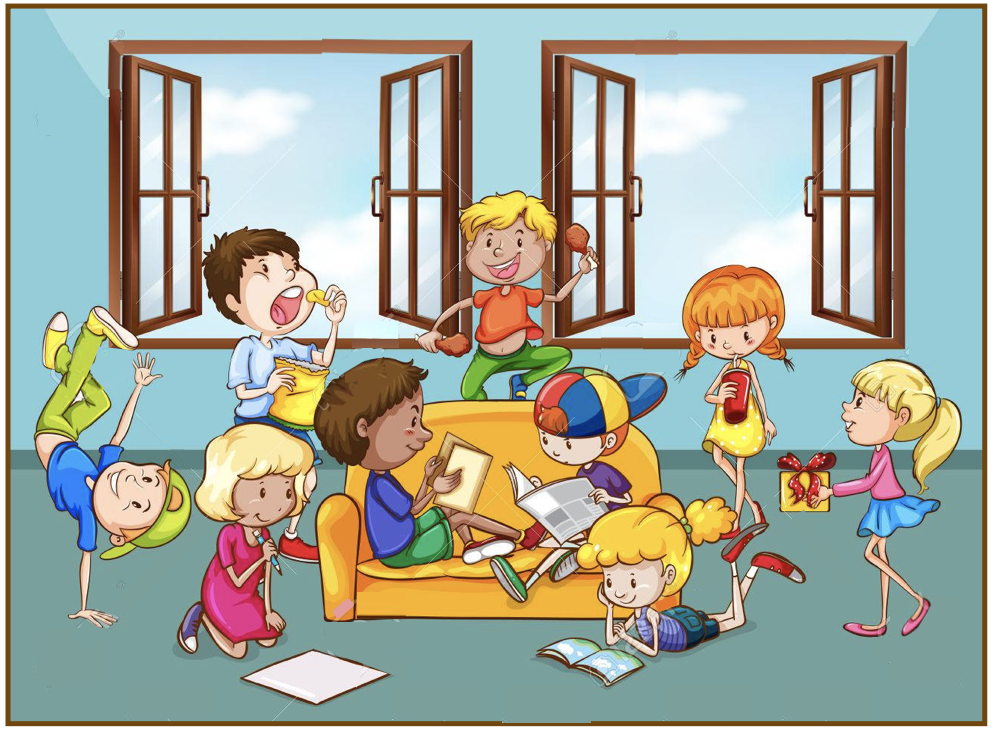
Childhood PLAY – FORMS (Part 1)

play stagesAS I GROW & DEVELOP
I can try lots of new ways to play!

PREVIOUS: Play – Intro #2

BOOK: A Playworker’s Taxonomy of Play Types, 1996

SITE: National Institute for Play


FORMS of PLAY in Childhood 
Research shows that playing is critical to healthy brain development.  It is as fundamental a childhood need as parental love, good food, sleep, healthy social interaction, & the fulfillment of emotional needs. Failure to learn play-skills early on can lead to problems with peers & in the classroom. Play is so important to optimal child development that it has been recognized by the UN High Commission for Human Rights as a right of every child. (General Assembly Resolution 44/25, 11/20/89)

• The idea that play is ‘natural’ & has ‘value’ for children is a relatively new social awareness. Its roots are in the European Enlightenment & Romantic eras, from the writings of Rousseau, Pestalozzi & Froebel…(1750s to 1850s). It’s a powerful motivator for learning because it’s enjoyable, self-initiated, engaging, active, & lets kids discover knowledge in their own way.

NOTE – re. TIME: being aware of it, managing it, harnessing it – are not some of the skills Play is involved in or teaches. The whole point of play is that there are no time limits, no deadlines & getting so caught up in it that ‘time flies’!
> That’s why some adults say that their jobs don’t feel like work: it’s fun – for them, and so absorbing they lose track of time.

THESE are not all listed by age but rather by category.baby parts
1. PHYSICAL  (Self & things)
Body Play – when infants explore how their body works & interacts with the world, preparing them to think in motion & in 3-D. Self-movement & play lights up the brain, structures our knowledge of our environment, & prepares us for the unexpected or unusual

Sensori-motor / Functional Play – it’s considered the first actual form of play, & continues thru childhood. Babies use early reflexes, then gradually become more deliberate as finer motor skills develop. Babies enjoy shaking a rattle, splashing in the bath, dropping objects repeatedly from a high chair….. & by age 1 they spend most of playtime exploring & manipulating objects (rolling a ball, dragging a pull toy)

puzzlesConstructive P –  by age 2+ children start to manipulate their environment to create & build things, which takes up nearly half their play time between ages 3 – 6.  It provides Practical info:
by experimenting with objects & ‘parts’, including drawing & music, learning how things fit together, what works & what doesn’t…. Piaget suggested it’s the foundation for understanding the rules that govern physical reality

Mastery P – emerges around age 4-5, when the child learns to control physical parts of the environments & how they function
EXP: run & jump over obstacles on a playground while pretending to be a cartoon superhero

Object / Exploratory P – which uses infinite & interesting sequences of hand-eye manipulations & movements. It a way to express curiosity & gather factual information from handling physical things…. Hands playing with all sorts of objects helps the brain develop beyond manual dexterity.
🔆 Object Play in the young is correlated with effective adult Problem Solving skills

Exploratory P – gathering factual information from activities such as handling, throwing, banging or mouthing objects (size, shape, feeling….)
Loco-motor P – movement in any or every direction for its own sake
EXP: running in circles, zooming around with arms out like an airplane…)

Active / Physical P – requires a good deal of energy, & is less about being social, although it does involves that, but more about movement. It helps children develop gross & fine motor skills
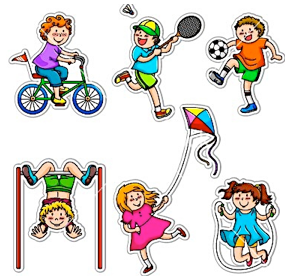
EXP: throwing & catching balls, climbing frames, riding a bike…)

Rough and Tumble P – physically close encounters, less to do with fighting & more about touching, tickling & gauging relative strength. It helps children discover flexibility & the exhilaration of showing off.

NEXT: Play FORMS (Part 3)
Childhood PLAY- Intro (Part 2)

fantasy 2
THE MORE I LET MYSELF PLAY

the healthier my kid & I can be

PREVIOUS: Children & Play – Intro (Part 1)

BOOK:Play, Stress & the Learning Brain”

\
💠
LEARNING STYLES -via NLP (#1)

💠 ACoA INVENTORY – WRITE what comes up for you as you carefully read thru each Benefit type.
As an adult: In spite of childhood trauma, & looking at your life-long patterns, identify which skills have always come easily / naturally, where you’ve excelled, which ones you’ve been working at the most, & what needs improving

cognitiveBENEFITS of Childhood PLAY
Positive Play experiences help children develop emotions & connections, sensing & moving, listening & talking, thinking & remembering
a. COGNITIVE skills
> Critical thinking – play encourages learning how to problem-solve, along with concepts like cause-&-effect, quantities & spatial relationships
Creativity & Imagination – pretending to be doctors, teachers, parents, firefighters, astronauts….. kids learn that life is full of possibilities & opportunities

b. LANGUAGE skills
Language – develops together with play as the brain grows & children use words while playing with toys & engaging in joint activities, expanding the ability to think & understand  (chart)language

• Both language & make-believe play involve the ability to represent the world mentally to oneself, so their developmental are parallel. Children play with:
— Sounds and noises // Linguistic systems (meanings of grammatical constructions) // Rhymes and words //  Conventions of speech. (MORE….)

c. MOTOR Skills
motor skills> Fine-motor – are developed by handling & manipulate objects – toys, books, art supplies, small animals
> Gross-motor – by being able to balance, catch, climb, crawl, jump, reach, run,  throw, walk…. when playing

d. SOCIO-EMOTIONAL Skills
> Social – Play helps build relationships, which children master by learning to follow directions, cooperate, take turns, share & obey the rules. It’s one way they learn about & practice living in their world & culture

> Emotional – spending time with safe adults, siblings & other children helps children learn about emotions – how to identify & manage them, as well as recognize & appreciate the feelings of others. It also helps them manage & cope with emotions when upsetting things happen

Social & Mental Disorders Increase as Play Decreases
• Unfortunately this vital part of growing up (play time) is being eroded – not only by the trauma of daily life in severely dysfunctional homes, but by a widespread systematic shift in our schools to ‘accomplishment’ – Doing rather than Being.

A study by the Alliance for Childhood “Crisis in the Kindergarten” tells us that free play or ‘choice time’ in most of them has dwindled to the vanishing point (30 min or less a day), replaced by lengthy lessons & standardized testing (about 2-3 hrs, daily)

• At a WonderPlay conference in 2008 Kathy Hirsh-Pasek, a Temple U. psychologist told her audience that lack of play in early childhood education “could be the next global warming,”. Without enough time to develop innovation & creative thinking via PLAY, America’s children will be at a disadvantage in the global economy. (MORE…)emotional problems

• Peter Gray’s book, Free to Learn (2013), tells us that for more than 50 years now, Americans (& other ‘advanced’ countries) have gradually reduced children’s freedom to play – which is correlated with a rise in childhood emotional problems

• Children are required to spend more time at schoolwork, & then are channeled into adult-directed after-school activities & lessons, with little or no time to explore on their own.
>> The decline in this freedom is showing up as an overall decline in empathy & a rise in narcissism, documented since the late 1970s by standardized questionnaires given to samples of typical college students (MORE….)

• Competitive, self-conscious parents are behind the emphasis on formal learning in preschool, more homework in elementary school & more pressure on young children to quickly gain academic skills.
Consequences are potentially dire, says psychologist Michael Thompson. He believes that diminished time to play freely with other children is producing a generation of socially inept young people, & is one reason for high rates of youth obesity, anxiety, ADD & depression.

NEXT: Childhood Play – FORMS (Part 1)

Childhood PLAY – Intro (Part 1)

fantasy landTHERE’S SO MUCH TO DO!
Games by myself, games with friends….

PREVIOUS: ACoAs & Play (#5)

SITE: Scientific Benefits of Play

BOOK: “Cycles of Power” ˜ Pamela Levin (Developmental Stages)

QUOTE: “Forget not that the earth delights to feel your bare feet, & the winds long to play with your hair.”  ~ Khalil Gibran

📕 Maria Montessori said “Children’s play is their work….”,  and modern play therapists added “Toys are their words”. Children are concrete learners, & must experience their world through all their senses in order to make sense of it.
At it’s best, a child’s world is filled with the magic of exploration, discovery, make-believe & play – vehicles for development. Play is the most important activity in their lives – sometimes more desired than food & sleep

• Actually, IF given the opportunity – Play is one of the most powerful tools children have for trying out & mastering new ideas, skills & activities. Much of their early learning comes through self-discovery, an outcome of play. It gives the opportunity to figure out -on their own- confusing social, emotional & intellectual issues.
By coming up with new ideas & solutions during play, they gain a positive attitude toward learning, & a sense of empowerment by being in control of their small world, rarely available to them later in real life.

Normal BRAIN Development
Although we’re born with basic genetic wiring, most of our synaptic connbrain developmentections form in early childhood. This process is shaped by internal & external experiences, & guided by the emotional bonds created between parent & child

So it’s very important to provide a loving family, warm home, with special attention (affection, playing…..), & appropriate education – to ensure healthy brain growth that will lead to a child’s optimum mental, emotional & social development. (Brain Development in Children  – detailed by age & style)

0 – 1.5 yr: Almost all neuron (nerve cells) are present at birth, but most are not yet formed into networks. Greatest growth is seen in sensori-motor & visual cortex, & then the frontal lobe. Piaget’s “practice play” reflects the development of these areas

1.5 – 3 yrs: Synapses continue to expand, reaching about 1,000 trillion – twice the density of the adult brain. so the toddler brain is twice as active.

3 – 6 yrs:  Fastest growth period for the frontal lobes. Processing speed, memory & problem solving increases
6-9 yrs: The synaptic connections in motor & sensory areas are firmly established. Elimination of synapses (pruning) in these areas has begun.  Children’s levels of attention & ability to modify impulses increases.

LEARNING STYLES (via NLP)
Everyone is born with a dominant sense – sound, sight, or touch. Less common are smell & taste. V.A.K. list of Preference //  V.A.K. Test  //  Examples:learning tree
Visual learners
> Statement : “Enough with the theories – just show me!”
> Play activities can include computers, CDs, DVDs, charts, diagrams, maps, reading & writing, photography, movies & video

Auditory learners
> Statement : “That doesn’t sound right to me” 

> Play activities can include debating, puppet shows, reciting songs or poems, story-telling, panel discussions, & the use of tape-recording for feedback & correction

Kinesthetic/Tactile learners
> Statement : “That makes me sick to my stomach!”

> Play activities can include demonstrations, dance, body games (rocking, field trips, modeling), play dough, playing instruments, sand play ….

PLAY & LEARNING: Studies at U of CA at Berkley look at ‘pretending’, which relates to what philosophers call “counterfactual thinking“, like Einstein wondering what would happen if a train went at the speed of light. It seems that children who are better at pretending can reason better about counterfactualspossibilities

❖ ‘Thinking about different possibilities’ has a crucial role in early learning – children at play are like pint-sized scientists testing theories.
They imagine how the world could / might work, predict various outcomes if their theories were true, then compare those ideas to what they actually see. Even toddlers turn out to be smarter than we’ve been assuming, if only we asked the right questions – in the right way. (MORE….)

NEXT: Children & Play – Intro (Part 2)

ACoAs & PLAYING (Part 6)

no timeNO TIME, NO TIME
for all that silly stuff! 

PREVIOUS : ACoAs & Play (#5)

SITE:: 7 Secrets of Dysfunctional Families (ironic)

QUOTE: “There is nothing that human beings do, know, think, hope & fear that has not been attempted, experienced, practiced or at least anticipated in children’s play” Heidi Britz-Crecelius (‘Children at Play’)

💠 ACoAs NOT KNOWINGwhat we like, or How to Play (Part 5)

💠 PLAY & the Wounded Inner Child (WIC)
ACoAs: Not taking time out to play is a lot like our great resistance to developing the daily habit of talking with our Inner Child. The same attitude applies to not building in down-time (just vegging) & play-time (doing something relaxing & fun).
We think: ‘Why do we even have play? Isn’t it an indulgence, a waste of time? Aren’t we always supposed to be busy DOING something productive?’ NO.

Adult play is not a waste of time. It’s actually a necessary component of being healthy. In a busy & competitive world ‘normal’ adults have forgottenhealthy vs not to play the way they did as kids, & need to be reminded of the freedom & benefits of spontaneous enjoyment.
But most ACoAs don’t have those ‘good times’ to look back on. WE didn’t have much of a chance to play – too busy care-taking, while being terrified, isolated & hiding from real danger!
WE:
• were programmed to live un-healthily, & play was not in it
• say we can’t decide what to do (but our Healthy kid knows!)
• are afraid to break any of the Toxic Rules
• can’t allow ourselves to have fun if our family members, or other loved ones, are in pain. We would feel guilty to not co-dependently suffer with them!

🦠 But it’s also understandable that some of us can’t find the fun in anything  – if we’re severely depressed or ill, still live in an abusive environment &/or are always worried about something serious ($$, lack of work, an ill child or parent, an angry spouse…. )

Just like we can’t let love in when we feel unsafe, we can’t feel free to play with too much anxiety.  Even the idea of Play doesn’t make sense to us – at first. John Bradshaw reminds us that ACoAs were forced to become Human Do-ings instead of Human Be-ings. So as adults it scares us to just BE, either doing something we like – or nothing, once in a while.

BTW, this is not the ‘nothing’ of depression or laziness, which is actually fear & hopelessness. Rather it’s the Be-ing of pleasure! It comes from feeling relief, being in our own skin instead of in someone else’s head.
It’s being good to ourselves, knowing we are safe.
And that safety comes FROM :
a. finding the right person & style of therapy, 12 Step meetings & books, mentors & friends – to set an example & give us the correct info about our past and what Mental Health is
b. our own persistent efforts to use all the tools at our disposal, including ‘constant contact’ with the IC
c. having a daily, deep connection to a safe, loving Higher Power Who supports us in the healing process

REQUIREMENTS for being able to Play
As we heal we can add recreation into our schedule. It may be uncomfortable for a while, but as with so many things, repetition makes it easier, & then becomes the new norm. For healthy play & ‘good, clean fun’ we need TO:
• carve out or use available free time to ‘waste’ on fun
• not be under pressure to produce anything in particular
• have a measure of control & autonomy over our choices – not compulsively obeying our self-destructive Family Rules nor follow someone else’s lead
• practice using our native imagination &/or skills for play

Ultimately, we need a decent amount of self-esteem (for internal permission), a relatively low-level of anxiety (at least at play-time).
💓 Don’t wait for some magical future time when you’re ‘well enough‘ – to have some fun & relax. Start slowly, but start now.

NEXT: Childhood PLAY (Intro)

ACoAs & PLAYING (Part 3)

rain on meI DON’T KNOW HOW TO PLAY –
only to be compulsive, never relaxed

PREVIOUS: ACoAs & Playing (#2)


💠DEFINITION (Parts 1 & 2)
   

💠 ACoA LAUNDRY LIST’s False Self related to PLAY

• One of the many sad results of having a traumatic childhood is that we were & are still deprived of the joy of relaxing thru playing & having fun. As a result of our damage we fall into several categories (lifestyles) which seem very different, but underneath each has the same problem – our WIC listening to the Negative Introject, believing the Toxic Rules:

“Life is hard / you have to suffer / you can’t play until all your work is done / no one wants to play with you anyway / if you don’t like it you have to stay / don’t be yourself / the world is a dangerous place / you always have to struggle, but never get there!…..”

a. ACoAs guess at what normal is
Here ‘Normal’ means healthy, as opposed to ‘average’. We don’t realize that playing, relaxing & having fun are a legitimate & important part of being healthy, happy & well-balanced. “All work & no play makes Jack a dull boy”.

There’s a tribe in Papua New Guinea that frowns on sex, & bans play. For years anthropologists have considered this tribe too dull to study, but finally someone did. Scholars still don’t know why the tribe developed this philosophy, but it’s certainly not one we should emulate! MORE…)

b. ACoAs have difficulty with intimate relationships
Everyone needs a certain degree of connection with other people, but the amount depends on one’s developmental stage, personality & on their current situation.
And while it’s perfectly normal & acceptable to play alone, playing with others requires a certain capacity for intimacy** to be ‘legitimate’ – since being in authentic play-mode means able to express the True Self without embarrassment or reservation.

This is not easy for ACoAs because our True Self got shrouded in shame & self-hate, making it hard for us to ‘let loose’ & let others get emotionally close to us.  ACoAs are more likely to put others in double binds: “I hate you – Don’t leave me!” OR “I need you – Don’t touch me!”

**INTIMACY: (IN-TO-ME-YOU-SEE) refers to a level of closeness where you feel understood & validated. Genuine intimacy with someone requires honesty, communication, vulnerability & reciprocity.
In relating to others, it’s the ability to connect our ‘deepest nature’ with safe & appropriate others, because we know there’s nothing fundamentally wrong with the Real Me, so we’re not afraid of letting it be seen

c. ACoAs take themselves very (too) seriouslytoo serious
While other children were busy learning to relate, compete, play & develop social skills, we were learning the tough lessons of survival. Many of us never heard our parents laughing, joking or fooling around (unless drunk!)
The air was heavy, filled with the invisible energy of suffering. Life was a hard business & the tone in our house put a damper on anyone enjoying themselves.
So if we did try to play or have fun we were guilted for wasting time OR punished for being frivolous & attacked for being ridiculous, making it stressful & terrifying.

d. ACoAs over-react to changes they can’t control
Genuine play allows us to be in the moment, not knowing the outcome, not having to win, be right or perfect, & not “forcing solutions”.
EXP: when children play, they often change the out of control‘rules’(which they made up in the first place) anytime they feel like it

Adult play doesn’t always have to follow pre-set rules either, sp they can be thrown out the window if it’s more fun to not use  them. This is hard to allow ourself.

Children do need things to be stable & predictable in their every-day life, with clear rules & boundaries, something in very short supply in most dysfunctional homes. Chaos was the order of the day for us, so now we try to keep everything under tight control, which doesn’t fit in with playing. But PLAY is free-form.

NEXT: ACoAs & PLAY #4

ACoAs & PLAYING (Part 2)

A HAPPY CHILDHOOD
includes having fun

PREVIOUS: ACoAs & Playing (#1)

SITES: Fostering Creativity

QUOTES: ✦“It is a happy talent to know how to play.”   ~ Ralph Waldo Emerson

✦ “A lot of people say a lot things about creativity – what it is, how to enhance it, what it means….. Creativity is just play, and love”  ~ Kent Parkstreet (blogger…)

💠EXPANDED Def
a. PLAY (in general) (Part 1)

b. FUN: It is playful, often noisy activity which diverts, amuses or stimulates. Anything that is a source of enjoyment & pleasure
• IMP: this def. only refers to positive situations, rather than abusive ones such as ‘making fun of’ someone / ‘having fun at their expense’…../ or excited, violent activity ‘She insulted him & then the fun began’

• In these posts the two terms (Play / Fun) are used interchangeably. The key word in both is activity – behaviors we choose to do – because we like** them. However, while play is indeed an action – even verbal play (poetry, exchanging puns & jokes, lively discussions about favorite topics…),  fun can be either active or passive. We can have fun sitting in a comedy club or quietly on the beach. Play is more participatory, although it doesn’t always need others for it to be ‘legitimate’

These definitions raise several issues for ACoAs
When asked ** “What do you like?” too often the answer is “I don’t know”.
To an observer this can be confusing because, looking at our behavior, they see many of us as functioning & accomplished people, which is not how we think of ourselves.

In spite of childhood trauma, ACoAs have done things as adults – & some as far back as childhood – which we did like, even enjoyed. It could be anything :
• Artistic – acting, singing, designing …
• Sporty – acting, dancing, bike riding, hiking, baseball….
• Physical things – going to an amusement park, traveling, having sex…..

So why do ACoAs say we don’t know what we like?
It’s a response from our WIC, who is still ‘living in the past’ & still doesn’t have a clue – or more accurately is not allowed to “Know what I know”. Because of the family’s narcissism & addictions we didn’t get mirrored** correctly, or at all.
**Mirroring (most effective when given to small children, but can be provided at any age), is what we call ‘being seen’ – literally echoed.
It’s when someone outside of us is able to freely, accurately see who we are & then feed it back —
without any mental or verbal distortion
without adding their opinion, taste or bias
without their need for us to be a certain way…..
…. just reflecting back to us who we are, the way we express ourselves, the way we see the world, the way we think, feel or do things

If this had been done for us when we were kids, we’d KNOW how are, & therefore have a lot less anxiety. Healthy PLAY is only possible with a minimum of background anxiety!

PLAY & TOXIC ROLES
Regarding down-time, each child was affected by & reacted to the family’s dysfunction in their own way, but it also lent a particular intensity to the ROLES we developed:
🔻 The HERO had to be ‘on’ all the time, being the serious adult right from the beginning of life, so not a lot of room for relaxing

tease🔻 For the SCAPEGOAT, ‘fun’ (for them) was hurting & humiliating (others) – in the guise of teasing “Just kidding !!”- verbal insults & arguing used to belittle, & pranks or games that could be dangerous

🔻 The LOST CHILD, often an Introvert by nature but not exclusively – stayed in the background, escaping, hiding, withdrew into daydreaming, reading, arts…. – their version of fun

🔻 Even the MASCOT, being cute & funny to keep everyone else’s spirits up, but at the cost of denying their fears. Their playfulness came from pain rather than joy, often tinged with sarcasm & meanness.

NEXT: ACoAs & PLAY-ing (Part 3)

ACoAs & PLAYING (Part 1)

having fun 1
HAVE FUN?
What’s that?

PREVIOUS: Inner Child Speaks, #2

See ACRONYM page for abbrev.


QUOTES:

✦“You can discover more about a person in an hour of play than in a year of conversation.”  ∼ Plato
✦ “A little nonsense now & then is cherished by the wisest men.”  ∼ Roald Dahl (children’s books Author)
✦ “Play is the royal road to childhood happiness & adult brilliance.” ∼ Joseph Chiltern Pearce  (child-development books Author)

💠 DEFINITION
Play – with a capital P – is a process, not a specific thing, which lights up our brain, benefiting us in PMES ways (physical, mental, emotional, spiritual). Being a ‘whole’ person means developing a balance between being serious & having fun, but ACoAs tend to live in one extreme or the other, being over-responsible or under-responsible.

In general, it’s any activity someone voluntarily chooses to do (or for ACoAs to not do) because it’s fun, relaxing & enjoyable. It can include being creative, & sometimes even competitive – but without the need to win – otherwise it stops being Play.  Debbie Mandel, Stress Management expert suggests that F-U-N = Feeling Uninhibited Naturally. And a formula for ‘balance’ is: Concentrated Energy + Relaxation = Healthy living.
 
🔆 The purpose & spirit of Play does not require any practical, concrete outcome. It’s not supposed to generate something you can ‘show for it’. It’s a state of being rather than doing.

🔆 However, we can have a hobby that we really love – something creative or a sport, which does includes performing, making or winning something. We may or may not be good at it. The value is not mainly the end product, but the process, which is supposed to be pleasurable & satisfying – suited to our True Self & feeding a part of our soul

🔆 Also, many of us have heard or read about people who say they love their work so much it feels more like playing. In this case there is a tangible product & a financial benefit, but the point they’re making is that it makes them happy! They feel blessed because they get to do it all the time instead of relegating it to their spare time – or not having time for it at all

EXPANDED Def:
1. PLAY (in general) is made up of a wide range of spontaneous, voluntary, internally motivated activities, usually associated with recreational pleasure. It’s driven by an interest or enjoyment in the task itself rather than -necessarily – working towards an external reward.
Play can range from frivolous & pointless —> through spontaneous, free-spirited & relaxed —> to planned or even compulsive

In childhood, Playing is ‘run’ by children who choose the plot, location, characters & props – making up or changing the rules arbitrarily. It’s something that completely engaged their attention, & ends when it’s no longer fun or interesting.
IMP: By this definition – when adults have kids ‘playing a game’ of any kind with pre-set rules – it’s not Play 

“Self-directed play gives kids the opportunity to hone their decision-making skills. Selecting a game, focusing on that activity & seeing it through to the end, is an important element of cognitive control, which helps sharpen their planning skills & attention spans. (For teachers….)

And when children are faced with a problem during play, it tests their reasoning judgment, & ability to find a solution. Brain-teasers, puzzles & strategy-based games help reinforce critical thinking skills”

NEXT: ACoAs & Play (Part 2)

“INNER CHILD SPEAKS”, re-posted (Part 2)

inner kidYOU DON’T HAVE TO KNOW EVERYTHING
to listen or talk to me!

PREVIOUS: Child to Adult Monologue (#1)

SITE: “Love Your Inner Child


WRITER: Marie T Russell (1996) publisher of InnerSelf Magazine. Reprinted in full, as is. 
LETTER CONTINUES

The child cries out:  “You told me that it was not a-prop-riot-e behavior to dance in the street, or to sing with the birds, or to talk to the new people that I discovered on the street – you call those people strange-hers. You told me that it’s not appropriate to be playful & childlike, that I had to act your age. Well, I’ve got news for you. I’m an Inner Child & I’m eternally young… so my age is whatever I choose. And today I choose to be five years old. So it is okay for me to sing & dance & love everyone I meet, because I know that God loves me, and that I am loved by everyone because God is in everbad inputyone.

“Do you know what is not appropriate? When you frighten me with your grown-up mixed-up beliefs. You have a picture of the world that I do not like, & you try to frighten me into doing what you want by telling me about your picture. Well, your picture is all wrong! Do you know why?

Because your picture has a nasty God in it that punishes children & He gets very angry when they make a mistake. Well, my God loves me & loves you too. And my God does not frighten little children. Instead He provides birds that make music, fruit trees for food, sun for light & warmth, grass to roll in & lay on, animals to play with, & lots of other good things.

“Your picture is just a horror movie that you made up, & I don’t watch horror movies. So if you insist on watching a horror picture, keep me out of it. Don’t even tell me about it. I don’t like to hear yucky stories. They make my belly & my heart hurt.

“But if you decide you’d like to watch and live a beautiful love story with me, then simply switch channel to the Inner Child channel. You and I can get to know each other, then we can have some fun as well as some love & peace together.

“You probably don’t even know where I am. Well, that’s because I’m scared of you and I’ve been hiding. I would suggest you tame me, just as if you were dealing with a scared kitten. Just imagine that your Inner Child is a scared kitty hiding under the bed. What do you do? Well, maybe you start talking gently, lovingly to it even though you can’t see it. And then maybe you bring it a saucer of warm milk (for me a saucer of unconditional love will do), then back off a little & keep talking softly.

“After a while, I may peek around the corner to make sure that you’re really for real & won’t judge or criticize me again… after all, you’ve done that a lot. If I feel that you are really ready to love me & be nice, I’ll come out & we can talk & play.

“Another way that you can get in touch with me is to listen to what you call your intuition. Lots of times that’s me telling you what would be great for us. So the next time you feel that it would be good for you to go for a walk, or sing out loud, or dance… pay attention. That’s probably me making my presence known. The more you spend time doing the kind of things I like, the more you’ll start feeling me there, & enjoying our time together.

“And keep taintuitionlking to me. Soon you’ll start hearing me. You see, I talk very softly cause I’m little and sometimes I’m scared of you cause you’re big and you talk loud and gruff. So listen softly, and then you’ll hear me.

Remember that I love you & really want to spend time with you. I know that once you start spending time with me, you’ll be much happier. You’ll find yourself singing & maybe even taking silly little dance steps in the street. The people around you will start smiling for no apparent reason when you walk by, because their own Inner Child will recognize me & will also pop up to the surface.

“Can I come out and play? I love you a whole bunch! I hope you’ll come visit often & invite me to hang out with you a lot too! We can really have a great time together, you and me.”

With Love, 
Your Inner Child

NEXT: ACoAs & Playing, #1

“INNER CHILD SPEAKS”, re-posted (Part 1)

compulsion 

IC:  I HAVE A LOT TO SAY
if only someone would listen!

PREVIOUS: Talking to the Inner Child (# 5)

SITE: Inner Child POEM


NOTE to MEN: While this monologue by the Inner Child is clearly a girl talking to her female adult-self, the thoughts & feelings are just as valid for your little boy saying it to your adult-man, so please substitute ‘HIM / himself’ where it applies. You may not want to sound quite as mushy in places, so find the words that suit your own style, always keeping it positive, respectful & kind.

COMMENT: You may notice that the ‘Adult’ being talked to in this writing sounds sometimes like the Bad Parent & sometimes like an OK but weak Adult. Neither is fully the Healthy Adult / Loving Parent ego state (the UNIT) we’re aiming for. However, it’s also true that the child doesn’t always understand how adults think or what motivates them, but much of that can be explained with patience & love.

WRITER: Marie T Russell, (1996), publisher of InnerSelf Magazine.   Reprinted in full, as is.

The INNER CHILD SITS & WAITS – patiently for the adult to notice it, to talk to it. It wonders how many more nights, months, or years it must wait. It asks “How can I get her attention? How can I get her to talk to me, to listen to me?”

It thinks back of its past experience with parents & teachers, remembering that many times, to get attention, one had to be ‘bad’ or naughty. That always did it!. So it wonders… if I’m the Inner Child, how can I be naughty tp get the attention of my adult self?
The child, trusting her intuition, does what comes up.

The child cries out: “It’s me! I’m here crying out for you. I need you. I love you. I can be your partner, your helper, your guide. All you need is to start acknowledging my presence. Stop ignoring me. Stop pretending you’re all grown up & past ‘that’ stage. Come back to earth. Come back to being present in this body – after all it’s the only one you’ve got, & it’s all ours. Yours & mine. The Inner Child and the Adult.

“I’m the part of you that you’ve hidden inside – the sensitive one, the caring loving one, the exuberant one! That’s me! You’ve become the serious one, the one that has no time to play, to simply be. You’re the busy one…. wanting to do better, to improve, to advance your growth, your career, your relationship…. I simply want to be – mostly joyful & happy.

“It’s OK to be sad now & then, but I don’t like to stretch that stuff out. I feel it, let it out, & move on! The adult that you are seems to enjoy mucking around in that stuff. Not me! I’m a child, & I want to play & enjoy life. I don’t believe we’re here to be miserable. I think some miserable people made that up so everyone would be miserable like them. Well, I don’t buy it! I trash that thought!

god-loves-me“I think that God made us & God loves us, & surely wants us to be happy! After all, don’t all parents want their children to be happy, deep down? It’s just that because they have buried their own Inner Child, they think that ‘happy’ means having a good job, a big house, secure income – all that stuff.

Inner Children know that is all crap. What’s important is the love, joy & simplicity. We don’t need fancy toys. We just need a loving lap we can sit on & feel loved. Then we can make up toys as we go along…..

The child cries out: “You adults make it so complicated! Give us a KISS. Yes! K.I.S.S. Keep it simple silly! Look inside yourself, invite your Inner Child to come out and play.  Tell it that it’s OK – that you won’t scream at it anymore, won’t tell it to go away, or tell it that it’s not behaving appropriately.
A-prop-riot-e-lie. That’s a big word that I learned from you. I know what a prop is. I know what a riot is. I know what a lie is. All those words together just don’t make any sense to me. Except that maybe behaving appropriately is a lie which becomes a prop for a riot. Did you ever think about that?

NEXT: Part 2 of “Letter from the Child”

ACoAs: BOOKENDING with the WIC (#2)

bookends 2
I CAN BE IN THE PRESENT
by being kind but realistic

PREVIOUS:
 Book-ending, Part 1

POSTS: ✦ Self-Hate
✦ 
Abandonment Pain, Now

See ACRONYM Page for abbrev.


TRYING to PROTECT ourselves (cont)
a. RULES & ROLES

b. CDs – Another strategy evolved into using Cognitive Distortions (CDs), B & W thinking being the most common – trying to have some predictive ability amid alcoholic chaos. We pickup them up from family, school & religion – as well as our own immature thinking. Ad now they’re entrenched in the WIC.

CDs were a way to project what we assumed would happen in any given situation, so we could either be prepared or avoid it altogether.  In terms of T.E.A., they’re forms of incorrect Thinking. But they’re too limited in scope to deal with most of reality, deep-rooted beliefs that leave out important info & lead to incorrect conclusions.

✶ Unfortunately this strategy also backfired, just like many others the WIC (understandably) absorbed. This is mainly because we were / are still trying to do the impossible: getting unhealthy people to love us & stop being abusive.

The only thing that’s truly successful is to stop chasing the WIC’s delusion that we are responsible for the original abandonment, & the fantasy that we can somehow make ‘them’ see & accept uimpossibles!

CDs are so harmful because:
• they’re the twisted ‘logic’ behind much of our un-healed habitual actions & emotional reactions, which are inevitably self-defeating & painful – even torturous!
• it makes us think we’re crazy when other people use them on us – unless we’re familiar with the distortions & can counter them accurately.
However, once you know the various CDs & Logical Fallacies well, you’ll never again think you’re nuts. Never again! Hurray!

Negative USES of Bookending
a. overblown unrealistichopeful’ expectations
• Both types of expectations (over & under-realistic) are based on  the WIC’s narcissism – ‘everything that others do (to me) is about me’, but this one comes from the aspect of ACoAs that is grandiose, symbiotic & unrealistic about people & events

Again, this is the WIC who desperately needs & want something, but is not using real-world criteria to evaluate what’s actually possible is any particular situation. Because the imagined outcomes are not possible, we are inevitably disappointed.
This reinforces our original CD – that we don’t deserve anything good & that the universe is against us/
Some of these CDs are:  • over-estimating  • mind-reading  • wishful thinking  • externalizing self-worth  • always being right ….. Screen Shot 2015-09-10 at 3.33.35 PM

b. totally negative beliefs about how , hopelessly things will always turn out.
Some of these CDs are: • all or nothing  • only noticing the negative  • making everything about oneself   • jumping to conclusions  • under-estimating …..

ALSO, we use idealization / fantasy to mask how scared we really are
• because we’re not actually allowed to get our needs met, AND
• when we already know the person or situation is unsuitable, even damaging, but don’t want to leave & have to start over – after all, if it’s hopeless anyway, why bother!

✶ This defensive way of thinking is NOT the same as being Appropriately Positive and Realistically Hopeful – about what we are actually capable of accomplishing or ways we can be nourished by healthy environments. ACoAs are so steeped in the fantasy, we have trouble imagining wonderful, happy circumstances – for ourselves!

However, as we heal and DO get good things in our life – we will know & feel the contrast with our upbringing : THIS is the way it should have / could have been, but never was. We need to mourn that loss but stop looking back for something that was not possible.

NOW it’s time we give ourselves the happiness we never had as kids!

NEXT: Bookending- #3