
 IT’S GOOD TO KNOW
what to look for
PREVIOUS: What is Character, Part 2
SITE: 7 Common Character types in Fiction
See ACRONYM Page for abbrev.
PRINCIPLES of Character (C)
1. Character Strengths (CS) are BASIC
Neal Mayerson (founder of the VIA Institute on Character) says CS are the basic building blocks of the True Self, our essence – the core part that account for being at our best.
• The word “character” comes from a Greek noun for the stamp impressed on a coin. From that we use the term to mean that individuals have been “stamped” by nature into a complex of mental & ethical traits.
Unfortunately, people often jump to incorrect conclusions about what C traits mean, such as – if someone is sensitive they are therefore weak; if a person is vain they must be shallow …. Groups are also rigidly stamped in a particular way, such as – because of the very real differences between men and women – one group is considered better than the other. (‘Men are from Mars, Women are from Venus’).
2. C Strengths (CS) are stable, but can & do change
While they are fundamental parts of our personality, these strengths can change in intensity or in focus, depending on predictable life events such as starting a family, unpredictable life events such as a trauma, and deliberate changes in lifestyle.
• ALSO, some traits may be prominent at one stage in life (being Adventurous but not Compassionate, Socially active but not Discrete…) while other traits may take prominence at other stages, as with experience & maturity (Decisiveness, Cautiousness, Self-control….)
3. CS are inter-dependent
In most situations people will express a combination of CS rather than one at a time. Interactions among strengths may enhance the expression of some but hinder the expression of others.
EXP : it’s hard to be Creativity without some level of Curiosity, or to be Kind without some amount of Bravery…..while being Discrete can limit the ability to be Persuasive, and being Truthful will modify one’s Meekness ….
4. CS can be developed
While we’re born with fundamental & personal CS, we can have them in different proportions (one person will be naturally higher on Courage, another on Cautiousness, one is higher on Ambition, another on Deference….).
Yet the strength of our characteristics can be modified or enhanced with attention, experience & training. People can learn to be more Confident, more Grateful, more Fair, more Open-minded, more Patient….
Specific interventions can have an impact on many CS, such as journaling, emulating others & goal-oriented planning. Persistent practice can break or modify old habits and form new ones
5. CS can be overused, misused, or under-used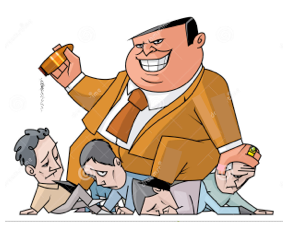
Since we are all molded by our childhood experiences, our fundamental strengths can be repressed & then quickly forgotten, or expressed in unbalanced & harmful ways.
EXP : Creativity can be misused in email spamming, overuse of Curiosity can lead to gossiping, or someone into dangerous locations, under-use of Fairness can lead to conflicted relationships.
Balance and skill are important aspects of mental health
6. CS have important consequences
The result of expressing one’s CS – at their best & from the right motives – is connected to many benefits, such as increased internal happiness & external success. This may be especially true of our signature strengths – the more intense ones that are energizing & authentic. They’re the True Self strengths we use across many settings & are readily noticed by others. Over time, research may also reveal that each C. has its own unique effect.
EXP : Perseverance seems to be linked with high achievement (nACH) more than most other character strengths.
7. CS are universal
Personal Character Strengths (CS) can be found in the most remote cultures & lands, shared by people with differing beliefs, religious affiliations, & political preferences. This makes applying CS more a matter of identifying & then actively using the best parts of us, instead of picking ourself apart. (from Ryan Niemiec, Psy.D)
NEXT: Dimensions of C.


 HEAL & GROW for ACoAs