Backlash of Over-Control (Part 2)

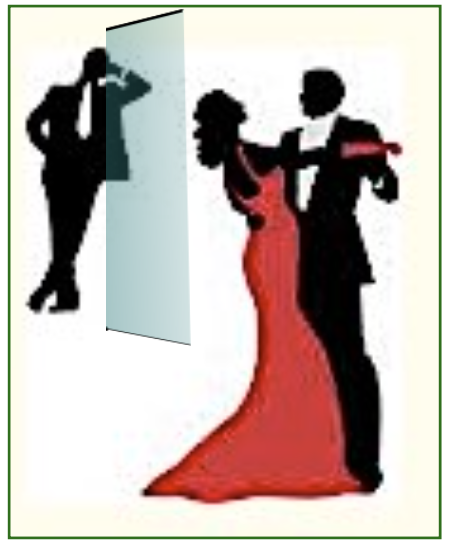
THE MORE I CONTROL MYSELF –
the more I can get over on others!

PREVIOUS: Aggression, Over-Taxing & Regrets

REMINDER: Go to Acronym PAGE for abbrev.


Some CONSEQUENCES (cont.)

3. Over-taxing self-control 
From U of Minnesota: Professor Kathleen Vohs’s study showed that suppression of emotions (NOT lack of sleep) generates aggression.

Half the subjects were required to stayed awake for 24 hours & half were well-rested. Then all were shown disgusting scenes from 2 movies –  Monty Python’s ‘The Meaning of Life’ (1983) and ‘Trainspotting’ (1996).  Some were allowed to express reactions to the gross images & others were told to show no emotion

• Later, everyone played an aggressive game in which they won or lost by chance, & winners were allowed to blast opponent with a loud noise. Those who had -suppressed- their emotions blasted their competitor at a 33% higher noise level than those -allowed- to show emotion

Conclusions:
❈ The ability to engage in self-control is determined by prior use of over-self-control, not by how much sleep one had the night before.
❈ (Your) aggressive behavior is a reaction to someone else’s action that makes you to want to retaliate
❈ Being stressed by doing one uncomfortable task can have spillover effects on another.
Even if we try to compartmentalize different daily tasks, it turns out they’re all connected – emotionally
ALSO:
The study suggests that overtaxing self-control drains us, which leaves less reserve for later tasks, making it harder to achieve all our personal or social aims. “These people have a diminishable supply of physical & mental energy for self-control, so when they work toward achieving one goal, they have less energy available for others.
✦ When you want to succeed, it’s best to set your day up to focus your self-control resources on the specific task you most want to accomplish.”

ACoAs:
Spillover: when we have to sit on frustration & anger caused by one or more sources (work, family, shopping…),  we more likely to take it out on someone else unrelated, or turn to an addiction to stay numb
Energy drain: This is especially obvious by wasting so much effort worrying, projecting failure, obsessing about some abandonment….. that we have little left for actual accomplishments that would make our life better!

4. Over-Control (O-C) & Manipulation
More is not always better when it comes to self-control. It’s hard for ACoAs to believe that vulnerability is not a weakness, but actually is a virtue. Of course, vulnerability without boundaries is foolish. But here it refers to a defense mechanism becoming self-destructive when over-used

a. Rigidity: For most ACoAs, O-C tends to kill the joy in life, robbing ourself of spontaneity & fun. This self-imposed rigid caution can make us unhappy & therefore unpleasant to be around

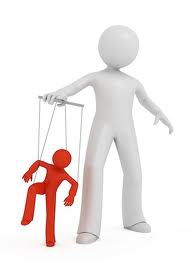
b. Secret agenda — But for an ‘elite’ group, O-C is used as an ulterior motive.
These are the smooth operators, skillful in the art of deception & manipulation: charlatans, con artists, under-cover agents & many politicians, religious leaders, judges, lawyers, teachers & pillars of society.
They’ll to go to any length to maintain the façade of invulnerability, no matter the cost to themselves, their family or anyone else.

For THIS TYPE
:
manipulator❈ self-control is simply one of the tools they use to maintain a positive public image, to not blow the cover on their actual abusive identity
❈ every action is always measured & proper for the occasion. Every word is carefully selected,  seldom revealing their emotions
✶ O-C makes them feel safe, superior. They’re usually so numb to their deeply hidden inner pain that they’re not bothered by the harm they do to others

ACoAs: Ironically – while many of us who are caught up in O-C believe we are total victims & would never think of ourselves as con-artists – we are if fact being manipulative & dishonest without meaning to.  We hide behind our own special mask (a role, a defense mechanism, a character defect….) to keep anyone from seeing what we are convinced is the ‘real’ us – weak, worthless & despicable! – which is only the WIC’s toxic belief, NOT our True Self.

NEXT: Backlash of O-C ,  #3

ACoAs: OVER-Controlling Ourselves (Part 5)

Sbridesmaid “ALWAYS THE BRIDES MAID –
never the bride!”

PREVIOUS: Over-Controlling Ourselves -#4

SITE: So What Is “Self Care”?


HOW we Over-Control (O-C) ourselves (cont)
a. DEFENSES (Part 4)

b. SELF-HATE – a defense mechanism – also controls us TO:
• keep ourself in line (harsh discipline), instead of taking charge of our thoughts & actions (healthy control) via a mature ego state. EXPs:

Young man: “I’m not supposed to look at or covet other women because I’m married – but I do anyway – which means I’m bad.
I figure that if I’m strict about beating myself up, I’ll stop being bad”.  It many work temporarily but doesn’t last, creating a vicious cycle

stave off (assumed) inevitable abandonment
Young woman: “I just met a potential partner / boss / friend… & I’m already thinking – I know I’m going to fuck it up”. So she won’t let anyone get too close, depriving herself of new experiences & possible benefits

symbiosis• stay symbiotically attached to the Introjects (no S & I)
Teen: “I don’t care about keeping my room neat, even though I’d like it, because Mom is horrified that I’m not compulsively clean like her.
She calls me a pig, saying: ‘You could lay down next to dirt and sleep!’- which to her is the greatest possible insult. So if I’m a pig, I might as well act like one!”

IRONY: As much as the teen (or Adult-Child) is rebellious or hates the family, we stubbornly hang on, because to let go would mean facing the world unprepared!

CONSEQUENCES of OVER-CONTROL
1. Unsupported
By O-C ourself, we’re always suspicious of anyone wanting to be kind, encouraging & helpful, so WE:
• isolate from the mainstream of society, which keeps us from finding out what kind of support systems are available, OR refuse to make use of them when we do know

• unconsciously prevent ourself from attracting people who have the capacity to be nurturing &/or nourishing. Instead we choose or let ourself be chosen by narcissists & abusers, wolves that are sometimes disguised in sheep’s clothing
iso;ationOR
• reject legitimate offers of nurturing or help, finding it painful when complemented or lauded. This is predictable as long as the WIC is allowed to make our relationship choices – which will inevitably duplicate our family

2. Illusions

We were greatly disappointment in our parents when we were too young to handle it. Being in constant emotional pain, as kids we created an inner world of fantasy – having an ideal life, with a loving family & never any frustrations!

• As adults this fantasy life can turn INTO various illusions, such as:
— looking for the ideal partner, friend, teacher, boss…. so we’ll finally feel safe & get our needs met. Anything less than that is unthinkable. When we are inevitably let down, we get very angry that they don’t live up to our expectations – which leaves us feeling hopeless!
ALSO 
— being convinced that everyone else is having the happy life we’re not, even strangers on the street, especially if we see them with a partner, children, clothes, cars…. that we wish we had – but are not ‘allowed’.

We know how bad we feel inside, & assume everyone can actually see how worthless we are – & that’s why they ‘stay away from us’.
We look at the glossy surface & think that’s the whole story, O-C (repressing) our ability to see ourself & others as having several dimensions.  BUT everyone has problems, no matter how their outsides look!

• ACoAs are encouraged to maintain illusions because:
— media & culture pushes surface images as reality, when they’re not
— emotionally we’re in child-mode, & little kids are very literal, concrete (what you see is what you get)
— our family taught us to deny & ignore what’s inside – the deeper truths of intuition, whether emotional, mental or Spiritual.

In many dysfunctional homes what mattered was how good everything looked on the outside.
👺So we created a facade too, a False Self, the only option we had at the time – BY rejecting or over-controlling our basic human needs!

NEXT: Over-controlling Ourselves (Part 6)

ACoAs : OVER-Controlling Ourselves (Part 1)

bad voiceTHE BAD PARENT VOICE –
doesn’t want me to outgrow it

PREVIOUS: Self-Care around Controllers #3

SEE:  Toxic Family Roles

❖ S-C = self-control


AS CHILDREN

Normal / Healthy: since children are not born with boundaries it’s a parent’s job to help them learn self-control (S-C), which is about setting limits for oneself & with others, but forming them is a long process. S-C is closely linked to:
• how children feels about themselves, If they delay self-esteem, that can only come from proper guidance, stability & unconditional love
• being taught how to deal with everyday frustrations & practicing those skills by helping them make their own age-appropriate choices & decisions

 2 MENTAL Abilities for healthy S-C : Be ABLE TO
a. estimate time correctly, in order to make reasonable decisions, based on immediate as well as future outcomes.
❖ Young children cannot do this because they live completely ‘in the present’, so it’s not rational to expect them to have the same S-C as older kids & adults (post: ACoAs & TIME)

b. direct one’s attention away from a current event. This is needed in order to have the time to evaluate situations, make better choices & weigh possible consequences.
Since young children’s attention can be easily distracted, they aren’t able to stop-to-consider alternatives or potential outcomes, so it’s inappropriate to demand it of them

• Children do best when guidance & boundary setting are given with consistent, age-appropriate expectations & realistic consequences, AND without constant punishment or power-conflicts with parents.
Children do need the security of knowing the rules & limits of behavior – otherwise they feel uncared for & at a loss. The healthy goal for parents is to guide & nurture them so they feel supported & valued, rather than judged or rejected

Alcoholic PARENTING extremes
In most cases, ACoAs had to be totally obedient to survive & later to fit in – first with parents, then in school, a religious community & then work. (Posts: Parenting styles & Results)

OVER: Many of us were given too many rules, assumed to be ‘little adults’, demanded that we be competent & self-sufficient way beyond our years.
We were bullied & manipulated into being compliant on pain of suffering & death. There was no fairness, or any leeway for our individuality. We submitted – or else.

This created great anxiety, knowing we couldn’t fulfill their spoken & implied expectations, while desperately trying to please.
✏︎ For some of us the rules kept changing, arbitrarily.
✏︎ For others they were rigid & unrealistic.
✏︎ For all of us, no matter what we did, it was never good enough!
Eventually we either rebelled or caved.

UNDER: Others of us received little or no guidance – left too much on our own, so that we basically raised ourselves, which also created great anxiety. It left us:
• without knowing how to pay attention to other people
• with no respect for, willingness or need to obey legitimate authority
• with no sense of boundaries, limits, discipline or self-trust
✦ not knowing what is expected of us or how to function in the world.

This may seem heavenly – to a teen, but a child without rules or expectations not only is being severely neglected – but will likely suffer from lack of motivation & direction for years to come!neglect

EITHER WAY – we were deprived of the opportunity to learn healthy self-control – which requires a SELF to implement!
Since having a True Self was not allowed much mess encouraged, the only thing we could do was to over-control ourself. We had to hide our true emotions, needs, as well as our intelligence, competence & talents – except as those gifts were needed to take care of sick, abusive, drunk, depressed & crazy parents &/or siblings – but never for ourself!

▶︎ Since over-controlled adults are generally responsible & reserved, they don’t get much attention, suffering loneliness & chronic depression in silence, which may include anorexia, or being obsessive-compulsive.
An evidence-based therapy Radically Open Dialectical Behavior Therapy (RO DBT), was developed to help “over-controllers” activate the brain’s neurological systems which help regulate smoother ways of interacting with others. SKILLS include:
social spontaneity, taking it easy, making true friendships, correcting rigid thinking & minimizing perfectionism. (MORE….)

NEXT: O-C Ourselves – Part 2