“FEELINGS AREN’T FACTS” (Part 2)

heart talkWHEN THE HEART TALKS….
… I should listen

PREVIOUS
: “Feelings aren’t facts” (#1)

SITEs: • How to listen to the heart
• Diff between feel, think, believe

POSTs : Use THINK instead of Feel


1. FEELINGS (Part 1)
2. ‘FACTS’:  The other problem with this platitude is that these 2 words don’t really belong together (feelings & facts).
a. Facts – are only actions, quantifiable, with measurable results. Simplified – facts come from the head.
b. Feelings – as pointed out in Part 1, has 3 different uses, 2 legit, 1 not.

For people who use this term – ‘feelings’ means Emotions (Es) and Es are never ‘facts’ – they are internal experiences – from the gut.  Yes, it’s a fact that we have emotions. Even Vulcans have those pesky things, underneath. For humans, to be cut off from them turn us into narcissists or worse – sociopaths!

• Eventually someone in Al-Anon added what they thought was a clarification: “Feelings aren’t facts, but it’s a fact that I’m having these feelings”.  OK – this does refer to Emotions. This was encouraging for many of us to hear, because as CoAs we were taught to repress some or all Es – to deny them as irrelevant or unacceptable.  So this version gave permission to FEEL emotions.
But this is not what the phrase “Feelings aren’t facts” actually means.

circular

c. Thoughts (Ts) are not technically facts either, but rather ‘constructs’ of the mind – not tangible in themselves. They are:
• the cause of emotions (in the present) :
EXP : T ⏩ “I can’t believe she never called me back. What a b— I’m so angry!” ⏪ E
Unrealistic expectations, cruel toxic rules, scary projections, unfounded assumptions & S-H … lead to distorted thinking & obsessions, which cause us great suffering, & often lead to unfair or harmful actions toward others!
OR
• the cause of actions, healthy or unhealthy, depending on the type (may not be conscious, but the real reason for behavior)
✒︎ NOTE : Watch out for people who ONLY talk about what they or other people are doing, where they’ve been, who they know, what they’ve accomplished…. Facts, facts, facts!  That tells us they’re NOT in touch with their emotions, which makes them unsafe in relationships, for anything other than giving information – if that!

CONCLUSION: Based of these distinctions, what does “Feelings are facts” really mean?
ANS: In this case ‘Feelings’ are obsessions, circular repetitive thinking built on negative, distorted beliefs, and NOT emotions at all! which are not telling us the truth (facts) about a situation.”
✒︎ In other words : “What my obsession is telling me is most likely a lie.”

And what do most ACoAs endlessly obsess about ? :
bad thoughts☁︎ EITHER Self-Hate
”I don’t know why he won’t talk to me – why is she ignoring me – was it something I said? Maybe I should have been nicer to her.  I probably sat in the wrong chair… I know he doesn’t like me… what can I do to change their mind… “  –  bla, bla, bla….
OR
👺 Rageful thoughts towards others
“How dare she treat me like that… Why didn’t he call me…. I never did anything to her… I’m going to give her a piece of my mind… I hate her, she’s a witch…. no I’d better not… what should I say… I don’t want to get fired…”  grrrrr , grrrrr

❖ Healthy THINKING is imperative for us to function well in the world & in personal relationships. This requires :
• accurate, reasonable & present-day information about how everything really work   • what our needs, goals & dreams are
• what is positive about oneself (character & abilities)
• what it means to be human (determined, imperfect) images-4
• universal spiritual truths about Higher Power.

EXRESS  thoughts
, opinions & beliefs, directly:
• “I think that the government should…”
• “That’s not my opinion”   •   “I wouldn’t say that…”
• “I suspect he’s not going to honor his agreement”
• “I’m convinced there’s a better way to do this project”

❖ Healthy EMOTIONS are NEVER good or bad, but rather range from the very painful <———–0————> to the very joyful.  ‘0’ is neutral.
✒︎ We’re most successful & comfortable when we live within a range of +5 to -5 on either side of center, most of the time, although not exclusively. Times of great stress OR great joy will push the range much higher or lower, but not get stuck at either extreme.
☆ This medium state can only happen when healing diminishes accumulated anxiety so we don’t have to alternate between the ‘outer limits’ of misery or fantasy/illusion!
(REVIEW all posts on Emotions)

NEXT: Getting to Our EMOTIONS – Under
“FEELINGS AREN’T FACTS” (Part 1)

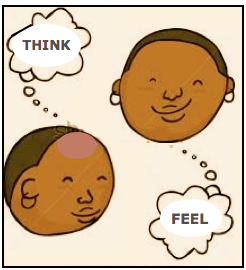
think or feelTHOUGHTS vs EMOTIONS
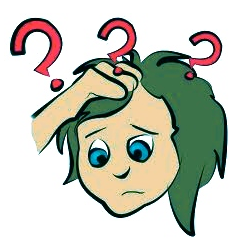
I’m confused! What are you talking about?

PREVIOUS: Recovery Thoughts


This is a familiar phrase used in 12-Step Programs, but not exclusively. It contains an intrinsic truth and an intrinsic lie.  We have to examine both words – ‘feelings’ and ‘facts’ – to understand.
1. FEELINGS
a. CONFUSION:
• In our language, the word feelings is used in almost every context to mean either thoughts, emotions or sensations, without distinction.
• The main problem is that most of the time people use ‘Feel’ to mean Thoughts, not emotions. This causes confusion for both speaker & listener.

confused• This triple usage may be a clever ploy in our culture – likely unconscious – to suppress Emotions! We’re taught to live in our head & only focus on actions (“Just do it”), which we gladly embrace as a defense against facing our deepest pain.
So, along with many other sources (family, media, male culture, war, sport…) our language encourages cutting us off from an essential part of ourself

b. CLARITY:  We’re not going to change how we talk, but we can understand the 3 uses of the word FEEL, so we can be accurate.
i. Sensations – ‘Feel’ as a Physical experience : I feel hungry, tired, thirsty, sexual…
ii. Emotions: If ‘feel’ as indicating Emotions –  followed only by a single words : “I feel…… sad, glad, mad, anxious, pleased…..”.
AND we can have more than one E at the same time, even contradictory ones.
“I’m happy to see you, but disappointed that Ted’s not here too.” (Posts: Use THINK, not feel)
iii. Thoughts :
 The word “Feel” should never be used to mean Thoughts / Opinions / Beliefs.  Thoughts are always in sentence form, always more than one word. 
When “Feel” is misused, it usually leads with ‘that‘ or ‘like’:
•  “I feel like he wants to talk about something”
•  “It feels like you’re not supporting me”
• “I feel that we should leave soon”
• “I don’t feel that we’re communicating”
•  “I feel like going to the movies”

Stated as such, none of these are about emotions, only ideas – ** even though emotions are implied but not acknowledged. It’s subtle & at best unintentionally, at worst it’s manipulative & dishonest

c. INDIRECTness : Another mix-up occurs when thoughts are expressed in a round-about way. Such statements are clearly sentences, but couched in terms of feeling, which makes the speaker sound unsure of themself. They’re not actually expressing confusion, but rather insecurity by asking for permission to have a voice.

ACoAs are ‘notorious’ for talking around an important point, leaving out crucial info, adding too many qualifiers, justifications & apologies! This misuse comes from not being allowed to own our personal power.
We say:
• “ I hope you don’t mind if I tell you…”
instead of
  “I’d like to tell you something / I need to talk to you about___”

• “Is it alright if I___ , Will you be upset if___ …”
instead of (with a smile, perhaps) “I won’t be able to____ , I need to____ , I’d like to___ , I’m not available for___”

• “I feel like I’m doing better”  instead of “I’m doing better”
• “I feel like I can’t trust them”  instead of “I know they’re not trustworthy”

☑️ Unfortunately, for many ACoAs, being direct is not just considered impolite but actually aggressive! which it is not IF statement are accurate & made without anger.
Sadly, women are more likely to be indirect as a way to not be pushy, which makes staying connected easier, but at a personal price. (BOOK : “He & She” by Chris Evatt)

YES, there is a time & place for careful wording, being respectful of others’ time & space, or for apologizing.
HOWEVER, the above examples of waffling have to do with ACoA shame, S-H, fear of being seen, of punishment or being cut off.

The BEST, clearest way to communicate combines emotions + thoughts in the same sentence : be clear
• “I’m scared you won’t stay with me”
• “I’m so happy that you got the promotion”
• “I feel sad that she’s ignoring me”
• “I’m worried that he won’t like this gift”
• “I’m excited for you & curious about what you’re going to be doing”
• “I’m concerned that you’re going there alone”
This of course implies that we know what we’re feeling (emotions) and have permissions to own & express them.
🔴 Practice verbalizing your thoughts & emotions using declarative sentences, so they come out of your mouth more easily. And repeat, daily: “I know what I know”!

NEXT: “Feelings aren’t facts”, Part 2

What about EMOTIONS? (Part 1)

PREVIOUS: “What others think of me is none of my business’ (#2)

REVIEW: 
Feelings Aren’t Facts

DEFINITIONS (Answers.com):
• The English word emotion (Es) is from the French émouvoir, from the Latin emovere, where e- means ‘out’, & movere means ‘move’, as TO emit & emote
• at its most basic: Es are pure mental & spiritual energy from the core of our being that makes us all one, where we meet & overlap as human beings
• they are short-lived psycho-physical phenomena that represent efficient adaptations to environmental demands (Levenson, ‘94)

• an E. is a particular mental state formed spontaneously rather than by conscious effort, often accompanied by physical changes
therapy couch 1• they are the part of our consciousness that involves sensibility: “The very essence of literature is the war between emotion & intellect” Isaac B. Singer

• Es are the result of combining external experience, brain chemicals, the way we think & the actions we choose —
— based on our native Self, our personal history, with the cultural rules & values we grew up with
• Es can be used to motivate us to take actions needed to connect, to protect ourselves, & to grow
• our Es liven those actions, which would otherwise be rigid or boring

• Emotions coordinate our many adaptive needs so we can function more efficiently, without those needs being in conflict or demanding attention all at the same time (food, shelter, reproduction, safety, sleep, communication….)

survivalEs make up an overriding brain-program that temporarily activates, deactivates, or modifies particular needs. This depends on the current situation – where 1 need is turned on, while another has to be put on hold  – so we can keep functioning properly (sleep vs go to work, stay connected vs withdraw from danger, achieve vs relax, socialize vs. regroup alone…..)

• From Affective NeuroScience (en.wikipedia)
Affect is an encompassing term, used mainly in psychology to describe emotion, feelings & moods, even though it’s more commonly used to mean Emotion

Feelings are our subjective impressions of emotions, private to the person experiencing them – based on perspective, beliefs & desires. A general state of consciousness independent of physical sensations and thoughts….

Moods are diffuse effects, generally lasting much longer than individual Es, but less intense. They represent an overall tone that effects one’s outlook on everything, for as long as the E lasts

• In “What are Emotions? And how can they be measured?” (2005) K. R. Scherer suggested 5 crucial elements:
📌 Action tendencies : motivational energy to prepare & direct motor responses – Es are the push to act in some way
📌 Bodily symptoms : physical aspect of an emotional experience, generated in the gut, but also experienced in other body parts
EXP: FEAR can be felt as tightening of the chest, stomach, throat, weakness in the knees…. & in panic attacks – as temporary blindness, inability to think, ‘clutched heart’, trouble breathing….

📌  Cognitive appraisal : Es provide an evaluation of events & objects. It’s the Mental component that which generate Es – what we think / believe about something, either healthy or unhealthy, accurate or not
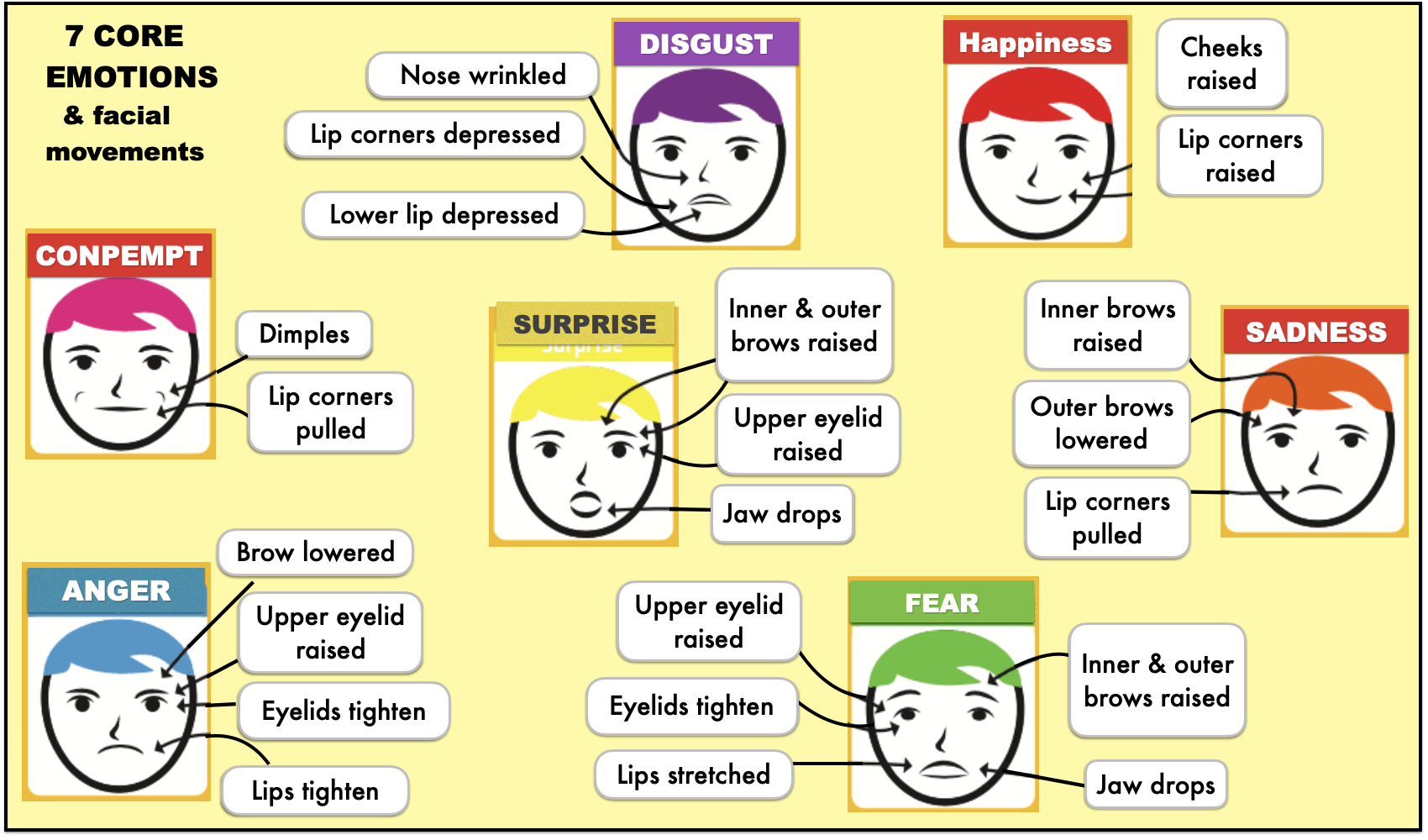
📌 Expression : facial & vocal output almost always accompanying an emotional state as a reaction to it, or indicate the intention of taking some action (unless using Botox! )
📌  Feelings : the person’s subjective experience of their emotional state, once it has occurred

BTW – Don‘t confuse feelings or emotions with:
obsessionCompulsions, which are actions we’re not in conscious control of – OR –
Obsessions (Os), which are over-focused, circular mental rumination, our hamster-in-the-wheel :
a. most Os are unconsciously —
— fueled by anxiety, trauma, S-H, FoA….
— supported by unhealthy thinking (CDs), wanting revenge, being one-up, proving oneself ….

b. less often (legitimate) Os may be:
POSITIVE uses • a way to rehearse phrases or counter-arguments from our Healthy Adult ego state
• ‘passions’, motivated by a deep need to connect with a H.P, to be of service to others or follow a creative goal.

BEST use • mentally reviewing a positive event recently experienced, to anchor it in memory. This is important for countering our “built-in-forgetter”, which automatically negates the good things in our life
Purpose : to solidify smarter ways of verbally responding, which can counter — ACoAs’ tendency to blank out when confronted or criticized (fear,) or — when told something outrageous, insensitive or mean (rage)

💎 Therefore, ‘obsessional repetition’ is a smart tool, creating new brain pathways, so the Frontal Lobes can stay ‘on line’ when we need them the most

NEXT: What about Es? (Part 2)

“FEAR is the ABSENCE of LOVE”

Sscared fish 

LOVE vs FEAR
I don’t know what love is, so how can I tell?

PREVIOUS: How ACoAs Abandon Others #3b

REVIEW: ACRONYM page for abbrev.


WHAT DOES this quote MEAN?
• Like so many popular ‘spiritual’ saying there’s some truth in it, but not the whole story, so we can easily get confused & also misuse it. Love & Fear are both Emotions, see. T.E.A.
Generally, it means that if we did have enough love in our life, we won’t be afraid = loved by a Higher Power, by family, by pets, by friends…  Yes, these are to be desired & cultivated.
BUT the reality for ACoAs is that we are fear-based, no matter how much recovery we may have. There are 2 separate issues re. this quote:

1. Fear is created in CHILDHOOD by genuinely being in danger!
• As kids, ACoAs lived in an atmosphere of constant trauma, subjected to fear-inducing experiences (mental, physical & emotional) practically every day of our childhood.
AND there was very little comfort or validation of our reality. On the contrary, if we told anyone or complained, they said we were over-reacting, making it up, being disloyal, AND it was our fault “What did you do?” Even if anyone believed us, they didn’t / couldn’t help, so we had to suck it up.

EXP:  A lot of our childhood was like being:
— a 5 yrs old, dropped off in the middle of a huge traffic intersection at rush hour, left there in our underwear, told to not whine & ‘JUST COPE’ !!  How cruel !

All that pain & terror got pushed down, so where did it go?  Yes, in large part, psychologically, it went into the unconscious. But physically – the chemicals generated by terror & other painful emotions got stored in our body – in our organs, our muscles, choking our aura, meridians & chakras.

2. Fear is created NOW by outer events & inner thoughts
a. Present-day reality. There are many real-world stressful events we’re faced with in life requiring a clear mind, much human help & Spiritual support. .
It’s normal to be fearful when WE:
• are overwhelmed by too many things needing our attention
• find out we’re very sick, & sometimes – don’t know the cause…
• hear / read about traumatic world events ….
• have a lot of emotional turmoil (visiting family, getting married or divorced…)
• loose something very important to us (apartment burns down…. )
• see someone we love is in danger (a child, a pet …)

BUT for ACoAs, such events can easily trigger the pain of past trauma, pushing us over the limit of our scarce reserves. So our emotional reaction will be much bigger than that of less wounded people.

b. Toxic Thinking. Fear will always be generated by harmful thoughts – our inner world of beliefs babad voicesed on negative family rules (CDs) – the harsh, scary things we tell ourselves, creating more terror on top of what we’re already carrying from our past.

Terror & S-H are behind ALL rage and ALL obsessions. WE:
• are convinced someone’s angry at us or can’t stand us, when they didn’t say hello or give us a compliment …..
• are so used to things not working out, & having anxiety as our constant companion, that we create mental drama when it’s not called for…
• believe we’re “dying of cancer” when we’re not seriously sick (especially when not feeling well but don’t know what’s wrong)
• assume others will react to us the same way we think about ourselves – badly !
• project only painful outcomes on to situations & relationships
• worry about future catastrophes & abandonments, which may never happen & which we will have no control over

Daily childhood abuse & neglect (unprocessed) accumulate in deep reservoirs of hidden pain, which most people call anxiety, because on the surface it doesn’t seem to be connected to anything obvious. HA !
As long as this backlog remains frozen, the pain:
a. drives much of our behavior, our thinking & interactions
b. causes physical & psychological ailments ….

… but in Recovery, much release work can be done, which definitely helps!  We can get to a place where we live more in a state of calm rather than upset. There will always be some residual ‘old’ fear that shows up thru the years when we’re under stress – never being completely rid of all original abandonment terror. This should not be a surprise, since there was so much of it.  We need to be extra kind to ourselves.: “Feel the fear & keep going”, but softly, softly.Screen Shot 2016-06-17 at 10.34.08 PM

“Fear is the absence of Love” is about :
— not having loving safe parents, originally
— the scary thoughts which torture us
— not searching out people who can be good to us, &
— not believing there’s any safety in the world – for us !

HOWEVER when we practice nurturing our Inner Child, connecting with the peace of a loving H.P. & with healthier people, our overall fear level diminishes, especially the unnecessary suffering we’ve been add to the ‘pile’.
➼  We can’t always control or eliminate old fear, but we can be in better charge of that we THINK & what we DO about it.

NEXT: Not Enough Love? – #1