BOUNDARIES & ACoAs (Part 4)

inner conflict 

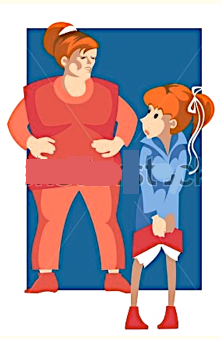
YOU’RE GETTING TOO CLOSE –
Hey, where are you going?

PREVIOUS: Bs & ACoAs (Part 3)

REVIEW posts: “Separation & Individuation


3. The SYMBIOTIC DILEMMA  (cont)
a. Fear of Engulfment
b. Feat of Separation

A basic requirement for S & I is a sense of efficacy – able to (allowed to) have an appropriate effect on our environment

SYMPTOMS of poor or no Separation & Individuation (S & I) :
• weak sense of Self: the child’s core injury comes from not receiving a meaningful, empathic emotional response from mother
• narcissistic vulnerability is based on shame of having needs : child is injured by being constantly slighted or ignored
• emotional detachment or clinging: abandonment is played out as “come here – go away” in adult relationships
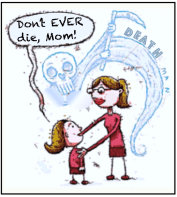
CONSEQUENCES of symbiosis : creates difficulty with —
✓ feeling all our emotions
✓ loving others unselfishly
✓ nurturing our young
✓ mourning the dead
✓ boundaries re. time & space
✓ caring about the human race
✓ dealing with conflict (isolating) & taming aggression….

✶ These problems make it very hard for ACoAs to have healthy intimacy, often relating to others as if we each were inanimate objects, used to fix unresolved infantile issues

‘COME HERE – GO AWAY’  
A common example of the symbiotic conflict is the push-pull syndrome.
While some ACoAs are primarily Stayers & others primarily Leavers, there are some whose conflict is subtle & very confusing because both are acted out in every relationship. Either way, ACoAs don’t realize we’re recreating our early abandonment – again & again

1. Come-Here/Go-Away : ACoAs very much want to have relationships, but don’t acknowledge our deep fear of emotional closeness. We invite people in, let them come close if they approach, & some of us even compulsively chase after anyone we can snag
✶ At the same time, we have an invisible barrier around us used as a substitute for real Bs others cannot see & that we are rarely aware of
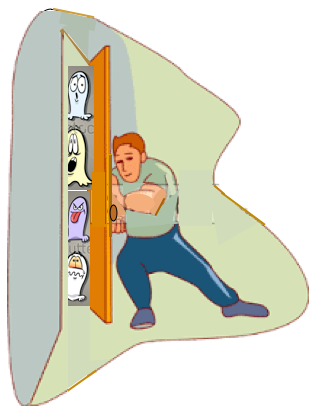
2. As someone gets emotionally & physically closer, wants to know more about us, spend more time, be more permanent – we start to panic. Since we’re not allowed to say what we need, want & don’t want, how we feel…. if we let them in we’ll be taken over by their needs & wants

3. As the person moves in, they inevitably cross that ‘line in the sand’ the WIC is hiding behind BUT which we never acknowledge, so can’t verbalize.
Then how can we possible expect others to know when they’ve gotten too close?
We feel invaded, suffocated, endangered – terrified. At that point the need to protect ourselves is much greater than our fear of being alone!

4. As the terror builds we do or say things that are a slap in the face to this person who cares about us – we verbally punch them in the stomach &/or become distant & unavailable.  They are shocked, hurt, confused, appalled! They try to figure out what they did wrong — but their only sin was getting too close to our wounded self! So naturally they back off & then go away!
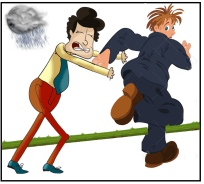
5. Now it gets interesting! WE have pushed the person away by cruelty or withholding AND then wonder why they withdrew!  Suddenly our abandonment fear come to the fore & we act confused & surprised at the others reaction!  Where did you go?? & WHY?

6. So without understanding what we’ve done – that we set up the painful outcome – some of us will invite, cajole, beg the person to come back to us.  If they do, AND we still cannot identify where our boundaries are, they’ll come too close again, & the cycle repeats!

• This pattern is crazy-making for us & our friends or partners. It makes them sad & eventually very angry.  We are condemning ourselves to an endless round of seduction & loss.  We look like the crazy one, hate ourselves more, blame others, say we can’t trust anyone, think we can’t love or the ‘universe’ is against us….. without looking at our Symbiotic Conflict!good Bs

RECOVERY – As Usual 😔
•  Admit our damage – cut thru denial
• Feel the old rage & terror
• Nurture the Inner Child
• Reduce S-H, CDs & obeying the PP
• Connect with others in Recovery
• Form an alliance with the loving H.P.

NEXT: How ACoAs Boundary Invade

BOUNDARIES & ACoAs (Part 3)

 no Bs
COME HERE  — GO AWAY

You’re too close! Hey, why are you leaving?

PREVIOUS: Bs & ACoAs (Part 2)


3. The SYMBIOTIC DILEMMA
Sigmund Freud concluded that there were 2 main psychological forces in humans – Eros & Thanatos, love & death, sex & violence (where have we heard that before??).
They are strong instincts which he called “an original self-subsisting instinctual disposition in man”.  These drives give people a kind of psychic “energy” which can be diverted into other areas (not repressed), giving some form of satisfaction.

Modern psychologists (Kohut, Mahler, Winnicut ….) have given us a revised understanding of these 2 forces: Attraction & Repulsion, Connection & Separateness, Attachment & Individuation.  In balance, both extremes are necessary for us to be psychologically sound. To feel safe we need connection, but to be our own person we need to be separate.

• For ACoAs, however, this internal tug-of-war is lose-lose. No matter how ‘wonderful’ we think the various individuals to be (‘my mom is the greatest – honest!’….), in a toxic family system both of these basic needs are distorted.
The wounded caregiver can be:  fearful or angry, withholding or intrusive, distant or controlling – all are scary & damaging. We end up as adults equally afraid of commitment AND of abandonment. push-pull

a. Fear of one-ness with mother —> being engulfed.  The result in the child is the need to form Rigid Bs (walls).
Having absorbed an unsafe mother (introjected object), the child feel the threat of loosing it’s True Self because of the caretaker’s lack of Bs.
Any fragments of their own identity are very precious to the child & need to be protected. This may happen by regressing to an ‘autistic’ stage – a normal part of infant development outgrown in a loving environment, but for us became stunted, limited or suppressed
~ AND ~
b. Fear of separateness from mother —-> being abandoned Results in Weak or no Bs: At the same time, because the internalized mother is unhealthy & can’t protect the child’s True Self from her damage, the whole world feels unsafe.
The outside is assumed to be as threatening as our family, so we’re reluctant to venture out & stand on our own.  The fear is that we’ll be set adrift in an alien, chaotic world knowing we don’t have a strong base to return to – so why leave?

Wounded adults who STAY (Ss) too long – the clingers in any type of relationship, and the LEAVERS (Ls) – who are afraid of getting too close  — are very often drawn to each other!
CHART : C = Conscious  //   Un = Unconscious
FoA = Fear of abandonment // FoC = Fear of commitment

• On a conscious level both types seem to be polar opposites – always at odds, demanding what the other cannot give. Ls want freedom, Ss want security.
• The key to understanding this unlikely attraction is what’s going on underneath.  In the unconscious, each had the exact opposite fear, but the Ls are not aware of their FoA, & the Ss vehemently deny their FoC.  The hidden part of each resonates with the other, acting as a magnet which keeps them repeating the pattern set up in their family

BTW what proves that Stayers are afraid of commitment?
They keep is : they keep picking Leavers who are deeply unavailable, physically or emotionally, so they can avoid letting anyone get too close to their WIC. Just because they get married doesn’t mean they’re capable of actual intimacy!

• AND, what do the Leavers get from choosing Ss?
Not only someone who will never leave them, but also someone they can rebel against!
They can have the illusion of being wanted, needed, loved… & still stay at arm’s length.  It’s an illusion, because the Ls are just as afraid of someone knowing how vulnerable they feel inside that armor, & the damaged Ss they hook up with are looking to be taken care of, behind their wall of self-hate.

This core conflict goes unresolved as long as our WIC has a high level of anxiety, which is old FoA terror not discharged (by deep emotional release work) AND a weak or missing Loving Inner Parent to replace the cruel Bad Voice (the UNIT).

NEXT: Bs & ACoAs (Part 4)

BOUNDARIES & ACoAs (Part 1)

Screen Shot 2015-06-25 at 12.05.31 AM 

I HATE YOU – DON’T LEAVE ME!
I need you but you’re too close – I can’t breathe

PREVIOUS:
Bs – Healthy Source ( #2)

REMINDER: See ACRONYM page for abbrev.

1. Normal Development – Stable Core (previous 2 posts)

2. ACoAs
Unfortunately, growing up – ACoAs did not originally have that all-important stable core to rely on, so weren’t able to form our own, because of:
• being overstimulated by chaos, emotional volatility & conflict
• being over-controlled, expected to be perfect, judged harshly
• not having role models for self-esteem & appropriate Bs
• not being loved & supported unconditionally

a. Wounded Adults
• Many un-recovered PARENTS are symbiotically enmeshed with their children, to cover their own FoA – ie. both the adults & the kids have similar immature mental drama & temperamental intensity, so they overlap each other, which is emotionally abandoning & terrifying for the children

• These parents function from their WIC’s ego state, so have:
— weak or no Adult & missing Loving Parent aspects
— weak or rigid boundaries, overlapping child’s feelings, as if the child were only an extension of themselves
— a narrow range of emotions available, w/ few nuances
AND
— their focus was on their addictions, bad relationships, financial worries, depression, mental illness, relatives, sickness ….
— often changed the rules arbitrarily or made them unreachable, so no matter how hard we tried to obey, it was inevitably going to be wrong – & then we got attacked & punished! We could ‘never win’.
As kids, this kept us off-balance so we wouldn’t become independent (& eventually be ‘separate’), which requires being sure of oneself.

Al-Anon visual: the alcoholic has their arms around the bottle & the co-dependent has their arms around the alcoholic!
In these households, children are just pawns to be used & burdens to be neglected, ( Games Alcoholics Play’)

b. Limiting our Emotionsnegate Es
• In an alcoholic, narcissistic family, one or both parents limit or repress the type of emotional responses allowed the children, who are expected to act like adults, both mentally & emotionally, long before maturation.
ACoAs were blamed for not behaving ‘right’,  even thought we were not experienced yet in social etiquette or subtleties, didn’t have enough motor co-ordination, weren’t old enough to actually act like adults!….

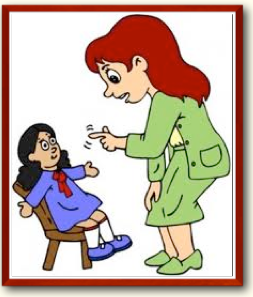
EXP: Beth was a pretty little girl who grew up in church. On one occasion her mother was at the dais addressing a Ladies Group. Beth was left all alone in the front pew & expected to sit for 2 hours like a perfectly groomed doll. But she was a normal 4-year-old – bored, lonely & fidgeting. Her mother was annoyed at her child’s ‘misbehavior’, confident it would make her look bad.

She gave Beth ‘the look‘, who immediately froze – terrified – knowing the dire consequences of displeasing her mother, but quick obedience saved her this time.
For years afterward her mother proudly liked to tell how the group afterward complemented heron having such a well-behaved child. Sadly – neither the mother or anyone else ever had a clue of the intense terror that was generated that day!

• We learned very early that our emotions & behavior had global impact – they effected the ‘gods’ badly. Our parents let us know blackmailin various ways that we harmed them just by being ourselves (kids). EXP: A mother repeated remarked : “You’ll be the death of me yet!”

• Many ACoAs experienced being emotionally blackmailed controlled using fear, obligation or guiltOur parents’ narcissism & lack of boundaries made it easy for them to:
— treat us the same way they had been – the ‘kick the dog syndrome’, ie. passing on their rage at their parents’ neglect & abuse
— project their self-hate onto us – they couldn’t face that they were considered ‘bad’ children’ so they made us bad instead – to preserve their fragile self-image

EXPs: “If you loved me…. I made that just for you…. If you don’t do your chores, dad will get really mad at me….
BOOKs: “Emotional Blackmail”  & “Toxic Parents“~ Susan Forward

NEXT: ACoAs & Bs (Part 2)