

I CAN CONTROL ANYONE
when I’m angry
PREVIOUS: Anger – positive uses
SITEs: “The Downside of Anger”
• “Angry/negative people can be bad for your brain” (Mirror Neurons & Emotional contagion).
BOOK: “IN SHEEP’S CLOTHING” re. manipulative people
► ANGER is UNHEALTHY – when it:
📌 Causes big problems
If situations which generate anger are not solved or are just walked away from, anger will build until there’s some kind of explosion, leading to trouble (being expelled or fired, arrested, injuring others, auto-immune illness, bad relationships…) T.E.A. circles
📌 Doesn’t happen enough
• Repressing our anger teaches others that it’s totally OK to treat us with disrespect, insensitively, or blatant abuse
• AND, it allows us to continue to stay less emotionally aware & less socially skillful, & therefore less valuable in society
• Leaking it out indirectly teaches others that we’re not actually safe to be around, not empathic or emotionally responsible
📌 Happens too much
 The chronically angry person – who tends to express anger more than 5-6x a week, as in having ‘a chip on your shoulder’. It makes others feel they have to walk on eggshells around that person
📌 Lasts a long time
When it’s more than a day, for around 30% of people. It tends to go along with obsessions, Toxic Beliefs, CDs, S-H & difficulty with personal Boundaries.
For ACoAs, anger & rage often lasts for months, even years – with no resolution, because WE:
• are not allowed to feel the angry at all, especially at our parents, or at any kind of abuse
• deny the depth & breadth of the anger, & the other emotions that are underneath
• have never been taught how to express it correctly & productively
When it is :
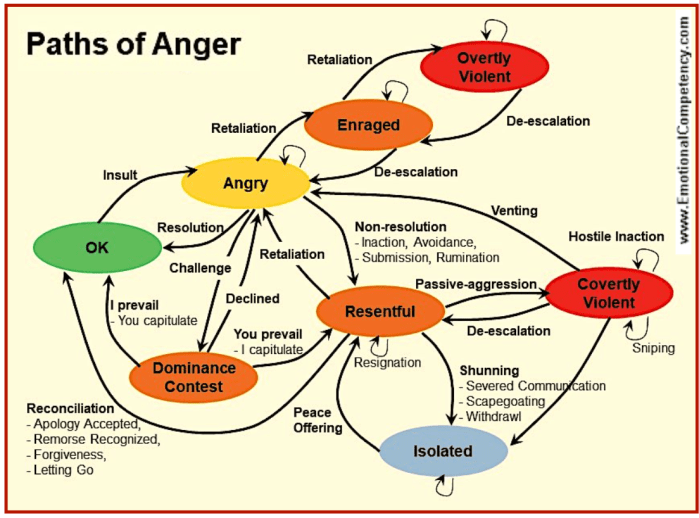
📌 Expressed badly (unsuccessful/harmful) : being passive-aggressive, giving the cold shoulder, insulting, shouting, swearing, retaliating, spreading rumors, malicious gossip….. OR
when food, chemicals, media…. are used to calm down / numb out
📌 Over-reactive : the intensity of emotion & physical / verbal expression are out of proportion to the trigger – because the current incident stepped on a ‘sore toe’ from past abuse. And if others also get angry in reaction to us, things can easily escalate, often obscuring the original upset.
 BITTERNESS has been described as “the crusty disease that grow on unprocessed anger…. which has boiled, simmered, & then found to be so unpalatable that it’s been thrown into the deep freeze of our unconscious psyche.
Refrigeration doesn’t work well, since cooled anger turns to resentment & bitterness. It has an annoying tendency to leak out at inappropriate times, upsetting good relationships, disturbing our dreams & filling us with a vague discontent.” ~ Elizabeth Spring, MA
RESENTMENTS are the mental version of anger – not the actual emotion. They’re obsessions recounting real or imagined hurts we’ve experienced, with no way to move past them.
• According to Philosophy Prof Dr. R.C Solomon, U of TX:
– Resentment/ bitterness is directed at someone of higher status than oneself
– Anger is at those of equal status, &
– Contempt is at those of lower-status.
These are painful emotions which mainly harm us IF held for too long, 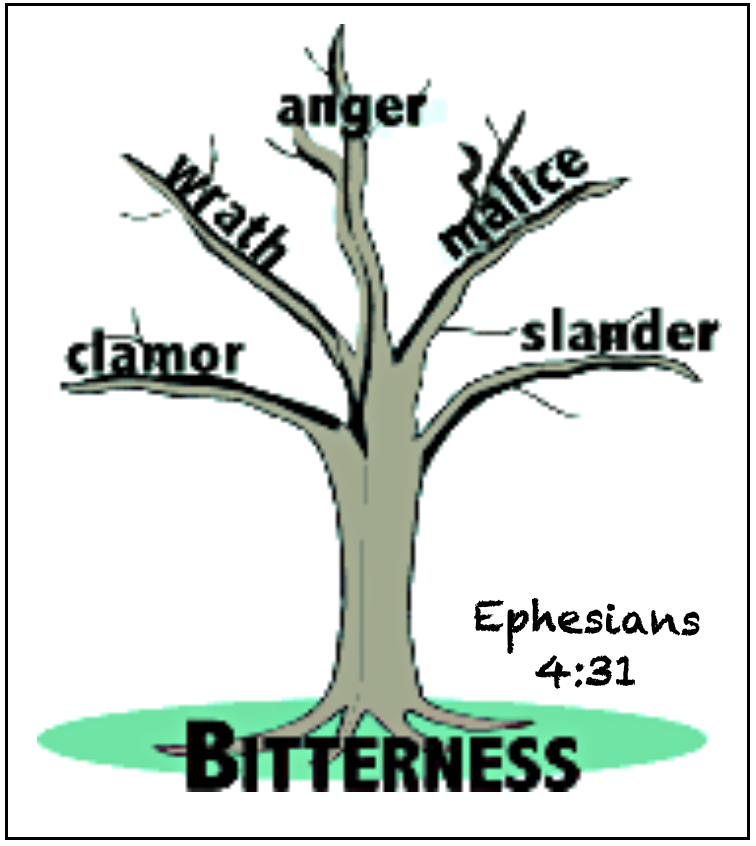 & then inevitably spill over onto others (targets).
√ The underlying cause of Bitterness (tree) is having suffered long-term abuse when one truly was or felt powerless to stop it
√ Resentment, which is focused on someone else, can be triggered by remembering very upsetting experiences they caused us
√ When turned on oneself, resentment becomes remorse, & then S-H (More.…)
• Unacknowledged hurts can take the form of: Animosity, Antagonism, Implacability (not appease-able), Hatred, Infantile Narcissism, Pathological Pride, Vindictiveness, Verbal, Physical & Emotional cruelty. (Explanations….).
Al-Anon reminds us that: “(unrealistic) expectations are planned disappointments, leading to resentment.” There are many people, situations or things in the present we can hook the resentments on to, but all are smoke screens for the underlying pain of unresolved childhood trauma.
NEXT: Negative Uses (Part 2)


 HEAL & GROW for ACoAs