ACoAs & CONFUSION – in Recovery (Part 4a)

normal confusion 

PREVIOUS: ACoAs & Confusion (#3d)

SITE: Emotional & Psychological Trauma


QUOTE: “One who asks a question is a fool for 5 minutes. One who does not ask a question remains a fool forever.” ~ Chinese proverb

IN RECOVERY
The opposite of confusion is clear thinking.
For ACoAs, this requires a certain amount of S & I, which allows us to develop a stable sense of who we are as an individual, what our rights are, & a decent amount of self-esteem.
At the same time, it’s appropriate to be confused in certain circumstances. Healthy adults use those situations to notice when something is incomplete or incorrect. It’s a cue to get more information, & ask for help or get verification. “Leaving home” (S & I) is scary & perplexing. From time to time it’s even depressing.

But the reasons for Recovery Confusion are not the same as those we’ve been drowning in much of our life.

CONFUSION is NORMAL :
a. during any transition, such as with personal growth.
In Recovery we’re moving thru completely new territory & don’t know what’s ahead, even tho many others have gone before & paved the way. We’re used to predicting all future events based on past experience – but the past we’ve been using is mainly based on childhood trauma.

So even if we’ve had some positive adult experiences, we still rely on what’s familiar, no matter how distorted or harmful – because that feels ‘safe’. But of course it’s NOT. The well-known ‘definition’ of Insanity is: “Doing the same (stupid/wrong/sick) thing over & over, & expecting a different (better) outcome”!NEW PATH
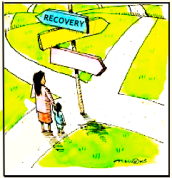
• At first we don’t know what to expect, or even if it’s possible for us to heal. We may not even believe we can achieve our goals of having internal peace & external success.

Yet many of us are compelled to keep searching for assurance. We want/demand a blueprint, & want to know how long it’s going to take, meaning – how fast we’ll be ‘well’. We hate uncertainty – it feels chaotic & unsafe. Transitions are always uncomfortable. That’s normal!

• BUT – by definition – growth means we can’t possibly know what’s ahead – not completely. We have to be willing to risk finding out what’s possible by changing our thinking & actions, to get that illusive ‘different outcome’. As we gather new information & courage, we’re encouraged to take more steps along the path. Otherwise there’d be no reason for the effort.

• Transitions include periods of time when we have to just sit with not knowing – we can’t use the old ways but don’t yet know ourselves well enough to figure out how to be. We don’t like it, but with persistence, we become more sure of ourselves. “I know what I know” applies even in transitional stages, which can help us feel a little more grounded.

b. when learning anything new – which includes reworking the original developmental stages. (See book “Cycles of Power + comments ~ Pamela Levin). We get confused not only for the obvious reason that it’s all new to us, but also because most of us never learned process.

We’re impatient & want our progress to be faster than is humanly possible:recovery impatience

• we think we should already know things we never learned & which our brain needs time to grow into, because repetition is what makes the change – & that takes time
• we’ve been miserable for so long we want a miracle cure, & right now!
• ACoAs rarely have a realistic sense of time – how long things actually take – we think something takes much, much longer OR no time at all

• Always remember the analogy to having physical injuries. The greater the damage to our body (& our age) – from an accident, illness or surgery – the longer it takes to heal. And if we try to use / over-use a recovering part of the body too soon – before it’s had enough time to heal – it’ll be re-traumatized.
It’s the same for emotional wounding.
Recovery work needs to be done consistently – every day – in order to see progress, AND it cannot be rushed. 12-Step Programs remind us “Progress, not perfection”.

NEXT: Confusion (Part 4b)
ACoAs & CONFUSION – as Adults (Part 3d)


PREVIOUS: ACoAs & Confusion (#3c)


ADULT Confusion (cont)
1. Confusing OURSELF 
2. Confusing OTHERS


3. OTHERS confusing US (cont)
a. IGNORE Emotions

b. INCOMPLETE responses: Others can confuse us when trying to give us info, often in the guise of help – which is only useful if it’s what we need at the time, & in a form we can use.

Vertical
– using School Levels as a metaphor
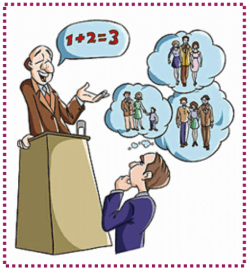
You ask someone for help or info at level 1 or 2,school levels because that’s as far as you’ve gotten about a subject / project / lesson…., but the response is given at level 3 or above.
You won’t be able to use what’s offered, & be confused or fail – if you try to apply it before you’re ready.

Anyone who responds that way is NOT actually paying attention or asking you for some context (“Where are you in your process?”). More than likely they’re in a narcissistic / co-dependent fog & just offer whatever they know, have done, or would like themselves, without considering you at all.

Horizontal confusion
Someone will try to provide what they think is a perfectly logical answer, but is actually incomplete. It’s because they’ve left out a crucial piece of info somewhere along the line (X) which they assumed you knew, but of course you do not. You know something’s missing, so you ask for clarification.

It’s so aggravating when the person says: “Well, what do you want to know?” Since you can’t possibly know that missing piece, you can only say you’re confused. If you insist they explain more thoroughly, AND they can’t or won’t – both of you will get very frustrated, & possibly quite testy!

c. OTHER ways
How we can confuse others is the same as what they can do to us (Part 3c).
Motto: “If I can’t convince you, at least I can confuse you!”

Re. THEMWe get confused when someone:
• asks for something small & then when you do it, you find out there’s more to the ‘thing’ they want (a quick ride home turns into several stops to pick up a fiend, their dry-cleaning, cigarettes….)
• injects a comment that has nothing to do with the current topic

• claims slaughing atomething is a proven fact simply because it’s a popular belief
• doesn’t ask you for enough info when assigned a task or project, & then procrastinates or makes a mess of it

• never gets to the point, only talking around a topic
• makes everything into a joke
• smiles or laughs when talking about something personally painful (childhood abuse, a death, an insult…)

• talks really fast & doesn’t take a breath, but doesn’t say anything meaningful
• tends to exaggerate, even lie, so you can never tell what’s really true
• they claim to be or do something they can never live up to
• use complex words or long explanations to express something simple

Re. US – We can get confused when someone:
• accuses you of something you didn’t do or say
• ‘comes on to you’ but has no intention of following thru (a tease)
• does the opposite of a direct request you made
• doesn’t pick up on cues you give about who you are or how you feel, so treats you as if you’re someone else (in their head)

• expects you to read their mind (know what they want)
• ignores or insults you to your face, but praises you to others (parents)
• ignores what you’re saying, leaving you wondering if you were heard
• is symbiotic, assuming you are the same as them

• is usually ‘there for you’ in some situations, but definitely not in others
• only says what they think you want to hear
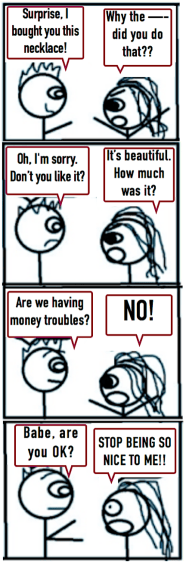
• reacts to your Adult or happy IC ego states from their PP or WIC   —> (Cartoon )
• reacts negatively to a positive or neutral statement

• repeats what you say – but in reverse (I hate holidays / Oh, you love holidays / Paint my room any color BUT brown / & then they paint the room brown )
• pretends to understand what you’re saying but doesn’t, letting you go on thinking they’re ‘connecting’
• says they’ll do something (“I’ll call you later”) but rarely or never does

• says “You know what I mean” without enough context
• twists your words / intentions against you
• uses emotions to manipulate (creating guilt, fear…)
• uses their authority to manipulate you into going against your principles or best interest ……

NOTE: Many of these can easily lead to frustration & anger! That’s normal. Remember – if you’re on the receiving end – it’s not you that’s off!

NEXT: Confusion (Part 4a)

ACoAs & CONFUSION as Kids (Part 2f)

confuing othersI KEEP TRYING TO CONNECT
but always seem to get it wrong!

PREVIOUS: Confusion (#2e)

SITEThe Value of Constructive Criticism

QUOTEs: “I pretty much stay in a constant state of confusion just because of the expression it leaves on my face.” ~ Johnny Depp
“If I looked confused, it’s because I’m thinking.”~ Samuel Goldwyn

Childhood CONFUSION : OTHER sources (cont)
3. Communication DISTORTIONS (cont)
c. Events NEVER discussed
d. Inappropriate information

e. Subtext – implied meanings we all get, but can’t always put into words. And it’s never kind or helpful!   EXP of subtext: “Even Johnny got an A on that test” – could mean: Johnny isn’t very bright // the test was that easy

AND for ACoAs – Painful stab-in-the-heart comments from parent to child:
• “You know dear, it’s better to have brains than looks”, means you’re not a pretty girl, so be happy you can rely on being smart (just trying to be helpful!)
• “I never expected you to understand”, means I actually expect you to read my mind son, but you’re stupid, or too selfish to bother considering me

• “See, she got one”. Perfectionistic mother is so constantly focused on daughter’s appearance, it makes the girl complain that she’ll never get a guy because she doesn’t think she’s pretty.
One day the 2 are out walking, & across the street mom spots an unattractive woman arm-in-arm with a plain-looking man – & points this out.
?? Does she really think she’s being ‘encouraging’ ?? while reinforcing daughter is ugly!

• Secretary – boss says she “needs xerox copies of certain papers – immediately”, no delay. Along with all the boss’s demands is the implied threat of punishment or dismissal – keeping employees frightened & compliant. As usual, the ACoAs worker rushes to obey, but finds those papers still lying around 2 days later! Crazy making.

• ‘You can do anything you want”. Sounds good, as if you’re given the freedom to pursue your own course in life. BUT in a dysfunctional family, children understand the subtext – even if they can’t describe it. Focus is on DO-ing rather than BE-ing.
Actually MEANS:
– parents can’t be bothered / don’t take the time & effort…. to find out what exactly you dreams of, or are inherently good at
– it leaves you with too many options, with no boundaries, and no guidance or explanation of process (HOW TO get to a goal)
– you’re only allowed to choose what the family approves of, so can’t make a mistake. Wrong one may cause a lot of anger or flat-out rejection
– no support, encouragement or admiration for the choice actually made

⬆ MOST important: whatever you choose to do in life has to make THEM look & feel good about themselves. It’s their narcissism – you’re not considered a separate person, only an extension of them.
RESULT: The ACoA either rebels – you do things to piss them off
OR you do whatever they told you to, no matter how unsuitable – & that you hate
OR drift & never quite decide.
Even more confusing is one of the Toxic Rules: “You have to always struggle, but can never get there.”

f. Silence as punishment : When a parent passive-aggressively (P-A) stodouble messagesps talking to their child, it severs the vital connection between them, always devastating to the child.
The angry adult may get temporary narcissistic satisfaction hiding behind their wall of disdain (“I’m more powerful, so I can shut you out”),
but ultimately P-A behavior is even more destructive than overt aggression. Virtually all interactions with a P-A person end up confusing & destructive (see post: Anger Categories #10)

g. Double Messages cause confusion because :
• we were punished if we didn’t know how to —> shop for our dinner, care for the pets, fix the washing machine, get all As in school….  AND
• we were punished (or made fun / teased) if we —> did things better than the adults such as playing board games, getting awards in school, making our clothes or balsa models, making friends….. (see posts: DMs, 1-9 & DB, 1-10)

NEXT: ACoAs & Confusion (Part 3a)

ACoAs & CONFUSION – as Kids (Part 2e)

confusion 6I’M JUST FOLLOWING
everything I learned at home!

PREVIOUS: ACoAs & Confusion (#2d)

QUOTE: “If you can’t convince them, confuse them” ~ Harry S Truman


Childhood CONFUSION
:
OTHER sources (cont)
2. Gender confusion (in #2d)

3. Communication DISTORTIONS
(cont)
a. Conflicting information
b. Lack of information
Expected to know how to do things by ourselves, even as very small kids, without guidance or practical knowledge: math problems, what to do when you get your period, doing housework, how to cook, do repairs to house & car, shop….. OR
– Not allowed to help them do things around the house because they were so  impatience, drunk or didn’t know how to explain

RESULTS : • believing we’re too stupid to learn
• not actually knowing how to do things, even basic self-care
missing info• unrealistic expectations re. what we should know (grandiosity) about everything, all the time. So we’re confused & full of S-H when we can’t be all-knowing & ‘perfect’
BUT
• if we did figure out how to do certain things on our own (ACoAs are actually very smart, determined & resourceful) we don’t valued the results of our efforts – convinced that if we did it, it can’t be very good.
We think our actions (skill & talents) are only kosher if someone else shows us ‘how to’, & says they’re acceptable! Even then we often don’t believe the complements & validation. SAD.

c. Events / situations NEVER discussed, explained or processed:
– broken promises denied, & never apologized for or corrected
– death of a family member (including previous children), a twin or biological parent you weren’t told about, disappearance of a beloved pet…with no time to grieve or reminisce
– fights so loud/violent that cops are called
– loss of jobs (often from drinking), with no acknowledgement or responsibility for messing up
– moving (perhaps many times) without preparation, or explanation….
– parents fighting at night, mom is black & blue

d. Inappropriate information: Using a child as an adult confidant
EXP: • While dad & brother slink off upstairs, drunk mom keeps young teen up night after night, forcing daughter to listen to her slurred ramblings – complaints about her bad marriage, money problems, hated relatives….. Next day no one -ever- says a word about it

• The child (any age) gets the message – in some form – that:
“You’re my only hope, no one but you understands me, I can’t have anyone else take care of me but you, you can never leave me”….. (More….)

RESULT: Besides feeling trapped & enraged, the confusion is about your role in the relationship. You’re being treated as a friend / caretaker rather than a son or daughter.
You like the feeling of being confided in & needed, but they’re never available for you to ‘rest in’, to rely on, to go to when feeling ‘weak’, needy, in pain, overwhelmed with the responsibility…. You’re only acceptable, petted, admired (if at all) for taking care of them.
SO – ACoAs end up believing that this kind of sick symbiotic connection is real intimacy!

Overt incest – aside from the horror of the violation & profound breach of trust – confusion can set in IF :
💨 the parent tells the child they’re needed, loved, being favored, BUT also threaten punishment & withdrawal of love if the child reveals their ‘secret’
💨 the child is a bit older & has ‘pleasurable’ physical reaction to sexual stimulation, while too young for sexual activity, AND not wanting parental attention in that way

Covert incest is even more confusing. Aside from power & control, thecaretaker child parent treats the child as if they were another adult – instead of caring for, protecting & nurturing them. (More….)  It can come in the form of:
• a mother half-dressed & flirting with your friends or dates
• a father lying around the house in underwear showing his privates
• a child being watched ‘hungrily’ while undressing or in the bathroom…
• a child treated as a substitute spouse by either parent – as when a mother “husbandizer” a son, or a father going to his daughter for emotional comfort
• children told lewd jokes, taken to brothels, called a slut, using sexual language about everything – all in the guise of “Ha Ha, aren’t I a cool parent!”

NEXT: Confusion #2f

ACoAs & CONFUSION – as Kids (Part 2d)

confusion #5BUT SHE SAYS SHE LOVES ME– & of course I believe her!

PREVIOUS: ACoAs & Confusion (#2c)

SITEs:”Gender Identity – Prenatal Factors
“Gender Identity & Gender Confusion in Children”


📕🖌️Childhood CONFUSION
: OTHER sources
(cont)
1. Being LIED to (in #2c)
2. Gender confusion – here this only refers to parents causing a distortion in the child’s identity, rather than being born gay, bi or trans-gendered. Children want to be acceptable & loved by parents, so look to them for information & validation. When parents hate themselves & the opposite sex, they do a great deal of harm. There are a number of possible permutations to this twisting.

IF:
gender cinfusion – a ‘sick’ /alcoholic father raises a daughter by himself, & continually expresses hatred for women (mother, ex-wife….), THEN this daughter will not learn how to be feminine, & may try to be ‘invisible’ or to act like a boy

IF – a cruel mother systematically negates a daughter’s gender, THEN the girl may take on the characteristics of a boy, OR just hates her own, hiding behind promiscuity, overweight, isolation….

IF – a narcissistic mother has a son but wanted a daughter, & so from infancy treats him as a girl
THEN he may take that on as his identity, or express his rage by rape, addictions, macho fighting….

IF – a controlling father wanted a son but only got a daughter
THEN he may try to turn her into a boy to be an extension of himself, & she’ll try to be the best baseball player or company ‘man’ – if she has the ability. If not, she’ll only get disapproval & disdain….

3. COMMUNICATION Styles – review
Passives truly believe their needs don’t count. They’re sort of like mice – small & timid – doing just about anything to avoid confrontations or being ‘seen’. They like to please others, usually at their own expense, which eventually builds into resentment

Aggressives act as if only their needs matter. They accuse, insult, yell, threaten & dominate. Not surprisingly, they’re often in relationships with passivescomm styles

Passive-aggressives don’t think their needs matter, but also angry about not getting them met. They use manipulation, guilt & subtle ‘games’ to get what they want because they’re not allowed to ask outright.
They hide their aggression by staying quiet, ‘forgetting’ things, refusing to listen, changing plans at the last minute…. & never admitting their anger & outrage

❇ Assertives recognize that everyone’s needs are important, so they use honest, neutral language to ask. This requires a level of emotional vulnerability, which comes with some emotional/mental maturity. Rewards : getting their own needs met, expressing emotions freely but appropriately, with healthier relationships, so everyone feels heard & connected, most of the time

Communication DISTORTIONS
a. Conflicting information: Damaging adults insist you see the world in their same slanted way, even with much evidence to the contrary. We heard:
• “Purple is Green, you don’t really see that, I’m not an alcoholic, your brother isn’t really dangerous, no one is to be trusted, no one will ever like / love you ….”

• “We’ll help you any way we can / you can tell us anything / we’ll always be there for you” BUT when do you go to them …. they negate what you say, make excuses, make it your fault, make it all about them….
They don’t actually want to deal wdouble talkith your emotional needs, nor will they tell the truth about what’s really going on in the family

• “Of course I love you”. BUT that’s not how it feels – as they alternately neglect & hurt you
• “Do as I say, not as I do”. Kids are master imitators – that’s how they learn. When adults’ rules & actions are diametrically opposed to their words, kids get thoroughly confused.

As kids, if we recognize their ‘game’, we feel betrayed, their hypocrisy leaving us with no one to trust. AND – which version do we follow? If we disobey the rules we get punished, but if we obey them we betray ourselves!
THEY SAY : • “Don’t lie” & then they lie in blatant or subtle ways
• “Never use drugs” as they smoke all day & drink like fish….
• “You’ll be the death of me yet”.  So I wonder “Am I a potential murderer?” What if they die young-ish? And if they’re still alive many years later, what does that mean??

NEXT: ACoAs & Confusion (Part 2e)

ACoAs & CONFUSION – as Kids (Part 2c)

teaching congusionWHICH WAY DO I TURN?
They’re mixing me up! (# 4)

PREVIOUS: ACoAs & Confusion (#2b)

 
🖌️ Childhood CONFUSION : PARENTAL sources (2b)

📕🖌️
Childhood CONFUSION
(cont) OTHER sources
1. Being LIED to
a. about US
EXP: Sick little boy is dressed up, & some of this things put in a suitcase.
TOLD: “You’re going to a party & staying over for a while”.
REALITY: Child is taken to the hospital for procedure, dropped off & just left!

COMMON LIES parent lying
• You killed your mother (at birth)
• Your bad behavior caused your father’s drinking
• You can go play later – when all your work is done
• That therapist is bad for you / confusing you (tells you I hurt you)
• You’re a ‘bad seed’
• You’re father didn’t meant to hurt you/ he really loves you but doesn’t know how to show it….

EXP
:
4 yr. child bumps her head while playing under the dining table. She’s bleeding & goes crying to her mother. Mom (also a drunk) yells at her: “You’re not really hurt!. Go to your room.”

b. about THEM
EXP: A boy’s mother spent most of 20 yrs holed up in her bedroom.
TOLD: Mom is suffering from menopause. (She was in her early 30‘s).
TRUTH: She was either drunk, sleeping it off or hung over!
It was only many years later, as a young man, he learned that menopause usually comes much later in life & doesn’t last 20 yrs!

COMMON LIES
• I’ve never said that! / I didn’t mean the way that sounded (Yes you did!)
• I’m never wrong / I’m perfect
• We’ll go to a movie / beach…..this weekend (not)
• I’ve never done anything wrong to you
• I’ll pick you up after school – but never shows up, or always very late
• I’ll come to see you at the game / in the play…. (not)

EXP: Severe alcoholic father TOLD the same story for years – that he was in WW II, on the front lines, & participated in terrible events.
TRUTH: For the whole war he was a supply clerk, & was never in combat.

EXP: Mom pushed to stay with daughter Marcia on a visit for a week in another city. Marcia kept saying “Come, but you can’t stay here”.lying mother
TOLD: “But I’m coming to see you, I’m just low on money, I won’t get in your way….”.

Marcia felt bad for mom’s ‘poverty’ but couldn’t put her up in the tiny apartment. In spite of Marcia’s explanations, mom decided to spent the last night of her trip at daughter’s place, and then announced this ‘favor’ at the last minute without asking if it was OK.  Marcia felt she could handle that much, so agreed.

TRUTH: Mom brought along a BFF, stayed in a fancy hotel for the week AND between lunch visits with Marcia, went shopping – buying many expensive clothes & shoes – & then showing them off on that last evening! Poor????

c. about OTHERS in the family
EXP: Early Saturday a.m. child looks out front window & sees dad face down on the lawn. Terrified, child rushes to wake mom, screaming “Dad’s dead, dad’s dead!” Mom reluctantly comes down to see, looks out & says: “Oh, your dad just went camping last night”. REALLY??
TRUTH: Dad was out drinking – again – & passed out before he could get in the house. Child is confused. If this is camping, where’s the tent?

EXP: Family myth – Grandpa was a traveling salesman & died tragically in a train derailment
TRUTH: He was on a train, but merchandise wasn’t the only thing he was carrying. He was with one of many ‘girlfriends’, got into a drunken fight with her husbandeath bed lied & was killed. Not a good guy, & not tragic!

EXP: Selena is an only child of 2 severely alcoholic parents – who fought like 2 wet cats for 40 yrs. Dad dies of cirrhosis. A few years later, on her deathbed, Selena’s mom tells her: “Your dad was not your biological father”, & before she’s willing to say more, mom dies.
🔹There are no other relative to get info from, so to this day Selena still doesn’t know if her mom was lying or not!

NEXT: ACoAs & Confusion (#3a)

ACoAs & CONFUSION – as Kids (Part 2b)

confused IDWHO AM I?
what am I supposed to be?

PREVIOUS: ACoAs & Confusion (#2a)

SITE: Identity vs Role Confusion Stage 5

QUOTE
: “May the forces of evil be confused on the way to your house” ~ George Carlin

📕🖌️Childhood CONFUSION (cont.) : PARENTAL sources
1. THEIR Narcissism

• Mother to child: “Put a sweater on, I’m cold”. HUH???
• Bragging about us to others, to make themselves look good – but never complementing us directly – while constantly tearing us down to our face.
We may or may not find out what they’ve been saying behind our back, but it doesn’t help. Are they proud of me or not?? What do others really think?  (3 Types of narc parents ➡️)

• EITHER: We’re absolutely convinced one or both parents are withholding – of love, attention, information, protection, affection….. when in fact they don’t have it to give because of their own damage. The smart, intuitive part of us DOES know it- but is too painful to acknowledge, so we blame ourselves!

OR – one parent is the pillar of the community, giving to others of their time, attention, knowledge, camaraderie…. BUT at home is withholding & distant, or blatantly abusive to wife &/or kids. No one will believe you if you tell – you would be a liar or the crazy one!

OR – he or she gives our toys, clothes, gifts…. to others, without any warning or discussion (stealing from us) to be the big-shot, to make themselves feel better & seem important, be admired. They’re feeding off of others because they’re empty inside.
Confusion: My parent is a ‘good’ & beloved person, so why not to me??

2. Hypocrisy – more likely to occur in externally functioning (dysfunctional) families – but not exclusively. Kids know when adults are being dishonest, but this will cause too much cognitive dissonance, so they end up believing the lies, & then have to work very hard to validate & justify their parents’ actions & statements, just to not feel crazy.
We’re all familiar with the preacher / public servant / spiritual teacher type who publicly advocates purity, sobriety, family values…. but privately does the opposite – until they get caught! (More...)2-faced

• A favorite manipulation of many parents is “Do as I say, not as I do”. This is very confusing, since kids automatically & relentlessly copy what the adults do, as much as absorb what they’re told.

Ironically, those of us who said “I’ll never BE like them” end up either following the same patterns directly (maybe in a disguised form), OR marrying / working for someone just like them. Among many other reasons ACoAs copy them, it’s our loyalty to family, and an attempt to eliminate confusion

3. Mental & Emotional illness (especially harmful when it’s the mother).
From the very beginning of life these children are trapped with real crazinesmental illnesss – someone who never makes any sense, or is only intermittently lucid – so their first relationship is with someone who twists, manipulates, gaslights —> ”false information presented to make a victim doubt their memory, perception & sanity”

• The parent may be psychotic, or ‘just’ severely depressed, drunk / drugged, suicidal…. ending up in the hospital, probably several times, with very little or no explanation given (needed info), with the child not allowed to visit, not knowing if the parent will ever be back….

OR being forced to take care of the debilitated parent at home, along with siblings – for many, many years, subjected all the while to mental confusion & cruelty.
It’s one more way we become deeply ashamed of ourselves (being part of that weird or shameful family). We learn never to rely on or trust others, or on our own intuition & experience.
Am I a child or am I the parent? Am I evil? Am I crazy too???

Early Confusion: Having several caretakers – being sent to live with relatives, having too many sitters, shunted to many foster homes, adopted – but not told, several step-fathers…. Who are my real parents? does anyone truly love me? where do I belong?

NEXT: Confusion  #2b

ACoAs & CONFUSION – as Kids (Part 2a)

CHILDHOOD CONFUSIONI MUST BE CRAZY
I can’t decide anything!

PREVIOUS: ACoAs & CONFUSION (#1)

SITE: Erikson’s Developmental Stages

QUOTE: “Until otherwise proven wrong, assume confusion.”
FromJudgement on the Front Line’~ C. DeRose & N. M. Tichy

📙🖌️ OVERVIEW (Part 1)
📕🖌️ CHILDHOOD confusion

ACoAs grow up with so much distorted, incorrect or missing information that we end up feeling crazy! WE were never crazy – it was the environment. We tried our very best to make sense of what we heard & saw, but that simply was not possible. That was NOT our fault or any lack in us!

• Damaged, narcissistic & addicted parents use many defenses to keep their carefully constructed life-mobile from crashing, so they don’t have to face themselves & change. Consciously or otherwise, they figured the more they could confuse us & keep us off-balance, the less chance we’d have to call them on their crap.

Even so, there’s often one child in the family who really gets what’s going on, who can’t be conned. They’re not confused, but if they let that slip they get severely punished.
In this case you’re in a Double-bind – you=the Receiver & they=the Sender. As a kid this is at best confusing, at worst crazy making.

projectionOne tool sick parents use is Projection (NOT Projecting the worst outcome) when they or anyone else attributes negative qualities – to you – that are only their own.
It can be called emotional dyslexia (getting things backwards) – when they label or accuse you of being something they unconsciously disown or know about themselves, but refuse to admit.

Children want & NEED to understand what’s expected of them – how to behave, where the boundaries are, their chores, their place in the family & the world, how to deal with each other & outsiders….
They’re highly intuitive & focused on their environment, with great curiosity about everything, & to understand what’s going on, so they know how to act & fit in.

Ideally, clearly knowing these things allows children to act appropriately, which leads to staying connected & feeling safe, to mature & flourish, based on what the healthy adults can provide & teachildhood Qsch them.

BUT – If the messages kids receive are crazy, garbled, contradictory, incomplete…. there’s no way they can figure out:
• who they are (identity) and how to behave
• how to correctly follow the adults’ demands, expectations & rules
• why they’re being punished or neglected
• what’s right & wrong, re. their own values or those in their world
• how to interact with others in a reasonable way (can cause isolation)
• when it’s safe to let go, not worry & just have fun

Children’s perceptions aren’t as clouded by years of conditioning as adults. They’re very concrete & literal, with little emotional or verbal filtering. They tend to say exactly what they think & feel, much to the chagrin or rage of adults – until awareness of their environment is beaten & terrified out of them, who then rebels or goes into hiding.

– The ‘good’ child (Hero) will carefully go along, following the script even when it doesn’t make any sense

– The ‘problem’ child (Scapegoat – who sees thru the confusion, but only for a while) will try to cut into the distortions by throwing the ‘truth’ in everyone’s face – without success. NOT quite the same as being scapegoated.

confused man– The ‘invisible’ child (Lost C) simply hides itself, closes it’s ears & tries to escape by physically isolating & staying in its head

– The ‘cute’ child (Mascot) tries to lighten the heavy painful atmosphere by playing dumb but amusing

• So we cobbled together some kind of view of ourselves & the world out of the many forms of twisted communication we were subjected to. It’s like having to weave a tapestry with only old tattered cloth, dead flowers, prickly vines & invisible yarn – forming a nightmare design.

We ended up deeply perplexed about who we are, how things work, what’s possible…. while at the same time having only one way of being/ doing things (according to the Introject), so we don’t realize there are other options in the real world – for us.

NEXT: ACoAs & Confusion (Part 3)

ACoAs & CONFUSION (Part 1)

state of CONFUSED

IT FEELS LIKE I’M CRAZY
I just can’t get it right!

PREVIOUS: Gifted Children #4

SITE: Sometimes Confusion Is A Good Thing

📙🖌️ OVERVIEW
DEF of Confusion (Cf) 
– Mentally disoriented. The inability to make decisions clearly & quickly
Cf occurs when another person’s Boundaries are vague, not easily understood, or in conflict with themselves

NOTE: These posts refer to Cf which is NOT caused by long-term severe mental illness or physical changes in the brain due to accident, aging, chemicals/ medication, drug use or illness.

Important distinction – confusion is always a cognitive (mental) NOT an emotional issue. It’s about whether or not we can think clearly, based on what’s going on in our head or how someone else is presenting information.

For ACoAs – overcoming life-long confusion is mainly about coming out of denial about our traumatic past. It includes identifying & correcting cognitive distortions (CDs) and toxic family beliefs, which lead to procrastination, self-doubt, perfectionism & self-hate!

To do that we need to know enough about ourselves AND how the world really functions – to not blindly follow what our unhealthy family taught us, or what the WIC has come to believe because of it.SCARF model

The opposite of confusion is Certainty, which is not the same as being rigid, dogmatic or opinionated.
Based on NLP, David Rock explains that there are 5 major goals of the human brain geared towards ‘maintaining’, ie. increasing positives & reducing negatives (the SCARF model): Status, Certainty, Autonomy, Relatedness & Fairness.  (MORE….)

• Executive Coach Ed Batista commented that certainty is a result of the brain’s effort to conserve energy, which comes from the limited capacity of the prefrontal cortex, the seat of executive function….

Human beings resist putting great mental effort into decision-making & impulse control because the body is preserving resources for a possible emergency in the next moment, & the same dynamic contributes to resisting uncertainty.” (CHART & info….)

Some causes of Mental / Psychological confusion
• Complex lifestyles – too much to do & not enough time, constant stress
confusion/stress• Denial – not wanting to admit & accept the way things really are (re. people, places, things), & so create a variety of defenses to mask the truth
• Dysfunctional interactions with others
• deliberately Distorted info – from media, politicians, advertising, cults, corporations …..
• Ignorance – trying to figure out something without enough or the correct info
• Grandiosity – trying to DO something without actually knowing how

• Major changes (Recovery process, new work, moving, divorce…..) without research, mentoring or other info, therefore being unprepared
• Misunderstanding & differences between countries, boss & workers, men & women, people speaking different languages….

• Overwhelming amounts of info from too many different sources (especially for Introverts)
• Transitions : those in-between times, from one inner state or outer situation to another, because we don’t know what to expect

Again, here we’re mainly concerned with the kind of confusion which comes from distorted ways people communicate with themselves or others, with words & body language, either unconsciously or deliberately.

When someone says “I feel confused”, they’re combining emotions & thoughts without expressing either one!
🔺What DO you feel – angry, happy…. ?  It sounds like they’re speaking about an emotion (I feel), but this ‘feel’ only refers to thinking . (See also “Feelings aren’t facts).

🔑 What are you confused ABOUT?  The phrase actually means they doesn’t know what to think about something (the jumble in my head, conflicting opposite needs or desires…. ) – often because of CDs, obsessions & Toxic Rules

• Someone can also be (mentally) confused when we have several or opposite emotions re. the same situation at the same time – happy/sad, lonely/excited…
🟢 Instead of either/or, think in terms of layers, coming from different levels of desire, experience, need or maturity…..

No one taught us (info = mental) that having ➕ / ➖ emotions together is not unusual, & will come from the same or different ego states.
EXP: Parent – loving someone while being angry with them
Adult – relieved someone’s gone away / Inner Child: (yet) missing them…..

🧩 Without knowing this, it may seem like a dilemma. However, feeling many differing emotions at once doesn’t need to be confusing, which only comes from negative beliefs, or having a limited awareness of human complexity.

NEXT: ACoAs & Confusion #2

Gifted Children – Types (Part 2)

IT’S GREAT TO KNOW
the ways we’re unique

PREVIOUS: Gifted Children (Part 1)

SITEs: Intellectual Giftedness

Cartoons re. Gifted kids

CATEGORIES of ‘Gifted & Talented’ (G&T)
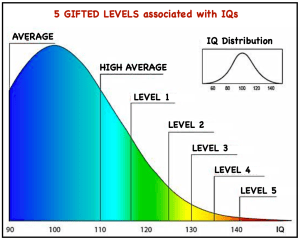
IQ LEVELS -cOne way of identifying the G&Ts is Dr Ruf’s’ Estimates of Levels of Gifted CHART (w/ info) ⬇️, using IQs as an indicator.

All gifted children are not affected by their special abilities in the same way.
Giftedness can be identified on the differences in intellectual abilities, talents, or interests  – rather than in terms of behavior, emotions or needs.
EXP of categories : artistically gifted, creatively gifted, intellectually gifted, learning disabled gifted….

Annemarie Roeper, 1982 noted that emotions cannot be treated separately from intellectual awareness or physical development – they intertwine & influence each other. She proposed 5 types of gifted children based strictly on the ways they cope with emotions – child/adult, perfectionist, self-critic, winner-of-the-competition, & well-integrated. She focused on how the gifted experience & express feelings, & the coping styles they develop.

🤓 However, the following overall distinctions were proposed by George Betts Maureen Neihart (1988).

G&Ts by BEHAVIORAL STYLE
TYPE I: The Successful – 90%
They are the traditional understanding of gifted children: they’re good at school – academically high achiever, becoming perfectionists,  tend to be structured thinkers & usually have a high self-concept.

Generally well-adjusted goal-setters, they do well on the SAT/ACT & score high on IQ tests. After figuring out what “sells” at home & at school, these kids conform to the rules, are obedient in class, do homework without a lot of prompting, & get good grades.

They’ve learned the system – keen to earn approval from all adults, so are usually well liked & included in social groups. Being dependent on the system to function, they lack autonomy, & so are less imaginative & creative – but they can perform music or produce art projects, without showing much interest in composition or abstract thinking.
Unfortunately, these children might face jealousy from some peers from being “teacher’s pet.”

• At home = they need independence, freedom of choice, time for personal interests, & opportunity for risk-taking experiences.  However, if they’re in an ‘average’ environment, gradually some Type Is will become bored, & then use the system to get by with as little effort as possible. They’ll go through the motions & end up coasting or under-achieving in both grade school & college.

Gifted young adults who may underachieve in college & later adulthood come from this group. They haven’t acquired skills, concepts or attitudes needed for life-long learning. They’re well adjusted to society, but not well prepared for the ever-changing challenges of life.

Type II: The Challenging
Challenging & creative students are generally the opposite of the “successful” ones. Many school systems fail to identify these kids as special, even though they’re ‘divergently gifted’ (multi-talented), therefore highly creative.

They may have extraordinary creative gifts as graphic & fine artists, composers, fashion designers, photographers,  writers …. But it’s this very disposition that put them at odds with a traditional school system.

As non-conformists, & can come across as obstinate, tactless, or sarcastic – which doesn’t go over well with the adults.
Not being ‘seen’, they become rebellious – questioning authority & the system, challenging teachers in class. They’re impatient, too direct & competitive, often leading to conflict.

🗯 Frustrated because school doesn’t acknowledge their natural talents & acquired skills, they struggle with low self-esteem. This group is at risk of dropping out & getting involved in unhealthy activities, such as drugs & delinquency.

• At home = they need acceptance, understanding & advocacy from parents. Also family activities & examples of positive behavior
• Socially = some may find themselves excluded as ‘weird’, while others will earn peer approval & friendship because of their creativity & sense of humor

NOTE: Gifted children types I & VI (Successful & Autonomous) are usually easy to recognize and deal with. Their achievements cannot go unnoticed.
BUT the other four types (Challenging, Under-grounders, Double-labeled & Dropouts) require special attention. They should be recognized as early as possible, so parents can find out what’s needed to help these children thrive.

NEXT: Gifted Children Learning styles 3 & 4