COVERT Narcissism (Part 1)

PREVIOUS: Overt Ns #3

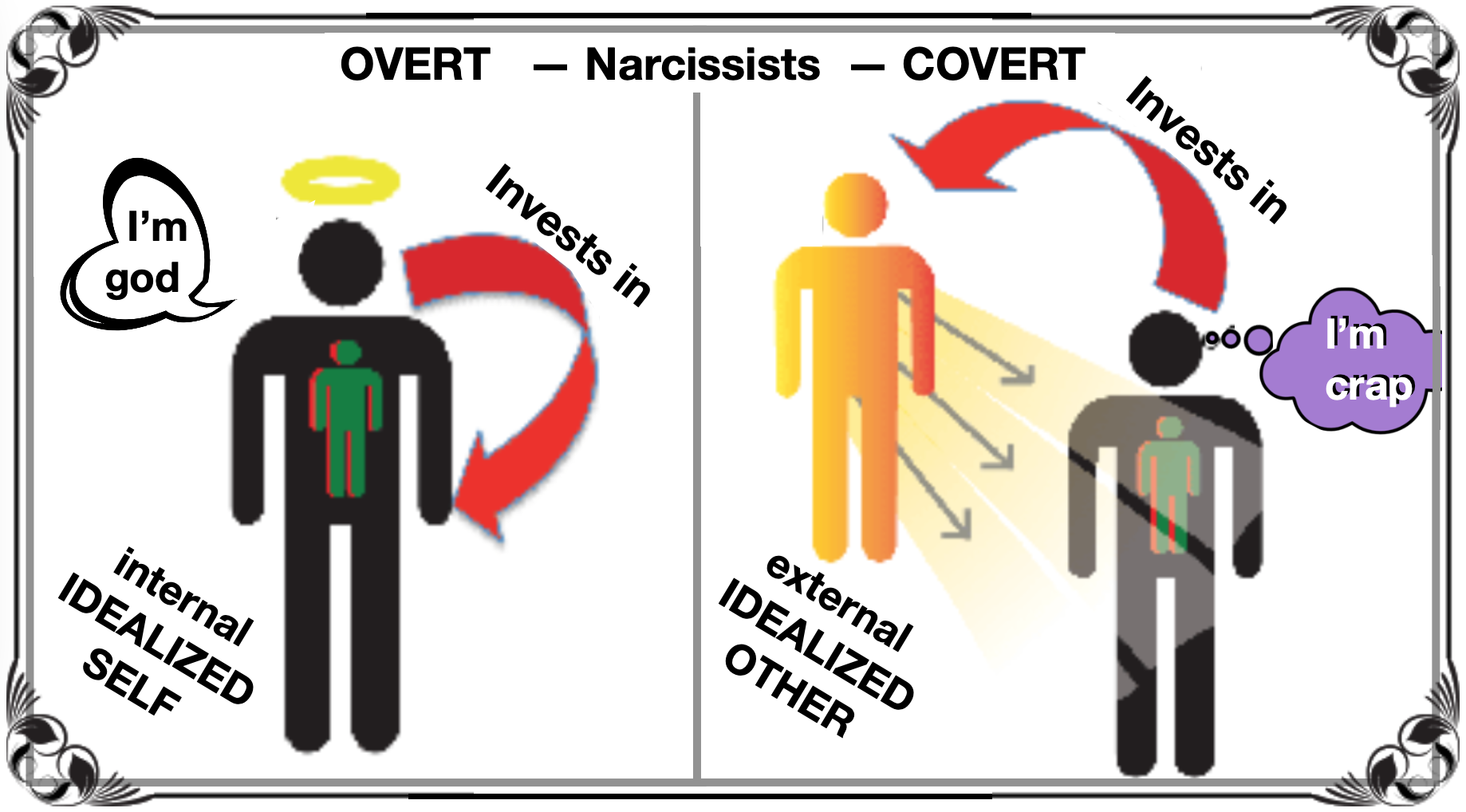
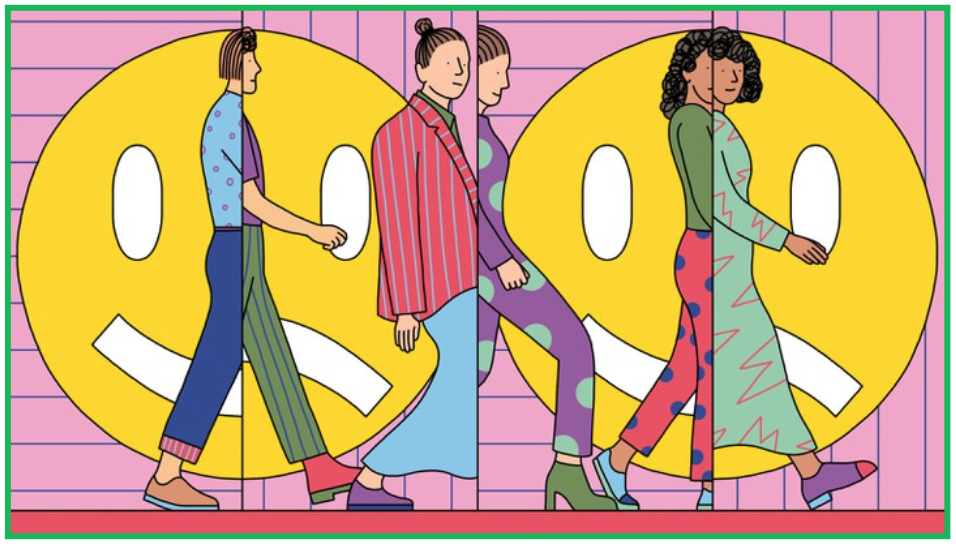
⬅️ On CHART : Letters A, B, C, D represent people with varying degrees of N damage – who are closer or further away from a Healthy Self. They function in the real world, but their behavior alternates between the extremes of Rage & Awe, creating much internal turmoil, & constant drama in their relationships & at work.

Os or O-Ns = Overts or OVERT Ns (‘narc’ = narcissist)
Cs or C-Ns = Coverts or Covert Ns //  FS = False self 

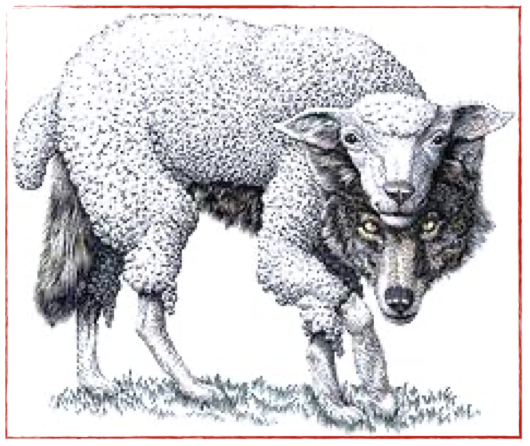
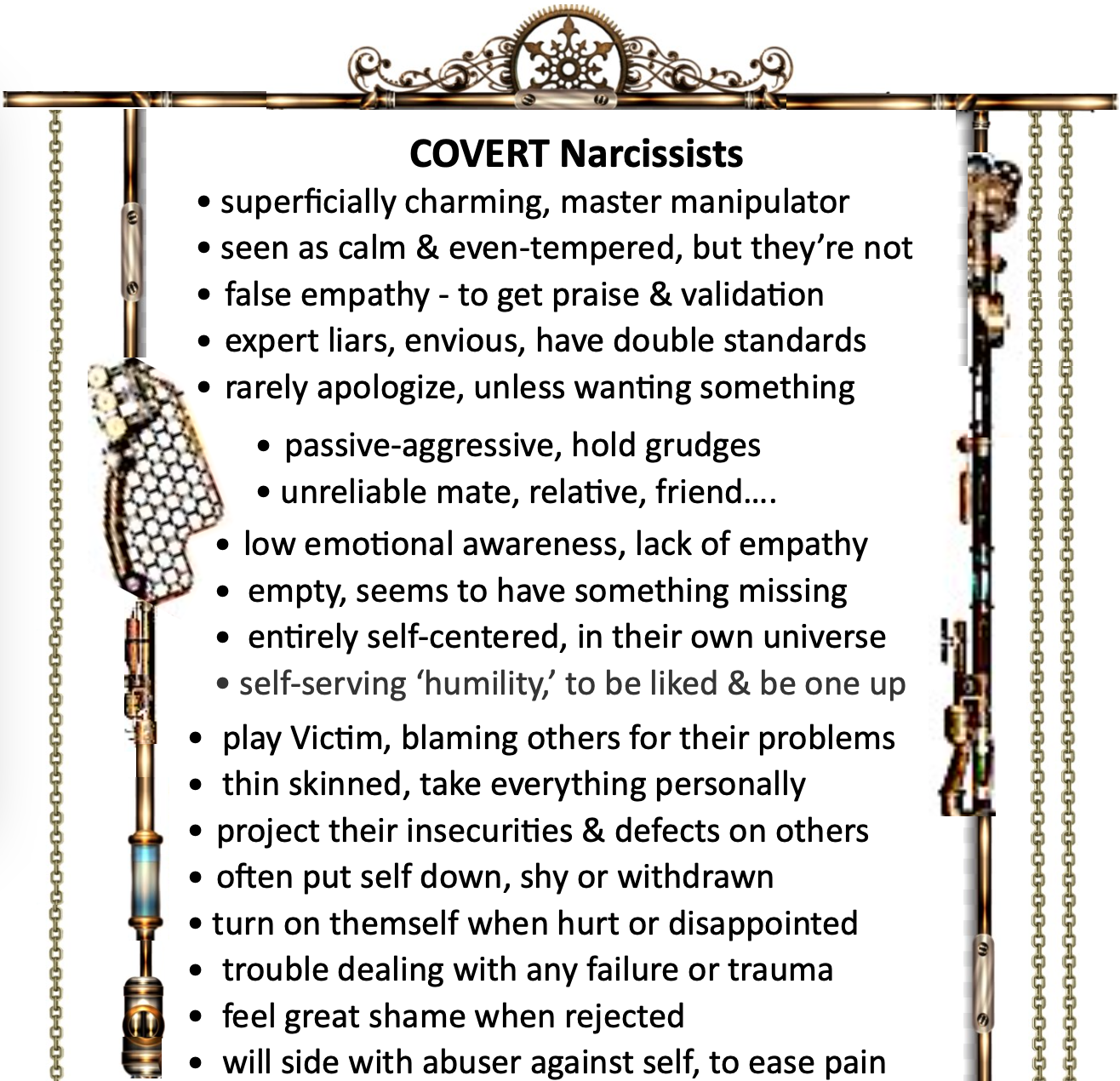
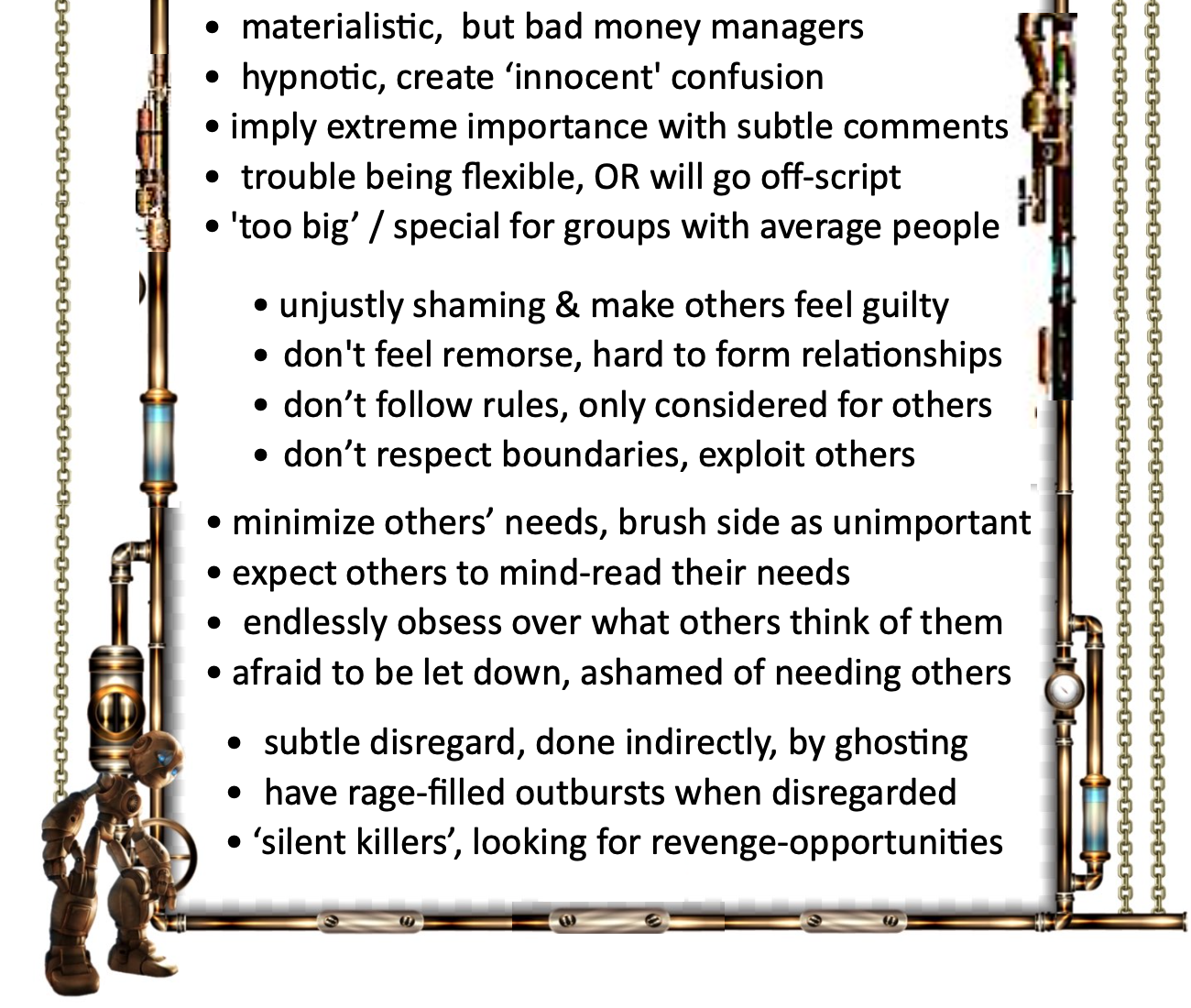
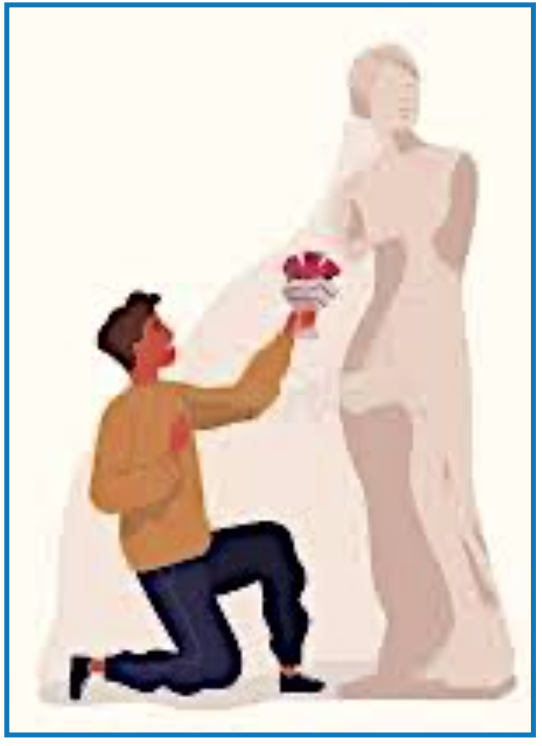
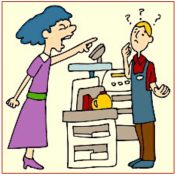
Covert Ns can be hard to identify & even harder to expose. While Overt Ns idealize themselves, Cs invest their heart & soul into idealizing something outside of themselves, hoping they’ll get warm inside by basking in reflected glory. AND, It doesn’t only have to be a person, but also religion, ideology, political movements, charity organizations….

C-Ns tend to be shy, sensitive & insecure, but Os & Cs share the same core personality traits. EXP: The difference is like listening to a song on full blast or very low. The song remains the same, only the volume changes.

IMP: Thecovert” aspect of N is not about hiding abuse or being slyly manipulative, which are common to all types of Ns.
IT IS about the fact that C-Ns are by nature more toward the Introvert end of the MBTI  E-I scale, which masks their underlying grandiosity.

If someone seems shy but still manages to suck all the air out of the room, you’re probably in the presence of an introverted N. Their partners know that there’s nothing covert about how arrogant, withholding & argumentative Cs can be.
EXP: Someone who jumps on everything you say, “What did you mean by that?”
OR who often goes into bitter rants about all the ways they’re being mistreated by everyone….

What Cs & Os have in common (intro- & extra- verts)
✴︎ They too crave importance, thirsting for admiration, but will look different to observers. They might give back-handed compliments, or purposefully minimize their accomplishments & talents so people will reassure them about how talented they are

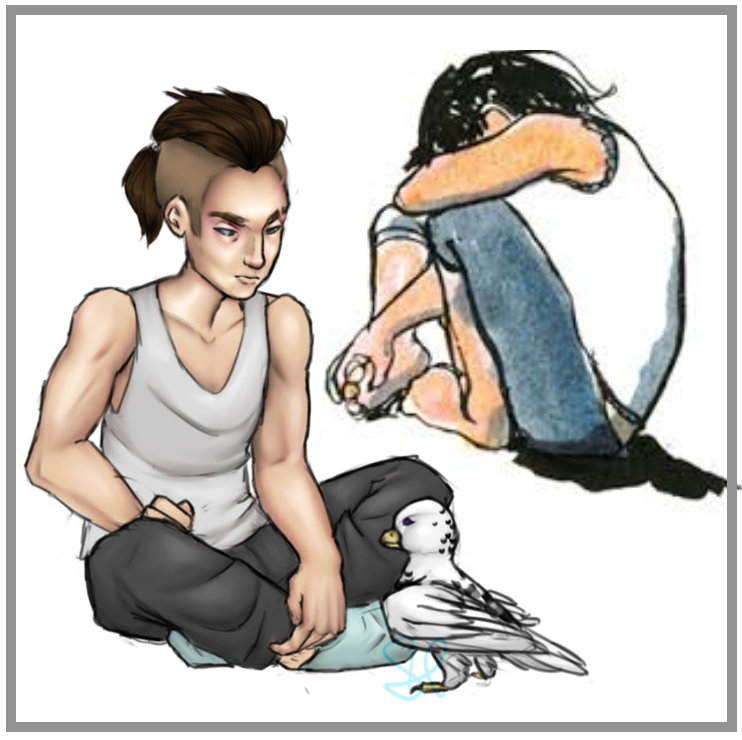
✴︎ They cling to feeling special, but with low self-esteem the grandiosity takes a different form. Cs fantasize about their greatness more than advertise it. Some Cs imagine themselves a misunderstood or undiscovered genius, a long-suffering victim (troubled teens can raise this to high art), the most sensitive person in the room, or the biggest piece of s–t!

THEY ARE:
✴︎ hyper-sensitive: reacting to slights & criticism, apt to attack “enemies” in a flash
✴︎ manipulative : which is by definition Sneaky. Loud Os or quiet Cs, they’re equally crafty
✴︎ not self-reflective, unwilling to uncover their motivations & feelings
✴︎ very abusive – mentally, emotionally & verbally, sometimes physically
THEY:
✴︎ use narc-speak / ‘word salad’, convoluted & deliberately confusing talk
✴︎ struggle to recognize needs & feelings of others, unless those relate to themself
✴︎ lack object-constancy, seeing things in B & W
EXP: When angry at you (unaware of feeling abandoned), they forget all the good things about you, & suddenly you’re all bad

✴︎ use gaslighting, triangulation & other mind games
– Overt
s are in your face with it – they like you knowing they ‘gotch-ya’
– Coverts 
fool you by making you think they’re loyal & faithful – while sneaking around. They’re more dangerous & damaging because you don’t see them coming.

COVERT SPECIFIC
1. Overt-Ns are often ambitious, successful go-getters, full of charm & energy
‣ but many COVERTS are marked by failed ambitions, chronic feeling of emptiness, & low functioning. When supply-depleated, they can sink into hopeless apathy

2. Overts can be identified by how they tell everyone how amazing they are, bragging about abilities & achievements
‣ but COVERTS are known to present themselves as weak & needy victims, & then run that ‘game’ as bait to reel in supply

❥ They’re often referred to as ‘Vulnerable Ns”. But there’s actually nothing vulnerable about them. That’s the problem.
If they could be emotionally open & vulnerable, they would be able to form secure attachments, which is what helps prevent people from becoming NPDs in the first place.

True vulnerability means taking genuine emotional risks & openly turning to others for support – rather than endlessly complaining.

NEXT: Covert Ns – #2

OVERT NARCISSISTS – toward others (Part 2)


PREVIOUS: Overt Ns toward others – #1

SITE:  10 Signs of a toxic person


Re. Treating OTHERS cont – THEY (Ns) :
are self-righteous
N assume their point of view is inherently superior to other people’s. And what they truly value is the attention they get for their ideas.

EXP:  a N may actually believe he/she has a closer connection to God than everyone else, but what’s more important to them is that others believe the N has this ‘connection’ & admires their ‘deep’ spirituality

don’t actually listen
Ns really don’t care about what you have to say, so they don’t ask how you are or what’s going on in your life.
But even if they happen to, out of politeness-training, they don’t actually let you say more than a word or two before they just start going on about themselves again

◆ are good at stonewalling
Ns are the ‘best’ at ignoring requests that don’t fit their agenda. They’ll refuse to : compromise, collaborate, negotiate a conflict in good faith refuse to : listen to another’s point of view with an open mind, support another’s plans, nor openly discuss their own motivations.
Another version – simply ignoring a person, refusing to acknowledge their existence

don’t give compliments, unless….
Ns want to be admired. They’re not interested in making others feel good about themselves. That’s not their job in life. You’re ‘lucky’ if you do get a compliment, which should make you suspicious about their motive. Don’t assume it’s sincere. However, if a N is trying to sexually seduce someone, they’ll gush about how wonderful the potential mark is, but only until they’ve ‘won’.

◆ over-rate their attractiveness
According to one study, Ns are generally rated as more stylish & physically attractive. However, this isn’t always the case.

According to another study (2008), Ns rated themselves highly in both looks & intelligence, but their IQ tests proved to just be average. When their peers were asked to rate their N friends on looks, the results were lower than what the Ns gave themselves.

don’t pick unattractive friends (usually)
This applies mainly to Extrovert Ns, who are in business, entertainment, politics…. anywhere they’re visible. Since they only do what benefits them, picking who they surround themselves with is important. Those have to be attractive & “upper-class” people who enhance their prestige, making them feel superior & invincible.

However, there are plenty of  ‘vulnerable’ Ns who hide behind false modesty, do-gooding, caretaking…. in which case they need to be the only one who’s attractive, reenforcing their sense of superiority.

Younger N men & women have different styles. Women choose male friends with high social status so they can feel worthwhile. Guys choose bros who are willing to be their ‘wingman’ when trying to pick up girls

are serial romantics
The “seductive” Ns fall in & out of ‘love’ quickly & easily, often with someone they don’t know very well. They think their partner is absolutely perfect – a match to their own perfection. When reality sets in they realize their partner is flawed, which often ends the relationship

cheat in relationships
Psychologists’ research found that narcissists are more likely to cheat – once they think their partners are committed. They tend to use more sexually explicit language in every-day conversation, & seem to get a charge out of convincing others to engage in promiscuous sexual acts they wouldn’t normally participate in. (MORE….)

don’t incorporate security into relationships
Ns want to keep you off balance, to never feel secure in the relationship. Your anxiety & fear of losing them makes them feel important.
AND Triangulation is a favorite tactic:

1. Stirring up jealousy = constantly look at / commenting about attractive strangers, or talking about about an ex….
2. Division = talking trash about your friends, & doing the same with them about you
3. Recruitment = calling in reinforcements to be on their side when the 2 of you are fighting
4. Cruel break-up styles = such as telling others how bad you are & getting them to agree. (MORE….)

don’t stick around
If you’re staring to bore them in any relationship, expect a N to pack up & leave. They want your full attention, which includes only talking about & doing what interest them, & keeping them entertained. Otherwise – they’re on to the next person who will.

NEXT : Who Ns are attracted to (#1)

OVERT NARCISSISTS – toward others (Part 1)


PREVIOUS: ACoAs as Ns – Growth goals

SITE:  Ns at WORK – 30 red flags


NOTE: Outsiders often ask a complaining N-victim: “Why do you put up with such bad behavior? If it were me, I’d have left right away.”

ANS: N. abuse is GRADUAL, increasing ever so slowly – so the victim won’t catch on too soon & escape. Ns need their target to ‘accept’ abuse as part of their daily routine, so they’ll get used to being treated with insensitivity & disrespect.

Re. Treating OTHERS – THEY (Ns):
don’t see others as equals
Ns believe they are the top of the world & so look down on everyone else. They can secretly admit someone may be their ‘better’ only so they can drain them (career, financial gain….), but then have to use all their manipulative skills to hide the conviction of their superiority.

If you’re an ‘average ‘Joe/Jane’ – in their eyes – & try to associate yourself with them as an equal, they’ll do anything in their power to bring you down – where they assume you belong

think everyone else is stupid
Many Ns are know-it-alls, so have a hard time getting along with coworkers & friends. They refuse to believe they could possibly be wrong about anything, & have a “my way or the highway” approach to decision-making

  but – put some people on pedestals
For Ns, everything has to be perfect, but secretly know they’re not. So they look to absorb it from others they idealize.

N-logic says: “If I find someone perfect to be close to, maybe some of their wonderfulness will rub off on me, & then I’ll become perfect too.”
With that fantasy in mind, Ns cozy up to a colleague or crush they decide is perfect, but get royally disappointed when that person doesn’t live up to the image they created

like to put other people down
Ns intentionally put others down so they can keep a high positive image of themselves. Being admire is like a drug for narcissists. In the long run it’s tough to keep being supplied when others won’t applaud them. So they have to keep searching for new acquaintances in order to get the next fix – which causes unstable relationships

don’t feel the need to be polite
At the best of times a N’s sense of superiority allows them to feel exempt from the rules of society, common courtesy being one.
Ns know that antisocial behavior isn’t acceptable, but are just fine with acting inappropriately because they constantly feel they’ve been wronged.

One study indicated that subjects with a high N-score are argumentative & curse more than their less reactive counterparts. They often take offense when it’s not intended, leading others to exclaim in confusion : “That’s not what I meant!”
However, don’t ever disrespect them – no matter how tempting. They’ll definitely not forgive or forget – ever! & will look to be revenged, however long it may take

◆ love telling others what to do
Ns typically enjoy leadership positions so they can dominate others to fulfill their need for constant positive reinforcement. And they expect others to go along with their every single plan & idea, unquestioned.
N leaders have either ‘dark’ or ‘bright’ leadership qualities, the latter more visible at first.  However, since Ns also have negative inter-personal features, they’re likely to abusing their power, with harmful consequences for the organization

◆ are a ’bad sport
Overt Ns are bullies, & one of their most troublesome traits is generally being a sore loser and a sore winner.
EXP: In sports, when they lose, they might try to humiliate the referee. When they win, they might gloat or abuse the loser

 are shape-shifters
Ns are actors playing a role – called narcissistic masks – the chameleon who changes their ‘persona’, based on who they’re with.

The role chosen is a hook, used to pretend they’re just like you. If you like country music so will they, if you have a dog, they do too….or in different groups, they pretend to be exactly what that group is looking for, so they can fit in. But there’s always a crack in the image of total togetherness, because they can’t keep it up. It was a lie from the start.

NEXT: Ns – re. Others #2

OVERT NARCISSISTS – about themselves (Part 2)

narcissist cartoon

PREVIOUS : Identifying the N (Part 2) 

Re. THEMSELVES (Ns) cont. — THEY:
don’t show their ‘true’ (damaged) self
Ns are manipulative, so of course they won’t be themselves when you first meet. They lure you into believing they’re an OK ‘normal’ person, maybe even sweet & kind. You won’t find out the truth until much later – when it’s too late because you’re already hooked.

don’t like losing control
Ns can’t stand to be at the mercy of other people’s preferences, which remind them they’re not invulnerable or completely independent. EXP: They may have to ask for what they want, & even worse, people may not feel like meeting the request.

When Ns are not in the driver’s seat in all situation, with everyone –  they get extremely anxious &/or angry – but won’t want to show it, because that would also be losing control!
Having everything be the way they want – without consideration for others – gives them a sense of security, knowing others will give in

◆ don’t do anything they don’t want to, OR that doesn’t benefit them
They can do helpful, useful things for others, but t’s not from generosity. It will only be something they actually like to do & nothing more. If it happens to be good for you too – that’s lucky, because anything else will be ignored.
EXPs:

✘ If an important object, emotion or need you have does not make sense to them, they’ll ignore it or blatantly put it down, no matter how much it means to you
✘ Ns don’t do anything without benefitting themselves. Whatever ‘kindness’ they do for you – they’re already calculating what they’ll get in return. You won’t know what they’re going to want until they call in a very big favor, out of proportion to what they did.
So, automatically giving a N whatever they want is NOT a good idea.

◆ don’t take orders
Don’t try to order a N around (not that it’s OK to do to anyone). But Ns are especially touchy about their importance & high value, so trying to be in charge of them or take control away from them will put a big dent in their self-esteem. It shouldn’t be surprising to later find they’re out for revenge, directly or subtly

won’t let anyone prove them wrong
Ns will argue that black is white until you start agreeing. This is one of the biggest negatives from being around them for too long. Arguing with them is a waste of time & effort, because they have their ‘reasons’ all figured out. Some even believe that they’re spouting.

The clever ones can sound very ‘logical’ & therefore convincing. BUT each premise is always flawed in some subtle way.
Others just repeat their crazy thinking (illogical, contradictory, untenable….).  Unless you’re very clear (“I know what I know”), you may start doubting your own beliefs & actual experiences, because they sound soooo convinced of their position.

◆ never allow you to see them as the bad guy / gal
Ns can never tolerate seeing themselves as the ‘bad one’, so have to make sure you don’t either. No matter the reality of a situation – of their making or just life – the blame for something being ‘off’ will ultimately fall on you, which can easily have make you feel like a terrible person. But getting you to feel bad about yourself is exactly what they want. That way they ‘win’.

constantly feel under-appreciated
Their grandiose attitude means they always have a grievance against the worldBecause they feel entitled to something better, Ns are convinced they’re not getting the recognition they deserve, & can become bitter & cynical  

◆ If not outwardly grandiose ….
“Covert N”, is the softer – BUT not milder – form, expressed in being anxious, defensive, hypersensitive & withdrawn, as opposed to the blatant hyper-aggressive, super-loud Trump type.
Both share a common core of arrogance, conceit, & giving in to their own needs while disregard others, just in a different style.

Extrapolated from “The Narcissist You Know.” by psychologist  Joseph Burgo, Ph.D.

NEXT : Overt Ns – toward others (#1)

OVERT NARCISSISTS – about themselves (Part 1)


PREVIOUS :
Overt Ns – themselves (#1)

POST: Passive-aggressive COMMENTS  (long list)


All Narcissists (Ns) are developmentally stunted. Many are secretly mired in self-loathing, & under their bravado lurks humiliation, insecurity, shame & extreme vulnerability.
To protect their deeply wounded core, early on they spun a cocoon around their heart & mind – a dense outer shell of false power with the goal of never being hurt – again! (Think inside Daleks)

*️⃣ However, there are some Ns who are absolutely sure they’re unassailable. There is no inner conflict, because they’re sure of their ‘rightness’. (Think Cyberman)

SAM VAKNIN, an Israeli writer & scientist, speculates that these Ns are not hiding a vulnerable core but are constitutionally defective, & therefore not curable. There’re no way to crack that wall (think Tony Soprano) & any attempt at getting them to understand their psychopathy ends in failure.

Perhaps they’re born missing a fundamental aspect of humanity – the ability to empathize with another. All of their socially acceptable interactions are therefore a complicated & clever imitation of what they observe in ‘normals’. This ability is used to keep others connected in order to ‘feed’ off of them.

Vaknin developed a new treatment dubbed “Cold Therapy”, which uses re-traumatization & reframing. It’s based on identifying pathological narcissism as a form of Complex PTSD & arrested personality development.

MAIN CAUSE: parent who both ignored & ‘adored’ them
According to Freud, a combination of parental rejection & excessive admiration is strongly linked to adult N. The caregiver‘s inconsistent whiplash of indiscriminate praise alternating with coldness & rejection  – eventually cause the child to exist in a perpetual state of insecurity. This coalesces into a deep craving for admiration, but with a distrust of any praise received, leading to a life of searching for fleeting ego boosts from others, which fall into a bottomless pit.

This accounts for the paradox noted by psychologist Robert Emmons (1984):  Ns simultaneously devalue others while needing their admiration. German psychologist Mitja D. Back ‘solved’ the paradox:
Ns pick people who help to keep their high positive self-image going, while intentionally avoiding or putting down anyone who would give them a harsh dose of reality.

For all Ns, their mantra (blatant or subtle) is CONTROL! CONTROL!
I must be in CONTROL of everything!

Re. THEMSELVES (Ns) — THEY:
don’t like to admit having emotions
N or not, everyone has emotions (except psychopaths). They have feelings for themselves (anger when snubbed, pleasure when pampered….), but not toward others, & will proudly say: “I’m not sensitive!”. EXACTLY

Letting any emotion show makes Ns vulnerable – it means someone or something can effect them, which challenges their sense of total autonomy, therefore being out of control. They’ll abruptly change the topic when someone tries to engage them in talking about emotions : “So, what about this weather / the game / this food…??”.

Ironically – they believe their every emotion is deeply important & valid, AND that everyone else is ‘over-reacting’ when they express feelings – which the N considers obscene

◆ don’t have emotional empathy
Through the use of cognitive empathy (in their head), they spent their entire lives observing the emotional language of other people & using it to their advantage.
Ns can recognize & react to the suffering of others, but ignore it. They can withhold an empathic response (comment or action) –
to control a partner, creating attachment anxiety =. abandonment fear
to
 get something by manipulation, or
to gain power, by exploiting an awareness of someone’s emotional state.

Their secret is that they’re not actually feeling with you – your emotions are a blank wall to them. This allows them to say & do horrible things to others without genuine remorse.(EMPATHY & types)
Your secret : If you talk only using facts instead of emotion words, they intuitively understand they have less of an upper hand!

No sympathy: Ns are the ones who laugh while everyone else cries at sad movies. They can fake ‘caring’, but aren’t actually interested in your emotions, even if you just went through a recent illness, divorce or death of parent / beloved pet…. They’re sooo tired of hearing about your troubles, even though you’ve barely mentioned them!
(Sympathy: Feel for you / Empathy – feel with you)

NEXT: Overt  Ns, re. themselves (#2)

OVERT NARCISSISTS – OVERVIEW


PREVIOUS : AFFIRMATIONS

POST: Secretly Angry “Nice” People
(Intro-b)

BOOK: “The Narcissist in Your Life: Recognizing the Patterns and Learning to Break Free∼  Julie L. Hall (Review)


IMPORTANT
: Too many images represent narcissists as “loving themselves”, which is totally inaccurate!
There’s no actual love involved. That would be emotionally mature self-esteem, which they do not have.

INSTEAD
– the reality is that their whole focus is on themselves – what they believe, want / need, how they want things done, how things should be (their way – only)….. Other people are supposed to agree & comply with the N, otherwise they’re simply wrong & of no value.

NOTE: Narcissists come in several styles : overtly controlling (aggressive), passive-aggressive, manipulative-victim, co-dependent, charming-arrogant…., all who are truly unavailable & harmful
AND
in varying degrees of self-centered reactions, from classic NPD-ness, which never improves —-> to garden variety (every-day) small-n narcissistic attitudes / comments / reactions, which can be annoying but not as toxic – & with a lot of attention can be diminished.

CLASSIC / OVERT
🔻
ARROGANCE = If a N feels low, they may ‘re-inflate’ their sagging ego by degrading & diminishing someone else.
Ns:
– assume only their point of view is legitimate & true
– act superior, controlling & can’t relax
– often act differently in public (good) than in private (bad)
– lie, distort facts & redefine events to suit their own agenda
– are emotionally distant & unavailable, until they want something

🔻BAD BOUNDARIES = Ns don’t get it that others are separate being rather than extensions of themselves. If someone is a supplier, they’re automatically part of the N’s ‘self’ & are expected to continue being that.
Ns:
– assume others are – or should be – a carbon copy of themselves
– do not treat other people’s homes & things with respect or as private (open mail, closets, read texts, ask nosy Qs….)
– tell others about someone’s private conversation or troubles
– “What’s yours is mine, & what’s mine is nobody’s business” (Mom)

🔻ENTITLEMENT = Ns have an unrealistic expectations of automatic compliance from everyone – because they’re special. They:
– are irresponsible & unreliable, including with money
– always expect preferential treatment
– have trouble admitting being wrong or making mistakes
– believe there’s nothing wrong with them
– use their own ‘superiority’ to judge others negatively

🔻ENVY (between 2 people) / JEALOUSY (among 3 or more) = Many Ns – but not all – secretly or unconsciously feel inferior & powerless to get their needs met honestly & directly. So they belittle & try to undercut someone else’s success or prominence. 
Ns:
– react negatively to someone’s blessings or life improvements, barely responding, or ignore them completely
– tend to blame others for their own failures & lack of success
– may copy someone’s whole life (as if it were a compliment), & then make it seem like all their choices were their own idea
– take credit for someone else’s work

🔻EXPLOITATION = Ns use other people to be taken care in some way – so they don’t have to.
Ns :
– lack sympathy & empathy, especially for the underdog they use
– only contact a person when they need them for something
– over-work & underpay employees
– trigger emotions in others which they refuse to feel (anger, fear, hopelessness, helplessness…)
– regularly provoke others & then blame then for the resulting uproar

🔻MAGICAL THINKING = Using this CD, Ns have the delusion that they’re perfect, so they’re never responsible for the consequences of their harmful behavior.
Ns :
– act on their impulses, doing whatever they feel like in the moment
– are addicted to fantasy & exaggerations, which may include dreams of impossible success & fame. Also flirting, affairs & porn

🔻SHAMELESSNESS = Ns are often proudly, openly outrageous / obnoxious, not hampered by their effect on anyone else. Since they consider themselves perfect, their intensions must always be good, so they’re not concerned with the emotional needs & wishes of others.
Ns :
– are 2-faced, putting family & friends down behind their back
– seduce then abandon a mate
– interfere in other’s lives, as if needed or asked
– insist on “help” that’s totally inappropriate or unsuited to the recipient
– tell on themselves as if a comment or incident were humorous & perfectly normal, although their behavior was foolish, insensitive or cruel (“I’m a taker” / “You’re ugly”…..)

NEXT: Overt Ns (Part 2)

KINDNESS (Part 2)


PREVIOUS : Kindness (Part 1)

SITE : KINDNESS website


STOP being Nice, START being KIND
There is a big difference between Nice & Kind. Nice makes you feel good, Kind is an act of doing good.
Niceness is how we try to social-climb, Kindness is how we lift others up.

Most people want to look good far more than they want to be good. Nice is mainly about trying to look good, using a set of pre-set social actions that take little-to-no effort, & makes it easy to pat ourselves on the back. (“Rescuing – False  helping“)

We may feel Nice (fake-virtuous) when we :
✴︎ tell the waiter the food is “great”, even though we hate it
✴︎ tell our friend we love their haircut even though it looks terrible
✴︎ say, “Oh, wherever” when someone asks us where we want to eat ….
In reality, these are often just passive-aggressive, conflict-avoiding responses.

EXP: When you’re offended about not being appreciated & admired for your niceness, you can be sure you’re not in the ‘Kindness Zone’.  Like when you —
— wave “Good morning” to someone, then get mad when they don’t wave back
— hold the door open for someone, & resent them for not thanking you….
On the other hand, being Kind means that the only thing on your mind – when you do something positive – is another person’s benefit & wellbeing, without needing payback.
NOTE:
Being appreciated & thanked is legitimate, but should never be required, expected or demanded.

AND, being Kind doesn’t always feel ‘nice’.
EXP: If your close friend / mate / child has bad breath today, & you don’t tell them, you may think that’s being nice. But at some point they’ll find out & wonder why you, who they have usually felt safe with, didn’t tell them.

They will eventually get embarrassed at work or school – & be upset you didn’t consider their best interest or the consequences of your silence, which will hurt & may diminish their trust in you.

An Al-Anon quote is : “Say what you mean, but don’t say it mean”.
So, pointing out an ‘imperfection’ can be said helpfully, with Kindness, such as “Did you notice your breath is a bit stale this morning?” or offering a breath mint – even if this may be uncomfortable for some of us to do.
Unless the other person is emotionally immature & gets a resentment (from the WIC’s shame & self-hate), they’ll be grateful to be spared later social discomfort, & know that you care.

Kindness doesn’t get worn out, because it does not over-do & doesn’t require the constant effort of pretense.
BUT It also does not mean others can walk all over us, because it includes setting & clearly stating appropriate boundaries.

Kindness
is OK with being a bit uncomfortable being around someone else’s ’embarrassing’ behavior, because it comes with it’s own self-esteem, so isn’t worried about having to look good all the time, in very situation (like Ns!) There’s “a time & a place” for that.

Being Nice is often the way we try to manipulate others & ‘handle’ the world around us. It’s wearing, & can make us cynical – because we’re often disappointed.

It takes so much effort to suppress strong opinions, ‘unacceptable’ emotions or thoughts, hoping we’ll say just the right thing to get people to like us.
So, at the end of a ‘being nive’ day you’re hurt & frustrated, obsessing about how no one gave you credit for all those nice things you did or kept yourself from doing.

Kindness gives up being controlling, but rather looks for ways to participate in other’s lives – finding appropriate opportunities to be helpful, & no more. Al-Anon says: “Take the action & let go of the result”.

Kindness is liberating. Instead of worrying about what people think of you, focus on being the best you possible today & enjoy what’s available.
Because you’re comfortable in your skin, others will realize you’re safe to be with, so they’ll be able to let their guard down a little. “One day at a time” is all we have, to just live & do our best.
(Posts : “Healthy Helping“)

NEXT : OVERT N – Overview

KINDNESS (Part 1)


PREVIOUS: LOVE TANK

BOOK: Kind Self-HealingAny Eden

QUOTE: Dr. Bloom (YALE) points out that empathy is skewed, whereas compassion is just.
“Empathy is a disaster in this complicated & interesting world, because :
1.  it’s biased. We feel more empathy toward people who look like us, share our skin color or ethnicity, are attractive rather than ugly, & are close rather than far away
2. it’s innumerate. We feel empathy for the one, but not for the hundred, or the thousands we never interact with
3. it can be weaponized (by Narcissists & their Flying Monkeys)”

DEF:  KINDNESS – The quality of being considerate, friendly & generous

ALWAYS start with being Kind to yourself – caring, compassionate & unconditionally gentle.
Mostly, ACoAs didn’t have role models for how to treat ourselves & others this way. But we can learn to do it now. Like love, it takes work to understand & feel it. We can practice every day by how we talk to ourselves & how we let others treat us.
(See posts: “The UNIT:Adult-Parent” //  “What is Self-esteem” //  “Healthy Individuation” // “Emotional Maturity” // “Being Confident

IN RELATIONSHIPS of various kind – at home, at work, in a store, on the street….. The degree & type of ‘kindness action’ we take will depend on where we are or who we’re with.
Kindness can mean something different to each of us, seen in the way we choose to show it. It can be through acceptance, empathy, generous gestures, thoughtfulness…. AND without expecting / demanding ‘goodies’ in return.

Genuine Kindness can only come from having enough in our LOVE TANK to overflow – some – on to others, without diminishing ourselves. It’s doing positive, intentional, voluntary acts – not only when it’s easy, but also when it’s hard.

Kindness is not a version of being nice (see Part 2) which is usually insincere, done begrudgingly, & only at the bare minimum.
It is not co-dependence or people-pleasing – because it’s NON-narcissistic,
not about gratifying a need to compensate for self-hate or making us look good (like the Pharisees in Jesus’ time). And it’s not ‘niceness’, because It must include having healthy boundaries.

Science seems to supports the experience of devoting some of our resources to others, rather than only grabbing more & more for yourself, brings about a feeling of well-being.

💕Kindness has been found by researchers to be the most important predictor of satisfaction & stability in marriage.
📚Many universities, including Harvard, are now emphasizing kindness on applications for admission. (“Healthy Give & Take“)
«

«
Kindness is GRACE. Being human, we all have personality flaws & so make mistakes. (Posts: “ACoAs – Humility”)
So we can & should treat ourselves & others with kindness when imperfections crop up – as they often do. We should not be surprised or be judgmental. This means to :
— think before speaking
— forgive before seeking revenge
— think about long-term goals for our relationships – instead of short-term gratification & our pride.
You can’t be perfect, & neither can anyone else. Rather than anger, offer grace – be kind.

PASSING it ON  – People (& animals) learn by observation & imitation. As we treat ourselves & others with kindness, others – especially children – can learn it from us. When we smile, say a nice word, do an unexpected deed, or plan a surprise…. we show the power of kindness – making people feel good, passing along hope & encouraging peace.

Most people are able to learn right from wrong through association. When you see someone being kind or notice it in a family member or friend, make sure to tell them you appreciate what they did. Positive reinforcement helps people want to do more good deeds & reminds them to act with intention.
(Modified from the Inspire Kindness Team)
«

NEXT: Kindness (Part 2)


The LOVE TANK (Revue)


PREVIOUS: Being Loved #2

SITE: Roach Motel for Lovers
Dr. Gottman

POSTS: “Not enough Love?

BOOK: “Is Your Love Tank Empty? “Bo Sanchez (re. God’s love)


How do you know if your love tank is low or near empty? 

DEPRESSION: feel overwhelmed, frustrated, angry, sad…. & unlovable
FEEL LOST: lack direction, don’t know what you want to do in life
WEIGHT : eat to find the comfort & love you’re not getting elsewhere
RELATIONSHIP : your partner may be trying to connect, but since you’re speaking different ‘love language’ it’s not working  (Five Love Languages)

With a low or empty Love Tank, we feel overwhelmed, frustrated, angry, sad…. and then treat others UN-lovingly, which can lessen their love tanks too. Many of us did come from a family that was not able to fill our tank on a regular basis. So we didn’t learn how to fill our own, which is our task now.

Many people go for the quick fix – some temporary external source to fill our love tank & get rid of the yucky feeling of hollowness & pain. We’re familiar with all the many things we use to get relief – additions & distractions.  But none of them work, not only because they come from the outside, but because they’re not LOVE.

NOTE : The only external source of Love that’s 100% reliable, always available, safe & totally filling – is God’s Love. (John 3:16 + 19 other verses)

Some of us go for more ‘positive fillers’ which seem OK – giving to others, being social, getting love from someone else. These may not be as worthless & harmful as the more obvious ones, but can be just as insubstantial. And outside sources are not always available, & not reliable in the long-term.

It’s like eating lots of cotton candy when we’re very hungry & need healthy nourishing food. It may taste good at first, but evaporates as soon as it goes in, & so our tank stays depleted. This is co-dependence.

HOW is the Love Tank filled?
Naturally, with what the tank is made to hold – LOVE. From ourselves first. Then from appropriate others.
LOVE is not mainly adoration, worship or self-sacrifice, although in some cases it can be : a first-time mother with her newborn, a brand new love relationship, our gratitude-response to a patient & Loving God….

LOVE is an emotion expressed in actions, based on our beliefs about it, & a willingness to show it. It consists of small everyday things we do for ourselves & for others (when possible) which are kind, thoughtful & suited to the current situation.

LOVE is consistent & persistent, not the flash-in-the-pan excitement based on a fantasy about who someone is or will be – for us!

Sometimes LOVE shows up as putting in a lot of effort, not just for that big job of helping a friend move apartments, but having the courage to persistently push for Recovery from our childhood abuse, especially as it means facing & feeling deep pain & fear. That’s real LOVE toward ourselves!

ACoAs assume we don’t have a right to be loved – that we’re worthless junk – but the longing & human need to be loved doesn’t go away. We think that longing is stupid – a character defect!. If our parents didn’t treat us lovingly – then why should we? It’s why we pick such unavailable & abusive people to marry, be friends with, work for….. But Al-Anon reminds us that “God doesn’t make junk!”

Here are some very basic ways for us to practices healthy self-love, to fill the love tank. All of then take time & effort. The UNIT is in charge of implementing these because the Wounded Kid & Bad Parent will fight against them. So it takes intention & perseverance, but you are worth the effort, even if the family couldn’t see it. Start with a small thought or action today.
How do you refill your love tank?
«

«
ALSO :  Commit to your physical health – cut back on drinking, improve eating habits, & exercise regularly. This CHART identifies what body parts are affected by emotional, mental & social stressors.

SO – the more you LOVE your whole self (Healthy Adult, Loving Inner Parent, Wounded Child & Healthy Child), your body will thank you by functioning better.
«

NEXT: Kindness #1
BEING LOVED – Parents (Part 3)

PREVIOUS : Being Loved – Kids (#2)

SITE : “5 Ways to be a Positive Role Model

 QUOTE: “They say that what you love doing most before the age of 10 is the best indicator of what your life’s passion will be….

↗️ Seasons exist for a reason. There’s a huge difference between holding & clinging. We can hold on in good faith to relationships, beliefs & attitudes that have served us well, even through challenging times
but when we cling to them with a death grip – when they no longer serve us – we can’t receive or embrace anything new & wonderful.” ∼ Beth Briggs

ACoAs:
It’s likely that none of us received the love & safety we needed from our family – regardless of the reason.  The following lists identify what we had a right to – not because we’re better than anyone else but just because we’re here & are God’s creation. And God doesn’t make junk!

Now we can apply this info to how we treat ourselves – being our own Loving Parent & Healthy Adult (the UNIT) to heal & nurture both our Healthy and Wounded Inner Child (the WIC).
Then can we have these attitudes toward our external children, grandchildren & others in our life.

CAVAT: Although this list is in the form of Promises – as wounded Recovering people, we’re not in touch daily with our Inner Children, the way we need to be for the best growth outcome.
So promising the WIC that ‘everything will be OK’ & we’ll ‘take care of it’ – but then we forget to do it – is not being truthful & dependable, no matter how good our intensions. Un-kept promises tells our INNER that we’re not trustworthy – just like our parents. So then it won’t rely on or believe us.

It’s better to use this list as conscious ACTIVE WILLINGNESS, working toward incorporating the principles slowly one-day-at-a-time, without self-judgment.
• Posts: “Why RESIST Talking with the Inner Child?”
• Use WORKBOOK : “The Recovery of your Inner Child” ∼ Lucia Cappacchione

💞 How many of these qualities have you already made a part of your life?  Give yourself credit
for those, & work on adding in the others, slow & steady.
«

💞These verses are a great way to deal with all life’s stresses, no matter what our age.
«


NEXT: The Love Tank