
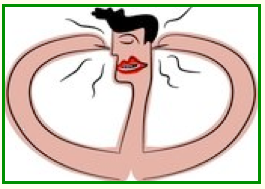
I TRY TO HIDE MY FEELINGS, but my body keeps giving me away
PREVIOUS: The BODY & Emotions – #2
SENSING Emotions
• Emotions (Es) represent a large part of our interchanges with others. If we leave out how we feel, or if we communicate them inadequately, we fail to get across an important chunk of what we mean.
NLP tells us that the Verbal part of Communication is only one aspect of the message we present, the others being our tone & body language. Words are important & have power – they can inspire or they can do great harm. But it’s tonality & body language that convey emotions.
Even though there are still people who deny the value of having emotions, (& some still flatly deny that animals also have them!) – fortunately there are scientists who continue to gather data identifying brain structures associated with emotions & the ways we can use our senses. Maybe it will eventually convince the skeptics!
BLINDSIGHT is a term coined by researchers at Oxford in the UK, over 40 years ago – working with blind monkeys & then humans, in the process of testing their ability to sense their environment using parts of the brain other than eyes.
• In the TV series “Through the Wormhole” the episode ‘Blind Sight’ (clips) shows a scientific study from the Netherlands about how Es travel from person to person, by picking up changes in faces. Dr. de Gelder’s subjects were stroke victims who can see with one eye but not the other.
They were shown pictures of people with neutral emotions – to their ‘good’ eye – at the same time that faces with a variety of emotions were shown to the blind eye.
• In every case, each time the unseeing eye was presented with people’s features that expressed emotions, the subjects automatically mimicked those exact expressions on their own face – without realizing it. When asked if they knew what emotion was on the screen, they all said they were just guessing.
Clearly they were using some other areas of the brain. For an explanation see the whole program
• CAT Scans show our brains experience many complex interaction we don’t consciously realize & don’t make enough use of, which include the emotion centers of the brain. It would benefit us as ACoAs to learn about these connections & realize they are legitimate parts of us – built into our biological system. We can then become more comfortable with our Es & use them to navigate the complexities of life – which is why we have them!
 HOLDING IN Es
• How we carry our body can indicate how we’re feeling emotionally, not just at the moment, but habitually. We store un-processed stress in our body’s organs, muscles, chakras, meridians & electro-magnetic layers. Specific emotional residue of abuse AND negative beliefs are stored in various locations in the body. (Anger in the liver, not being supported is in the lower back muscles, shame in the gut, fear in the heart or stomach….)
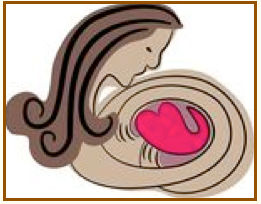
EXP: Some people’s whole body center is visibly concave, as in these drawings. It shows they were severely & regularly abused in childhood, often continued in current toxic relationships.
☁︎ Their solar plexus has been emotionally punched (sometimes physically too) so often that their body is trying to pullback from future blows they know will come – or are still expecting, even long after the danger has passed.
There are also many abused people whose outward signs are much subtler, but the cues are there as well – to help us understand their behavior
 ➼ Generally, people who are confident & happy stand erect, head up, shoulders back, & walk with a sure but not arrogant gait. Depressed or self-hating people may stand with head down, slumped shoulders, slow or unsure walk….. Changing how we hold our body can improve how we feel about ourselves.
Of course there are exceptions:
 ♿️ someone with a chronic physical illness or disability may move slowly, be hunched over, clumsy, needing a wheelchair. Yet they can be confident & emotionally balanced, with ups & downs, but not miserable,
☢️ while some who are deeply insecure may strut & seem ‘strong’ emotionally, only because they present a facade to compensate for being afraid, expressed as anger & inflated self-importance.
NEXT: Emotions & the Body (#4)


 HEAL & GROW for ACoAs