
 PREVIOUS: For Protection
REMINDER: Use Acronyms Page for abbrevs.
2. INDIVIDUAL NEEDS – cont.
c. PROTECTION from HARM
d. To PREDICT BEHAVIOR
• Psychological research has shown that Emotion shapes behavior, perhaps because strong Es reinforce experience. Knowing how someone feels will help us evaluate how they will act.
Everyone has a chronic or habitual emotional state that determines their fundamental & relatively constant behavior patterns. When we experience success or failure in our activities, emotional levels move up or down accordingly, but eventually re-balance, returning to our personal base line.
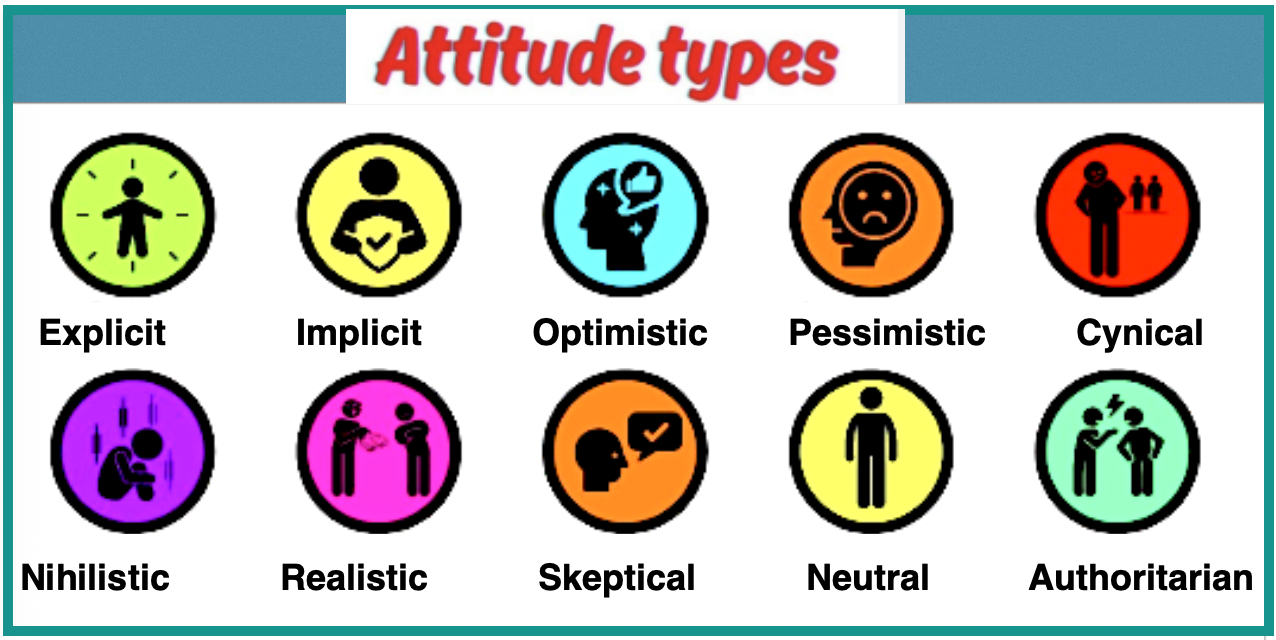 ATTITUDES (Att) are a person’s consistent evaluation of people, objects, & ideas, based on TEA: T – cognitive, E – affective or A – behavioral. Explicit Att are opinions that people consciously endorse, & can be easily described, whereas implicit Att are involuntary, usually unconscious & therefore uncontrolled. Att can predict behavior if we know which of these 2 categories someone is coming from in a given situation
T.O.M. –Theory of Mind – acknowledges our natural capacity to understand internal states such as beliefs, feelings, desires, hope & intentions. We’re able to create a mental picture of our own Es & reactions, which helps us understand that other people’s behavior is caused by their inner experience. This helps us anticipate & predict some of what to expect from them
• We know that whatever goes on in the mind of others is not visible to us, so the images remain a “theory” we create. T.O.M. is not a form of mind-reading but rather a way to notice patterns, like putting oneself in someone else’s shoes.
EXP: Even as a kid, you ‘understood’ that your sister would be sad, furious & frustrated with you IF you tore up her favorite dress! And you could also predict how she’d react – yell, hit you, tell your parents, get back at you later – depending on her personality
CHILDREN: A group of Child Psychologists made a systematic examination of emotions & story themes in children’s play time, to see if the combination could provide useful information about their bad behavior (acting-out).
Scenarios made up by 4 & 5-yr-olds, with images of emotional distress & destruction (aggression, personal injury, loss, abandonment…. ), correlated with their actual behavior problems, as rated by parents & teachers.
SALES: Marketing studies have used emotional measurements to see if they could link people’s capacity for persuasion & therefore purchasing decisions with emotional feelings. They concluded that combining emotional responses with other key factors indicate consumers’ true basis for choices. This gives companies an effectively tool for reaching their audience, since Es accounted for 70% of the respondents’ purchasing motivation.
ACoAs: Again, the type of Predicting referred to here is NOT mind-reading, which is based on our assumptions, projections & wishes. Rather, it’s the ability to observe what others are telling us about themselves – which they do all the time – AND recognize what our emotions are telling us about them.
 • As we get to know someone we can make general but legitimate assumptions about how they’re going to react in various emotional states & social situations. It’s up to us to stay awake.
Children figure out how to do this at an early age by watching their parents & others around them, so they know what’s expected of them, how to respond & how to protect themself. BUT we were taught not to trust those observations – so we ignore what we do know, to our detriment!
• Because of this trained blind spot, as a substitute ACoAs try to mind-read what others feel & need, which is always a disaster. We also make the mistake of ‘predicting their behavior’ based mainly on how our parents treated us & each other – instead of responding to who someone actually is in the present. EXP – If we were —
— constantly neglected as kids we expect everyone will ignore us now
— always scapegoated in the family, we keep ‘seeing’ ways others marginalize or blame us
— usually punished for getting angry, we assume everyone else will also reject us if we express anger….
➼ Yes, we can easily fi nd people who are just like our family, often choosing & then staying with them because we can act out the Negative Prediction of always & inevitably being abandoned.
However, those types are not our only options. There are respectful, caring people in the world as well. We have a right to find & be with them – so believe in that Right & keep looking!
✶ Relations are like fish – it’s up to us to pick the ones with the least bones!
NEXT: Purpose – Decisions, #1


 HEAL & GROW for ACoAs