
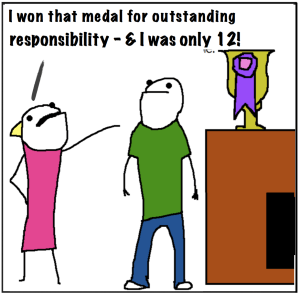
I’M PROUD OF WORKING
harder than everyone else!
PREVIOUS: Being too nice #1
SITE: ☀︎ “Too agreeable’?
☀︎ Childhood Trauma Recovery ARCHIVE
See ACRONYM page for abbrev
The HIGH COST of ‘too nice’ (cont)
Co-Dependence & Anger have a reciprocal connection. Some people compensate for their fear/terror of rejection – for having their own needs, opinions & emotions such as anger – by using people-pleasing tactics. They may not have started out angry, but the longer they have to suppress their own needs & feelings, the angrier they get. ‘Fake-nice’ has its limits, so when we can no longer hold down the rage that’s been building, we can explode outward – at others, OR or implode – on ourself, getting depressed, physically ill &/or suicidal.
Michelle Ferris (LMFT) offers 3 Co-Dep traits that breed anger & resentment
– while trying to soothe internal pain, & avoid feeling shame, loneliness & emptiness :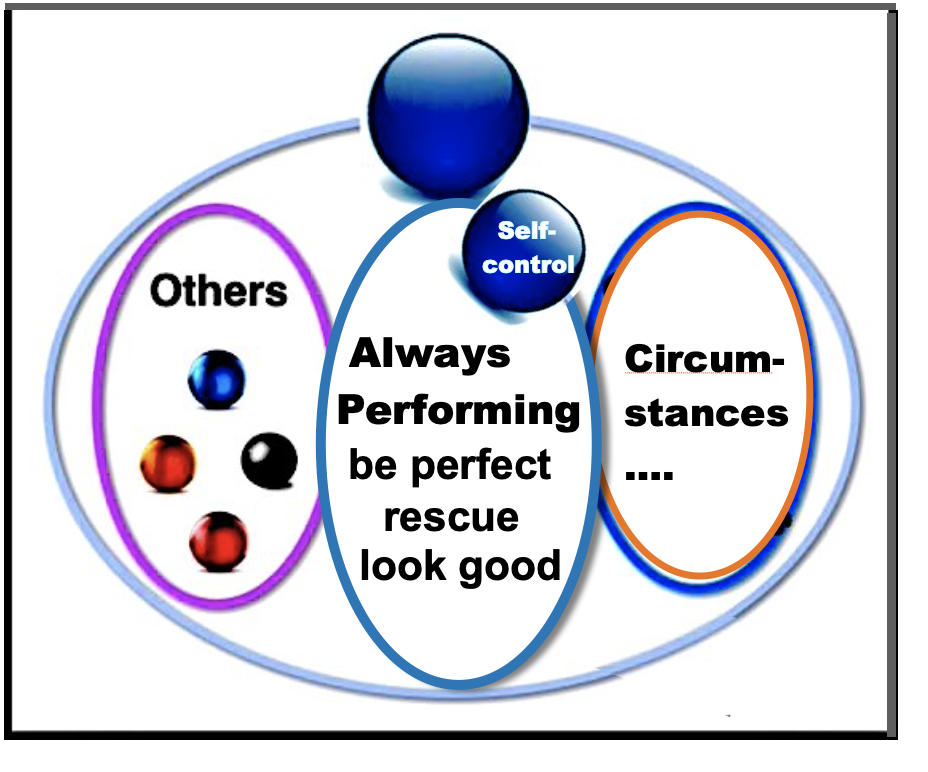
1. The Illusion of control — over others (the Serenity Prayer backwards)
2. Being a Superhero — always over-giving, never asking for help
3. The Lie of being FINE — superheroes aren’t supposed to be vulnerable, have weakness or needs
Active Co-deps have not yet learned that:
• it’s normal for everyone to experience anger, being part of the kaleidoscope of emotions we’re born capable of
• it’s imperative to find legitimate, effective outlets for anger, so it doesn’t get vented in situations that can harm ourself or others
• there’s a difference between the WIC’s anger from S-H’s beliefs & unrealistic demands of others vs. appropriate anger at being victimized by family & others
• the best way to manage anger is to deal with it as soon as we can, each time we feel it – so it doesn’t have a chance to build up
• we can give ourselves permission to feel & deal with all emotions
(‘Anger & Co-dependency‘. Great site by Dr. Irene)
GIVER or TAKER??
 In their book “The Givers & Takers“, the authors Evatt & Feld point out that – ironically – Takers are more ‘desirable’, in spite of & because of being less available, less forthcoming & less sensitive. When they do give – it’s more reluctantly, sporadically & for calculated reasons. They’re the ones who lean back instead of forward in their chair when having a conversation, who seem not to need anything, who have an air of mystery. Yet, they’re considered more sexually & socially attractive, while Easy/Soft is considered uninteresting & un-sexy!
The authors believe these are the Introverts of the world, while the Givers are the Extroverts. There may be some validity in that, because Introverts don’t need or want as much contact & interaction with others.
But it’s not the whole story.
Introversion is an inborn characteristic & is not a sign of emotional damage.
On the other hand, dyed-in-the-wool Takers are more likely to be trying to compensate for childhood damage – withholding, arrogant, insecure & narcissistic – hiding behind silence, while feeding off of the others who chase them.
Now, if you are the co-dependent Giver type, unavailables are like catnip to you – BUT you don’t want to be one of them! You’re too driven to give, sacrifice, be needed, rescue & fix – to be aloof. HOWEVER – if you are indeed an extrovert/ connector type by nature, you really do have a good heart, so it’s imperative you learn to moderate how much you give & to whom – if you want mental health & true safety. 
Of course, to be psychologically heathy and a giver- we have to have clear, firm boundaries, which means knowing your needs.. (Healthy Helping).
Not the Real you? Angry-niceness is a damage-trait, like all other character defects. The big mistake many of us make is to think these patterns represent our real personality, murmurin g: “Well, that’s just who I am, I can’t help it.” Actually, it’s a manifestation of the False Self, rather than written in stone. So the good news is that it can slowly be changed, or at least greatly modified.
NEXT: INTERNAL High Cost, #1



 HEAL & GROW for ACoAs