
 THE WORLD IS ONLY SAFE – if I pretend to not notice the bad stuff!
PREVIOUS: Trusting #2
SITE: 10 Warning Signs of being too trusting
QUOTE: “Never trust anyone completely but God.” ~ Lawrence Welk
OVER-Trusting (OT) – as ADULTS
DEF: Ignoring information you already know about a person or situation (or a potential one you’ve been told about) that screams: “I’m NOT safe. I’ll get you as often as I can. Don’t trust me” AND that everyone else – except you – can see!
📌 A therapist suggested to a client why she needed to be more discerning & less trusting: “Some people you don’t let in the bedroom, some people you don’t let into the living room, & some you don’t let in the front door!”
🔷 WRONG reasons for trusting:
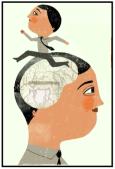 • Impulsiveness : chasing something or someone the WIC very badly wants, putting all our inappropriate hope & trust in how it will turn out (the way we ne-e-ed it to), without admitting what we know, & not considering the consequences – including thinking through possible danger to ourself or others
• Masochism : We tend to search out confirmation of prior expectations. ACoAs expect abandonment.
For abuse survivors with little or no Recovery – reinforcing the pain of unjustified hope & unfulfilled trust (PMES abandonment) is often chosen over safety & pleasure.
We repeatedly trust the wrong people, guaranteeing disappointment, by fulfilling our self-destructing assumption – that there are no positive outcomes for us.
• Risk-taking : Being desperate, or as an adrenaline junkie, we pursu e a situation or person even knowing that the danger of going ahead is great (re. love, money sports….).
If we subjectively think the possible gains far outweigh any possible loss (coming from the WIC), we’re willing to take the gamble, sometimes even with our life.
All of us ACoAs experienced years of trauma in childhood – at home, at school & in our neighborhoods. We were deeply scarred by those experiences, but each of us handled it in our own way, depending on our basic personality AND our Toxic Family Roles.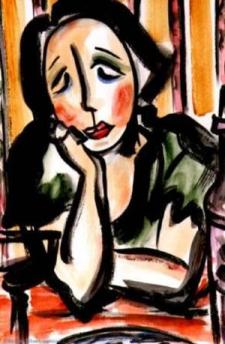
Those wounds were beyond anything we could bear, so we developed our own defensive posture:
• some have become overtly tough, angry, bitter
• others hide away from everyone
• some try to rescue & fix others to feel safe
• others escaped into a world of fantasy & have stayed lost, needing to see everyone thru rose-colored glasses!
THIS last defense mechanism is a thick blanket of vagueness to soothe the ache in our heart, BUT it makes us endlessly vulnerable to emotional, mental & physical vultures who can smell our ‘out-to-lunchness’ a mile away!
 ACoA IRONY : Regardless of which protective style we act out, we’re trapped in another dilemma. Trying to mask how afraid we really are of everyone underneath, some of us carelessly trust everyone, especially the most damaging people! It’s so automatic we don’t even realize we’re being too credulous because we need it as a safety blanket, & because it’s passive.
EXP: Josie hears a new acquaintance say she has trouble with friendships – they usually end in serious disagreements. Josie is starving for companionship & overlooks this vital information. Unconsciously her WIC is thinking: “She wouldn’t do that to little ole’ meeee – I’d never hurt her or make her feel bad, I care too much, I’m so sweet…..”
Yet, sure enough, at some point Josie says or does the ‘wrong thing’ & the friend gets mad at her – attacking, accusing, withdrawing ….. Josie is shocked, then hurt, confused & of course blames herself for the problem (as if this outcome wasn’t totally predictable!)
We excuse our blindness by saying:
• I’m just trying to be a good person, I’ll give them another chance
• it’s wrong to judge others, & besides – they’re trying
• ‘they’ don’t mean to hurt me / can’t help how they are
• you don’t know their ‘good’ side, their good qualities
• …but they say they love me, give me money, ne-e-ed me
• I can’t make it without them
• & it’s my fault anyway, I deserve how they treat me …
NEXT: Over-Trusting (Part 2)


 HEAL & GROW for ACoAs