ACoAs & PLAYING (Part 6)

no timeNO TIME, NO TIME
for all that silly stuff! 

PREVIOUS : ACoAs & Play (#5)

SITE:: 7 Secrets of Dysfunctional Families (ironic)

QUOTE: “There is nothing that human beings do, know, think, hope & fear that has not been attempted, experienced, practiced or at least anticipated in children’s play” Heidi Britz-Crecelius (‘Children at Play’)

💠 ACoAs NOT KNOWINGwhat we like, or How to Play (Part 5)

💠 PLAY & the Wounded Inner Child (WIC)
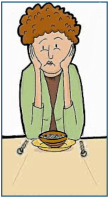
ACoAs: Not taking time out to play is a lot like our great resistance to developing the daily habit of talking with our Inner Child. The same attitude applies to not building in down-time (just vegging) & play-time (doing something relaxing & fun).
We think: ‘Why do we even have play? Isn’t it an indulgence, a waste of time? Aren’t we always supposed to be busy DOING something productive?’ NO.

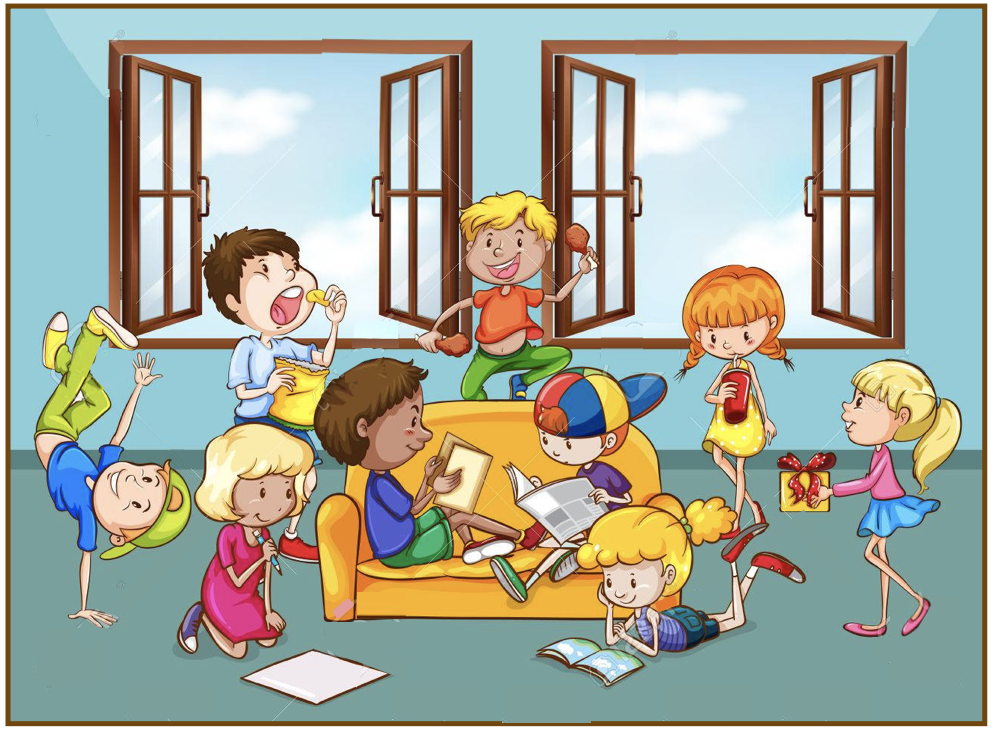
Adult play is not a waste of time. It’s actually a necessary component of being healthy. In a busy & competitive world ‘normal’ adults have forgottenhealthy vs not to play the way they did as kids, & need to be reminded of the freedom & benefits of spontaneous enjoyment.
But most ACoAs don’t have those ‘good times’ to look back on. WE didn’t have much of a chance to play – too busy care-taking, while being terrified, isolated & hiding from real danger!
WE:
• were programmed to live un-healthily, & play was not in it
• say we can’t decide what to do (but our Healthy kid knows!)
• are afraid to break any of the Toxic Rules
• can’t allow ourselves to have fun if our family members, or other loved ones, are in pain. We would feel guilty to not co-dependently suffer with them!

🦠 But it’s also understandable that some of us can’t find the fun in anything  – if we’re severely depressed or ill, still live in an abusive environment &/or are always worried about something serious ($$, lack of work, an ill child or parent, an angry spouse…. )

Just like we can’t let love in when we feel unsafe, we can’t feel free to play with too much anxiety.  Even the idea of Play doesn’t make sense to us – at first. John Bradshaw reminds us that ACoAs were forced to become Human Do-ings instead of Human Be-ings. So as adults it scares us to just BE, either doing something we like – or nothing, once in a while.

BTW, this is not the ‘nothing’ of depression or laziness, which is actually fear & hopelessness. Rather it’s the Be-ing of pleasure! It comes from feeling relief, being in our own skin instead of in someone else’s head.
It’s being good to ourselves, knowing we are safe.
And that safety comes FROM :
a. finding the right person & style of therapy, 12 Step meetings & books, mentors & friends – to set an example & give us the correct info about our past and what Mental Health is
b. our own persistent efforts to use all the tools at our disposal, including ‘constant contact’ with the IC
c. having a daily, deep connection to a safe, loving Higher Power Who supports us in the healing process

REQUIREMENTS for being able to Play
As we heal we can add recreation into our schedule. It may be uncomfortable for a while, but as with so many things, repetition makes it easier, & then becomes the new norm. For healthy play & ‘good, clean fun’ we need TO:
• carve out or use available free time to ‘waste’ on fun
• not be under pressure to produce anything in particular
• have a measure of control & autonomy over our choices – not compulsively obeying our self-destructive Family Rules nor follow someone else’s lead
• practice using our native imagination &/or skills for play

Ultimately, we need a decent amount of self-esteem (for internal permission), a relatively low-level of anxiety (at least at play-time).
💓 Don’t wait for some magical future time when you’re ‘well enough‘ – to have some fun & relax. Start slowly, but start now.

NEXT: Childhood PLAY (Intro)
ACoAs & PLAYING (Part 5)


PREVIOUS: ACoAs & PLAYING (Part 4)

QUOTES: “Combinatory play seems to be the essential feature in productive thought.” ∼ Albert Einstein
“If you want creative workers, give them enough time to play”  ∼ John Cleese


💠 REACTION to growing up in a dysfunctional environment
(Parts 3 & 4)

💠 ACoAs NOT KNOWINGwhat we like, or How to Play
1. Having a parent who was:
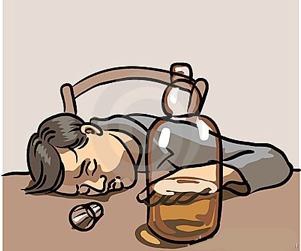
• a drunk – whether active, hung over or temporarily dry – they weren’t paying attention to who we were or what we liked (no mirroring)
• angry at having to be a parent at all, so we were left us too much alone, with little guidance to figure things out for ourselves – way too young
who was :
• immature & needy, who overtly or by default expected us to take care of them, so their needs & wants bdrunk dadecame our only concern
• so depressed/ sick/ scared…. making the atmosphere heavy, gloomy
• overbearing, who demanded, coerced, manipulated or shamed us into only wanting/ liking what they did, so we never learned what our tastes are
who was :
• mentally ill (especially if it was the mother), chaotic, greatly neglectful & depressed.
They could not be a role model for sane thinking – so we didn’t learn to process info correctly, have options, think for ourself or know our feelings & preferences
• deceased or went away (by divorce or deliberate disappearance), & the remaining one was too overwhelmed &/or busy working to pay attention, so we didn’t get to interact enough with a adult, much less a safe one

2. Re. Siblings – IF:
• one (or more) died before we were born, it was held up as the perfect model no other child could compete withproblem sibling
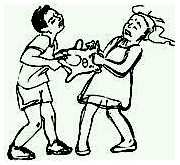
• one was always a bully, abusive, demanding
• one was physically or mentally ill, their problems were the main parental focus
• one was a parental favorite, only what they liked had value (‘golden child’)
• we had to care for younger ones, only their needs counted

3. We were:

• blatantly discouraged from taking any time for ourselves, to relax
belittled for not knowing how to do something correctly – the 1st time! which made us reluctant to try anything new, assuming we’re incapable of learning (too stupid) or that we’ll be punished & ridiculed
• rarely or never given the opportunity to do leisure activities as a kid
We were
• so preoccupied with keeping the family from falling apart, that we felt guilty if we rested or took the time to do something we enjoyed
• not allowed our emotions at all, or only certain ones that were acceptable to the adults (being ‘up’, being sullen or angry), so we had to shut down both painful feelings as well as our joy
• left alone so much that we felt abandoned & depressed, not motivated to entertain ourselves – except perhaps as a form of escaping painful emotions – not an an ingredient for having fun!
We were
• too anxiety-ridden to play – fearful, worried, confused, lost AND simply not allowed to relax & have a god time!
• ignored – no one in the family bothering to play with us or show us the way by example, unless it was unhealthy – going out on the town while leaving us alone, drunken parties at home that ended in verbal &/or physical fights, being unfaithful, hanging out with their buddies…..
ALSO
• Certain ‘leisure’ activities – that are supposed to be play or fun – were poisoned because they were forced on us – by parents, teachers, leaders, mates…
Were you forced to practice an instrument? have sex with an inappropriate person you were supposed to trust (& you hated) ? take sports lessons you weren’t suited for or not interested in?
OR did you have a limitation or disability which was made fun of in gym, on the playground, at home?

PLAY is a necessary & normal part of childhood that we were deprived of OR which became connected to some type of pain.

NEXT: ACoAs & PLAY-ing (Part 5)

ACoAs & PLAYING (Part 4)


PREVIOUS:
ACoAs & PLAYING (Part 2)


ACoA LAUNDRY LIST’s
 False Self characteristics (cont)

e. ACoAs feel ‘different’, creating a wall that isolates us
This prevents many of us from making the effort to reach out to others, search for appropriate venues that can provide relaxation, or for opportunities to play & have fun, whether recreational or educational. If we do try, we often end up picking controlling narcissists, reinforcing the need to withdraw

f. ACoAs are afraid to relax, let go & have fun
As much as we may take pride in being the good, responsible one, we’re internally at war. We may frown on others we label as silly, childish or lazy, but are deeply envious of them for having a freedom we don’t allow ourselves

g. ACoAs are impulsive
The opposite of spontaneity. Impulsive is when we do or say things it seems we have no control over, & can’t stop even if mascotwe say we ‘want’ to. It comes from the WIC’s intense anxiety caused :
by a constant push to get a huge backlog of unfulfilled needs met – the only way the child knows how, without boundaries or guidance

but misdirected or short-circuited by toxic unconscious beliefs – nit allowed to actually have needs, because we’re just to-o-o much (for our parents to manage!).
This impulsivity includes any type of ‘recreation’ that ultimately harms us in PMES ways. We act out & then feel ashamed, OR are convinced we’re ‘free’ to do whatever we want

It’s about looking for immediate rather than deferred gratification: “I want it NOW!” because to the WIC any delay absolutely, unequivocally means “NO, you can’t have it & never will!”
Suggested Affirmation: “Delay is OK”. If we’re brave enough to ask for something realistic we want, most of the time it turn out well enough.

💠 REACTION to growing up in a dysfunctional environment
a. Many of us turned out to be compulsive, over-responsible worker bees, doing something we hate or are bored with, trudging thru life trying to be perfect, but never quite making it. No time for play, unless we consider participating in addictions as a way to relax. Obviously not real fun.

b. Some of us decided early on to give up & not really try at all. Hide & be safe, don’t rock the boat, don’t stick your neck out. No fun here.

c.
And then there are those of us who are openly rebellious – “addicted to excitement” but not actual fun – the flamboyant addicts, promiscuous, belligerent, running wild, never finishing our education, never sticking to anything long enough to become accomplished, terrified of being trapped, controlled, of even committing to a book – much less a satisfying job or relationship….

• To the rest of the world this third group may seem to be living it up. They do whatever they want, get away with ‘murder’ & play all the time. NOT SO. Sometimes even this type of ACoA may think so too while in the middle of it, but it wears thin over the years. The internal foundation is built with inferior material – not ours but what was given to us by our limited family & community. It’s cracked & crumbling. This is not fun.

BTW, If you identify with any one of these 3 group, & are reading this, presumably you’re in the process of healing your wounds & working to outgrow the category. You deserve a lot of respect & encouragement!

encouragementHowever, some of you may say – “I’m an ACoA & don’t fit into a. b. or c. I have a decent life I’ve carved out for myself – family, career, some accomplishments, some travel…. & I know how to have fun & play.”

Response: “GOOD! You’ve used your own native skill & drive to achieve these things, & have a lot to show for it. Have you built it all on your Tue Self? Are you content & relaxed?
Are you free of addictions, perfectionism & S-H? Or do you over-do for others & under-feel – for yourself? How’s your sleep & anxiety level?

NEXT: ACoAs & Playing (Part 5)

ACoAs & PLAYING (Part 3)

rain on meI DON’T KNOW HOW TO PLAY –
only to be compulsive, never relaxed

PREVIOUS: ACoAs & Playing (#2)


💠DEFINITION (Parts 1 & 2)
   

💠 ACoA LAUNDRY LIST’s False Self related to PLAY

• One of the many sad results of having a traumatic childhood is that we were & are still deprived of the joy of relaxing thru playing & having fun. As a result of our damage we fall into several categories (lifestyles) which seem very different, but underneath each has the same problem – our WIC listening to the Negative Introject, believing the Toxic Rules:

“Life is hard / you have to suffer / you can’t play until all your work is done / no one wants to play with you anyway / if you don’t like it you have to stay / don’t be yourself / the world is a dangerous place / you always have to struggle, but never get there!…..”

a. ACoAs guess at what normal is
Here ‘Normal’ means healthy, as opposed to ‘average’. We don’t realize that playing, relaxing & having fun are a legitimate & important part of being healthy, happy & well-balanced. “All work & no play makes Jack a dull boy”.

There’s a tribe in Papua New Guinea that frowns on sex, & bans play. For years anthropologists have considered this tribe too dull to study, but finally someone did. Scholars still don’t know why the tribe developed this philosophy, but it’s certainly not one we should emulate! MORE…)

b. ACoAs have difficulty with intimate relationships
Everyone needs a certain degree of connection with other people, but the amount depends on one’s developmental stage, personality & on their current situation.
And while it’s perfectly normal & acceptable to play alone, playing with others requires a certain capacity for intimacy** to be ‘legitimate’ – since being in authentic play-mode means able to express the True Self without embarrassment or reservation.

This is not easy for ACoAs because our True Self got shrouded in shame & self-hate, making it hard for us to ‘let loose’ & let others get emotionally close to us.  ACoAs are more likely to put others in double binds: “I hate you – Don’t leave me!” OR “I need you – Don’t touch me!”

**INTIMACY: (IN-TO-ME-YOU-SEE) refers to a level of closeness where you feel understood & validated. Genuine intimacy with someone requires honesty, communication, vulnerability & reciprocity.
In relating to others, it’s the ability to connect our ‘deepest nature’ with safe & appropriate others, because we know there’s nothing fundamentally wrong with the Real Me, so we’re not afraid of letting it be seen

c. ACoAs take themselves very (too) seriouslytoo serious
While other children were busy learning to relate, compete, play & develop social skills, we were learning the tough lessons of survival. Many of us never heard our parents laughing, joking or fooling around (unless drunk!)
The air was heavy, filled with the invisible energy of suffering. Life was a hard business & the tone in our house put a damper on anyone enjoying themselves.
So if we did try to play or have fun we were guilted for wasting time OR punished for being frivolous & attacked for being ridiculous, making it stressful & terrifying.

d. ACoAs over-react to changes they can’t control
Genuine play allows us to be in the moment, not knowing the outcome, not having to win, be right or perfect, & not “forcing solutions”.
EXP: when children play, they often change the out of control‘rules’(which they made up in the first place) anytime they feel like it

Adult play doesn’t always have to follow pre-set rules either, sp they can be thrown out the window if it’s more fun to not use  them. This is hard to allow ourself.

Children do need things to be stable & predictable in their every-day life, with clear rules & boundaries, something in very short supply in most dysfunctional homes. Chaos was the order of the day for us, so now we try to keep everything under tight control, which doesn’t fit in with playing. But PLAY is free-form.

NEXT: ACoAs & PLAY #4

ACoAs & PLAYING (Part 2)

A HAPPY CHILDHOOD
includes having fun

PREVIOUS: ACoAs & Playing (#1)

SITES: Fostering Creativity

QUOTES: ✦“It is a happy talent to know how to play.”   ~ Ralph Waldo Emerson

✦ “A lot of people say a lot things about creativity – what it is, how to enhance it, what it means….. Creativity is just play, and love”  ~ Kent Parkstreet (blogger…)

💠EXPANDED Def
a. PLAY (in general) (Part 1)

b. FUN: It is playful, often noisy activity which diverts, amuses or stimulates. Anything that is a source of enjoyment & pleasure
• IMP: this def. only refers to positive situations, rather than abusive ones such as ‘making fun of’ someone / ‘having fun at their expense’…../ or excited, violent activity ‘She insulted him & then the fun began’

• In these posts the two terms (Play / Fun) are used interchangeably. The key word in both is activity – behaviors we choose to do – because we like** them. However, while play is indeed an action – even verbal play (poetry, exchanging puns & jokes, lively discussions about favorite topics…),  fun can be either active or passive. We can have fun sitting in a comedy club or quietly on the beach. Play is more participatory, although it doesn’t always need others for it to be ‘legitimate’

These definitions raise several issues for ACoAs
When asked ** “What do you like?” too often the answer is “I don’t know”.
To an observer this can be confusing because, looking at our behavior, they see many of us as functioning & accomplished people, which is not how we think of ourselves.

In spite of childhood trauma, ACoAs have done things as adults – & some as far back as childhood – which we did like, even enjoyed. It could be anything :
• Artistic – acting, singing, designing …
• Sporty – acting, dancing, bike riding, hiking, baseball….
• Physical things – going to an amusement park, traveling, having sex…..

So why do ACoAs say we don’t know what we like?
It’s a response from our WIC, who is still ‘living in the past’ & still doesn’t have a clue – or more accurately is not allowed to “Know what I know”. Because of the family’s narcissism & addictions we didn’t get mirrored** correctly, or at all.
**Mirroring (most effective when given to small children, but can be provided at any age), is what we call ‘being seen’ – literally echoed.
It’s when someone outside of us is able to freely, accurately see who we are & then feed it back —
without any mental or verbal distortion
without adding their opinion, taste or bias
without their need for us to be a certain way…..
…. just reflecting back to us who we are, the way we express ourselves, the way we see the world, the way we think, feel or do things

If this had been done for us when we were kids, we’d KNOW how are, & therefore have a lot less anxiety. Healthy PLAY is only possible with a minimum of background anxiety!

PLAY & TOXIC ROLES
Regarding down-time, each child was affected by & reacted to the family’s dysfunction in their own way, but it also lent a particular intensity to the ROLES we developed:
🔻 The HERO had to be ‘on’ all the time, being the serious adult right from the beginning of life, so not a lot of room for relaxing

tease🔻 For the SCAPEGOAT, ‘fun’ (for them) was hurting & humiliating (others) – in the guise of teasing “Just kidding !!”- verbal insults & arguing used to belittle, & pranks or games that could be dangerous

🔻 The LOST CHILD, often an Introvert by nature but not exclusively – stayed in the background, escaping, hiding, withdrew into daydreaming, reading, arts…. – their version of fun

🔻 Even the MASCOT, being cute & funny to keep everyone else’s spirits up, but at the cost of denying their fears. Their playfulness came from pain rather than joy, often tinged with sarcasm & meanness.

NEXT: ACoAs & PLAY-ing (Part 3)

ACoAs & PLAYING (Part 1)

having fun 1
HAVE FUN?
What’s that?

PREVIOUS: Inner Child Speaks, #2

See ACRONYM page for abbrev.


QUOTES:

✦“You can discover more about a person in an hour of play than in a year of conversation.”  ∼ Plato
✦ “A little nonsense now & then is cherished by the wisest men.”  ∼ Roald Dahl (children’s books Author)
✦ “Play is the royal road to childhood happiness & adult brilliance.” ∼ Joseph Chiltern Pearce  (child-development books Author)

💠 DEFINITION
Play – with a capital P – is a process, not a specific thing, which lights up our brain, benefiting us in PMES ways (physical, mental, emotional, spiritual). Being a ‘whole’ person means developing a balance between being serious & having fun, but ACoAs tend to live in one extreme or the other, being over-responsible or under-responsible.

In general, it’s any activity someone voluntarily chooses to do (or for ACoAs to not do) because it’s fun, relaxing & enjoyable. It can include being creative, & sometimes even competitive – but without the need to win – otherwise it stops being Play.  Debbie Mandel, Stress Management expert suggests that F-U-N = Feeling Uninhibited Naturally. And a formula for ‘balance’ is: Concentrated Energy + Relaxation = Healthy living.
 
🔆 The purpose & spirit of Play does not require any practical, concrete outcome. It’s not supposed to generate something you can ‘show for it’. It’s a state of being rather than doing.

🔆 However, we can have a hobby that we really love – something creative or a sport, which does includes performing, making or winning something. We may or may not be good at it. The value is not mainly the end product, but the process, which is supposed to be pleasurable & satisfying – suited to our True Self & feeding a part of our soul

🔆 Also, many of us have heard or read about people who say they love their work so much it feels more like playing. In this case there is a tangible product & a financial benefit, but the point they’re making is that it makes them happy! They feel blessed because they get to do it all the time instead of relegating it to their spare time – or not having time for it at all

EXPANDED Def:
1. PLAY (in general) is made up of a wide range of spontaneous, voluntary, internally motivated activities, usually associated with recreational pleasure. It’s driven by an interest or enjoyment in the task itself rather than -necessarily – working towards an external reward.
Play can range from frivolous & pointless —> through spontaneous, free-spirited & relaxed —> to planned or even compulsive

In childhood, Playing is ‘run’ by children who choose the plot, location, characters & props – making up or changing the rules arbitrarily. It’s something that completely engaged their attention, & ends when it’s no longer fun or interesting.
IMP: By this definition – when adults have kids ‘playing a game’ of any kind with pre-set rules – it’s not Play 

“Self-directed play gives kids the opportunity to hone their decision-making skills. Selecting a game, focusing on that activity & seeing it through to the end, is an important element of cognitive control, which helps sharpen their planning skills & attention spans. (For teachers….)

And when children are faced with a problem during play, it tests their reasoning judgment, & ability to find a solution. Brain-teasers, puzzles & strategy-based games help reinforce critical thinking skills”

NEXT: ACoAs & Play (Part 2)

“INNER CHILD SPEAKS”, re-posted (Part 2)

inner kidYOU DON’T HAVE TO KNOW EVERYTHING
to listen or talk to me!

PREVIOUS: Child to Adult Monologue (#1)

SITE: “Love Your Inner Child


WRITER: Marie T Russell (1996) publisher of InnerSelf Magazine. Reprinted in full, as is. 
LETTER CONTINUES

The child cries out:  “You told me that it was not a-prop-riot-e behavior to dance in the street, or to sing with the birds, or to talk to the new people that I discovered on the street – you call those people strange-hers. You told me that it’s not appropriate to be playful & childlike, that I had to act your age. Well, I’ve got news for you. I’m an Inner Child & I’m eternally young… so my age is whatever I choose. And today I choose to be five years old. So it is okay for me to sing & dance & love everyone I meet, because I know that God loves me, and that I am loved by everyone because God is in everbad inputyone.

“Do you know what is not appropriate? When you frighten me with your grown-up mixed-up beliefs. You have a picture of the world that I do not like, & you try to frighten me into doing what you want by telling me about your picture. Well, your picture is all wrong! Do you know why?

Because your picture has a nasty God in it that punishes children & He gets very angry when they make a mistake. Well, my God loves me & loves you too. And my God does not frighten little children. Instead He provides birds that make music, fruit trees for food, sun for light & warmth, grass to roll in & lay on, animals to play with, & lots of other good things.

“Your picture is just a horror movie that you made up, & I don’t watch horror movies. So if you insist on watching a horror picture, keep me out of it. Don’t even tell me about it. I don’t like to hear yucky stories. They make my belly & my heart hurt.

“But if you decide you’d like to watch and live a beautiful love story with me, then simply switch channel to the Inner Child channel. You and I can get to know each other, then we can have some fun as well as some love & peace together.

“You probably don’t even know where I am. Well, that’s because I’m scared of you and I’ve been hiding. I would suggest you tame me, just as if you were dealing with a scared kitten. Just imagine that your Inner Child is a scared kitty hiding under the bed. What do you do? Well, maybe you start talking gently, lovingly to it even though you can’t see it. And then maybe you bring it a saucer of warm milk (for me a saucer of unconditional love will do), then back off a little & keep talking softly.

“After a while, I may peek around the corner to make sure that you’re really for real & won’t judge or criticize me again… after all, you’ve done that a lot. If I feel that you are really ready to love me & be nice, I’ll come out & we can talk & play.

“Another way that you can get in touch with me is to listen to what you call your intuition. Lots of times that’s me telling you what would be great for us. So the next time you feel that it would be good for you to go for a walk, or sing out loud, or dance… pay attention. That’s probably me making my presence known. The more you spend time doing the kind of things I like, the more you’ll start feeling me there, & enjoying our time together.

“And keep taintuitionlking to me. Soon you’ll start hearing me. You see, I talk very softly cause I’m little and sometimes I’m scared of you cause you’re big and you talk loud and gruff. So listen softly, and then you’ll hear me.

Remember that I love you & really want to spend time with you. I know that once you start spending time with me, you’ll be much happier. You’ll find yourself singing & maybe even taking silly little dance steps in the street. The people around you will start smiling for no apparent reason when you walk by, because their own Inner Child will recognize me & will also pop up to the surface.

“Can I come out and play? I love you a whole bunch! I hope you’ll come visit often & invite me to hang out with you a lot too! We can really have a great time together, you and me.”

With Love, 
Your Inner Child

NEXT: ACoAs & Playing, #1

“INNER CHILD SPEAKS”, re-posted (Part 1)

compulsion 

IC:  I HAVE A LOT TO SAY
if only someone would listen!

PREVIOUS: Talking to the Inner Child (# 5)

SITE: Inner Child POEM


NOTE to MEN: While this monologue by the Inner Child is clearly a girl talking to her female adult-self, the thoughts & feelings are just as valid for your little boy saying it to your adult-man, so please substitute ‘HIM / himself’ where it applies. You may not want to sound quite as mushy in places, so find the words that suit your own style, always keeping it positive, respectful & kind.

COMMENT: You may notice that the ‘Adult’ being talked to in this writing sounds sometimes like the Bad Parent & sometimes like an OK but weak Adult. Neither is fully the Healthy Adult / Loving Parent ego state (the UNIT) we’re aiming for. However, it’s also true that the child doesn’t always understand how adults think or what motivates them, but much of that can be explained with patience & love.

WRITER: Marie T Russell, (1996), publisher of InnerSelf Magazine.   Reprinted in full, as is.

The INNER CHILD SITS & WAITS – patiently for the adult to notice it, to talk to it. It wonders how many more nights, months, or years it must wait. It asks “How can I get her attention? How can I get her to talk to me, to listen to me?”

It thinks back of its past experience with parents & teachers, remembering that many times, to get attention, one had to be ‘bad’ or naughty. That always did it!. So it wonders… if I’m the Inner Child, how can I be naughty tp get the attention of my adult self?
The child, trusting her intuition, does what comes up.

The child cries out: “It’s me! I’m here crying out for you. I need you. I love you. I can be your partner, your helper, your guide. All you need is to start acknowledging my presence. Stop ignoring me. Stop pretending you’re all grown up & past ‘that’ stage. Come back to earth. Come back to being present in this body – after all it’s the only one you’ve got, & it’s all ours. Yours & mine. The Inner Child and the Adult.

“I’m the part of you that you’ve hidden inside – the sensitive one, the caring loving one, the exuberant one! That’s me! You’ve become the serious one, the one that has no time to play, to simply be. You’re the busy one…. wanting to do better, to improve, to advance your growth, your career, your relationship…. I simply want to be – mostly joyful & happy.

“It’s OK to be sad now & then, but I don’t like to stretch that stuff out. I feel it, let it out, & move on! The adult that you are seems to enjoy mucking around in that stuff. Not me! I’m a child, & I want to play & enjoy life. I don’t believe we’re here to be miserable. I think some miserable people made that up so everyone would be miserable like them. Well, I don’t buy it! I trash that thought!

god-loves-me“I think that God made us & God loves us, & surely wants us to be happy! After all, don’t all parents want their children to be happy, deep down? It’s just that because they have buried their own Inner Child, they think that ‘happy’ means having a good job, a big house, secure income – all that stuff.

Inner Children know that is all crap. What’s important is the love, joy & simplicity. We don’t need fancy toys. We just need a loving lap we can sit on & feel loved. Then we can make up toys as we go along…..

The child cries out: “You adults make it so complicated! Give us a KISS. Yes! K.I.S.S. Keep it simple silly! Look inside yourself, invite your Inner Child to come out and play.  Tell it that it’s OK – that you won’t scream at it anymore, won’t tell it to go away, or tell it that it’s not behaving appropriately.
A-prop-riot-e-lie. That’s a big word that I learned from you. I know what a prop is. I know what a riot is. I know what a lie is. All those words together just don’t make any sense to me. Except that maybe behaving appropriately is a lie which becomes a prop for a riot. Did you ever think about that?

NEXT: Part 2 of “Letter from the Child”

ACoAs : BOOKENDING with the WIC (#3)

PREVIOUS:
 Book-ending, #2

POST: ‘ My Rights


4 USES (written or mental) 


1. Identify an activity (A) that makes you anxious just thinking about it! – going to a party, making a cold-call, asking for a need, verbally objecting to mistreatment ….

2. Before taking the action, list as many scary, mean, negative beliefs (T) about the situation you can come up with, in 2 categories – ‘About Me’ & ‘About Them’.
These assumptions will come mainly from the WIC – (negative “I” statements), &/or Bad Parent voice (PP), using “You” statements.  🧩 Use CHART from “Why are you Stuck?”

✶ Include experiences you’ve already had with this particular scary person or event, so you’re clear about who or what you’re dealing with
— This can be tricky if you tend to paranoia, as your evaluation may be slanted or incorrect
— However, we often ignore what we DO know about people, places & things that are unpleasant, unsuitable or actually harmful

3. As soon as possible, take the planned action (A).

4.
Afterwards, go back to the original list & write down:self-esteem
• what actually happened – specifically in relation to your negative ‘pre’ list
• how that was the similar to, partly or totally different from the ‘PRE’ list?
• how do you feel now (your emotions)?
• using the Adult ego state, what do you conclude (T) about this event now?
EXP:
#1. Afraid to say NO to someone’s request
#2. “They’ll be mad at me / won’t like me…. if I decline”
#3. I fearfully call or text: “I’m sorry but I won’t be able to —-”

#4
. Possible positive results:
• The person says OK & is not upset with me
• I’m relieved & surprised, can’t believe it was so easy
• It wasn’t as bad as I thought it would be (not bad at all)
🎩
Whenever we think of having to make a choice, it’s usually in B&W terms – either Good or Bad. Naturally we want to opt for the good / best option. But what if you only have 2 painful ones, & you’re torn? Which one do you choose?

EXP: You’re in a ‘love’ relationship that means a lot to you but is making you unhappy. You know it’s somehow not good for you (even toxic) but it’s so-o-o hard to leave because it’s going to hurt a lot. Staying hurts, leaving will hurt.

Which ‘negative’ option do yo pick? DEFINITELY – it has to be the one that will contribute to your personal growth & self-care.

If you DO want to leave, naturally you have to be fed up enough (“sick & tired of being sick & tired”) – but also have to be ready to handle the PMES results, with the right kind of support!
HELPFUL HINT :
Long-term = the pain never ends, so staying will hurt as long as you’re in that situation
Short-term = the healthy option will hurt for a while (a lot), but will end & eventually be replaced by self-esteem & empowerment.

Use the same 5 points in Part A, but for this version:

1. write down the event or situation you’re excited about, & exactly how you picture it turning out – fulfilling all your hopes & dreams 😍
2. write all the beliefs, assumptions, projections & expectations you have for the person or event.
If you’ve had previous experience with this particular person / situation, list what happened before.
• Continue with  #3 & #4 as above.
🏵
Re. ANY GOAL – If you tend towards grandiosity, idealization, & over-expecting, you’re likely to exaggerate how something will turn out – for you.
ipad notes♦️The Recovery rule is to FIRST identify :
a. what you automatically think will happen
b. cut that expectation in half
c. then cut that in half 
d. take the action with this modified goal
EXP:
a. I’m going to a party, secretly convinced I’ll meet Mr/Ms. Right & live happily ever after
b. Half : I’ll meet someone, we’ll click & we’ll go home together
c. Half again is: I’ll enjoy the music, talk to & dance with different people, & be happy I went out for the evening. I may or may not meet anyone I like!
d. I can explain this to the IC, & then go, with much less anxiety!
Practice:
• When this tool is new, it’s best to do it in written form, anytime you’re particularly stressed about an action
• Eventually you can do bookending on the run – in your head – any time you need it

REVIEW posts on CDs & the Brainto see why it’s so important to re-program the brain by adding new pathways.
Little by little the IC will be drawn into the present, where life can be much better than when it started out – when our thinking is accurate! (ALSO posts “How the brain learns“)


HEALTHY USE – EVERY time…
❣️….
you take a new action (A) that represents your personal growth & /or converting a self-harming belief into a positive thought (T)
OR when….
🌈 …..something good (that you like) comes your way from the outside & you allow it in!

THEN: Anchor it with #4 to reinforce the ‘good stuff’, so it becomes your new norm. Say to the WIC: “See, wasn’t that great?!”
Now you can use those accumulated positive experiences when you temporarily slip back into negativity – TO reminding your Inner Child you’re OK.

NEXT : “Inner Child Speaks”- Reprint (#1)

ACoAs: BOOKENDING with the WIC (#2)

bookends 2
I CAN BE IN THE PRESENT
by being kind but realistic

PREVIOUS:
 Book-ending, Part 1

POSTS: ✦ Self-Hate
✦ 
Abandonment Pain, Now

See ACRONYM Page for abbrev.


TRYING to PROTECT ourselves (cont)
a. RULES & ROLES

b. CDs – Another strategy evolved into using Cognitive Distortions (CDs), B & W thinking being the most common – trying to have some predictive ability amid alcoholic chaos. We pickup them up from family, school & religion – as well as our own immature thinking. Ad now they’re entrenched in the WIC.

CDs were a way to project what we assumed would happen in any given situation, so we could either be prepared or avoid it altogether.  In terms of T.E.A., they’re forms of incorrect Thinking. But they’re too limited in scope to deal with most of reality, deep-rooted beliefs that leave out important info & lead to incorrect conclusions.

✶ Unfortunately this strategy also backfired, just like many others the WIC (understandably) absorbed. This is mainly because we were / are still trying to do the impossible: getting unhealthy people to love us & stop being abusive.

The only thing that’s truly successful is to stop chasing the WIC’s delusion that we are responsible for the original abandonment, & the fantasy that we can somehow make ‘them’ see & accept uimpossibles!

CDs are so harmful because:
• they’re the twisted ‘logic’ behind much of our un-healed habitual actions & emotional reactions, which are inevitably self-defeating & painful – even torturous!
• it makes us think we’re crazy when other people use them on us – unless we’re familiar with the distortions & can counter them accurately.
However, once you know the various CDs & Logical Fallacies well, you’ll never again think you’re nuts. Never again! Hurray!

Negative USES of Bookending
a. overblown unrealistichopeful’ expectations
• Both types of expectations (over & under-realistic) are based on  the WIC’s narcissism – ‘everything that others do (to me) is about me’, but this one comes from the aspect of ACoAs that is grandiose, symbiotic & unrealistic about people & events

Again, this is the WIC who desperately needs & want something, but is not using real-world criteria to evaluate what’s actually possible is any particular situation. Because the imagined outcomes are not possible, we are inevitably disappointed.
This reinforces our original CD – that we don’t deserve anything good & that the universe is against us/
Some of these CDs are:  • over-estimating  • mind-reading  • wishful thinking  • externalizing self-worth  • always being right ….. Screen Shot 2015-09-10 at 3.33.35 PM

b. totally negative beliefs about how , hopelessly things will always turn out.
Some of these CDs are: • all or nothing  • only noticing the negative  • making everything about oneself   • jumping to conclusions  • under-estimating …..

ALSO, we use idealization / fantasy to mask how scared we really are
• because we’re not actually allowed to get our needs met, AND
• when we already know the person or situation is unsuitable, even damaging, but don’t want to leave & have to start over – after all, if it’s hopeless anyway, why bother!

✶ This defensive way of thinking is NOT the same as being Appropriately Positive and Realistically Hopeful – about what we are actually capable of accomplishing or ways we can be nourished by healthy environments. ACoAs are so steeped in the fantasy, we have trouble imagining wonderful, happy circumstances – for ourselves!

However, as we heal and DO get good things in our life – we will know & feel the contrast with our upbringing : THIS is the way it should have / could have been, but never was. We need to mourn that loss but stop looking back for something that was not possible.

NOW it’s time we give ourselves the happiness we never had as kids!

NEXT: Bookending- #3