

FUN WISE OWL SAYS:
“Play help us be the best we can be!”
PREVIOUS: PLAY-ing EXPERTS (Part 1)
QUOTE: If you want creative workers, give them enough time to play. ~ Actor John Cleese
MORE Play EXPERTS
Piaget (1962) wrote that children learn primarily by doing, & that Play is the main way they take in their surroundings, absorb it into their thinking about the world, & use it as psychic nourishment. It’s what Maria Montessori called the “absorbent mind of the child”: they soak up their environment, and by taking it in, they become it.
Karen Hutchison is a play advocate and expert, teaching at Rowan University, & the U.S. delegate for the International Play Association’s “Right To Play Award” in 2012.
She’s concerned that in recent years Play is under attack. It’s being curtailed in the U.S. by parents trying to protect their kids from harm or over-scheduling their ‘free time’, while schools are cutting recess for economic reasons. Since the 1970s, kids have lost, on average, 9 hours of free playtime a week!
She 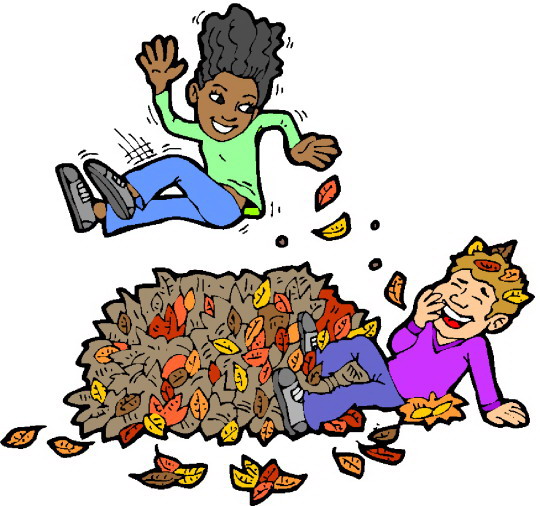 commented: “True play is unstructured. It’s messy & it’s child-initiated. Not allowing them to go onto the playground to get scraped knees & even broken arms – is doing more harm, by preventing them from learning what they can or can’t do. Experience is the best teacher. That’s what play is all about.” (MORE….)
Gary Chick, anthropologist at Pennsylvania State U, focused his studies on the non‐Western cross‐cultural validity of the concept of leisure (Article)
Johan Huizinga, the Dutch historian, cultural theorist & professor, wrote in “Playing Man” (1938) that Play is an important component of culture & society. The book lists general RULES:
> Play is free, & is in fact, freedom
> Play is not ‘ordinary’ nor ‘real life’, separate in both location
> Play creates order, absolute & supreme order, demands order
> Play is not connected to material interest, & no profit is gained from it.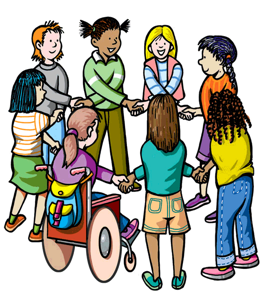
Huizinga considered it to be a most basic human function, calling it the ‘magic circle’ of human activity that permeats all cultures from the beginning, expressed in creative language.
“Play is older than culture, for culture always presupposes human society, & animals have not waited for man to teach them their playing.” One of the most important characteristics of play is that it’s fun.
• He noted that Play “absorbs the participant intensely & utterly…. proceeds within its own proper boundaries of time & space, according to fixed rules, in an orderly manner. Both free & structured play are meant to promote adaptive social behaviors & enjoyment, even though many adults consider the ‘loose’ type (unstructured) a waste of time.
It promotes the formation of social groupings that tend to surround themselves with secrecy & stress the difference from the common world by disguise or other means.”
Carl Jung, Swiss psychiatrist & one-time student of Freud, felt that access to the unconscious archetypal energies could provide the blueprint for profound change, when allowed to surface (conscious ego).
“The creation of something new is not accomplished by the intellect but by the play instinct, acting from inner necessity. The creative mind plays with the objects it loves….. Without this ‘playing with fantasy’ no creative work has ever yet come to birth. The debt we owe to the play of the imagination is incalculable.”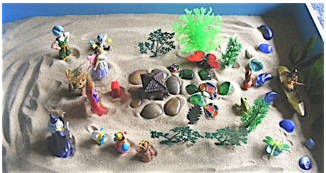
• An extension of his work is SAND PLAY, originally developed by Margaret Lowenfeld in the 1930’s. It’s a self-directed learning & therapeutic tool that emphasizes nonverbal, symbolic work in sand, similar to dreamwork, believed to tap into very deep levels of consciousness that helps heal and enlighten
Frank Salamone is a prolific anthropologist & writer. His book “Society, Culture, Leisure and Play: An Anthropological Reference” (2000) is a collection of 42 articles about the many facets of leisure, taken from his almost 30 years experience in the field, ranging from adornment to weaving, with considerable depth about music and the other arts.
NEXT: PLAY-ing EXPERTS (Part 3)


 HEAL & GROW for ACoAs