
 PREVIOUS : RELATIONSHIPS (#2)
SITEs: ☸︎ “Why attachment Styles are more important than Love Languages”
☸︎ “Attached: The New Science of Adult Attachment & How It Can Help You Find -and Keep – Love.” ∼ Dr. Amir Levine (AUDIO)
AUDIOBOOK : “Attachment in Relationships”
1. SECURE
2. INSECURE
a. Anxious // b. Avoidant // Disorganized
“Don’t confuse Attachment styles with Love. Insecure attachment is about fear & dependency, more to do with a narcissistic focus on self rather than on another”
😍 IF adult romantic pairings are attachment relationships, THEN :
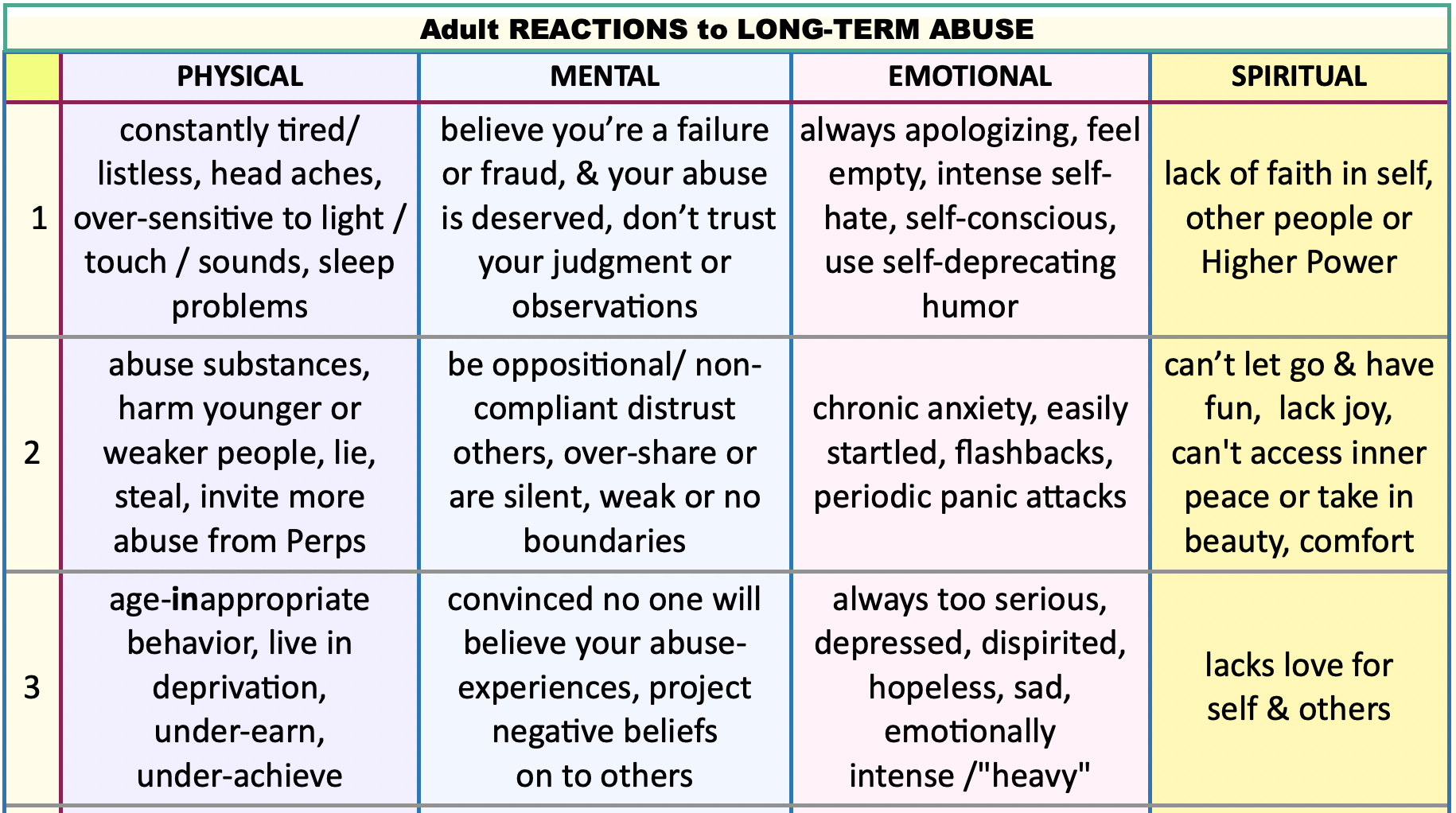
— whether an adult has a Secure or Insecure bond with a mate, it will at least partially be a reflection of all the experiences with their primary caregivers, since they tend to ‘work’ the way infant-mother relationship worked originally.
«

«
Insecure relationships are often so stressful that they wreak havoc in our life, continuing toxic push-pull interactions.Recognizing how our attachment style meshes with our unmet needs – will show in what areas our Inner Child needs attention & love. This will extend to understanding our partner’s needs, based in their Attachment type.
To whatever degree possible, we can try building current partnerships on a solid base of mutual respect, empathy & kindness. While we can’t rewrite history, we can be responsible for ourself by using adult power to choose the way the rest of our story turns out. Putting positive attention on our relationships, we’ll see how the attitudes, expectations & actions we choose affect our interactions. The way we deal with people either encourages or hinders how they experience us & to some extent how they treat us.
«
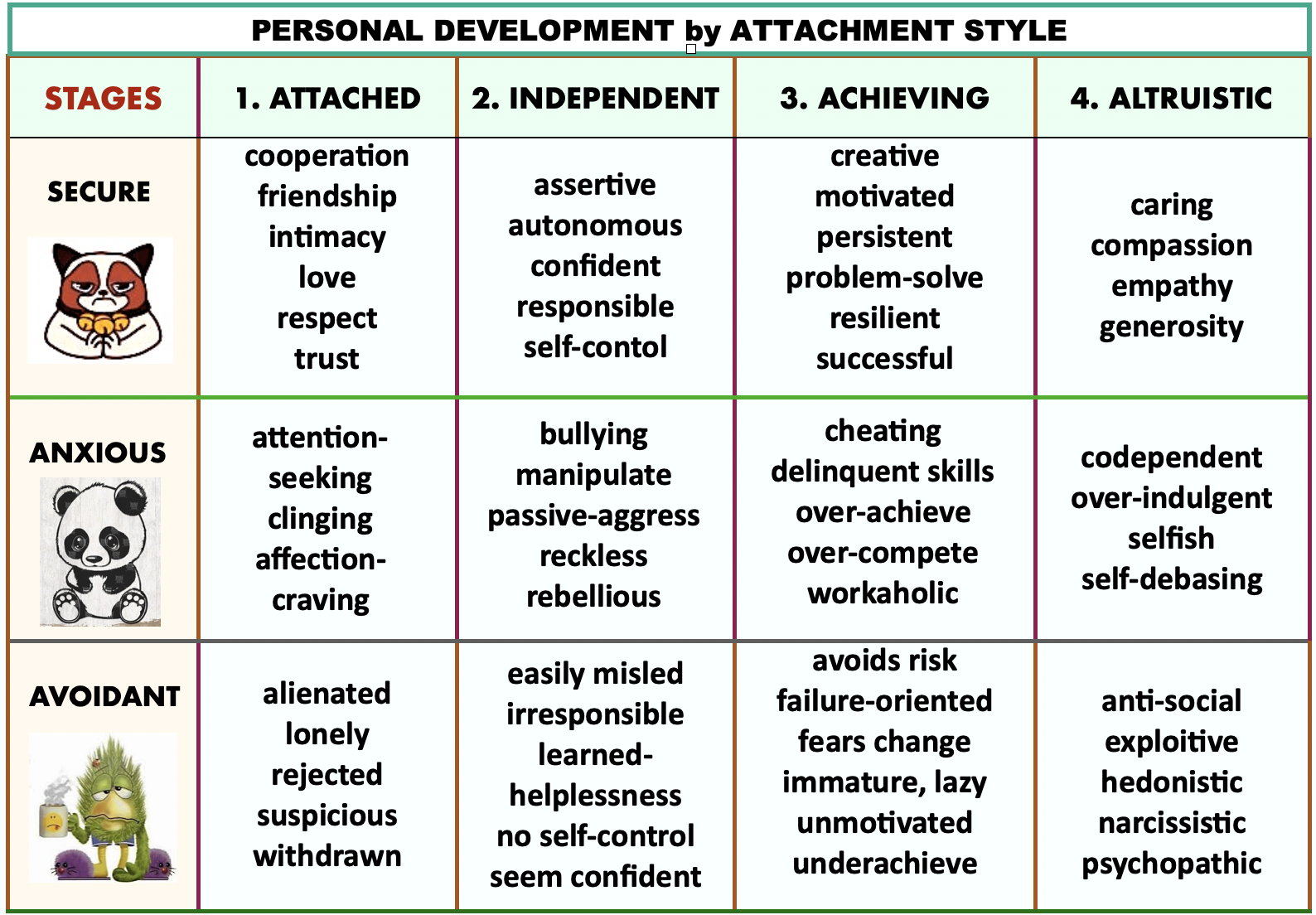
STAGES
When we successfully move through Erikson’s 8 developmental rungs, he believed we develop a healthy personality with human virtues. Failure to provide the needs of any level – makes it hard to move into a fulfilling future, which harms our sense of self, & perhaps stunts growth, feeling inadequate & ‘stuck’.
»
«
TRIGGERs for the Insecurely Attached
‘Attachment triggers’ are unhealed reactions from old emotional wounds, that inevitably show up in intimate relationships. EXP:
a. you sense a change in verbal communication & texting style ↵
b. you interpret this behavior, assigning it a negative meaning (rejection, judgement, cheating, they’re leaving …) ↵
c. anxiety grips you insides (chest, stomach, lower back…) ↵
d. you obsessively try to figure out what’s going on : over-think, review what was last said & done, re-read texts, troll social media….) to create a false sense of control, to figure out if you were right to wrong in some way – TO ease the anxiety.
INSTEAD : 🔺 Identify how your style shows up. Have you chosen someone who is also Insecurely attached? Do you ignore red flags OR do you take you partner’s reactions too personally?
«
«
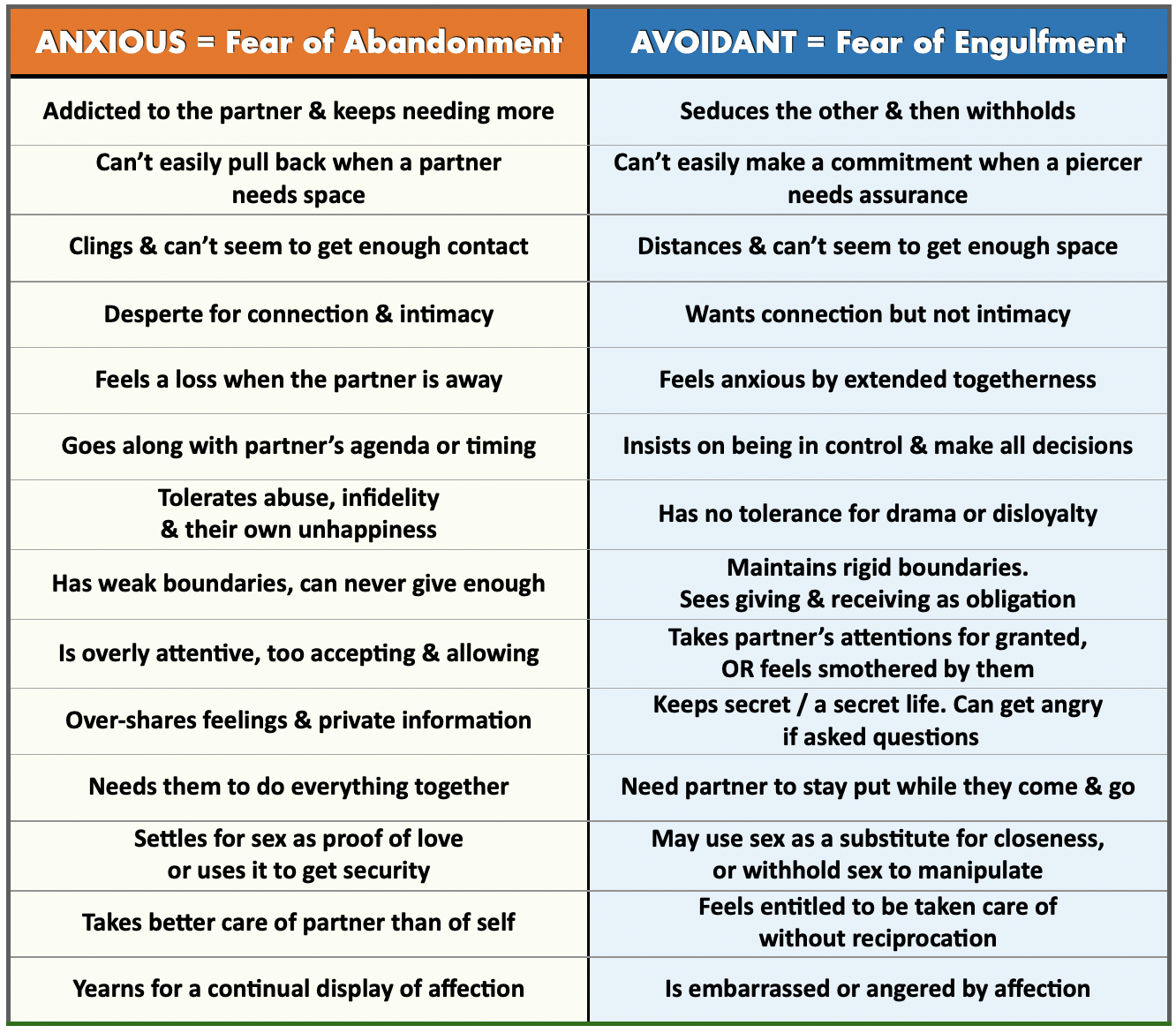
2 CONTRASTING Attachment Styles
Anxious & Avoidants frequently end up together more often than with their own type. That may seem counter-intuitive, but there’s method behind the madness. Avoidants are so good at putting others off that maybe it’s only the Anxious ones who are willing to stick around & put in the extra effort to get them to open up & connect.
Most fearfully-avoidant adults are poorly adjusted despite their defensive nature, while the dismissing-avoidants are able to use defensive strategies to their benefit.
EXP: In a study by Fraley & Shaver (1997), adult participants were asked to discuss losing their partner. Dismissives, who tested high on attachment-related Avoidance but low on Anxiety, showed just as much physical distress as others – assessed by skin conductance measures.
But when asked to suppress thoughts & feelings, Dismissives were able to do so effectively – deactivating physiological arousal to some degree, & minimize attention to attachment-related painful thoughts.
On the other hand, Fearful-Avoidants were not as successful in suppressing their emotions.
«
«
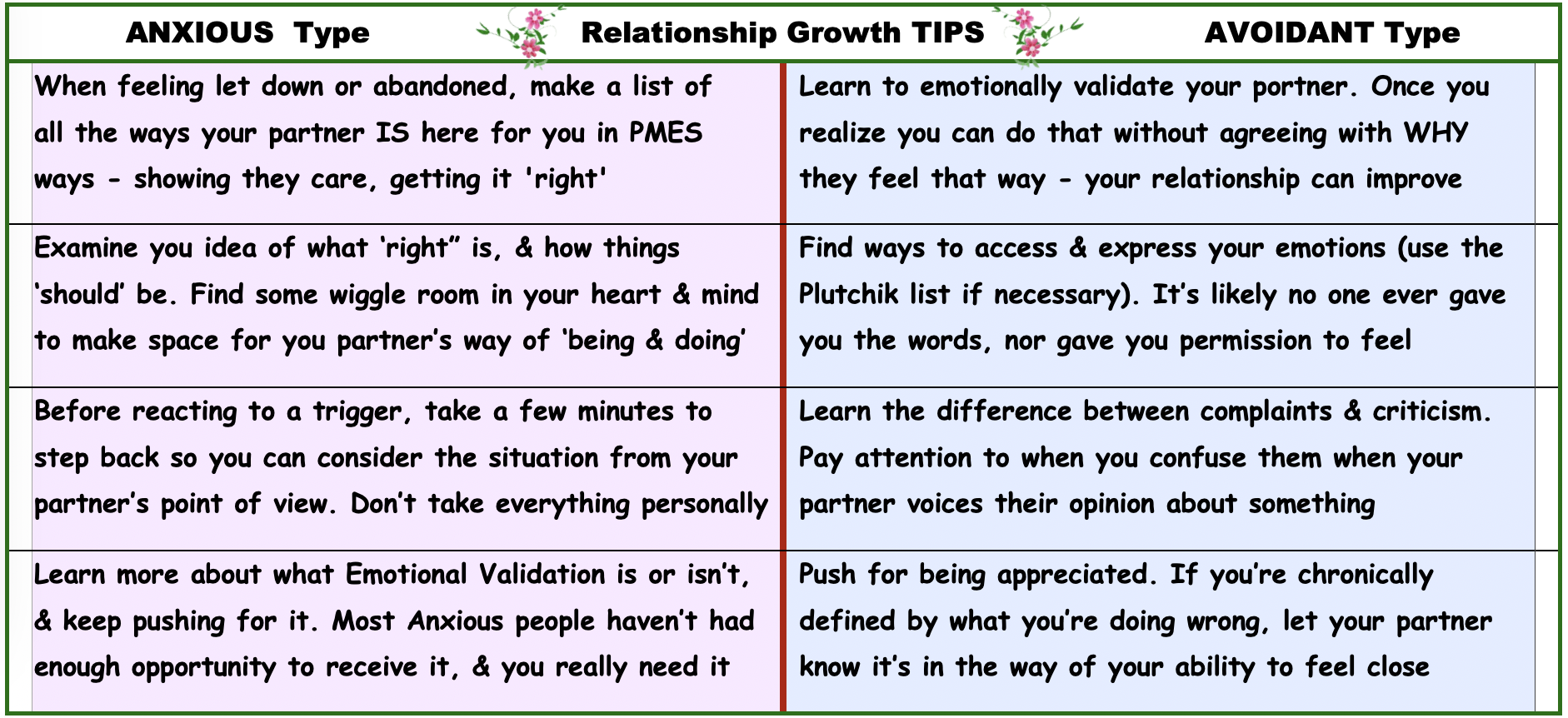
GROWTH Suggestions
1. Become aware of your Attachment style (Quiz)
2. Don’t be Hard On Yourself – change takes a lot of time
3. Build Secure relationships (see Part 1)
🕴🏻 Speak up for your needs, without blame or assumptions
🕴🏻Expect & ask to be treated well (Post:”Expectations“- scroll down)
🕴🏻 Notice your partner’s emotional needs as well
🕴🏻 Talk about your emotions & negative beliefs (be vulnerable but with healthy boundaries), especially if Avoidant,
«
«
NEXT : Attachment & HEALTH
 HEAL & GROW for ACoAs