Chronic LATENESS Styles (Part 2)


PREVIOUS : Lateness #1

SITE : I Broke My Lifelong Habit of Chronic-Lateness and You Can Too  
(seen as addiction, like alcoholism)


VARIATION on Lateness Types – from 
Diana DeLonzor’s “Never Be Late Again” AND Robert Bateman‘s “The Complete Guide to Being on Time”

The Absent-minded Professor
These people are easily distracted. Some ‘flakiness’ is thought to have a genetic basis, & can range from full-blown attention deficit disorder (ADD) to simple absent-mindedness. It affects punctuality in 2 main areas:
– the ability to stay focused on a course of action
– the level of awareness one has to the needs & feelings of others

People who are easily distracted are also likely to have trouble with other attention-related matters – losing track of time, misplacing keys, forgetting appointments….

The Crisis Maker

These put all their effort into getting as much done in as little time as possible. They pack each day to the brim with activities, because when swamped, their self-worth goes up a notch.
They enjoy the rush of the last minute, the race to the finish line. They even believe they perform better under pressure, but it’s actually a risky & destructive strategy.

Crisis-makers are adrenalin junkie/s, with “magical thinking,” consistently under-estimating how long each task will take. So they don’t evaluate & then plan out how much they’ll be able to get done in a specific time period.

EXP: Because they hate “wasting” time, they try to time arrivals to the minute, often resulting in lateness. They typically fall into THOSE WHO:
– crave stimulation, feel life is more enjoyable when there’s excitement & urgency
– use rushing to relieve & distract themselves from feeling boredom or anxiety

The Defier 
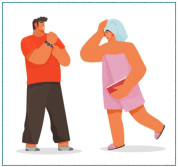
These people see punctuality as a form of systemic oppression, so lateness is an act of rebellion, shaking their fist at all forms of structure.
They feel compelled to break the little everyday procedures that make life work smoothly. Rebellious tardiness comes in 3 basic flavors: Competing for power, Resisting authority or Needing to feel special & unique
The Dreamer
They’re similar to the absent-minded, but not from faulty brain chemistry. Rather – it’s a form of dissociation, a vagueness about everything.
These people suffer from time delusion, seriously under-estimating how long a task will take or to get someplace – like the crisis-maker. But it’s more likely that their mind is on other things – maybe creating something grand, or solving a problem!

The Evader
Studies indicate that late-people as a group have lower self-esteem & higher chronic anxiety than on-timers. Because of these issues, they can feel an overwhelming need to control their environment – subconsciously assuming that if they can make themselves & their surroundings perfect, they’ll feel SAFE & therefore less anxious

The Indulger
Some studies suggest that this group has trouble with self-motivation – ranking lower in self-discipline &/or impulse control, with less ability to make appropriate, realistic sacrifices than on-timers.
Their lack of self-control is not only about time, but also affects other parts of their life. However, it doesn’t mean that latecomers lack all self-control, but many do tend to procrastinate when it comes to personal goals

The Love-Seeker
These come from dysfunctional families, where they never experienced acceptance, appropriate attention, validation & healthy love. So compulsive lateness becomes a continual test “Will you still accept & approve of me even if I’m late? If you do then I know you “really” care!’  (ACoAs & TIME)

The Perfectionist
They focus too much on small stuff, like needing everything to be ‘just so’ before they leave the house – such as still proofreading the footnotes of an assignment when the deadline has passed.
They need to stop missing the “forest for the trees.” Do you really need to rearrange the shoe rack before you walk out the door? Are you really going to prioritize washing up last night’s wine glasses over catching the bus?

The Rationalizer
These people have trouble admitting their chronic lateness, insisting it’s only occasional, & then only by a few minutes. Those who do acknowledge the problem find it very hard to own their responsibility, often blaming external factors such as traffic jams, the kids, busy schedules….

NEXT: Personal Values
Chronic LATENESS Styles (Part 1)


PREVIOUS :  NEEDS – 3 
Categories

SITE: The Uptighterati hate lateness: are we wrong? 


HABITUAL lateness comes with a HIGH PRICE

👎🏽 Missed opportunities. Not just worst-case scenarios like missing-the-interview-for-your-dream-job. It’s the whole range of lost opportunities by not being professional

👎🏽 Damage to your reputation. A showed that 46% of employees feel resentful toward their persistently late co-workers. And around have dismissed an employee for lateness

👎🏽 Psychological and Physical harm. Lateness causes stress, anxiety, guilt & shame (even in normal on-timers).
EXP: being late for an important meeting because of backed-up traffic (did you leave early enough?)

Lateness is an outrageous expression of arrogance,” says Anthony Warren, at Penn State’s Smeal College of Business.

More people prefer messiness, loud noises, even bad smells – TO late people. In a recent study from Randstad USA, 54% of respondents said others’ poor time management skills drove them nuts, second only to office gossip (60%).
Even late people can’t stand it when others are late, in part because from their point of view, meetings start too promptly.

Friedman and Rosenman divided people into :
Type As are ambitious, competitive & organized. They generally have lower rates of lateness, seeing time as a valuable resource, so are more likely to manage it effectively. Asked to estimate when a minute had expired, most Type As said it lasted 58 seconds.

Type Bs are more relaxed, functioning at a slower pace. They estimated the length of a minute as 77 seconds. Over the course of a day that will have a definite impact.

Samantha Grossman (2015 – her LIST belowwrites that Comedian Mike Birbiglia quipped “What late people don’t understand about on-time people is that we hate them.”
◆ To paraphrase Tolstoy, All early people are alike, but every late person is late in his own way.

🦠 The Deny-er: The person who walks in, hugs you hello & acts like their lateness just never happened

🦠 Eleventh-Hour Over-compensator: sends you a completely overdramatic paragraphs-long text explaining why they’re late

EXP
: “OMG I’m gonna be late bcuz a UNICORN was crossing the street so OBVIOUSLY I had to follow it but then my foot hurt so I had to stop and see why my foot hurt & then RYAN GOSLING walked by but it was actually a homeless person LOL so yeah I’ll be there in 45 mins maybe!”

🦠 The Empty Chair: who shows up late to an event where you’re graciously saving them a seat. Everybody gives you the stink eye, but you’re not the monster here

🦠 The Genetic Latie: who blames their personality for why they’re always late

🦠 The Hangry-Maker: who is so late that you say ‘screw it’ & start eating brunch alone

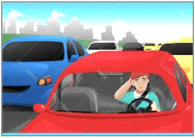
🦠 The Harried Commuter: who blames public transit or traffic every time they’re late. (Sometimes, yes. But every time? No. Build in extra time.)

🦠 The Interruptor: who comes into the movie right as it’s starting, distracting you from the important opening scenes and/or literally crawling over you

🦠 The Infuriatingly Relaxed Colleague: who rolls into the meeting 10 minutes late, holding a coffee that they clearly could have forgone in order to be on time

🦠 The Manic Pixie Procrastinator: who shows up, breathless, their whimsical flowy skirt fluttering in their wake, thinking their lateness is adorable & bohemian

🦠 The Over-scheduler: who is late because they were doing some other fun thing right before & you know because they Instagrammed it. BUSTED.

🦠 The Over-sharer: who always blames their lateness on their significant other. This typically involves an overly detailed story you’re then forced to listen to

🦠 The Pre-Liar: who texts you “almost there!” when you’re confident they’ve in fact just gotten out of the shower

🦠 The Post-Liar: who arrives late & says “Oh my God, I’m so sorry, the subway was delayed!” when you live in a town without a subway

🦠 The Spatially Incompetent: who is always late because they just can’t seem to figure out how long it takes to get from their apartment to Point B, even though they’ve lived there for three years.

NEXT: Lates, Part 2

NEEDS – from DAMAGE (Part 3)

PREVIOUS: NEEDS – 3 Categories (Part 2)

POST: SYNOPSIS – Unhealthy & Healthy RULES


Categories of NEEDS: 1. Human, 2. Personality, 3.Damage

3. DAMAGE
These needs are extreme (EXP: being very needy), & can often seem bottomless – nothing is ever enough. They’re accompanied by a great deal of anxiety & anger – because we’re not allowed to have needs, BUT can’t get rid of having them!

As children, our normal, human child-needs were a burden to our parents – not because we were “too much”, but because our family was too preoccupied with their own unhappiness & addictions. They DIDN’T HAVE IT to give us – not even those who ‘meant well’!

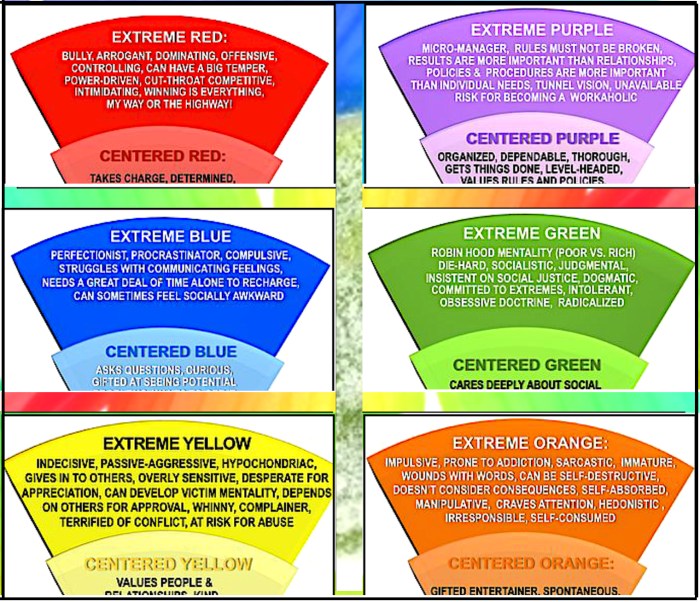
Unhealthy styles for each “COLOR” type, from Part 1 (SITE…)


EXPERIENCING REACTION to childhood events
a. Our specific personality (in Part 2 – True Self) influences how we respond to everything in our early environment. This is clearly visible in how / why sibling can be so different from each other

b. The way each child is treated (differently by birth order, gender AND style….) in the family & outside – contributes to the kind of damage-needs each of us has

Jungian analyst Donald Kalsched, exploring various archetypes of our psychological self-defence system in response to trauma, (2006) asked :
‘What is it about trauma that leads people to sabotage the road to healing?’….

Archetypes are primitive energies & emotions not easily assimilated by the conscious mind. They show up as characters in myths, fairy tales, theatre & film, as an inner figure swinging between protecting & persecuting us…. (⬆️ CHART )

Simone Weil wrote : “The True god turns violence into suffering. BUT the False god turns suffering into violence.” This double-edged self-care system in the traumatized child becomes the “false god” – its anger is turned inward, splitting the psyche between a supposedly inadequate ‘self’ & the critical inner protector.

…. When a child is consistently abused, its healthy developmental is compromised. Its core essence (the creative, relational, authentic spark of life) goes into hiding, deep into the unconscious – part of the Jungian Shadow.  (CHART explained ➡️)

…. The moment of this survival-dissociation is miraculous, since defensive splitting preserves the child’s psychological core in an encapsulated state,
but it’s also tragic because it forces the child to step out of the reality & vivacity of life. Having to separate itself from too many unbearable experiences, the child’s psyche goes into trance, causing it’s capacity for genuine trust in human relationships to slowly disintegrate.

….This split is cemented into the fabric of the child’s development process, & a shame-based identity becomes the filter through which it will then see everything.  Paradoxically – in the name of survival, this archetypal defense says “NO!” to life, as expressed in the last line of ‘The Rose’ : “And the soul, afraid of dying, that never learns to live”  (MORE…. excellent)

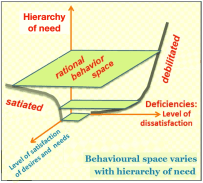
⬅️ CHART : • Barely meeting our needs (limited actions) leads to anxiety & ‘starvation’.
• The more we take healthy actions, the greater the personal empowerment & satisfaction.
• How much effort we put in also depends on how important a specific need is to us

♨️Trauma-related needs caused by our damaged past are ‘housed’ in the WIC, who was neglected, abandoned & abused. For severely wounded people, much of what we believe is our identity – is actually a distortion of our Original Self, masked by the conforming “False Self we had to create in order to survive.

EXP = desperately trying TO :
❗️always feel safe (even more than to be loved)
❗️have everyone always be consistent / dependable
❗️insist on being heard / visible  – by everyone
❗️always have an impact, everywhere (effective)
❗️never be hurt / abused / ignored
❗️never experience any form of loss or abandonment
❗️always use others to take care of us (emotionally), give us permission – to exist, do things for us that we can do for ourself…

To successfully deal with this 3rd category, we have to distinguish between ways we were wounded, the resulting unhealthy needs AND then how we deal with them, which can either be:
a. UNhealthy – the most common ways in pre- & early Recovery
OR
b. Healthy
– ways we provide Adult & Child needs, using the UNIT in all 4 PMES ways, to feel safer & make up for what we missed out on originally.


NEXT: CHRONIC LATENESS, #1