
 PREVIOUS : Attachment =Parent child
SITEs : ☸︎STRUCTURAL PLASTICITY of the ADULT BRAIN
☸︎ 6 neuroplasticity exercises for Anxiety relief
☸︎ Brain-repatterning (Free exercises – recommended)
☸︎ Raising the bar on brain training (subscribe)
NOTE for ACoAs
Please read the 4 posts on “How the Brain Learns” (Jan 2011), which will help to understand why it’s so hard for anyone to let go of toxic beliefs!
In spite of that info – the fact is that the human brain also has Neuroplaticity, which provides a tool to modify our earliest training – with perseverance & repetition.
The brain grows very fast in a child’s earliest years. At birth, every neuron in the cerebral cortex has an estimated 2,500 synapses (connections). By age 3, it has grown to a whopping 15,000 synapses per neuron.
But the average adult only has about half that number – because as we accumulate new experiences, some connections are strengthened while others are eliminated. This process is known as synaptic pruning., allowing the brain can adapt to changing environments.
DEF: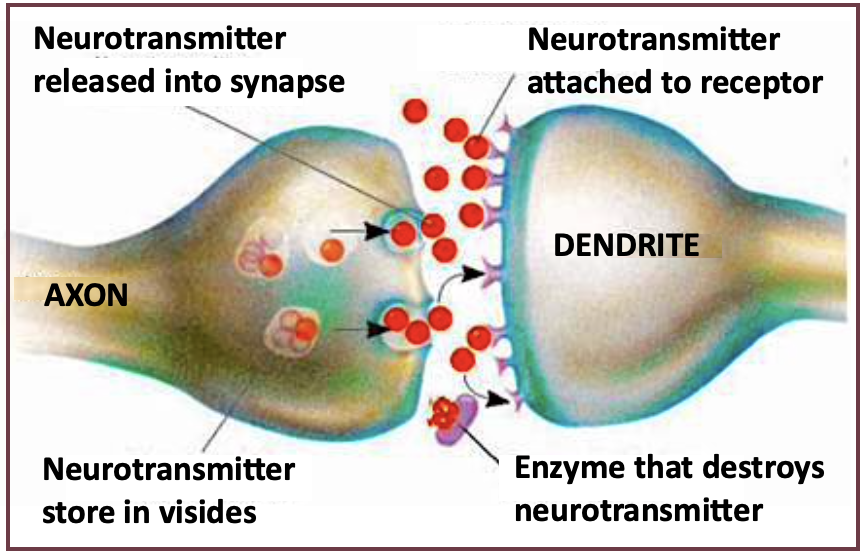
☀︎ NeuroGenesis : continuous regeneration of neurons in certain brain areas
☀︎ New Synapses – New skills & experiences create new neural connections
☀︎ Strengthened Synapses – With repetition & practice neurons develop stronger connections
☀︎Weakened Synapses – connections that aren’t needed or not used regularly become weak or die off.
2 main types :
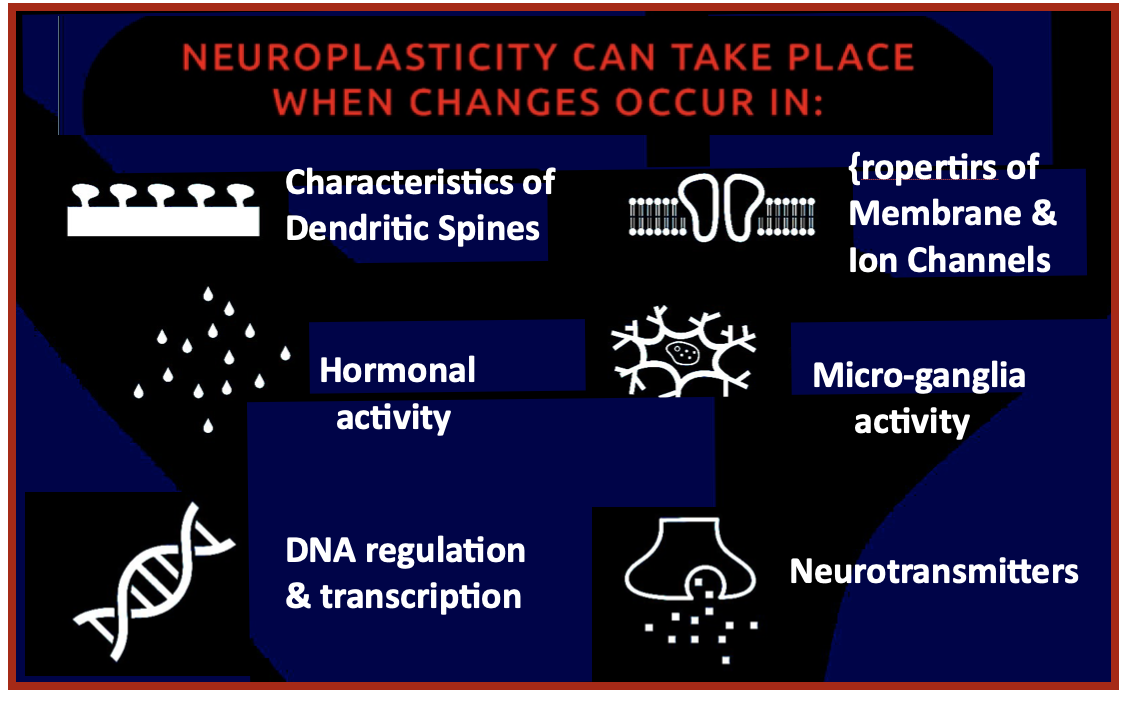 a. Functional plasticity is the brain’s ability to move functions from a damaged area to other parts that are undamaged. It allows for recovery from strokes & traumatic brain injuries, & strengthens areas where function is lost or has declined.
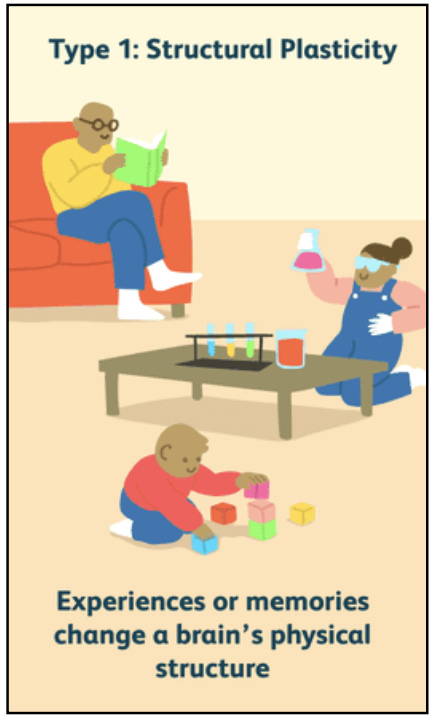 b. Structural plasticity is the brain’s ability to actually change its physical structure as a result of learning, experience & memory formation,. Improvements in brain imaging technology show that neuroplasticity is ongoing throughout life, involving neurons, as well as glial & vascular cells.
It’s the result of :
— adding information, experiences, skills…
— enhancing existing cognitive capabilities
— creating improvements that boost brain fitness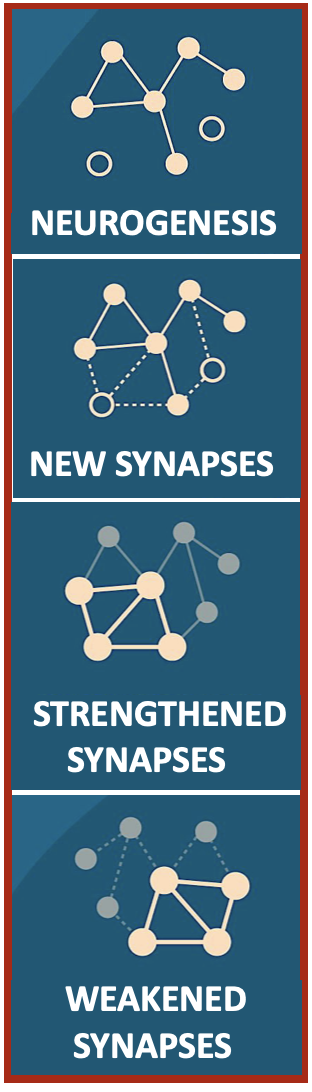
LIGHT side : neuroplasticity makes the brain resilient, so we can find new ways of being, & better ways of responding to conflict.
Also, it allows us to recover from birth abnormalities (VERY improved by Feldenkreis treatments for children) , & in many cases can be a healing tool for overcoming depression, addictions, OCD, ADD….
DARK side (see 2011 posts 🔼) : the brain is actually neutral, so it doesn’t know the difference between good & bad, right & wrong information. It absorbs whatever is repeated, both helpful & unhelpful thoughts, action & habits. So it can also be a tool for reinforcing negative beliefs & patterns.
Intrinsic motivation is our spontaneous tendency to be curious, look for challenges, develop & use our skills & knowledge. We engage in an activity because we find it interesting & inherently satisfying, even without a tangible or obvious pay-off. 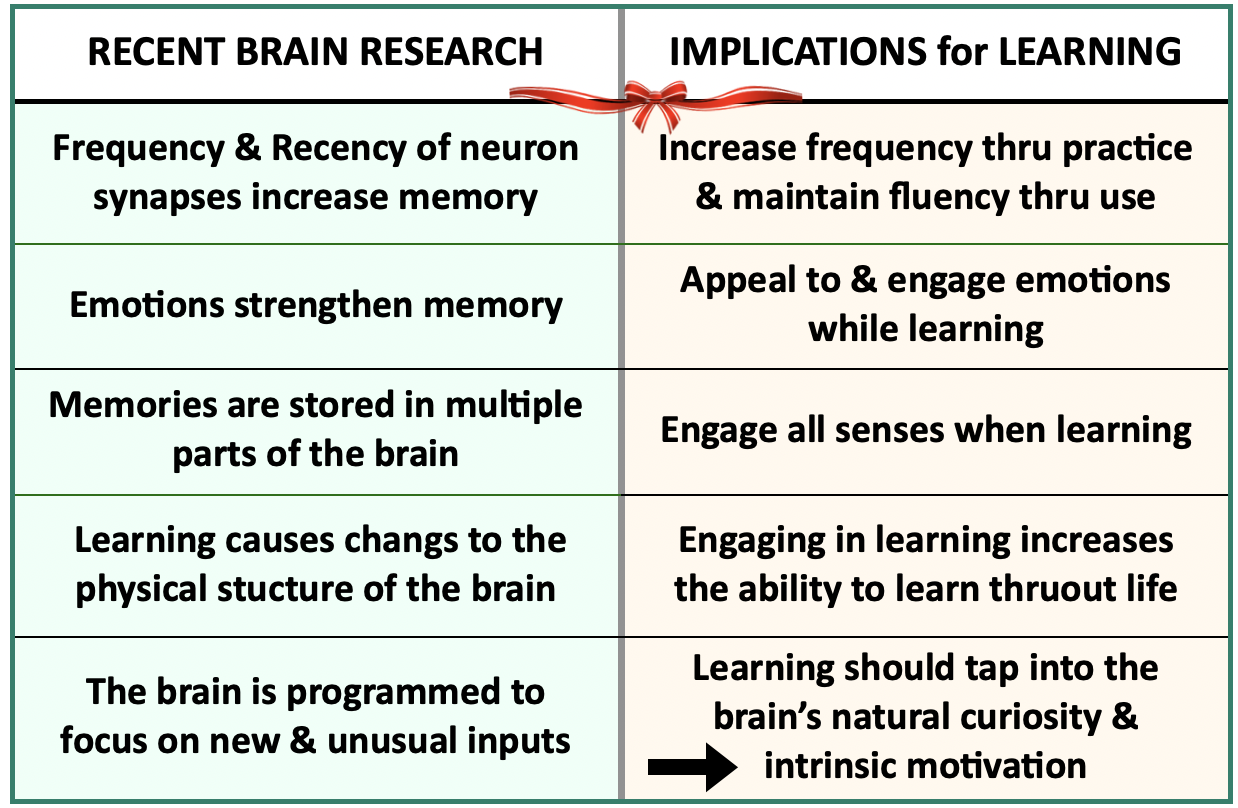
In contrast, when Extrinsically motivated, we participate in an activity to gain some practical result such as a getting a reward, avoiding punishment, or achieving a valued outcome.
IMPROVE Neuroplasticity by:
1. Being Mindful – regularly practice immersing your mind in the present moment, without ruminating over the past or worrying about the future. Stay aware of the sights, sounds & sensations around you & the emotions inside yourself
2. Enriching Your Environment – continually find & make use of opportunities to focus attention on novelty & challenges, because it stimulates positive shifts in the brain.
EXP : Reading different genres, learning a new language or how to play an instrument, traveling & exploring new places, creating any form of art, Recovery work from childhood trauma, addictions….
3. Exercising Regularly – exercise might help prevent neuron loss in key areas of the hippocampus, the part involved in memory & other functions. It may also help to form new neurons in the same region.
Physical movement can also boost brain plasticity through its effect on functional connectivity, brain-derived neurotrophic factor (BDNF, a protein that impacts nerve growth), & the basal ganglia, responsible for motor control & learning.
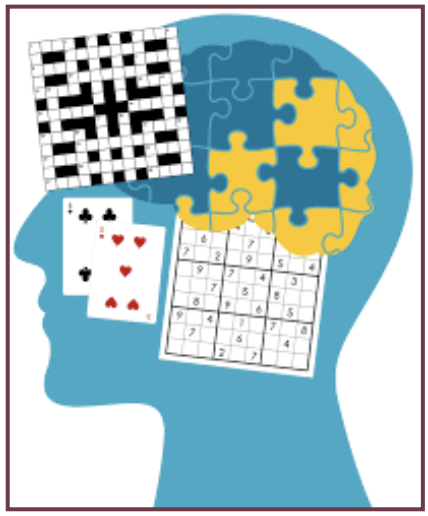 4. Playing – 10 Best Brain Games to Keep Your Mind Sharp
5. Getting Plenty of Rest – Sleep has been shown to have important effects on both physical & mental health, partly due to genetics & partly due to the grey matter in the brain.
It plays an important role in dendritic growth, which are located at the end of neurons, & help transmit information from one neuron to the next. Strengthening these connections can encourage greater brain plasticity. (VeryWell Mind)
NEXT :

