
 HOW CAN I BEST
get my point across?
PREVIOUS: Dealing with conflict #2
⬅️ Designed & assembled by DMT
CATEGORIES of Communication (Comm) cont.
3. Re. FORMS of Comm. /// 4. Re. SYNERGY levels
5. Re. WHO the participants are
 a. INTRA-personal comm – mental conversations with oneself, silent or out loud. It’s a form of thinking, where we consciously pay attention to certain information, to process & analyze a situation. This strategy is particularly useful when we need to make important life decisions, or deal with a conflict.
EXPs: To-do lists, journals, inventories, notebooks, calendars, a reminder to finish something, -OR- mentally congratulating yourself on a job well done, planning a project, or “Positive self-talk” to encourage & improve self-esteem
• In biz: An exchange of info among departments. Frequent, in close proximity & only dealing with internal company issues
b. INTER-personal Comm – only between two people, & usually face-to-face. It can be impromptu or planned, & it’s meant to share / exchange information, feelings, experiences, plans….
EXPs: Conversation between you & your BFF, a text message from mom, a meeting with a boss or teacher, explaining something to your child…..
SUBDIVIDED into: Assertive (strong but not harsh), Non-assertive (weak, disrespecting self) & Aggressive (angry, hostile). (MORE…..)
 c. Small Group Comm – takes place within private gatherings or work teams, where everyone is encouraged to participate in discussions. The purpose is to provide info that’s of common interest to the members, or to get the opinions of each participant – to arrive at a decision, solve a problem, plan a project or event, discuss a result….
EXPs: a family dinner, hanging out with friends, a class discussion, a football huddle or post-game review, executive committee meeting, Meet-Up.com, 12 Step programs….
d. One-to-Group Comm – involves a speaker who informs, persuades or motivates an audience – a spiritual teacher giving a sermon, a candidate giving a campaign speech, a football coach giving a pep talk, a college lecturer….
e. Mass Comm – one or more individuals directing a message to a large audience at the same time, often made up of members not in the same location, & who have a wide variety of characteristics. It can be provided electronically such as thru TV, internet, newspapers, PHS announcements….
OR it can be a live event (rock bands, opera in the park, political rallies or protests, Billy Graham Crusade…. in a huge space). In such cases the person(s) on stage needs to have special skills & charisma to hold the audience – talent, voice, posture, phrasing & timing, relevant info, media material, props ….EXPs : requests to support a cause, to donate time & money, or may offer some benefit, such as – health education, spiritual guidance, emotional release, call to social activism…..
6. Re. FOCUS of STRUCTURE
a. Known to Unknown
Comm starting from info which the listener already consciously or subconsciously “knows” & accepts, then moving into a clear explanation of new or unknown info.
Using this order means the speaker understands the other person or group’s real-world experiences, & is going to present possible answers or solutions to deal with the current situation or problem.
This helps to form a “Yes Set” in the listener’s subconscious, which encourages a tendency to accept that the speaker’s ideas & suggestions are correct, worth taking seriously, & acting on.
b. General to Specific
This approach starts with an overview of the big picture & general category to be discussed, who lets the listener know what’s being dealt with. Equally important is that it allows for a wide variety of possible items to be included, without identifying which one.
EXP: Animals / Cars / Emotions / Law Suits / Seating ….
Gradually more details are added, giving the listener time to absorb what’s presented, like gradually moving down a funnel, which limits & curbs the amount of info given at each level.
c. Simple to Complex
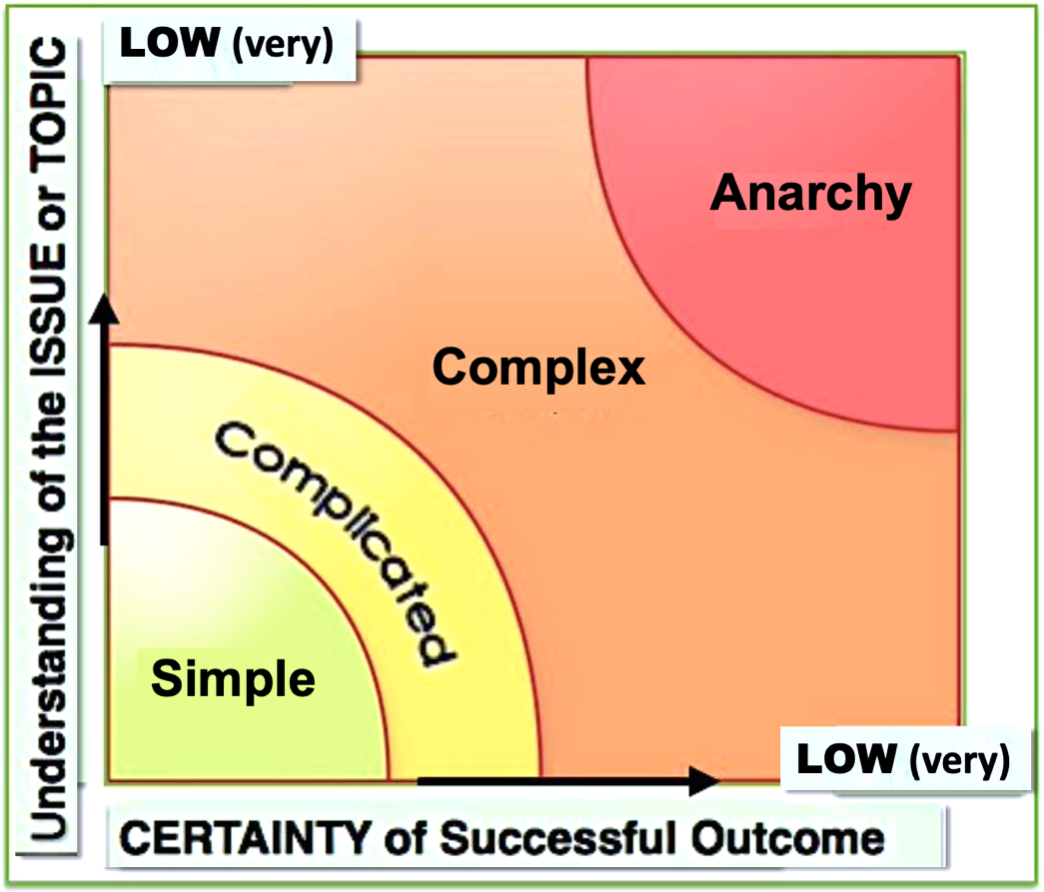 This structure is the reverse of Point b. It requires the speaker to fully understand the ‘whole’ as well as its components, in order to lead the listener gradually toward an action goal or understanding of a big ‘concept’ – in small increments.
It counters the assumption that the listener already knows the issue being discussed. Unless addressing an educated person or group with highly specialized knowledge, each part needs to be described, adding & linking pieces in logical order, building up a picture of the topic.
EXP: It’s not helpful – or fair – to tell a child: “Be good”, without first identifying ‘good’ characteristics & behaviors. (MORE….)
NEXT: Levels of Comm #4
 HEAL & GROW for ACoAs