Internal SABOTEURS (Types 3 & 4)

PREVIOUS:
Saboteurs – the Master & Type 2


3. The CONTROLLER accomplice
⛓️ Description
 It’s your anxiety-based need to take charge, maneuvering & manipulating situations or people’s actions to suit you. When you can’t, you get very fidgety & impatient
YOU :
⚙︎ connect to others through challenge, conflict, competition, or physicality – rather than ‘softer’ emotions
⚙︎ are a straight talker, but your in-your-face style is interpreted by others as anger or criticism
⚙︎ often intimidate or push people beyond their comfort zone, tending to be confrontational
⚙︎ come alive when doing the ‘impossible’ & beating the odds, & are surprised that you hurt others with your strong, willful energy & need to take charge.

⛓️ Beliefs
⚙︎ “If I work hard enough I can & should control the situation so it goes my way
⚙︎ Others want & need me to take control, so I’m doing them a favor
⚙︎ No one tells me what to do.”

⛓️ Emotions – YOU
⚙︎ have high anxiety when things don’t go your way
⚙︎ get angry & pushy when others don’t follow
⚙︎ are impatient with other’s feelings & difference in style
⚙︎ feel hurt & rejected when ‘out of control’, but won’t admit it

⛓️ Justification Lies
✑ “
Without my Controller, I can’t get much done
✑ I also need to push other people
✑ If I don’t control, I‘ll be controlled, & I can’t bear that
✑ I’m just trying to get the job done for everyone’s sake.”

⛓️ Original Survival Function
⚙︎ Under the Controller’s bravado there’s a hidden fear of being the vulnerable controllee.
⚙︎ It can develop from early experiences when the child is forced to grow up fast, be on its own, & cope with chaotic or dangerous surroundings, to help survive physically &/or emotionally.
When continually hurt, rejected, or betrayed, you deciding to never be that vulnerable again.

⛓️ Impact on Self & Others
🪄Being controlling comes at the cost of others feeling resentful toward us
🪄The Controller does get temporary results, but can’t tap into their own greater reserves
🪄It creates a great deal of anxiety, since we can’t control everything in life.

🦠 ACoAs posts
AcoAs acting Controlling – Part 1“. Also “
Over-C ourselves

4. The HYPER-ACHIEVER accomplice
⛓️ Description
⚙︎ It makes you dependent on constant performance & achievement for self-respect & self-validation
⚙︎ Highly focused on external success, rather than being touch with deeper emotional or relationship needs
YOU
⚙︎
are c
ompetitive, image obsessed & status conscious
⚙︎ good at covering up insecurities & showing positive image, keeping people at a safe distance
⚙︎ adapt your facade to fit what will most impress other, to perfect a public image
⚙︎ are goal-oriented & self-promoting, with an unsustainable workaholic compulsion

⛓️ Beliefs – I :
⚙︎ “am worthy only as long as others think well of me
⚙︎ can be anything I want to be
⚙︎ focus on thinking & actions – Emotions get in the way of performance
⚙︎ must be efficient & effective – the best at whatever I do
⚙︎ won’t bother if I can’t be successful & outstanding”

⛓️ Emotions
⚙︎ I avoid emotions as much as possible & don’t feel them for too long when they do crop up
⚙︎ I’m afraid of intimacy & being vulnerable – can’t let others see who I really am (weak & needy)
⚙︎ Sometimes I feel empty & depressed inside, but don’t linger

⛓️ Justification Lies
✑ life is all about achieving & producing results
✑ my feelings are just a distraction & don’t help anything
✑ portraying a good image helps me achieve results

⛓️Original Survival Function
⚙︎ validation, self-acceptance & self-love are all conditional — based on continual performance
✒︎ it’s usually the result of conditional or altogether absent validation from parental figures
♥︎ Even with very loving, approving parents, it’s easy for children to conclude they’re mainly loved for achievements, obeying family rules…. rather than unconditionally.

⛓️ Impact on Self and Others
🪄Peace & happiness from brief achievement celebrations – is fleeting or short-lived
🪄Self-approval is very limited, & based on the next success
🪄Lost touch with True Self ‘s deeper feelings, & so have a weak ability to intimately connect to others
🪄Others can be pulled into your ‘performance vortex’ & get as lopsided in being focused on external achievement.

⚙️ ACoA posts
See all 4 posts, & Actions = Healthy opposites (part 1, ¶ f)

NEXT : Saboteurs # 5, 6

Internal SABOTEURS (the Master & Type 2)

PREVIOUS: Our Saboteurs,  Intro #2

SITE : We are our own worst critic”

 
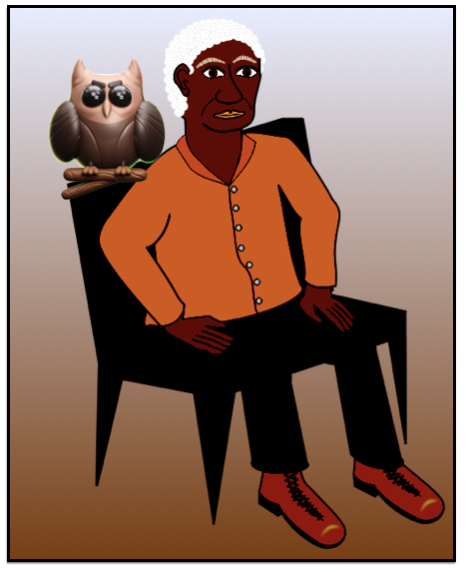
1. The JUDGE in You
– our Master Saboteur, reinforced by one or more “Accomplice Saboteurs” 

⛓️ Description
 The voice that finds fault with everything, all the time.
⚙︎ Self : makes us badger ourself for past mistakes or current shortcomings
⚙︎ Others : focuses on what’s wrong with other people rather than looking for & appreciating the good ones.  Gets into inferior/ superior comparisons
⚙︎ Circumstances : insists every situation or outcome is deliberately against ourself & therefore ‘bad’, rather than seeing it as an opportunity to learn something new, be creative, & therefore be a benefit.

 ⛓️ Beliefs
⚙︎ I’m wrong  OR  ⚙︎ You’re wrong . AND —
⚙︎ All circumstances or outcomes in my life are wrong (against me?).
⚙︎ The universe is against me so I always have to be on guard.

⛓️ Emotions
 Produces ALL anger, disappointment, guilt, regret, resentments, shame….

⛓️ Justification Lies
Without me
— pushing you, you’ll get lazy & useless
— punishing you for mistakes, you won’t learn anything & will keep repeating them
— scaring you about bad future outcomes, you won’t work hard to prevent them
— judging others, you’ll lose your objectivity & won’t protect your self-interest
— making your feel bad about unsuccessful outcomes, you won’t do anything to change them.

Because its bias is towards always seeing the worst, it makes us over /under react to & exaggerate The Negative in everything, even when there is none.We end up mentally & emotionally numb, which reduces our ability to quickly notice real but unanticipated dangers to our physical & emotional survival / wellbeing, so we’re shocked & don’t protect ourself. (“brain’s Negativity Bias“)

⛓️ Impact on Self & Others
🪄 It has the strongest influence if we grew up in constant fear, chaos, danger & neglect.
🪄 Generates much of our anxiety, distress & suffering, causing many of our relationship conflicts.

⚙️ ACoAs posts
Being RIGHT (9 posts) , ACoAs Acting Controlling – Part 3,  Control & Abandonment

2. The AVOIDER accomplice
⛓️ Description – this voice focuses on the positive & comfortable to the extreme, ignoring anything considered unpleasant or difficult.
YOU :
⚙︎ lose yourself in comforting routines & habits, procrastinate taking actions that make you anxious
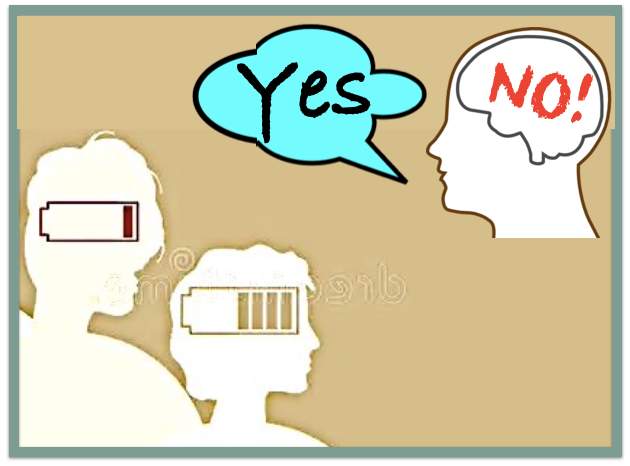
⚙︎ avoid conflicts, so often end up says YES to things you don’t want to do
⚙︎ downplay the importance of real problems, trying to deflect others from challenging you
⚙︎ resist dealing honestly with other people by being passive-aggressive rather than direct, because you have trouble saying NO

⛓️ Thoughts
⚙︎ “This is just too much.  I’d rather not
⚙︎ Maybe if I let it go it’ll take care of itself
⚙︎ If I deal with this now, I’ll hurt their feelings
⚙︎ If I have conflict with others, I might lose my connection to them
⚙︎ I’ve found a balance & don’t want to mess with it
⚙︎ I’d rather let someone else have their way than create a scene….”

⛓️ Emotions
⚙︎ Want to always be “on an even keel”, anxious anytime about your “peace of mind” is interrupted
⚙︎ Have anxiety about what you’ve avoided or procrastinated on
⚙︎ Suppress anger rather than express it, but feel resentment instead (mental version)

⛓️ Justification Lies
✑ “I’m such a good person for sparing others people’s feelings
✑ It’s best to be flexible (people-pleasing, rescuing)
✑ No good comes out of conflict, so someone needs to be the peacemaker (me!)”

⛓️Original Survival Function
‘The Avoider’ can start from either happy or hard childhoods.
⚙︎ In happy ones, you might not have learned the skills & resiliency to deal with difficult events & painful emotions
⚙︎ In hard ones – with high conflict & tension – the Avoider can show up as peacemaker, by swallowing your own anger & anxiety to not add to existing family tensions.

⛓️ Impact on Self & Others
🪄Whatever is avoided just quietly festers
🪄Denying conflicts & hard feelings that are real – prevents you from actually working them thru
🪄Being numbed out prevents you from developing wisdom & power from the gaining self-esteem & resilience
🪄Relationships are kept superficial, because other people’s ability to trust  you is reduced, since they can’t be sure when you’re holding back things that upset you.

⚙️ ACoAs posts
Fear of 
Responsibility” // “Procrastination” // “Being Trustworthy

NEXT: Saboteurs, Typs 2, 3

Our Internal SABOTEURs – Intro (#2)

PREVIOUS  : Saboteur INTRO – #1


🔴 The Judge is Our Master Saboteur, the mental torturer that afflicts just about everyone, making us unhappy, reducing our effectiveness, & harming our relationships, along with its accomplices.
By the time we’re adults we no longer need all the saboteurs, but they’re deeply entrenched in our mind, having become soft-encoded in our brain through neural pathways.

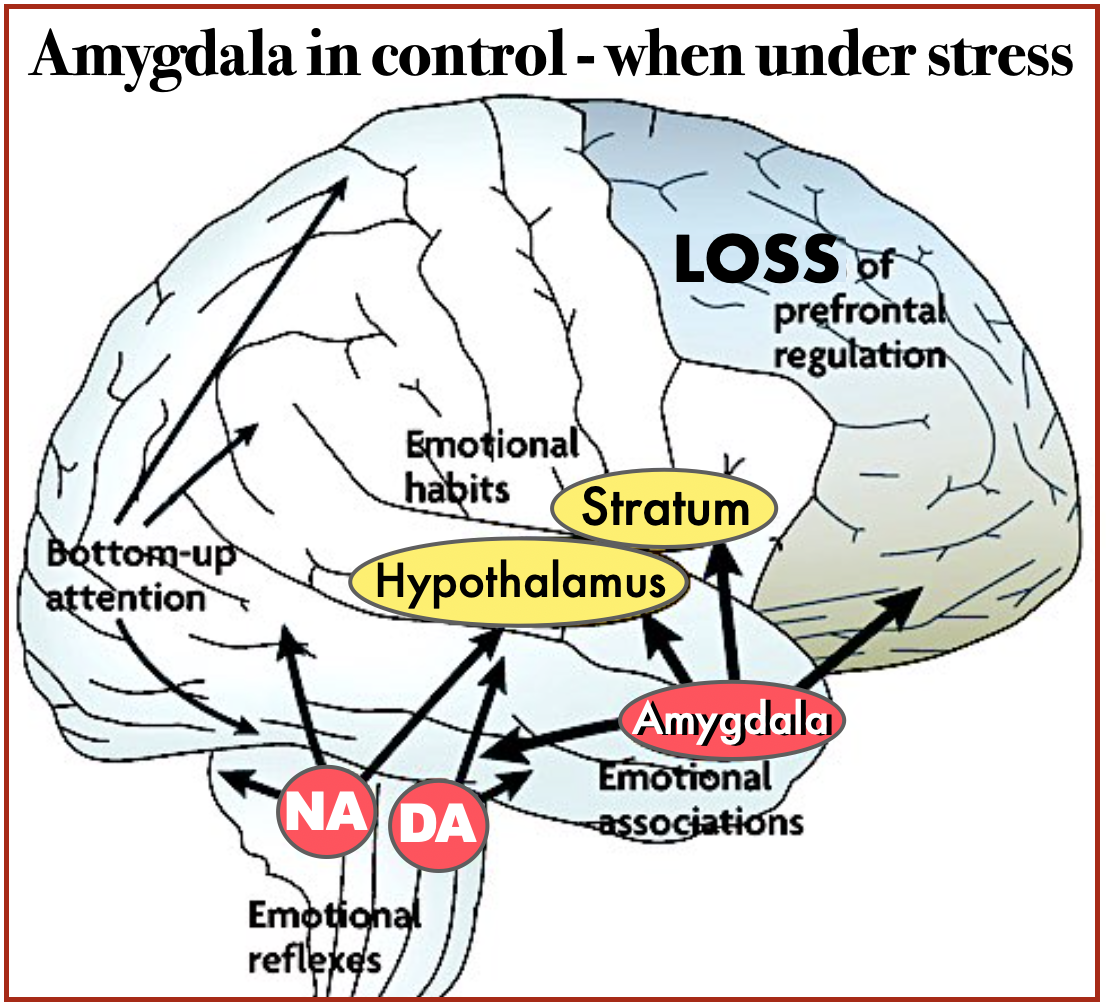
Saboteurs & the Sage live in very different regions of the brain. Advances in functional MRI (fMRI) studies, which measures how neural activity changes blood flow, allow scientists & psychologists to pinpoint areas in the brain involved in producing different thoughts or feelings, & so identify the neural functions that activate Saboteurs or the Sage.

🔵 The SURVIVE Regions : Our Inner Saboteurs
Saboteurs are the voices in our head that create pailful emotions when faced with internal buttons &/or life’s challenges. They’re generated by the interactions of the brainstem, limbic system & parts of the left brain.
They produce much of our self-doubting chatter (toxic self-talk) & distressing emotions (anxiety, anger, shame, guilt, frustration…..) which are only “helpful” for a second —-> as they alert us to real or potential dangers. However, staying trapped in these thoughts & feelings prevents us from thinking clearly & choosing the most productive responses to stress.

Saboteur Interceptor “Muscle”
Beside painful emotions, Saboteurs generate constant stress by self-defeating behavior patterns & attitudes such as avoidance, procrastination, insensitivity & discontent.
Because of our damaged upbringing, we automatically & unconsciously make the mistake of trusting & accepting them into our “inner circle”, making them our (false) sense of self & our negative view of the whole world.

♥︎ Saboteurs do the greatest damage if they can convince us they’re our friend, just trying to protect us & only wanting our best!
Each of them has very reasonable-sounding justifications for its ‘truth’- saying why it’s good for you. But their rationalizations are all well-masked lies.
EXP: the Judge, Controller, Hyper-Achiever & Stickler insist that without them you’d turn into a lazy, unambitious, worthless couch potato.

♥︎ While their constant whiplashing (as if we’re a stubborn mule) may seem to have been the only source of our accomplishments in some area of life. And their big lie is that any & all our successes came exclusively by them pushing & pushing.

We know that being able to feel physical pain is useful – teaching us what to avoid. Similarly, painful emotions alert us to danger, but are only helpful for a quick second. However, if we get stuck in self-hating beliefs which lead to constant emotional pain — it’s because the Saboteurs are forcibly holding our mental hand to a hot stove, making us complain that life is so hard!

🟡 The THRIVE Regions : Your Inner Sage
Our Sage lives in an entirely different region of the brain : the middle prefrontal cortex, anterior insular cortex (“empathy circuitry”), & parts of the right brain.
It generates pleasant feelings even when handling life’s challenges, allowing us to calmly take clear-headed laser-focused choices.
❣️ Activating this combination of brain area releases endorphins that counter the negative effects of stress-induced cortisol. It’s wired for artistic ability & big picture awareness of what’s important for the best outcomes.
“Positive” emotions include curiosity, compassion, empathy, gratitude & joy of creativity.

In terms of successes – the Sage is much more creative than the Survivor Brain. By empathizing with ourself, exploring what caused the Saboteurs, & coming up with creative solutions, we get energized to take decisive action, & not waste an ounce of vitality suffering the painful drama of beating ourself up.

Both Saboteurs & the Sage may help achieve goals, but by very different paths. 🔻 Saboteurs push us into actions & accomplishments through anger, anxiety, fear, guilt, obligation, regret, shame ….
🔺 Instead, the Sage pulls us into action through compassion, curiosity, intuition, the joy of self-expression, a desire to contribute to & create meaning, & the excitement of moving forward.
Only the Sage lets us achieve successes without sacrificing happiness & peace of mind. (More in later posts.)
Consistently implementing S.A.G.E. tools can result in :
Increasing the grey matter in the PQ Brain region, where our Sage lives
Decreasing the white matter in the Survivor Brain region, where Saboteurs live

NEXT : Saboteurs, Judge & Type 1

Our Internal SABOTEURs – Intro (#1)

PREVIOUS : Attachment – Spirituality #4

BOOK : POSITIVE INTELLIGENCE” book & lectures, from Yale & Stanford professor Shirzad Chamine’s extensive psychology & neuroscience research.


The 10 SABOTEURS
are negative psychological ‘constructs’, automatic belief patterns that are part of the False Self, governing our every move. They represent our brain’s automatic mental habits of limiting beliefs & assumptions about how to handle life’s challenges.

They started off as mental  guardians, developed in childhood to help us survive real threats to our physical & emotional self. They were psychological attempts to manage the distressing environment we were in, trying to provide a sense of safety for ourself – or at least some control.

Instead, they have steered us in the wrong direction, so we end up undermining ourself. These harmful ‘protective characters’ are so pervasive that we don’t realize they’re running us, influencing the way we think, feel & act – each with its own motivation.

SYNOPSIS
PRIMARY
♦️ The Judge – the ultimate saboteur, activates & works with one or more Accomplice Saboteurs to hijack our thinking, causing most of our setbacks in life. When we’re triggered by some current event, we activate whichever Saboteur shows up to react according to pre-set but invisible patterns. They :
❗️ keep beating you up over mistakes or limitations
❗️ warn you obsessively about future risks
❗️ wake you up in the middle of the night worrying
❗️ get you fixated on what’s wrong with others or your life. You over-think, obsessing over mistakes, & worrying about the future (projecting negative outcomes)

REINFORCERS
/ Accomplices:
▪︎ Avoider – puts off unpleasant tasks & conflicts
▪︎ Controller – needs to take charge & manipulate situations
▪︎ Hyper-Achiever – thrives off of constant performance & achievements —> for validation

▪︎ Hyper-Rationalist – intensely focused on processing everything rationally, which comes off as being uncaring
▪︎ Hyper-Vigilant – intense anxiety about dangers, real or not
▪︎ Pleaser – tries to get acceptance & affection by constantly helping, rescuing, & flattering others

▪︎ Restless – constantly chasing more excitement, the next activity, only happy when always busy
▪︎ Stickler – perfectionist, with a desperate need for “order”
▪︎ Victim – over-focused on painful emotions, always the martyr. (Details for each in following posts)

♥️ Alternatively, the SAGE is our native wisdom, without the “bad voice”. It provides the ability to be emotionally balanced, a guide to deeper insights, & helps us make good decisions. The SAGE is the counter to harmful defense mechanisms, & can be developed by applying Cognitive Reframing, Mindfulness & Self-Compassion.

By the time we’re adults we no longer need the saboteurs, but they’re  deeply entrenched in our mind, having become soft-encoded in our brain through neural pathways.  Saboteurs & the Sage live in entirely different regions of the brain. Consistently applying S.A.G.E. tools can result in :
Increased grey matter in the PQ Brain region, where your Sage lives
Decreased grey matter in the Survivor Brain region, where your Saboteurs live (more in Part 2)

Which saboteur shows up?
Saboteurs were copied from our very damaged parents (+ others), who had their own ingrained defenses which we absorbed during the first 15-20 years of life when we were subjected to daily neglect & PMES abuses.

Characteristics of our parent’s personality & dysfunction decide which saboteurs show up as the negative energy :
💚 that motivates us to function, and what is —
💙 — our personal style of handling challenges.

3 main motivations underpin survival needs
☙ Acceptance  –  to maintain a positive image in the eyes of others, so we can be validated & gain their affection
☙ Independence  -  to have boundaries with others, & maintain personal separateness
☙ Security  – to control unsafe things in life & push away or minimize them.
«

«
⬆️ 3 styles of handling any given situation re. acceptance, independence or security needs :
☞ Assert  – take actions that fulfill our needs (strongest & most active)
☞ Earn  –  work hard to insure achieving those needs
☞ Avoid –  protect those needs by withdrawing ourself or our attention from activities, thoughts & feelings, or from other people.

DEVELOPING Self-sabotage (“behavioral dysregulation”), includes :
✓ not forming a legitimate goal to pursue
✓ having a deep fear of failure AND of success
✓ cognitive dissonance – internal imbalance or discomfort when words or actions do not align with one’s beliefs & values…. (SEE  7 common signs of self-sabotage)

NEXTSABOTEURs – Intro (#2)

CREATIVITY – COMPONENTS

PREVIOUS : Creativity – 4 Types 


💝 If we think of Creativity as only about producing ART, we exclude other types of people from being considered as Creatives, & limit our ability to think creatively about any other arena – such as business, education, medicine, science…. & family dynamics!

If you say, “But I’m not creative!”,  ask : “What product am I referring to? What process could I need to use to become creative?”
Maybe you are innately, but are in the wrong environment or not encouraged to express themself.

FROM ‘anotherbrigida’, 2024 : some principles associated with idea-generation & creativity are : collaboration, curiosity, flexibility, originality, persistence, and broken rules (freedom). They are part of the equation but not the foundation. The fusion of these powerful pillars rests on : Think, Respect, Humanize, Create.

IN BUSINESS – to succeed, organizations NEED the ability to foster innovation, develop exceptional talent & leadership, with a high degree of brand recognition. This is affected by its creative people, perspective, practices, and culture.
The 4 Ps
(from work of Mel Rhodes) ⬆️
🔹 Person: the characteristics, habits & thoughts what makes someone creative.
🔸 Product – the ‘things’ that are the result of creative activity. What makes one product creative (a song)  & another not (grocery list)? What products are the result of creativity?
🔹Process –  HOW creative people do what they DO. But Processes can also be Products – new ways of doing old tasks
🔸 Press – the environment around the creative person. If it’s not conducive to creativity, it soon dies. (MORE info…)

COMPONENTS
A report from the “Center for Childhood Creativity” lists 7 critical components of creativity in children :
💮 Physical =
Action & movement
💮 Mental = ⇓

Imagination & originality – combining 2 or more different ideas to create a new one
Decision-making skill – intersectional thinking, to refine ideas & choose the best possible answer for problem solving
Flexibilitycombining & modifying previous ideas or strategies
💮 Social / Emotional =
Communication & Self-expression – exhibiting one’s unique perspective to others with confidence, from a connection to one’s authentic feeling & desires
Collaboration – exchange of ideas when working together to find a solution for a project or to a problem. Explain & expand ideas
Motivation – the core of development, being inspired to explore & satisfy one’s curiosity ☛ ☛ acting without expectation or promise of reward.

According to Guilford (1986) Creativity is “divergent thinking“, a way of solving problems by more than one approach, with :
▫︎ Fluency – generate numerous ideas or solutions by the smooth flow of objects or emotion that resonate with unique symbol or norm.
EXP : list possible ways to use a rope or scarf  (think Robin Williams)
▫︎ Flexibility – shift between different types of ideas. Flexible thinkers might suggest various categories shift between different types of ideas. EXP : suggest various categories for the same object (practical, social, artistic….).

▫︎ Originality
– produce uncommon or unique responses that are not obvious, as in a number of statistically infrequent ideas
▫︎ Elaboration – develop ideas in detail, adding & elaborating. EXP : “What would it be like if no sleep was needed?”
▫︎ Sensitivity identify overlooked challenges & potential opportunities
▫︎ Redefinition see familiar items or problems in new ways, which promotes innovative solutions.
«

«
STAGES of Creative Activity  (CHART ⬆️ )
1. 
Idea generation interest or curiosity about a specific problem to area of study
2. Preparation – develop clarity about what one wants to achieve with a novel idea, & how to accomplish it
3. Incubation – reflective thought, often subconsciously, working in the background
4. Illumination (Insight) – when the idea resurfaces as a realistic creation
5. Verification – double-check that the chosen idea is realistic & useful, by evaluation & experimentation.

BLOCKED
Anyone doing creative work has experienced the ebb & flow that comes with it. But like weather, most turbulent spells eventually pass, & though we can’t will them away, we can work with & through them until sunny skies return.  (Explanation for each tool  ➡️)
Q : Creative blocks keep us from taking pleasure in our work. SO – what can we do when clouds darken our eyes?
A :  While there could be other root causes to creative blocks (illness, abuse, severe loss….), IF possible – a starting place is removing external & internal clutter allowing oneself to be becoming vulnerable, still, gentle & self-forgiving.
ALSO :  “
14 Tips for Getting out of a Creative Slump

 NEXT : Internal Saboteurs, #1 

CREATIVITY – 4 STYLES

PREVIOUS : Stress & Body Parts + Relaxation

SITEs : Several Creativity CHARTS
• “
How can we see images in our minds?
• GOD’S View of CREATIVITY – why it matters to Christ


DEF
: “The use of imagination or original ideas, especially in the production of an artistic work.”
ALSO, from California State U : “The tendency to generate or recognize ideas, alternatives, or possibilities —> that may be useful in solving problems, communicating with others, & entertaining oneself & others.”

TYPES 
Neuropsychologist Arne Dietrich’s research paper on creativity in 2004  ▶︎ indicated that the creative process is not always linear – it can go back & forth between different stages, as needed.  ▲

🍃 Deliberate & Cognitive
This type comes from hard work in a specific area.
The key aspect of this creativity is having an already formed body of knowledge that can be combined in new, innovative ways.
Gathering a wide range of in-depth information obviously takes time.  So, for these people it’s essential to have lots of opportunities for research & learning. Then, to have enough time to develop a creative solution.

☞ ☛ The prefrontal cortex (PFC) is home to this type of creativity, one of 3 cortex regions, the space right behind your forehead. It’s the source of language, memory, reflexion & superior executive functioning. The 2 main things it provides : ➣ Focusing your attention and ➣ Making connections among stored info in the brain.
«

«
EXP : Edison, the inventor of the telegraph & the electric light bulb (improved from the invention of Joseph Swan). He repeated & repeated his experiments, making tweaks along the way, until something finally worked. This process followed him throughout his brilliant career, as he continued to contribute to the modern world.

🌷 Deliberate & Emotional
For others, creativity comes from sitting quietly & reflecting on their situation. These types likely have “a-ha” moments where they seem to pull a solution out of thin air. However, the clever idea doesn’t actually come from nowhere, but rather from time spent pondering & asking questions, instead of research & studying.
☞ ☛ This type of creativity comes from the cingulate cortex – an area of the brain that connects our emotions to the PFC.

To help such people, it’s important they have time to think. Asking “Why & How”questions will not produce immediate solutions. Instead, it develops insights, then allow them to come back later to share their thoughts.
EXP : If something bad happened to you or a loved one, you ponder, trying to understand the decisions & events that led to this situation. You naturally want to figure it out so you can cope with the stressor, learn what can be gathered from the situation, & be able to move on.

🗼Spontaneous & Cognitive
Someone who falls into this category needs time to be doing something else – away from the project or problem – allowing their subconscious to keep working in the background. This style of creativity also requires an existing body of knowledge, but used indirectly.
Solutions may come while washing dishes, driving, taking a shower, walking the dog…. EXP : how Isaac Newton thought of gravity while watching a falling apple.

For these people, it’s essential to develop stages of creativity over time. EXP : on day 1 they may think up the problem, then come back sometime later (a week, a month….) to solve it.
☞ ☛ This style uses the brain’s basal ganglia – a part of the brain where dopamine is stored, & operates outside conscious awareness. It’s also the part that’s primarily involved in processing movement-related input.

❣️Spontaneous & Emotional
It’s what’s considered the most elusive form of creativity ——> something you either “have or don’t have“.
EXP : Great artists & musicians such as Mozart, Baudelaire, or rap singers like Eminem….
They often experience powerful emotional moments (☞ ☛ from the amygdala) that seem like an epiphany, even a religious experience. It’s much harder to deliberately inject these moments into our regular life, because a high degree of native skill is often required.

IN BIZ – When dealing with team members of this type, it’s essential to create an environment that helps to collect their creative ideas & hone their specific skills, even if the applications aren’t immediately obvious.
« CHART explained ⬇️

«
NEXT : Creativity – Components

STRESS & Body Parts + Relaxation

PREVIOUS : Self-Regulation – GROWTH

SITE : BODY SCAN – ask yourself about your emotional state
• “A Comprehensive Overview on Stress Neurobiology
• “Stress effects on the body” – 8 areas, extensive info

⬆️ CHART ” for self reflection ”
The emotional body pain chart offers an intriguing prompt to explore links between where & how you might be feeling physically pain – with correlating emotions – energetically. This can provide valuable insights.

Nurture both Body and Spirit with loving awareness, tuning into any pain you may feel with curiosity, self-compassion & a willingness to unpack layers of healing. While your experience is subjective, use the chart as a tool for self-care, not as absolute truth.

REMINDER : Physical pain can be caused by real health conditions, not just emotions. (pain meds guide)

❀ Are the emotions listed absolute for each body part?
√ They’re not definitive for everyone. The chart provides guidance to reflect on, based on collective wisdom, but your personal experience may differ or have nuances.

❀ Can I create my own ‘meaning’ from my pain?
√ Yes, tap into your own intuition about what your body pain is trying to signal emotionally, beyond what any chart indicates.

❀ What if I have pain in several places?
√ Look up each spot on the body to get clues about the blend of emotions that may be showing up for you in this time. See if there are any inter-connections, & if they relate to past traumas.

❀  Will the pain instantly go away if I process the emotions?
√ Releasing the emotional layer can bring relief, but built-up tension usually takes time to fully unwind from your body – especially if it’s been with you a long time. Be patient with the process & keep nurturing your whole being.

 Focus of EXTERNAL body part, & EMOTIONS

«
Some INTERNAL
EFFECTS of too much stress
Stress triggers the body’s fight-or-flight response. Chronic stress can cause negative health effects on emotions, your cardio-vascular, immune & digestive systems…

RELAXATION
For best results, combine the emotional body chart info with other well-being practices to provide holistic support while processing any pain. They can include:
☼ Body-work like massage to relax muscle tightness
Breath-work to calm & focus (◀︎ “Lazy 8″ exercise :  Start on it’s side)
☼ Emotional release, like EFT tapping
☼ Exercises to release physical tension (stretches)
☼ Healthy diet to reduce inflammation
☼ Journaling to express ‘hard’ emotions & thoughts
☼ Therapy/12-Step Programs to process & heal

4 Square BOX BREATHING  (BB)- calms the nervous system. This technique reduces stress & restores overall wellness by balancing the autonomic nervous system (ANS). Multiple studies have shown that breathing exercises are highly effective for reversing our fight-or-flight state. They counteract hyper-ventilation, which is the body’s distress response of increasing carbon dioxide and decreasing oxygen levels. BB can guide your breath into a steady rhythm, promoting relaxation & potentially aiding sleep.  (Other breathing exercises….)

1. While sitting upright, slowly exhale thru your mouth, getting all the oxygen out of your lungs.
Focus on this intention, being conscious of what you’re doing

2. Inhale slowly & deeply thru your nose – to the count of 4 (seconds) – very slowly in your head.
Feel the air fill your lungs one section at a time, until they’re all completely full & the air moves into your abdomen

3. Hold your breath for another slow count of 4
4. Exhale thru your mouth for the same slow count of 4, expelling air from lungs & abdomen.
Be conscious of how the air leaving your lungs feels

5. Hold your breath for the same slow count of 4. Repeat.
«

«
NEXT : Creativity – 4 styles

Self-Regulation – GROWTH TOOLS √

PREVIOUS : S-R – Myths

SITE:  Growth mindsets of self-regulation & the influences on effort & perseverance”


SELF- REGULATION TOOLS
🔘 Be assertive, not aggressive – Don’t crumble when someone is pressuring you. EXP : Stand your ground when a salesperson is trying to upsell you or trying to make the sale by making you feel anxious

🔘 Body Awareness & Sensations – Include exercises in your schedule, to clear everyday stress. Stay mentally awake to keep a check on how your body reacts to different situations & sensations

🔘 Compliment Someone – Doing this every day makes you emotionally stronger, & improves relationship with people you deal with or who pass thru your life.
EXP: ‘That’s a beautiful scarf”  //  ‘I enjoyed your talk”

🔘 Express YourselfCommunicate emotions in healthy ways, both verbally as well as in artistic activities (dance, design, paint, read /write, sing….).  Consistently doing anything you love aligns your mind and body to be more coordinated/unified

🔘 Form a Bedtime Routine – Add a special activity before sleeping as a self-reg strategy. EXP : Read a chapter, thank God for the day, brush your teeth, listen to a soothing visualization….

🔘 Have Intimate Conversations – rather than be superficial, stonewall, avoid, or flee. EXP: Your partner wants to talk about having another baby & you absolutely have no such intention. Take time to calm yourself, think thru how you want to express your feelings & point of view – always using “I” statements.
Don’t give in but don’t attack.

🔘 Identify Emotions – Emotional literacy is the ability to notice & accept all your feelings, as well as those of others. Improve emotional S-R skills by understanding why you feel certain ways & find healthy tools to manage them, instead of suppressing or acting them out on others

🔘 Make a Gratitude List – List them in your journal, regularly review all the things you love, to keep reminding you of goodness in life & a reason to keep going/ growing

🔘 Reframe Negative Thoughts – Most people have negative thoughts sometimes, but strong self-regulators make sure to find solutions or alternatives to feeling hopeless or being a victim of circumstances. Stop as soon as a negative thought shows up & reframe it into a positive belief or solution

🔘 Reinforcement – Reward yourself with something exciting & special – when you’ve achieved a goal.
EXP:  You’ve finally finished that project that took all your brains & perseverance. Now take the time to rest or what fills your heart with quiet happiness. Do something fun you’ve been putting off that doesn’t have to ‘lead to’ an outcome.

🔘 Practice Mindful breathing techniques every day to keep you ‘sane’ & present in the now. It minimizes stress, anxiety & anger, which ultimately helps stay in S-R. Christian prayer & Bible reading (like the Psalms dramatized) also provide comfort & self-control info to guide your actions, especially in tough times

🔘 Positive Self-Talk – Affirmations like “I’m ok just the way I am, I can do this, I know what I know”…. encourages you to function at your best & keep on trying, even when frustrated or can’t see the outcome

🔘 Supplements – Many health problems can be linked to nutritional deficiencies.  Add supplements to support Mind-Body Health, making S-R easier to practice.  EXP :  Vitamin A, B6, B12, C, D, Calcium, Folate Iodine, Iron, Magnesium, Zinc…. for physical, emotional & cognitive health

🔘 Tolerate awkwardness – Communicate clearly & directly when it makes sense to do this, even when feeling awkward. EXP : When you need to explain to someone why you’ve decided not to use their services, having to go back on a promise, cancel a date or appointment….

🔘 Visualizations – Use imagination to create a mental picture as a motivation to pursue goals, TO :
▷ increase confidence   ▷reduce stress ▷ rehearse a scenario the way you want it to turn out   ▷  prepare for a big even at work or personal life  ▷stay connected to your Inner Child & Higher Power

🔘 Wait – Be willing to delay gratification in order to continue working toward a desired goal. Waiting does NOT mean ‘No or Never”- just “Later”. 😣
EXP : You’re trying to lose weight, so you wait ’till tomorrow to eat the rest of the dessert you made since you’ve already had one portion

NEXT : STRESS & Body Parts + Relaxation

Self-Regulation MYTHS √

PREVIOUS: S-R – Adults, #2

SITE : “The Myth of Self-Regulation”


NOTE
: T.E.A. = Thought, Emotions, Actions (moods, feelings, body /behaviors)


BASED on info from The MEHRIT Centre
#1. MYTH“Scientists all mean the same thing about S-R
ANS : Dr. Jeremy Burman documented 447 different uses of “self-regulation” in scientific literature, grouped into 6 distinct concept-families (domains)

#2. Not being able to self-regulate is a ‘moral failure’
ANS : When a child can’t regulate their actions, thoughts or emotions they’re not being disobedient, manipulative, mean or trying to irritate someone. More likely it’s from curiosity (how does this toy come apart?), finding something funny or strange (making fart sounds), by accident, or induced by stress.

#3. It’s just about managing stress & emotions
ANS :
S-R is as much about up-regulating pleasant emotions (interest, love, happiness…) as down-regulating painful ones. It involves controlling & modulating what you do with your body & brain as well as emotions. Learning to manage stress produces a calmness that opens doors to practicing all forms of self-regulation.

#4. It’s just another word for ‘self-control’
ANS :
S-R is concerned with how we manage stress & energy, not about inhibiting impulses or shutting off feelings that arise from excessive stress. It involves learning to control, plan, monitor…our T/E/As. Importantly, it also involves learning when to let loose & just be yourself.

#5. A child’s ability to self-regulate, like intelligence, is genetically determined
ANS : Neither is genetic, although biological issues can make it harder for some children to learn to manage their behavior from life’ stressors

#6. Only children need to learn self-regulation
ANS : Executive functions (E-F) change throughout life, so they have to be adjusted according to our health & circumstances. Having to plan & organize, control our impulses, remember important information, monitor our behavior, & be flexible in our thinking are huge tasks, so are just as critically important for us adults as to our children.

#7. It has to be taught early or not at all
ANS : Excessive stress in the early years can have a strong effect on a child’s ‘reactivity’ (be out of control), but it’s never too late to be appropriately modified & corrected .
Actually, S-R takes more than 20 years to fully develop, so there’s a wide time-window for teaching / learning how to self-regulate. But anyone who has to start much later in their development will have to unlearn some old habits while developing new skills.

#8.  It turns children into ‘tiny tyrants’
ANS : Children learn how to self-regulate their T.E.A.s in ways that fit each family & culture. The adults make sure children learn when they can let loose to do whatever they want – as well as what’s not okay, and how to channel their needs & desires. As children grow they can be freer yet still need adult guidance, but with less close supervision.

#9. It can’t be learned by some children
ANS : All children can learn self-regulation. That means young ones, those with learning challenges, the gifted ones… everyone can improve. Some children will need more support & practice, and some need unique learning tools, but every child can benefit from refining their S-R skills.

 #10. It is just a form of behavior management
ANS : Self-Reg does provide a more effective way to manage behavior than traditional behaviorist approaches, since it’s about understanding, not imposing external control (by fear), & improving negative conditions that cause mis-behavior.

Adults teaching a child S-R skills can reward desired behaviors to decrease acting out or making undesired choices. It includes helping children understand when & where they need to self-regulate.

#11. It lets parents and teachers be permissive
ANS :
S-R is about recognizing & reducing stressors, so structure is important & very much wanted by children, who do not thrive in chaos or neglect. Permissive parents are as great a stress for children as the authoritarian type.

Children need to learn how to control themself & their social interactions in order to get along well in the world, with guidance as to the appropriate times & places to do different things.
EXP: Running down an isle & yelling in a church/ synagogue /mosque is NOT ok, but is both appropriate & encouraged at games, concerts, rallies….

NEXT: S-R  Growth

Self-Regulation – ADULTS (Part 2) √

PREVIOUS: S-R & Adults S-R (#1)

BOOK : “17 Exercises to Foster Self-Acceptance & Compassion”


S-R INFO

Shanker’s Self-Reg® 5-point strategy helps us understand & respond to ourself & others, across all 5 interrelated domains :
🍃 Reframe the ‘difficult’ behavior / event
🍃 Recognize the specific stressor (across any domain)
🍃 Reduce the stress whenever & as much as possible
🍃 Reflect : increase stress-awareness, so you won’t be surprised each time a similar situation shows up – be prepared or avoid it before it happens again
🍃 Restore : develop personalized strategies to promote resilience & healing

Regularly using these strategies can replace impulsive, self-defeating behaviors with mindful, beneficial activities. Notice that the first 3 are immediate & happen “in the now”. The last 2 are ongoing & in a constant state of refinement. However, even though listed in order, any of them can be used at any time – as needed.
«

«
NOTE : This chart was originally compiled to benefit students. However, it can be a useful guide for any ACA who is stuck in childhood stress mode – to make gradual shifts by staying awake for their pattern of self-torture or dissociation.

Remember that everyone has a limbic system, & is affected by daily stress to varying degrees. How we respond depends on our S-R strength at the moment, & what our individual triggers are with a particular person or when in a group.

IMPULSE CONTROL
A major task of S-R is being able to separate our immediate impulses from long-term desires. We can plan, evaluate our behavior, & prevent ourself from taking any action which is self-defeating, socially inappropriate or harmful to others. Violating our deepest values creates guilt, undermining self-esteem & emotional well-being.

The cognitive bias known as illusion of control identifies a person over-estimating their own ability to manage / have an effect on events. It’s often triggered by an early history of chaos, uncertainty & abuse.
Sayette (2004) describes S-R failures in two categories:
1. Under-regulation – when a person fails to control oneself
▷ Trouble managing one’s emotions (lack of self-soothing, correct negative thinking), which can lead to problems in relationships, work, school. EXP : When feeling depressed, anxious, rageful….

2. Mis-regulation – having some control, (weak self-efficacy) but not able to reach a desired goal
▷ Using flawed strategies, like negative self-talk, avoidance / procrastination, & addictive behaviors.

Improve Self-Regulation
✴︎ Live in alignment with your values & acting with integrity. Be a good role model, practice what you preach, create safe, comfortable environments for yourself

✴︎ Believe in yourself: boost self-efficacy by working on self-confidence. Focus on the experiences in your life when you did succeeded, & keep your mistakes in perspective. Choose to believe in your own abilities & surround yourself with positive, supportive people who know your best qualities

✴︎ Identify your triggers: cultivating a sense of self-awareness which will help you learn what your strengths & weaknesses are, and what can trigger you into a troubled mental & emotional state

✴︎ Reframe negative thoughts : practice taking a step back from all your thoughts & emotions.  Evaluate & disagree with the harsh ones, & come up with positive alternative beliefs & present-day reality options

✴︎ Keep calm under pressure: removing yourself from the stressful situation for the short-term — mentally or physically— & use relaxation techniques like deep breathing, exercise, prayer

✴︎  Consider the consequences: stop to think about the results of giving in to some “bad” behavior (remember what happened in the past, what’s likely to happen now & what this behavior could trigger in terms of longer-term consequences)

✴︎ Seek feedback : It can be hard to look at yourself objectively all the time. Asking for feedback from trusted colleagues or friends can be very helpful on your journey of awareness & self-regulation

✴︎ Stay open to change : use your inner strength to deal with life-shifts – in direct, positive ways, improving your ability to adapt to different situations while staying hopeful & creative

✴︎ Practice self-discipline: commit to taking initiative & being persistent, as you work toward your goals, even when it’s the last thing you feel like doing!

NEXT : S-Reg – MYTHS