
 PREVIOUS : S & I (#3)
BRAIN – Normal APPETITE
An key role of the brain is to ensure that there’s enough regularly circulating energy needed for smooth tissue functioning, as well as enough stored energy to cope with intervals when external provision is scarce (food). An important goal of the brain is to limit meal size, by coordinating several processes that allow the most effective circulation & storage quantity of energy-rich nutrients.
Brain centers (hypothalamus, brainstem & reward centers) provide signals that are integrated by peripheral nerves, resulting in appetite stimulation or satiety.
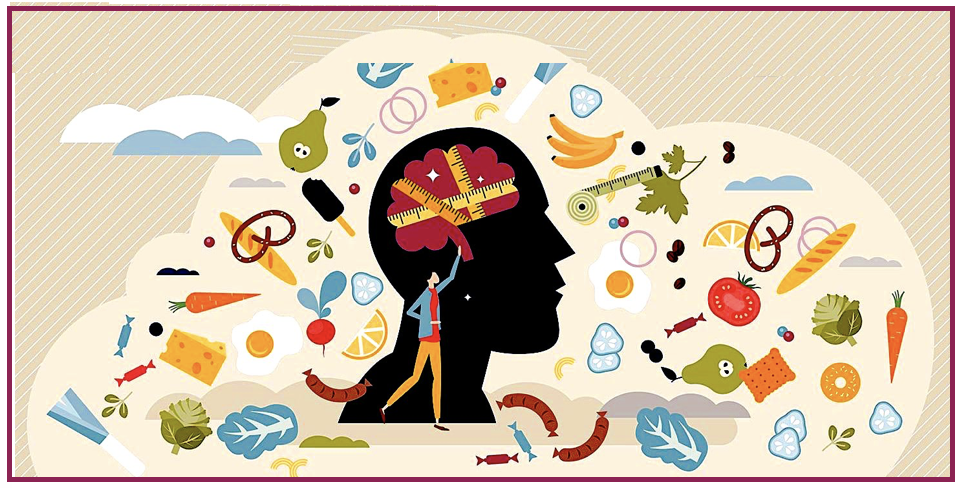
The hypothalamus acts as a main appetite regulatory center, playing a central role in orchestrating bodily responses to hunger & food, It provides peptides to the reward pathways, & controls the release of leptin, ghrelin & orexin, with one area increasing appetite, another reducing it. (IMAGE ⬇️ )
The meso-limbic reward pathway projects from the VAT into the NA in the limbic system (ventral tegmental area —>nucleus accumbens). This pathway stimulates pleasure by increasing the release of dopamine.
Food activates the reward system, providing the feeling of pleasure, which in turn can lead to food-seeking, so that the person’s thinking about hunger motivate the action (memory of pleasure). More….download full-text. ) “Control of Food Intake and Appetite“.
«
«
Insecure attachment styles are made up of negative mental images about close relationships —-> anxious or avoidant, preoccupied & dismissing <—- which have important implications in the development & maintenance of eating disorders.
ANOREXIA = traits
Anorectics are anxiety based – they think negatively about the world, experiencing it as a dangerous, overwhelming place. They’re also negative about themself – not seeing their body accurately as everyone else does, & as not friendly, pretty, or capable.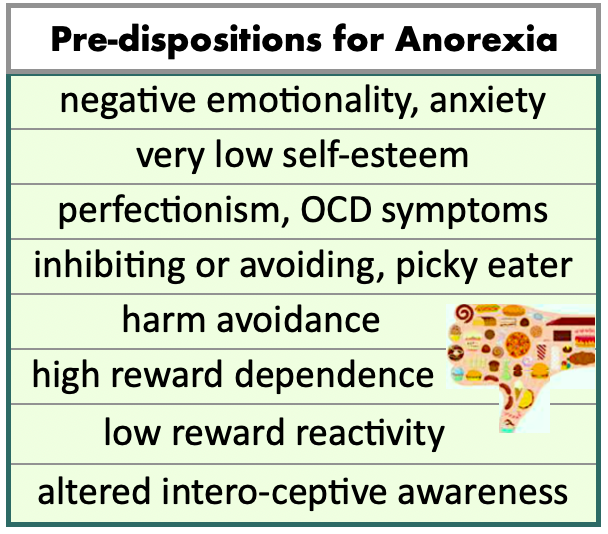
✒︎ They develop an OCD-like pattern because something feels out of order & they don’t know how to correct it. So they create rules to avoid food, which makes them less scared.
✒︎ Being reward dependent & perfectionistic, they want to be the very best, the top dog or they don’t feel ‘legitimate”
✒︎ But they’re also stressed because of low reward reactivity, so that even when they succeed, it doesn’t help them feel better.
✒︎ Their interoceptive** awareness (how we experience our body) is distorted so they misinterpret cues from their stomach, or other internal parts.
** INTEROception = Body Awareness
Muscles & joints have receptors that tell you where your body parts are. Interoception works much the same way, but the receptors are in your —> organs, including your skin. These receptors send messages about the body to the brain, helping to regulate vital functions such as hunger, thirst, digestion, or heart rate.
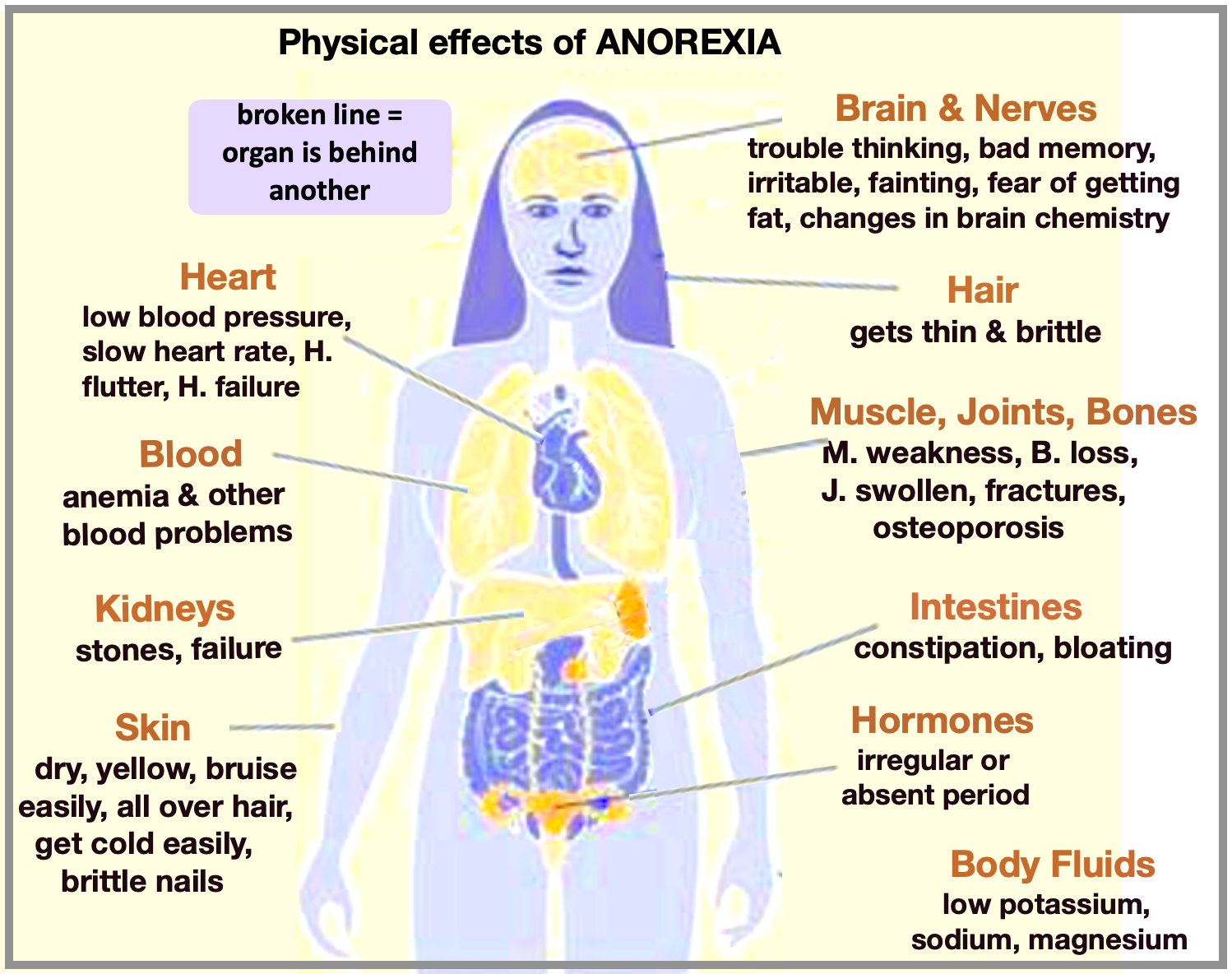
 The Anorectic BRAIN : Researchers say an ongoing eating disorder can distort the brain’s reward circuitry. They lose weight everywhere, including inside the brain. This reduction is a danger to ED sufferer – as the volume drops, parts of the brain thin. The white matter shrinks & cells lose the ability to communicate clearly. Ironically, making decisions about their diet is the only thing that brings them relief & joy.
At ‘best’ the thinning breaks connections between brain areas, at worst it destroys cells. Areas affected include Attention, Impulsivity, Self-regulation & Social interactions. The damages also injures memory circuits, so anorectics can struggle to remember details about daily life, which can persist even after people enter recovery & regain weight .
No satisfaction : The release of Dopamine, from the hypothalamus, that should act as a reward (eating tasty food) —> is instead felt as punishment (for adding a snack).
EXP : Anorectics may feel happy when reading ingredient labels & finding hidden fat calories, and rewarded when they harm their bodies, such as : pushing food around the plate instead of eating it, excessive exercise, dropping an unhealthy amount of weight….
When brain cells that are normally used to signal happiness vs harm are reversed, & the alterations can make it very hard for the anorectic to make good choices. Since those switched neuro-transmitters provide physical rewards, telling the person they’re making the right choices, they’re not likely to see the need to get treatment.
RECOVERY : Brain structure & broken connections can’t be repaired, but anorectics can gather information, apply acceptance & develop new coping skills. They can come to understand & accept why changing eating habits is crucial. Since brain losses in this disease are progressive, early treatment will lessen the damage, & improve their life.
«
«
NEXT : Attachment & Food – Bulimia, #4b
 HEAL & GROW for ACoAs