
PREVIOUS: Dealing with P-As – Communication (4a)
SITE: “How to Successfully Handle Passive-Aggressive People,
NOTE: Communication is the T category of T.E.A. It’s about words, & can be expressed non-verbally, with body language & tone of voice…..
ALSO – It’s understood that dealing with a P-A at work has the advantage that they are being paid to accomplish tasks & can be fired ‘for cause’. Dealing with P-As at home is much harder, whether a spouse or child, altho you can ‘fire’ a spouse, but not young children. YOUR attitude has a big impact on how you communicate with them.
Def – ATTITUDE: A predisposition & tendency toward or habitual way of responding to ideas, objects, people or situations. Each specific attitude (helpful, positive, negative, arrogant, defiant, cool….) will influence ones choice of response to difficult or pleasant experiences (stimuli). The 4 main components are:
(1) Affective : emotions or feelings (2) Cognitive : conscious beliefs or opinions
(3) Conative : inclination to act, implies striving (4) Evaluative : positive or negative
Stay Friendly AND Assertive
P-As vent emotion from behind a mask of indifference. Because they feed on negativity, they look for a ‘bad reaction’ from the Receiver (R= us) so they can make their stress reaction be about you, without getting blamed.
Don’t stoop to their level in return.- being P-A or attacking. If you fall for their ploy of letting them getting under your skin, it will divert attention from the real problem you want to address. Be open, honest & direct about the issue, which will allow you to be more in charge of your responses.
Staying calm lets you clearly see their actions rather than what’s wrong with you. Model positive behavior. Whether dealing with children or adults, show how you handle frustrations & problems in healthy ways (Adult ego state), which will let others know what you expect of them, & how to interact with you. But don’t assume they’ll copy you!
Assertive communication is direct, non-reactive, & respectful.
In dealing with adults, being mentally clear & emotionally level-headed are important in dealing with a P-A. Show confidence, be collaborative & state that you want to solve the problem in a way that works for both of you. It’s not just about getting your way, but taking the other person into consideration. Offer a positive alternative to their behavior & its advantages, as well as asking the P-A to contribute a useful option they can live with. Take the time to reach a fair solution
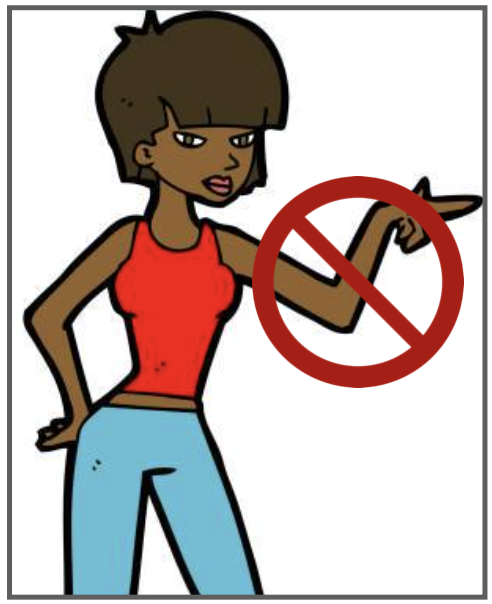 • Avoid broad statements like “You’re always doing this! / Why can’t you ____? / When are you going to____?….” These are accusations, not solutions
• Avoid verbal confrontations & power struggles which only reinforces the passive-aggressiveness, which will increase your frustration
• Avoid rehashing the past, trying to force a solution, or sounding disgusted
• Avoid telling them what you think their motive is for problem behavior., You’re not their therapist
• Avoid telling them they’re being passive aggressive! 😬
♦︎ Instead, point out the inconsistencies between their words & actions, keeping it factual rather than emotional. Describe their specific behavior objectively & its negative effect on the goal you’ve set for them (which they may even have agreed to but are ‘messing up’) : clean the garage, finish a paper, write a proposal, prepare a presentation, research a subject, fill out their eval form, pick up milk….
Listening (4 posts) – It’s also important to hear what the P-A is saying, without interrupting, especially without accusation or blame. Consider the other person’s point-of-view, & acknowledge it. Validate their feelings or opinions, even if you think / know they are wrong. Acknowledging that you heard their position does not automatically mean you agree with them.
In Mild situations, use humor! This helps in conflict resolution, can be a great  way to shine a light on the truth, disarm difficult behavior & show your composure.
EXP: Is someone you see often is too stuck up to respond to your: “Hello, how are you?, you can say – to their silence: “That good, eh?” It may or may not break the ice.
NOTE: Other reasons for their silence are not always P-A but rather may be shyness, preoccupation or illness. One woman who was undergoing chemo treatments felt awful much of the time. Every week an acquaintance would ask “How are you”. After the second or third time the sufferer got tired of repeating “I’m in pain, weak & tired, thanks.” So she stopped responding & just shook her head. She hoped shuffling along with a cane would be enough of an answer!
NEXT: Dealing with P-As #5
 HEAL & GROW for ACoAs