MONEY MADNESS – Timeline (Part 2)

 PREVIOUS : Timeline -#1


TIMELIME (cont)
From BC = BARTER to A.D. = PAPER

A.D. 1500 : Potlatch
Potlatch means “gift or to give”from a Chinook Indian custom in many North American Indian cultures. In some cases it was a form of initiation into secret tribal societies, a feast where gifts were exchanged, with dances & other public rituals being performed.
Because the exchange of gifts was so important in establishing a leader’s social rank, potlach often spiraled out of control as the presents became progressively more lavish, with tribes putting on larger, grander feasts & celebrations to out-do each other.

A.D. 1535 : Wampum
The earliest known use (1535) of wampum (short for wampumpeag = ‘white strings of shell beads’) – were made from clam & mollusk shells by North American Indians, but likely existed well before. These were used in ceremonies, as a record of an important agreement or treaty, as an object of tribute given by subject tribes, or for gift exchange. Its value derived from its ritualistic importance & the skill involved in making the objects.

1816 : The Gold Standard
Gold was officially made the standard of value in 1821 by the United Kingdom – then the leader in international finance – in response to currency problems such as fiat money. This is currency issued on the “fiat” (decree) of a sovereign government &, unlike gold and silver coins, has no intrinsic value.

Countries can issued such money at will, potentially making the currency worthless. Banknotes had been used in England & the Continent for several hundred years, but their worth had never been tied directly to gold.

In the “gold standard”, the unit of currency is typically kept at the value of a fixed quantity of gold, increasing confidence in international trade by preventing governments from excessively issuing currency. Eventually other countries, including Germany, France & the US adopted this system in 1900. p which helped lead to the establishment of a central bank.

However, the system had its drawbacks – it limited a country’s ability to isolate its economy from depression or inflation in the rest of the world.  Guidelines were added to allowed for a non-inflationary production of standard banknotes which represent a certain amount of gold.

Since then there have been a number of extreme cases of hyper-inflation. A notable case is Zimbabwe in the early 2000s, when the country issued currency in denominations as high as $100 trillion—which was worth about a loaf of bread.

A.D.  1930 : End of the Gold Standard
The Great Depression (1929–c. 1939), felt worldwide, marked the beginning of the end of the gold standard, & by the 1970s gold was no longer tied to currency. Since then there have been a number of extreme cases of hyper-inflation. A notable case is Zimbabwe in the early 2000s, when the country issued currency in denominations as high as $100 trillion – worth about a loaf of bread.
In the US, it was revised & the price of gold devalued, eventually ending the connection altogether. The British & other gold standards soon ended as well, & the complexities of international monetary regulation began.

🏧 The Present: Forms of money have continually evolved since the days when people accepted seashells for payment, as evidenced by the new $100 U.S. Ben Franklin bill.  A gold standard existed until the arrival of fiat currency.
CREDIT CARDS
While credit has existed for ages, the first universal credit card was introduced in 1950. That year the Diners Club was founded in the US. & in 1959 American Express debuted. We have IBM to thank for the magnetic stripe on credit cards, introduced in the 1960s to hold account information.

Because of the stripe, merchants no longer needed to make phone calls for authorization. In the 1990s, cards had embedded chips encrypting information such as account balances, providing even greater security.
In the beginning, card users were required to pay the full balance at the end of the month. Eventually, AMEX allowed consumers to carry balances – though interest was applied – & other credit companies quickly followed. Customers took advantage of this development – maybe a little too much. In 2017 American consumers were carrying $1 trillion in credit card debt.

🁢 The Future : Electronic Money
In our digital age, economic transactions regularly take place electronically without any physical currency. Digital cash will most likely continue to be the currency of the future. (MORE….)
BITCOINS
Bitcoin is a digital currency system created in 2009 by an anonymous computer programmer or group of programmers known as Satoshi Nakamoto. The currency is not issued by a central bank & not regulated, though a decentralized network of computers keeps track of transactions. Users of Bitcoins are anonymous, known only by their digital wallet ID.

CBDC  –  a digital form of “central bank money” – that is a liability of the central bank. In the US there are currently two types : physical currency issued by the Federal Reserve & digital balances held by commercial banks at the Federal Reserve.

As of June 2024, the US doesn’t yet have a CBDC. If implemented, the public could use another form of central bank money other than physical cash & digital balances held in individual or corporate bank accounts. The Federal Reserve is committed to ensuring the continued safety & availability of cash, & is considering a CBDC as a way to expand safe payment options, not to reduce or replace them.  (MORE….)

SITE : The Future of Reserve Currencies

NEXT : Emotional Effects

MONEY MADNESS – Timeline (Part 1)

PREVIOUS :  MM – ORIGINS #2

«
From  PBS NOVA & Britannica

COUNTERFITTING
Counterfeiting dates to the invention of money. Even wampum was a target. Forgery proved such a huge problem around the world that harsh penalties were enacted. Chinese currency from about the 14th century carried the warning that counterfeiters would be decapitated, & England was known for punishing perpetrators by burning them at the stake.

In the American colonies too, death greeted early cheaters,  & many measures were taken to prevent forgeries. Ben Franklin, who owned a firm that printed money for several colonies, notably misspelled Pennsylvania, believing that ——s would correct the error in their forgeries.

Today anti-counterfeiting measures are much more elaborate. EXP :  the most copied note in the U.S. – the $20 bill – has been improved by adding a watermark & security thread,  which are visible when the note is held to the light. However, in recent years penalties for counterfeiting have relaxed – the maximum prison sentence is 20 years.

In the Beginning: BARTER
Barter is the exchange of resources or services to mutual advantage, & the practice likely dates back tens of thousands of years, perhaps even to the dawn of modern humans. Plants & animals have also been bartering in symbiotic relationships. Among humans, barter certainly pre-dates the use of money, & today individuals, organizations & governments still use – & often prefer – it .

9000 – 6000 B.C.: Cattle
Throughout history & across the globe  – cattle (including sheep, camels & other livestock) are the first & oldest form of money. In many cultures, with agriculture also came the use of grain & other vegetable or plant products as a standard form of barter

1200 B.C.: Cowrie Shells ++
Historically, the cowrie is the most widely & longest used currency. They had a number of advantages: they were similar in size, small, & durable. Many other societies adopted them as money, & even as recently as the mid-29th cent, cowries have been seen in some parts of Africa.
• Another currency from nature was made from whale teeth,  used by Fijians
• The people of Yap Island (now part of Micronesia) carved huge disks of limestone that eventually became currency, & remain part of the island’s culture..

1000 B.C.: First Metal Money & Coins
While the use of metal-money can be traced back to Babylon before 2000 B.C., standardized & certified coinage may not have existed until the 7th century B.C..  Bronze & Copper cowrie-imitations were manufactured by China at the end of the Stone Age & are considered some of the earliest forms of metal tender.

500 B.C.: Modern Coinage
Outside of China, the earliest coins were made of lumps of silver. They soon took the familiar round form of today, stamped with various gods & emperors to mark their authenticity. These first appeared in Lydia in Turkey, but were copied & further refined by the Greek, Persian, Macedonian, & later the Roman empires. These new coins were made from precious metals (gold, silver, bronze), which had more inherent value, unlike Chinese coins which depended on base metals (bronze, copper, tin, lead).

118 B.C.: Leather Money
About the 6th century BC leather from animal hides as currency came into fashion. The Chinese emperor Wudi (reigned 141–87 BC) created currency out of skins from his personal collection of white stags, in one-foot-square pieces. It was fringed & decorated with elaborate designs. This could be considered the first documented type of banknote.

Early ancient Rome reportedly used this type of money, also found in such areas as Carthage, & what is now France, & Russia is believed to have used leather money well into Peter the Great’s reign (1682–1725 CE).  Although no longer used, leather money has left a lasting legacy: some believe it gave rise to the use of buck as slang for dollar.

💲     💲    💲

A.D. 800 – 900: The Nose
The phrase “to pay through the nose” comes via Balor of the Evil Eye, a Fomorian giant who once ruled over Ireland. He collected an ounce of gold ‘per nose’ in taxes, & if you didn’t pay, it was off with your nose.
The Norse god Odin collected either a Scotpenny or a penny a nose from the Swedes. The 9th century Danes instituted a “nose tax” reminiscent of Balor’s. Pay one ounce of gold, or have your nose slit. (MORE….)

A.D. 806 : Paper Currency
Paper is widely believed to have originated in China & the first known paper banknotes appeared there. This innovation is widely thought to have occurred during the reign of Emperor Zhenzong  (997–1022 CE), made from the bark of mulberry trees (So, in a way – money really did grow on trees!)  (More….)
It used for over 500 years, from the 9th through the 15th century. Over this period, paper notes were over-produced so their value eventually depreciated & inflation soared.

By the late 18th & early 19th centuries, paper money had spread to other parts of the world. However, most of it was not money in the traditional sense. Instead, it served as promissory notes – to pay specified amounts of gold or silver – which were key in the development of banks.

Starting in 1455, their use of paper money disappeared for several hundred years, a long time before paper currency would reappear in Europe, & 300 yrs before it was considered common.

NEXT : Timeline #2

MONEY MADNESS – Money ORIGINS (Part 2)

PREVIOUS – ORIGINS (Part 1)

SITEs : “Coins of the Bible – when money was first mentioned

QUOTE : “All wealth belongs to the Divine , & those who hold it are trustees, not possessors. It is with us today, tomorrow it may be elsewhere.” — Sri Aurobindo

✳️ Money as SYMBOL
In ancient times, money was often used ritualistically, serving as a symbolic offering to deities, representing wealth and prosperity in ceremonies, and sometimes even acting as a substitute for actual goods in sacrificial rituals, with different cultures employing various practices depending on their beliefs and the form of currency available to them.

Tithing: In religions like Judaism, the practice of “tithing” (10%) involved setting aside a specific portion of one’s income as a religious offering to the temple, often with a symbolic monetary value

• Symbolic Value : Money was often seen as a representation of abundance & power, making it suitable for rituals aimed at attracting wealth, good fortune, or fertility. James Hillman wrote
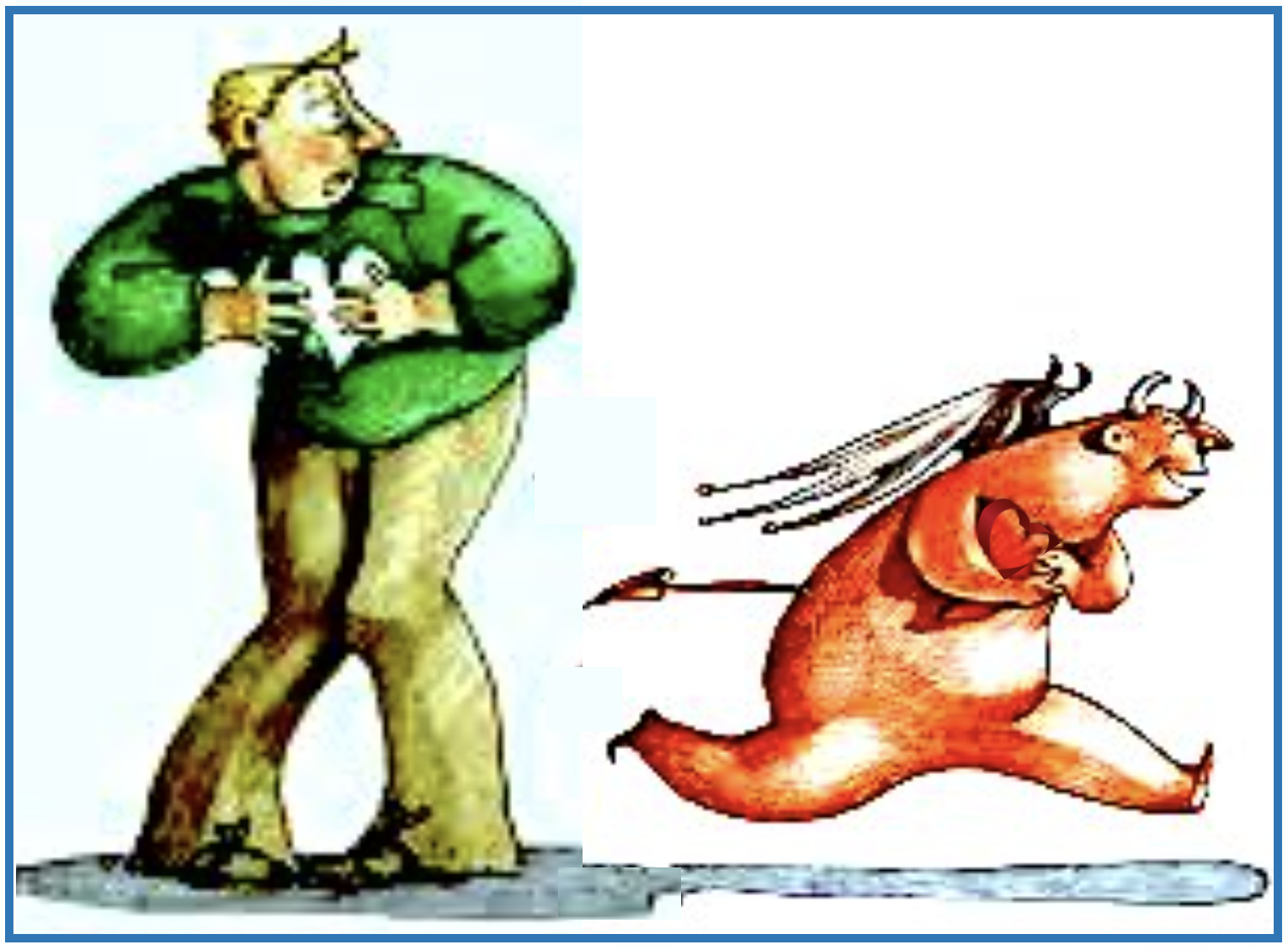
” …money brings panic, confusion, ecstasies, joys and madness, especially when we try to hold its flow with rational accounting. Taurus the Bull, rules money (the Age of Taurus – 4300- 2150 BC)  so bags, pits, vaults, temples…. have been trying to keep the life in the money under control, as do the other measures in which we pen the bull.
But money is a wild ride because it’s truly blood money, perhaps never severed from the bull…”. Hillman (Pompeii fresco ▶️ ).
So it may be easier to understand why we speak of Bull Markets. At its symbolic root, money is not rational, &, like the bull, it relates to passion & desire. Financial markets are subject to the tidal periodic rises and falls just like the Moon and just like our emotions.
• Offerings to Gods: Many cultures would deposit coins or other forms of currency in temples or sacred sites as offerings to deities, either as a way to appease them or to request favors. Hillman writes that “the ceremonial dismemberment of the bull was the origin of bits of money. The spit on which the animal was roasted (obelos) became the coin (obolos) as the piece of bull meat stuck to the spit.”
In some cases, money could be used as a symbolic substitute for actual sacrificial animals or goods, particularly when the practice of animal sacrifice was restricted or considered inappropriate.  (COIN :  Apollo <——&——> Numa Pompilius 97 B.C.)

EXP :  In ancient times (Greece, Rome….)  money had more psychological & symbolic meaning than  economic.  In ancient religious rituals money was used as a symbol in sacrificial food ceremonies. The ‘god’ received the best part & the participants the rest – according to their social rank. To be excluded from the feast meant they were a social outcast.

Coinage evolved from the ritualistic killing & eating of the divine bull.  Metal coins (gold, then, silver then bronze) eventually replaced bull meat, representing royal esteem. & proportionally to the amount of each citizen’s contribution to the state.
So – the system of commodity money eventually evolved into a system of representative money. Money as a form of commercial exchange came later.

BTW – In England this ritual continues to the present – the royal gift of 1/4 venison is bestowed on important people such as the Prime Minister, lord chief justice, archbishops of Canterbury & York….

Therefore, money as a status symbol preceded money as a means of exchange. However, the deep psychological meaning in the human mind – as a measure of social rank – has not changed, even though our rational mind only considers money as a medium of exchange for tangible goods & services.

DEF : The word money derives from the Latin word moneta with the meaning “coin” via French monnaie. The Latin word is believed to originate from a temple of Juno Moneta on the  Capitoline hill often associated with money. It was the place where the mint of Ancient Rome was located, & she was believed to have blessed the coins herself. “Juno” may have derived from the Etruscan goddess Uni, & “Moneta” either from the Latin “monere” (remind, warn, or instruct) or from the Greek “moneres” (alone, unique).

NEXT : MM – TIMELINE , #1

MONEY MADNESS – Money ORIGINS (Part 1)

PREVIOUS : MM – Intro, #3

SITE : • Tragic Money” – from ancient Greek literature & tragedy plays.


💲   💲   💲
In early societies, survival was based on being the strongest & swiftest. But over thousands of years, money has become a substitute for strength & speed. People no longer compete directly for basic needs, but indirectly to purchase food, shelter ….. 

Because the ancient origins of economic systems precede written history, it has not been possible to trace the true origin of the invention of money. The use of barter-like methods may date back to at least 100,000 years ago, although there is no evidence of a society that relied primarily on barter. Historians believe metal objects were first used as money as early as 5,000 B.C. Non-monetary societies operated largely by debt & gift economy. When barter did occur, it was usually between complete strangers or potential enemies.

Many cultures around the world eventually developed the use of commodity money. The first usage of the term came from Mesopotamia circa 3000 BC, with a shekel as a unit of weight, which relied on approx. 160 grains of barley.  Their accounting documents – in the monetary system sense – showed lists of expenditures & goods received & traded.

Commodities are basic items used by almost everyone – including salt, tea, cattle & seeds. Using these items as money alleviated some of the problems of bartering. However, commodities weren’t always easy to transport , as many were perishable or difficult to store.
KNIFE-shaped commodity money were produced by various governments & kingdoms in ancient China about 2500 years ago, & circulated in China between 600 & 200 B.C. during the Zhou dynasty. They seem to have evolved in parallel with the spade money (12 different types) in the north-east of China. from 1045 to 256 B.C.

Societies in the Americas, Asia, Africa & Australia used shell  The use of shells in trade began as direct commodity exchange, the shells having use-value as body ornamentation.
Metal objects were first used as money as early as 5,000 B.C.   According to Herodotus, the Lydians (ancient Turkey) were the first people to introduce gold & silver coins, the first stamped coins minted around 650 to 600 BC.

Historical evidence indicates that money has taken 2 main forms, divided into money of exchange (tangible media of exchange made from clay, leather, paper, bamboo, metal…..) & money of account (debits & credits on ledgers).

The history of accounting shows that “money of account” pre-dates the use of coinage by several thousand years. Money as a unit of account was invented when the unquantifiable obligation “I owe you one” transformed into the quantifiable notion of “I owe you one unit of something”.

TALLY  – As “money of account” depends on the ability to record a count, the tally stick was a significant development. Tallies have had many uses, such as messaging & scheduling, especially in financial & legal transactions, to the point of being currency.

It was an ancient memory aid used to record & document numbers, quantities & messages. They first appear during the Upper Palaeolithic as animal bones carved with notches (notable example = Ishango Bone).
Historical reference is made by Pliny the Elder (AD 23–79) about the best wood to use for tallies, & by Marco Polo (1254–1324) who mentions the use of the tally in China. 

INSET : Medieval English split tally stick (⬇️ front & back) – notched & inscribed to record a debt owed to the rural dean of Preston Candover in Hampshire – of a tithe of 20d each on 32 sheep, amounting to a total sum of £2 13s. 4d (UK).
MANY types: Single & split tallies from the Swiss Alps, 18th to early 20th cent.

«
There are two principal forms : the single & the split tally. A comparable example of this primitive counting device can be found in various types of prayer beads…..The split tally became a prevalent technique in medieval Europe to document bilateral exchanges & debts – a time when there was a scarcity of coinage & widespread illiteracy. (MORE….)

NEXT : MM – Money ORIGINS, Part 1

MONEY MADNESS – INTRO (Part 3)

PREVIOUS : MM – Intro #2


✳️ MEANING of money
1.  Society
has placed a cultural significance on money. It conveys intelligence, fame, power, status…. to people who have it. In reality, money is just a tool that can create opportunities for those who use it correctly. It allows us to buy necessities, invest in others, travel, & build bridges to new ideas.

2. A very personal relationship
What money means to us is a complex web of experiences with friends & family, the communities we live in, & what our culture say about money & wealth. These all affect our attitudes, beliefs & values re. money, which form the basis for the meaning we place on it. 💲Money💲 is :
🔸 part psychology (how we think about it)
🔸 part utility (how we use it)
🔸 part subjectivity (personal choices we make)
It allows us TO  :
Impact & Servicebe active in our communities
Lovetake care of family
Securityfeel more comfortable
Powerhelp achieve effectiveness

Power of Choice : While history has attributed much significance to money, we still hold the power to define its meaning of in our life. The best way to live life is to feel in control, to have the ability to do what we love, & spend time with those that matter most to us. This includes the power to choose what meaning we give our money.

It reflects our beliefs & values. It’s not what we have – it’s what we do with it – that matters.  The meaning of $$ comes from the ROLES we choose to give it. With the right mindset, we can use it as a tool to help us live well.

Freedom from anxiety
Famed psychologist Abraham Maslow may be right that we re all searching for what he calls self-actualizationthe best version of ourself – but we can’t satisfy the higher levels of our human needs if we can’t provide the basic necessities first. Money can provide the essentials in life, giving us the security to strive for more.
(From “FACETS”, 2021)   (see Pyramid info expanded)

✳️ Broad ATTITUDES
Our “Money personality” is affected by them, impacting how we interact with money – ours & others»
🔻 Avoidance == A negative association w/ $. This is a coping mechanism to avoid emotional distress & can be a trait across generations.  Often the outcome is spiraling debts.
Behaviors can include :
•  Avoiding making budgets • Procrastination on bills or taxes
Not keeping records of finances, opening banking apps & checking credit card statements.
Some reasons  
✎ Short-term comfort : spending can provide temporary comfort in times of stress
✎ Survival instincts: our brain os geared toward wanting rewards & away from anything painful. 

🔻 Status == keeping up w/ the Jones, they equate self-worth w. net worth. Wanting to be a celebrity living like a star,  they buy things to be part of a social experience & be seen in a certain way. SIGNS : they believe —
• they’re only as successful as the amount of money they earn, & without a lot of money, they’re not worth much
• if something is not considered the best, it’s not worth buying
THEY :
● are financially dependent on others
● are prone to excessive gambling
● hide spending from their spouse
● prioritize outward displays of wealth
● spend more than they can afford

🔻 Vigilance == often in the wealthy & self-made. It’s important to them to feel they have enough money so they’re alert, watchful & obsessed about their financial health. But they’re not waiting for a financial windfall & tend to downplay how much they have.

🔻 Worship == $ is put on a pedestal- more will make me gappy, solve all my problems . The person ics obsessed with the idea that getting more money is necessary to make progress in life, but at the same time, convinced they will never have enough money to fulfill their needs or desires.  (More….). 

SITE :
5 attributes iof  money LEDGERS :
◆ Anonymity
Centralization
Openness
Limit of Supply
Physicality.

 NEXT : $ Origins, #1

MONEY MADNESS – INTRO (Part 2)

PREVIOUS : MM- Intro, #1


«

✳️  FUNCTIONS  — MONEY IS A:
1. store of value. If I work today and earn 25 dollars, I can hold on to the money before I spend it because it will hold its value until tomorrow, next week, or even next year. In fact, holding money is a more effective way of storing value than holding other items of value such as corn, which might rot. Although it is an efficient store of value, money is not a perfect store of value. Inflation slowly erodes the purchasing power of money over time.

2. unit of account. You can think of money as a yardstick-the device we use to measure value in economic transactions. If you are shopping for a new computer, the price could be quoted in terms of t-shirts, bicycles, or corn. So, for instance, your new computer might cost you 100 to 150 bushels of corn at today’s prices, but you would find it most helpful if the price were set in terms of money because it is a common measure of value across the economy.

3. medium of exchange. This means that money is widely accepted as a method of payment. When I go to the grocery store, I am confident that the cashier will accept my payment of money. In fact, U.S. paper money carries this statement: “This note is legal tender for all debts, public and private.” This means that the U.S. government protects my right to pay with U.S. dollars.

✳️  5  TYPES
☼ COMMERCIAL Bank $ = debt generated by commercial banks. This money is used as loans generated by financial institutions. When a customer deposits funds in a bank account, it is loaned out to other customers, which earns the original depositor interest.
There is always a reserve requirement – the portion of client funds that a bank cannot lend out to other customers. This money is a vital part of any financial system, as it creates liquidity for the buying & selling of other forms of asset. EXP : money for mortgages, business &/or personal loans.

☼ FIDUCIARY $ = payment on the basis of trust, such as cheques, but not on any order of the government.
This is a money substitute that is often a written statement of debt or intent of payment. It is essentially a promise of money at a later date, backed by nothing more than trust between the two parties in a transaction.

There are risks involved, as the supply of money & the promises made may not align. So, if too many individuals using fiduciary money try to convert their statements at the same time, it can create a run on the fiat system that underpins the exchanges.

☼ COMMODITY $ = Money whose value comes from a commodity which it’s made of (stocks…). Economists say the invention of money is in the same category as other great inventions of ancient times, such as the wheel & the inclined plane.
Early forms of money were often commodities made of a valuable substance such as gold & silver coins. Gold was desirable in itself, used in exchange for other goods or services, for jewelry….
Commodity money gave way to the next stage – representative money.

☼ REPRESENTATIVE $ = a certificate or token that can be exchanged for the underlying commodity. EXP : instead of carrying the metal, the gold can be kept in a bank vault , replaced by a paper certificate which could be carried more easily & safely.
The certificate could be redeemed for the gold at any time, so people grew to trust them as much as the metal.
Representative money led to the use of fiat money – the type used in modern economies today.

☼ FIAT $ = government-issued currency not backed by a commodity (gold). It does not have intrinsic value & does not represent an asset in a vault somewhere. Its value comes from being declared “legal tender”- an acceptable form of payment – by the government of the issuing country.
Modern economies use fiat money.
The term Fiat comes the Latin word “fiat”, meaning ‘determined by authority’ – because the value of currencies is set by government bodies, not in relation to another asset. It’s traded in the foreign exchange or forex markets.  (MORE….)

NEXT : MM- Intro, #3

MONEY MADNESS – INTRO (Part 1)

PREVIOUS : Enneagram positives, Type 9

PODCAST : Rogue’s Gallery – Secret History of the Moguls & Money that Made the New York Metropolitan Museum


 MONEY is a belief that has to be shared with other people otherwise money is useless: you can’t eat it or wear it, buy love with it (although it may help), & you don’t get to take it with you when you die.
Money can be anything you like — gold or silver, peas or paper, tiny shells or massive stones, or nothing at all but surfing on the electronic highway. But everyone must agree on what it is: we accept money because we believe others in turn will accept it too. It works because it works.” (GREENBACK, by Jason Goodwin)

✳️ 2 possible forms of money:
🐂  A cow. Cattle have been used as money at different points in history.
🏧 A stack of U.S. 20-dollar bills equal to the value of one cow.

Money – MUST BE:
Acceptable — widely accepted as a medium of exchange – the cornerstone characteristic. SO – Even though cows have intrinsic value, some people may not accept cattle as money. In contrast, people are more than willing to accept 20$ bills, & the U.S. government protects your right to use it to pay your bills.
Divisible — easily divided into small parts so that people can purchase goods & services at any price. SO – 20$ bill can be exchanged for other denominations (a 10, a 5, four 1s, and 4) quarters. A cow, on the other hand, is not very divisible.

Durable — able to withstand the wear & tear of many people using it without easily deteriorating. SO – 20$ bills are fairly durable & can be easily replaced if they become worn. Even better, a long trip to market does not threaten the health or value of the bill

Fungible / Uniformity – considered the same as another of the same value. BUT – you can get a larger variety of “things” from the cash, while only 3 things from the cow. Cows come in many sizes & shapes, each with a different value, so are not a very uniform form of money. 20$ bills are all the same size, shape & value – very uniform.

Scarce — relatively scarce & hard for people to obtain, in order to maintain its value. While the supply of cows is fairly limited, if they were used as money, ranchers would do their best to increase the supply of cows, which would then decrease their value.

Portable — easy to carry from place to place.  SO – while the cow is difficult to transport to the store, the currency can be easily put in your pocket
Stable — Money’s value must remain relatively constant over long periods of time. SO – cows have a limited life span, cash usually lasts for decades.

✳️ 4 financial MINDSETS
♠︎ Scarcity – Based on negativity, this style is rooted in the lack of resources to satisfy basic needs. It can lead to making decisions out of desperation , living week-to-week, & spending most of your money on necessities as soon as the paycheck arrives.  EXP : take out loans without regard for the interest rate, or skimp on savings.

♥︎ Abundance
This is a positive outlook where you’re in the financial driver’s seat, focused on what you have rather than what you lack. You feel empowered, engaged & positive, & inspire those feelings in others.  You look for new opportunities to build wealth for Self & family.

♦︎ Consumer
It’s the “shop ’til you drop” attitude, over=buying & spending during shopping sprees, engaging in promotions like tax-free holidays & Black Friday sales. You also may feel compelled to act better off than you are. It can make you justify your spending even when financially strapped & risk getting deeper into debt. Soon, it becomes impossible to avoid delinquent bill payments, & your financial health suffers.

♣︎ Investor
You’re keenly aware of money, with a clear financial vision, dedicated to putting your money to work. Investing wisely can increase your net worth, provide a comfortable retirement, pay for college tuition, or finance your dream house. Your age, income & risk tolerance all play a role in determining the best way to invest. (Solutions for each type)  (MORE in posts re. M vs F)

 NEXT : Intro (Part 2)

Enneagram – All POSITIVES for Type 9

PREVIOUS : All POSITIVES = Type 8

POST : Enneagram Strengths


See “POSITIVES in us ALL – Definitions” post for meanings


⚜️ Type 9 ENTHUSIASM – YOU CAN :
• do what you really want to do, & do it fully awake
• express your talents directly, rather than waiting for others to notice
• gently stop someone from trying to control your actions
• go inward to explore & honor what you think & feel
• honor your own abilities, talents & knowledge
• recognize that your voice matters & speak up
• share your deep feelings in safe settings

⚜️ Type 9 FLEXIBILITY  – You can step up to lead the way rather than just be a follower. Acknowledging a different point of view does not negate my own.
Self-Statement: I can step it up & assert myself, NOW!

⚜️ Type 9  GENEROSITY of Spirit – For it to come from a genuine place, not ego-based, you need to stay awake & keep a sense of a separate Self – when interacting with others & the environment. Get in touch with the embers of your volcanic anger instead of always ‘keeping the peace”. To be truly generous – not just placating – speak from your true voice.

⚜️ Type 9 GRATITUDEObvious idea: Be grateful for your courage & directness. Express your gratitude honestly to 3 different (safe) people for their part in your life.
Not-obvious idea: Write an advertisement about yourself, promoting all of your innate abilities & accomplishments – & post it on your bathroom mirror. If you’re artistic, make it into a visual ad.

⚜️ Type 9 INVOLVEMENT – You can get highly involved in activities that matter to you, your loved ones or teams, even someone you hardly know but find pleasant. So ASK :
* Deep down inside, what drives me to engage with others as much as I do?
* Can I tell the difference between fusing/blending and true involvement with someone, group  or project?
* What would happen if I disengaged from all involvements for just one day & seriously asked what really matters enough to be fully engaged?

⚜️ Type 9 MOTIVATION – Work at hanging on to your inner motivation even ——> when you’re tired, when there’s conflict with others that can’t be resolved, when you’re not being heard or understood, or when your integrity is challenged in some way

⚜️ Type 9 PERSPECTIVEToo loose lenses : when you look at things so generally – you think everything in your field of vision is equally important, without boundaries or enough differences (spilled milk is just as bad as a slap in the face). You may see everything that’s there, but completely miss what’s really important for your well-being.
Remedy : Get progressive lenses so you can see the layers of reality

⚜️ Type 9 PROSPERITY – Move from calmness & self-restraint to passionate prosperity – which will benefit all.
Take courage & understand that it comes from accessing your core desire for ‘right action’, then following through on plans that let you be useful in the world.

⚜️ Type 9 RESPONSIBILITY – Having “put your anger to sleep” deadened physical instincts, which reside in the body. This led to being over-responsive to others, too accommodating to their desires ….
At the same time being under-responsive to yourself, leaving you depleted & low on the energy needed to respond to stress when most needed. Find a way to express your anger in the right way. Choose to be fully response-able to yourself first, before caring about others.

⚜️ Type 9 SPONTANEITY – To be in the present moment you need to access more parts of yourself & be fully awake to your natural instincts. Being spontaneous comes from lowered anxiety – by knowing that all of you matters, being comfortable with what you think, feel & want to do, based on your True Self.

⚜️ Type 9 VISION – Your challenge is to dream bigger – as big as you actually are.  Tap into your highest longing & ambitions, & give them the attention they deserve ——> by being their advocate. Dig out what  excites you the most, what you always wanted to accomplish, & act on it. And you’ll need to get comfortable with the tension this creates.

⚜️ Type 9 WILLINGNESS – Be willing to set aside your routines & rituals in order to be more present in your body.  Allow yourself to stay awake to deal with stressful situations, especially if they may not have a positive outcome. Be willing to use your ‘voice’- to speak up for yourself at any time, any place.

NEXT : —–

Enneagram – All POSITIVES for Type 8

PREVIOUS : All POSITIVES = Type 7

POST : Enneagram Strengths


See “POSITIVES in us ALL – Definitions” post for meanings

⚜️ Type 8 ENTHUSIASM – YOU CAN :
• allow yourself to feel vulnerable (which is not weakness) – go into your heart like a child
• directly ask for guidance & support
• honor your innocence by letting your deep sweetness  show
• lighten up, see the humor in life’s messes
• look for & find safe people you can rely on
• try to sit back, instead of always being the boss

⚜️  Type 8 Type 8 FLEXIBILITY  – I can go with the flow when I really want to be in control. Other people can be boss-for-a-day instead of me without losing face or being controlled. It’s only fair.
Self-Statement: Step back. Give it up, NOW!  Allow!

⚜️ Type 8 GENEROSITY of Spirit – You can be generous in many way (protecting the weak, fighting injustice, being warm & supportive to those who could benefit)…. But much of it is ego-based, (unconsciously) designed to feel tough, & important.
Instead, true generosity comes from humility & the vulnerability of open-heartedly reaching out to another – on an qual footing – and allowing others to be generous toward you.

⚜️ Type 8 GRATITUDEObvious idea: Name 3 things that someone else made happen (without you!) that you’re grateful about. Sit with these in your mind, heart & body for half an hour.
Not-obvious idea: Acknowledge your needs & experience gratitude for being open, flexible & gentle in allowing yourself to feel them. Do this daily for one month.

⚜️ Type 8 INVOLVEMENT – You are intense about most things, getting caught up with people, projects & causes. But ASK :
* What’s driving my intense involvement? Is this true & pure?
* Can I stick with my involvement when I’m not in charge or in control?
* Deep inside, am I truly committed to the hopes & goals of others, even when I don’t agree with their motives, or when I’m feeling competitive?

⚜️ Type 8 MOTIVATION – Hang on to your inner motivation even when  ——> you’re not in control, you feel vulnerable in some way, or when your gut tells you something’s not going in the right direction but you can’t change it.

⚜️ Type 8 PERSPECTIVE One dimensional lenses : realize that such a restricted view of the truth & reality usually misses other available aspects that would help you cope with life more easily, & let you be softer with other people. Accept that there are many dimensions to life, & they occur simultaneously as well as sequentially.
Remedy: Get wide-angle lenses to see a wider range of options

⚜️ Type 8 PROSPERITY – Go from obsessive control to pure prosperity,  accepting that bigness & excessive action do not create prosperity. What does is – openness & surrender to what is supposed to happen, in its own time.

⚜️ Type 8 RESPONSIBILITY – You’re over-responsive to situations when taking an immediate, big action because the stress so easily sets off your anger-defense. And under-responsive to yourself. EXP : be exhausted or ill & not realize it, feel sad, anxious, or vulnerable, but cover it so fast with anger or action – that you can’t provide your true needs. And an intense drive to have a big impact can make you over or under-respond to the actual requirements of a situation.

⚜️ Type 8 SPONTANEITY – You’re quite deliberate & strategic – which is not spontaneity. But you also take what you want when you want it, which could seem like it. Actually, it’s an ego-need for the immediate fulfillment of desire.
Genuine”presence” requires that you soften the need for power & influence, & learn to manage your anxiety of feeling vulnerable or weak…. to surrender control over whatever happens, whatever you feel & ‘desperately” want, so you can truly enjoy all the good things in the moment.

⚜️ Type 8 VISION – You’re driven by your visions, thinking big & clever, but they’re not concrete enough to grasp – even by you.

What’s the meaning & impact of this vision? What does “We should do…..” mean? How can it be implemented?
Find the exact words to explain what you know instinctually. Then your vision will attract more & more people who can help accomplish it – with less & less need for you to manage all the details (which you don’t really like to do anyway!).

⚜️ Type 8 WILLINGNESS – Be willing to give up being in control of  situations that push your buttons. Carefully notice what’s in you, available in others & in the environment. Be willing to do very, very small things, rather than only ones that have a large impact. Stay present when feeling anxiety, sadness or vulnerability – to experience the total human condition, like everyone else.

NEXT : Type 9 – All Positives

Enneagram – All POSITIVES for Type 7

PREVIOUS : All POSITIVES for Type 6

POST : Enneagram Strengths


See “POSITIVES in us ALL – Definitions” post for meanings

⚜️ Type 7 ENTHUSIASM – YOU CAN :
appreciate each small step you take toward being more & more focused
learn to be patient with people, & especially with yourself
• set reasonable limits on yourself so others won’t have to
realize you almost always have choices. But demanding unlimited choices before acting becomes overwhelming, so nothing gets done
recognize that your internal processes – feelings, patterns of thought, choices of behavior – are far more interesting than any external stimuli you’ve been chasing
trust your heart as much as your head. You can have all emotions – briefly, and you can handle the unpleasant ones !

⚜️ Type 7 FLEXIBILITY  – I can sit with (rather than escape from) the discomfort or pain of a situation, accept that it’s part of life, & know that these feelings won’t last forever
Self-Statement: Sit, Be, Feel, Stay!

⚜️ Type 7 GENEROSITY of Spirit – Your enthusiasm is contagious, willing to share your ideas & listen to others’. You’ll even sacrifice your own need- for-gratification, especially to benefit the group. But these are more ego-based – to excite & stimulate yourself or to feel a little ‘better than’.
True generosity comes from accessing your own capacity for an honest, deep feeling of sensitivity & compassion for others. It means developing your ability to stay focused rather than escaping – especially when sad, anxious or stressed.

⚜️ Type 7 GRATITUDEObvious idea: Feel grateful for all the times you’ve been able to stay with uncomfortable feelings, rather than avoid them.
Not-obvious idea: Name one thing in your life that you care about so deeply that your interest in it is self-sustaining. Sit with gratitude for this (positive) passion – which proves you can stay focused – when something touches your heart.

⚜️ Type 7 INVOLVEMENT – You can be highly engaged with ideas, activities, individuals, & groups – that stimulate you. But ASK:
* Do I know the difference between being stimulated vs. true involvement?
* What happens when I get involved & then get bored?
* Am I focused on the desires, intentions & motivations of others – as much as on my own need for excitement?

⚜️ Type 7 MOTIVATION – Hang on to you inner motivation even when ——> what you’re doing might limit some options & choices, when no one is really listening to all your wonder-ful ideas, or when something stressful or painful has happened.

⚜️ Type 7 PERSPECTIVERose-colored lenses : opposite of Type 6, but somewhat like Type 2s. Remember that everything is not nearly as pretty or amusing as you want it to be, just because you keep wanting to run from anything unpleasant. The 2s see that way to stay connected to others, you see that way to keep having fun – no matter what.
Remedy: Get lenses that do not filter out the gritty parts of life

⚜️ Type 7 PROSPERITY – Move from meaningless pleasure to grounded prosperity. Learn about & accept that there’s a real difference between temporary pleasure masquerading as prosperity, vs. solid, deeply rewarding well-being & riches that last.

⚜️ Type 7 RESPONSIBILITY – You are over-responsive to pleasure and stimulation, over-sensitive to pain (that is, by avoiding it), and under-responsive to your own interior life, being still & experiencing deeply.
It’s hard for you to focus for longer periods – out of boredom, fear, resentment…. so you don’t always live up to your responsibilities.

⚜️ Type 7 SPONTANEITY – you may think you are because you say whatever you’re thinking or do whatever excites at the moment. Impulsivity & spontaneity – are not synonyms. Being fully present “in the moment” means staying in touch with what’s happening internally, including emotional distress.

⚜️ Type 7 VISION – Thinking of creative possibilities is an important part of a vision, but not an idea anyone can easily follow. A possibility that’s not fleshed out is like a skeleton without muscle & too many possibilities will be confusing . Daydreaming a vision without a practical way of achieving it is like falling in love with the idea of a person rather than the person themself! Pick a vision you really believe in and stick with it.

⚜️ Type 7 WILLINGNESS – Be willing to do some small undramatic things that may not feel exciting very much – or at all, but are just as important. Focus long enough to do the opposite of your impulses – to forgo your desires, not just delay them. That way your ‘spontaneous’ acts come straight from your heart, offering your gifts to others or the environment.

NEXT : Type 8 – All Positives